The Order of Ernesto Che Guevara

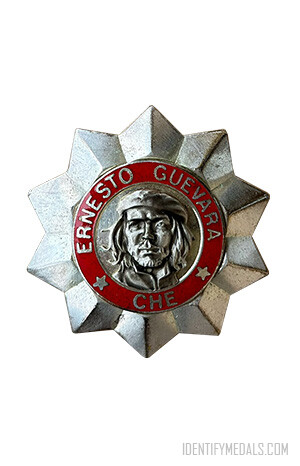
The Order of Ernesto Che Guevara is one of Cuba’s most distinguished honors and is awarded for contributions to internationalist missions.

  • Time Period: Post-WW2
  • Institution: 10 December 1979
  • Country: Cuba

The Order of Ernesto Che Guevara is one of Cuba’s most distinguished honors, established on December 10, 1979, under Decree-Law No. 30. This order celebrates extraordinary contributions to internationalist missions, embodying the ideals of solidarity and resistance against oppression as championed by its namesake, Ernesto “Che” Guevara.

The Order of Ernesto Che Guevara is awarded in three classes, symbolizing varying levels of achievement and contribution to internationalist causes. The Order of Ernesto Che Guevara not only honors remarkable contributions to Cuba’s internationalist efforts but also serves as a tribute to Che’s revolutionary legacy. It underscores the Cuban government’s commitment to global solidarity and the defense of oppressed nations. 

The Order of Ernesto Che Guevara Criteria

The order is conferred on:

  • Members of the Revolutionary Armed Forces (FAR): Including active, reserve, and retired personnel who have demonstrated exceptional dedication and merit during internationalist missions.
  • Cuban citizens and foreign military personnel: Granted in exceptional cases for outstanding service in missions aimed at defending the independence and sovereignty of oppressed peoples.

Criteria for Award

The order recognizes individuals who have:

  • Performed extraordinary acts of valor and dedication in internationalist missions.
  • Acted in defense of independence and sovereignty for nations resisting imperialism, colonialism, neocolonialism, or exploitation.
  • Displayed exemplary solidarity and commitment to advancing liberation movements around the world.

Who Was Che Guevara?

Ernesto “Che” Guevara (1928–1967) was an Argentine Marxist revolutionary, guerrilla leader, physician, and key figure in the Cuban Revolution. Renowned for his unwavering dedication to global anti-imperialist struggles, Che’s efforts extended beyond Cuba to revolutionary movements in Africa and Latin America. His ideals of internationalism, solidarity, and resistance to exploitation continue to inspire liberation movements worldwide.

The Order of Camilo Cienfuegos

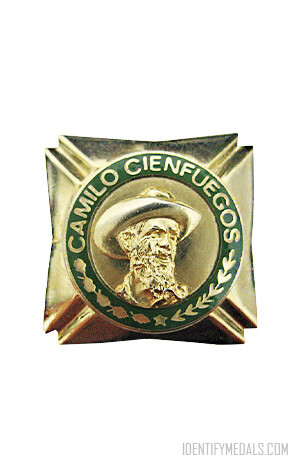
The Order of Camilo Cienfuegos is a prestigious Cuban military decoration for exceptional contributions to the defense of Cuba’s sovereignty.

  • Time Period: Post-WW2
  • Institution: 10 December 1979
  • Country: Cuba

The Order of Camilo Cienfuegos is a prestigious Cuban military decoration established on December 10, 1979, under Decree-Law No. 30. This order honors exceptional contributions to the defense of Cuba’s sovereignty and revolutionary achievements, drawing inspiration from the life and legacy of Camilo Cienfuegos, a key figure in the Cuban Revolution.

Camilo Cienfuegos (1932–1959) was a revered Cuban revolutionary leader and a close ally of Fidel Castro during the Cuban Revolution. Known as the “Hero of Yaguajay,” he played a critical role in the triumph of the revolution, particularly in the final offensive against the Batista regime. Cienfuegos was celebrated for his humility, charisma, and unwavering dedication to the revolutionary cause. His untimely disappearance in 1959 further cemented his status as a symbol of the Cuban struggle for justice and equality.

The Order of Camilo Cienfuegos is not only a recognition of individual and collective military excellence but also a tribute to the revolutionary spirit of its namesake. It highlights the values of courage, leadership, and loyalty to the revolutionary cause that Cienfuegos embodied. By extending the honor to friendly nations, the order also reflects Cuba’s commitment to international solidarity and the shared fight for sovereignty and self-determination.

The Order of Camilo Cienfuegos Criteria

The Order of Camilo Cienfuegos is awarded to:

  • Members of the Revolutionary Armed Forces (FAR): Active, reserve, and retired personnel.
  • Military personnel of friendly nations: Recognizing their solidarity and contributions to shared ideals.

Recipients must demonstrate extraordinary merit in:

  • Planning or executing combat actions: Showcasing exceptional leadership, strategic vision, and operational success in defending Cuba.
  • Defending Cuba’s sovereignty and revolutionary achievements: Acting decisively to protect and advance the nation’s socialist principles and independence.

The Order of Antonio Maceo

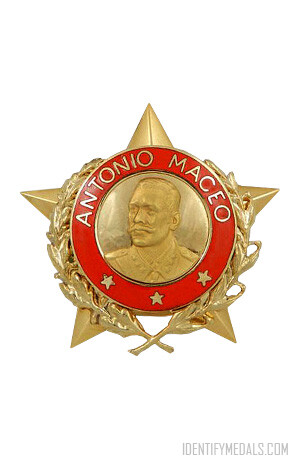
The Order of Antonio Maceo is a distinguished military honor established in 1979 and awarded in recognition of exceptional contributions.

  • Time Period: Post-WW2
  • Institution: 10 December 1979
  • Country: Cuba

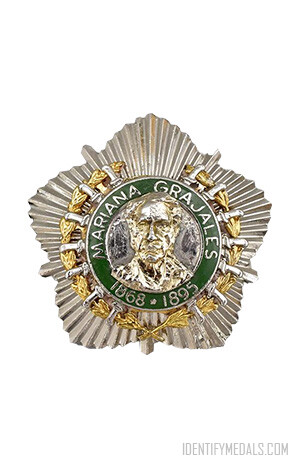
The Order of Antonio Maceo is a distinguished military honor established on December 10, 1979, under Decree-Law No. 30, named after Antonio Maceo Grajales, one of the most celebrated leaders of Cuba’s struggle for independence. It is awarded to individuals and military units in recognition of exceptional contributions to Cuba’s defense and revolutionary values.

Antonio Maceo (1845–1896), known as the “Bronze Titan,” was a legendary military commander and second-in-command of the Cuban Army of Independence. Renowned for his tactical brilliance and unwavering commitment to Cuba’s liberation from Spanish colonial rule, Maceo was a symbol of resistance, resilience, and dedication to justice. His leadership during the Ten Years’ War (1868–1878) and the War of Independence (1895–1898) left an indelible mark on Cuban history.

The Order of Antonio Maceo serves to honor those who embody Maceo’s courage, leadership, and commitment to Cuba’s revolutionary principles. By recognizing both individuals and military units, it underscores the collective effort required to safeguard the nation’s sovereignty and socialist values. It also extends Cuba’s solidarity by honoring friendly nations’ military units that share a commitment to these ideals.

The Order of Antonio Maceo Criteria

The order is conferred upon:

  • Members of the Revolutionary Armed Forces (FAR): Including active, reserve, and retired personnel.
  • Military units of the Revolutionary Armed Forces: For demonstrating extraordinary merit in military operations and contributing significantly to the nation’s defense.
  • Military units of friendly nations: For outstanding achievements that align with Cuba’s ideals of solidarity and defense.

Recipients must demonstrate:

  • Exceptional merit in military operations: Successfully executing complex missions or achieving strategic goals.
  • High combat qualities: Displaying bravery, discipline, and skill in military engagements.
  • Excellence in training and preparation of command cadres: Developing leadership and enhancing the operational readiness of the Armed Forces.
  • Contributions to the defense, development, and consolidation of socialism: Upholding and advancing the revolutionary ideals of the Cuban state.

The Order of Máximo Gómez

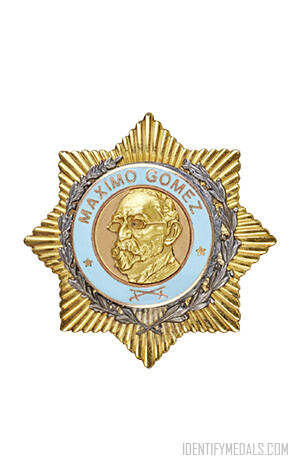
The Order of Máximo Gómez is one of Cuba’s highest military honors, established on December 10, 1979 and given for exceptional contributions.

  • Time Period: Post-WW2
  • Institution: 10 December 1979
  • Country: Cuba

The Order of Máximo Gómez is one of Cuba’s highest military honors, established on December 10, 1979, under Decree-Law No. 30. It is named after Máximo Gómez 🔗, a Dominican Major General who played a pivotal role as the military leader of Cuban forces during the wars of independence from Spain.

This order not only honors extraordinary military achievement but also celebrates the enduring legacy of Máximo Gómez. It serves as a tribute to those who uphold Cuba’s revolutionary ideals and demonstrate exemplary service in defending the nation’s sovereignty and socialist values.

The Order of Máximo Gómez is awarded in two distinct classes, with each class denoting the significance of the recipient’s contribution. The award acknowledges:

  • Outstanding leadership in major military operations.
  • Exceptional contributions to military strategy or defense.
  • Brilliant leadership of fronts or columns of the Rebel Army during the War of National Liberation.

The Order of Máximo Gómez Criteria

The order is awarded to recognize exceptional contributions to Cuba’s military efforts and national defense. It is conferred upon:

  • Members of the Revolutionary Armed Forces (FAR): Including active, reserve, and retired personnel.
  • Civilian citizens: For extraordinary merits in defending the socialist homeland.

Who Was Máximo Gómez?

Máximo Gómez (1836–1905) was a Dominican-born general who became one of the most iconic figures in Cuban history. Renowned for his strategic brilliance and commitment to Cuba’s independence, he was instrumental in leading Cuban forces during the Ten Years’ War (1868–1878) and the Cuban War of Independence (1895–1898). His leadership solidified him as a symbol of dedication to liberty and justice.

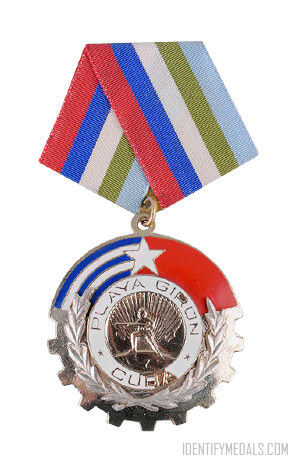
The Order of Playa Girón

The Order of Playa Girón was established in 1961 to recognize exceptional contributions to the defense of sovereignty, peace, and humanity.

  • Time Period: Post-WW2
  • Institution: 18 July 1961
  • Country: Cuba

The Order of Playa Girón was established by Law No. 949 on July 18, 1961, and later ratified with a new design under Decree-Law No. 30 on December 10, 1979. This prestigious Cuban award recognizes exceptional contributions to the defense of sovereignty, peace, and humanity.

The Order takes its name from the Bay of Pigs Invasion 🔗 (1961), a failed U.S.-backed landing operation aimed at overthrowing the Cuban government. The operation’s defeat marked a pivotal moment in the Cuban Revolution, symbolizing the nation’s resilience and victory against imperialism.

The Order of Playa Girón Criteria

The Order is conferred on Cuban and foreign citizens, including Heads of State or Government, who:

  • Demonstrate extraordinary efforts in combating imperialism, colonialism, neocolonialism, racism, fascism, or any other form of exploitation.
  • Make significant contributions to the development and defensive capacity of the armed forces.
  • Undertake outstanding actions in favor of peace, human progress, and the defense of Cuba’s homeland and revolutionary achievements.

The award highlights solidarity and commitment to global liberation movements, reflecting Cuba’s dedication to social justice and resistance against oppression.

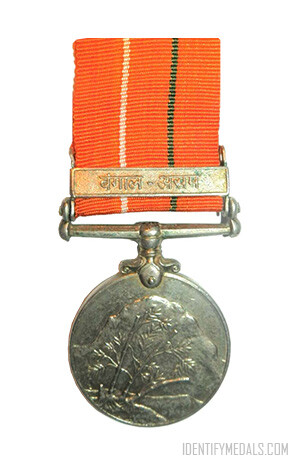
The Sainya Seva Medal

The Sainya Seva Medal is awarded by the Indian Armed Forces to recognize non-operational service performed under challenging conditions.

  • Time Period: Post-WW2
  • Institution: 26 January 1950
  • Country: India

The Sainya Seva Medal is an honor awarded by the Indian Armed Forces to recognize non-operational service performed under challenging conditions in harsh climates and designated areas.

Established on 26 January 1960, the medal was introduced by the Government of India with the President’s approval. It was instituted alongside other notable awards, including the Vishisht Seva Medal series (Class I, II, III), the Videsh Seva Medal, the Sena Medal, the Nao Sena Medal, and the Vayu Sena Medal.

The Sainya Seva Medal highlights the dedication of individuals serving in demanding environments, emphasizing their commitment and resilience in the face of hardship.

The Sainya Seva Medal Criteria

The medal is conferred for completing at least one year of non-operational service in specified geographic areas identified as having extreme conditions or severe climates. 

The medal is awarded to a broad range of personnel, including:

  • Commissioned Officers, Junior Commissioned Officers, and other ranks of the regular Army.
  • Non-Combatants (Enrolled) serving in the Armed Forces.
  • Members of auxiliary and reserve forces.
  • Nursing Officers and other personnel in nursing services.
  • Lawfully constituted armed forces, including police and central armed police forces.

Medal Clasps

  • Jammu and Kashmir: Awarded for one year of service since 27 Oct 1947; Air Force: 10 sorties/40 hours flying; inscribed जम्मू कश्मीर with a chinar leaf.
  • NEFA: One year of service in NEFA (1947–1958); Air Force: 10 sorties/40 hours flying; inscribed ने फ़ा on bamboo stalk.
  • Himalaya: One year of service in northern Himalayas; Air Force: 10 sorties/40 hours flying; inscribed हिमालय with a pine tree. Discontinued since 1986.
  • Bengal-Assam: One year of service in West Bengal/Assam (after 26 Oct 1962); Air Force: 10 sorties/40 hours flying; inscribed बंगाल-असम.
  • Andaman and Nicobar: One year of service in the islands (post-20 May 1966); Air Force: 50 hours flying; inscribed अण्डमान और निकोबार with lotus designs.
  • Marusthal: One year of service in Gujarat/Rajasthan deserts; Air Force: 10 sorties/40 hours flying; inscribed मरुस्थल.
  • 6YR Sea Service: Awarded since 2017 for six cumulative years of naval service in anti-piracy, coastal patrols, and seaward defense.

The Sainya Seva Medal Design

The Sainya Seva Medal is a circular medal made of cupro-nickel, measuring 35 mm (1.4 inches) in diameter. It is suspended from a straight bar, which holds the clasps.

  • Obverse: Features an image of Nanda Devi with bamboo in the foreground, symbolizing nature and resilience.
  • Reverse: Displays a gate of the Purana Qila (Old Fort) with the inscription “Sainya Seva Medal” in Hindi above it.

The ribbon, measuring 32 mm (1.3 inches), is saffron with a white vertical stripe and a dark green vertical stripe dividing it into three equal sections, representing balance and harmony.

The award is always accompanied by a clasp engraved with the name of the location where the service was rendered. For subsequent qualifications, only an additional clasp indicating a new service area is issued.

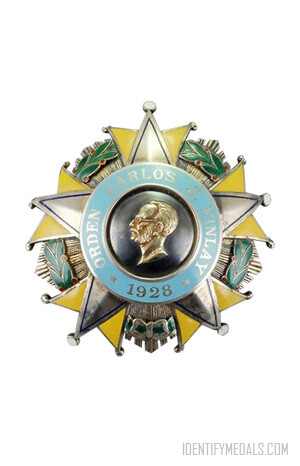
The Order of Carlos J. Finlay

The Order of Carlos Juan Finlay honors Cuban and foreign citizens for their contributions to science, research, and public health.

  • Time Period: Post-WW2
  • Institution: 21 January 1928
  • Country: Cuba

The Order of Carlos Juan Finlay was initially instituted by Decree No. 77 on January 21, 1928, and later ratified with a new design by Decree-Law No. 30 on December 10, 1979. This prestigious order honors both Cuban and foreign citizens for their exceptional contributions to the advancement of science, research, and public health.

The Order of Carlos J. Finlay Criteria

The order is granted to individuals who have demonstrated extraordinary merits in:

  • Advancing natural or social sciences.
  • Conducting scientific research or activities that significantly contribute to the progress of knowledge.
  • Promoting health and well-being, benefiting humanity at large.
  • Efforts in preserving and improving public health.

The award specifically recognizes achievements that contribute to the development of science in ways that improve societal welfare, enhance health systems, and lead to global benefits.

Carlos Juan Finlay: The Namesake

Carlos Juan Finlay (1833–1915) was a renowned Spanish-Cuban physician and epidemiologist. He is celebrated for his groundbreaking research on yellow fever, where he identified mosquitoes as the primary vector for its transmission. Finlay’s work paved the way for effective disease control measures and has saved countless lives. His contributions to epidemiology earned him recognition as one of the most influential figures in the history of public health.

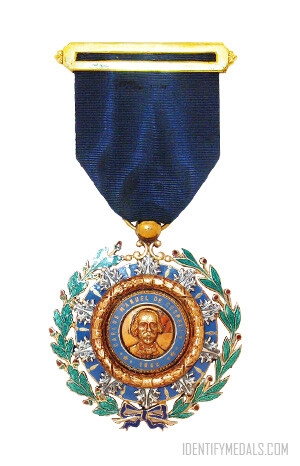
The Order of Carlos Manuel de Céspedes

The Order of Carlos Manuel de Céspedes is a prestigious decoration of the Republic of Cuba, named after the independence leader.

The Order of Carlos Manuel de Céspedes is a prestigious decoration of the Republic of Cuba, named after the independence leader Carlos Manuel de Céspedes (1819–1874).

Established in 1926 by Presidential Decree No. 486 under Gerardo Machado, it recognized services to Cuba or humanity, often in diplomatic or eminent capacities. The President of Cuba served as the order’s Master, with high-ranking officials as Chancellor and Vice Chancellor.

Post-1959, after the Cuban Revolution, the government annulled awards from the Batista era and re-evaluated recipients. Reorganized under Law No. 17, the order honors Cuban and foreign leaders, Heads of State, or individuals contributing to national liberation, international solidarity, or peace.

The Order of Carlos Manuel de Céspedes Criteria

Ranks included Grand Cross (for presidents and heads of state), Grand Officer, Commander, Officer, and Knight or Lady, with specific criteria for diplomats and officials.

The Order of Carlos Manuel de Céspedes Design

The medal consists of a white-enamelled five-point star with a turquoise blue crown, featuring Céspedes’ effigy and the inscription “1868.” The reverse displays the Cuban Coat of Arms. It hangs from a ribbon with turquoise blue, red, and white stripes.

The Hero of Labor of the Republic of Cuba Medal

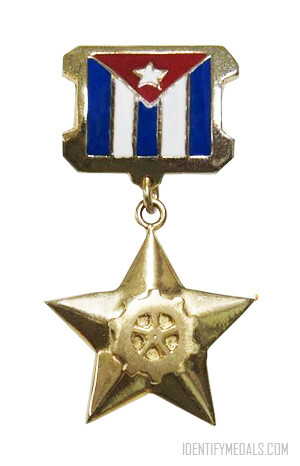
This medal is awarded by the Council of State to Cuban and foreign citizens in recognition of extraordinary achievements in creative work.

  • Time Period: Post-WW2
  • Institution: 10 December 1979
  • Country: Cuba

The Hero of Labor of the Republic of Cuba (Héroe del Trabajo de la República de Cuba) is an honorary title of the Republic of Cuba, established by Decree-Law No. 30 on December 10, 1979. It is awarded by the Council of State to Cuban and foreign citizens in recognition of extraordinary achievements in creative work or struggles for the advancement and defense of the achievements and interests of the working class, as well as for consistent practice and valuable contributions to proletarian internationalism.

The title can also be awarded posthumously. 

The Hero of Labor of the Republic of Cuba Medal Criteria

Presented to Cuban and foreign citizens in recognition of exceptional achievements in productive labor, efforts in advancing and defending the accomplishments and interests of the working class, and steadfast dedication with significant contributions to proletarian internationalism.

The Hero of the Republic of Cuba Medal

The Hero of the Republic of Cuba is the nation’s highest honorary title, symbolizing extraordinary achievement and dedication.

  • Time Period: Post-WW2
  • Institution: 10 December 1979
  • Country: Cuba

The Hero of the Republic of Cuba (Héroe de la República de Cuba) is the nation’s highest honorary title, symbolizing extraordinary achievement and dedication to the ideals of the Cuban Revolution. Equivalent to similar titles awarded within the Socialist Bloc, this prestigious distinction recognizes individuals who have made exceptional contributions to Cuba’s national interests, socialist development, and the global working-class struggle. 

This prestigious title underscores Cuba’s commitment to recognizing those who embody the principles of socialism, whether through domestic contributions or international solidarity. Its recipients include revolutionary leaders, military figures, and foreign allies who have played pivotal roles in supporting Cuba’s ideals and sovereignty.

The Hero of the Republic of Cuba Medal Criteria

Established by Decree-Law Number 30 on December 10, 1979, the title is granted to both Cuban and foreign citizens. Its purpose is to acknowledge extraordinary merits achieved in various domains, including:

  • Productive Labor: Outstanding contributions to the advancement of Cuba’s economic, scientific, or industrial sectors.
  • Defense of Socialist Ideals: Acts of valor or leadership in protecting the achievements and interests of the Cuban Revolution and the working class.
  • Proletarian Internationalism: Significant support or actions promoting solidarity among socialist nations or advancing global socialist ideals.

The Hero of the Republic of Cuba Medal Design

Recipients of this honor are presented with the Gold Star Medal (Medalla Estrella de Oro), a beautifully crafted award featuring a gold plaque enameled with the vibrant colors of Cuba’s national flag.