The Knight’s Cross Of The War Merit Cross In Gold

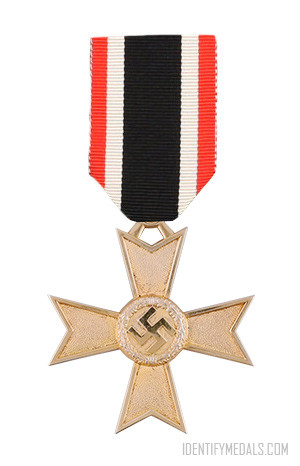
The Knight’s Cross Of The War Merit Cross In Gold is a rare Third Reich variation of the War Merit Cross suggested by Albert Speer in 1944.

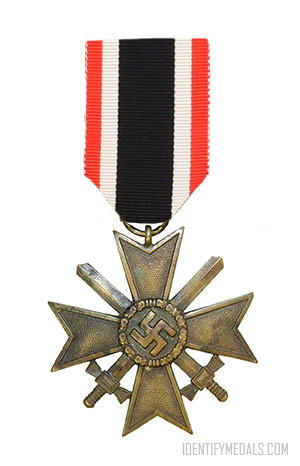
The Knight’s Cross of the War Merit Cross in Gold (or Ritterkreuz des Kriegsverdienstkreuzes in Gold in German) was a decoration of Nazi Germany and a variation of the War Merit Cross (Kriegsverdienstkreuz). The medal can be dated back to 7 July 1944 when Albert Speer suggested the need for a superior grade of the award. The goal was to recognize exceptional non-combatant contributions to the war effort in Germany. 

The medal was officially instituted on 13 October 1944. Only 21 Knight’s Cross of the War Merit Cross in Gold are known to have been awarded (with several dozen having been produced but not given).

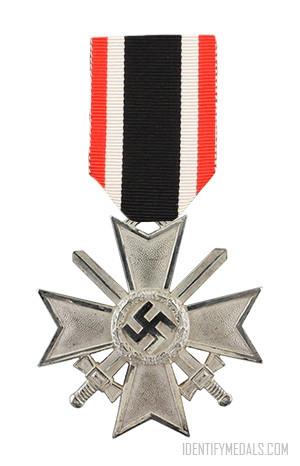
The award had four variantswith swords given to soldiers for exceptional service “not in direct connection with combat”, without swords given to civilians for meritorious service in “furtherance of the war effort”, the Knights Cross of the War Merit Cross, and the rare Knight’s Cross of the War Merit Cross in Gold

Knight’s Cross of the War Merit Cross in Gold Design

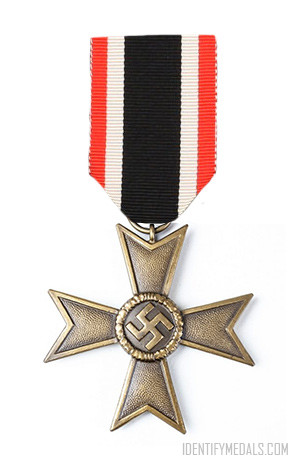
The medal consists of a gilded silver Maltese Cross. The obverse has pebbled arms, with a central wreathed mobile swastika and crossed swords piercing the centerpiece. The reverse has a block hinge and a banjo-style pinback. The cross measures 48.51 mm (w) x 48.48 mm (h) and weighs 17.6 grams.

Ribbon

The ribbon of the Knight’s Cross of the War Merit Cross in Gold was red-white-black-white-red (the colors being reversed from the ribbon of the World War II version of the Iron Cross). 

Order of Wear

Knight’s Cross of the War Merit Cross in Gold was a neck decoration and worn the same way as the Knights Cross of the Iron Cross.

Medal Variations

Find this Medal Online

The Kenyan Silver Star

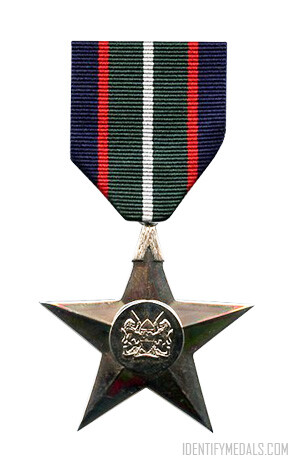
The Kenyan Silver Star was instituted on 8 December 1983 and is awarded to members of the uniformed services for conspicuous acts of valor.
The Kenyan Silver Star was instituted on 8 December 1983 and is awarded to members of the uniformed services for conspicuous acts of valor, self-sacrifice, or devotion to duty in the face of danger.

The medal is a cupro-nickel, 18.7 mm (0.74 inches) five-pointed star and bears the arms of the Republic of Kenya on the obverse. The reverse is plain. 

Find Kenyan Medals Online

More Kenyan Medals

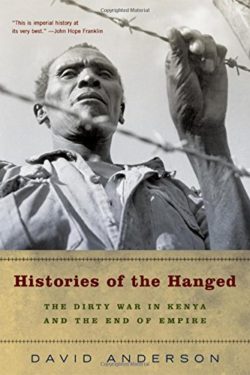
Books About Kenyan History

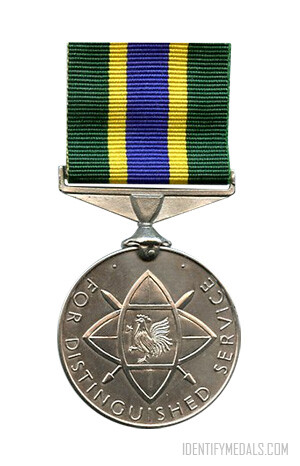
The Distinguished Conduct Medal of Kenya

The Distinguished Conduct Medal is a Kenyan award given for exceptionally distinguished service or devotion by members of the Armed Forces.

  • Time Period: Post-WW2
  • Institution: 21 April 1966
  • Country: Kenya

The Distinguished Conduct Medal is a Kenyan award given for exceptionally distinguished service or devotion to duty by members of the Armed Forces. 

It was instituted on 21 April 1966. During the presidency of Arap Moi, the Coat of Arms on the obverse of the medal has been replaced by the effigy of the President.

Find Kenyan Medals Online

More Kenyan Medals

Books About Kenyan History

The Order of the Grand Warrior of Kenya (O.G.W)

The Order of the Grand Warrior of Kenya is an award presented to individuals in recognition of outstanding service rendered to the country.
The Order of the Grand Warrior of Kenya (or OGW) is an award presented to individuals in recognition of an outstanding service rendered to the country. Especially, those who put their lives at risk to save their fellow countrymen and protect others.  

Among the notable recipients of this award include Former Senate Speaker, Hon. David Ekwee Ethuro, current speaker of the National Assembly, Hon. Justin Bedan Muturi, former leader of the majority party in the Senate, Hon. Prof. Kithure Kindiki, and the current leader of majority party in the national assembly Hon. Adan Duale.

The Order of the Grand Warrior of Kenya Design

The Order of the Grand Warrior of Kenya medal features a central emblem, in the obverse, with a shield and crossed spears. The medal is adorned with a ribbon in the colors of the Kenyan flag: black, red, green, and white.

About the Kenyan Presidential Awards

In Kenya, it’s tradition to present various presidential awards during National Holidays to honor individuals for their excellent service to the nation. These awards are conferred by the sitting President and government, advised by the National Honors and Awards Committee.

Nominees are recommended by county commissioners, NGOs, government agencies, religious institutions, individuals, and community groups. The National Honors Act of 2014 outlines criteria for eligibility, such as displaying exceptional abilities, courage, leadership, and making significant contributions in fields like social, economic, scientific, public service, and governance. Recipients often include state or public office holders and athletes who have brought glory to the country.

Once awarded, recipients can add the honor’s initials before their name.

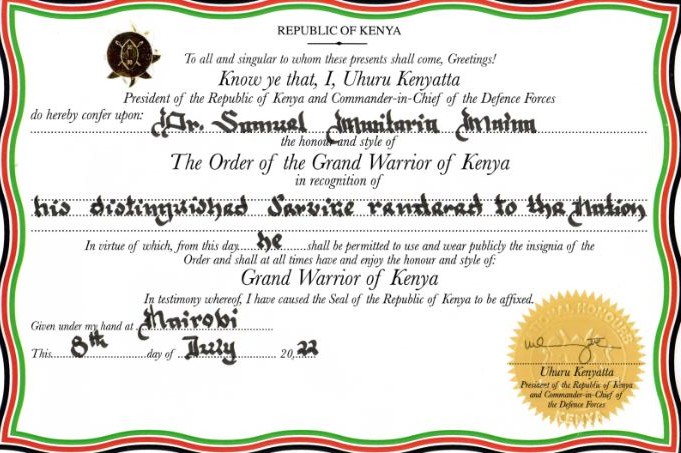
A Grand Warrior of Kenya title awarded to Dr. Samuel Maina Mwituria.
A Order of the Grand Warrior of Kenya (OGW) title awarded to Dr. Samuel Maina Mwituria in 2022 by His Excellency Uhuru Kenyatta, President and Commander-in-Chief of the Defence Forces of the Republic of Kenya.

What's the Meaning of OGW?

The meaning of OGW refers to The Order of the Grand Warrior of Kenya, a prestigious award presented to individuals for outstanding service to the nation. It recognizes those who have shown exceptional dedication, bravery, and contributions in various fields such as social, economic, scientific, public service, and more. The award honors acts of valor, leadership, and significant achievements that benefit the country.

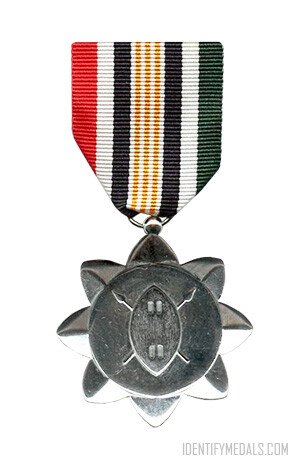
The Order of the Burning Spear

The Order of the Burning Spear was instituted for distinguished services to dignitaries, members of the public service, and professionals.

The Order of the Burning Spear was instituted on 21 April 1966 for distinguished services to dignitaries, members of the public service, and professionals.

The Order is divided into three classes:

  • Chief of the Order of the Burning Spear (C.B.S)
  • Elder of the Order of the Burning Spear (E.B.S)
  • Moran of the Order of the Burning Spear (M.B.S)

Some of the notable figures who received this award include former Statehouse Spokesman Manoah Esipisu, 800 meters Olympic Champion and world record holder David Rudisha, and veteran journalist Jeff Koinange of Citizen Television Kenya.

The Order of the Burning Spear Design

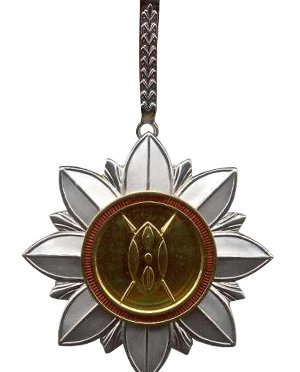
The elder rank of the Order of the Burning Spear is always a breast star and a neck badge, while the insignia of Moran Burning Spear (M.B.S.) and it’s ONLY a neck badge.

The ribbon is black, half green with a wide white-edged red central stripe. The earlier insignia of the Moran of the Burning Spear had a silvered center.

Find Kenyan Medals Online

More Kenyan Medals

Books About Kenyan History

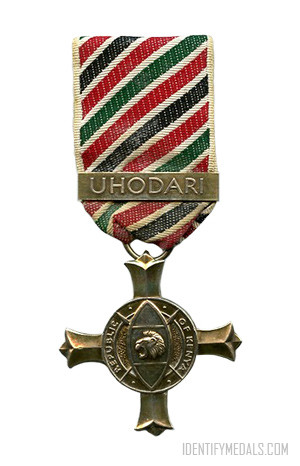
The Uhodari Medal

The Uhodari Medal is awarded to individuals for their most outstanding acts of bravery and sacrifice while serving in the armed forces.

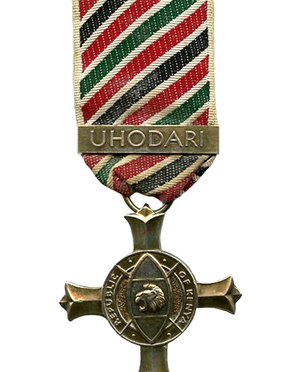
The Uhodari Medal is awarded to soldiers and individuals for their most outstanding acts of bravery and sacrifice while serving in the armed forces. The medal was instituted on 21 April 1966. As the country’s utmost gallantry honor, it is presented to the most conscious bravery or for some daring act of valor, extreme devotion to duty, and self-sacrifice. The recipients of this prestigious award put the lives of other first in an act of selflessness.

For over 20 years no one had received this award- until the incumbent H.E. Uhuru Kenyatta awarded Major Ndeke Fredrick Afande the Uhodari Medal. The most notable figure to have received this award is former Defense Forces General Mohammed for his role in defending the country during the 1982 coup attempt.

Find Kenyan Medals Online

More Kenyan Medals

Books About Kenyan History

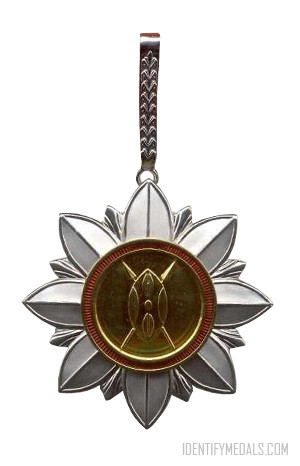
The Chief of the Order of the Golden Heart of Kenya Medal

The Chief of the Order of the Golden Heart of Kenya Medal is the highest-ranked award and presented to the holders of the president’s office.

The Chief of the Order of the Golden Heart of Kenya is the highest-ranked award and is presented to the holders of the president’s office. The incumbent, President Uhuru Muigai Kenyatta is the holder of the award Chief of the Order of the Golden Heart of Kenya.

The Order is divided into three categories based on seniority:

  • The Chief of the Golden Heart, awarded to a sitting president.
  • The Elder of the Order of the Golden Heart of Kenya (E.G.H), awarded to the deputy President of the Republic, Speakers of the House and Senate, Cabinet Secretaries, the First Lady, etc. 

The Chief of the Order of the Golden Heart of Kenya Design

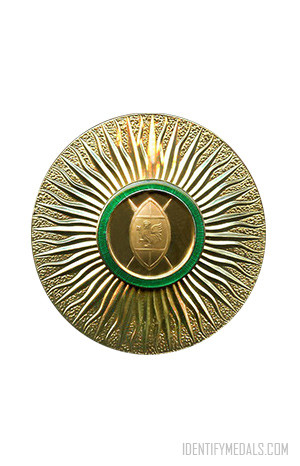
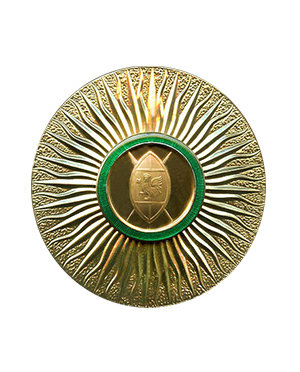
The medal is a breast star made by Spink with an inverted backplate. It measures about 73 millimeters in diameter.

Find Kenyan Medals Online

More Kenyan Medals

Books About Kenyan History

The Winter War 1939-1940 Medal

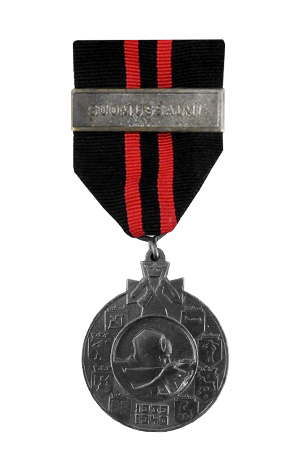
The Winter War 1939-1940 Medal was established on 2 August 1940 and awarded to soldiers and civilians for serving the Nation’s best interests. In particular, to honour those who had helped to keep Finland’s independence.

The 1939-1940 War Service Medal was created through Number 418 Finnish Code of Regulations 1940 by President Kyösti Kallio and the Minister of Defense Rudolf Walden. The first medals were presented in September of the same year.

The criteria was as follows: The medal was ‘established to commemorate the war of 1939–1940 and the unanimous will to defend it and the deeds done for the benefit of the motherland.’ The medal was generally very liberally granted to those engaged in some form of war work. This could range from those who cooked and baked in canteens to soldiers and young boys and girls who helped pass messages and washed uniforms.

Over 700,000 of all versions of the 1939-1940 War Service Medal were awarded.

The Winter War 1939-1940 Medal Design

The medal was designed by Major Aarno Karimo, who had helped found the Voimaliitto (Power League) in 1906. He was a well-known and respected poet and artist who had spent the Winter War designing propaganda posters.

The medal is made from blackened iron and measures 35 mm wide. The obverse is divided in two: An 18mm diameter circular centerpiece and a 17mm wide border. The centerpiece displays a silhouette of a snow-covered rifleman surrounded by eight provincial coats of arms of Finland. At the bottom is a stylized text reading 1939–1940. The reverse has an embossed conifer wreath around the border and the inscription ‘KUNNIA ISÄNMAA’ meaning ‘Honour Fatherland’. 

The Turkish Armed Forces Medal of Distinguished Service

The Turkish Armed Forces Medal of Distinguished Service (Türk Silahlı Kuvvetleri Üstün Hizmet Madalyası) was first created in 1967.

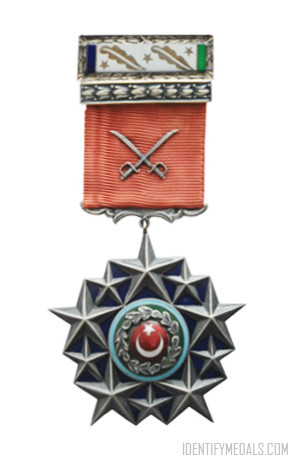
The Turkish Armed Forces Medal of Distinguished Service (or Türk Silahlı Kuvvetleri Üstün Hizmet Madalyası n Turkish) was first created on July 27, 1967 (although it took its current form on July 29, 1983). 

During war or peace, the medal is bestowed upon individuals whose contributions to the strengthening of the Turkish Armed Forces (TAF) have been extraordinarily high, serving national interests with exemplary determination and contributing greatly to the prestige and strength of the TAF.

This can encompass any military, scientific, material, or administrative contribution, in or outside the territory of the Republic of Turkey.

The medal can be given to civilians or soldiers, regardless of nationality. It is bestowed by any of the Commanders of the four main branches of the TAF (the Army, the Navy, the Air Force, or the Gendarmerie). 

The Turkish Armed Forces Medal of Distinguished Service Design

The medal is struck in bronze and measures 60 mm wide. It has five large and five small stars on dark blue background circling an insignia of a crescent moon and a star on red background (the symbol of the Turkish flag) pointing upwards.

The Chelengk

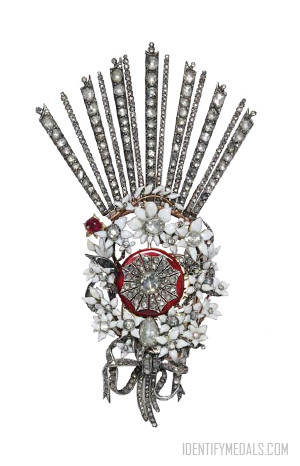
The Chelengk (çelenk) was a military decoration of the Ottoman Empire that continued to be awarded for military merit up to the 1820s.
The Chelengk (çelenk) was a military decoration of the Ottoman Empire that continued to be awarded for military merit up to the 1820s.
A çelenk was “a bird’s feather which one attaches to the turban as a sign of bravery” and became institutionalized practice amongst the Ottoman military. 

A specially-made Chelengk was awarded to Horatio Nelson by Sultan Selim III after the Battle of the Nile (a major naval battle fought between the British Royal Navy and the Navy of the French Republic at Aboukir Bay on the coast off the Nile Delta) in 1798. This was the first time that a Chelengk was conferred on a non-Ottoman. Selim III also gave a chelengk to Russian Admiral Fyodor Ushakov after the capture of Corfu in 1799.

The Chelengk Medal Design

The Chelengk is a jeweled aigrette (the tufted crest or head-plumes of the egret, used for adorning a headdress) consisting of a central flower with leaves and buds, and upward-facing rays.