The Mussert Bravery Cross

The Mussert Bravery Cross was a special award for NSB members serving in German forces. It was akin to the German Eastern Front Medal.

Officially referred to as the “Oostlanderskruis,” the Mussert Bravery Cross or “Mussertkruis” was instituted by the Dutch Nazi Party (NSB), led by Anton Mussert, as a special award for NSB members serving in German forces.

The award was akin to the German Eastern Front Medal and not a bravery award. It was issued in two classes: with swords for combatants and without swords for non-combatants.

Although the decoration was not authorized for wear on German uniforms, it was likely worn by recipients.

The Mussert Bravery Cross Design

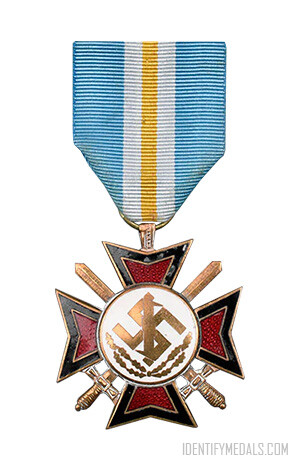
The NSB Mussert Bravery Cross is a gilded bronze Maltese cross with red and black enamel, featuring crossed swords between its arms.

The obverse center medallion displays a golden mobile swastika, Wolfsangel, and oak leaf stems on a white enamel background. The reverse center medallion bears the inscription “MUSSERT 1941” surrounded by “HOU EN TROU” and oak leaf branches.

Measuring 37.12 mm by 41.25 mm, the cross is suspended from a ribbon that displays the Dutch national colors.
The Front-Fighters Badge

The Norwegian “Frontkjemper” (Front-Fighter) badge was awarded for bravery to Waffen-SS Norwegian legionnaires and German cadre.

The Norwegian “Frontkjemper” (Front-Fighter) badge was introduced in October 1943 by Vidkun Quisling, leader of the Norwegian collaborationist government during World War II. This badge was awarded to Norwegian legionnaires and German cadre members who demonstrated bravery while serving on the Eastern Front between 1941 and 1945.

The badge was awarded to Norwegian soldiers and German cadre for their participation in combat on the Eastern Front. Nurses who served on the Eastern Front were also eligible for the award. A miniature version was available for veterans to wear on civilian clothing. A special variant featuring a nurse helping a wounded soldier was produced, reflecting the contributions of medical personnel.

The Front-Fighters Badge Design

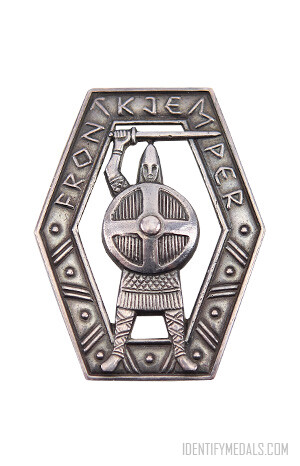
Manufactured by “Webeto” in Oslo, it was only issued in silver. The badge depicts a Nordic warrior with a shield and sword, framed by an archway inscribed with “FRONT KJEMPER” in pseudo runic script. Two types exist: an early high-quality version with sharp details and a later type with a standard “M” in “frontkjeMper”. Original badges feature the silver content “830S” and the maker’s mark “W”.

On the reverse, the badge displays a serial number, indicating its silver content. Authentic pieces have a thin needle, small hinge, and “C”-shaped catch, with patina in the relief’s deepest areas. Some post-war badges, made of zinc, were produced for veterans who lost their awards.

The Brave and Faithful Order or Quisling Cross

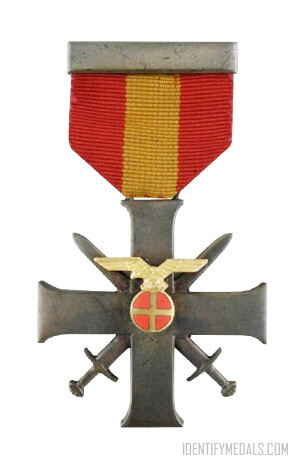
The Brave and Faithful Order was introduced by the Quisling Government to serve as the Norwegian equivalent of the German Iron Cross.

The Brave and Faithful Order was introduced by the Quisling Government to serve as the Norwegian equivalent of the German Iron Cross. The decoration was intended for Norwegian front-line fighters.

Few of these medals were produced before it was decided that Norwegian soldiers could wear the German Iron Cross.

The Brave and Faithful Order Design

In 1944, the Order was repurposed as a civilian Nazi Party award, featuring a Sun-Eagle instead of the original “1941.”

Known as the “Quisling Cross,” the reverse bears the inscription “Brave and Faithful.” It is very rare, as many recipients kept it secret after 1945.

The three grades differ in how they are worn: the I Class as a breast cross, the II Class on a ribbon, and the Knight’s Cross with a ribbon suspension.

The W.A. Military Sports Badge

The W.A. Military Sports Badge was awarded to members of the “Weer Afdeelingen” (Defense Sections) for military sporting events.

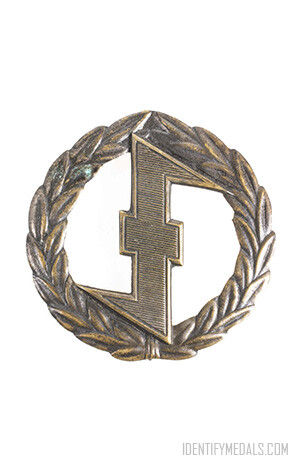
The W.A. Military Sports Badge was awarded to members of the “Weer Afdeelingen” (Defense Sections) or stormtroopers of the NSB. This decoration was instituted on 13 September 1941.

The National Socialist Movement in the Netherlands (Dutch: Nationaal-Socialistische Beweging in Nederland; NSB) was a Dutch fascist organization that evolved into a Nazi political party. Initially successful in the 1930s parliamentary elections, the NSB became the sole legal party under German occupation during most of World War II.

Military sporting events were held for W.A. troops and successful winners were awarded with the military sport badge.

The W.A. Military Sports Badge Design

The sport badge shows in the background a Laurel with the NSB emblem “wolf hook” in front. The reverse is hollow with two small loop rings that holds the pin. This die stamped badge was awarded in two classes- silver and bronze gilt. The badge is very large it measures 53mm in diameter.

Note: I could only find limited information about this medal. If you know more, please use the contact form to let me know.

The SS Dutch Sports Badge

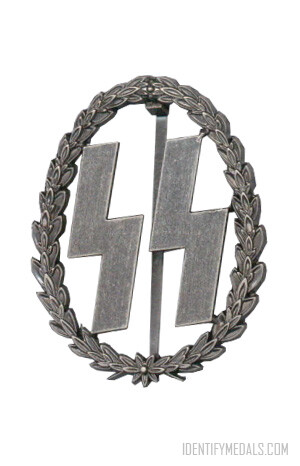
The SS Dutch Sports Badge was awarded to members of the Dutch SS for demonstrating athletic prowess and physical fitness.

The SS Dutch Sports Badge was awarded to members of the Dutch SS for demonstrating athletic prowess and physical fitness.

This badge was part of the efforts to promote physical conditioning among the SS members.

The design typically included elements symbolizing strength and athletic achievement, often incorporating Nazi insignia and symbols to reflect the regime’s ideology. These badges were awarded during World War II, making them historical artifacts of that era. Collectors value them for their historical significance and the insight they provide into the period’s propaganda and values.

Note: I could only find limited information about this medal. If you know more, please use the contact form to let me know.

The Best Books To Learn About Medal Collecting

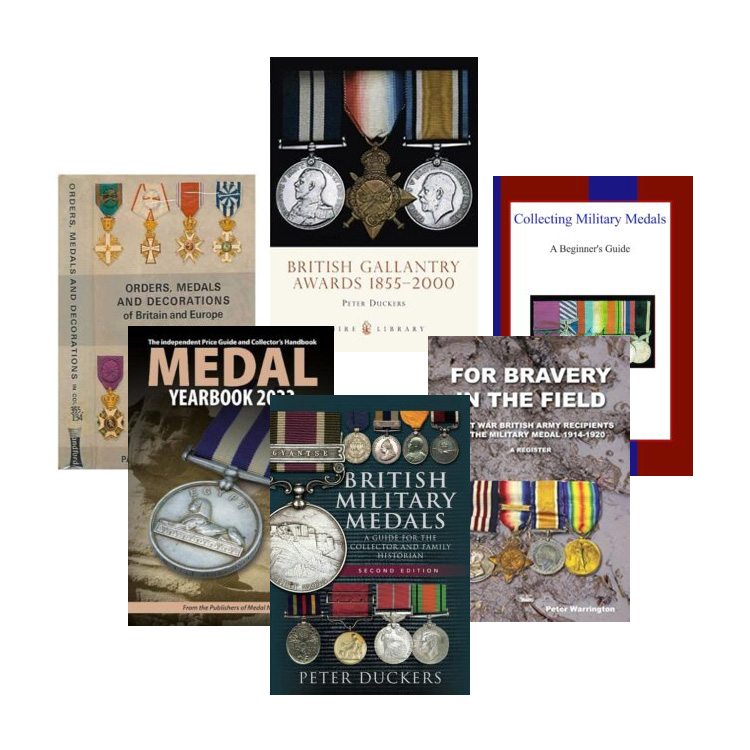
Are you interested in learning more about collecting medals and decorations? Here are some classic books to get you started.

Collecting medals is captivating because each medal embodies a unique piece of history, often tied to significant events and personal acts of valor. The stories behind these awards reveal the bravery and sacrifices of individuals, creating a deep emotional connection for collectors.

Discover the fascinating world of medal collecting, where history, artistry, and personal narratives converge. Here is a curated list of essential books to deepen your understanding and appreciation of this rewarding hobby. These recommended readings should provide a comprehensive guide to starting and enhancing your medal collection, ensuring you gain the most from your collecting journey.

British Gallantry Awards by Peter Duckers

4.2 on Goodreads
Rated 4.2 out of 5

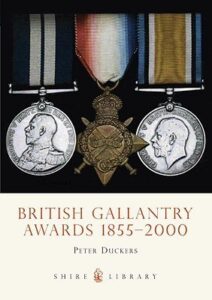
“British Gallantry Awards” by Peter Duckers is an authoritative and meticulously researched guide to British military honors.

Duckers provides a comprehensive history of gallantry awards, detailing their origins, criteria, and the heroic acts they commemorate. The book is richly illustrated with photographs and descriptions of medals, making it a valuable resource for collectors and historians alike.

Duckers’ engaging writing style and depth of knowledge bring to life the stories behind the medals, offering insights into the bravery and sacrifice of those who earned them. This book is an essential addition to any military history enthusiast’s library.

Medal Collecting Books: British Gallantry Awards by Peter Duckers

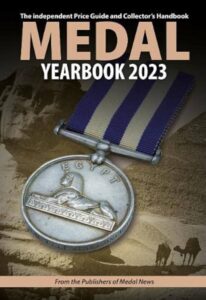
Medal Yearbook by John W. Mussell

5 on Goodreads
Rated 5 out of 5

“Medal Yearbook” by John W. Mussell is an indispensable resource for both novice and experienced medal collectors. This comprehensive guide provides detailed information on a wide array of medals from around the world, making it a go-to reference for enthusiasts seeking to expand their collections or deepen their knowledge. The book is meticulously organized, featuring high-quality photographs, detailed descriptions, and the historical context of each medal, ensuring readers understand not only the physical aspects but also the stories behind these awards.

Mussell’s expertise shines through in his thorough explanations of the criteria and significance of various medals, making complex information accessible and engaging. The yearbook also includes current market values, which is particularly useful for collectors interested in the investment aspect of their hobby. Additionally, the book offers tips on authentication and preservation, helping collectors maintain the integrity and value of their medals.

Overall, “Medal Yearbook” is a well-rounded and informative guide that stands out for its depth of content and practical advice. 

Medal Yearbook by John W. Mussell

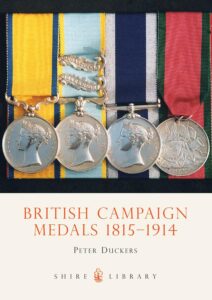
British Campaign Medals 1815-1914 by Peter Duckers

4 on Goodreads
Rated 4 out of 5

“British Campaign Medals 1815-1914” by Peter Duckers is an authoritative and meticulously researched guide to the medals awarded to British soldiers during this pivotal century. Duckers provides a detailed account of each medal, covering the context of the campaigns, the criteria for awarding the medals, and the historical significance of each piece. The book is richly illustrated with high-quality photographs, enhancing the reader’s understanding of the medals’ design and symbolism.

Duckers’ expertise is evident in his clear, informative writing, making complex historical details accessible to both novice and experienced collectors. The inclusion of personal anecdotes and accounts adds depth and human interest, linking the medals to the stories of the individuals who earned them.

This book is not only a valuable reference for collectors but also a compelling read for anyone interested in British military history. It provides insights into the bravery and sacrifices of British soldiers and the evolution of military honors during the 19th and early 20th centuries.

British Campaign Medals 1815-1914 by Peter Duckers

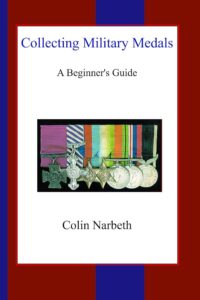
Collecting Military Medals: A Beginner's Guide by Colin Narbeth

No Rating on GoodReads

“Collecting Military Medals: A Beginner’s Guide” by Colin Narbeth is an excellent starting point for anyone interested in the fascinating hobby of medal collecting. Narbeth provides a comprehensive overview of military medals, covering their history, significance, and the basics of building a collection. His approachable writing style makes complex topics accessible, offering practical advice on identifying, sourcing, and valuing medals. The book is filled with useful tips on how to avoid common pitfalls and how to authenticate medals, ensuring novice collectors can start their journey with confidence.

High-quality photographs and detailed descriptions of various medals enhance the learning experience, making it easier for readers to recognize different types and understand their contexts. Narbeth also delves into the stories behind the medals, adding a human element that makes the subject matter even more engaging.

Overall, “Collecting Military Medals: A Beginner’s Guide” is a must-read for anyone new to the hobby. Its blend of historical insight, practical advice, and personal stories provides a well-rounded introduction that will inspire and educate aspiring collectors.

Collecting Military Medals: A Beginner's Guide by Colin Narbeth

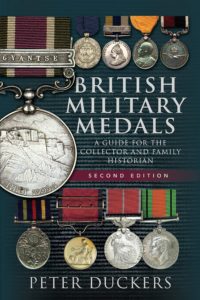
British Military Medals: A Guide for the Collector and Family Historian by Peter Duckers

4.6 on Goodreads
Rated 4.6 out of 5

“British Military Medals: A Guide for the Collector and Family Historian” by Peter Duckers is an essential resource for both collectors and those interested in family history. Duckers offers a thorough exploration of British military medals, detailing their origins, the conflicts they represent, and the stories of the individuals who earned them. The book is richly illustrated with high-quality images, providing clear examples of various medals and their distinctive features.

Duckers’ expertise shines through in his detailed descriptions and the historical context he provides for each medal. This guide not only helps collectors identify and understand the value of their medals but also assists family historians in uncovering the military service of their ancestors. The book includes practical advice on how to research medals, tips on authentication, and insights into the collecting market, making it a valuable tool for anyone interested in this field.

Overall, “British Military Medals” is a comprehensive and engaging guide that combines historical depth with practical advice, making it an indispensable addition to any collector’s or historian’s library. Duckers’ ability to connect personal stories with broader historical events makes this book both informative and compelling.

British Military Medals - Second Edition

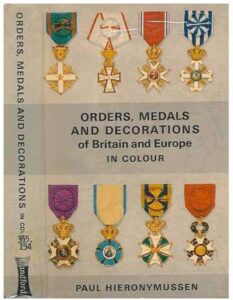
Orders, Decorations and Medals by Paul Hieronymussen

No Rating on GoodReads

“Orders, Decorations and Medals” by Paul Hieronymussen is a seminal work that provides a comprehensive overview of military and civil awards from around the world. Hieronymussen meticulously catalogs a wide array of medals, offering detailed descriptions and the historical context of each. The book is richly illustrated with high-quality photographs that capture the intricate details and craftsmanship of these decorations.

Hieronymussen’s expertise and thorough research are evident throughout, making this book an invaluable resource for collectors, historians, and anyone interested in phaleristics (the study of orders and medals). The depth of information, combined with the accessible writing style, makes complex subjects understandable for both beginners and seasoned collectors.

Overall, “Orders, Decorations and Medals” stands out for its exhaustive coverage and scholarly approach, making it an essential addition to any serious collector’s library. Hieronymussen’s work not only serves as a detailed reference but also as an engaging exploration of the history and significance of these honors.

Orders, Decorations and Medals by Paul Hieronymussen

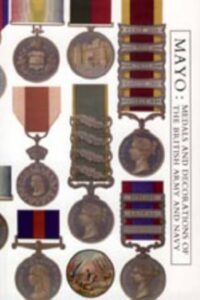
Medals and Decorations of the British Army and Navy by John Horsley Mayo

No Rating on GoodReads

“Medals and Decorations of the British Army and Navy” by John Horsley Mayo is an authoritative and exhaustive reference on British military honors. Mayo meticulously catalogs the various medals and decorations awarded to British service members, providing detailed descriptions and the historical contexts in which these honors were bestowed. The book is richly illustrated with images and engravings, offering readers a visual appreciation of the medals’ craftsmanship and design.

Mayo’s work stands out for its depth and precision, making it an indispensable resource for collectors, historians, and military enthusiasts. His comprehensive approach ensures that readers gain a thorough understanding of the significance and criteria of each award. Additionally, the book delves into the stories and achievements of the individuals who received these decorations, adding a personal dimension to the historical data.

Overall, “Medals and Decorations of the British Army and Navy” is a must-have for anyone interested in the rich heritage of British military awards. Its blend of detailed research, historical narrative, and visual documentation makes it both an educational and engaging read.

Medals and Decorations of the British Army and Navy by John Horsley Mayo

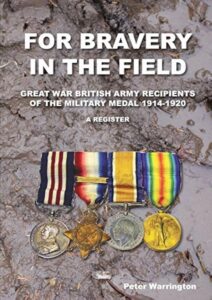
For Bravery in the Field: Great War British Army Recipients of the Military Medal by Peter Warrington

No Rating on GoodReads

“For Bravery in the Field” by Peter Warrington is an insightful and meticulously researched tribute to the soldiers of the British Army who received the Military Medal during World War I. Warrington delves deep into the personal histories and acts of valor of these brave individuals, providing a compelling narrative that brings their extraordinary courage to life. The book is well-organized, with detailed accounts of various battles and the specific deeds that earned these soldiers their medals.

Warrington’s thorough research and engaging writing style make this book an invaluable resource for historians and military enthusiasts alike. The inclusion of personal letters, photographs, and official citations enriches the reader’s understanding of the profound sacrifices and heroism displayed by these men. This book not only honors their memory but also serves as a poignant reminder of the human cost of war.

Overall, “For Bravery in the Field” is a must-read for anyone interested in military history, offering a deeply personal and moving account of the recipients of the Military Medal during the Great War.

For Bravery in the Field: Great War British Army Recipients of the Military Medal by Peter Warrington

Medals of the Templar Knights and Teutonic Knights

Symbols like the cross pattee, red cross, and later iron cross are intertwined to the story of the Crusades. Let’s discuss knights’ insignia.

The Templar Knights and the Teutonic Knights, two of the most renowned medieval military orders, are celebrated for their distinctive symbols and significant roles in history. The Templar Knights, known for their iconic red cross patée, were protectors of Christian pilgrims and crusaders. The Teutonic Knights, distinguished by their black cross on a white mantle, evolved from a crusading order to a chivalric and charitable organization. 

In this article, we will explore the rich history, symbolism, and the evolution of the medals and decorations associated with these legendary orders.

Insignia and Decorations of the Templar Knights

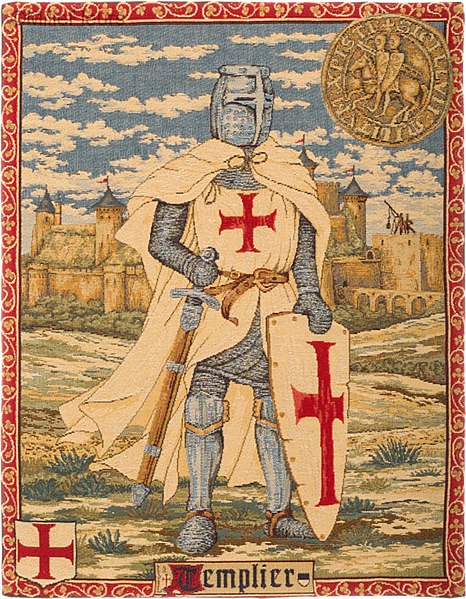
The Templar Knights, officially known as the Poor Fellow-Soldiers of Christ and of the Temple of Solomon, were a medieval Christian military order.

While they did not have medals in the modern sense, their distinctive symbol was the red cross pattée on a white mantle, representing their commitment and valor in battle. This emblem was a significant part of their identity and was worn on their tunics and shields.

  • Symbolism: The red cross patée was a symbol of martyrdom and sacrifice, reflecting the Templars’ role as protectors of pilgrims and crusaders.
  • Uniform: Templars wore a white mantle with the red cross, which became synonymous with their identity and mission.

Insignia and Decorations of the Teutonic Knights

The Teutonic Knights, or the Order of Brothers of the German House of Saint Mary in Jerusalem, also featured a distinctive symbol. Their emblem was a black cross on a white mantle, often called the “Teutonic Cross.

Over time, the order developed medals and decorations, particularly during later periods when they functioned more as a chivalric order rather than a military one. These included various crosses and badges awarded for bravery, service, and leadership within the order.

  • Cross Variants: The Teutonic Knights’ cross evolved over time, with various forms such as the Iron Cross becoming prominent in later German military history.
  • Awards: During the 19th and early 20th centuries, the Teutonic Knights, having transitioned to a primarily honorary organization, developed various medals and decorations to honor service and dedication.

Connection to Modern Medals

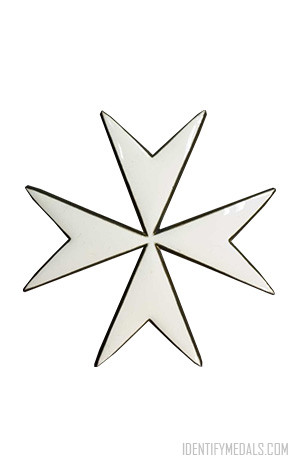
The influence of the Templar and Teutonic Knights’ insignia is evident in several modern military decorations and orders of chivalry. The Templar cross, with its distinctive red patée, has inspired numerous modern medals and emblems, symbolizing sacrifice and valor. For example, the Cross of the Order of St. John, awarded by the British monarch, bears a striking resemblance to the Templar cross, reflecting its heritage of service and protection.

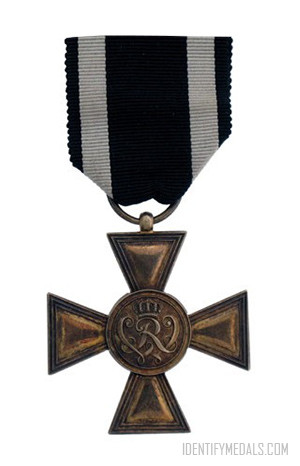
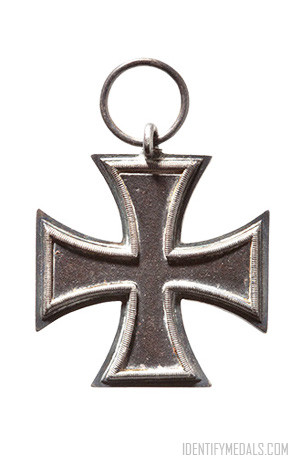
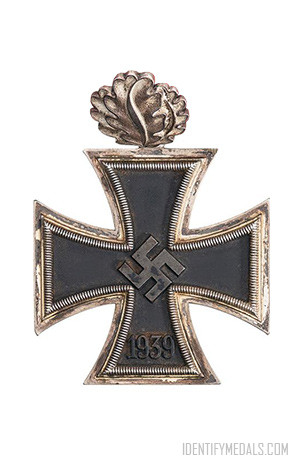
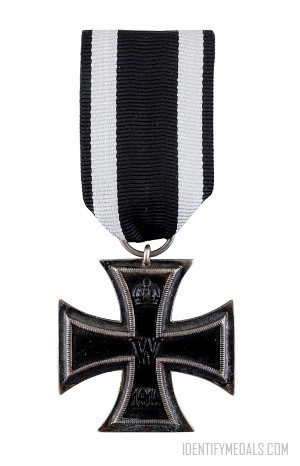
Similarly, the black cross of the Teutonic Knights has evolved into the Iron Cross, a prestigious German military decoration awarded for bravery. Established in 1813 by King Frederick William III of Prussia, the Iron Cross was prominently awarded during both World Wars. Its design, directly influenced by the Teutonic Knights’ cross, symbolizes valor and honor in the face of adversity.

In addition to the Iron Cross and the Cross of the Order of St. John, several other modern medals and decorations draw inspiration from medieval military orders like the Templar and Teutonic Knights:

  1. Order of Malta: The Sovereign Military Order of Malta, an order of chivalry founded in the Middle Ages, continues to bestow honors such as the Grand Cross.
  2. Order of the Holy Sepulcher: This papal order awards various classes of knighthood, including the Knight Grand Cross.
  3. Order of the British Empire: While not directly linked to medieval orders, its hierarchical structure and awarding of medals reflect the influence of chivalric traditions.
  4. Legion of Honor: Established by Napoleon, this French order also embodies the spirit of chivalric orders, awarding medals for military and civil merit.

The Germanic Proficiency Runes

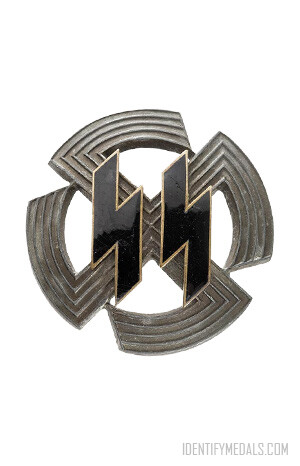
The Nazi regime introduced a sports badge for non-Germans who were part of the Germanic-SS and Waffen-SS, known as the runes.

The Germanic Proficiency Runes Badge, established on August 15, 1943, was awarded to non-German members of the Germanic-SS and Waffen-SS who demonstrated exceptional physical fitness and adherence to Nazi ideology.

The Germanic Proficiency Runes were awarded in two grades: bronze and silver. The distinction between these grades was based on the level of physical achievement demonstrated by the recipients.

The tests for these awards were similar to those required for the SA Sports Badge, ensuring a standardized measure of physical fitness across both German and non-German SS members.

The creation of the Germanic Proficiency Runes served several purposes. It was a tool for promoting physical fitness and readiness among non-German SS members. Additionally, it reinforced the ideology of the Germanic-SS, which sought to include ethnically Germanic volunteers from occupied and neutral countries in Europe.

The Germanic Proficiency Runes Tests

Recipients of the Germanic Proficiency Runes had to undergo rigorous physical tests that were on par with the requirements for the SA Sports Badge. These tests included a variety of athletic and endurance challenges designed to assess overall physical fitness, agility, strength, and stamina. The aim was to maintain a high level of physical preparedness among the SS troops, irrespective of their nationality.

The SS Zivilabzeichen Badge

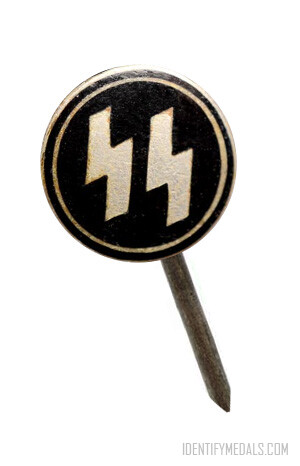
The SS Zivilabzeichen Badge, also known as the SS Civil Badge, was a lapel pin issued to SS members between 1933 and 1938.

The SS Zivilabzeichen, also known as the SS Civil Badge, was a lapel pin issued to SS members between 1933 and 1938. This badge, displaying the SS runes, was worn on civilian clothing to signify membership in the SS.

The badge was predominantly awarded to veteran SS members within the Sicherheitspolizei, though there was no strict criteria for its issuance. Members simply had to apply to the SS-Hauptamt to receive it.

Known Badge Numbers

  • Adolf Hitler: Honorary SS number “1”. His badge was kept in his Munich apartment and later taken by 1st Lieutenant Philip Ben Lieber in 1945. This badge, along with other items owned by Hitler, was sold through Mohawk Arms to collectors Stephen Wolfe and Neil Hardin, and eventually acquired by collector Craig Gottlieb in 2013.
  • Heinrich Himmler: Badge number 2.
  • Adolf Eichmann: Badge number 6,375.
  • Gustav Lombard: Badge number 72,723.
  • Karl Freiherr Michel von Tüßling: Badge number 106,983.
  • Ernst Kaltenbrunner: Badge number 160,180.
  • Hermann Senkowsky: Badge number 169,582.

The SS Membership Runes for Order Police

The SS Membership Runes for Order Police was a badge worn by members of the Ordnungspolizei who were also full members of the SS.

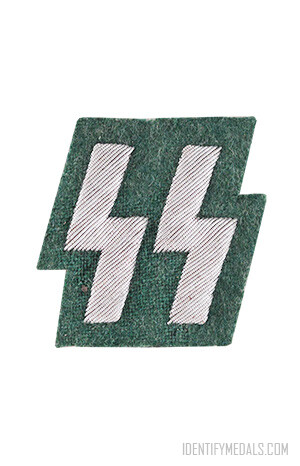
The SS Membership Runes for Order Police was a badge worn by members of the Ordnungspolizei (Orpo) who were also full members of the Schutzstaffel (SS). This badge featured two white Sig Runes, the symbol of the SS, and was centered on the lower left-hand pocket of the jacket.

This badge marked the initial step towards merging the Order Police with the SS, a process supported by Kurt Daluege and Heinrich Himmler. The integration advanced further in 1942, when all Orpo Police Generals were granted equivalent SS ranks and began wearing modified SS-Police rank insignia.

The SS Membership Runes for Order Police Design

The badge was centered on the lower left-hand jacket pocket. It prominently featured two white Sig Runes, which are the iconic symbol of the SS, signifying the wearer’s dual membership in both the Order Police and the SS.

The two white Sig Runes were centrally placed, symbolizing the SS. The runes are in a stylized font typical of Nazi iconography.

The background of the badge is a dark green color, creating a strong contrast with the white runes and ensuring the symbol is easily recognizable from a distance.