Identifying Royal Air Force RAF Badges

Each RAF badge has unique features that reflect the wearer’s position, qualifications, and service history. Here’s the complete list.

The Royal Air Force (RAF) uses badges for several key reasons, including identification, recognition, and tradition. For example, the RAF Pilot Wings are awarded to qualified pilots, symbolizing their ability to fly aircraft, while the specialist insignia includes badges for navigators, engineers, and other specialized roles.

RAF badges can also indicate the rank of the individual, from airmen to senior officers and/or recognize long service, bravery, and other notable achievements. In this article, you will find a thorough list of RAF badges, their description, and their significance. If you have a RAF badge you cannot identify, hopefully this resource will come in handy.

Why Does the RAF Use Badges?

As we have mentioned above, the main uses of RAF badges is identification and recognition – but also tradition, heritage, and even practical considerations. For example:

  • Rank and Role: RAF badges help to quickly identify the rank and role of personnel. This is crucial for maintaining the chain of command and ensuring proper communication within the force.
  • Specializations: Badges denote specific qualifications and specializations, such as pilot wings, engineer insignia, and medical corps symbols, helping to identify the skills and capabilities of individuals.
  • Achievements and Service: Badges are awarded for various achievements, including long service, acts of bravery, and completion of specialized training. They serve as a visual recognition of an individual’s accomplishments.
  • Unit and Squadron: Badges often represent the individual’s unit or squadron, fostering a sense of belonging and pride in their specific group within the RAF.
  • Esprit de Corps: The use of badges fosters esprit de corps, boosting morale by instilling a sense of identity and pride among personnel.
  • Operational Efficiency: In operational settings, quickly identifying personnel based on their badges can be essential for efficient coordination and execution of missions.
  • Uniformity: Badges contribute to the uniformity of the force, ensuring that all personnel adhere to a standard appearance, which is important for discipline and cohesion.

All the RAF Badges and Their Meaning

Below, you will find the best-regarded RAF badges and their design elements and their meaning.
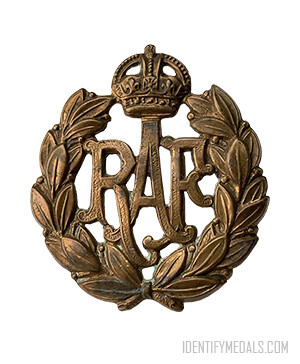
RAF Cap Badge

The RAF Cap Badge

The Royal Air Force Cap Badge is a distinctive and symbolic emblem that represents the heritage and values of the RAF.

The badge features the letters “RAF”, the St. Edward’s Crown at the top (symbolizing the sovereignty of the British monarch and the RAF’s allegiance to the Crown), the a surrounding laurel wreath, an ancient symbol of victory and honor. 

This design has remained largely unchanged since its adoption.
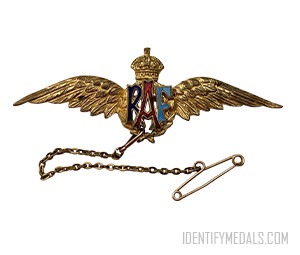
RAF Wings

The RAF Wings

The RAF wings, often referred to as Pilot Wings or Aircrew Brevets, are distinctive badges worn by qualified aircrew members in the Royal Air Force. These wings are awarded to personnel who have successfully completed the necessary training for specific aircrew roles, signifying their expertise and qualification to operate in their designated capacity.

There are different types of RAF wings:

  • Pilot Wings: The most recognized version of RAF wings, it features a set of stylized wings with a crown above and a laurel wreath encircling the letters “RAF” at the center. This badge is awarded to qualified pilots and is worn on the left breast of the uniform.

  • Navigator Wings: Similar in design to the Pilot Wings but with the central letters indicating the specific role (e.g., “N” for Navigators), these wings are awarded to those qualified in navigation duties.

  • Aircrew Brevets: These wings are issued to other aircrew roles such as Air Loadmasters, Air Gunners, and Flight Engineers. The design features a single wing on one side of a circular emblem or letter(s) that corresponds to the specific role.

  • Observer Wings: An older design used before specific roles like Navigator were introduced. The Observer Wings have a single wing and the letter “O” in the center.
RAF Wings

The RAF Wings

The RAF wings, often referred to as Pilot Wings or Aircrew Brevets, are distinctive badges worn by qualified aircrew members in the Royal Air Force. These wings are awarded to personnel who have successfully completed the necessary training for specific aircrew roles, signifying their expertise and qualification to operate in their designated capacity.

There are different types of RAF wings:

  • Pilot Wings: The most recognized version of RAF wings, it features a set of stylized wings with a crown above and a laurel wreath encircling the letters “RAF” at the center. This badge is awarded to qualified pilots and is worn on the left breast of the uniform.

  • Navigator Wings: Similar in design to the Pilot Wings but with the central letters indicating the specific role (e.g., “N” for Navigators), these wings are awarded to those qualified in navigation duties.

  • Aircrew Brevets: These wings are issued to other aircrew roles such as Air Loadmasters, Air Gunners, and Flight Engineers. The design features a single wing on one side of a circular emblem or letter(s) that corresponds to the specific role.

  • Observer Wings: An older design used before specific roles like Navigator were introduced. The Observer Wings have a single wing and the letter “O” in the center.

RAF Medical Services

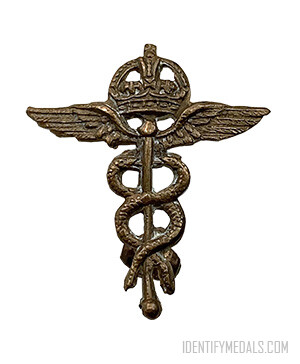
The RAF Medical Services Badge

The RAF Medical Services Badge is a distinctive insignia worn by members of the Royal Air Force who serve in medical roles, including doctors, nurses, and medical technicians.

The RAF Medical Services Badge prominently features the Caduceus, a staff with two serpents entwined around it, which is a well-known symbol of medicine and healing. This emblem signifies the medical and healthcare responsibilities of the personnel who wear the badge. Often, the badge also includes a pair of wings, symbolizing the aviation aspect of the service, linking the medical role to the broader mission of the RAF. A crown is typically included in the design, representing the service’s loyalty to the British Crown and its role as part of the Royal Air Force.
RAF Apprentice Badge

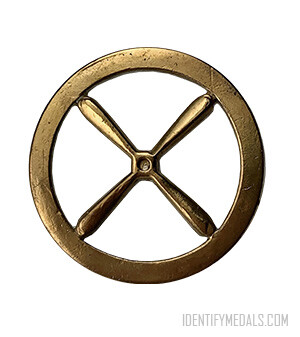
The RAF Apprentice Badge

The RAF Apprentice Badge is a distinctive emblem worn by individuals who have undergone and completed an apprenticeship within the Royal Air Force. These apprenticeships have traditionally been a pathway for young men to enter the RAF, where they would receive both technical training and military education, preparing them for various specialized roles within the service.

The RAF apprenticeship program began in the early 1920s, aimed at training young men in various trades essential to the operation and maintenance of RAF equipment and infrastructure. The apprenticeship typically lasted three years, after which the graduates were fully qualified and ready to take on roles as skilled tradesmen.
RAF Women's Junior Air Corps

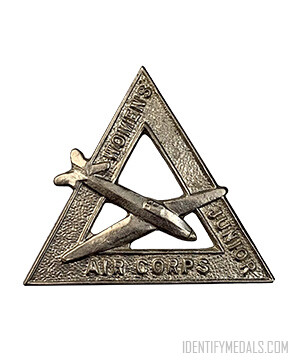
The RAF Women's Junior Air Corps Badge

The RAF Women’s Junior Air Corps (WJAC) was a youth organization established in the United Kingdom during World War II. It was created to provide girls and young women with an opportunity to participate in activities related to aviation and the military, much like their male counterparts in the Air Training Corps (ATC).

The corps primarily targeted girls aged 14 to 20, offering them a structured environment in which to learn and grow. The organization served as a pre-service training program, giving participants a head start should they choose to join the RAF or other branches of the armed forces when they were old enough. Members of the WJAC were taught the basics of aviation, including aircraft recognition, navigation, and the principles of flight. They also engaged in physical training and drills similar to those conducted in military training.
RAF Warrant Officers Badge

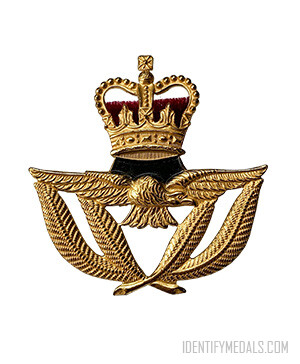
The RAF Warrant Officers Badge

The RAF Warrant Officers Badge is a distinctive insignia worn by Warrant Officers (WOs) in the Royal Air Force (RAF), representing one of the highest non-commissioned officer (NCO) ranks within the RAF. 

Warrant Officers hold a significant level of responsibility within the RAF. They are senior to all other non-commissioned officers and often serve in leadership roles, overseeing various aspects of military operations, administration, and discipline. While they are non-commissioned officers, Warrant Officers possess a level of authority comparable to that of commissioned officers in certain contexts. They play a crucial role in bridging the gap between the enlisted ranks and the officer corps, ensuring the effective functioning of their units.
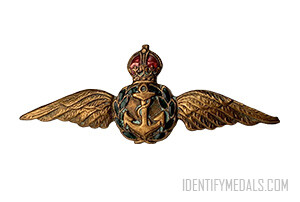
The RAF Royal Naval Air Force

The RAF Royal Naval Air Force Badge

The Royal Naval Air Service (RNAS), not to be confused with a specific RAF badge, was the air arm of the Royal Navy during World War I. It existed from 1914 until 1918, when it merged with the Royal Flying Corps (RFC) to form the Royal Air Force (RAF). However, after the establishment of the RAF, badges and insignia relating to the RNAS were largely phased out or adapted into RAF insignia.

Before the formation of the RAF, the RNAS was responsible for naval aviation, including airships, seaplanes, and land-based aircraft for naval operations.
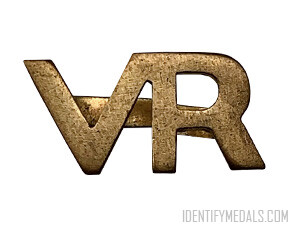
RAF VR Volunteers Badge

The RAF VR Volunteers Badge

The RAF VR (Volunteers Reserve) Badge is an insignia awarded to members of the Royal Air Force Volunteer Reserve (RAFVR). The RAFVR is a reserve force of the RAF, composed of volunteers who have committed their time to support the RAF in various capacities, often alongside their civilian careers.

The RAF VR Volunteers Badge is awarded to individuals who have served with distinction in the RAF Volunteer Reserve. It is a mark of honor, acknowledging the contribution and commitment of volunteers who support the RAF’s operations, training, and other functions. The badge is typically awarded to those who have completed a certain period of service within the RAFVR, demonstrating dedication and proficiency in their duties.
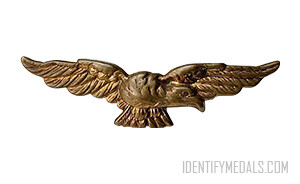
The RAF Officers Albatross Badge

The RAF Officers Albatross Badge

The RAF Officers Albatross Badge, commonly referred to simply as the “Albatross Badge,” is a distinctive emblem worn by commissioned officers of the Royal Air Force (RAF). It is one of the most recognizable symbols of RAF officer rank and status.

The badge prominently features a stylized albatross in flight. The albatross is a symbol often associated with long flights and endurance, making it a fitting emblem for air force personnel. The Albatross Badge is exclusively worn by commissioned officers in the RAF. It symbolizes their authority, responsibilities, and the high standards expected of them within the service.
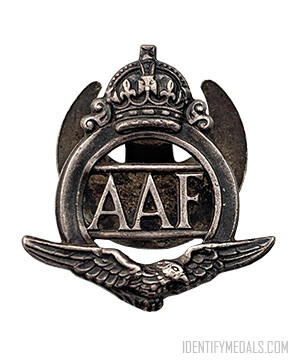
The RAF Auxiliary Air Force Badge

The RAF Auxiliary Air Force Badge

The RAF Auxiliary Air Force Badge is a distinctive insignia awarded to members of the Royal Auxiliary Air Force (RAuxAF), a volunteer reserve component of the Royal Air Force (RAF). This badge signifies the individual’s membership in the RAuxAF and their commitment to supporting the RAF’s operations.

Established in 1924, the RAuxAF was created to provide additional support to the regular RAF. Members of the RAuxAF are part-time volunteers who receive training and are called upon to serve in various roles during times of need, such as in national emergencies or military conflicts. The RAuxAF members serve in a variety of roles, including air defense, logistics, intelligence, medical services, and more. The badge is a symbol of their service and dedication to supporting the RAF’s mission.
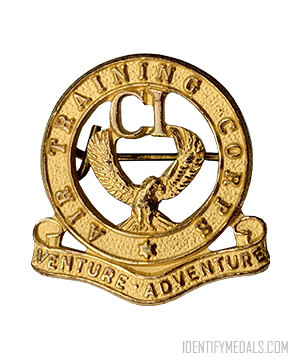
The RAF Air Training Corps Badge

The RAF Air Training Corps Badge

The RAF Air Training Corps (ATC) Badge is an insignia worn by members of the Air Training Corps, a youth organization sponsored by the Royal Air Force. The ATC is part of the RAF’s Cadet Forces and provides young people aged 12 to 20 with opportunities to participate in aviation-related activities, military training, and personal development programs.

The badge typically features the emblem of the Air Training Corps, which includes a central motif of an eagle in flight, symbolizing the organization’s connection to aviation. The eagle is often surrounded by a laurel wreath, representing achievement and excellence, and is topped with a crown, denoting the ATC’s royal patronage. The badge includes the ATC motto, “Venture Adventure,” which reflects the spirit of exploration, learning, and challenge that the organization encourages among its members.
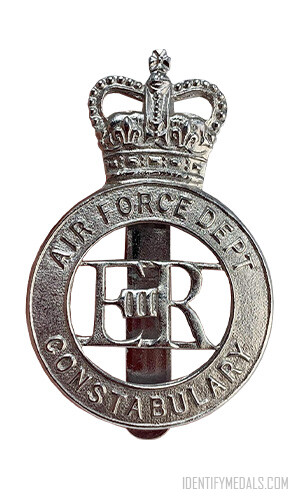
The RAF Air Force Department Constabulary Badge

The RAF Air Force Department Constabulary Badge

The RAF Air Force Department Constabulary Badge is an insignia associated with the RAF Police or the RAF’s civilian police forces, who are responsible for maintaining law and order on RAF bases and installations. The badge represents the authority and duties of these personnel in their role as protectors of RAF property, personnel, and classified information.

Personnel wearing this badge are responsible for enforcing security measures on RAF bases, protecting sensitive areas, and ensuring the safety of military assets. The badge signifies the authority of the wearer to conduct law enforcement duties, including investigations, traffic control, and maintaining general order on RAF premises.

While the badge is often worn by civilian constabulary members, they work closely with the RAF Police, who are uniformed military personnel, to ensure comprehensive security and law enforcement coverage on RAF installations.

Find RAF Badges Online

Right Now on eBay 
Clicking a link to eBay may result in a referral commission being paid if a purchase is made.
Loading...

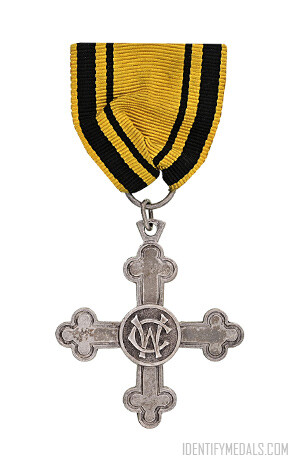
The Württemberg Charlotte Cross

The Württemberg Charlotte Cross was established on January 5, 1916, by King William II of Württemberg. It was named in honor of his wife.

The Charlottenkreuz (“Charlotte Cross“) was established on January 5, 1916, by King William II of Württemberg. It was named in honor of his wife, Queen Charlotte, who was born Princess Charlotte of Schaumburg-Lippe.

This decoration was intended to recognize individuals who demonstrated exceptional merit, either on the battlefield or on the home front, in caring for the wounded and ill, or in providing general war-related aid.

The Charlotte Cross Design

The decoration consists of a silvered white metal cross botonny with a central medallion. The front of the medallion features the intertwined initials C and W (for Charlotte and Wilhelm), while the reverse displays the year 1916.

Recipients wore the decoration on the left breast, suspended from a yellow ribbon with one narrow and one wide black stripe on each side.

Buy This Medal Online

Right Now on eBay 
Clicking a link to eBay may result in a referral commission being paid if a purchase is made.
Loading...

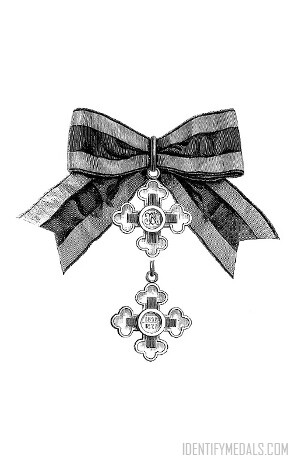
The Württemberg Order of Olga

The Württemberg Order of Olga was established by King Karl I of Württemberg on June 27, 1871, in honor of his queen consort.

The Order of Olga (or Olga-Orden in German) was established by King Karl I of Württemberg on June 27, 1871, in honor of his queen consort, Grand Duchess Olga Nikolaevna of Russia.

The order was primarily intended to recognize women who provided care for wounded soldiers during the Franco-Prussian War of 1870-1871. Although it was occasionally awarded to men, it predominantly remained an order for women.

The Order of Olga Design

The insignia of the Order of Olga featured a silver cross with the interlocking ciphers of King Karl and Queen Olga on the obverse and the years 1870-71 on the reverse.

This emblem was suspended from a red and black ribbon. 

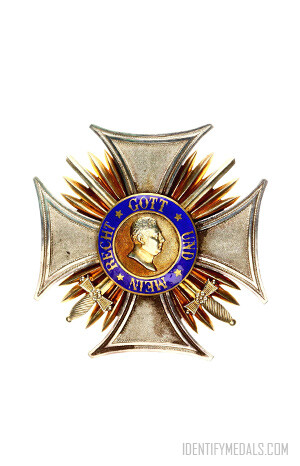
The Friedrich Order

The Friedrich Order was a prestigious order of merit in the German Kingdom of Württemberg. It was instituted on January 1, 1830.

The Friedrich Order (or Friedrichs-Orden or Friedrichsorden in German) was a prestigious order of merit in the German Kingdom of Württemberg. It was instituted on January 1, 1830, by King Wilhelm I in honor of his father, King Friedrich I. The order was abolished in 1918 with the end of the monarchy.

The Friedrich Order Classes

Initially created as a single-class order that conferred nobility, the Friedrich Order was restructured on January 3, 1856, into four classes. On September 29, 1870, a Knight 1st Class and a military division with swords were added, with existing Knights being appointed to the new 1st Class. In 1892, the “Medal of the Order of Frederick” was introduced. An additional rank, the Grand Cross with Crown, was established on March 6, 1899.

The classes were:

  1. Grand Cross with Crown
  2. Grand Cross
  3. Commander 1st Class
  4. Commander 2nd Class
  5. Knight 1st Class
  6. Knight 2nd Class
  7. Medal

Buy This Medal Online

Right Now on eBay 
Clicking a link to eBay may result in a referral commission being paid if a purchase is made.
Loading...

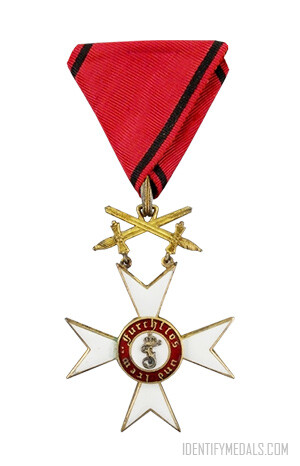
The Württemberg Order of the Crown

The Order of the Crown was initially established in 1702 as the St.-Hubertus-Jagdorden (Hunting Order of St Hubert) but renamed in 1807.

The Order of the Württemberg Crown (or Orden der Württembergischen Krone in German) was a prestigious chivalric order in the Kingdom of Württemberg.

Initially established in 1702 as the St.-Hubertus-Jagdorden (Hunting Order of St Hubert), it was renamed the Ritterorden vom Goldenen Adler (Knightly Order of the Golden Eagle) by Frederick I in 1807.

On September 23, 1818, King William I renewed and restructured the order, naming it the Order of the Württemberg Crown and initially organizing it into three classes: Grand Cross, Commander, and Knight. The order underwent further expansions and modifications in 1889 and 1892.

The Order of the Crown Criteria and Classes

The motto of the order was ‘Furchtlos und treu’ (‘Fearless and Loyal’). Until 1913, the higher ranks of the order were restricted to the nobility. The ranks, in descending order, were:

  1. Knight Grand Cross, Special Class (for sovereigns)
  2. Knight Grand Cross
  3. Knight Commander (since 1889)
  4. Commander
  5. Cross of Honour (Ehrenkreuz; since 1892)
  6. Knight (since 1892 with golden lions, and since 1864 also with a crown, as a special honour)
  7. Gold service medal (Verdienstmedaille)
  8. Silver service medal (Verdienstmedaille, abolished in 1892)

The Order of the Crown Design

The order’s cross was a white enameled Maltese cross with gold lions in its four angles. The lions were standard for the Grand Cross and Commander but were a special honor on the Knight’s crosses. A golden crown was secured on the upper arm by two gold bands, from which the cross hung, except in the case of the Honor Cross in its fixed form. The medallion featured the golden initials of King Frederick I and a crown on the front, and a golden crown on red on the back. Since 1866, all grades could be awarded with swords, and after 1890, swords were only granted in awards of a higher class. From 1892, the lowest grades also featured the special honors of a golden lion and, since 1864, a lion added.

The Grand Cross featured a silver 8-pointed star with a reduced cross in a medallion at its center, surrounded by the circular motto. Sovereigns received the star in gold. The Commander had a 4-pointed silver star with rays extending through the cross angles.

The ribbon was carmine red with black stripes and carmine borders. Members of reigning houses received the Grand Cross insignia with a scarlet ribbon.

Buy This Medal Online

Right Now on eBay 
Clicking a link to eBay may result in a referral commission being paid if a purchase is made.
Loading...

Roman Military Decorations and Medals of Honor

The Roman military developed a comprehensive array of awards for acts of valor in combat. Here’s the complete list with images.

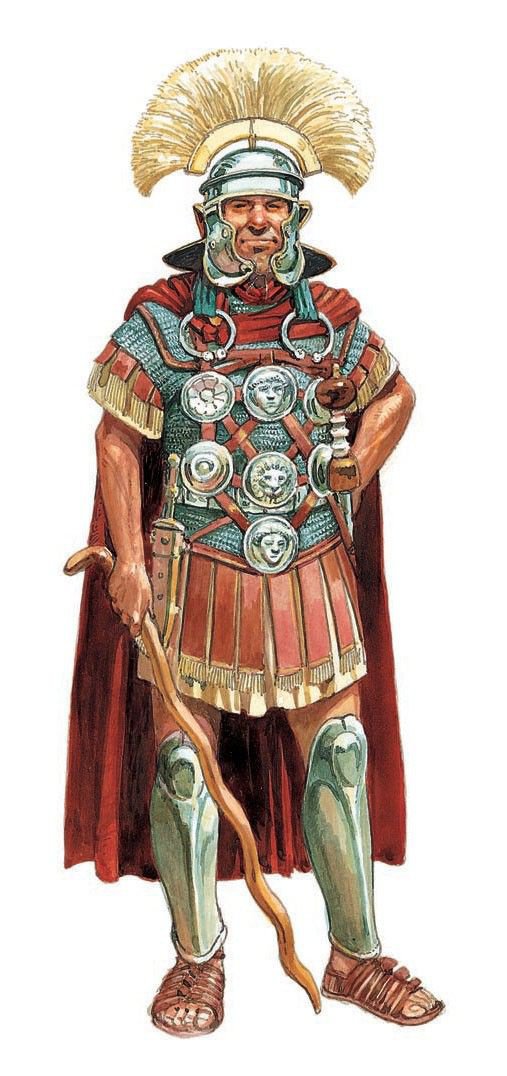
The Roman Empire regularly handed out medals of honor (also known as phalera) to centurions, who sometimes wore mounted them on their armor. But Romans also had other military decorations, including crowns and imperial titles. 

In this article, we will go through all the decorations, awards, and victory/imperial titles given by the Roman emperor to his forces. We will also explore necklets, armbands, disks, and even various financial awards.

Why Were There Decorations,
Awards, and Titles in Rome?

Roman soldiers were awarded medals, crowns, and titles for several reasons. In many cases, theses served as a formal recognition of bravery and outstanding performance in battle. Additionally, the decorations acted as a powerful motivational tool. Knowing that acts of bravery could lead to recognition and rewards, soldiers were more likely to perform heroically and take calculated risks in combat. 

By rewarding soldiers with honors and titles, the Roman military ensured loyalty and prolonged service. Soldiers who felt appreciated and recognized were more likely to remain committed to their duties and continue serving the empire. Many awards also came with increased social status, privileges, and even financial benefits. This provided an opportunity for soldiers, especially those from lower social classes, to rise in social standing and improve their economic conditions through military service.

The Roman Crowns

  • Grass Crown – (Latin: corona obsidionalis or corona graminea), was the highest and rarest military decoration, awarded only to a general, commander, or officer who saved a legion or the entire army.

  • Civic Crown(Latin: corona civica), a chaplet made of common oak leaves woven into a crown. During the Roman Republic and early Principate, it was the second highest military honor after the Grass Crown. It was awarded for saving fellow Roman citizens’ lives or standing firm in battle. Since Augustus, only the princeps was eligible for this decoration. It may be identical to the Crown of the Preserver.

  • Naval Crown(Latin: corona navalis), a gold crown given to the first man who boarded an enemy ship during a naval battle, featuring ship beaks as decoration.

  • Gold Crown(Latin: corona aurea), awarded to centurions and potentially some principales for killing an enemy in single combat and holding the ground to the end of the battle.

  • Battlement Crowns – These gold crowns were decorated with the uprights (valli) of an entrenchment or turrets of a city and awarded to the first soldier or centurion to mount the wall or palisade of an enemy town or camp.

  • Mural Crown(Latin: corona muralis), also known as the “walled crown”, was a golden crown resembling a battlement, awarded to the first soldier who climbed the wall of a besieged city and successfully placed the standard of the attacking army upon it.

  • Camp Crown(Latin: corona vallaris or corona castrensis), a golden crown adorned with the palisades used to form an entrenchment.

  • Crown of the Preserver – Awarded to those who shielded and saved any citizens or allies. According to Polybius, the crown is presented by the civilians the soldier saved, who then honor the soldier as a father figure throughout their life.

The Roman Decorations or Medals

Polybius writes that “After a battle where some have shown exceptional bravery, the general convenes an assembly of the troops. He brings forward those he deems to have demonstrated remarkable valor and begins by praising their courageous deeds and any other commendable actions from their past conduct.” Only after this are the military decorations presented:

  • Torc – a gold necklet
  • Armillae – gold armbands
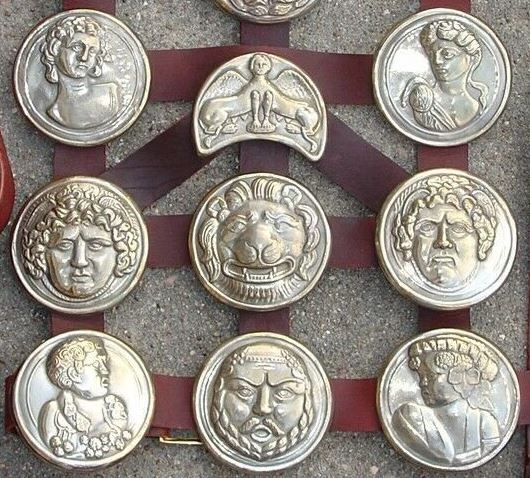
  • Phalerae – gold, silver, or bronze sculpted disks worn on the breastplate during parades
  • Hasta pura or Arrow without a Head – a ceremonial silver spear awarded to “the man who has wounded an enemy.” The specific use of this decoration is unclear.
  • A small silver replica of a standard or flag (vexillum)
  • A cup – given to an infantryman who “has slain and stripped an enemy,” not in the usual melee of battle, but voluntarily in single combat after putting themselves in danger
  • Horse trappings – awarded to a cavalryman who “has slain and stripped an enemy,” not in the normal melee of battle, but voluntarily in single combat after putting themselves in danger
A Roman Centurion wearing medals as part of their battle dress.

The Roman Titles

Imperial Titles

The Roman Empire used a variety of titles and honorifics for their emperors, each with distinct connotations and historical contexts:

  • Augustus: Meaning “Majestic” or “Venerable”, this honorific was exclusive to the emperor.
  • Αὐτοκράτωρ (Autokrator): A Greek title equivalent to “Commander-in-Chief”.
  • Βασιλεύς (Basileus): Greek for “sovereign”, used in the east and formally adopted by Roman emperors starting with Heraclius.
  • Caesar: Initially a family name, it became an honorific for emperors and heirs.
  • Censor: A republican office with significant moral and societal oversight, held for five years.
  • Consul: The highest office in the Roman Republic, with two annually elected coequal magistrates.
  • Dominus: Meaning “Lord” or “Master”, a title popular in the middle period of the Empire.
  • Imperator: Originally a title for victorious generals, it was adopted by emperors upon accession and after major victories.
  • Imperator Destinatus: Used by Septimius Severus to designate his heir, Caracalla.
  • Imperium maius: Denotes supreme power, including capital punishment authority.
  • Invictus: Meaning “Unconquered”, an honorific title.
  • Pater Patriae: “Father of the Fatherland”, an honorific title.
  • Pius Felix: “Pious and Blessed”, an honorific title.
  • Pontifex Maximus: “Supreme Pontiff”, a title of high religious authority, later reserved for the pope after Christian emperors.
  • Princeps: “First Citizen”, highlighting the emperor’s status as primus inter pares (first among equals).
  • Princeps Iuventatis: “First of Youth”, given to heirs apparent.
  • Princeps Senatus: “First Man of the Senate”, a prestigious republican office.
  • Restitor Orbis: “Restorer of the World”, awarded to Aurelian for his role in stabilizing the empire.
  • Tribunicia potestas: Denotes the powers of a tribune, including sacrosanctity and veto power.

Victory Titles

Victory titles were conferred as cognomina, typically reflecting the name of the enemy defeated (e.g., Africanus, Numidicus). These titles symbolized Roman dominance over these groups. Famous examples include Publius Cornelius Scipio, known as “Scipio Africanus” for his victories in the Second Punic War. Emperors often expanded these titles with “Maximus” to emphasize their supremacy (e.g., Parthicus Maximus).

Other Roman Decorations

Financial Awards

  • Monetary Bonuses: Soldiers received financial rewards.
  • Loot and Spoils: Part of the conquered wealth, including slaves, was distributed.

Service Awards

  • Missio Honesta: An honorable discharge from service.
    Trophies
  • Spolia Opima: The rich spoils taken from an enemy leader defeated in single combat.
  • Tropaion: A trophy set up to commemorate a victory.

Imperial Parades

  • Triumph: A grand civil and religious ceremony in ancient Rome to honor a military commander (dux) for a significant victory in a foreign war, showcasing the spoils and captives.
  • Ovation: A lesser form of the triumph, granted for victories over enemies considered inferior or when conflicts were resolved with minimal combat.

The Dutch NSKK Honor Badge

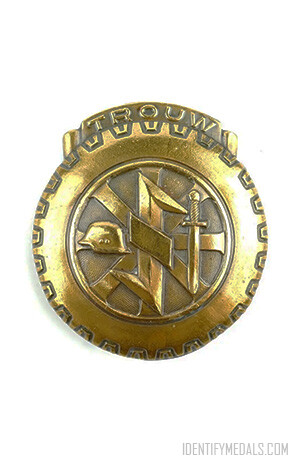
The Dutch NSKK Honor Badge was awarded for exceptional service in the Motor W.A. (German Motorized Transport service).

The Honor Badge for Dutch volunteers in the “NSKK” was awarded for exceptional service in the Motor W.A.

The badge, available in bronze, silver, and gold, was awarded by Banleader Eman with input from the NSKK-Gruppe Luftwaffe liaison officer. bronze badges were typically awarded biannually on May 11 and November 9, while silver badges were reserved for exceptional cases and awarded at Christmas.

The Ggold badge is believed to have never been awarded.

The Dutch NSKK Honor Badge Design

The badge, die-struck from a bronze-copper alloy, features the Dutch “wolf-hook” emblem, a German helmet, and a downward-facing sword, with “TROUW” (Loyalty) inscribed on a transport tire. The reverse has a Belgian-style “C” catch and pin. Measuring 46.8mm x 51.2mm, the badge is associated with those who served in Russia during the winter of 1941-1942, were wounded at Milorowo, or volunteered for guard duties in Makajewka.

The Gold class criteria remain unknown, and reproductions of the badge, identifiable by different attaching hardware, have surfaced.

The Schalburg Cross

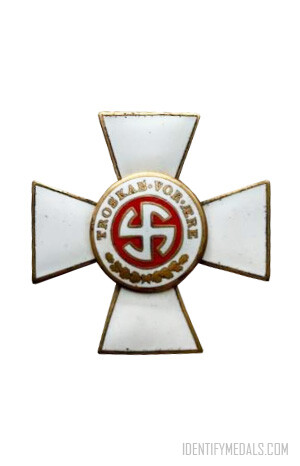
The Schalburg Cross was a military decoration for members of the Danish Schalburg Corps during World War II.

The Schalburg Cross, or Schalburgkors in Danish, was a military decoration for members of the Danish Schalburg Corps during World War II.

Named after Christian Frederik von Schalburg, the cross was produced by Heimbürger in Copenhagen. Although many were made, there is only one confirmed instance of it being awarded, posthumously. Instituted possibly after 1943, the cross recognized service against the Danish resistance and on the Eastern Front.

The cross was meant to be worn on the left breast pocket. Some unissued crosses were found at the Schalburg Corps HQ after the German retreat in May 1945 and were kept as souvenirs. They were even distributed to the public during the liberation celebrations in Copenhagen. Only a few enamelled versions are known to exist today.

The Schalburg Cross Design

The cross came in two classes: one for officers and NCOs, and another for enlisted men. Both versions measured 50mm x 50mm and featured a central medallion.

The enlisted version was off-white with golden edges and had the inscription “Our Honor is Loyalty” along with golden oak leaves.

The officer’s version was enameled with the same design but more intricate, with gilded oak leaves and enameled red background.

The Mussert Garde Pin 1939-1940

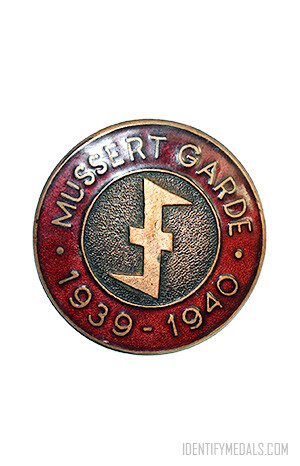
The Mussert Garde Pin, created in 1939-1940, was a symbol of loyalty and service to the National Socialist Movement in the Netherlands (NSB).

The Mussert Garde Pin, created in 1939-1940, was a symbol of loyalty and service to the National Socialist Movement in the Netherlands (NSB), led by Anton Mussert.

This pin was awarded to members of the Mussert Garde, an elite guard unit responsible for protecting NSB leaders and significant events. The design of the pin typically featured the NSB emblem, reflecting the organization’s ideology and dedication to the Nazi cause.

These pins are now rare historical artifacts, providing insight into the collaborationist activities in the Netherlands during World War II.

The Mussert Garde Pin Design

The badge features a central shield with a black Wolfsangel, a symbol used by the NSB, on a white background. This central element is surrounded by a red enamel border.

The Jarnkross or State Police Honor Cross

The State Police Honor Cross was a special decoration likely instituted in 1941 and awarded to frontline volunteers.

The Jarnkross, or “Rikspolitiets Hederstegn,” was a special decoration likely instituted in 1941.

It was awarded to frontline volunteers in the “Norwegen Polizei Kompanie” (Norwegian SS Police Companies), who briefly served with the “Legion Norwegen” and later the “SS-Skijager Btl ‘Norge’.”

The Norwegen Polizei Kompanie were paramilitary units formed during World War II, comprising Norwegian volunteers. These units were integrated into the German SS and served on the Eastern Front, participating in combat operations alongside German forces. Initially, they served with the “Legion Norwegen” and later with the “SS-Skijäger Battalion ‘Norge’.” 

The Jarnkross or State Police Honor Cross Design

The decoration was made of solid metal. The front side of the silver cross featured a shield, either enameled or painted, showing the “Saint Olaf’s” Cross, symbolizing the Norwegian Nazi Party “Hird.” The reverse was flat, with a thin needle pin and a small hinge, and variations in catch style.

Additionally, there was a 2nd class award with different ribbons: yellow and red for State and Border Police (Grepo/Stapo) and green for detectives, designated for police employees.