The Military Merit Medal (Austria-Hungary)

The Military Merit Medal is a military decoration of the Empire of Austria-Hungary only awarded to officers and officials of similar rank.

The Military Merit Medal (or Militär-Verdienstmedaille in German) is a military decoration of the Empire of Austria-Hungary founded by Emperor Franz Joseph I on March 12, 1890 and only awarded to officers and officials of similar rank.

The Military Merit Medal is often referred to as the “Signum Laudis” (Latin for “Sign of Praise”) after the inscription on the reverse of the medal. It was awarded in peacetime for meritorious service and in wartime for outstanding acts, including bravery or military merit.

The medal originally came in one class, a gilt bronze version, and repeat awards were not authorized. On March 26, 1911, a Silver Military Merit Medal was founded, intended to reward those who would have earned a second award of the Military Merit Medal. It too could be awarded on either of the two ribbons. On December 13, 1916, the addition of a pair of gilt-crossed swords on the ribbon was authorized to recognize a higher grade of wartime merit.

The Military Merit Medal became obsolete with the fall of the Austro-Hungarian monarchy in November 1918.

The Military Merit Medal Design

The medal is circular and struck in bronze, silver, or gold.

The obverse shows the bust of the reigning emperor. The reverse bears the words “SIGNUM LAUDIS” (Latin for “Sign of Praise“) surrounded by a wreath, half-laurels and half-oak leaves. The Medal is surmounted by a crown (dual crowns for the Karl I type) and worn from a tri-fold ribbon.

The peacetime awards were on the statute ribbon, a red ribbon, while wartime awards were on the ribbon of the Bravery Medal, a “laddered” pattern of red stripes edged in white and with white between the “rungs”.

The Civilian Wartime Merit Cross

The War Cross for Civil Merits is a civil award of Austria-Hungary awarded in recognition of civilian war service during World War I.

The War Cross for Civil Merits (or Kriegskreuz für Zivilverdienste in German) is a civil award of Austria-Hungary established on 16 August 1915 by Emperor Franz Joseph I of Austria to recognized civilian war service during World War I.

The cross could also be awarded to military officers for their contributions to the war when they were not directly involved in combat operations – for example when they had shown outstanding zeal and willingness to make sacrifices, and have given special support to the Austro-Hungarian government.

The Civilian Wartime Merit Cross Design

The medal has the shape of a Cross pattée and measures 55 mm high and 55 mm across. The first and second Class crosses are gilded, the third class is silver, and the fourth class is bronze. The first through third classes had white enamel on the arms of the cross.

The obverse shows a laurel wreath surrounding the center medallion, passing under the horizontal arms of the cross, and in front of the vertical arms. The center medallion, also enameled white, bears the Emperor’s monogram FJI (Franz Joseph Imperator), surrounding the letters is the inscription “Merito Civili tempore belli MCMXV” (or “Civil merit in time of war 1915“).

The cross was worn as a breast cross directly on the coat or uniform.

The Merit Cross for Military Chaplains

The Merit Cross for Military Chaplains was awarded to military chaplains for outstanding acts in wartime and meritorious service in peacetime.

The Merit Cross for Military Chaplains was instituted on 23 November 1801 and awarded to military chaplains for outstanding acts in wartime and for meritorious service in peacetime.

The cross was awarded in two classes:

  • Gold
  • Silver

The Merit Cross for Military Chaplains Design

The medal is a Latin cross struck in gold or silver and decorated with enamels. It measures 51.75 mm (w) x 63.22 mm (h) and weighs 22.1 grams.

The obverse and reverse have a central blue enameled medallion with the inscription “PIIS MERITIS”.

The ribbon is a red and white striped triangle for wartime merits and white for peacetime merits. The suspension is a loop. From 13 December 1916, the award for brave and successful conduct was awarded with swords on the ribbon.

The Newfoundland Volunteer War Service Medal

The Newfoundland Volunteer War Service Medal was created to honor those from Newfoundland & Labrador who served in British Forces.

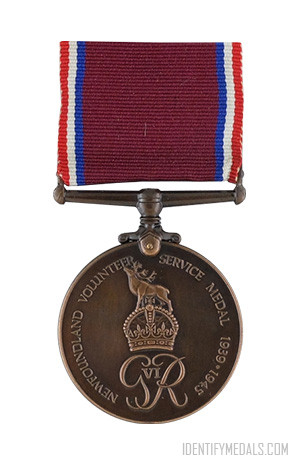
The Newfoundland Volunteer War Service Medal is a British campaign medal established 6 November 1981, to honour those from Newfoundland & Labrador who served in British Forces outside of the province.

The medal was issued to those who did not receive a volunteer war service medal from another country, including Canada, and who had volunteered and served in units or organizations contributed by the Dominion of Newfoundland to the allied war effort. The period of qualifying service was from September 3, 1939 through September 2, 1945.

During the Second World War, Newfoundland was a separate Dominion of the British Empire, only joining the Canadian Confederation in 1949. Accordingly, Newfoundland servicemen who volunteered to serve with British Imperial Forces, including Newfoundland units, did not qualify for the Canadian Volunteer Service Medal

A total of 7,500 medals were awarded, including those issued to next-of-kin, who could claim on behalf of those who died both in or since the war.

The Newfoundland Volunteer War Service Medal Design

The medal is circular, struck in bronze and measures 37 millimeters in diameter. It was designed by Ian H Stewart CM, the Senior Designer in Residence at Memorial University St John’s Nfld.

The obverse shows the Crown and cipher of King George VI surmounted by a baying Newfoundland stag caribou. Around the edge is the inscription “NEWFOUNDLAND VOLUNTEER SERVICE MEDAL 1939-1945″. The reverse bears a depiction of Britannia standing on a scallop shell, with a spear in her right hand and the sun’s rays behind her. Two lions encircle each side with their heads towards the bottom of the medal.

The ribbon is deep claret with edges of red, white, and blue. The medal is mounted on a single claw with a single-curl mount and the rim is uniquely numbered to each recipient.

Find This Campaign Medal

Right Now on eBay 
Clicking a link to eBay may result in a referral commission being paid if a purchase is made.
Loading...

More WW2 British Campaign Medals

During World War II (1939–1945) British campaign medals were awarded to members of the British Armed Forces and civilians for active service in specific military campaigns or operations. These included:

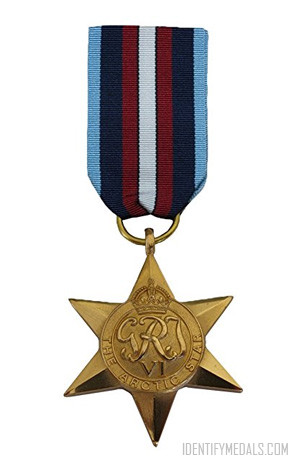
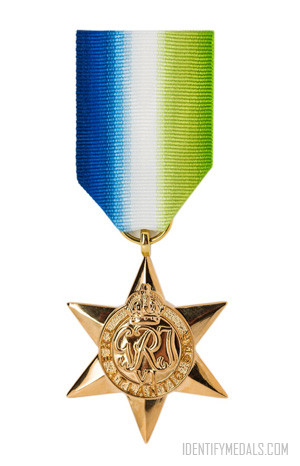
WW2 Medals and Awards: The Arctic Star

The Arctic Star

The Arctic Star is a military campaign medal which was instituted for service on the Arctic Convoys north of the Arctic Circle in WW2. 

Read More »
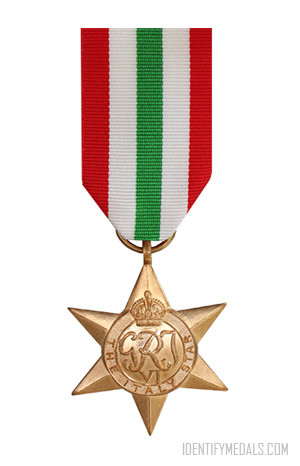
WW2 Medals and Awards: The Italy Star

The Italy Star

The Italy Star is a military campaign medal, instituted by the United Kingdom in May 1945 for service in the Italian Campaign 1943 to 1945.

Read More »

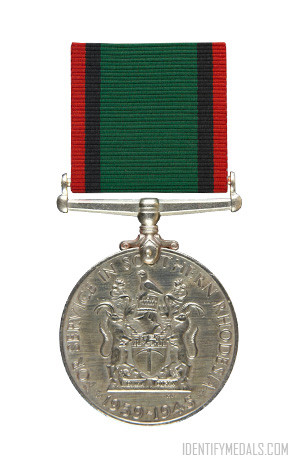
The Southern Rhodesia Service Medal

The Southern Rhodesia Service Medal 1939-1945 is a campaign medal awarded to members of the Southern Rhodesia Defence Forces for home service.

The Southern Rhodesia Service Medal 1939-1945 is a campaign medal of the British Commonwealth awarded to members of the Southern Rhodesia Defence Forces who had at least six months full or part-time service between 3 September 1939 and 2 September 1945 and were not eligible for any other British World War II campaign medal.

The Southern Rhodesia Service Medal was authorized in 1948 and distributed from 1949. A total of 3,908 medals were awarded, mainly to those who had served part-time:

  • Southern Rhodesia Territorial Force: 3,140
  • British South Africa Police Reservists: 497
  • Those who served with both bodies: 271

There are no clasps for this medal.

The Southern Rhodesia Service Medal Design

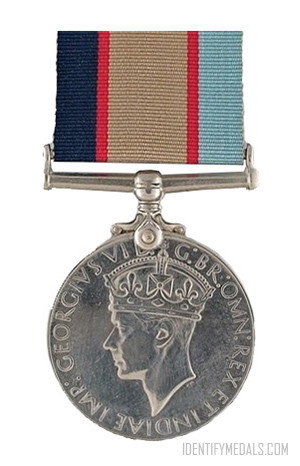
The medal is circular, struck in cupro-nickel and measures 36 millimeters (1.4 in) in diameter.

The obverse shows the crowned effigy of King George VI facing left, with the legend “GEORGIVS VI D:G:BR:OMN:REX ET INDIAE IMP.” (George VI by the grace of God King of Great Britain and Emperor of India).

The reverse was designed by Humphrey Paget and shows the coat of arms of Southern Rhodesia, surrounded by the words “+ FOR SERVICE IN SOUTHERN RHODESIA + 1939-1945”.

The ribbon measures 31.7 millimeters (1.25 in) wide and is beetle green with red and black stripes at each edge, the colors of the Rhodesia Regiment.

Find This Campaign Medal

Right Now on eBay 
Clicking a link to eBay may result in a referral commission being paid if a purchase is made.
Loading...

More WW2 British Campaign Medals

During World War II (1939–1945) British campaign medals were awarded to members of the British Armed Forces and civilians for active service in specific military campaigns or operations. These included:

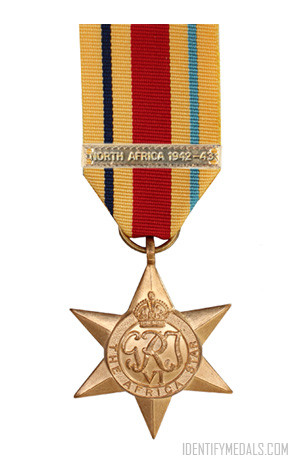
WW2 Medals and Awards: The Africa Star

The Africa Star

The Africa Star is a military campaign medal awarded to those who served in the Second World War specifically in North Africa. 

Read More »
WW2 Medals and Awards: The Italy Star

The Italy Star

The Italy Star is a military campaign medal, instituted by the United Kingdom in May 1945 for service in the Italian Campaign 1943 to 1945.

Read More »

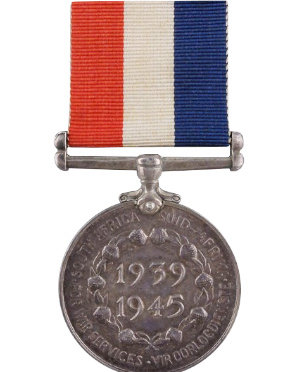
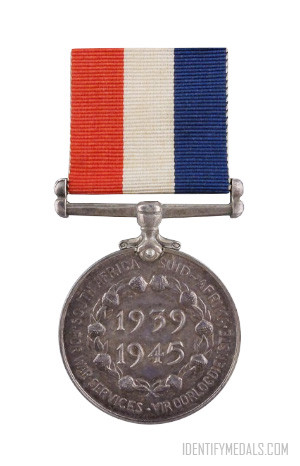
The South African Medal for War Services

The South African Medal for War Services is a service medal for voluntary unpaid service in support of the war effort during WW2.

The South African Medal for War Services is a South African service medal for voluntary unpaid service in support of the war effort during the Second World War (between 6 September 1939 and 15 February 1946). The South African Medal for War Services was instituted by a Royal Warrant dated 29 December 1945, countersigned and sealed at Cape Town on 6 February 1946.

Altogether 17,500 medals were awarded to people of both sexes, irrespective of whether or not they were British subjects. The requirement was a minimum of two years service, of which at least one year was continuous, rendered voluntarily and without pay within or outside the borders of the Union of South Africa, in one or more of the officially recognized voluntary non-military organizations, such as the Red Cross and the Governor-General’s War Fund, with the proviso that five or more hours were worked every week.

The South African Medal for War Services Design

The medal is circular, struck in silver and measures 36 millimeters in diameter and 3 millimeters thick at the raised rim.

The obverse shows the years “1939” over “1945”, encircled by a wreath of protea flowers, all of which are surrounded by the name of the medal in English and Afrikaans, “SOUTH AFRICA” and “SUID-AFRIKA” above and “FOR WAR SERVICES • VIR OORLOGDIENSTE” below. The reverse bears the Coat of Arms of the Union of South Africa, with the medal number impressed at the bottom on the rim.

The ribbon has three equal stripes of red, white and blue (the national South African colors). The medal is affixed to the suspender by means of claws and a pin through the upper edge of the medal.

More Union of South Africa Medals

The New Zealand Memorial Cross

The New Zealand Memorial Cross is awarded to the next of kin of New Zealand service personnel killed on active service or who died of wounds.

The New Zealand Memorial Cross is a campaign medal awarded to the next of kin of New Zealand service personnel who, since September 1939, have been killed on active service or later died of their wounds. Up to two crosses could be awarded to the family of each individual, and was intended primarily for widows and mothers.

The cross was formally instituted, and full regulations published, in September 1947. Eligibility included both those serving with New Zealand forces and New Zealanders serving with other British Commonwealth forces, including the merchant navy.

In September 1960, further regulations were published extending eligibility to conflicts since the Second World War. Awards have since been made relating to service in Korea, Malaya, Vietnam, East Timor and Afghanistan. In September 1995 relatives of those killed during peacekeeping operations became eligible.

The New Zealand Memorial Cross Design

The medal is a cross patoncé struck in dull silver and measures 32 millimeters (1.3 inches) in diameter.

The obverse shows a laurel wreath between the arms of the cross. At the top of the vertical arm is a St. Edward’s Crown, with a fern leaf at the end of each of the other arms. At the center is the reigning monarch’s Royal Cypher.
The reverse is plain, with most crosses engraved with the name, rank and service number of the person commemorated.

The ribbon measures 12 millimeters wide and is royal purple.

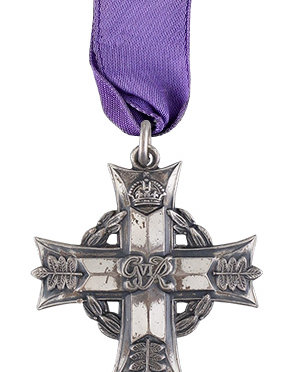
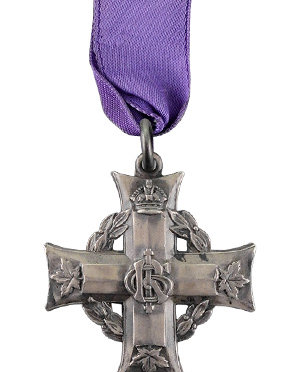
The Canadian Memorial Cross

The Canadian Memorial Cross was first instituted in 1919 and awarded to mothers and widows of Canadian soldiers who died on active duty.

The Canadian Memorial Cross was first instituted by Order-in-Council 2374, dated December 1, 1919, and awarded to mothers and widows of Canadian soldiers who died on active duty or whose death was consequently attributed to such duty.

This gift of Canada was issued as a memento of personal loss and sacrifice on the part of widows and mothers of Canadian sailors, soldiers and airmen who died for their country during the war.

The crosses could be worn by the recipients anytime and were engraved with the name, rank and service number of the son or husband.

The Canadian Memorial Cross Design

The medal is in the form of a cross pattee, struck in silver and measures 32 millimeters in diameter.

The obverse shows, at the end of the upright, a crown. At the foot and the end of either arm is a maple leaf and in the center, within a wreath of laurel, is the royal cipher of the reigning monarch: GRI for King George the Fifth, GVIR for King George the Sixth, or EIIR for Elizabeth the Second. The reverse of the Cross is engraved with the name and service number of the individual commemorated.

The medal is suspended by a bar brooch, although prior to 1945 it was suspended from a light purple ribbon 11 mm wide.

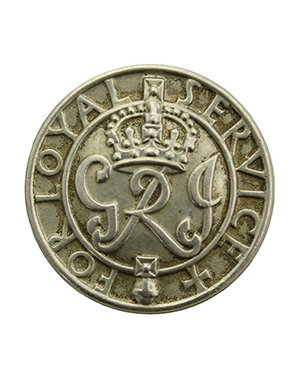
The King’s Badge

The King’s Badge is a lapel badge issued to servicemen who, as a result of their injuries, had been discharged from active service.

The King’s Badge is a lapel badge authorized by the Ministry of Pensions in the early part of the Second World War and initially issued to servicemen who, as a result of their injuries, had been discharged from active service.

Its basic purpose was to show that the wearer was a veteran. As well as members of the armed services, merchant navy and fishing fleets qualifying, by late 1944, it was also awarded to the coastguards, police, members of the Civil Defence Services, and the Home Guard. The badge was to be worn only on civilian clothing and by the end of 1941 over 8,000 had been awarded.

Three versions of the badge were produced.

The King’s Badge Design

The badge is struck in silver and measures 26 millimeters in diameter.

The obverse shows the initials “GRI” for Georgius Rex Imperator, in this case referring to King George VI. The earlier badge was in the name of his father, George V. The wording around the initials read “For King and Empire Services Rendered to For Loyal Service”.

The reverse is plain and the badges are not numbered or named.

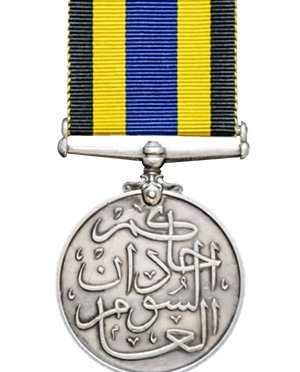
The Sudan Defence Force General Service Medal

The Sudan Defence Force General Service Medal is a campaign medal awarded for service in minor operations within the Anglo-Egyptian Sudan.

The Sudan Defence Force General Service Medal is a campaign medal instituted in 1933 and awarded for service in minor operations within the Anglo-Egyptian Sudan.

The medal superseded the Khedive’s Sudan Medal (1910) and was awarded on the recommendation of the Commandant of the Sudan Defence Force (SDF) to locally recruited personnel of the SDF, police and other approved Sudanese who served in minor operations classed by the Governor-General as of sufficient importance to warrant the grant of the medal.

About 9,000 SDF General Service Medals were issued. No further awards were made after 1945, with the medal becoming obsolete with Sudanese independence in 1956.

The Sudan Defence Force General Service Medal Design

The medal is circular, struck in silver and measures 36 millimeters in diameter.

The obverse shows the seal of the Governor-General of Sudan. The reverse bears a stationary group of Sudanese soldiers, with “The Sudan” in Arabic below.

The ribbon has a central stripe of royal blue, edged by two yellow stripes and two black stripes at the edges.