The United Nations Emergency Force Medal

The United Nations Emergency Force Medal is a service medal of the United Nations instituted in 1957 and awarded for service in the United Nations Emergency Force between 7 November 1956 and 19 May 1967.

In 1956, Egypt came into conflict with the combined forces of Israel, France, and the United Kingdom resulting in the Suez Crisis. Combined political pressure from the United States, the Soviet Union, and the United Nations resulted in the withdrawal of French, British and Israeli forces from Egyptian territory and the cessation of hostilities. To maintain peace, the United Nations established its first Peacekeeping force, the United Nations Emergency Force (UNEF). Brazil, Canada, Colombia, Denmark, India, Norway, Sweden, and Yugoslavia provided troops to serve in the UNEF. The mission lasted from November 1956 until June 1967. 

Ninety days of service with the UNEF was required for award of the medal.

The United Nations Emergency Force Medal Design

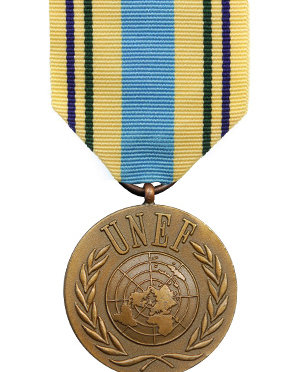
The medal is circular, struck in bronze, and measures 35 mm in diameter. It’s similar in appearance to other United Nations Medals.

The obverse depicts the official emblem of the United Nations, a world map oriented from the north pole. Above the emblem are the letters UNEF. The reverse is plain except for the words “In the Service of Peace” in relief.

The ribbon is sand yellow with an 8 mm central stripe of light blue. On either side of the central stripe, 3 mm from the edge, is a 1 mm stripe of dark blue 2 mm apart from a 1 mm stripe of dark green. The sand yellow color represents the Sinai while the wide central stripe represents the UN. Of the two thin stripes, the blue represents the Suez Canal, and the green represents the Nile River Valley.

The Accumulated Campaign Service Medal

The Accumulated Campaign Service Medal (and its 2011 version) are medals awarded to the Armed Forces to recognize long campaign service.

The Accumulated Campaign Service Medal (and its 2011 version) are medals awarded by Her Majesty Queen Elizabeth II to members of her Armed Forces to recognize long campaign service.

The original medal was instituted in January 1994 and awarded to holders of the General Service Medal who had completed 36 months of accumulated campaign service, with a clasp for each period of further 36 months of campaign service. Criteria for part-time members of the Royal Irish Regiment were similar but with 1000 days replacing 36 months. The replacement Accumulated Campaign Service Medal 2011 is currently awarded to holders of various campaign service medals who have completed 720 days of campaign service.

Service personnel is now (2020) eligible for an Accumulated Campaign Service Medal (ACSM) after two years of operational service instead of the three years previously required.

> Learn more about Qualifying for the Accumulated Campaign Service Medal (gov.uk)

The Accumulated Campaign Service Medal Design

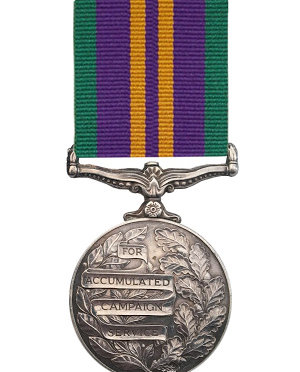
The medal is circular, struck in silver, and measures 36 mm in diameter.

On the obverse, it bears the Crowned Effigy of the Sovereign and on the reverse, the description “FOR ACCUMULATED CAMPAIGN SERVICE” set within a four part ribbon surrounded by a branch of oak leaves with laurel and olive leaves woven through the motto ribbon. 

The ribbon is purple and green, like that of the General Service Medal (1962) with an added central gold stripe denoting excellence. The Accumulated Campaign Service Medal 2011 uses the same medal, but with a ribbon with two central gold stripes. When the ribbon only is worn, a silver rosette is worn on the ribbon for each clasp, with a single gold rosette indicating four clasps.

The Accumulated Campaign Service Medal is hallmarked on the rim to the right of the suspension fixing. The 2011 version of the medal is not hallmarked.

Find This Medal

Right Now on eBay 
Clicking a link to eBay may result in a referral commission being paid if a purchase is made.
Loading...

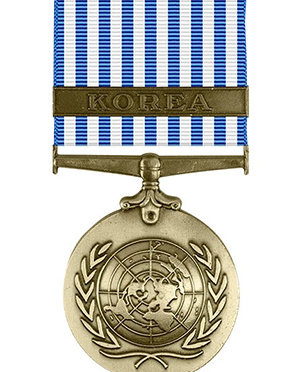
The United Nations Korea Medal

The United Nations Service Medal for Korea (or UNKM) is a military decoration established by the United Nations on December 12, 1950.

The United Nations Service Medal for Korea (or UNKM) is a military decoration established by the United Nations on December 12, 1950. The decoration was the first international award ever created by the United Nations and recognized the multi-national defense forces which participated in the Korean War.

The medal is awarded to any military service member, of an Armed Force allied with South Korea, who participated in the defense of South Korea from North Korea between the dates of June 27, 1950 and July 27, 1954. International Red Cross personnel engaged for service during the war with any United Nations relief team in Korea were not eligible for the medal.

National variants were produced but the British and Commonwealth type was granted to all personnel who had served at least one full day in Korea or in support units in Japan. Those who served after the armistice of 1953 were also entitled the UN medal.

On November 22, 1961, the United Nations officially changed the name of the United Nations Service Medal to the United Nations Service Medal Korea. Most countries consider the United Nations Service Medal an automatic decoration, if some other Korean service award was bestowed, and generally award the medal without requesting permission through United Nations channels.

The United Nations Korea Medal Design

The medal is struck in bronze alloy and measures 35 mm in diameter.

The obverse depicts the ‘World-in-a Wreath‘ emblem of the United Nations. The reverse has the inscription: “FOR SERVICE IN DEFENCE OF THE PRINCIPLES OF THE CHARTER OF THE UNITED NATIONS”. Each participating country has the text in the most appropriate language.

The medal hangs from a claw attachment on a straight bar suspension. Each medal is worn with a medal bar bearing the inscription KOREA in the same language as the reverse inscription. 

The ribbon is made up of 17 equal stripes of United Nations Blue (Bluebird 67117) and white, 9 blue, and 8 white, each 564 inch (2.0 mm) wide.

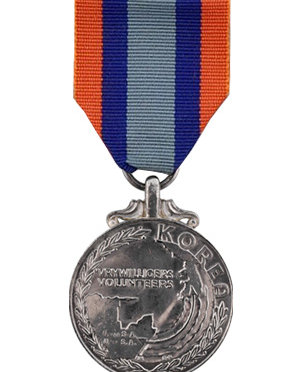
The South African Medal for Korea

The South African Medal for Korea is a military campaign medal instituted by the Union of South Africa in 1953 and awarded to volunteers of the Union Defence Forces for service in Korea during the 1950-1953 Korean War.

The Union Defence Forces (UDF) were established in 1912 and renamed the South African Defence Force (SADF) in 1958. On 27 April 1994, it was integrated with six other independent forces into the South African National Defence Force (SANDF).

More than 200 officers and some 545 other ranks saw action in Korea between 1950 and 1953, along with some members from other branches of the Union Defence Forces. South Africa’s primary contribution to the United Nations Command during the Korean War was the Flying Cheetahs, 2 Squadron of the South African Air Force. During the Korean War, South African pilots flew altogether 2,890 operational missions, during which 34 pilots and two ground crew were killed in action or listed as missing in action.

The South African Medal for Korea Design

The medal is struck in silver and measures 38 mm in diameter. Around the edge is a laurel wreath, the left branch spreading from the bottom of the medal to the top, while the right branch is shorter to allow space for the inscription “KOREA”.

The obverse has the words “VRYWILLIGERS” and “VOLUNTEERS”, with outlines of the maps of the Korean Peninsula and South Africa, including South-West Africa. The maps are connected by a line with an arrowhead at each end and five wavy lines. Superimposed on the map of South Africa are the inscriptions “U. van S-A.” and “U. of S.A.”

The reverse bears the pre-1994 South African Coat of Arms and Queen Elizabeth II’s royal cipher (E II R) above the Coat of Arms.

The ribbon is 32 millimeters wide, with a 6 millimeters wide orange band and a 5 millimeters wide dark blue band, repeated in reverse order and separated by a 10 millimeters wide light blue band in the center. The medal number is impressed at the bottom of the medal on the rim.

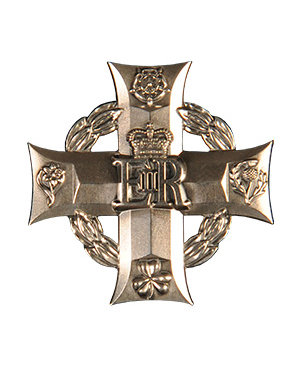
The Elizabeth Cross

The Elizabeth Cross medal is a commemorative emblem established on 1 July 2009 and awarded to next of kin of members of the British Armed Forces killed in action or as a result of a terrorist attack after WW2. The medal bears the name of the current British monarch, Queen Elizabeth II.

The award was instituted by Queen Elizabeth II and eligibility is retrospective to deaths from the end of the Second World War. Previously, for those who died in the First World War relatives were presented with a memorial scroll and bronze plaque. The creation of the award was announced in a written statement to the House of Commons by Secretary of State for Defence Bob Ainsworth on 1 July, and also in a broadcast on the British Forces Broadcasting Service made by the Queen.

The Royal Warrant states that relatives of members of the Royal Fleet Auxiliary are also eligible to receive the award. The first crosses were issued by the Ministry of Defence Medal Office at Imjin Barracks, Innsworth on 1 August 2009.

The Elizabeth Cross Design

The medal is struck in sterling silver, measures 31 mm and was designed by Dayna White of Birmingham jewelers Gladman & Norman Ltd – who also made them until 2018 (from May 2018 the contract to manufacture the cross passed to Worcestershire Medal Service).

The shape is a Greek cross superimposed on another cross, with a Royal cipher in the center. Within a laurel wreath are the floral emblems of England (the Rose), Scotland (the Thistle), Ireland (the Shamrock), and Wales (the Daffolid). Its appearance is similar to the earlier Canadian Memorial Cross, awarded since 1919.

The obverse scroll bears the words:

This scroll commemorates [name] who gave his/her life for Queen and country on the [date] day of [month] [year]

The words were chosen by the previous Poet Laureate, Andrew Motion, and approved by the Chief of the Defence Staff Air Chief Marshal Sir Jock Stirrup and the three service chiefs.

Families receive a large version of the cross, and a pin-on miniature, as well as a Memorial Scroll signed by The Queen which bears the name of the person who died.

The Volunteer Officers’ Decoration

The Volunteer Officers’ Decoration (or VD) is a British medal instituted in 1892 as an award for long and meritorious service by officers of the United Kingdom’s Volunteer Force.

The award was instituted by Queen Victoria’s Royal Warrant on 25 July 1892. The decoration could be awarded to efficient and thoroughly capable officers of proven capacity for long and meritorious service in the part-time Volunteer Force of the United Kingdom.

The decoration was discontinued in the United Kingdom when it was superseded by the Territorial Decoration in 1908, but it continued to be awarded throughout the British Empire, defined as being India, the Dominion of Canada, the Crown Colonies and the Crown Dependencies.

Volunteer Officers’ Decoration Design

The medal is oval skeletal and is struck in silver, with parts of the obverse in silver-gilt. It measures 43 millimeters (1.69 inches) high and 35.5 millimeters (1.4 inches) wide with a ring suspender formed of silver wire.

The obverse shows an oak leaf wreath in silver, tied with gold, with the Royal Cypher below the Royal Crown, both in gold, in the center. The reverse is plain with the hallmarks impressed at the bottom. 
The ribbon is dark green and 1 12 inches (38 millimeters) in width and is suspended from a silver bar-brooch decorated with an oak leaf pattern. The decoration was awarded unnamed but was frequently unofficially engraved in various styles.

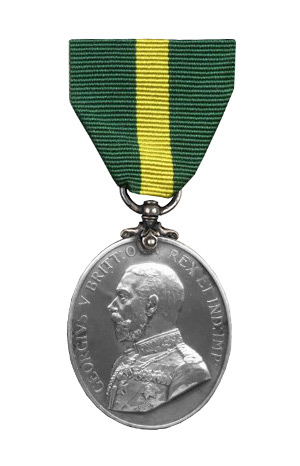
The Territorial Force Efficiency Medal (1908)

The Territorial Force Efficiency Medal is a United Kingdom award for long service in the Territorial Force between 1908 and 1921.

It was established in 1908 following the enactment of the Territorial and Reserve Forces Act 1907, (7 Edw.7, c.9) which instigated a major re-organization of the old Volunteer Force and the remaining units of Militia and Yeomanry. 

The medal was awarded to non-commissioned officers and men for a minimum of 12 years service in the Territorial Force, providing they attended 12 annual training camps. Previous service in other part-time forces, including the Volunteer Force could count, and war service counted double. Bars were awarded for further periods of 12 years.

The Territorial Force Efficiency Medal (1908) Design

The medal is oval, struck in silver and measures 38 millimeters (1.5 inches) high and 31 millimeters (1.2 inches) wide.

The obverse shows the bust of the reigning King in Field Marshall’s uniform, facing left. Originally Edward VII was shown, with the legend, “EDWARDVS VII REX IMPERATOR“. In 1911 the image was changed to that of George V, the legend reading “GEORGIVS V BRITT: OMN: REX ET IND: IMP:“.

The reverse has a raised rim and bears the inscription “TERRITORIAL FORCE EFFICIENCY MEDAL” on four lines.

The ribbon is 32 millimeters (1.26 inches) wide and originally plain dark green with a central yellow stripe. In December 1919 was changed to plain dark green with yellow edges. For members of the Honourable Artillery Company (HAC) the ribbon is half blue, half scarlet with yellow edges.

The recipient’s service number, rank, name, and unit were impressed on the edge of the medal. The medal hangs from a ring suspension, attached to the medal by a claw fixing.

Notes

This entry was updated on 21 March 2023. The medal image was replaced to show the effigy of George V. Thank you David Wilcock for this information.

The Territorial Efficiency Medal (1921)

The Territorial Efficiency Medal is a United Kingdom award for long service in the Territorial Army awarded for a minimum of 12 years service.

The Territorial Efficiency Medal (or TEM) is a United Kingdom award for long service in the Territorial Army established in 1921 and awarded to non-commissioned officers and men for a minimum of 12 years service in the Territorial Army – provided they attended 12 annual training camps.

Bars for further periods of 12 years service were intended but never issued since the medal was superseded by the Efficiency Medal after 9 years. Previous service in other part-time forces including the Territorial Force could count, while war service counted double. 

The award superseded the Territorial Force Efficiency Medal when the Territorial Force became the Territorial Army in 1921. It was superseded by the Efficiency Medal in 1930.

The Territorial Efficiency Medal (1921) Design

The medal is oval, struck in silver and measures 38 millimeters (1.5 inches) high and 31 millimeters (1.2 inches) wide.

The obverse shows the effigy of King George V in Field Marshall’s uniform facing left, circumscribed by the inscription “GEORGIVS V BRITT: OMN: REX ET IND: IMP:“. The reverse bears a raised rim and bears the inscription “TERRITORIAL EFFICIENCY MEDAL” on three lines.

The ribbon is 32 millimeters (1.26 inches) wide, plain dark green with yellow edges. The medal hangs from a ring suspension, attached to the medal by a claw fixing. The recipient’s service number, rank, name, and unit were impressed on the edge of the medal.

For members of the Honorable Artillery Company (HAC) the ribbon was half blue, half scarlet with yellow edges.

The Newfoundland Volunteer War Service Medal

The Newfoundland Volunteer War Service Medal was created to honor those from Newfoundland & Labrador who served in British Forces.

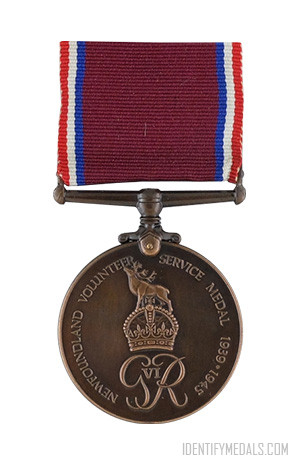
The Newfoundland Volunteer War Service Medal is a British campaign medal established 6 November 1981, to honour those from Newfoundland & Labrador who served in British Forces outside of the province.

The medal was issued to those who did not receive a volunteer war service medal from another country, including Canada, and who had volunteered and served in units or organizations contributed by the Dominion of Newfoundland to the allied war effort. The period of qualifying service was from September 3, 1939 through September 2, 1945.

During the Second World War, Newfoundland was a separate Dominion of the British Empire, only joining the Canadian Confederation in 1949. Accordingly, Newfoundland servicemen who volunteered to serve with British Imperial Forces, including Newfoundland units, did not qualify for the Canadian Volunteer Service Medal

A total of 7,500 medals were awarded, including those issued to next-of-kin, who could claim on behalf of those who died both in or since the war.

The Newfoundland Volunteer War Service Medal Design

The medal is circular, struck in bronze and measures 37 millimeters in diameter. It was designed by Ian H Stewart CM, the Senior Designer in Residence at Memorial University St John’s Nfld.

The obverse shows the Crown and cipher of King George VI surmounted by a baying Newfoundland stag caribou. Around the edge is the inscription “NEWFOUNDLAND VOLUNTEER SERVICE MEDAL 1939-1945″. The reverse bears a depiction of Britannia standing on a scallop shell, with a spear in her right hand and the sun’s rays behind her. Two lions encircle each side with their heads towards the bottom of the medal.

The ribbon is deep claret with edges of red, white, and blue. The medal is mounted on a single claw with a single-curl mount and the rim is uniquely numbered to each recipient.

Find This Campaign Medal

Right Now on eBay 
Clicking a link to eBay may result in a referral commission being paid if a purchase is made.
Loading...

More WW2 British Campaign Medals

During World War II (1939–1945) British campaign medals were awarded to members of the British Armed Forces and civilians for active service in specific military campaigns or operations. These included:

WW2 Medals and Awards: The Italy Star

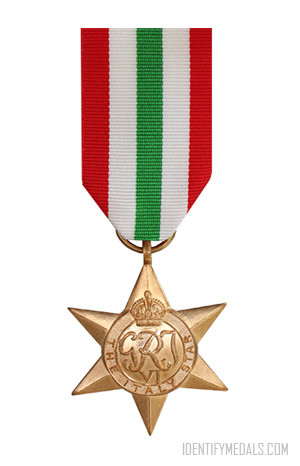
The Italy Star

The Italy Star is a military campaign medal, instituted by the United Kingdom in May 1945 for service in the Italian Campaign 1943 to 1945.

Read More »
WW2 Medals and Awards: The Africa Star

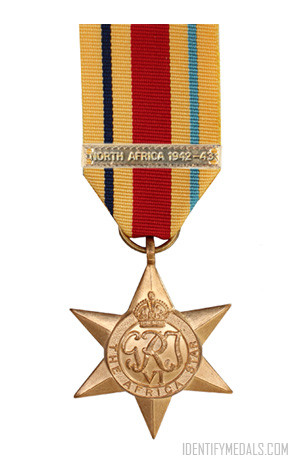
The Africa Star

The Africa Star is a military campaign medal awarded to those who served in the Second World War specifically in North Africa. 

Read More »
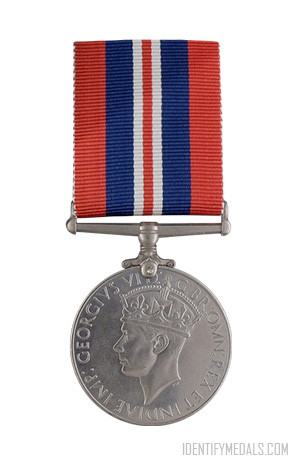
The War Medal 1939-1945 Obverse

The War Medal 1939-1945

The War Medal 1939–1945 is a British campaign medal instituted by the United Kingdom on 16 August 1945. The medal was awarded to subjects of the British Commonwealth who had served full-time.

Read More »
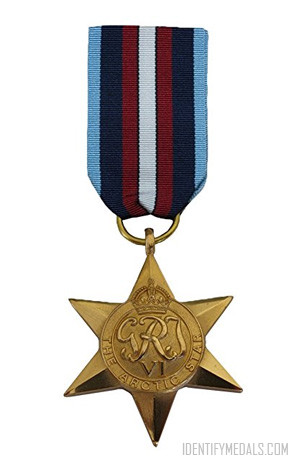
WW2 Medals and Awards: The Arctic Star

The Arctic Star

The Arctic Star is a military campaign medal which was instituted for service on the Arctic Convoys north of the Arctic Circle in WW2. 

Read More »

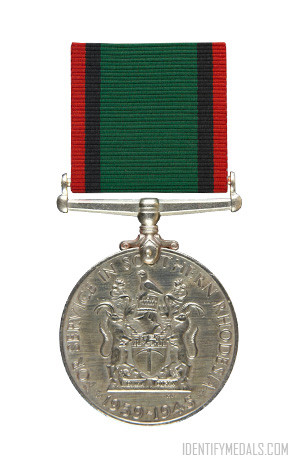
The Southern Rhodesia Service Medal

The Southern Rhodesia Service Medal 1939-1945 is a campaign medal awarded to members of the Southern Rhodesia Defence Forces for home service.

The Southern Rhodesia Service Medal 1939-1945 is a campaign medal of the British Commonwealth awarded to members of the Southern Rhodesia Defence Forces who had at least six months full or part-time service between 3 September 1939 and 2 September 1945 and were not eligible for any other British World War II campaign medal.

The Southern Rhodesia Service Medal was authorized in 1948 and distributed from 1949. A total of 3,908 medals were awarded, mainly to those who had served part-time:

  • Southern Rhodesia Territorial Force: 3,140
  • British South Africa Police Reservists: 497
  • Those who served with both bodies: 271

There are no clasps for this medal.

The Southern Rhodesia Service Medal Design

The medal is circular, struck in cupro-nickel and measures 36 millimeters (1.4 in) in diameter.

The obverse shows the crowned effigy of King George VI facing left, with the legend “GEORGIVS VI D:G:BR:OMN:REX ET INDIAE IMP.” (George VI by the grace of God King of Great Britain and Emperor of India).

The reverse was designed by Humphrey Paget and shows the coat of arms of Southern Rhodesia, surrounded by the words “+ FOR SERVICE IN SOUTHERN RHODESIA + 1939-1945”.

The ribbon measures 31.7 millimeters (1.25 in) wide and is beetle green with red and black stripes at each edge, the colors of the Rhodesia Regiment.

Find This Campaign Medal

Right Now on eBay 
Clicking a link to eBay may result in a referral commission being paid if a purchase is made.
Loading...

More WW2 British Campaign Medals

During World War II (1939–1945) British campaign medals were awarded to members of the British Armed Forces and civilians for active service in specific military campaigns or operations. These included:

WW2 Medals and Awards: The Arctic Star

The Arctic Star

The Arctic Star is a military campaign medal which was instituted for service on the Arctic Convoys north of the Arctic Circle in WW2. 

Read More »
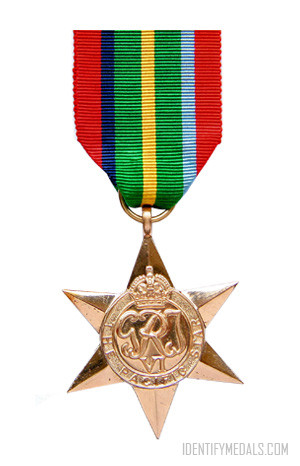
WW2 Medals and Awards: The Pacific Star

The Pacific Star

The Pacific Star is a British military campaign medal instituted by the United Kingdom in 1945 for those who served in the Pacific Campaign.

Read More »