The Memorial Plaque Medallion

The Memorial Plaque was issued after WW1 to the next-of-kin of all British and Empire service personnel who were killed during the war.

The Memorial Plaque was issued after the First World War to the next-of-kin of all British and Empire service personnel who were killed as a result of the war.

The plaques are about 4.75 inches (120 mm) in diameter, cast in bronze, and came to be known as the “Dead Man’s Penny“, because of the similarity in appearance to the much smaller penny coin.

A total of 1,355,000 plaques were issued, which used a total of 450 tons of bronze, and continued to be issued into the 1930s to commemorate people who died as a consequence of the war.

The Memorial Plaque Design

Over 800 designs were submitted in a public competition for the design of the plaque. The winner was the sculptor and medallist Edward Carter Preston using the pseudonym Pyramus, who received two first-place prizes of £250 for his winning and also an alternative design.

The obverse includes an image of Britannia holding a trident and standing with a lion. The designer’s initials, E.CR.P., appear above the front paw. In her outstretched left hand Britannia holds an olive wreath above the rectangular tablet bearing the deceased’s name cast in raised letters. Below the name tablet, to the right of the lion, is an oak spray with acorns. Two dolphins swim around Britannia, symbolizing Britain’s sea power, and at the bottom a second lion is tearing apart the German eagle.

The reverse is blank, making it a plaquette rather than a table medal. Around the picture the legend reads “HE DIED FOR FREEDOM AND HONOUR“, or for the 1500 plaques issued to commemorate women, “SHE DIED FOR FREEDOM AND HONOUR“.

Smaller or miniature unofficial bronze plaques were produced by other manufacturers, for example Wright and Sons of Edgware, Middlesex, who sold them for 13 shillings and sixpence each.
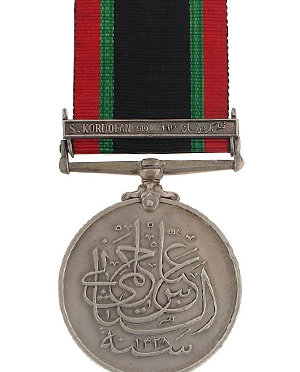
The Khedive’s Sudan Medal 1910

The Khedive’s Sudan Medal is a campaign medal established in 1911 by the Khedive and awarded by the Khedivate of Egypt for service in the Anglo-Egyptian Sudan.

The medal was awarded for minor operations in Sudan to members of the Egyptian Army, including Sudanese battalions. Recipients included a number of British Army officers seconded to the Egyptian Army, although no complete British Army units took part. A number of members of the Royal Flying Corps received the medal with the Durfur 1916 and Fasher clasps, while about thirty members of the Royal Air Force received the Garjak Nuer clasp.

This medal replaced the earlier Khedive’s Sudan Medal (1897).

The Khedive’s Sudan Medal 1910 Design

The medal is circular and measures 36 millimeters in diameter. It was issued in silver with clasps to combatants and without a clasp to non-combatants. Camp followers, such as porters and grooms, received the medal in bronze without a clasp.

The obverse shows the Arabic cipher of the Khedive, and the Hijri year of its establishment. The medal awarded in 1911 bears the cipher of Khedive Abba Hilmi, while that from 1918 shows the cipher of the Sultan Hussain Kamil. The reverse bears a lion standing on a plinth bearing the word “SUDAN” with, behind, the sun rising above the flowing River Nile.

The ribbon is 32 millimeter wide in black with thin red and green stripes on each side. The medal hangs from a bar suspension.

The Messina Earthquake Commemorative Medal

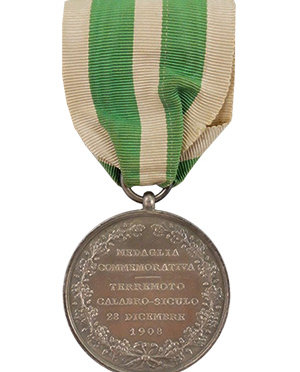
The Messina Earthquake Commemorative Medal is a British campaign medal established in 1908 and awarded by the King of Italy to Royal Naval and other personnel who went to the aid of victims of the tragic earthquake that hit Messina in December 1908.

At 5:22 am on the 28th December 1908 the Sicily & Calabria area of Italy was struck by a 7.5 magnitude earthquake, a major disaster with a terrible death toll (estimated 70,000 to 100,000). Many nations came to the aid of the affected areas and various ships in the Mediterranean at the time were deployed to offer whatever help could be given. Messina was the worst affected population center and a number of Royal and British Merchant Navy vessels landed men to assist, from digging survivors out from collapsed buildings to assisting with the evacuation of the injured and homeless.

In the aftermath, it was decided by the Italian Royal family that a merit medal would be produced to be awarded to those who distinguished themselves “whether by rendering assistance and medical treatment or by donating health and administrative services and meeting the material and spiritual needs of the sufferers of the disaster.

An estimate of up to three hundred of these merit medals were awarded.

The Messina Earthquake Commemorative Medal Design

The medal is circular, struck in silver, gold and bronze and measures either 31.5 millimeters (for individuals) or 40 millimeters (for institutions) in diameter.

The obverse shows a left-facing profile of King Victor Emanuel III. The reverse bears a wreath of oak leaves within which are the words “MEDAGLIA COMMEMORATIVA / TERREMOTO CALABRIO SICULO 28 DECEMBRE 1908“.

The ribbon is green with white edges and a central white stripe.

The Natal Rebellion Medal

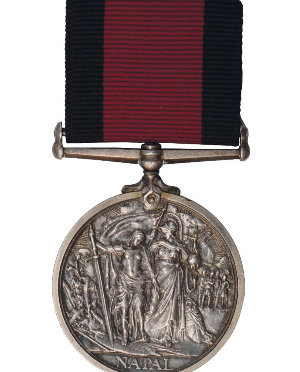
The Natal Native Rebellion Medal is a British campaign medal authorized in 1907 for service in Natal during a Zulu revolt against British rule and taxation in 1906.

In the years following the Second Boer War, British employers in Natal found it difficult to recruit sufficient Zulu farm workers because of increased competition from the gold mines on the Witwatersrand. To coerce more Zulu men to enter the labor market, the Natal Colonial government introduced a £1 head tax, in addition to the existing hut tax. The revolt, led by Chief Bambatha kaMancinza, leader of the amaZondi clan of the Zulu people who lived in the Mpanza Valley, was sparked in February 1906, when two British tax collectors were killed near Richmond.

Martial law was declared and Bambatha embarked on a series of guerrilla attacks, using the Nkandla forest as a base. The revolt continued until colonial troops managed to surround the rebels at Mome Gorge. Between 3,000 and 4,000 Zulus were killed during the revolt, some of whom died fighting on the side of the Natal government. More than 7,000 were imprisoned, and 4,000 flogged. King Dinuzulu kaCetshwayo, who gave tacit support to Bambatha, was arrested and sentenced to four years imprisonment for treason.

The 1906 Clasp to the medal was awarded to those who had served for more than fifty days. Altogether 9,979 medals were awarded, 8,045 with the clasp and 1,934 without the clasp.

The Natal Rebellion Medal Design

The medal is circular, struck in silver and measures 36 millimeters (1.4 in) in diameter. It was designed and manufactured by the Goldsmiths and Silversmiths Company of London, having been commissioned by the Natal Government.

The obverse shows the uncrowned head of King Edward VII facing right, surrounded by the legend “EDWARDVS VII REX IMPERATOR” around the perimeter. The reverse shows the figures of Britannia and Natalia, holding a large sword and standing on a heap of native weapons, against a background of a landscape with a group of Zulu men and huts with a sunrise behind. The name “NATAL” appears in the exergue.

The ribbon is crimson with black edges.

The Medal for the Defense of O’okiep

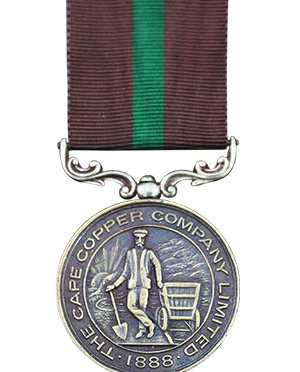
The Medal for the Defence of O’okiep (also known as the Cape Copper Co. Medal) is a private campaign medal instituted by the Cape Copper Company Limited in 1902 and awarded to members of the O’okiep Garrison who defended the town while it was besieged by Boer Commandos from 4 April to 4 May 1902, near the end of the Second Boer War.

The Cape Copper Company had its origin in the Cape Copper Mining Company, originally established in 1862 or 1863 to take over the copper mining properties of Phillips & King, an enterprise that had been involved in copper mining around O’okiep in Namaqualand since the 1850s. The Cape Copper Mining Company was restructured as the Cape Copper Company in 1888.

The garrison of O’okiep, commanded by Lieutenant Colonel W.A.D. Shelton DSO, consisted of 206 European miners, 660 “Cape Coloureds”, 44 men of the 5th Warwickshire militia and twelve men of the Cape Garrison Artillery who assisted Shelton’s troops.

The Medal for the Defense of Ookiep Design

The medal is circular, struck in silver or bronze and measures 36 millimeters in diameter.

The obverse shows a miner and copper wagon, with the Company name and date of foundation (1888) inscribed around the circumference. The reverse bears a thirteen-lined text.

The ribbon is dark brown with a central green stripe and the medal is fitted with a scroll suspender.

The Yorkshire Imperial Yeomanry Medal

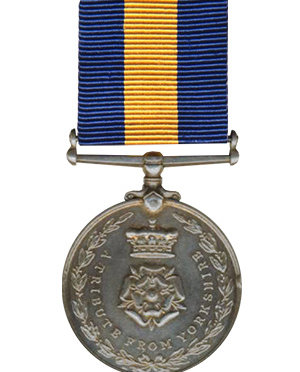
The Yorkshire Imperial Yeomanry Medal is an unofficial British Empire campaign medal instituted in 1900 and presented by the ‘people of Yorkshire’ to members of the Yorkshire Imperial Yeomanry that served in South Africa during the Second Boer War.

The original proposal to organize Regiments of Yeomanry for service in the Boer War was made by Lord Chesham and other Yeomanry officers in October 1899. On 13 December 1899, the War Office decided it would allow a contingent of volunteer forces based on the standing Yeomanry regiments to serve overseas. Simultaneously, with the establishment of the Imperial Yeomanry, Volunteer Service Companies, each of which contained 116 men, territorially affiliated with the Infantry, were also established.

A total of 66 Volunteer Service Companies served during the Boer War. Many medals were produced locally and awarded to officers and men of county regiments.

The Yorkshire Imperial Yeomanry Medal Design

The medal is a circular, struck in silver and measures 38 millimeters in diameter. Three versions of this medal were produced.

The obverse of the first two medals featured the numeral 3 below the Prince of Wales’s feathers and may be found with the dates 1900-1901 or 1901-1902. The third type has the figure “66”, denoting the two battalions that were involved.

The reverse is the same for the three versions of this medal: The white rose of Yorkshire surmounted by an imperial crown and enclosed in a laurel wreath with the inscription “A TRIBUTE FROM YORKSHIRE“.

The ribbon is dark blue with a central yellow stripe. The suspender for the first two medals was a plain ring that surmounts the medal. The third issue is of the plain, straight and swiveling style attached to the medal by a claw mount.

The recipient’s details can be found on the medal’s rim.

The Kimberley Star and Kimberley Medal

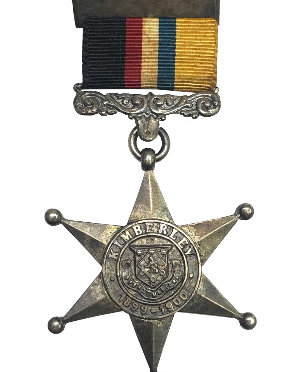
The Kimberley Star and Kimberley Medal were instituted in 1900 and awarded by the Mayor and Council of Kimberley to the defenders of the mining town against the Boer forces.

Two medals were struck in gold but about 5000 were produced in silver. The Kimberley medal (as opposed to the star) is a much scarcer award.

The Kimberley Star and Medal Design

The Star

The Kimberley Star is a six-pointed star with ball finials and a circular center and measures 43 millimeters high and 41 millimeters wide.

On the obverse is the inscription “KIMBERLEY 1899-1900” with the civic arms in the middle. The reverse is plain, except for the inscription “MAYOR’S SIEGE MEDAL 1900”. The medal’s ribbon is half yellow, half black, separated by narrow stripes of red, white and blue.

The suspension is a plain ring from a scrolled bar.

The Medal

The Kimberley Medal is a circular, struck in silver and measures 38 millimeters in diameter.

The obverse features the figure of Victory above the Kimberley Town Hall, with the dates 1899-1900 in the exergue. The reverse bears two shields with the inscription “INVESTED 15 OCT. 1899” and “RELIEVED 15 FEB. 1900”. The imperial crown appears above and the royal cipher underneath, with the legend “TO THE GALLANT DEFENDERS OF KIMBERLEY” around the circumference.

The Sultan of Zanzibar’s Medal

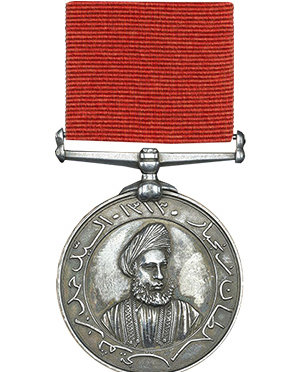
The Sultan of Zanzibar’s Medal was established in 1896 and awarded to the Zanzibari contingent who served under Lieut. Lloyd-Matthews RN in East Africa alongside British and Imperial forces.

The medal was awarded with the following clasps:

  • Pumwani
  • Jongeni
  • Takaungu
  • Mwele (inscribed only in Arabic)

The Sultan of Zanzibar’s Medal Design

The medal is circular, struck in silver and measures 36 millimeters in diameter.

The obverse shows a facing bust of Sultan Hamid bin Thwain surrounded by a Suaheli inscription in Arabic. The reverse has the same inscription in four lines.

The medal’s ribbon is plain bright scarlet.

The British North Borneo Company’s Medal 1888-1916

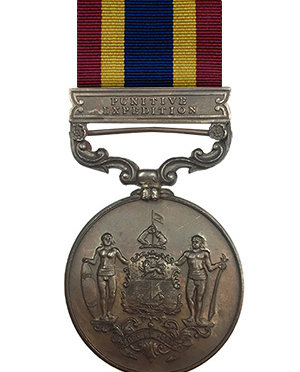
The British North Borneo Company’s Medal 1888-1916 is a British campaign medal established in 1897 and awarded for service in the 15 minor expeditions between 1883 and 1915, excluding the major action at Tambunan.

The manufacturers, Spink, supplied 12 silver medals in 1898-89 for award to officers, only three of which were named. In 1906 a further 74 silver medals were issued to be exchanged for the bronze ones initially awarded to other ranks. A further 11 silver medals were supplied unnamed later on. A total of 75 bronze medals were supplied, of which 25 were stamped with a name and sometimes rank and number.

The medal was awarded with the following clasps:

  • Punitive Expedition (1897)
  • Punitive Expeditions (1898-1915)
  • Rundum (1915)

The British North Borneo Company’s Medal 1888-1916 Design

The medal is circular, struck in silver or bronze and measures 38mm in diameter and 5mm thick.

The obverse shows the shield of the Company, supported by a warrior on either side. The company motto at the foot reads “ERGO ET PERAGO” (or “I carry and accomplish“). The reverse bears the British lion facing left, standing in front of a bush adorned with the Company flag, with a small wreath in the exergue.

The medal’s ribbon was initially gold (later yellow), watery silk and measuring 32 millimeters. It was replaced in 1917 by a 32mm ribbon with maroon edges, two yellow stripes and a dark blue central stripe. The central stripe was originally 6mm wide, although modern ones have a 10mm stripe.

The Uganda Star

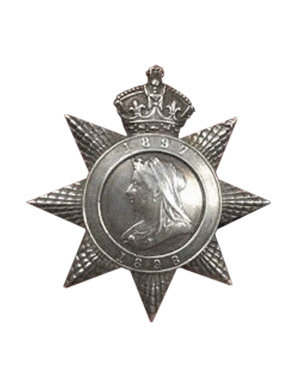
The Uganda Star is a British campaign medal approved by the Foreign Office and sanctioned by Queen Victoria in 1897 to acknowledge the loyalty of African tribal leaders.

In a few cases, the medal was also awarded to Sudanese troops (one Tunisian) who fought gallantry in quelling the serious mutiny of Sudanese troops of the Uganda Rifles.

It was for this action that British, Indian and Local forces were awarded to East and Central Africa Medal with the bar for Lubwa’s.

Only a total of 39 stars were awarded.

The Uganda Star Design

The medal is an eight-pointed uniface star struck in silver and surmounted by a crown. It was manufactured by Carrington of London and issues in a blue plush-lined case.

The obverse shows the dates 1897 and 1898 on a circular rim enclosing the Old Head or Veiled Bust of Queen Victoria. The reverse is plain.

The medal was awarded without a ribbon and was brooch-mounted.