The King Haakon VII Commemorative Medal

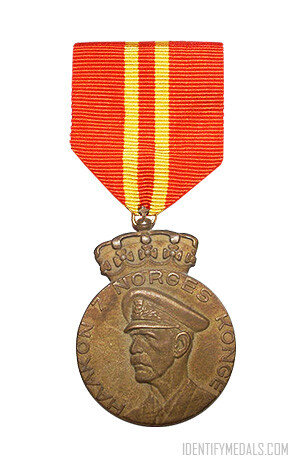
The King Haakon VII Commemorative Medal was established in 1957 to commemorate the deceased monarch on the occasion of his funeral.

The King Haakon VII Commemorative Medal of October 1, 1957 (or Kong Haakon VIIs minnemedalje 1. oktober 1957 in Norwegian) is a Norwegian award established to honor the late monarch on the occasion of his funeral, which took place on October 1, 1957.

The commemorative medal was awarded to individuals who performed duties related to King Haakon VII’s funeral. The gold version of the medal was awarded 26 times, predominantly to military personnel. The silver version was awarded 54 times, with 48 of those medals given to officers of the army, navy, and air force who led honor detachments at the funeral.

This medal holds the 30th position in the Norwegian order of precedence for decorations.

The King Haakon VII Commemorative Medal Design

The medal is available in both gold and silver.

The obverse features a depiction of King Haakon VII without his crown, crafted by the engraver Ivar Throndsen. Surrounding the portrait is the inscription “HAAKON • VII • NORGES • KONGE” (Haakon VII King of Norway).

The reverse showcases the royal monogram. The medal is topped with a royal crown and is suspended from a red ribbon. The ribbon includes a silver clasp inscribed with “1. OKTOBER 1957” (October 1, 1957).
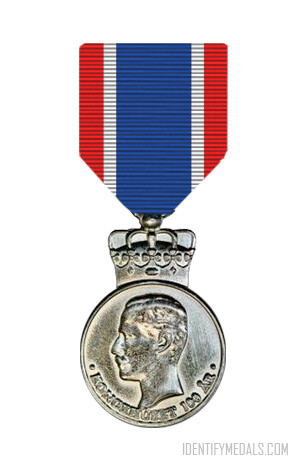
The Royal House Centennial Medal (Norway)

The Royal House Centennial Medal was established in 2005 by Harald V of Norway to commemorate the centennial of the Norwegian royal family.

The Royal House Centennial Medal (or Kongehusets 100-årsmedalje in Norwegian) is a distinguished Norwegian award established by King Harald V to commemorate the centennial of the Norwegian royal family.

The Royal House Centennial Medal was awarded as part of the celebrations for the centennial of Norwegian independence and the royal family in 2005.

Recipients included members of the Norwegian royal family, descendants of King Haakon VII and Queen Maud, members of the Royal Court, government officials, the presidium of the Norwegian Parliament, county governors, bishops of the Church of Norway, police directors, other officials, and individuals who assisted the royal family. A total of 400 medals were produced, with 366 being awarded.

The medal holds the 29th position in the Norwegian order of precedence for decorations.

The Royal House Centennial Medal Design

The Royal House Centennial Medal is crafted from silver and measures 30 mm in diameter. The medal features a royal crown affixed to the top.

The obverse depicts King Haakon VII along with the inscription “KONGEHUSET 100 ÅR” (The Royal House 100 Years). The reverse showcases a wreath made of oak leaves, with the motto “ALT FOR NORGE” (Everything for Norway) inscribed above the wreath, and the dates “1905–2005” below.

The medal is suspended from a blue ribbon with red and white edges, reflecting the colors of the Norwegian flag. This color scheme was also used for the ribbon of the Order of the Norwegian Lion. The medal was produced by the Carl Poellath company.

The Defense Service Medal (Norway)

The Defense Service Medal was established in 1982 and is awarded for outstanding or noteworthy service to the Norwegian Armed Forces.

The Defense Service Medal with Laurel Branch (or Forsvarsmedaljen med laurbærgren in Norwegian) is a prestigious military medal in Norway. Established on May 1, 1982, this medal honors outstanding or noteworthy service to the Norwegian Armed Forces.

It can be awarded to both Norwegian and foreign individuals, whether they are civilians or military personnel.

The Defense Service Medal Design

The Defence Service Medal with Laurel Branch is a round, embossed medal made of silver.

The obverse features the depiction of three swords placed side by side, with their blades pointing upwards.

The reverse bears the inscription “FORSVARET – FOR FORTJENESTER” (ARMED FORCES – FOR MERIT). The medal is suspended from a red ribbon with a central vertical stripe of silver.

A laurel branch device can be attached to the suspension ribbon of the medal, as well as to the service ribbon worn on undress uniforms, symbolizing the recipient’s meritorious service.

The Civil Defense Cross of Honor (Norway)

The Civil Defense Cross of Honor is awarded to Norwegian civil defence personnel for helping to prevent loss of life or damage to property.

The Civil Defence Cross of Honor (or Sivilforsvarets hederskors in Norwegian) is a prestigious medal awarded by the Directorate for Civil Protection and Emergency Planning of Norway.

It recognizes Norwegian civil defense personnel who demonstrate exceptional ingenuity in dangerous conditions to prevent loss of life or damage to equipment and property. The medal was established on November 6, 2003.

The Civil Defense Cross of Honor Design

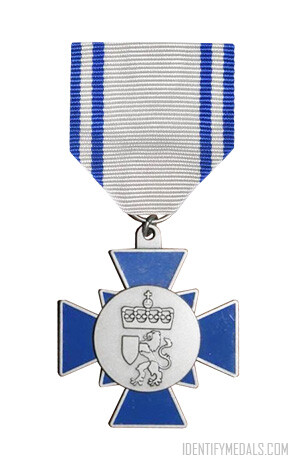
The Civil Defence Cross of Honor is crafted from silver and designed as a cross.

The obverse features blue-enamelled arms with a central medallion depicting a crowned lion holding a shield, which is the emblem of the Civil Defence.

The reverse side is plain silver, bearing the inscription “Honor et caritas” (Honor and Charity) in the center.

The ribbon is white or silver-grey with double blue edge stripes, complementing the medal’s design and significance.

The Norwegian Police Cross of Honor

The Norwegian Police Cross of Honor is awarded by the head of the National Police Directorate of Norway to Norwegian police personnel.

The Norwegian Police Cross of Honor (or Politiets hederskors/Politiets heiderskross in Norwegian) is a distinguished medal awarded by the head of the National Police Directorate of Norway.

It recognizes Norwegian police personnel who have demonstrated exceptional ingenuity in perilous conditions to prevent loss of life or damage to equipment and property.

Although the award was discontinued in 2012, it was reinstated in 2019 and awarded to retired Director of Public Prosecutions Tor-Aksel Busch, making it an active award once again.

The Norwegian Police Cross of Honor Design

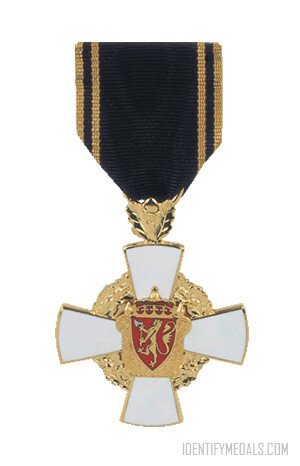
The Norwegian Police Cross of Honour is a cross made of gilded metal, suspended from a stylized spray of oak leaves.

The obverse features white-enameled arms of the cross, with the center displaying the emblem of the Norwegian Police Service: the Norwegian Coat of Arms (a gold lion on a red field) on a gold background engraved with fasces, surrounded by a wreath of oak leaves.

The reverse side, which is not enamelled, bears the inscription “HONOR ET MERITUM” (Honour and Merit) in three lines on a circular design at the center of the cross.

The ribbon is black with double yellow edges, adding a striking contrast to the medal’s design.

The Medal for Rescue at Sea (Norway)

The Medal for Rescue at Sea was instituted in 1978 and is awarded to individuals who have demonstrated courage for the saving of life at sea.

The Medal for Rescue at Sea (or Medaljen for redningsdåd til sjøs in Norwegian) is a Norwegian honor established by Royal Decree on August 25, 1978. It holds the 14th position in the order of precedence for Norwegian orders, decorations, and medals.

This medal is conferred by the Ministry of Trade and Industry, based on recommendations from the Norwegian Maritime Directorate. It is awarded to individuals who have demonstrated exceptional courage, resourcefulness, and skill in saving lives at sea.

The Medal for Rescue at Sea Design

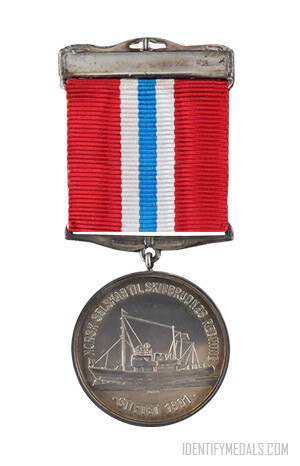
Crafted from silver, the Medal for Rescue at Sea features the Coat of Arms of Norway on the obverse, surrounded by the inscription “Kongeriket Norge” (Kingdom of Norway). The reverse bears the inscription “For Redningsdåd til Sjøs” (For Rescue at Sea) along the top edge, with an oak wreath below.

The medal is suspended from a ribbon that is red with a blue stripe edged in white down the center, mirroring the colors of the Norwegian flag.

The Armed Forces Medal for Heroic Deeds

The Armed Forces Medal for Heroic Deeds, from 1982, is given for heroic deeds done while on active service for the Norwegian Defence Force.

The Armed Forces Medal for Heroic Deeds (or Forsvarets medalje for edel dåd in Norwegian) was instituted in 1982 to honor acts of heroism performed while on active duty in the Norwegian Defence Force.

This prestigious award recognizes individuals who have demonstrated extraordinary bravery and selflessness in the service of their country. It not only serves as a tangible recognition of individual acts of heroism but also as a symbol of the values upheld by the Norwegian Defence Force. 

The Armed Forces Medal for Heroic Deeds Design

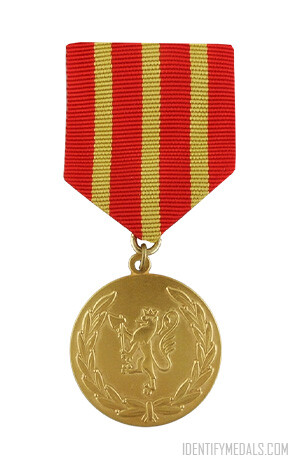
The obverse of the medal prominently features the iconic Norwegian lion, symbolizing strength, courage, and national pride. This lion motif is a significant emblem in Norwegian heraldry and represents the valiant spirit of those who serve in the armed forces.

The reverse of the medal bears the inscription “FORSVARET FOR EDEL DÅD,” which translates to “The Defence For Noble Deed.” This inscription encapsulates the essence of the award, emphasizing the noble and commendable nature of the actions recognized by this medal.

The ribbon from which the medal is suspended is red with three yellow stripes. The red color signifies courage and sacrifice, while the yellow stripes add a distinctive touch, representing honor and valor.

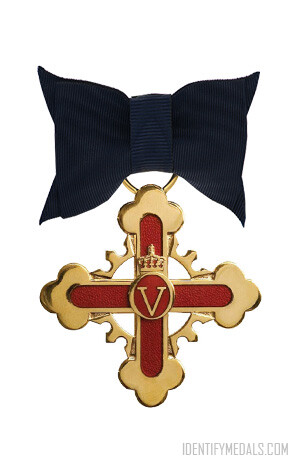
The Royal Norwegian Order of Merit

The Royal Norwegian Order of Merit is an award reserved usually for foreigners and diplomats and was instituted by King Olav V in 1985.

The Royal Norwegian Order of Merit (or Den Kongelige Norske Fortjenstorden in Norwegian) was established by King Olav V in 1985.

This prestigious order is awarded to individuals who have rendered exceptional service in the interests of Norway, including foreigners, Norwegian citizens residing abroad, diplomats from the Ministry of Foreign Affairs, foreign civil servants in Norway, and Norway’s honorary consuls. Unlike the Royal Norwegian Order of St. Olav, which is typically awarded to Norwegian citizens living in Norway, the Order of Merit recognizes contributions from those outside the country or those serving Norway in an international capacity.

Nominations for the Order are processed through the Protocol Department of the Royal Ministry of Foreign Affairs. The King grants the Order based on recommendations from the Lord Chamberlain of the Court, the Chief Protocol Officer of the Royal Ministry of Foreign Affairs, and the Head of Chancery of the Royal Norwegian Order of St. Olav.

The Order of Merit Grades

The order has five grades:

  • Grand Cross Commander, subdivided into:
    • Commander with Star 
    • Commander
  • Knight, subdivided into:
    • Knight 1st Class 
    • Knight

The Order of Merit Design

The Order features a distinctive deep blue moiré ribbon. The Grand Cross is worn on a broad sash draped over the right shoulder.

The Commander’s Cross is suspended from a ribbon worn around the neck. The Knight’s Cross is displayed on the left breast, also attached to a ribbon.

For women, both the Commander’s Cross and the Knight’s Cross are worn on the left breast, with the ribbon fashioned into a bow. Unlike the Order of St. Olav, the insignia of the Royal Norwegian Order of Merit is owned by the recipient.

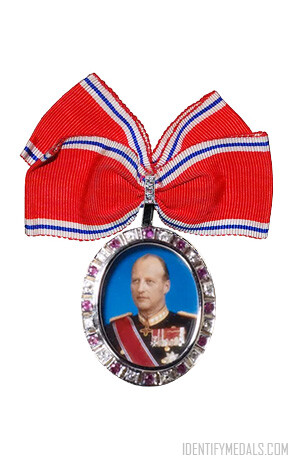
The Royal Family Order of Harald V

The Royal Family Order of Harald V is a prestigious honor conferred by the King of Norway upon female members of the royal family.

The Royal Family Order of Harald V (or Kong Harald Vs Husorden in Norwegian) is a prestigious honor conferred by the King of Norway specifically upon female members of the Norwegian royal family. Unlike the other two Royal Family Orders, this one is still actively awarded, highlighting its contemporary relevance within the royal household.

King Harald V, who ascended to the throne in 1991, has continued the tradition of awarding family orders as a means of honoring and recognizing the efforts of royal family members. His reign has been characterized by a modern approach to monarchy, balancing tradition with contemporary values, and this order is a testament to that balance.

This order serves as a mark of distinction and recognition for the female members of the royal family, acknowledging their service, dedication, and contributions to the monarchy and the nation. The active bestowal of this order reflects King Harald V’s appreciation and support for the roles played by women in the royal family.

The Royal Family Order of Harald V Design

The insignia of the Royal Family Order of Harald V is both elegant and symbolic. It features a portrait of King Harald V in his middle years, encased within a jeweled frame.

This portrait is suspended from a distinctive red ribbon, which is accented by a blue stripe along the edges, further bordered by a thin white stripe. The combination of these colors and the intricate design of the insignia underscores the honor’s regal significance and the esteem in which it is held.

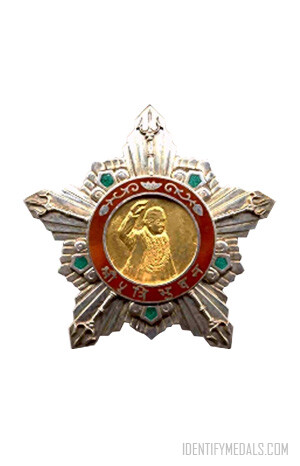
The Tribhuvan Order of the Footprint of Democracy

The Tribhuvan Order of the Footprint of Democracy was established by King Mahendra on May 2, 1956, in honor of his father, King Tribhuvan.

  • Time Period: Post-WW2
  • Institution: 16 December 1962
  • Country: Nepal

The Tribhuvan Order of the Footprint of Democracy (or Tribhuvan Prajatantra Shripada in Nepali) was established by King Mahendra on May 2, 1956, in honor of his father, King Tribhuvan.

This prestigious order is conferred exclusively on Nepalese citizens who have provided valuable services to the country, particularly those associated with the revolution that led to the removal of the Rana regime.

The order comprises several ranks:

  • Sovereign: Parama-Gaurabmaya-Tejaswi-Tribhuvan-Prajatantra-Shripada
  • Grand Master: Ati-Gaurabmaya-Tejaswi-Tribhuvan-Prajatantra-Shripada

Additionally, there are five classes for ordinary members:

  1. Maha-Gaurabmaya-Tejaswi-Tribhuvan-Prajatantra-Shripada
  2. Sugaurabmaya-Tejasvi-Tribhuvan-Prajatantra-Shripada
  3. Gaurabmaya-Tejaswi-Tribhuvan-Prajatantra-Shripada
  4. Tejaswi-Tribhuvan-Prajatantra-Shripada
  5. Tribhuvan-Prajatantra-Shripada

The Tribhuvan Order of the Footprint of Democracy Design

The insignia features a circular medallion at its center. The central medallion is surrounded by intricate goldwork and is encircled by a decorative, multi-layered border that radiates outward.

The central part of the insignia contains a detailed and finely crafted footprint, symbolizing the “Footprint of Democracy.” The footprint is set against a richly colored background. Encircling the central medallion, the insignia includes a series of elegant, ornamental designs.