The Hero of Ukraine Medal

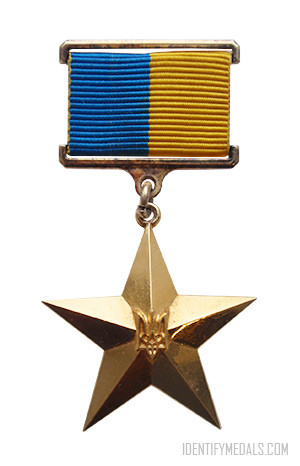
The Hero of Ukraine Medal (Герой України) is the highest national title conferred upon an individual citizen by the President of Ukraine.

  • Time Period: Post-WW2
  • Year of Institution: 26 November 1998
  • Country: Ukraine

The Hero of Ukraine Medal (Герой України) is the highest national title conferred upon an individual citizen by the President of Ukraine. The award was created in 1998 by President Leonid Kuchma.

The title is granted to two different order recipients: the civilian Order of the State, and the military Order of the Gold Star. These are the highest national award to citizens for accomplishing a remarkable work achievement and for accomplishing a remarkable heroic act.

The “Hero of Ukraine” medal can be traced to the Soviet medals Hero of the Soviet Union (established 16 April 1934) and the Hero of Socialist Labor (established 27 December 1938), which were the highest decorations in the Soviet Union. After the dissolution of the Soviet Union in 1991, similar awards were created in the resulting independent countries, including Ukraine

The Hero of Ukraine Medal Design

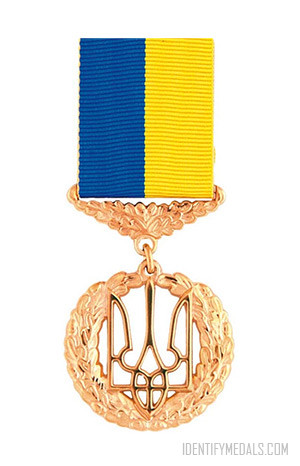
Two medals were created by Ukrainian law to differentiate between the titles. Both medals have a ribbon measuring 45 mm (1.8 in) long and 28 mm (1.1 in) wide, divided equally into two bands (a blue band on the left and a yellow band on the right, matching the colors of the Ukrainian flag). 

The Order of State and Order of Gold Star are as follows:
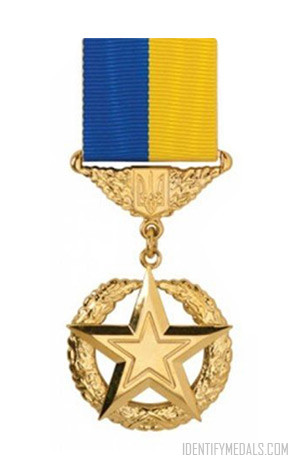
Order of Gold Star - Ukrainian Medals
Ukrainian Medals - Order of State

The New York City Police Department Medal of Valor

The New York City Police Department Medal of Valor is the department’s third highest medal, conferred for acts of outstanding bravery.

The New York City Police Department Medal of Valor is the department’s third highest medal, conferred for acts of outstanding personal bravery intelligently performed in the line of duty at imminent personal hazard to life under circumstances evincing a disregard of personal consequences.

Mayor Michael Bloomberg and NYPD Police Commissioner Raymond Kelly awarded the first 13 Medals for Valor at the 2006 Medal Day Ceremony in New York.

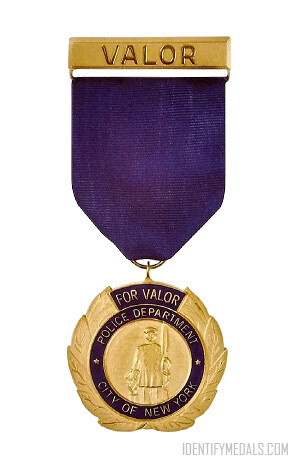
The NYPD Medal of Valor Design

The obverse of the medal bears the image of the Police Memorial Statue, representing the years of selfless service that New York City police officers have given to its citizens. Surrounding the center is a Mediterranean evergreen laurel leaves, representing honor and glory dating back to ancient Rome. The outer background and ribbon are police blue. The words “For Valor, Police Department City of New York” are written on the face of the medal in gold lettering. The two gold stars signify the level of importance associated with this recognition. The reverse bears the inscription of the recipient’s name.

The breast bar is a solid blue bar.

More New York City Police Department Medals

NYPD medals are awards presented by the New York City Police Department to recognize and honor the bravery, service, and exceptional achievements of its officers. These medals serve as symbols of honor and pride within the NYPD, highlighting the commitment and sacrifice of its members in safeguarding the communities they serve. 

The New York City Police Department Medal of Honor

The New York City Police Department Medal of Honor is the highest law enforcement medal of the NYPD and awarded for extraordinary bravery.

The New York City Police Department Medal of Honor is the highest law enforcement medal of the NYCPD and awarded for individual acts of extraordinary bravery performed in the line of duty at extreme risk and danger to life.

The NYPD Medal of Honor was created on October 23, 1973, although there are some earlier versions from as early as 1871. Back then, the decoration was known by a variety of names such as the “Police Silver Medal” and “Gold Medal of Valor“. These were first awarded on August 17, 1871 to Patrolman Bernard Tull of the 19th Precinct who arrested a burglar after being shot at. 

The New York City Police Department Medal of Honor was created in 1912 and was awarded until 1972, when it was redesigned.

The NYPD Medal of Honor Design

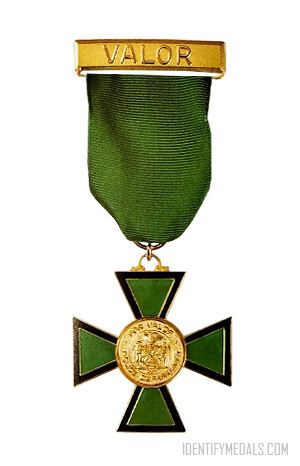
The initial medals were silver or gold and had the shape of the then shield of the department. On the obverse were the arms of the City of New York, the names of the police commissioners, and the words “Municipal Police”. On the reverse was an inscription describing the act for which the medal was awarded.

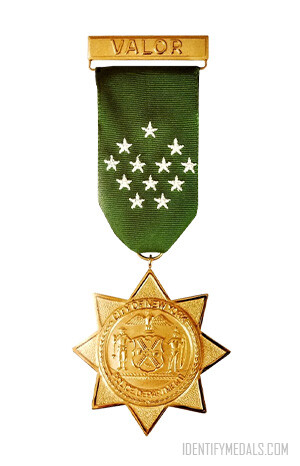
Later, the NYPD medal was changed to a silver medal in the shape of a police shield. On the obverse is the figure of a draped female placing a wreath upon the head of a police officer. On the reverse is an inscription of the act of bravery and the names of the city’s commissioners.

The medal hangs from a ring and suspender on which the letters “NY” are interlocked and attached to a top bar that is inscribed with the word “valor”.

The stars on the green ribbon commemorate the city’s original 12 police constables, who began to patrol in the 1700s.

More New York City Police Department Medals

NYPD medals are awards presented by the New York City Police Department to recognize and honor the bravery, service, and exceptional achievements of its officers. These medals serve as symbols of honor and pride within the NYPD, highlighting the commitment and sacrifice of its members in safeguarding the communities they serve. 

The Vishisht Seva Medal

  • Time Period: Post-WW2
  • Institution: 26 January 1960
  • Country: India

The Vishisht Seva Medal is a decoration of the Indian armed forces awarded for “distinguished service of a high order” to all ranks of the Indian Armed forces. The award carries with it the right to use “VSM” as post-nominal letters.

The medal was originally established as the “Vishisht Seva Medal, Class III” on 26 January 1960. It may be granted posthumously.

The Vishisht Seva Design

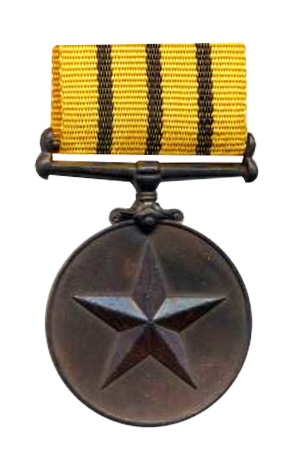
The medal is circular, truck in silver, and measures 35 mm in diameter. It’s fitted to a plain horizontal bar with standard fittings.

The obverse bears the State Emblem. On its reverse, it has a five pointed star.

The ribbon is golden color with three blue vertical stripes in the center.

The Ati Vishisht Seva Medal

  • Time Period: Post-WW2
  • Institution: 26 January 1960
  • Country: India

The Ati Vishisht Seva Medal is a military award of India for distinguished service of an exceptional order to all ranks of the armed forces. It was established in 1960 and is a peacetime equivalent of Uttam Yuddh Seva Medal.

The Ati Vishisht Seva Medal was originally instituted as the “Vishisht Seva Medal, Class II” on 26 January 1960.

The Ati Vishisht Seva Design

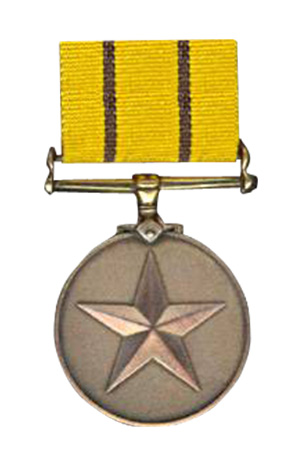
The medal is struck in silver gilt, circular and measures 35 mm in diameter. 

The obverse bears the Lion Capital. On its reverse, it has a five pointed star.

The ribbon is golden color with two blue vertical stripes.

The Param Vishisht Seva Medal

  • Time Period: Post-WW2
  • Institution: 26 January 1960
  • Country: India

The Param Vishisht Seva Medal is a military award of India constituted in 1960 and awarded in recognition to exceptional peace-time service of the most exceptional order. The medal was originally instituted as the “Vishisht Seva Medal, Class I” on 26 January 1960. 

 All ranks of the Indian Armed Forces including Territorial Army, Auxiliary and Reserve Forces, Nursing officers and other members of the Nursing services and other lawfully constituted Armed Forces are eligible for the award. The medal may be awarded posthumously.

The Param Vishisht Seva Design

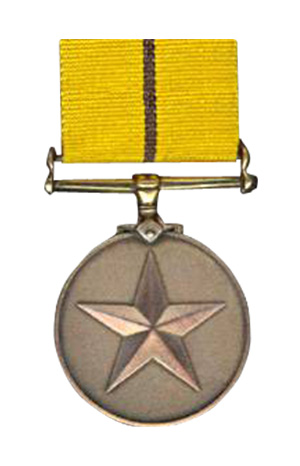
The medal is struck in gold gilt, round, and measures 35 mm in diameter. It’s fitted to a plain horizontal bar with standard fittings.

The obverse bears the State Emblem. On its reverse, it has a five pointed star.

The ribbon is golden color with one blue vertical stripe in the center, which divides it into two equal parts. If a recipient of the medal is subsequently awarded the medal again, every such further award shall be recognized by a bar to be attached to the riband by which the medal is suspended. 

The Yudh Seva Medal

  • Time Period: Post-WW2
  • Institution: 26 June 1980
  • Country: India

The Yudh Seva Medal is one of India’s military decorations for distinguished service during wartime. It is awarded for a high degree of distinguished service in an operational context, such as times of war, conflict, or hostilities.

The medal may be awarded posthumously.

The Yudh Seva Design

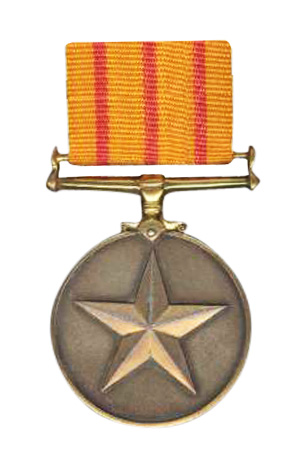
The medal is circular and measures 35 mm in diameter. It’s fitted to a plain horizontal bar with standard fittings.

The obverse bears the State Emblem and the inscription “YUDH SEVA MEDAL“. On its reverse, it has a five pointed star.

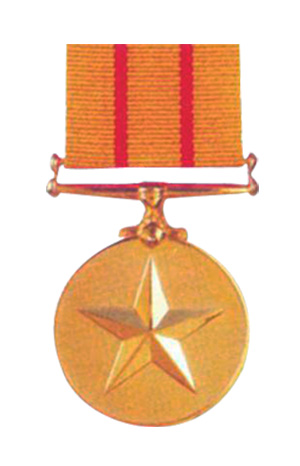
The ribbon is golden color with three red vertical stripes in the center.

The Uttam Yudh Seva Medal

  • Time Period: Post-WW2
  • Institution: 26 June 1980
  • Country: India

The Uttam Yudh Seva Medal is one of India’s military decorations for Wartime Distinguished Service in an operational context (times of war, conflict, or hostilities).

The Uttam Yudh Seva Design

The medal is struck in gold gilt, circular and measures 35 mm in diameter. It’s fitted to a plain horizontal bar with standard fittings.

The obverse bears the State Emblem and the inscription “UTTAM YUDH SEVA MEDAL“. On its reverse, it has a five pointed star.

The ribbon is golden color with two red vertical stripes.

The Sarvottam Yudh Seva Medal

  • Time Period: Post-WW2
  • Institution: 26 June 1980
  • Country: India

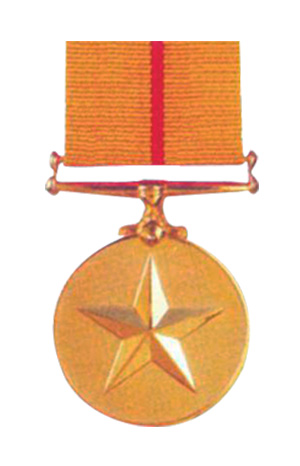
The Sarvottam Yudh Seva Medal is India’s highest wartime distinguished service decoration. It is awarded in an operational context such as during times of war, conflict, or hostilities. It is the military equivalent of the Param Vishisht Seva Medal.

The Sarvottam Yudh Seva Medal may be awarded to all ranks of the Army, the Navy and the Air Force including those of Territorial Army Units, Auxiliary and Reserve Forces and other lawfully constituted Armed Forces. The medal can be awarded posthumously.

The Sarvottam Yudh Seva Medal has only been awarded three times in history: To Lieutenant General A.S. Kalkat, the overall commander of the Indian Peacekeeping Force (IPKF) in Sri Lanka. To Air Marshal Vinod Patney was the Western Air Commander and to Lieutenant General H.M. Khanna was the Northern Army Commander during the Kargil War.

The Sarvottam Yudh Seva Design

The medal is struck in gold gilt, circular and measures 35 mm in diameter. It’s fitted to a plain horizontal bar with standard fittings.

The obverse bears the State Emblem and the inscription “SARVOTTAM YUDH SEVA MEDAL“. On its reverse, it has a five pointed star.

The ribbon is golden color with one red vertical stripe in the center, which divides it into two equal parts. If a recipient of the medal is subsequently awarded the medal again, every such further award shall be recognized by a bar to be attached to the riband by which the medal is suspended. 

The Vayu Sena Medal

The Vayu Sena Medal is a gallantry award for servicemen in the Indian Air Force. It was instituted in 1960 and usually awarded in peacetime.

  • Time Period: Post-WW2
  • Institution: 17 June 1960
  • Country: India

The Vayu Sena Medal is a gallantry award for servicemen in the Indian Air Force. It was instituted on 17 June 1960 by the President of India and is usually awarded in peacetime. However, it has been granted during times of conflict for acts of gallantry in the face of enemy (although not as many times as the Vir Chakra Decoration).

It is possible to receive the Vayu Sena Medal posthumously. 

The Vayu Sena Medal Design

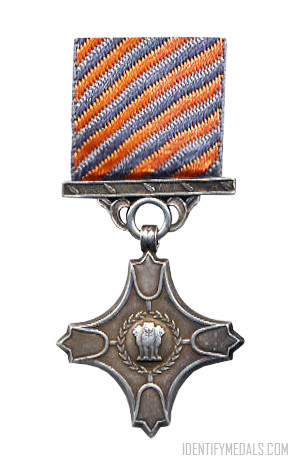
The medal is a four-armed silver star with the ends shaped like lotus flower blooms. 

The obverse bears the national emblem of India. The reverse shows a Himalayan Eagle with wings spread, and the legend, above and below, in Hindi “Vayu Sena Medal” or “Air Force Medal“. 

The ribbon measure 30 mm wide and alternates 2mm diagonal stripes in grey and orange-saffron.