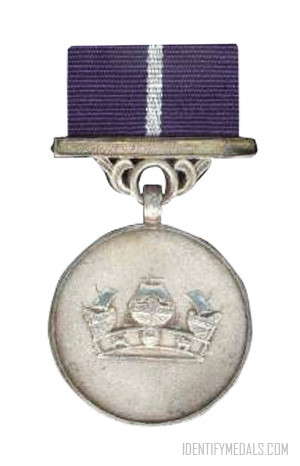
The Nau Sena Medal

  • Time Period: Post-WW2
  • Institution: 17 June 1960
  • Country: India

The Nau Sena Medal is a gallantry award for servicemen in the Indian Navy instituted on 17 June 1960 for individual acts of exceptional devotion to duty or courage as have special significance for the Navy.

The Nao Sena Medal was instituted by the Government of India, with the approval of the President of India.

The Nau Sena Medal Design

The medal is pentangular in shape, struck in silver and has curved sides. 

The obverse bears an embossed Naval Crest. The reverse shows a trident within a circle and rope. There’s also an inscription reading “Nau Sena Medal” in Hindi embossed along the upper rim.

The ribbon is navy blue with a single central white line and measures 32 mms wide. 
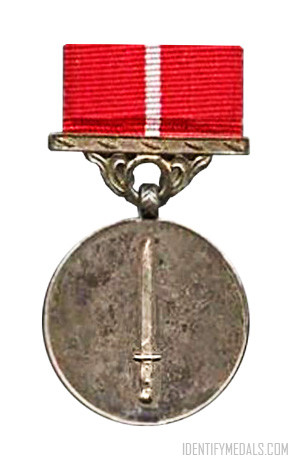
The Sena Medal

  • Time Period: Post-WW2
  • Institution: 17 June 1960
  • Country: India

The Sena Medal is a decoration from India awarded to members of the Indian army for acts of exceptional devotion to duty or courage. It was established on 17 June 1960 by the Government of India, with the approval of the President of India, and may be made posthumously.

The Sena Medal can be awarded for gallantry or for distinguished service carried out by any soldier not in the face of the enemy – so it serves as a sort of general commendation medal for the Indian Army too.

From 1 February 1999, the central government set a monthly stipend of Rs. 250 (later revised, currently around Rs. 2000) for recipients of the award when given for bravery. 

The Sena Medal Design

The medal is circular in shape. The obverse bears a bayonet pointing upwards. The reverse shows a standing soldier with the legend in Hindi “Sena Medal” above.

The ribbon is red with a single central white line, measuring 32 mms long. 

The Shaurya Chakra Decoration

  • Time Period: Post-WW2
  • Institution: 4 January 1952
  • Country: India

The Shaurya Chakra Decoration was established in 1952 and is India’s third-highest peacetime military decoration awarded for courageous action or self-sacrifice while not engaged in direct action with the enemy. 

The Ashoka Chakra is awarded to civilians and military personnel, sometimes posthumously. The decoration was first established as the “Ashoka Chakra, Class III”, the name it kept until 27 January 1967.

Since July 1999, the decoration can also be given to Civilians of either gender in all walks of life, other than members of Police Forces or recognized Fire Services. It is the peacetime equivalent of the Vir Chakra. It is generally awarded for Counter-Insurgency operations and actions against the enemy during peace-time.

The Shaurya Chakra Design

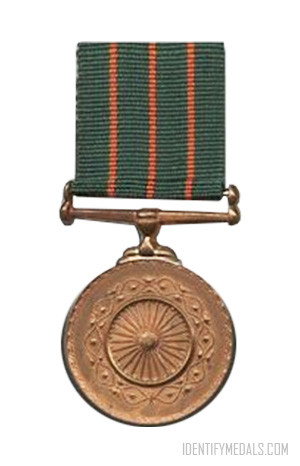
The medal is circular in shape, struck in bronze and measures 1-3/8 inches in diameter.

The obverse has the chakra (wheel) of Ashoka surrounded by a lotus wreath and an ornate edge. The reverse has the inscription “Shaurya Chakra” embossed in Hindi and English along the upper and lower edges of the medal. The center is blank.

The ribbon is green with three thin orange lines.

The Kirti Chakra Decoration

  • Time Period: Post-WW2
  • Institution: 4 January 1952
  • Country: India

The Kitri Chakra Decoration was established in 1952 and is India’s second-highest peacetime military decoration. It’s awarded for valour, courageous action or self-sacrifice away from the field of battle.

The Kitri Chakra may be awarded to civilians and military personnel, and can be given posthumously. The decoration is the peacetime equivalent of the Maha Vir Chakra.

Before 1967, the award was known as the Ashoka Chakra, Class II. The statutes were revised and the decoration renamed on 27 January 1967.

The Kitri Chakra Design

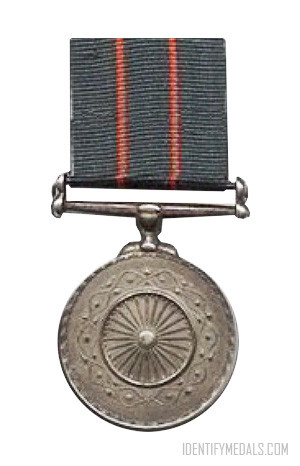
The medal is circular in shape, struck in standard silver and measures 1-3/8 inches in diameter.

The obverse has the chakra (wheel) of Ashoka surrounded by a lotus wreath and an ornate edge. The reverse has the inscription “Kitri Chakra” embossed in Hindi and English along the upper and lower edges of the medal. The center is blank.

The ribbon is green with two thin orange lines in the center.

The Ashoka Chakra Decoration

The Ashoka Chakra Decoration was established in 1952 and is India’s highest peacetime military decoration awarded for valor.

  • Time Period: Post-WW2
  • Institution: 4 January 1952
  • Country: India

The Ashoka Chakra Decoration was established in 1952 and is India’s highest peacetime military decoration awarded for valor or self-sacrifice. It is the peacetime equivalent of the Param Vir Chakra (PVC) decoration. 

The Ashoka Chakra is awarded for the “most conspicuous bravery or some daring or pre-eminent valor or self-sacrifice” not in the face of the enemy and may be given to either military or civilian personnel.

The decoration was originally established on 4 January 1952 as the “Ashoka Chakra, Class I” and was the first step of a three-class sequence of non-combatant bravery decorations. These were removed in 1967 and renamed as the Ashoka Chakra, Kirti Chakra, and Shaurya Chakra decorations. 

The Ashoka Chakra Design

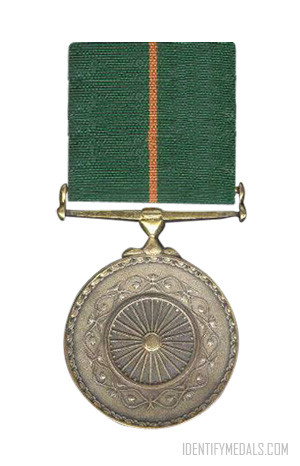
The medal is circular in shape, struck in gold gilt and measures 1-3/8 inches in diameter.

The obverse has the chakra (wheel) of Ashoka surrounded by a lotus wreath and an ornate edge. The reverse has the inscription “Ashoka Chakra” embossed in Hindi and English along the upper and lower edges of the medal. The center is blank.

The ribbon is green with a thin orange line in the center.

The Vir Chakra Decoration

The Vir Chakra Decoration was established in 1950 and is awarded for wartime military bravery and acts of conspicuous gallantry.

  • Time Period: Post-WW2
  • Institution: 26 January 1950
  • Country: India

The Vir Chakra Decoration was established on 26 January 1950 and is the third highest wartime gallantry award of India. It is presented for acts of conspicuous gallantry in the presence of the enemy on the battlefield.

The decoration was created after the independence of the country, when the British honors and awards system in India informally came to an end. It replaced the British Distinguished Service Cross (DSC), Military Cross (MC) and Distinguished Flying Cross (DFC) awards.

Award of the decoration carries with it the right to use Vr.C. as a postnominal abbreviation. It also carries with it a cash allowance and, in some cases, a lump sum cash award.

The Vir Chakra Design

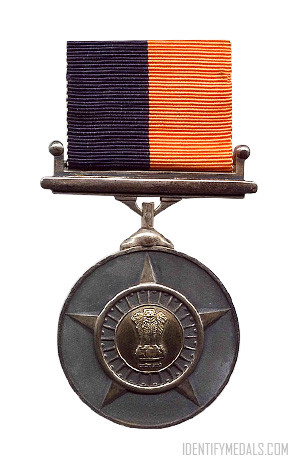
The medal is circular in shape, struck in silver and measures 1-3/8 inches.

The obverse has an embossed five-pointed circular star. In the center is the chakra and the state emblem. The reverse has the inscription “Vir Chakra” embossed in Hindi and English, with two lotus flowers in the middle.

The ribbon or ribband measures about 3.2 cm in width and is half dark blue and half orange-saffron.

The Maha Vir Chakra Decoration

  • Time Period: Post-WW2
  • Institution: 26 January 1950
  • Country: India

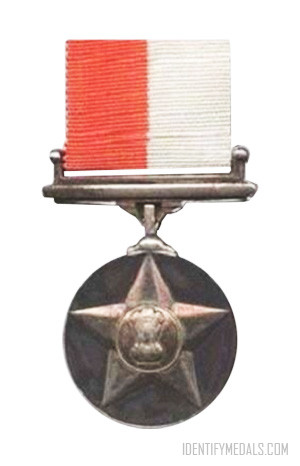
The Maha Vir Chakra Decoration was established on 26 January 1950 and is the second highest military decoration in India, after the Param Vir Chakra.

The decoration was awarded for acts of conspicuous gallantry in the presence of the enemy, whether on land, at sea or in the air. It replaced the British Distinguished Service Order (DSO). The decoration was created after the independence of the country, when the British honors and awards system in India informally came to an end. Prime Minister Jawaharlal Nehru decided to give gallantry awards for the ongoing conflict in Jammu and Kashmir in June 1948 it was decided to institute new Indian awards for gallantry. These included the Param Vir Chakra, the Maha Vir Chakra, and the Vir Chakra decorations.

The Maha Vir Chakra Design

The medal is circular in shape and struck in silver.

The obverse has an embossed five-pointed circular star. In the center is the gilded state emblem of India. The reverse has the inscription “Mahavira Chakra” embossed in Hindi and English, with two lotus flowers in the middle.

The ribbon or ribband measures about 3.2 cm in width and is half-white and half-orange riband.

The Param Vir Chakra Decoration

The Param Vir Chakra Decoration was established in 1950 and is awarded for displaying distinguished acts of valor during wartime.

  • Time Period: Post-WW2
  • Institution: 26 January 1950
  • Country: India

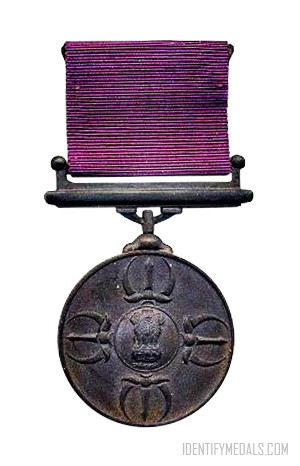
The Param Vir Chakra Decoration was established on 26 January 1950 and is awarded for displaying distinguished acts of valor during wartime. The name translates as the “Wheel of the Ultimate Brave“, and the award is granted for “most conspicuous bravery in the presence of the enemy“. 

The decoration was created after the independence of the country, when the British honors and awards system in India informally came to an end. Prime Minister Jawaharlal Nehru decided to give gallantry awards for the ongoing conflict in Jammu and Kashmir in June 1948 it was decided to institute new Indian awards for gallantry. These included the Param Vir Chakra Decoration as well as the Maha Vir Chakra (MVC), and the Vir Chakra (VrC) Decorations.

The Param Vir Chakra Decoration was established by the first President of India, Rajendra Prasad, with effect from 15 August 1947 (Independence Day of India). The medal carries with it the right to use “PVC” as a post-nominal.

The Param Vir Chakra Design

The medal is circular in shape, struck in bronze, and measures 35 mm in diameter (one and three-eighth inches). 

The obverse has an embossed design with four replicas of Indra’s Vajra with the state emblem in the center. The reverse has the inscription “Param Vir Chakra“, both in Hindi and English, as well as two lotus flowers between the sentences. 

The medal is suspended by a plain purple-colored ribbon 33 mm (one and a quarter inches) in width. 

The Padma Shri Award

  • Time Period: Post-WW2
  • Institution: 2 January 1954
  • Country: India

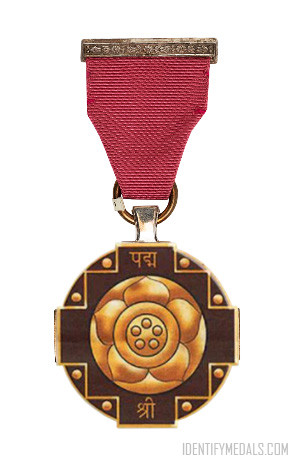
The Padma Shri Award was established in 1954 and is the fourth-highest civilian award of the Republic of India, the first one being the Bharat Ratna.

The award is given every year on India’s Republic Day to citizens of India in recognition of their distinguished contribution in various spheres of activity including the arts, education, industry, literature, science, acting, medicine, social service and public affairs. Some distinguished individuals who were not citizens of India but did contribute in various ways to India have also received this award.

The Padma Shri Design

The award is made in burnished bronze with white gold embossing.

It bears, on the obverse, the words “Padma” (meaning lotus) and “Shri” (the honorific equivalent of Mr. or Ms.) in Devanagari above and below the pattern of a lotus flower. 

The Padma Bhushan Award

  • Time Period: Post-WW2
  • Institution: 2 January 1954
  • Country: India

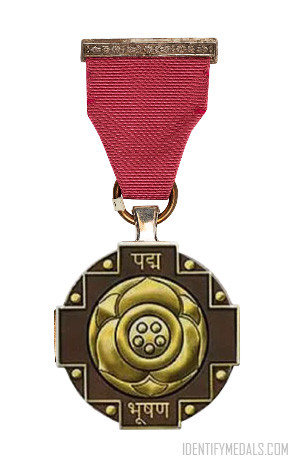
The Padma Bhushan Award was established on 2 January 1954 and is the third-highest civilian award of the Republic of India, the first one being the Bharat Ratna and the second the Padma Vibhushan.

The award is given for “distinguished service of a high order…without distinction of race, occupation, position or sex”. This includes service in any field including service rendered by Government servants including doctors and scientists and excluding public sector workers.

Recommendations for the award are submitted between 1 May and 15 September each year to the Prime Minister of India.

The Padma Bhushan Design

The original award from 1954 was specified as a circle made of standard silver and measuring 35 mm (1 38 inches) in diameter, with rims on both sides.

The obverse had the lotus flower embossed in the center and the inscription “Padma Bhushan” in Devanagari script inscribed above along the upper edge. The bottom edge had an embossed floral wreath. The reverse had the Emblem of India in the center and the inscription “Desh Seva” in Devanagari Script on the lower edge. The ribbon was pink. 

In 1955, the design was modified. The current decoration is a circular-shaped bronze-toned medallion measuring 44 mm (34 inches) in diameter. The obverse has a central pattern and a knob carved within each of the outer angles of it. There is also an embossed lotus flower in the center, with the inscription “Padma” written in Devanagari script above and “Bhushan” below it. The reverse keeps the emblem of India and the national motto “Satyameva Jayate” (“Truth alone triumphs”), in Devanagari Script below. 

The ribbon or riband is pink and measures 32 mm wide.