The Order of the Sacred Treasure

The Order of the Sacred Treasure (or 瑞宝章 Zuihō-shō) is the most widely conferred Japanese order. It was established in 1888 by Emperor Meiji.

The Order of the Sacred Treasure (or 瑞宝章 Zuihō-shō in Japanese) is the most widely conferred Japanese order and it was established on 4 January 1888 by Emperor Meiji and originally called the Order of Meiji. It is awarded for both civil and military merit, though of a lesser degree than that required for the conferment of the Order of the Rising Sun.

It was initially awarded in eight classes, but since 2003 this has been changed to six classes (the lowest two medals were abolished that year). The Order is awarded to those who have made distinguished achievements in research fields, business industries, healthcare, social work, state/local government fields or the improvement of life for handicapped/impaired persons.

Although the order was originally only given to males, it’s been made available to women since 1919. Conventionally, a diploma is prepared to accompany the insignia of the order. In some rare instances, the personal signature of the emperor will have been added.
The Order of the Secret Treasure Design

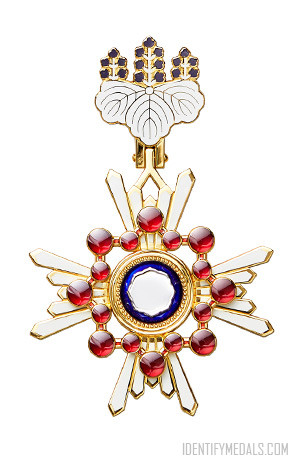
The insignia of the order incorporates symbols for the three imperial treasures: the Yata Mirror, so sacred that not even the Emperor is allowed to look at it; the Yasakani Jewel, which is made of the finest jade; and the Emperor’s personal sword.

The star for the Grand Cordon and Second Class has two sets of Maltese crosses, one in gilt and one placed diagonally in silver.

The badge for the first through sixth classes is a Maltese cross, in gilt (1st–4th classes), gilt and silver (5th class) and silver (6th class), with white enameled rays (representing the sword). The central disc is blue, bearing an eight-pointed silver star (representing the mirror), surrounded by a wreath with red-enameled dots (representing the jewel).

Until 2003, when it was abolished, the badge of the seventh and eighth classes was an eight-pointed silver medal, partially gilded for the 7th class.

The Order of the Rising Sun

The Order of the Rising Sun (Kyokujitsu-shō) was the first national decoration awarded by the Japanese government, established in 1875.

The Order of the Rising Sun (旭日章 Kyokujitsu-shō) is a Japanese order established on 10 April 1875 by decree of the Council of State. The Order was the first national decoration awarded by the Japanese government.

The order is conferred upon those who have made distinguished achievements in international relations, promotion of Japanese culture, advancements in their field, development in welfare, or preservation of the environment. Prior to the end of World War II, it was also awarded for exemplary military service. 

While it is the third highest order bestowed by the Japanese government, it is however generally the highest ordinarily conferred order. The highest Japanese order, the Order of the Chrysanthemum, is reserved for heads of state or royalty, while the second highest order, the Order of the Paulownia Flowers, is mostly reserved for politicians.

The awarding of the Order is administered by the Decoration Bureau of the Cabinet Office headed by the Japanese Prime Minister. It is awarded in the name of the Emperor and can be awarded posthumously.

The Order of the Rising Sun Medal Classes

The Order was awarded in nine classes until 2003 and from then on in six classes.

  • ribbon bar 1st Class: Grand Cordon
  • ribbon bar 2nd Class: Gold and Silver Star (Rays, Principal Grade)
  • ribbon bar 3rd Class: Gold Rays with Neck Ribbon (Cordon, Middle Grade)
  • ribbon bar 4th Class: Gold Rays with Rosette (Cordon, Junior Grade)
  • ribbon bar 5th Class: Gold and Silver Rays (Double Rays)
  • ribbon bar 6th Class: Silver Rays (Single Ray)
  • ribbon bar 7th Class: Green Paulownia Leaves
  • ribbon bar 8th Class: White Paulownia Leaves
The Order of the Rising Sun Medal Design

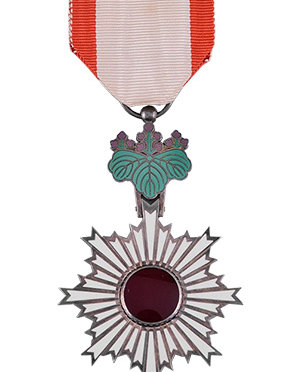
The badge features rays of sunlight from the rising sun. The design symbolizes energy as powerful as the rising sun in parallel with the “rising sun” concept of Japan (“Land of the Rising Sun“).

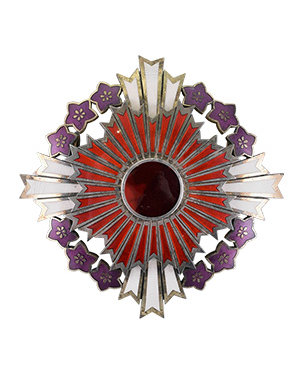
The star for the Grand Cordon and Second Class is a silver star of eight points, each point having three alternating silver rays; the central emblem is identical to the badge. It is worn on the left chest for the Grand Cordon, on the right chest for the 2nd Class.

The badge for the Grand Cordon to Sixth Classes is an eight-pointed badge bearing a central red enameled sun disc, with gilt points (1st–4th Classes), with four gilt and four silver points (5th Class), or with silver points (6th Class); each point comprises three white enameled rays. It is suspended from three enameled paulownia leaves on a ribbon in white with red border stripes, worn as a sash from the right shoulder for the Grand Cordon, as a necklet for the 2nd and 3rd Classes and on the left chest for the 4th to 6th Classes (with a rosette for the 4th Class).

The badge for the Seventh and Eighth Classes consisted of a silver medal in the shape of three paulownia leaves, enameled for the 7th Class and plain for the 8th Class. Both were suspended on a ribbon, again in white with red border stripes, and worn on the left chest. Both classes were abolished in 2003 and replaced by the Order of the Paulownia Flowers, a single-class order that now ranks above the Order of the Rising Sun.

The ribbon of the Order references the colors of the Japanese flag (a red disc on a white background) but are represented in stripes (a central large white stripe and smaller red ones on the edges).

Where to Find an Order of the Rising Sun Medal

Right Now on eBay 
Clicking a link to eBay may result in a referral commission being paid if a purchase is made.
Loading...

The Order of the Paulownia Flowers

The Order of the Paulownia Flowers is an order presented by the Japanese government and established in 1888 during the Meiji Restoration.

The Order of the Paulownia Flowers (桐花章 Tōka shō) is an order presented by the Japanese government and established in 1888 during the Meiji Restoration as the highest award in the Order of the Rising Sun.

The only grade of the order is Grand Cordon of the Order of the Paulownia Flowers (旭日桐花大綬章 Kyokujitsu tōka daijushō), which ranks higher than the Order of the Rising Sun but lower than the Order of the Chrysanthemum.

Traditionally, the order has been conferred upon eminent statesmen, former prime ministers and senior cabinet ministers, diplomats and judges. It may be conferred posthumously, and is the highest regularly conferred honor in the Japanese honors system.

The Order of the Paulownia Flowers Medal Design

The badge for the Order is a gilt cross with white enameled rays, bearing a central emblem of a red enameled sun disc surrounded by red rays, and with three paulownia blossoms between each arm of the cross. It is suspended from three enameled paulownia leaves on a sash in red with white border stripes, and is worn on the right shoulder.

The star for the Order is the same as the badge, but without the paulownia leaves suspension. It is worn on the left chest.

The Order of the Chrysanthemum

The Supreme Order of the Chrysanthemum is is the highest possible honor a Japanese citizen can be awarded during his or her lifetime.

The Supreme Order of the Chrysanthemum (大勲位菊花章 Dai-kun’i kikka-shō, literally Grand Order of the Capitulum of the Chrysanthemums) is Japan’s highest order.

The Grand Cordon of the Order was established in 1876 by Emperor Meiji of Japan; the collar of the Order was added on 4 January 1888. Unlike its European counterparts, the order may be conferred posthumously. Apart from the Imperial Family, only six Japanese citizens have ever been decorated with the collar in their lifetimes. Today, only the reigning Emperor holds this dignity as sovereign of the order; however, exceptions are made for foreign heads of state, who can be awarded the collar in friendship.

The grand cordon is the highest possible honor a Japanese citizen can be awarded during his or her lifetime.

The Order of the Chrysanthemum Medal Design

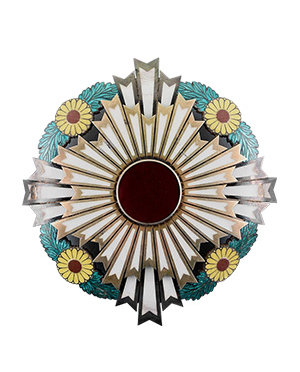
The star of the order is similar to the badge, but in silver, without the chrysanthemum suspension, and with an eight-pointed gilt medallion (with white-enameled rays and red-enameled sun disc) placed at the center. It is worn on the left chest.

The badge of the order is a four-pointed gilt badge with white-enameled rays; the center bears a red enameled sun disc. On each of the four corners of the badge is a yellow-enameled chrysanthemum blossom with green-enameled chrysanthemum leaves. The badge is suspended on a yellow-enameled chrysanthemum, either on the collar or on the grand cordon.

The collar of the order is made of gold, and features the kanji for “Meiji”, in classic form, indicating the era of the order’s establishment. It is decorated with gold chrysanthemum blossoms and green-enameled leaves. The sash of the grand cordon of the order is red with dark blue border stripes. It is worn on the right shoulder.

The Order of the Golden Kite

The Order of the Golden Kite was an order of the Empire of Japan established in 1890 by Emperor Meiji “in commemoration of Jimmu Tennō”.

  • Time Period: Pre-WW1
  • Institution: 12 February 1890
  • Country: Medals from Japan Japan

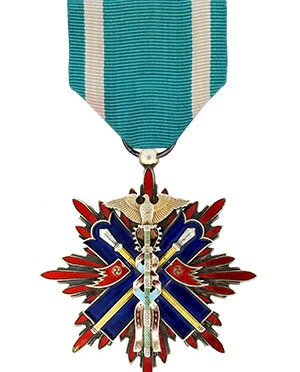
The Order of the Golden Kite (金鵄勲章 Kinshi Kunshō) was an order of the Empire of Japan established on 12 February 1890 by Emperor Meiji “in commemoration of Jimmu Tennō, the Romulus of Japan”.

The Order of the Golden Kite was an exclusively military award, conferred for bravery, leadership or command in battle. It ranked just below the Order of the Chrysanthemum in precedence and was the military equivalent of the Order of the Paulownia Flowers; therefore, it could be considered analogous to the military division of the Order of the Bath in the United Kingdom. The first three classes were roughly equivalent to the three divisions of the Order of the Bath, the fourth, fifth, sixth and seventh classes were analogous to the DSO, MC/DSC, DCM/CGM and DSM/MM, respectively.

The order consisted of seven classes. Enlisted rank soldiers were eligible for the 7th–5th classes, non-commissioned officers were eligible for the 6th–4th classes, junior officers for the 5th–3rd classes, field grade officers for the 4th–2nd classes and general officers for the 3rd-1st classes. A total of 1,067,492 Order of the Golden Kite awards were made over the history of the order, most of them in the two lower 6th and 7th classes. Only 41 of the 1st class and 201 of the 2nd class were awarded.

The Order was officially abolished by the Supreme Commander of the Allied Powers of Occupied Japan in 1947 after World War II.

The Order of the Golden Kite Medal Design

The badge for the Order is a gilt cross with white enameled rays, bearing a central emblem of a red enameled sun disc surrounded by red rays, and with three paulownia blossoms between each arm of the cross. It is suspended from three enameled paulownia leaves on a sash in red with white border stripes, and is worn on the right shoulder.

The star for the Order is the same as the badge, but without the paulownia leaves suspension. It is worn on the left chest.

The Cross of St. George (Russia)

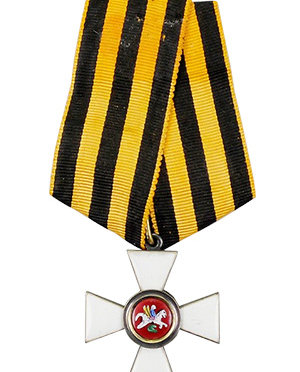
The Cross of Saint George is a state decoration of the Russian Federation initially established by Imperial Russia between 1807 and 1913.

The Cross of Saint George (or Георгиевский крест in Russian) is a state decoration of the Russian Federation initially established by Imperial Russia between 1807 and 1913.

The award was intended as a reward for “undaunted courage” by the lower ranks (soldiers, sailors and NCOs) of the military. There was only a single class with no restriction as to the number of awards per person. The first soldier to be awarded the Cross of Saint George was a cavalry non-commissioned officer named Yegor Ivanovich Mitrokhin. He received the award for distinction in the battle against the French at Friedland on 2 June 1807.

Over two million Saint George Crosses were distributed during the Great War and before the abdication of the tsar. They went to soldiers, nurses and members of the Red Cross. An enlisted man or NCO could be awarded the 4th class cross for his first brave act. A second notable act could then bring him the 3rd class cross, etc.

The Cross of Saint George could be awarded to foreigners. For example, the cross was awarded to the surviving Prussian veterans of the Napoleonic wars 1813/1815. 4500 decorations were made, although only 4264 were issued and about 1765 were returned to the Chancellery of Russian Orders after the death of their recipients and melted down.

The Cross of Saint George was reinstated into the Russian awards system in 1992.

The Cross of St. George Design

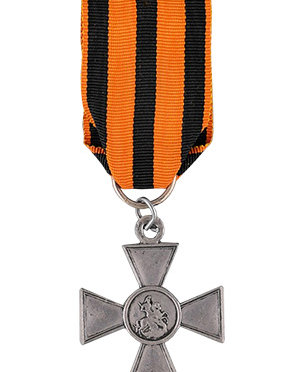
The modern Cross of Saint George is virtually identical to the imperial variant, a 34mm wide cross pattée worn on the left side of the chest with other medals. The first class and second class were struck in gold, the first class with a bow on the ribbon. The third and fourth classes were struck in silver, with the third class marked by a bow.

The obverse has a central medallion bearing the right-facing image of Saint George on horseback slaying the dragon. The reverse of the central medallion bears the Cyrillic monogram of the Order of Saint George “SG” (Russian: «СГ»). The reverse of the two lateral arms of the cross bears the serial number of the award, the left arm having an embossed letter “N” at its left extremity. The class of the cross is embossed on the reverse of the lower arm, “1-я степ” for the first class, “2-я степ” for the second class, “3-я степ” for the third class and “4-я степ” for the fourth class.

All four crosses hang from the standard Russian pentagonal mount covered with an overlapping 24mm wide silk moiré ribbon of Saint George (black and orange bicolor pattern, with three black and two orange stripes). When the cross is not worn, a ribbon bar is worn on the uniform. The ribbon bar is 8mm high by 24mm wide, it bears a 7mm high golden metallic Roman numeral denoting the class of the award.

The Order of St. George (Russia)

The Order of Saint George is the highest military decoration of the Russian Federation and was originally established 26 November 1769.

Time Period: Pre-WW1
Year of Institution: 26 November 1769
Country: Russia & USSR

The Order of Saint George (or Орден Святого ГеоргияOrden Svyatogo Georgiya in Russian) is the highest purely military decoration of the Russian Federation. It was originally established 26 November 1769 as the highest military decoration of the Russian Empire by Empress Catherine the Great.

The current Order of Saint George is awarded to highest and senior military officers for the conduct of military operations to protect the Fatherland from attack by an external enemy which resulted in the complete defeat of the enemy, for the execution of combat and other operations in other states aimed at restoring international peace and security, or for being a model of military science with feats that exemplify military prowess; the Order is also conferred upon officers who were previously awarded state awards of the Russian Federation for distinction in combat.

The order was revived in the Russian Federation on 8 August 2000 by Decree №1463 of the President of Russia. The current award criteria were amended on 7 September 2010 by Presidential Decree 1099.

The Order of St. George Design

The Cross is a white enameled cross pattée with a central medallion bearing the image of Saint George on horseback slaying the dragon. The cross measures 60mm across in the case of the Order first class (50mm for third class and 40mm for the fourth) and is worn on a sash in the colours of Saint George (orange and black).

The Star is a four-pointed silver gilt star with a gold central medallion bearing the cipher of Saint George “SG” topped by a crown and surrounded by a black enamelled band bearing the motto of the order “For Service and Bravery” (“Za Sluzhbu i Khrabrost“). The star is worn on the left breast for both the Order first and second classes.

The ribbon of the Order of Saint George is orange with three black stripes, commonly called “George’s Ribbon”. It symbolizes fire and gunpowder: the Russian “colors of military glory”, and is also thought to be derived from the colors of the original Russian imperial coat of arms (black eagle on a golden background). It was subsequently associated to the colors of the Russian Guard units.

The Most Noble Order of the Garter

The Order of the Garter is an order of chivalry founded by Edward III in 1348 and regarded as the most prestigious British order of chivalry.

The Order of the Garter (also known as the “Most Noble Order of the Garter”) is an order of chivalry founded by Edward III in 1348 and regarded as the most prestigious British order of chivalry (though in precedence inferior to the military Victoria Cross and George Cross) in England and later the United Kingdom. It is dedicated to the image and arms of Saint George, England’s patron saint.

Membership of the Order is limited to the Sovereign, the Prince of Wales, and no more than 24 living members, or Companions. The order also includes supernumerary knights and ladies (for example, members of the British royal family and foreign monarchs). New appointments to the Order of the Garter are often announced on St George’s Day (23 April), as Saint George is the order’s patron saint.

In addition to the 25 Knights, there have been occasionally extra non-Christian Knights, such as the Sultans of Turkey or the Emperor of Japan. Emperor Hirohito was actually awarded the Garter twice: in 1922 and again in 1971 (he had forfeited the first as a result of Japan entering the Second World War in 1941). Soon after the founding of the Order, women were appointed “Ladies of the Garter“, but were not made companions. King Henry VII discontinued the practice in 1488; his mother, Margaret Beaufort, was the last Lady of the Garter before Queen Alexandra. Ladies (other than royalty) are now eligible for the Order.

All official insignia is returnable to the Central Chancery of Knighthood on the death of the holder.

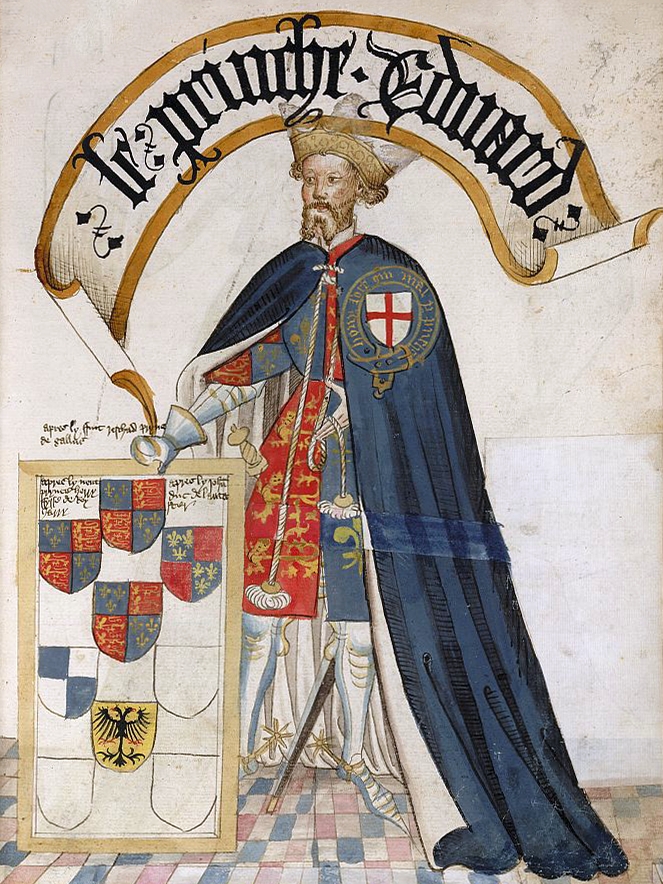
Edward, The Black Prince
Edward, The Black Prince.
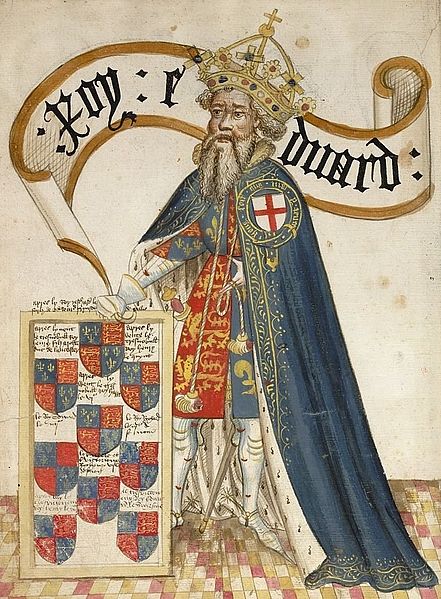
King Edward III
King Edward III.
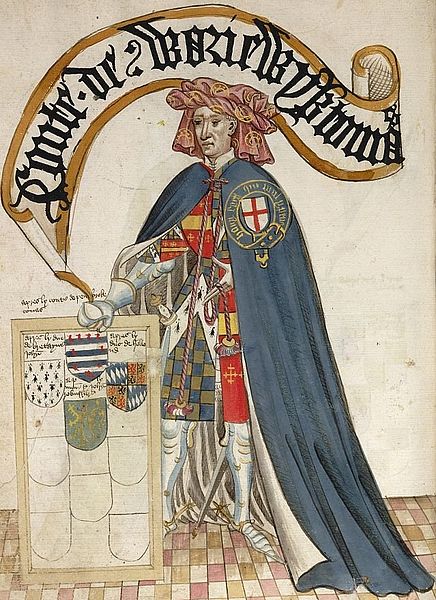
The 11th Earl of Wawick
The 11th Earl of Wawick.

The Order of the Garter Design

The Star

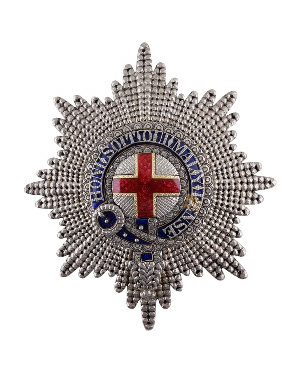
The star was originally embroidered in a metal thread and was introduced in the 17th century by King Charles I (before 1858, knights often purchased metal stars). It depicts the heraldic shield of St. George’s Cross, encircled by the Garter and the motto “HONI SOIT QUI MAL Y PENSE” (or “Evil be to who evil thinks“), which is itself encircled by an eight-point silver badge. Each point is depicted as a cluster of rays, with the four points of the cardinal directions longer than the intermediate ones. Since the Order of the Garter is the senior order of the United Kingdom, a member will wear their star above the others (up to three) that he or she holds.

The Ribbon

The ribbon measures 100 millimeters and is plain dark blue. It’s not worn in undress uniform.

The Emblem

The order’s emblem is a dark blue velvet garter with the motto “Honi soit qui mal y pense” (or “Shame on him who thinks ill of it” in Middle French) in embroidered lettering and details, or with gold lettering, buckle and tab. Members of the order wear it on ceremonial occasions. The collar chain is made of gold and consists of alternate buckled garters, each encircling a red enamelled rose. The collar badge is an enamelled three-dimensional figure of St. George the Martyr on horseback slaying a dragon.

If you want to learn more about the Order of the Garter’s mantle, hat, collar, Great George and garter, please check our sibling site Medieval Britain

More About The Order

Right Now on eBay 
Clicking a link to eBay may result in a referral commission being paid if a purchase is made.
Loading...

The Order of Saint Andrew the Apostle

The Order of St. Andrew is the highest order of the Russian Federation. It was established in 1698 and the motto is “For Faith and Loyalty”.

The Order of St. Andrew the Apostle the First-Called (or Орден Святого апостола Андрея Первозванного in Russian) is the highest order of the Russian Federation. Established as the first and highest order of chivalry of the Russian Empire in 1698, it was abolished under the USSR before being re-established as the top Russian order in 1998.

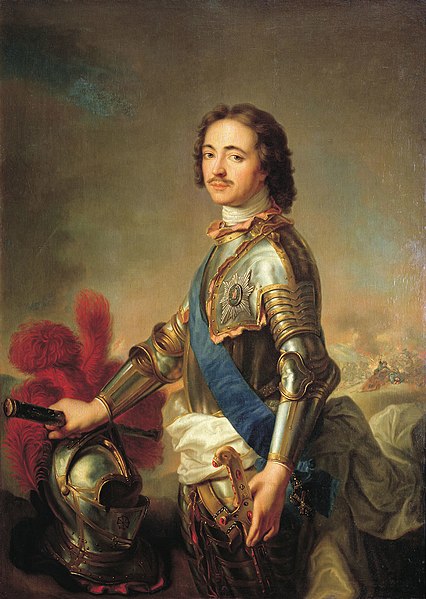
The Order was established in 1698 by Tsar Peter the Great, in honor of Saint Andrew, the first apostle of Jesus and patron saint of Russia. It was bestowed in a single class and was only awarded for the most outstanding civilian or military merit.  Saint Andrew’s Cathedral in Saint Petersburg was the chapter church of this order of chivalry.

A Brief History of the Russian Order of Saint Andrew

During Peter the Great’s travels in the West as part of the Great Embassy, Peter the Great observed the practice of awarding honors, a departure from the traditional Russian method of rewarding service with money or estates. For instance, he witnessed first hand the awards ceremonies for England’s Order of the Garter and Austria’s Order of the Golden Fleece and noticed the loyalty and pride of the awardees. It also saved the state land and money.

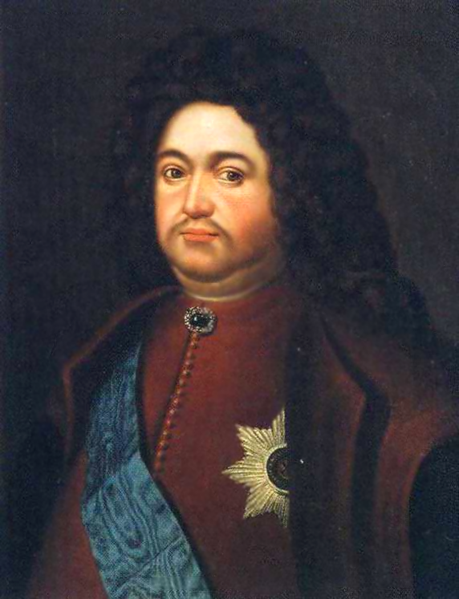
The first recipient of the Order of St. Andrew was Count Fyodor Golovin, a boyar (member of the highest rank of feudal nobility) and the first Chancellor of the Russian Empire.

Until the Russian Revolution in 1917, slightly over a thousand individuals were bestowed with this honor. These included:

  • Sir John Acton, 6th Baronet: A prominent British naval officer and Prime Minister of Naples.
  • Prince Adalbert of Prussia (1811–1873): A notable member of the Prussian royal family.
  • Adolf Frederick, King of Sweden: King of Sweden from 1751 until his death in 1771.
  • Grand Duke Adolphe of Luxembourg: The first Grand Duke of Luxembourg from the House of Nassau-Weilburg.
  • Prince Albert of Prussia: A general in the Prussian army and regent of the Duchy of Brunswick.
  • Alexander I of Russia: Emperor of Russia from 1801 to 1825, known for his role in defeating Napoleon.
  • Alexander II of Russia: Emperor of Russia from 1855 to 1881, famed for his emancipation of the serfs.
  • Otto von Bismarck: The first Chancellor of the German Empire, recognized for unifying Germany.
Emperor Peter the Great.
Portrait of Peter I of Russia (1672-1725). Arkhangelskoye Palace collection.
Count Fedor Golovin, portrait from the 18th century.
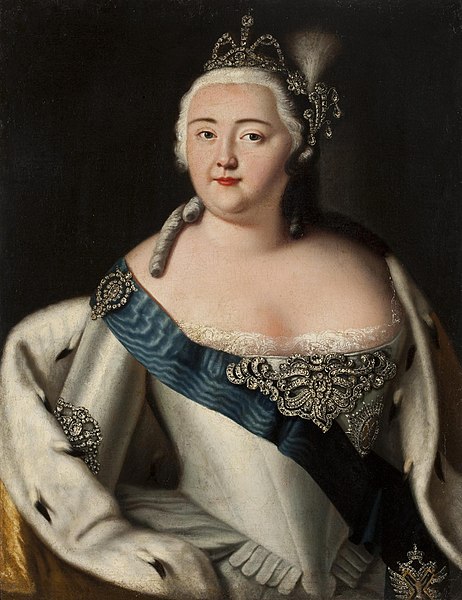
Portrait of Elizaveta Petrovna (Elizabeth I of RUssia) between 1701 and 1800. Hermitage Museum.

The Order of Saint Andrew During the Revolution

During the Russian Revolution of 1917, the Order of St. Andrew, along with other imperial orders, was officially abolished by the Bolshevik government. The new Soviet regime sought to eliminate all vestiges of the Russian imperial system, which included the prestigious chivalric orders that had been symbols of the tsarist state and its aristocracy.

Existing recipients of the Order of St. Andrew were stripped of their titles and privileges. The revolutionary government viewed these honors as incompatible with the new socialist ideology that aimed to dismantle class distinctions and aristocratic privileges.

Despite its official abolition in Russia, the Russian Imperial House in exile continued to recognize the Order of St. Andrew. The heads of the House of Romanov, living in exile, maintained the tradition of awarding the order to individuals who demonstrated exceptional service to the Russian community and the broader international community.

Reinstatement and Modern Status

After the fall of the Soviet Union, the Russian Federation reinstated the Order of St. Andrew as the highest state decoration. Today, the Order of St. Andrew the Apostle the First-Called is conferred upon distinguished statesmen, public figures, and notable individuals from various fields such as science, culture, the arts, and industry, in recognition of their exceptional contributions to the prosperity, prestige, and honor of Russia.

Additionally, the Order may be bestowed upon foreign heads of state for their significant service to the Russian Federation.

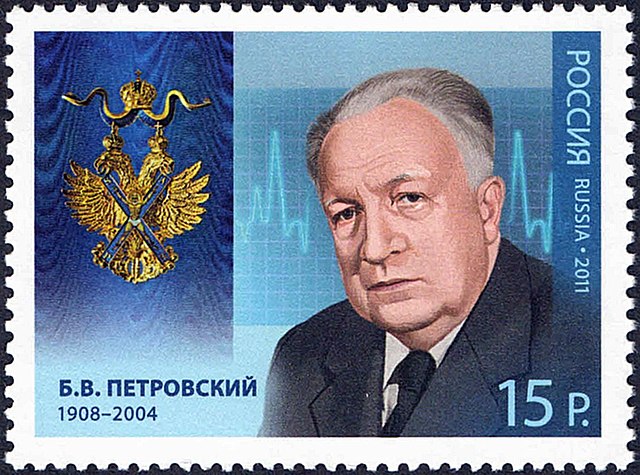
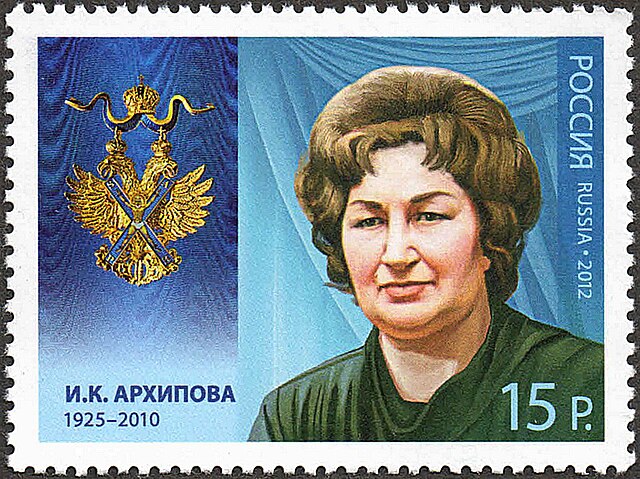
Modern Awardees: Boris Petrovsky
Modern Recipients: General surgeon, health minister of the Soviet Union Boris Petrovsky.
Modern Recipients: Opera singer Irina Arkhipova.

The Order of Saint Andrew Medal Design

The insignia of the order consisted of a badge and star.

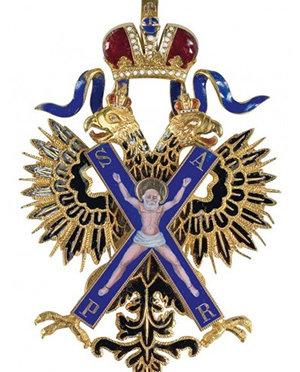
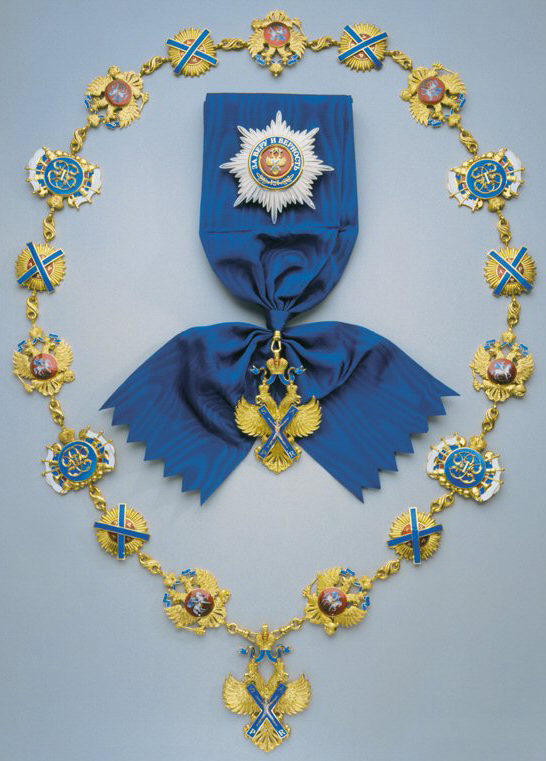
The badge is an enameled crowned black double-headed eagle bearing a blue St. Andrew’s Cross (saltire) with St. Andrew crucified upon it; on the arms of the saltire were the Latin letters ‘SAPR’ (‘St. Andrew, Patron of Russia’). It was worn on a pale blue sash over the right shoulder, or on special occasions on an elaborate ‘collar’ (chain).

The star is an eight-pointed silver star bearing a miniature of the badge on a golden background at the center, surrounded by the motto “For Faith and Loyalty” (or За веру и верность, Za Veru i Vernost in Russian) on a blue ring. It was worn on the left chest.

The insignia of the order could be awarded “with diamonds” as a special distinction. 

Order Of Saint Andrew The Apostle.
Order Of Saint Andrew The Apostle. Star, badge, and collar with badge.

Find an Order of Saint Andrew

Right Now on eBay 
Clicking a link to eBay may result in a referral commission being paid if a purchase is made.
Loading...

The Commemorative Medal for the Greco-Bulgarian War of 1913

  • Time Period: Pre-WW1
  • Year of Institution: 17 February 1914
  • Country: Greece

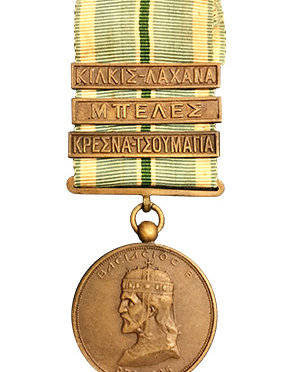
The Commemorative Medal for the Greco-Bulgarian War of 1913 was instituted by Royal Decree on 17 February 1914 and awarded for participation in the war against Bulgaria the previous year.

An alliance of Bulgaria, Greece, Montenegro and Serbia threw the Ottoman Turks out of almost all their remaining European territories in 1912 and the First Balkan War ended with the Treaty of London on 30 May 1913. However, the victors fell out over the division of the spoils, with Serbia and Greece forming an alliance against Bulgaria and the Second Balkan War broke out at the end of June. After initial setbacks, Bulgarian military successes stabilized the front in Macedonia. The situation was transformed by the invasion of Bulgaria by Romania on 10 July, leaving the former in a hopeless position. An armistice was agreed on 31 July with Greece gaining significant additional territory at the expense of Bulgaria.

The sense of grievance thus created led to Bulgarian participation in the two subsequent world wars on the side of Germany and against Greece but the territorial settlement has endured. The Byzantine Emperor Basil II earned the epithet ‘Bulgar-slayer’ during his wars against the Bulgarian empire of Tsar Samuel which led to the incorporation of most Bulgarian lands into the Byzantine Empire.

The Commemorative Medal for the Greco-Bulgarian War of 1913 Design

The medal is struck in bronze and measures 30 mm.

The ribbon is pale blue with white edge stripes and a white-edged green central stripe.