The 1914-1920 British War Medal

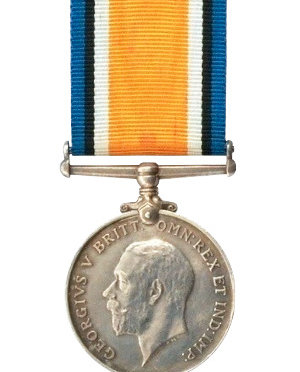
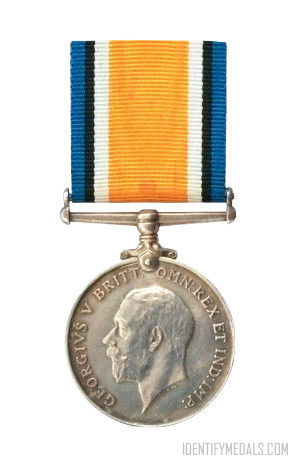
The 1914-1920 British War Medal (also known as ‘Squeak’) is a British Empire campaign medal presented for service during World War I.

The 1914-1920 British War Medal (also known as ‘Squeak’) is a British Empire campaign medal presented for service during World War I.

The British War Medal was instituted on 1919 for those who had rendered service between 5 August 1914, the day following the British declaration of war against the German Empire, and the armistice of 11 November 1918. The British War Medal could be awarded to all officers and men of British and Imperial forces who had served for the prescribed period or who had died on active service before its completion. 

The trio of First World War medals (the 1914 Star or 1914-15 Star, the British War Medal and the Victory Medal) were collectively referred to as Pip, Squeak and Wilfred, after comic strip characters that were popular in the immediate post-war era. Squeak represented the British War Medal.

Some 6,610,000 medals were awarded, 6,500,000 struck in silver and 110,000 struck in bronze. 427,993 medals were awarded to Canadians who served in the Canadian Expeditionary Force.

The History of the Distinguished Service Cross

The medal is a silver or bronze disk, with a diameter of 36 millimeters and a straight clasp suspender without swivel. The medal was designed by W. McMillan and struck by the Royal Mint.

The recipient’s name, rank, service number and unit are impressed on the bottom edge of the medal.

The obverse shows an effigy of King George V facing left and the legend “GEORGIVS V BRITT: OMN: REX ET IND: IMP:”. The reverse shows Saint George naked on horseback and armed with a short sword.

Related Medals

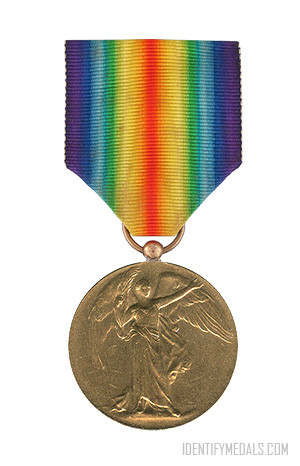
The ‘Pip’, ‘Squeak’, and ‘Wilfred’ medals were British military decorations established during World War I. The Pip Squeak was the 1914 Star, the Wilfred was the British War Medal, and the Pip was the Victory Medal. 

WW1 Medals and Awards: The 1914-15 Star

The 1914-15 Star

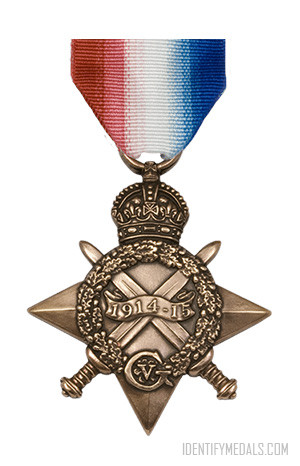
The 1914–15 Star is a British Empire campaign medal awarded to officers and men of British and Imperial forces during the First World War.
Read More »
WW1 Medals and Awards: The 1914 Star

The 1914 Star

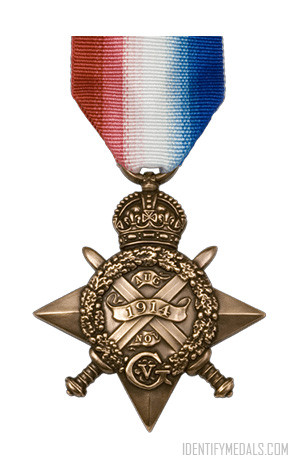
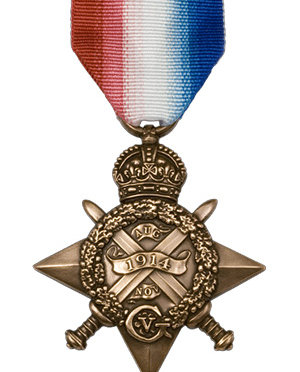
The 1914 Star, ‘Mons’ Star or ‘Pip’ is a British Empire campaign medal instituted in 1917 and presented for service during World War I.
Read More »

The 1914 Star

The 1914 Star, ‘Mons’ Star or ‘Pip’ is a British Empire campaign medal instituted in 1917 and presented for service during World War I.

The 1914 Star (also known as the ‘Mons’ Star) is a British Empire campaign medal presented for service during World War I.

The 1914 Star was instituted in 1917 and awarded to the officers and men of the British forces who served in France or Belgium between 5 August and midnight on the 22/23 November 1914 (the day after Britain’s declaration of war against the Central Powers, and the closing date marks the end of the First Battle of Ypres).

The majority of recipients were officers and men of the pre-war British army, specifically the British Expeditionary Force (the ‘Old Contemptibles’), who landed in France soon after the outbreak of the war and who took part in the retreat from Mons.

The 1914 Star Design

The medal is a four-pointed star of bright bronze, ensigned with a crown, with a height of 50 millimeters (2.0 in) and a width of 44 millimeters (1.7 in). The obverse has two crossed gladii (swords) with their blades upwards. The reverse is plain and is impressed with the recipient’s number, rank, name and regiment or unit.

About 365,622 medals were awarded. In most instances, recipients of this medal also received the British War Medal and Victory Medal.

Related Medals

The ‘Pip’, ‘Squeak’, and ‘Wilfred’ medals were British military decorations established during World War I. The Pip Squeak was the 1914 Star, the Wilfred was the British War Medal, and the Pip was the Victory Medal. 

WW1 Medals and Awards: The 1914-15 Star

The 1914-15 Star

The 1914–15 Star is a British Empire campaign medal awarded to officers and men of British and Imperial forces during the First World War.

Read More »