The W.A. Military Sports Badge

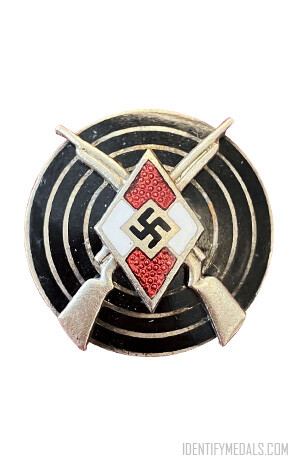
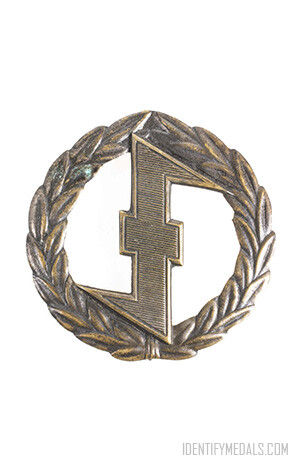
The W.A. Military Sports Badge was awarded to members of the “Weer Afdeelingen” (Defense Sections) for military sporting events.

The W.A. Military Sports Badge was awarded to members of the “Weer Afdeelingen” (Defense Sections) or stormtroopers of the NSB. This decoration was instituted on 13 September 1941.

The National Socialist Movement in the Netherlands (Dutch: Nationaal-Socialistische Beweging in Nederland; NSB) was a Dutch fascist organization that evolved into a Nazi political party. Initially successful in the 1930s parliamentary elections, the NSB became the sole legal party under German occupation during most of World War II.

Military sporting events were held for W.A. troops and successful winners were awarded with the military sport badge.

The W.A. Military Sports Badge Design

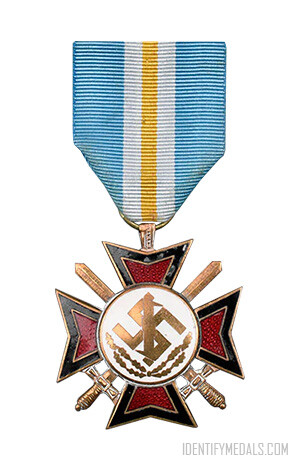
The sport badge shows in the background a Laurel with the NSB emblem “wolf hook” in front. The reverse is hollow with two small loop rings that holds the pin. This die stamped badge was awarded in two classes- silver and bronze gilt. The badge is very large it measures 53mm in diameter.

Note: I could only find limited information about this medal. If you know more, please use the contact form to let me know.
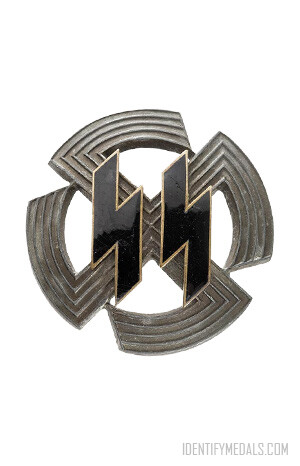
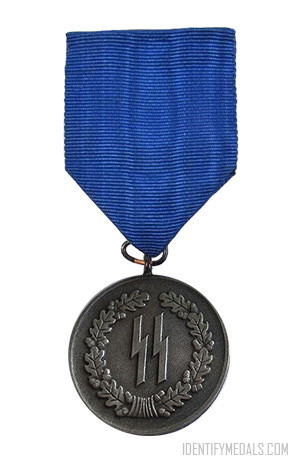
The SS Dutch Sports Badge

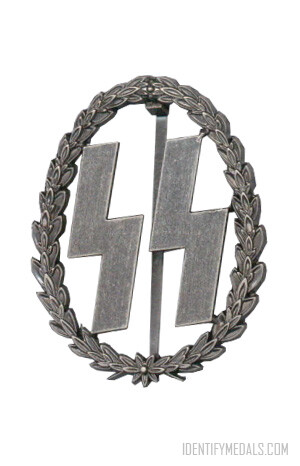
The SS Dutch Sports Badge was awarded to members of the Dutch SS for demonstrating athletic prowess and physical fitness.

The SS Dutch Sports Badge was awarded to members of the Dutch SS for demonstrating athletic prowess and physical fitness.

This badge was part of the efforts to promote physical conditioning among the SS members.

The design typically included elements symbolizing strength and athletic achievement, often incorporating Nazi insignia and symbols to reflect the regime’s ideology. These badges were awarded during World War II, making them historical artifacts of that era. Collectors value them for their historical significance and the insight they provide into the period’s propaganda and values.

Note: I could only find limited information about this medal. If you know more, please use the contact form to let me know.
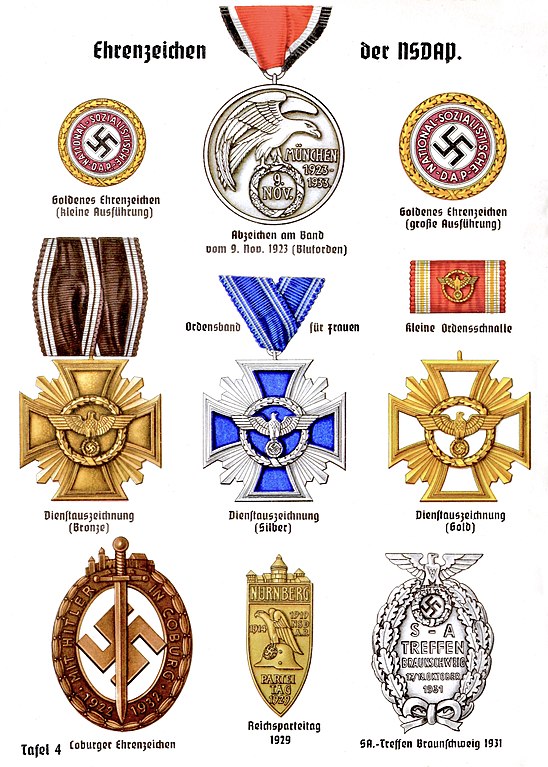
The Political Decorations of the NSDAP/Nazi Party

Explore the different decorations (including Gau badges) issued by the National Socialist German Workers’ Party (NSDAP) from 1920 to 1945.

Political decorations issued by the National Socialist German Workers’ Party (NSDAP) from 1920 to 1945 were a range of medals and awards. These decorations were authorized to be worn on any paramilitary uniform of Nazi Germany, as well as civilian attire. 

Within the decorations, civil ones were regarded as the lowest tier of medals, below military and political decorations of the Nazi Party. These awards were authorized for display on civilian clothing and Nazi Party paramilitary uniforms. However, they were typically prohibited on active duty Wehrmacht military uniforms, with the notable exception of sports badges, which were granted the same status as military qualification awards.

Following the defeat of Nazi Germany in 1945, the public display of all Nazi Party awards was banned in Germany.

Political Decorations and Awards
of the Nazi Party

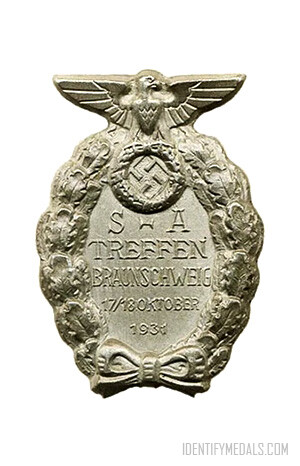
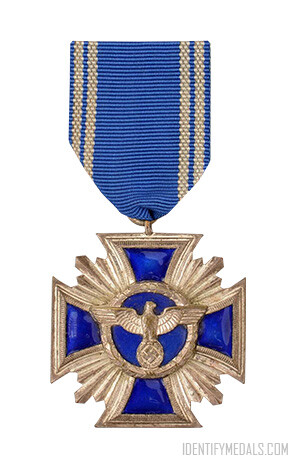
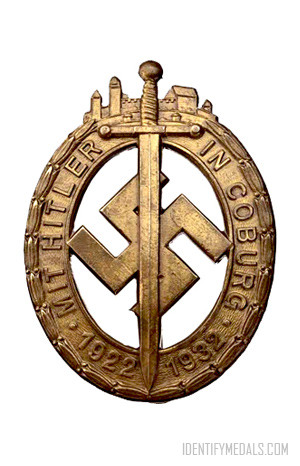
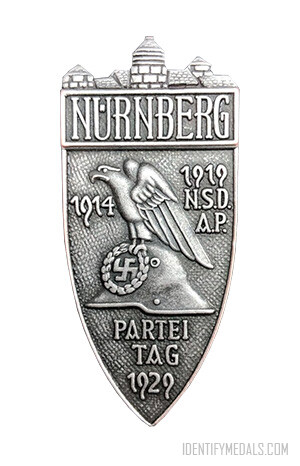
In November 1936, Hitler issued new directives regarding the “Orders and Awards” of the Nazi Party. The highest honors were ranked as follows: 1. Coburg Badge; 2. Nuremberg Party Day Badge; 3. Brunswick Rally Badge; 4. Golden Party Badge; 5. The Blood Order. These were followed by the Gau badges and the Golden Hitler Youth Badge.

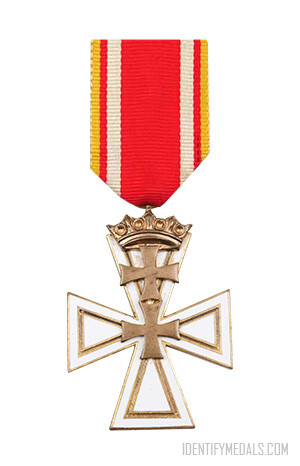
The Danzig Cross - Nazi Germany Medals, Interwar

The Danzig Cross

The Danzig Cross or Danziger Kreuz was a Nazi decoration established in the Free City of Danzig prior to its incorporation into Germany.

Read More »
The Coburg Badge - Nazi Germany WW2 Medals

The Coburg Badge

The Coburg Badge (Das Coburger Abzeichen in German) was the first badge recognized as a national award of the Nazi Party or NSDAP.

Read More »

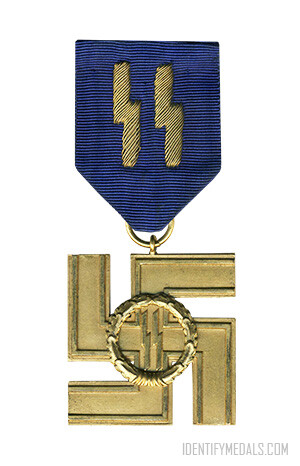
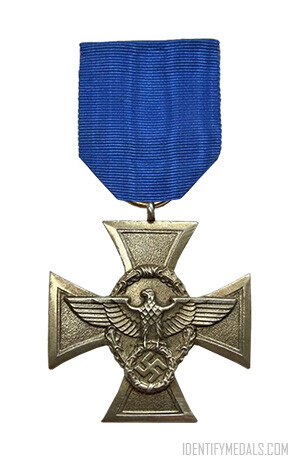
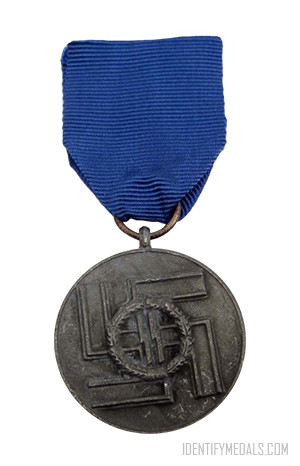
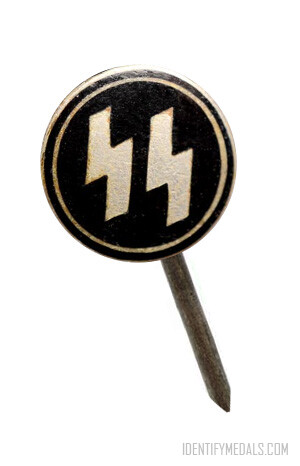
SS, Germanic SS, and Police Decorations

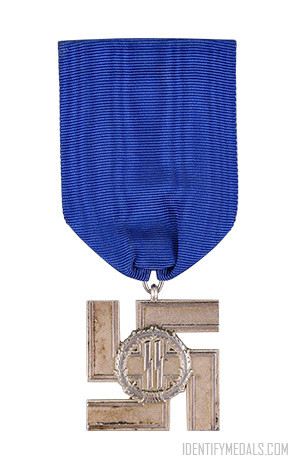
The Nazi Party also awarded various decorations to members of the SS (Schutzstaffel) and police forces to recognize loyalty, bravery, and service. For example, the SS Long Service Awards were given to SS members for their years of service, in grades for 4, 8, 12, and 25 years. The Germanic SS, composed of non-German volunteers from occupied countries, also had specific decorations to acknowledge their contributions.

More SS and Police Decorations

SS Honor Sword

The SS Honor Sword was awarded to SS officers as a symbol of loyalty and recognition of their service. It featured intricate designs and was a mark of prestige within the SS hierarchy.

SS Julleuchter

The SS Julleuchter was a ceremonial candle holder given to SS members during the winter solstice. It symbolized the pagan traditions that the SS leadership sought to revive and was often awarded for loyalty and service.

SS Membership Runes for Order Police

These runes were worn by members of the SS and the Order Police to denote their affiliation with the SS. The runes were typically displayed on the uniform and signified membership and rank within the organization.

Totenkopf Ring

The Totenkopf (Death’s Head) Ring was awarded to SS officers as a personal decoration from Heinrich Himmler. It featured the SS skull symbol and was a sign of elite status and commitment to the SS ethos. The ring was often returned to the SS upon the officer’s death.

Decorations of the Hitler Youth

The Hitler Youth (Hitlerjugend) was a youth organization of the Nazi Party in Germany, founded in 1926. It aimed to indoctrinate young Germans into Nazi ideology and prepare them for future roles in the party and the military. Membership became compulsory for all boys aged 14-18 in 1936, and the organization focused on physical fitness, paramilitary training, and propaganda.

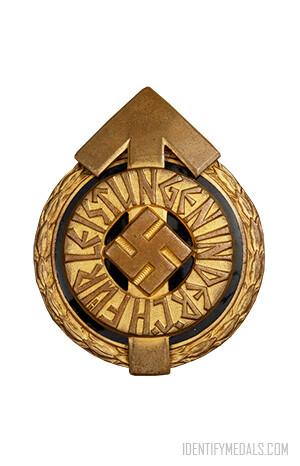
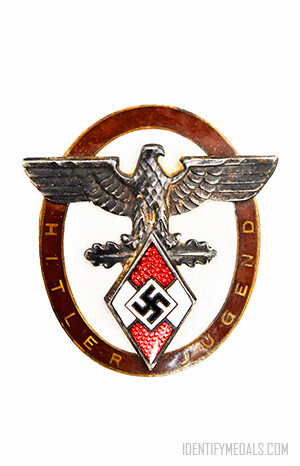
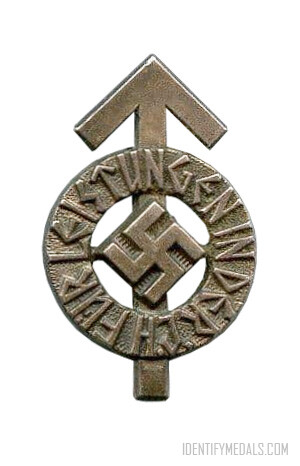
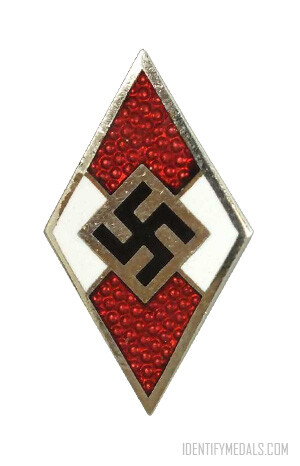
The variety of Hitler Youth badges arose from the organization’s desire to recognize different levels of achievement, service, and merit among its members. These included:

The Medals that Adolf Hitler Wore

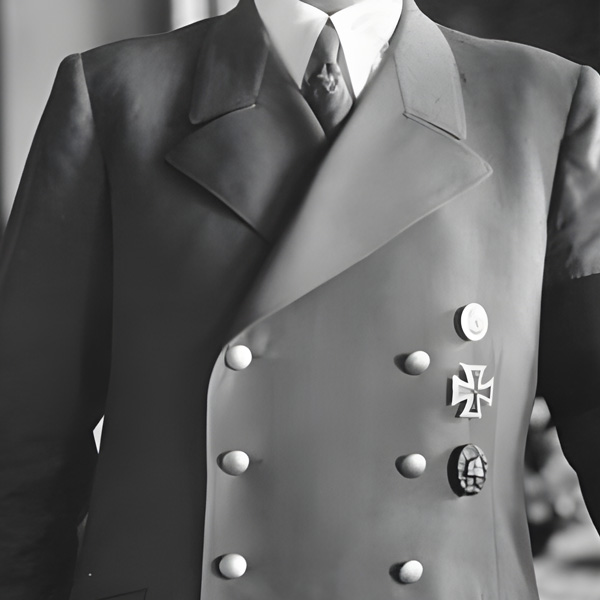
Adolf Hitler wore several medals throughout his life, reflecting his military service and political career. Here is the complete list.

Adolf Hitler wore and received medals for several reasons. During World War I, for instance, he served as a soldier in the Bavarian Army during World War I. His role as a dispatch runner was dangerous, involving carrying messages between command posts and front lines under fire. 

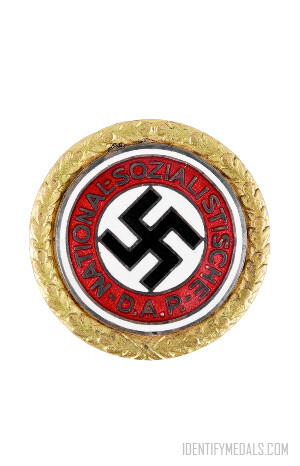
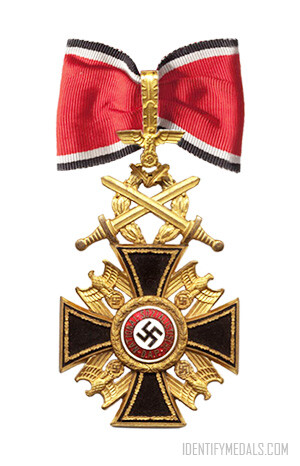
As the leader of the Nazi Party, Hitler also received medals that reflected his central role in the party and its activities. For example, the Golden Party Badge of the NSDAP was awarded in 1933 and was a mark of his status and contributions to the Nazi Party.

Here are the medals worn by Adolf Hitler both during his military career and political tenure:

The Tinnies

Adolf Hitler also wore some tinnies, or small badges. These were commonly produced for Third Reich events and were usually mad of cheaper metal.

These events were pivotal in the Nazi Party’s strategy to build support, disseminate propaganda, and solidify their control over Germany. Each rally or celebration served to project the power and unity of the Nazi movement and to cultivate a sense of belonging among their followers. Many people bought them as souvenirs.

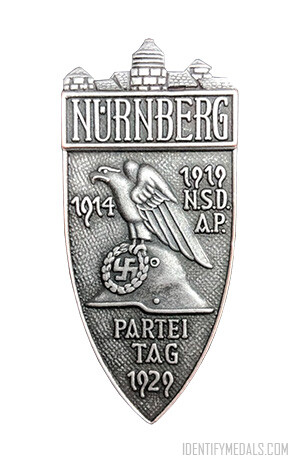
German WW2 Tinnies: Reichsparteitag 1929
1929: Reichsparteitag Nurnberg (Obverse)

The Reichsparteitag Nurnberg Badge

2-4 August 1929

The Reichparteitag, or Nuremberg Rally, of 1929 was the first major propaganda event held by the Nazi Party in Nuremberg. This rally marked the Nazi Party’s growing influence in German politics and was used to showcase their ideology and military discipline.

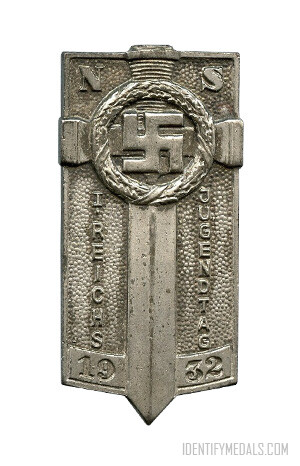
German WW2 Tinnies: Reichsjugendtages Potsdam 1932
1932: Reichsjugendtages Potsdam (Obverse)

The Reichsjugendtages Potsdam Badge

1-2 October 1932

The First Reich Youth Day in Potsdam was a significant event aimed at mobilizing the German youth under the Nazi banner. This event was part of the broader Nazi strategy to indoctrinate young Germans with their ideology.

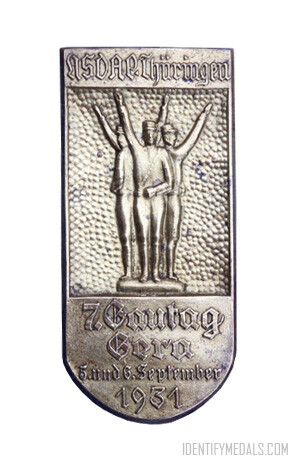
German WW2 Tinnies: Gera’s Gauparteitag1931
1931: Gera’s Gauparteitag (Obverse)

The Gera's Gauparteitag Badge

5 September 1931

Gera’s Gauparteitag was a regional Nazi Party meeting held in Gera. These regional gatherings (Gauparteitag) were important for consolidating party support at the local level and mobilizing party members and supporters.

German WW2 Tinnies: Gautag in Essen 1932
1932: Gautag in Essen (Obverse)

The Gautag in Essen Badge

30 October 1932

The Gautag in Essen was another regional Nazi rally. Held in the industrial heartland of Germany, such events were crucial for the Nazis to garner support among the working class and industrial workers.

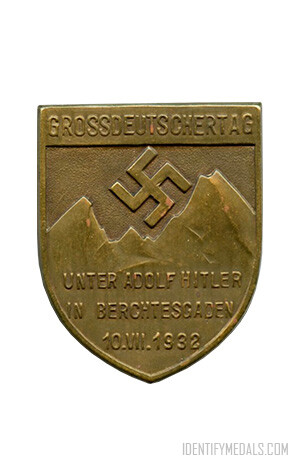
German WW2 Tinnies: Grossdeutscher Tag Berchtesgaden 1932
1932: Grossdeutscher Tag Berchtesgaden (Obverse)

The Grossdeutscher Tag Berchtesgaden Badge

10 July 1932

The “Greater German Day” in Berchtesgaden was a Nazi rally aimed at promoting the idea of a Greater Germany that would include all German-speaking peoples. Berchtesgaden was also significant as it was near Hitler’s mountain retreat.

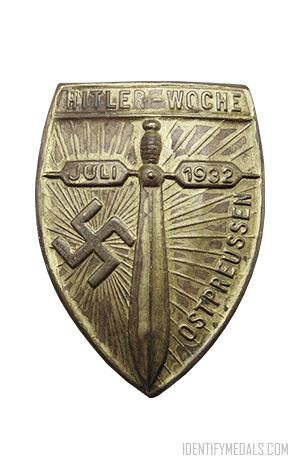
German WW2 Tinnies: Hitler Woche in Königsberg 1932
1932: Hitler Woche in Königsberg (Obverse)

The Hitler Woche in Königsberg Badge

17 July 1932

“Hitler Week” in Königsberg was a week-long series of events designed to promote Adolf Hitler and the Nazi Party in the East Prussian city of Königsberg. Such events were part of the broader strategy to solidify Hitler’s image and the party’s popularity across Germany.

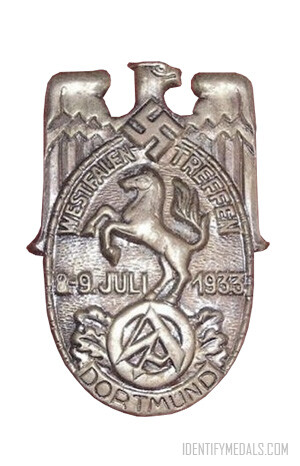
German WW2 Tinnies: Dortmund SA Rally 1933
1933: Dortmund SA Rally (Obverse)

The Dortmund SA Rally 1932 Badge

9 July 1933

This rally in Dortmund was an SA (Sturmabteilung) event, emphasizing the paramilitary organization’s loyalty to Hitler and its role in enforcing Nazi policies and suppressing opposition.

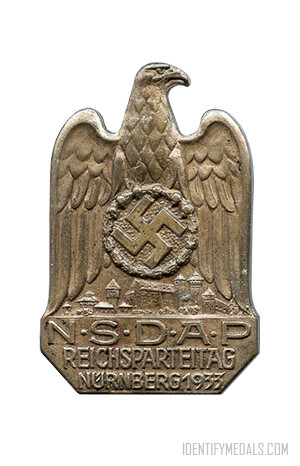
German WW2 Tinnies: Reichparteitag 1933
1933 Reichparteitag (Obverse)

The Reichparteitag 1933 Badge

30 August – 3 September 1933

The Reichparteitag of 1933, also known as the “Rally of Victory,” was the first Nuremberg Rally after Hitler’s rise to power. It celebrated the Nazi seizure of power and showcased the unity and strength of the Nazi regime.

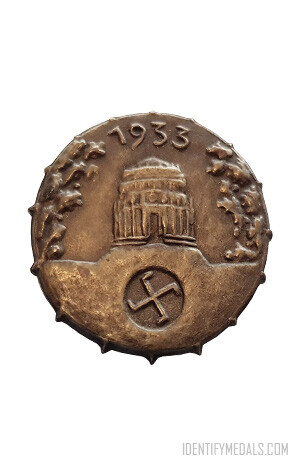
German WW2 Tinnies: Befreiungsfeier in Kelheim 1933
1933: Befreiungsfeier in Kelheim (Obverse)

The Befreiungsfeier in Kelheim Badge

22 October 1933 (source)

The “Liberation Celebration” in Kelheim commemorated the Nazi Party’s political victories and the consolidation of power in 1933. These celebrations were used to reinforce the narrative of liberation from the Weimar Republic and the triumph of Nazi ideology.

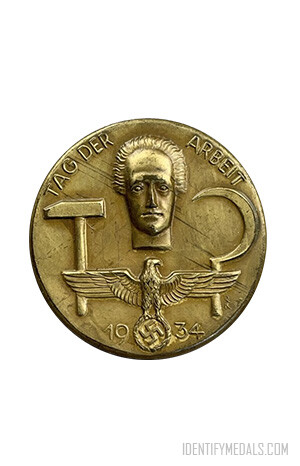
German WW2 Tinnies: Tag der Arbeit 1934
1934: Tag der Arbeit (Obverse)

The Tag der Arbeit 1934 Badge

1 May 1934

“Tag der Arbeit” or “Day of Labor” was the Nazi celebration of International Workers’ Day. The Nazis co-opted this day to align the labor movement with Nazi ideology, promoting the message of national solidarity and labor’s role in the Nazi state.

Other Awards Given to Hitler

Adolf Hitler received numerous awards throughout his life due to his involvement in World War I, his membership in the Nazi Party (NSDAP) and the SS, and his roles as the Führer and commander-in-chief of the German military.

World War I awards

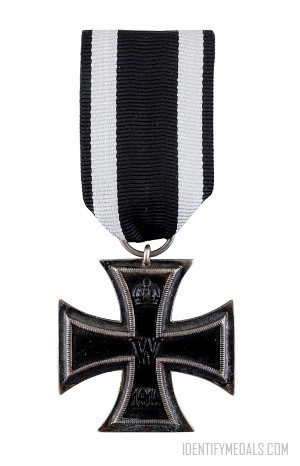
    • Iron Cross, Second Class – 12 February 1915
    • Bavarian Cross of Military Merit, Third Class with Swords – 17 September 1917
    • Regimental List Diploma – 5 May 1918
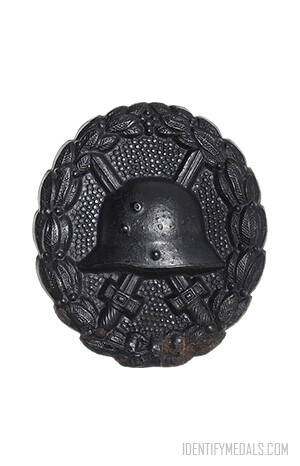
    • Wound Badge in Black – 18 May 1918
    • Iron Cross, First Class – 4 August 1918
    • Bavarian Medal of Military Service, Third Class – 25 August 1918
    • Cross of Honor with Swords – 13 July 1934

Political badges

Awards of the SS (Adolf Hitler was supreme commander of the SS (SS member #1) and qualified for two SS awards, which he never wore)

NSDAP awards

WWII awards (As supreme commander of the armed forces and commander in chief of the army, Hitler qualified for some military decorations, which he never wore)

The Iron Cross (EK 1957)

The Iron Cross 1957 was introduced to allow German veterans to wear their WWII decorations in a denazified form.

Institution: 26 July 1957
Country: Germany

The Iron Cross 1957 was officially established on July 26, 1957. It aimed to honor the bravery and leadership of those who had served during World War II while adhering to new legal requirements.

Following the end of World War II, Germany underwent significant political and social changes, including the denazification process to remove Nazi symbols from public life. By the mid-1950s, many German veterans sought recognition for their wartime service without the stigma associated with Nazi imagery. In response, the Federal Republic of Germany (West Germany) introduced the Iron Cross 1957.

This version allowed veterans to wear their decorations in a form that conformed to post-war regulations, promoting reconciliation and respect for individual bravery.

The Iron Cross 1957 Criteria

The criteria for the Iron Cross 1957 remained the same as those of the 1939 version. It was awarded to recognize acts of bravery and leadership in combat. Veterans who had earned the Iron Cross during World War II were eligible to wear the 1957 version, ensuring that their wartime service could be publicly acknowledged without the associated Nazi symbols

More Variations of the Iron Cross

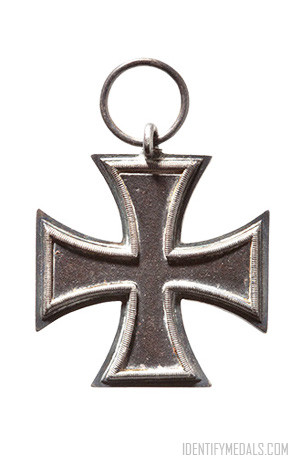
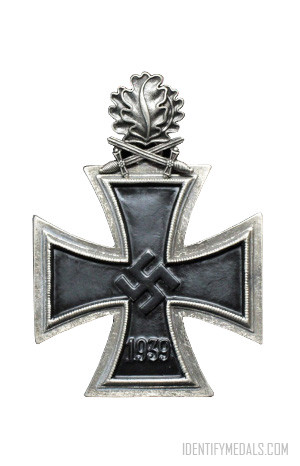
The Iron Cross, a prestigious German military decoration, has undergone several variations since its inception. For example, the Iron Cross 1813 was instituted during the Napoleonic Wars by King Frederick William III of Prussia, the Iron Cross 1914 was awarded during World War I, it was reinstated by Kaiser Wilhelm II, and the Iron Cross 1939 was revived by Adolf Hitler for World War II, with modifications including a swastika.

Find the Iron Cross Medal Online

Right Now on eBay 
Clicking a link to eBay may result in a referral commission being paid if a purchase is made.
Loading...

Further Reading About the Iron Cross

Discover the stories behind the Iron Cross with these compelling books and delve into the rich history and significance of this prestigious military decoration.

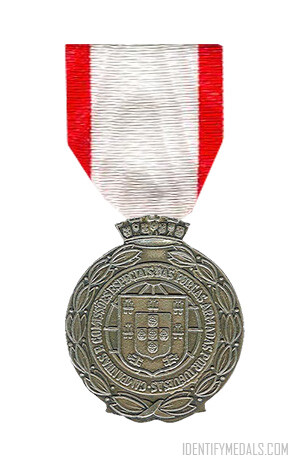
Special Service Commissions Medal (Portugal)

Special Service Commissions Medal was established on 28 May 1946 to recognise service during ‘non-warlike’ operations.

The Commemorative Medal for Special Service Missions of the Portuguese Armed Forces (or Medalha comemorativa de comissões de serviço especiais in Portuguese), established on May 28, 1946, is awarded to military personnel who have completed service missions abroad, whether as part of national or multinational forces.

Initially, this decoration was part of the 1946 Campaign Commemorative Medal of the Portuguese Armed Forces, differing only in its ribbon, which was white with red edges. It was awarded in “cases of simple expeditions or actions of any nature where the circumstances did not require the conduct of war operations” (Art. 43 of the 1946 Regulations).

This medal is given to soldiers and sailors who participate in multinational forces under NATO, the UN, and the EU, as well as in technical-military cooperations.

Special Service Commissions Medal Design

Since 1971, there has been a clear distinction between the Medal for Special Service Commissions and the Campaign Medal, although the design of both remains the same, with only the ribbon colors differing. The ribbon for this medal is white, edged with red. The design, since 2002, is as follows:

The obverse features the national emblem surrounded by a circular strip with the inscription “CAMPANHAS E COMISSÕES ESPECIAIS DAS FORÇAS ARMADAS PORTUGUESAS” in uppercase Elzevir type letters. This inscription is encircled by two laurel branches, with fruits, tied at the proximal ends with a wide bow. Above this ensemble is a mural crown with five towers.
The reverse is a disc featuring a National Flag at the top. Superimposed on the flag, and occupying nearly the entire diameter, are the figures of an Army soldier (right), an Air Force soldier (center), and a Navy sailor (left), standing on a pedestal. The disc is surrounded by the inscription “ESTE REINO É OBRA DE SOLDADOS” (“This kingdom is the work of soldiers”), a quote from Joaquim Augusto Mouzinho de Albuquerque in a letter to Prince Royal D. Luís Filipe, in uppercase Elzevir type letters, within a circular strip, concluded at the bottom by a wide bow. Above this ensemble is a mural crown identical to the one on the obverse.
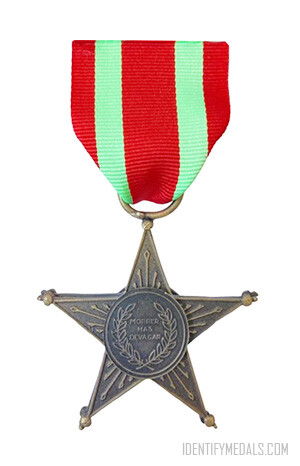
The Wounded on Operations Medal (Portugal)

The Wounded on Operations Medal was created in 1946 and is awarded to military personnel who were wounded in a campaign.

The Medal for Wounded in Campaign (or Medalha dos Mutilados em Campanhain Portuguese) was established on May 28, 1946 and is awarded to military personnel who suffer permanent impairment during a campaign or in directly related circumstances, resulting in damage or loss of an organ or function. This award is conferred by the Minister of National Defense.

Originally introduced as an insignia on October 5, 1918, by decree no. 4886, it was initially known as the Insignia of Mutilated and Crippled by War and consisted of a simple ribbon.

The Wounded on Operations Medal Design

The medal is a five-pointed, chiseled star, with each point ending in a small armillary sphere. On the obverse and in the center is a disc bearing the National Emblem, encircled by a band with the inscription “FERIDOS EM CAMPANHA” (“WOUNDED IN CAMPAIGN“) in capital Elzevir type letters.

The reverse is identical to the obverse, but with a central disc inscribed with the phrase “MORRER MAS DEVAGAR” attributed to King Sebastião I of Portugal during the Battle of Alcácer Quibir. This inscription is arranged in three lines and surrounded by two laurel branches, with fruit and crossed at the base.

The ribbon is red with two vertical green lines.

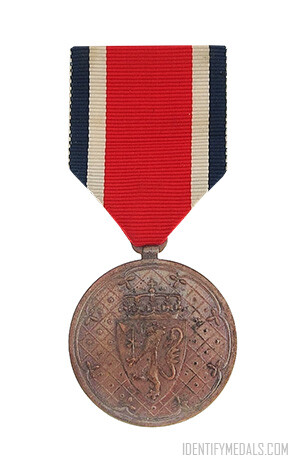
The Norwegian Korea Medal

The Norwegian Korea Medal is a Norwegian medal awarded for at least two months of service during the Korean War.

The Norwegian Korea Medal (or Den norske Koreamedalje in Norwegian) is a campaign medal that was established by the Norwegian government to recognize the service of individuals who participated in the Korean War.

Specifically, this medal was awarded to those who completed at least two months of service at the Norwegian Mobile Army Surgical Hospital (NORMASH) during the conflict. This unit played a vital role in treating wounded soldiers and offering essential medical care under challenging conditions. By awarding this medal, the Norwegian government acknowledged the significant contributions and sacrifices made by these individuals.

In the Norwegian honors system, the Norwegian Korea Medal holds the 25th position in the order of precedence. It ranks just below The King’s Medal of Merit for Service in the Home Guard and above the Maudheim Medal. This placement reflects the importance of the medal within the broader context of Norwegian military and civil awards.

The Norwegian Korea Medal Design

The obverse side of the medal features a prominent and detailed representation of a stylized lion, which is part of the Norwegian coat of arms. The lion is standing on its hind legs, holding an axe, symbolizing Norway’s historical strength and resilience.

The reverse side of the medal bears a simple yet powerful inscription “For Deltakelse” (For Participation), acknowledging the recipient’s contribution to the Korean War efforts. Encircling this inscription is a laurel wreath, which traditionally symbolizes honor, victory, and recognition of achievement.

The medal is suspended from a ribbon that incorporates the national colors of Norway.

The Defense Medal 1940–1945 Medal

The Defense Medal 1940–1945 Medal was awarded to military and civilian personnel who participated in the fight against the German invasion.

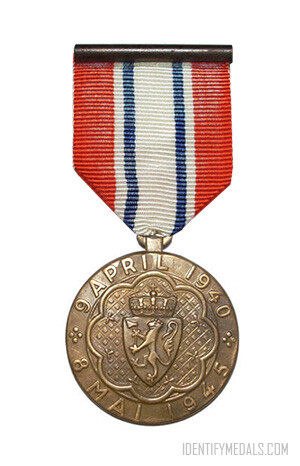
The Defence Medal 1940–1945 (or Deltagermedaljen 9. april 1940 – 8. mai 1945/Deltakarmedaljen 9. april 1940 – 8. mai 1945 in Norwegian) is awarded to military and civilian personnel who participated in the fight against the German invasion and occupation of Norway from 1940 to 1945.

This medal can be awarded to both Norwegian and foreign citizens. Due to the large number of participants and the challenge of identifying all eligible recipients, the medal may still be awarded.

The Defense Medal 1940–1945 Medal Criteria

The medal was awarded to individuals who met one of the following criteria:

  • Participating in the 1940 campaign in Norway for five days or more.
  • Serving in the Norwegian armed forces and merchant fleet outside of Norway for four months or more (or less if serving in units involved in the liberation of Norway).
  • Participating in the Finnmark campaign (winter 1944-45) for one month or more.
  • Allied soldiers who participated in the liberation of Norway and served for one month or more.
  • Serving in the resistance forces for four months or more.

As of 2017, the Defence Medal 1940–1945 ranks 23rd among Norwegian decorations.

The Defense Medal 1940–1945 Medal Design

The Defence Medal 1940–1945 is made of bronze. The medal is crafted by the goldsmith firm J. Tostrup in Oslo.

The obverse features the coat of arms with the inscription “9 April 1940 – 8 Mai 1945.”

The reverse displays the royal flag, the national flag, and another flag, all beneath a narrow circle inscribed with “DELTAGER I KAMPEN” (Participant in the struggle), surrounded by a chain.

The medal is suspended from a ribbon in the Norwegian national colors. A rosette may be added to the ribbon for recipients who have distinguished themselves multiple times. 

The King Haakon VII Freedom Medal

The King Haakon VII Freedom Medal was awarded for significant service to Norway during World War II and established on 18 May 1945.

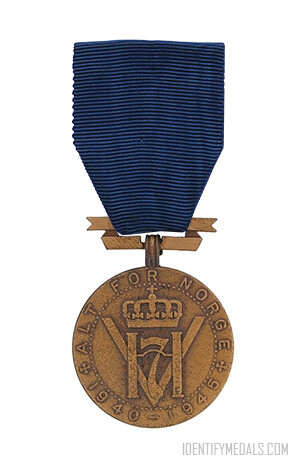
Established on May 18, 1945, King Haakon VII’s Medal of Liberty (or Haakon VIIs Frihetsmedalje in Norwegian) is a prestigious Norwegian award given to both Norwegian and foreign military and civilian personnel for their significant contributions to Norway during World War II.

This recognition extends to services rendered that did not necessarily involve direct combat with the enemy.

The King Haakon VII Freedom Medal Design

The medal is made of bronze and is circular in shape. It is suspended from the ribbon by a stylized bronze element folded at both ends.

On the obverse side, the medal features the monogram of King Haakon VII positioned over a letter V, symbolizing victory. This central design is encircled by a ring of beads, outside of which the inscription “ALT FOR NORGE 1940-1945” (ALL FOR NORWAY 1940-1945) is written.

The reverse side is plain except for a wreath of oak leaves, tied with a ribbon at the base, symbolizing strength and endurance.

The ribbon is a simple dark blue. When only the ribbon is worn, it is adorned with the King’s monogram in bronze, adding a distinguished touch to the decoration.