- Time Period: Pre-WW1
- Institution: 10 May 1865
- Country: Netherlands
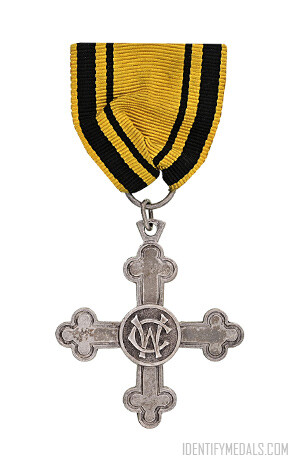
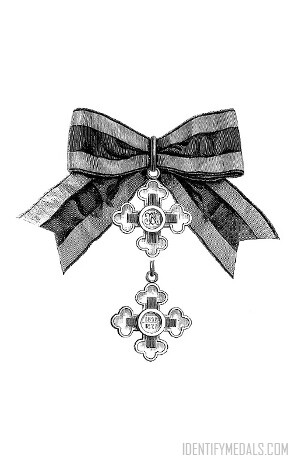
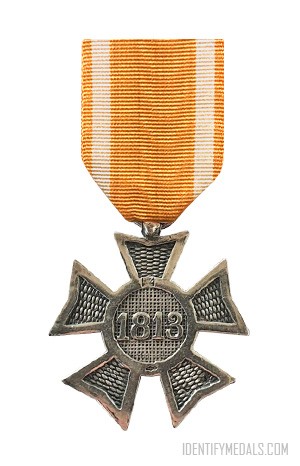
The Silver Memorial Cross 1813–1815 was a Dutch campaign medal created by King William III of the Netherlands in 1865 to honour veterans who had served in the wars that restored Dutch independence at the end of the Napoleonic Wars. It specifically commemorated service during the campaigns of 1813–1815, including the 1814 operations against French forces and the Hundred Days that culminated in the Battle of Waterloo.
The award was only given to surviving veterans, meaning it was both a retrospective recognition and a symbol of national gratitude. At the time it was issued, only a fraction of the original troops were still alive, making it a relatively rare and highly valued decoration.
The Silver Memorial Cross is historically significant because it not only commemorates military service but also represents one of the earliest examples of a state issuing a campaign medal retrospectively to surviving soldiers, decades after the conflict. It is often mentioned alongside other European post-Napoleonic commemoratives, like the Waterloo Medal.
The Silver Memorial Cross Medal Design
The cross is made of silver with five arms, featuring a central medallion engraved with the years 1813 and 1815. It was worn on a ribbon of orange with white stripes, reflecting the national colours of the Netherlands.
The medal was intended for everyday wear on military dress and ceremonial occasions, serving as a tangible link between the veterans and the country they helped free.
The Different Waterloo Medals
The Waterloo medal was issued by the British Government to all soldiers present during action. Seven nations of the Seventh Coalition struck differently designed medals for soldiers who took part in the campaign. These are:

The Waterloo Medal
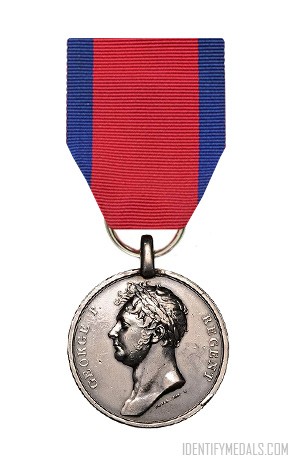
The Waterloo Medal is a British military medal established in 1816-17 and struck for all those who participated in the Waterloo campaign.
The Brunswick Waterloo Medal
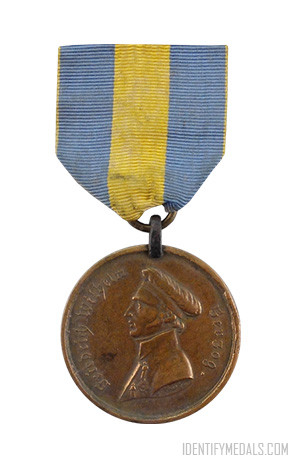
The Brunswick Waterloo Medal was a campaign medal awarded to those who participated in the Battles of Quatre Bras and Waterloo.
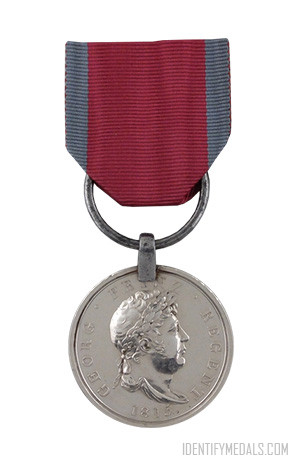
The Hanoverian Waterloo Medal
The Hanoverian Waterloo Medal was issued to all members of the Hanoverian army who fought in the battles of Quatre Bras and Waterloo.
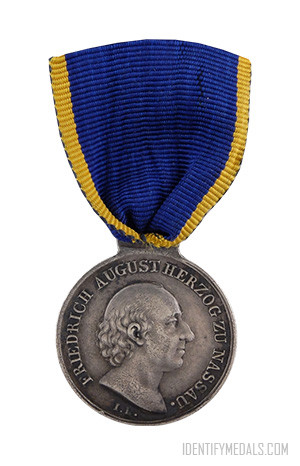
The Nassau Waterloo Medal
The Waterloo Medal is a campaign of the Duchy of Nassau established by Frederick Augustus, Duke of Nassau on 23 December 1815.
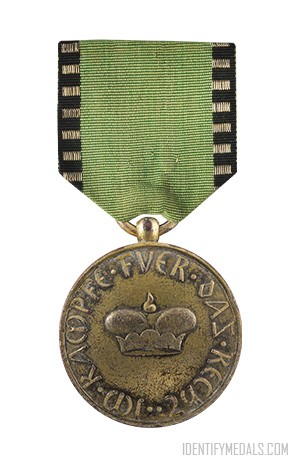
The Saxe-Gotha Altenburg Waterloo Medal
The Saxe-Gotha Altenburg Waterloo Medal, instituted in 1816, was awarded for participation n the Napoleonic Wars against France.
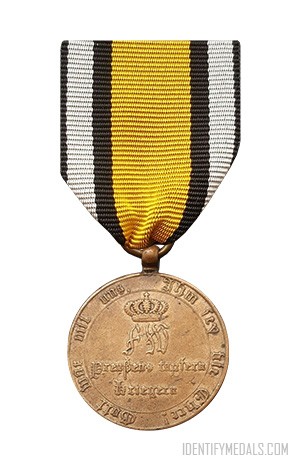
The War Commemorative Medal of 1813-15
The War Commemorative Medal for 1813–1815 was established in 1813 by King Friedrich Wilhelm III of Prussia for the Wars of Liberation.