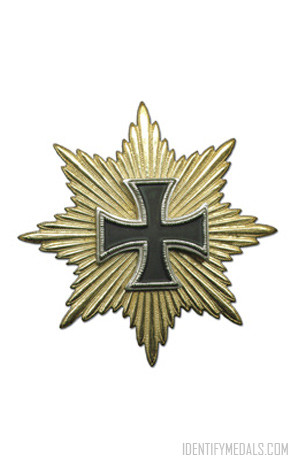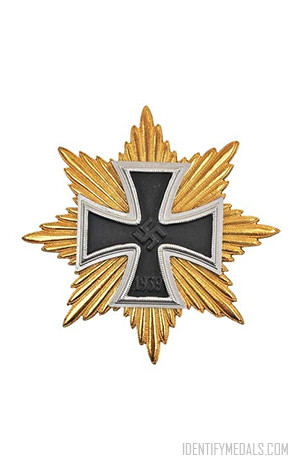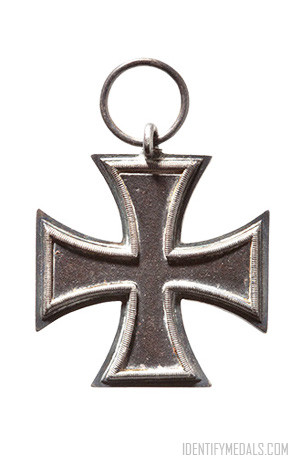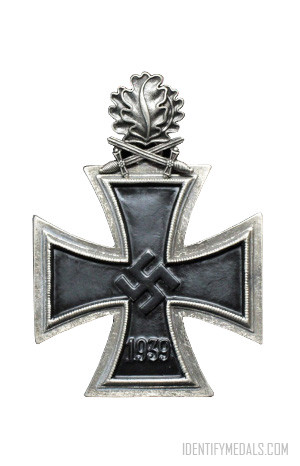
The Iron Cross (EK 1914)

The Iron Cross (Eisernes Kreuz or EK) is a military decoration established by King Friedrich Wilhelm III of Prussia in March 1813.
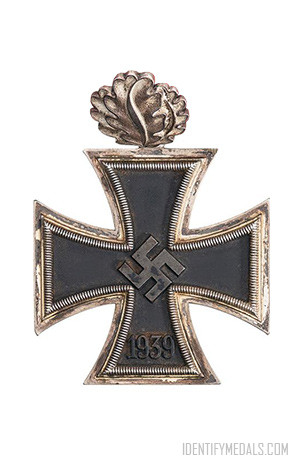
Time PeriodWorld War I
Institution: March 1813 (Iron Cross EK 1813)
Country: Germany

The Iron Cross (also known as Eisernes Kreuz or EK) is a military decoration established by King Friedrich Wilhelm III of Prussia in March 1813 normally awarded to military or to civilians for performing military functions.

Friedrich’s late wife Queen Louise was the first person to receive (posthumously) this award. The recommissioned medal was awarded during the Franco-Prussian War (EK 1870), World War I (EK 1914), and World War II (EK 1939, re-introduced with a swastika added in the center).

Emperor Wilhelm II reauthorized the Iron Cross on 5 August 1914, at the start of World War I. The Grand Cross was intended for senior generals of the Prussian or (later) the German Army. The Iron Cross 1st Class and the Iron Cross 2nd Class were awarded without regard to rank. 

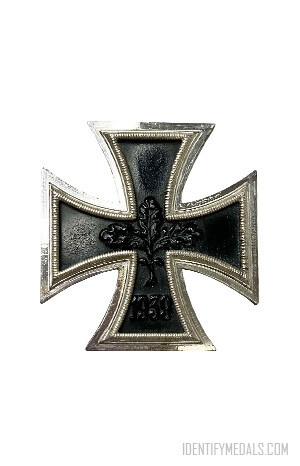
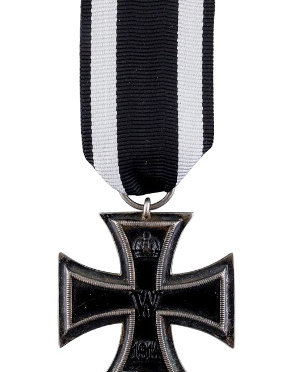
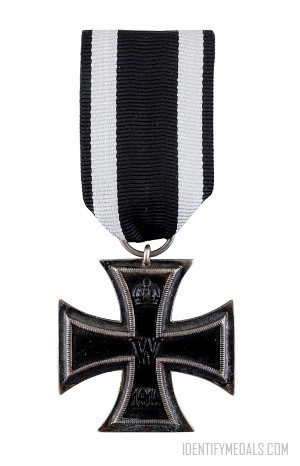
The Iron Cross 1914 Design

The design of the cross symbol is black with a white or silver outline, a derivation from the cross pattée of the Teutonic Order, which was sometimes used from the 13th century by knights.

The ribbon was black with two thin white bands, the colors of Prussia. The Iron Cross 1st Class employed a pin or screw posts on the back of the medal and was worn on the left side of the recipient’s uniform, like the original 1813 version. The Grand Cross was suspended from a neck ribbon and the 2nd Class from a ribbon on the chest.

During World War I, approximately 218,000 EKIs, 5,196,000 EKIIs and 13,000 non-combatant EKIIs were awarded.

What's the Meaning of The Iron Cross?

The Iron Cross held significant symbolism for the German armed forces and other German military personnel, as well as the nation as a whole.

It represented bravery, sacrifice, and loyalty to the Fatherland, serving as a powerful emblem of national pride and military prowess. You can learn more about the Iron Cross’ meaning here.

Iron Cross 1914 Recipients During WW1

Recipients of the Iron Cross were esteemed for their courage and dedication to the defense of Germany during World War I.

Here are ten famous individuals who received the Iron Cross EK 1914 during World War I:

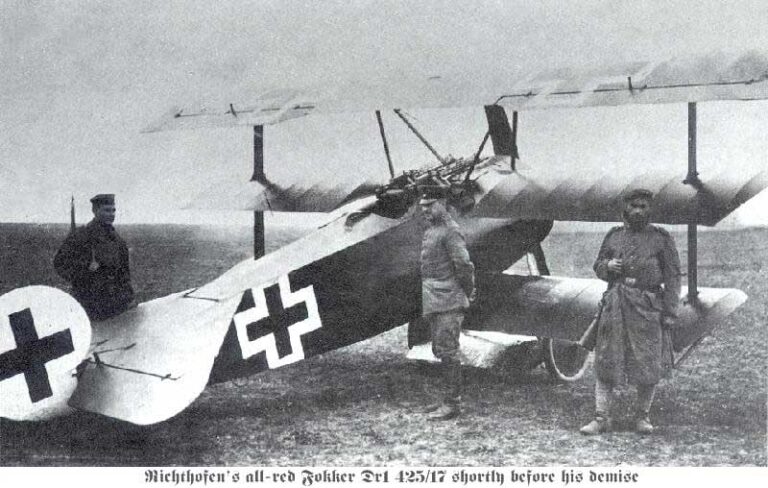
The red Fokker Dr1 of Manfred von Richthofen on the ground.
  1. Erwin Rommel – German field marshal: Rommel received the Iron Cross for his exceptional leadership and bravery during various battles, particularly in the Argonne Forest and at Caporetto.
  2. Manfred von Richthofen – German fighter pilot known as the “Red Baron”: Known as the “Red Baron,” Richthofen was awarded the Iron Cross for his remarkable success as a fighter pilot, credited with 80 aerial victories.
  3. Paul von Hindenburg – German military officer and later President of Germany: Hindenburg received the Iron Cross for his strategic brilliance in the Battle of Tannenberg, which resulted in a decisive victory over Russian forces.
  4. Hermann Göring – German politician and military leader: Göring earned the Iron Cross for his aerial combat achievements as a fighter pilot, including numerous successful engagements and his leadership of Jagdgeschwader 1.
  5. Ernst Jünger – German writer and soldier: Jünger was awarded the Iron Cross for his valor and resilience as an infantry officer, particularly noted in his memoir “Storm of Steel” which details his front-line experiences.
  6. Max Immelmann – German fighter pilot: Immelmann received the Iron Cross for his pioneering aerial combat tactics and his success as a fighter ace, with 15 confirmed kills.
  7. Erich Ludendorff – German general and politician: Ludendorff was awarded the Iron Cross for his critical role in various battles, including his strategic planning and execution during the Spring Offensive.
  8. Fritz Haber – German chemist and Nobel laureate: Haber received the Iron Cross for his contributions to the war effort, specifically his development of chemical weapons used during the conflict.
  9. Oswald Boelcke – German fighter pilot: Boelcke earned the Iron Cross for his extraordinary skills as a fighter pilot and his development of air combat tactics that became standard practice.
  10. August von Mackensen – German field marshal: Mackensen received the Iron Cross for his distinguished service as a field marshal, leading successful campaigns on the Eastern Front.

More Variations of the Iron Cross

The Iron Cross, a prestigious German military decoration, has undergone several variations since its inception. For example, the Iron Cross 1813 was instituted during the Napoleonic Wars by King Frederick William III of Prussia, the Iron Cross 1914 was awarded during World War I, it was reinstated by Kaiser Wilhelm II, and the Iron Cross 1939 was revived by Adolf Hitler for World War II, with modifications including a swastika.

Find the Iron Cross Medal Online

Right Now on eBay 
Clicking a link to eBay may result in a referral commission being paid if a purchase is made.
Loading...

Further Reading About the Iron Cross

Discover the stories behind the Iron Cross with these compelling books and delve into the rich history and significance of this prestigious military decoration.

The Distinguished Service Order

The Distinguished Service Order (DSO) is a United Kingdom military decoration awarded for distinguished service during wartime.

The Distinguished Service Order (DSO) is one of the highest military decorations awarded by the United Kingdom, primarily for acts of meritorious or distinguished service by officers of the armed forces during wartime.

Instituted in 1886 by Queen Victoria and typically awarded to officers ranked major, the first DSOs awarded were dated 25 November 1886. Recipients of the order are officially known as Companions of the Distinguished Service Order and are entitled to use the post-nominal letters “DSO”.

The DSO is typically awarded to officers ranked Major and above for meritorious or distinguished service in combat or other significant contributions to military operations. It is often awarded for leadership, courage, and exceptional service under fire.

 Over the years, the DSO has been awarded to numerous officers for their outstanding leadership, gallantry, and devotion to duty in various conflicts, including World War I, World War II, and subsequent military operations. During the First World War, 8,981 DSOs were awarded, each award being announced in The London Gazette.

The Distinguished Service Order Precedence and Clasps

The DSO ranks below only the Victoria Cross (VC) and the George Cross (GC) in the order of precedence for British military decorations. It is considered a prestigious honor and is highly respected within the military community.

In addition to the standard DSO, there are several variants and clasps that may be awarded in recognition of additional acts of distinguished service or multiple awards.

The Distinguished Service Order Design

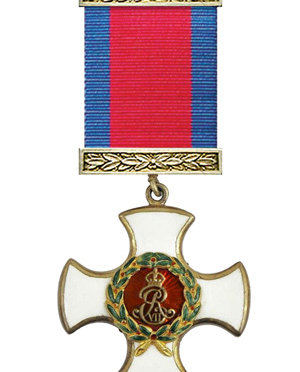
The DSO is a cross patonce, which means it has arms that narrow towards the center and end in a floriated decoration. It is crafted from silver gilt, enameled white and edged in gold.

In the obverse and the center, within a wreath of green laurel, is the imperial crown in gold upon a red enameled background. The reverse shows the royal cypher in gold upon a red enameled ground, within a wreath of laurel, enameled green. 

The ribbon of the DSO is crimson with narrow dark blue edges.