The South African Honoris Crux Medal

The South African Honoris Crux Medal was a military honor established by the Union of South Africa in 1952. It remained in use until 1975.

The Honoris Crux (Cross of Honor) of 1952, identified by the post-nominal letters HC, was a military honor established by the Union of South Africa in 1952.

It remained in use from 1952 to 1975 and was bestowed upon members of the South African Defence Force for acts of gallantry in combat against the enemy. However, it was phased out on July 1, 1975, when it was succeeded by a new series of four Honoris Crux decorations, each in a different class.

The Honoris Crux of 1952 recognized acts of gallantry in combat against the enemy. A Bar could be added for subsequent acts of bravery.
Only five decorations were conferred, with the first awarded in 1973 and the others in 1974 and 1975. All recipients were helicopter pilots and flight engineers of the South African Air Force, with Captain A.P. (Aap) Möller receiving the first decoration. Notably, no bars were ever added to the decoration.

The South African Honoris Crux Medal Design

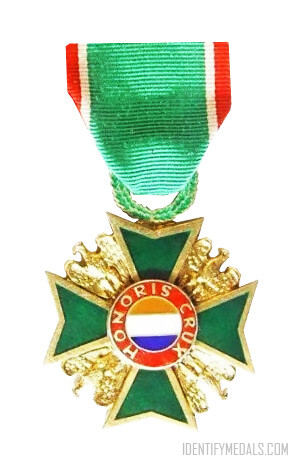
The Honoris Crux of 1952 is a silver-gilt Maltese cross designed to fit within a 45-millimeter diameter circle. The cross features arms adorned with green enamel and four eagles positioned between the arms, all facing towards their right. At the center, there is a roundel divided horizontally into enameled orange, white, and blue bands, symbolizing the national flag. Encircling this roundel is a red ring inscribed with “HONORIS CRUX.” The cross is suspended from a laurel wreath, forming a circular ribbon hanger, with the leaves depicted in green enamel.

The reverse side displays the pre-1994 South African coat of arms, with the decoration number stamped at the bottom of the rim. Prior to South Africa becoming a republic in 1961, specimens featured Queen Elizabeth’s royal cipher (E II R) above the coat of arms. However, the royal cipher was removed in 1961 without relocating the coat of arms to the center of the decoration.

The ribbon measures 32 millimeters in width and features a pattern consisting of a 3-millimeter-wide red band, followed by a 2-millimeter-wide white band, a 22-millimeter-wide dark green band, another 2-millimeter-wide white band, and finally, another 3-millimeter-wide red band.
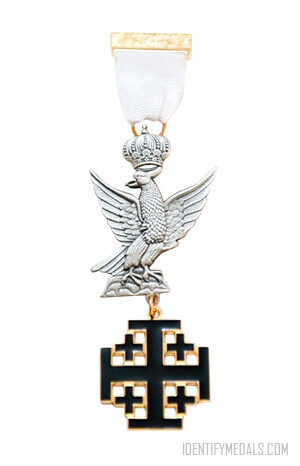
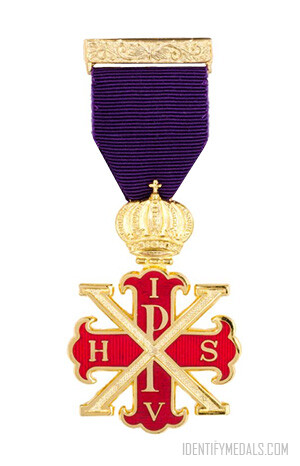
The Red Cross of Constantine Past Commanders Jewel

The Red Cross of Constantine Past Commanders Jewel is a decoration of the Christian fraternal order of Freemasonry.

The Red Cross of Constantine Jewel is a decoration of the Christian fraternal order of Freemasonry. Aspirants to the order are required to hold membership in Craft Freemasonry (lodge) and Royal Arch Freemasonry (chapter). Additionally, they must profess adherence to the Christian faith and affirm their belief in the Christian doctrine of the Holy Trinity.

The Masonic and Military Order of the Red Cross of Constantine comprises a three-degree Order of Masonry, and with its “Appendant Orders,” a total of five degrees are granted within this framework.

The Red Cross of Constantine bestows the title of Past Commander upon individuals who have previously served as Commanders within its ranks. This designation is a mark of honor and recognition for their dedication, leadership, and contributions to the order.

Past Commanders within the Red Cross of Constantine play a vital role in the organization’s activities and rituals. They bring a wealth of experience and knowledge to the table, guiding and mentoring newer members while upholding the traditions and values of the order. These esteemed individuals often continue to actively participate in the affairs of the Red Cross of Constantine, offering their expertise and support to ensure the continued success and prosperity of the order. 

The Red Cross of Constantine Past Commanders Jewel Design

For centuries, Freemasonry has integrated symbols and ceremonies from various Medieval military orders into its Masonic organizations. Among these is the notable Red Cross of Constantine, which is inspired by the Military Constantinian Order.

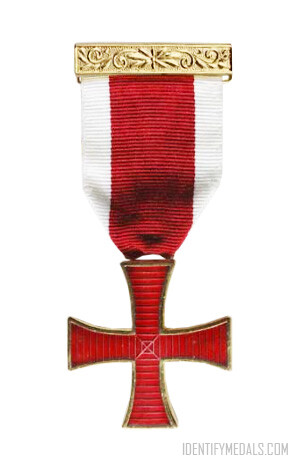
The insignia for the Red Cross of Constantine features a red cross pattée (a cross with arms that narrow towards the center) surrounded by a golden wreath or border. The Past Commander Jewel is instead black, with a bird suspension and a white ribbon.

The Red Cross of Constantine Jewel

The Red Cross of Constantine Jewel is a decoration of the Christian fraternal order of Freemasonry. Members must be of Christian religion.

The Red Cross of Constantine Jewel is a decoration of the Christian fraternal order of Freemasonry. Aspirants to the order are required to hold membership in Craft Freemasonry (lodge) and Royal Arch Freemasonry (chapter). Additionally, they must profess adherence to the Christian faith and affirm their belief in the Christian doctrine of the Holy Trinity.

The Masonic and Military Order of the Red Cross of Constantine comprises a three-degree Order of Masonry, and with its “Appendant Orders,” a total of five degrees are granted within this framework.

Attainment of the title “Knight of the Red Cross of Constantine” marks entry into the Order’s initial degree. Subsequently, two additional degrees are conferred, along with two other separate Masonic Orders, both characterized by their Christian nature, overseen by each national or regional Grand Imperial Conclave of the Order.

The Knight-Mason ceremony is short and simple, but focuses on teaching valuable moral lessons to the candidate. These lessons are based upon the story of the Roman Emperor Constantine the Great and the Battle of the Milvian Bridge.

The Red Cross of Constantine Jewel Design

For centuries, Freemasonry has integrated symbols and ceremonies from various Medieval military orders into its Masonic organizations. Among these is the notable Red Cross of Constantine, which is inspired by the Military Constantinian Order.

The insignia for the Red Cross of Constantine features a red cross pattée (a cross with arms that narrow towards the center) surrounded by a golden wreath or border. This symbolizes the connection to the historical figure Constantine the Great, who is said to have had a vision of a red cross before a decisive battle.

The Masonic Knights of Malta Jewel

The Knights of Malta Jewel is a decoration of one of the highest and most illustrious orders in Freemasonry, the Knights of Malta.

The Knights of Malta Jewel is a decoration of one of the highest and most illustrious orders in Freemasonry, the Knights of Malta

During the 11th century, the inception of the original Knights of Malta order aimed to ensure the safe journey and administer medical aid to Christian pilgrims.

In Masonic context, the Malta Degree is bestowed upon Candidates who have previously been Installed as Knights Templar. Although the regalia and ceremonial proceedings differ significantly from those of Knights Templar Freemasonry, it does not constitute a distinct governing body; rather, it serves as a progressive Degree within the Knights Templar Order. 

The Masonic ritual for the Installation of a Knight of Malta is richly ceremonial and punctuated with moments of drama and historical narrative. For instance, the ceremony commemorates the journey of the Knights Hospitaller from their origins in Jerusalem to their eventual settlement on the Island of Malta in 1522, following their passage through Palestine and Rhodes. 

The Masonic Knights of Malta Jewel Design

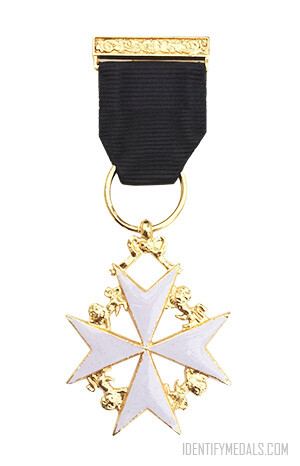
The Order’s jewel is a Maltese Cross similar to that of the Sovereign Military Order of Malta. On the obverse, the cross is adorned with white enamel and gold details. The ribbon is black.

The Masonic Knights Templar Past Preceptor Jewel

The Masonic Knights Templar Past Preceptor Jewel is a distinctive emblem worn by members of the Knights Templar, within Freemasonry.

The Masonic Knight Templar Past Preceptor Jewel holds a distinguished significance within the Knights Templar, a chivalric order within Freemasonry. As a mark of honor and recognition, this emblem is bestowed upon those who have served with dedication and distinction as Preceptors within the Knights Templar.

The Knights Templar, formally known as The United Religious, Military, and Masonic Orders of the Temple and of St John of Jerusalem, Palestine, Rhodes, and Malta, is a fraternal organization associated with Freemasonry. Membership in the Knights Templar and several other Masonic Orders is restricted to Freemasons who profess faith in Christianity. As part of their obligations upon entry into the order, individuals are required to pledge to safeguard and uphold the Christian faith. 

For those who have served as Preceptors within the Knights Templar, the Past Preceptor jewel serves as a tangible reminder of their commitment to the principles of the order and their contributions to its mission. 

The Masonic Knights Templar Past Preceptor Jewel Design

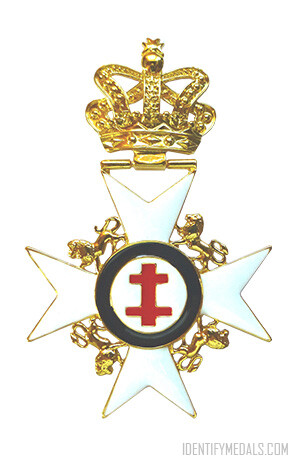
The jewel is shaped like a Maltese Cross, the symbol of the Order of Malta.

The emblem incorporates white, black, and red hard enamel to highlight a crimson preceptor’s cross encircled by a black ring and white enamel. This enamel arrangement is enhanced by gold plating.

The Masonic Knights Templar Breast Jewel

The Knights Templar Breast Jewel is a distinctive emblem worn by members of the Knights Templar, a chivalric order within Freemasonry.

The Masonic Knights Templar Breast Jewel is a distinctive emblem worn by members of the Knights Templar, a chivalric order within Freemasonry. The jewel typically consists of a cross pattée (a type of cross with arms that narrow towards the center), often adorned with various symbols and designs that hold specific significance within the Knights Templar tradition.

The Knights Templar Breast Jewel is worn as a mark of membership and distinction within the Knights Templar order. It is typically worn suspended from a ribbon or chain around the neck, or pinned to the wearer’s clothing during Masonic ceremonies and events.

In addition to serving as a symbol of membership, the Knights Templar Breast Jewel carries with it the rich symbolism and tradition of the Knights Templar, including concepts of honor, duty, and service that are central to the ideals of chivalry and Freemasonry.

The Masonic Knights Templar Breast Jewel Design

At the center of the cross, there is a symbol representing the Knights Templar: Typically, a red cross potent or a crown.

Surrounding this central emblem, the cross may feature additional symbols such as swords, crowns, helmets, or other medieval motifs associated with chivalry and knighthood. For example, the Knights Templar Preceptory Centenary Breast Jewels also induce the Preceptory Name, number, and years of consecration on the obverse, as well as the word centenary on the enamelled bar.

The Sovereign Military Order of Malta

The Sovereign Military Order of Malta is a Catholic lay religious order that claims continuity with the Knights Hospitaller.

The Sovereign Military Order of Malta (SMOM), officially known as the Sovereign Military Hospitaller Order of Saint John of Jerusalem, of Rhodes, and of Malta, is a Catholic lay religious order with a rich history rooted in military and noble traditions. Despite not having its own territory, the order is recognized as a sovereign entity under international law.

Its origins trace back to the Knights Hospitaller, a chivalric order founded around 1099 in the Kingdom of Jerusalem by Blessed Gerard. Led by an elected prince and grand master, the order upholds the motto “Tuitio fidei et obsequium pauperum” (Defense of the faith and assistance to the poor) and reveres the Virgin Mary as its patroness, under the title of Our Lady of Philermos.

Membership in the order comprises approximately 13,500 Knights, Dames, and Chaplains, with a subset of 33 professed religious Knights of Justice. While noble lineage was once a prerequisite for higher ranks, recent changes have allowed individuals without aristocratic ancestry to attain the highest class and hold office within the order.

Today, the Order of Malta focuses primarily on humanitarian efforts and international humanitarian relations, exemplifying its commitment to serving others and upholding its centuries-old values.

The Sovereign Military Order of Malta Design

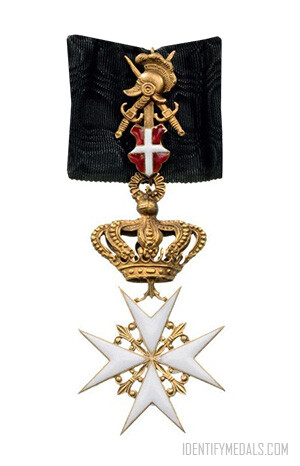
The insignia of the Sovereign Military Order of Malta (SMOM) features a white enameled cross worn on a black ribbon.

The white cross, often referred to as the Maltese Cross, is a powerful symbol of faith, charity, and nobility, representing the virtues upheld by the members of the order throughout history. Worn proudly by knights, dames, and chaplains of the order, this distinctive insignia reflects the dedication of its members to the principles of compassion, justice, and service to others.

The Order of St. Sylvester

The Order of St. Sylvester is one of five orders of knighthood awarded directly by the Pope and intended to honor Catholic laypeople/.

The Pontifical Equestrian Order of Saint Sylvester Pope and Martyr, also known as the Sylvestrine Order or the Pontifical Order of Pope Saint Sylvester, stands as one of the five orders of knighthood directly conferred by the Pope, serving as the Supreme Pontiff and head of the Catholic Church, as well as the Head of State of Vatican City. This distinction aims to recognize Catholic laypeople actively engaged in Church life, particularly those who demonstrate dedication through their professional endeavors and mastery of various arts.

In the past, this Order was united with the Order of the Golden Militia. However, Pope Pius X, through his motu proprio on 7 February 1905, titled Multum ad excitandos, split the Sylvestrine Order into two Orders of Knighthood. One retained the name of St. Sylvester, while the other reverted to the ancient name of the Order, namely the Order of the Golden Militia or the Order of the Golden Spur.

The Order acknowledges Catholic individuals deeply involved in Church affairs, especially those who excel in their professional roles and artistic pursuits. Notably, it is also bestowed upon non-Catholics, including prominent figures such as Anglicans, Muslims, and Jews in the UK.

The Order of St. Sylvester Design

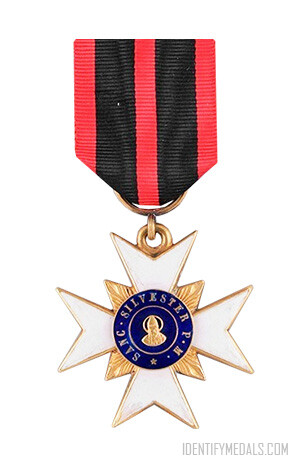
The present insignia of the Order consists of a gold cross with a white enamel surface. In its center lies the image of St. Sylvester, encircled by a blue enamel ring inscribed with “SANC. SYLVESTER P. M.”

On the reverse side, the papal tiara and crossed keys take center stage within a blue circle, featuring the dates of the Order’s restoration under Gregory (MDCCCXXXXR) and its renovation by Pius X (MDCCCCV) in gold characters.

The ribbon adorning the insignia is crafted from black silk, accented with three narrow red stripes. Additionally, the star or badge comprises the Order’s cross affixed to a silver star.

The Order of the Golden Spur

The Order of the Golden Spur is a papal order of knighthood awarded for distinguished service in propagating the Catholic faith.

The Order of the Golden Spur (or Ordine dello Speron d’Oro in Italian and Ordre de l’Éperon d’or in French), also officially known as the Order of the Golden Militia (or Ordo Militia Aurata in Latin and Milizia Aurata in Italian), is a papal knighthood bestowed upon individuals who have demonstrated exceptional service in promoting the Catholic faith or enhancing the prestige of the Church through acts of valor, scholarly writings, or other noteworthy achievements.

Following the passing of the last surviving knight, Grand Duke Jean of Luxembourg, in 2019, the order is now considered inactive.

The History of the Order of the Golden Spur

The Order of the Golden Spur has its roots in medieval times and is believed to have been established around the 8th century. Its origins are closely linked to the papacy and the Holy See’s role in recognizing individuals who made significant contributions to the Catholic Church and its mission.

Initially, the order was associated with the accolade of knighthood, often bestowed upon knights who demonstrated exceptional bravery in battle or service to the Church. Over time, its criteria expanded to include individuals who contributed to the glory of the Church through scholarly pursuits, artistic endeavors, or other illustrious acts.

During the Middle Ages, the order gained prominence as one of the highest honors conferred by the papacy. Recipients of the Golden Spur were esteemed members of the nobility and clergy, recognized for their unwavering dedication to the Catholic faith and their exemplary service to the Church.

Throughout its history, the order underwent various reforms and modifications, adapting to the changing political and religious landscape of Europe. Over time, the Golden Spur became associated not only with military valor but also with intellectual and cultural achievements that contributed to the advancement of Christianity.

The Order of the Golden Spur Design

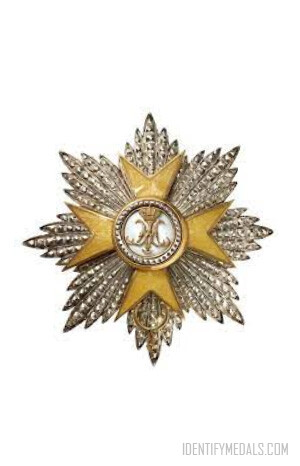
The badge today features an eight-pointed, enamelled gold cross. At its center lies a small white medallion, bearing the word “Maria” encircled by a golden ring. On the reverse side of the medallion, the year MDCCCCV is inscribed, surrounded by the words “Pius X Restituit” in a surrounding circle. Hanging from the bottom of the cross is a small golden spur.

The decoration is suspended from a red ribbon with white borders.

The star, worn on the left breast, retains the same cross design. It is set against the backdrop of silver star rays, enhancing its visual appeal.

The Supreme Order of Christ

The Supreme Order of Christ is the highest order of chivalry that can be awarded by the pope. The order is currently dormant.

The Supreme Order of Christ, known in Italian as the Ordine Supremo del Cristo, holds the distinction as the highest order of chivalry that can be bestowed by the Pope. Since 1987, there have been no new appointments to this prestigious order. Following the passing of the last remaining knight, King Baudouin of Belgium, in 1993, the order entered a period of dormancy.

Scholars suggest that its origins trace back to the Order of Christ of the Knights Templar, which also gave rise to the Order of Christ awarded by the kings of Portugal and the emperors of Brazil. Originally, the Portuguese order had both secular and religious aspects, but by the 18th century, the religious aspect had faded away.

The Portuguese Controversy

The Portuguese Crown has asserted its authority to bestow the Order of Christ. However, the Papacy contends that the Portuguese monarchs’ right to confer the Order was granted by a Pope through the Bull Ad ea ex quibus issued in Avignon in 1319.

Although the Bull itself does not expressly confer upon the Pope the authority to issue the Order, successive popes from Pope John XXII onward have done so. For many years, the Portuguese monarchy contested the Papacy’s right to grant the Order, and in one notable instance, apprehended an individual for wearing the Papal Order.

The stance of the Crown of Portugal was that the sole legitimate fons honorum was the Crown. However, this claim is disputed by the Papacy.

The Supreme Order of Christ Design

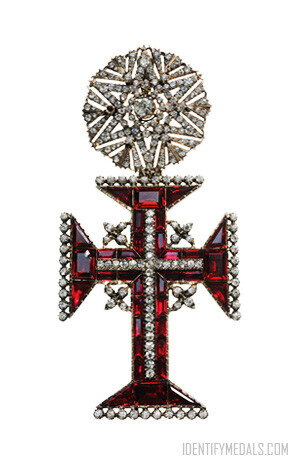
The insignia of the Order is a gilt cross with enamel with a longer lower arm. In the era of monarchy, distinct badges were assigned to civil and military knights: civil knights sported a badge resembling the contemporary version but adorned with the Sacred Heart of Christ above it. Conversely, military knights bore a completely different insignia—a gilt, blue, and white enamelled Maltese Cross, featuring white enamelled oval shields between the cross arms, each bearing a design akin to the Coat of arms of Portugal minus the red border.