The Vatican Cross of Mentana

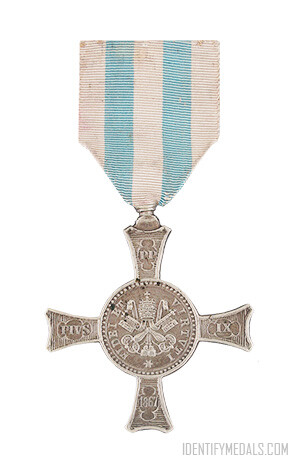
The Vatican Cross of Mentana is an order created by Pope Pius IX on 14 November 1867 to commemorate the Battle of Mentana.

The Cross of Mentana, also known as the Cross Fidei et Virtuti, was a military decoration established by the Holy See during the Italian unification period.

Pope Pius IX established the cross on November 14, 1867, following the victory of French-Papal troops in the Battle of Mentana. Although initially associated with that battle, it was later awarded to all participants in the campaign against Garibaldi’s volunteers.

On March 3, 1868, the Imperial French government permitted the wearing of the medal with French uniforms.

The Order of St. Gregory the Great Design

The Vatican Cross of Mentana is a silver cross featuring a cross pattée design with concave ends on the arms.

The obverse is a circular center medallion displaying the Papal coat of arms surrounded by the words ‘FIDEI ET VIRTUTI’. The upper, left, right, and lower arms bear the inscriptions ‘PP’, ‘PIUS’, ‘IX’, and ‘1867’ respectively. The reverse features a Latin cross encircled by a laurel wreath, with the inscription ‘HINC VICTORIA’ above it.

It hangs from a white ribbon with two light blue stripes in the center. Medal bars were affixed to the ribbon to denote the various battles for which each cross was bestowed.
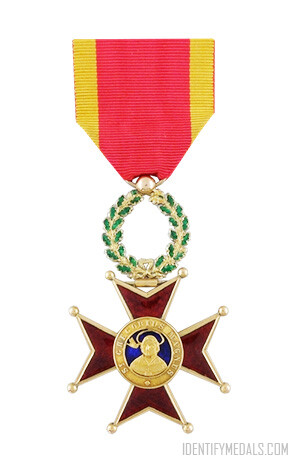
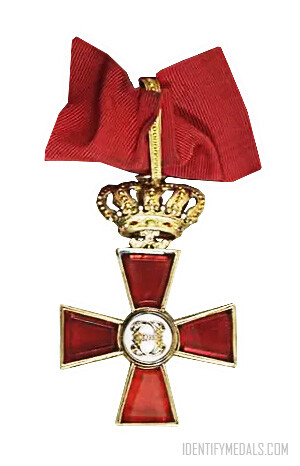
The Order of St. Gregory the Great

The Order of St. Gregory the Great is one of the five orders of knighthood of the Holy See and was established in 1831 by Pope Gregory XVI.

The Order of St. Gregory the Great (or Pontifical Equestrian Order of St. Gregory the Great, known in Latin as Ordo Sancti Gregorii Magni and in Italian as Ordine di San Gregorio Magno), was founded on September 1, 1831, by Pope Gregory XVI, following his ascent to the papacy seven months prior.

This order stands among the five orders of knighthood of the Holy See. It is conferred upon Catholic individuals, as well as certain distinguished non-Catholics, in acknowledgment of their personal dedication to the Holy See and the Catholic Church. This recognition is granted for their exceptional service, unwavering support of the Holy See, and the positive influence they exert in their communities and countries.

The inaugural statement affirms that individuals honored with the Order of St. Gregory the Great are recognized for their loyalty to the Holy See, noble lineage, noteworthy deeds, or charitable contributions. Recipients must uphold their reputation through ongoing meritorious actions and demonstrate unwavering fidelity to God and the Pope.

The award imposes no specific obligations on recipients towards the Catholic Church beyond the general expectations outlined above.

The Order of St. Gregory the Great Design

The insignia of the order is an eight-pointed cross, featuring a depiction of St. Gregory on the front and the motto “Pro Deo et Principe” (For God and Ruler) on the back. This cross is suspended from a ribbon in red and gold.

In ecclesiastical heraldry, individuals honored with the prestigious rank of Grand Cross may exhibit a red and gold ribbon encircling the shield in their personal coats of arms. However, recipients of lower ranks typically display an appropriate ribbon beneath the shield.

The civilian and military insignia differ in their presentation. Civilian recipients wear the cross suspended from a laurel wreath, while military recipients wear it suspended from a trophy of arms.

The Order of Charles XIII

The Order of Charles XIII is a Swedish order of merit established in 1811 and awarded to Freemasons of the Protestant faith.

The Royal Order of Charles XIII (Kungliga Carl XIII in Swedish) is a distinguished Swedish order of merit established by King Charles XIII in 1811.

Membership of the order is limited to Freemasons of the Protestant faith. The King of Sweden, currently King Carl XVI Gustaf, serves as the Lord and Master of the Order. The order’s membership is structured as follows:

  • Thirty lay members, with a maximum of seven non-Swedish members, each holding the XI (highest) degree of the Swedish Rite of Freemasonry, such as regional or national heads.
  • Three clerical members, typically priests or bishops of the Church of Sweden.
  • All princes of the Royal House of Sweden are born members but only wear the insignia if they hold the Knight and Commander rank of the Red Cross of the Swedish Order of Freemasons. As a result, the King and the Duke of Värmland, both born Knights of the Order, do not wear the insignia.
  • Foreign princes of royal lineage may be granted honorary membership if they are senior Freemasons, regardless of their affiliation with the Swedish Order or another. While they enjoy full membership rights, they are not included in the order’s membership limits. Prince Edward, Duke of Kent (United Kingdom), was admitted to the Order on November 6, 2000.

The total membership cannot exceed 33 individuals concurrently. Members of royal descent are automatically included in the count but do not consume slots from the allotted 33.

The Order of Charles XIII Design

The insignia of the order features a red St. George cross, with a white globe at its center bearing the monogram of the founder, consisting of two letters “C” surrounding “XIII” in gold.

On the reverse side of the globe, there is a gold letter “B” within an equilateral triangle bordered in black and gold. A closed golden crown is mounted atop the cross. The insignia is worn around the neck on a red ribbon. Additionally, there exists a red breast cross, making the insignia equivalent to that of a Commander 1st Class, and recipients are ranked accordingly following the Commanders 1st Class of the Swedish Royal Orders.

The ribbon is red.

The Order of Vasa

The Order of Vasa is a Swedish order of chivalry awarded to citizens of Sweden for service to the state and society.

The Royal Order of Vasa (or Kungliga Vasaorden in Swedish) is an order of chivalry bestowed upon citizens of Sweden in recognition of their contributions to the state and society, particularly in fields such as agriculture, mining, and commerce.

Instituted by King Gustav III on May 29, 1772, the Order of Vasa was unique in its inclusivity. It was unrestricted by birth or education and thus open to anyone deserving of recognition. Unlike the Order of the Polar Star, which primarily honored individuals in the learned professions, the Order of Vasa had a broader scope.

In 2019, a parliamentary committee was tasked with devising guidelines for the reintroduction of the Swedish orders, including the Order of Vasa, into the national honors system and for the reappointment of Swedish citizens to these orders. The committee presented its recommendations in September 2021 and a new regulation was issued on December 20, 2022, revoking the 1974 restriction and once again permitting Swedish citizens to receive the Royal Orders.

The Order had five classes:

  • Commander Grand Cross 
  • Commander 1st Class 
  • Commander 
  • Knight 1st Class (Member 1st Class for women and clergymen) 
  • Knight (Member for women and clergymen) 

The Order of Vasa Design

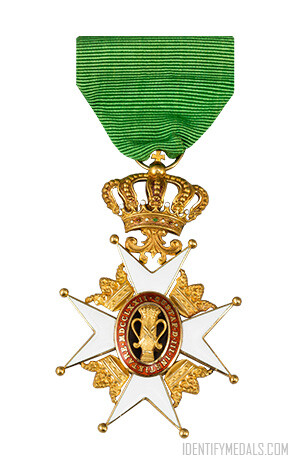
The badge of the Order is crafted as a white-enameled Maltese Cross, fashioned in silver for the Knight class and in gilt for Knight 1st Class and higher ranks, with crowns adorning the spaces between the arms of the cross. The central oval disc, which is identical on both sides, features a golden sheaf against a black enamel background, encircled by a red enamel ring bearing the inscription “Gustaf 3. Instiktare 1772″ (Instituted by Gustaf III, 1772). The badge is suspended from a royal crown.

The Badge of Vasa resembles the silver badge of the Order for knights, but lacks white enamel on the cross. The star of the Order takes the form of a silver Maltese Cross with a silver sheaf at the center. For the Grand Cross, the star additionally features the aforementioned nettle leaf emblem in silver between the arms of the cross.

The ribbon of the Order is green.

The Order of the Polar Star

The Order of the Polar Star is a Swedish order of chivalry established in 1748 as an award for civic merits, devotion to duty, science, etc.

Established on February 23, 1748, by King Frederick I, the Royal Order of the Polar Star (or Kungliga Nordstjärneorden in Swedish), alternatively known as the Royal Order of the North Star, stands as a Swedish order of chivalry.

Alongside the Order of the Sword and the Order of the Seraphim, it was introduced to honor individuals for their contributions to civic society, dedication to duty, advancements in science, literary accomplishments, scholarly pursuits, and the establishment of beneficial institutions, both within Sweden and internationally.

The Order has five degrees:

  1. Commander Grand Cross (KmstkNO) 
  2. Commander 1st Class (KNO1kl) 
  3. Commander (KNO) 
  4. Knight 1st Class (RNO1kl/LNO1kl
  5. Knight (RNO/LNO

The Order of the Polar Star Design

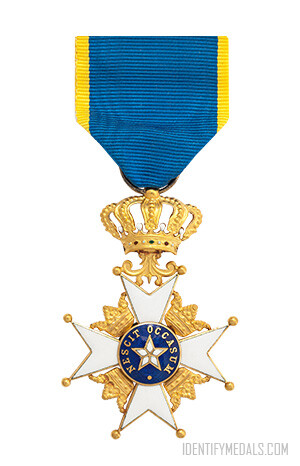
The Order’s badge features a white enamelled Maltese Cross, rendered in silver for a Knight and gilt for a Knight 1st Class and higher ranks, with crowns adorning the spaces between the arms of the cross. The central disc, identical on both sides, showcases a blue enamel background with a white-enamelled five-pointed star encircled by the Order’s motto, Nescit occasum (“It knows no decline”). The badge is suspended from a royal crown.

The star of the Order takes the form of a silver Maltese cross, with a silver five-pointed star positioned at its center. For the Grand Cross, straight silver rays extend between the arms of the cross.

The ribbon of the Order is black. However, from 1975 to 2023, it featured a blue color with yellow stripes near its borders. From 2023 onwards, the black ribbon was reinstated. 

The Order of the Sword (Sweden)

The Order of the Sword is a Swedish order of chivalry and military decoration established in 1748 as an award for bravery and long service.

The Royal Order of the Sword, officially known as the Royal Order of the Sword (or Kungliga Svärdsorden in Swedish), was established as an order of chivalry and military decoration by King Frederick I on February 23, 1748. It was created alongside the Order of the Seraphim and the Order of the Polar Star. The order’s motto, “Pro Patria,” meaning “For Fatherland,” is expressed in Latin.

Initially intended as a recognition for bravery and exceptional long or meritorious service among officers, the Order of the Sword eventually evolved into a customary award for military officers upon completing a certain number of years in service. Originally comprising three grades—Knight, Commander, and Commander Grand Cross—the order later expanded its classification into multiple classes.

On December 20, 2022, the Swedish Government issued a new regulation that overturned the 1974 restriction, thereby reinstating eligibility for Swedish citizens to receive the Royal Orders. This reactivation of the Order of the Sword, alongside the Order of Vasa, took effect on February 1, 2023.

The Grades of the Order of the Sword

In 1788, after King Frederick I established the three aforementioned orders, King Gustav III introduced two new grades of the Order of the Sword. They were both exclusively reserved for wartime conferment:

  • Knight Grand Cross First Class: The decoration was conferred upon division commanders holding the rank of at least major general in recognition of their significant triumphs in battle. Even the monarch could only don the insignia of Knight Grand Cross with the unanimous approval of his officers, as exemplified by Gustavus III, Charles XIII, and Charles XIV John.
  • Knight Grand Cross: The cross looks similar to the Knight’s cross, but is as large as the Grand Cross badge.

During peacetime, the Order of the Sword had five classes:

  •  Commander Grand Cross 
  •  Commander 1st Class 
  •  Commander 
  •  Knight 1st Class 
  •  Knight 

The Order of the Sword Design

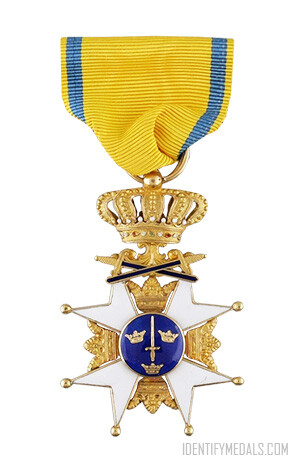
The insignia of the Order is a white-enamelled Maltese Cross arranged in a saltire (X-shaped) formation, rendered in silver for the Knight class and in gold for the Knight 1st Class and higher ranks. Gold open crowns are positioned between the arms of the cross.

On the obverse central medallion, an upright gold sword is flanked by three gold crowns against a blue enameled background, while the reverse central medallion features an intersecting gold sword and laurel wreath, accompanied by the Latin inscription “Pro Patria” (For Fatherland) on a blue enameled backdrop.

Across the opening between the upper arms of the cross at the top of the badge, a pair of crossed gold swords in blue enamelled scabbards with downward-turned blades is depicted. Additionally, in the badges of the two highest classes, an upright gold and blue sword spans the openings at the sides of the cross, along with a pair of crossed gold and blue swords with downward-turned blades across the opening between the lower arms of the cross at the bottom of the badge. 

The badge is suspended from a gold and enamelled royal crown. 

The Cross of Valor (Togo)

The Cross of Valor is a Togolese decoration established in 1988 and awarded for acts of valor or wounds during war or security operations.

  • Time Period: Post-WW2
  • Institution: 27 July 1988
  • Country: Togo

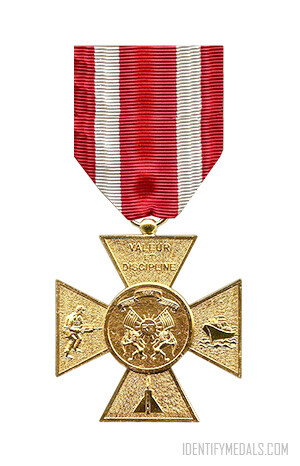
The Cross of Valor is a Togolese decoration established in 1988 (Decreee n°88-131) and bestowed upon military personnel who have demonstrated acts of bravery or have been injured during warfare or public security operations.

In exceptional circumstances, civilians who have shown exceptional valor during military operations may also receive this decoration.

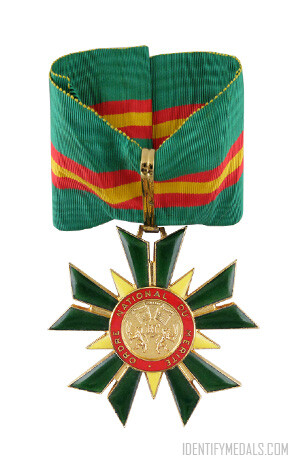
The National Order of Merit (Togo)

The National Order of Merit is a Togolese decoration awarded for distinguished service in the public, private, or military.

  • Time Period: Post-WW2
  • Institution: 26 March 1973
  • Country: Togo

The National Order of Merit is a Togolese decoration established in 1973 and awarded for distinguished service in the public, private, or military.

The order has five classes:

  • Grand Cross
  • Grand Officer
  • Commander
  • Officer
  • Knight

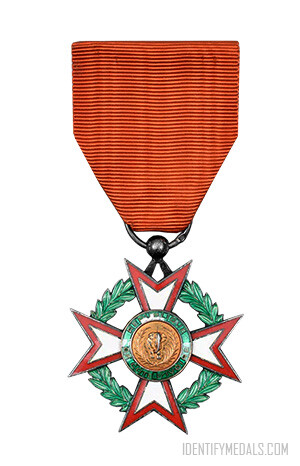
The National Order of the Republic of Ivory Coast

The National Order of the Republic of Ivory Coast is the country’s highest state honor and awarded for high distinction.

  • Time Period: Post-WW2
  • Institution: 10 April 1961
  • Country: Ivory Coast

Established on April 10, 1961, the National Order of the Republic of Ivory Coast commemorates the independence of the country, formerly a French colony, achieved in 1960.

Serving as the nation’s premier state distinction, it is bestowed upon individuals who have demonstrated exceptional service to the state.

Notably, the prestigious collar of the Order is exclusively conferred upon foreign heads of state as a symbol of diplomatic recognition and honor.

The National Order of the Republic of Ivory Coast Design

The Order’s medal features a white-enamelled cross of Malta, outlined in red, encircled by a wreath of laurel leaves in green. In the center of the cross lies a gold medallion depicting a frontal elephant, encircled by another laurel wreath, all set within a green-enamelled ring inscribed with “REPUBLIQUE DE COTE D’IVOIRE” (“Republic of Ivory Coast”) in gold.

Similarly, the plaque exhibits the identical design as the medal, with the cross positioned atop a silver radiating star.

The ribbon accompanying the order is a deep shade of orange.

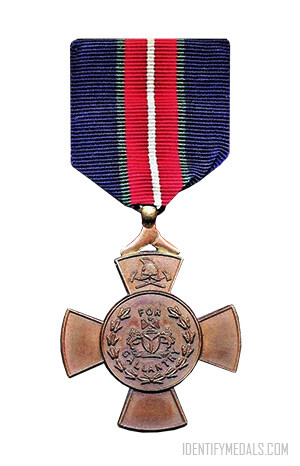
The Nigerian Fire Service Cross

The Nigerian Fire Service Cross is a Nigerian decoration awarded to members of the fire service for conspicuous acts of gallantry.

The Nigerian Fire Service Cross is a Nigerian decoration awarded to members of the fire service for conspicuous acts of gallantry in the course of duty. The award is available to Officers and Other Ranks.

All the medals of the Nigerian Fire Services were instituted by a Warrant dated 28 February 1974.