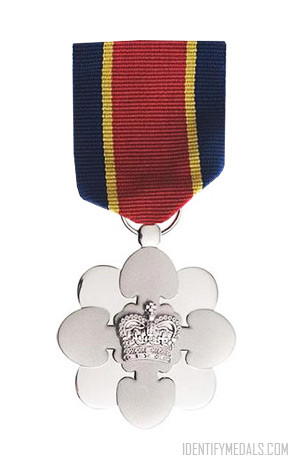
The New Zealand Distinguished Service Decoration

The New Zealand Distinguished Service Decoration (DSD) was instituted as a Royal Honor in 2007 to recognize distinguished military service.

The New Zealand Distinguished Service Decoration (DSD) was established by Royal Warrant in 2007 as a prestigious New Zealand Royal Honor, designed to commend exceptional military service. This decoration recognizes the distinguished contributions of regular, territorial, and reserve members within the New Zealand Defence Force.

Prior to 1995, such commendable service was acknowledged through the presentation of the British Empire Medal (Military Division). However, following the transition to a fully New Zealand Honors system in 1996, these Commonwealth awards were no longer available for recognition of New Zealand military personnel.

The New Zealand Distinguished Service Decoration Eligibility Criteria

The Distinguished Service Decoration is open to all members of the New Zealand Defence Force, as well as uniformed individuals from allied forces operating alongside or in conjunction with New Zealand military units.

It may be conferred for exceptional performance of military duties, whether in warlike or non-warlike operations, or for individual contributions to peacetime and humanitarian efforts that bring significant credit to the New Zealand Defence Force. Such acts must substantially contribute, through unwavering devotion to duty, commitment, discernment, or the application of skills, to the execution of operational deployments, military training, military operations, or the management and execution of projects or activities bearing significant implications for the current or future capabilities of the New Zealand Defence Force.

The Distinguished Service Decoration can be awarded for a singular remarkable achievement or for a cumulative record of extraordinary service rendered over an extended period.

The New Zealand Distinguished Service Decoration Design

The medal, crafted from sterling silver, takes the form of a kotiate, a traditional Māori war club featuring eight blades.

At the heart of the kotiate, on the obverse, one finds the depiction of St Edward’s Crown. The blades are arranged in an alternating pattern of frosted and polished silver.

On the reverse side, you’ll find the inscription “FOR DISTINGUISHED SERVICE,” accompanied by its Māori counterpart, “MO NGA TE MAHI KAHURANGI.

The ribbon adorning the medal is characterized by a dark blue base with a prominent red center stripe flanked by two narrow yellow stripes that separate the red from the blue.

Find This Medal

Right Now on eBay 
Clicking a link to eBay may result in a referral commission being paid if a purchase is made.
Loading...

The New Zealand Antarctic Medal

The New Zealand Antarctic Medal was established on 1 September 2006 as a New Zealand royal honor to replace the British Polar Medal.

The New Zealand Antarctic Medal, established on September 1, 2006, as a New Zealand royal honor, was introduced to replace the British Polar Medal (the Polar Medal, initiated in 1904, was bestowed upon individuals who had made significant contributions to polar exploration and knowledge). Recipients of this prestigious award had braved the formidable challenges and hardships posed by polar environments, whether on land, sea, or in the air.

In 1995, the Prime Minister’s Honors Advisory Committee recommended the establishment of the Polar Medal under a New Zealand royal warrant. Simultaneously, they proposed renaming it as “The Antarctic Medal” to better align with New Zealand’s accomplishments and endeavors in Antarctica. On September 1, 2006, Queen Elizabeth II formally instituted the New Zealand Antarctic Medal.

The New Zealand Antarctic Medal is conferred upon New Zealanders and other individuals who, either independently or as part of a New Zealand mission in the Antarctic region, have made exceptional contributions to exploration, scientific research, conservation, environmental protection, or the advancement of knowledge related to Antarctica. Additionally, it may be awarded to those who have supported New Zealand’s objectives or operations in the Antarctic region. Notably, the Medal is not granted for acts of bravery, short-term feats of extreme endurance, long service, or general service in Antarctica.

The New Zealand Antarctic Medal Design

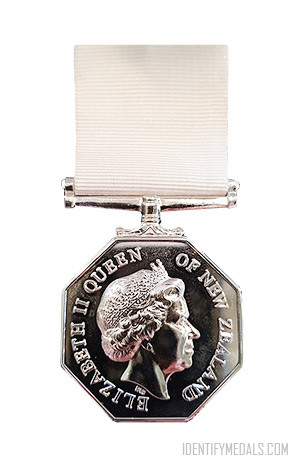
The obverse of the New Zealand Antarctic Medal features Queen Elizabeth II. The ribbon is white. 

Find Antarctic Medals

Right Now on eBay 
Clicking a link to eBay may result in a referral commission being paid if a purchase is made.
Loading...

The New Zealand Queen’s Service Order

The New Zealand Queen’s Service Order was established on 13 March 1975 and awarded for valuable voluntary service to the community.

The Queen’s Service Order, established through a royal warrant by Queen Elizabeth II on March 13, 1975, serves as a means of acknowledging “valuable voluntary service to the community or meritorious and faithful services to the Crown or similar services within the public sector, whether in elected or appointed office.

This order emerged following a comprehensive evaluation of New Zealand’s honors system in 1974, effectively supplanting the Imperial Service Order in New Zealand.

The name of this Order reflects the historical significance of Queen Elizabeth II as the inaugural monarch officially designated as the Queen of New Zealand. The monarch of New Zealand is the Sovereign Head of the order and those who are appointed as members are “Companions“.

The New Zealand Queen’s Service Order Design

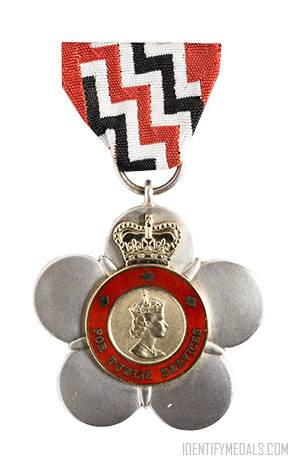
The emblem of this order features a stylized mānuka flower characterized by five petals, within which lies the likeness of the reigning monarch encircled by a red border bearing the words “FOR SERVICE — MŌ NGA MAHI NUI,” topped by a crown.

The ribbon showcases a traditional Māori Poutama pattern, consisting of black, white, and red diagonal ‘steps,’ symbolizing human growth and perpetual striving upwards. Red stripes line each edge of the ribbon.

Wearers display the insignia on the left lapel of their coat, and women opt to wear it as a ribbon fashioned into a bow on their left shoulder. When in uniform, women adopt the male fashion of displaying the QSO. 

The Order of New Zealand

The Order of New Zealand was created to recognize outstanding service and is the highest honor in the New Zealand royal honors system.

The Order of New Zealand represents the pinnacle of recognition within the New Zealand royal honors system. It was established on February 6, 1987, through a royal warrant, this prestigious order is designed to honor individuals who have demonstrated exceptional service to both the Crown and the people of New Zealand, whether in civil or military roles.

Appointments to the Order are made through a royal warrant under the monarch’s sign manual, following the prime minister’s advice. The order’s administration is overseen by a Secretary and Registrar, who holds the role of Clerk of the Executive Council.

The Order of New Zealand Classes

The Order of New Zealand consists of three classes categories of members:

  • Sovereign
  • Ordinary
  • Honorary

The ordinary membership is limited to 20 living members, although this number can be lower at any given time. Additional members may be appointed to commemorate significant royal, state, or national events, such as anniversaries or jubilees. Notable occasions for these appointments include the Treaty of Waitangi’s 150th anniversary in 1990, the Queen’s Golden Jubilee in 2002, the 20th anniversary of the Order’s institution in 2007, the Queen’s Diamond Jubilee in 2012, the Queen’s Platinum Jubilee in 2022, and the coronation of King Charles III in 2023. Additional members share the same status as ordinary members.

Honorary membership is extended to citizens of countries where the Sovereign is not the head of state. All members, regardless of category, are entitled to use the post-nominal letters “ONZ.”

The Order of New Zealand Design

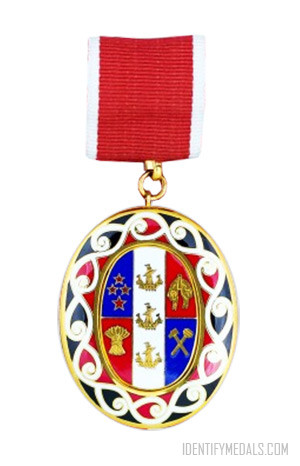
The insignia of the Order features an oval-shaped medallion adorned with the New Zealand coat of arms in brilliant gold and vibrant enamel colors. It is traditionally worn suspended from a white and ochre ribbon around the neck for men, while women wear it as a bow on their left shoulder.

The Spanish Cross (Nazi Germany)

The Spanish Cross was a military decoration awarded by Nazi Germany to members of the German Condor Legion in the Spanish Civil War.

The German Spanish Cross (Spanienkreuz) was a military decoration awarded by Nazi Germany to members of the German Condor Legion who had served in the Spanish Civil War, which took place from 1936 to 1939. The Condor Legion was a unit of the German Luftwaffe (air force) that provided support to Francisco Franco’s Nationalist forces during the conflict.

The German Spanish Cross came in two classes:

  1. Spanish Cross in Bronze (Spanienkreuz in Bronze): This version of the award was given for service in Spain without combat action. It featured a Maltese cross with a central swastika and a laurel wreath. The cross had a bronze finish.

  2. Spanish Cross in Silver with Swords (Spanienkreuz in Silber mit Schwertern): This higher-class version was awarded for actual combat action in Spain. It featured the same design as the bronze cross but had a silver finish, and crossed swords were added behind the swastika to denote combat service.

The Spanish Cross Design

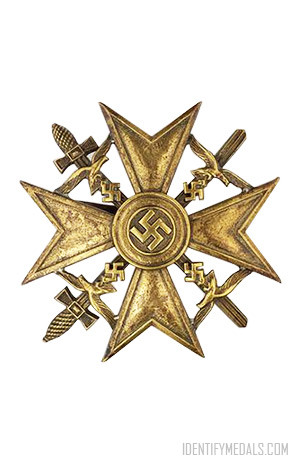
The Spanish Cross had a Maltese cross shape, which is a type of cross characterized by arms of equal length that widen as they extend outward from the center. This shape is often associated with military medals.

In the center of the cross, there was a black swastika, which was a prominent symbol of the Nazi regime.

Surrounding the central swastika, there was a laurel wreath. Laurel wreaths are traditional symbols of victory and honor, and they were often used in military decorations to signify achievement.

In the Spanish Cross in Silver with Swords, two crossed swords were positioned behind the swastika. These crossed swords indicated that the recipient had been awarded the medal for combat service in Spain.

The cross itself had a silver finish, which distinguished it from the lower-ranking Spanish Cross in Bronze, which had a bronze finish.

Order of Pedro I

The Order of Pedro I is a Brazilian order of chivalry instituted in 1826 by Emperor Pedro I and considered the rarest of the country’s orders.

The Order of Pedro I (or Imperial Ordem de Pedro Primeiro in Portuguese) is a Brazilian order of chivalry instituted in 16 April 1826 by Emperor Pedro I and considered the rarest of the country’s Imperial orders.

The Order of Pedro I was canceled on 22 March 1890 by the interim government of the United States of Brazil. Since the deposition of the last Brazilian monarch in 1889, it continues to be used as a house order by the Heads of the Orleans-Berganza house. The Grand Mastership, like many other Brazilian imperial orders, is shared between the branches of Petrópolis and Vassouras.

Classes of the Order of Pedro I

The Imperial Order of Pedro I has the following classes:

  • Grand Cross (Grã-Cruz)
  • Commander (Comendador)
  • Knight (Cavaleiro)

The Order of Pedro I Medal Design

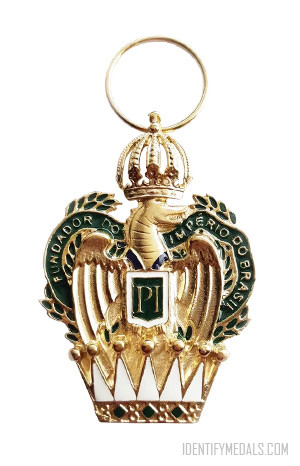
The insignia of the Grand Cross of the Order of Pedro I is a gold-winged dragon (referencing the House of Braganza) with a red sole garnished with coffee branches and the inscription “Founder of the Empire of Brazil”. The insignia is topped with an imperial crown and a green ribbon. The reverse is the same except that the dragon is complete with its tail and without the crown of the city.

Order of Saint James of the Sword

The Order of Saint James of the Sword was an honorific order of the Empire of Brazil established in 1843 and nationalized by Pedro I.

  • Time Period: Pre-WW1
  • Institution: 9 September 1843
  • Country: Brazil

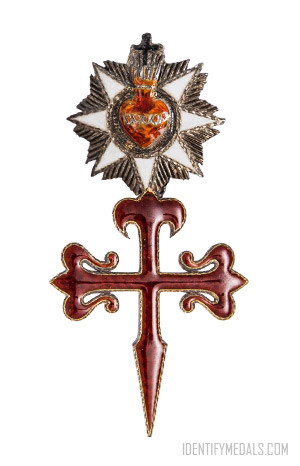
The Imperial Order of Saint James of the Sword (or Imperial Ordem de Sant’Iago da Espada in Portuguese) was an honorific order of the Empire of Brazil established on 9 September 1843 and nationalized by Pedro I of Brazil after the reform proposed by  Dona Maria II of Portugal and recommended by the Judiciary.

While the Portuguese Order of Saint James of the Sword (on which this Brazilian one is based) was offered to people who made advancements in science, literature, and art, the Brazilian counterpart was reserved exclusively for military personnel (especially of Pedro I and his son Dom Pedro II). 

The Imperial Order of Saint James of the Sword was canceled as a national order by the interim government of the United States of Brazil on 22 March 1890. Since then, it continues to be awarded by the Heads of the Orleans-Braganza house, and the Petrópolis and Vassouras branches of the Imperial family dispute its Gand Mastership. 

Classes of the Order of th Sword

The Imperial Order of Saint James of the Sword has the following classes:

  • Grand Cross (Grã-Cruz)
  • Commander (Comendador)
  • Knight (Cavaleiro)

Order of Columbus

The Order of Columbus was a Brazilian order of merit instituted in 1890, right after the abolition of Imperial Brazilian Orders.

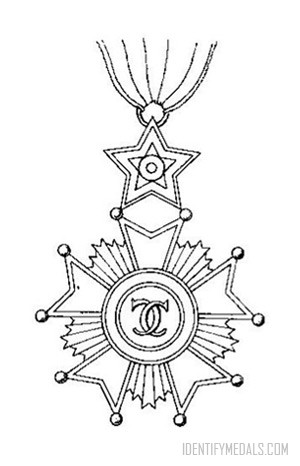
The Order of Columbus (or Ordem de Colombo in Portuguese) was a Brazilian order of merit instituted on 6 June 1890, right after the abolition of all the Imperial Brazilian Orders. 

When the first constitution of the Brazilian republic was created, the Order of Columbus was abolished (24 February 1891).

Classes of the Order of Columbus

The Order of Columbus had the following grades:

  • Grandmaster
  • Grand Cross (12 real and 24 honorary)
  • Grand Officer (50 dignataries)
  • Officer (150 of them)
  • Knights (An unlimited number)

Order of Naval Merit (Brazil)

The Order of Naval Merit is a Brazilian award established in 1934 and presented for distinguished service and contributions.

The Order of Naval Merit (or Ordem do Mérito Naval in Portuguese) is a Brazilian award established on 4 July 1934 by president Getúlio Vargas and presented to those who have served with distinction in the Brazilian Navy or have contributed in some way to it.

Classes of the Order of Naval Merit

The Order of Naval Merit has five grades:

  • Order of Naval Merit - Grand Cross (Brazil) - ribbon bar.png Grand Cross (Grã-Cruz)
  • Order of Naval Merit - Grand Officer (Brazil) - ribbon bar.png Grand Officer (Grande-Oficial)
  • Order of Naval Merit - Commander (Brazil) - ribbon bar.png Commander (Comendador)
  • Order of Naval Merit - Officer (Brazil) - ribbon bar.png Officer (Oficial)
  • Order of Naval Merit - Knight (Brazil) - ribbon bar.png Knight (Cavaleiro)

The National Order of Naval Merit Medal Design

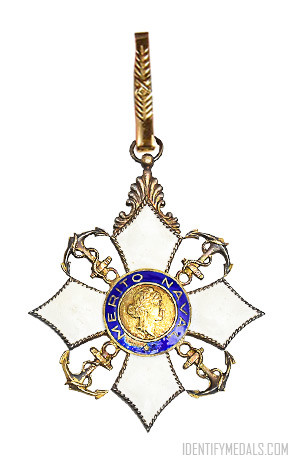
The obverse of the Order of Naval Merit medal bears the effigy of the republic surrounded by a circle of blue enamel. On it is the inscription “Naval Merit”.

The reverse shows the word “Brasil” inscribed in the same blue circle.

The ribbon consists of a red grosgrain chamalotada with a light blue stripe in the center.

Imperial Order of Christ (Brazil)

The Imperial Order of Christ is a Brazilian order of chivalry instituted in 1822 and awarded for notable services to religion.

The Imperial Order of Christ (also known as The Imperial Order of Our Lord Jesus Christ or Imperial Ordem de Nosso Senhor Jesus Cristo in Portuguese) is a Brazilian order of chivalry established on 7 December 1822 and awarded for notable services to religion.

The Order of Christ was instituted by emperor Pedro I of Brazil and is based on the Portuguese Order of Christ, which was founded in 1316-1319 by King Dom Dinis and Pope John XXII. 

Classes of the Order of Christ

The Order of Christ has three grades. These are:

  • Grand Cross: The badge is worn on a sash on the right shoulder.
  • Commander: The badge is worn o a necklet.
  • Knight: The badge is worn on a ribbon on the left side of the chest.

The Order of Christ Medal Design

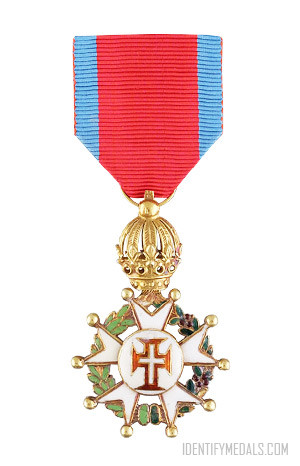
The Brazilian Order of Christ is based on the Portuguese order carrying the same name, with one difference: The badge had an added Imperial Crown of Brazil and the ribbon is different.

The obverse of the insignia for Civil Knights is a Latin cross with silver gilt and red enamel. The border is chiseled and has insets of white enamel. Military Knights is a Maltese cross with ball-tipped finials and a laurel wreath between the arms.

The star of the order has 22 asymmetrical arms of rays and a central white enamel disc with a miniature cross above it. On top of the star is the Sacred Heart of Christ. 

The ribbon of the Order of Christ is red with small blue stripes on each side.