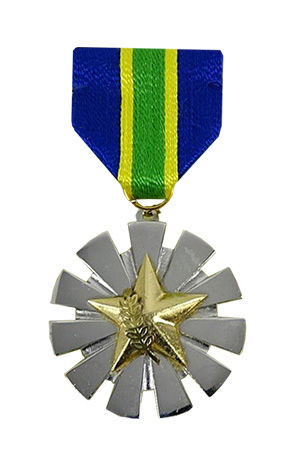
The Gawad sa Kaunlaran Distinction

The Gawad sa Kaunlaran Distinction is the second highest distinction presented by the Armed Forces to civilians and government officials

The Gawad sa Kaunlaran is conferred upon Philippine citizens by the Chief of Staff of the Armed Forces of the Philippines, Area Command, and Major Service Commanders. It stands as the second highest honor bestowed by the Armed Forces of the Philippines upon civilians and government officials.

This award is granted for remarkably meritorious and significant contributions to socio-economic and other non-combat endeavors, or for exceptionally distinguished service that significantly furthers the peaceful objectives of the AFP or enhances the quality of life within military communities.

Recipients are selected based on the conspicuous nature of their achievements, regardless of their position or length of service. The completion of specific tasks or projects is not a prerequisite for consideration; rather, the notable impact and contribution of the individual’s actions are the primary criteria for recognition.

The Gawad sa Kaunlaran Medal Design

The medal features a circular design adorned with 11 silver rays, with dark blue interspaces between the rays. Positioned at the center of the rays is a gold star, upon which a single branch of light-green laurel leaves is diagonally superimposed.

It hangs from a blue ribbon accentuated by a central green stripe bordered by yellow edges.
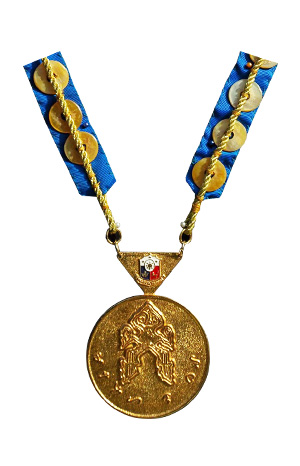
The National Living Treasures Award

The National Living Treasures Award is conferred to artists for their contributions to the country’s intangible cultural heritage.

The National Living Treasures Award, also known as the Gawad sa Manlilikha ng Bayan (GAMABA), is a recognition conferred by the Government of the Philippines upon individuals or groups of artists for their significant contributions to the nation’s intangible cultural heritage.

A recipient of this award, termed a National Living Treasure or Manlilikha ng Bayan, is described as “a Filipino citizen or group of Filipino citizens engaged in any traditional art uniquely Filipino, whose exceptional skills have attained a high level of technical and artistic excellence and have been transmitted to and widely practiced by present generations within their community with the same level of technical and artistic proficiency.”

The initiative began in 1988 with the establishment of the National Folk Artists Award by the Rotary Club of Makati-Ayala. However, this recognition ceased after 1992 when it was supplanted by the GAMABA Law. Notably, individuals recognized with the National Folk Artists Award from 1988 to 1992 are not formally acknowledged by the government, as the award was conferred by a private entity.

The National Living Treasures Award Eligibility

To qualify as a National Living Treasure, an individual must meet the following criteria:

  • Residency: Resides within an indigenous or traditional cultural community across the Philippines that has preserved its indigenous customs, beliefs, rituals, and traditions, or has amalgamated external influences while retaining its distinctiveness.
  • Artistic Tradition: Engages in a folk art tradition that has a documented history of at least 50 years.
  • Consistency: Demonstrates a consistent and prolonged commitment to producing works of exceptional and unique quality over a significant period.
  • Mastery: Exhibits a high level of expertise in utilizing the necessary tools and materials for their craft and enjoys a recognized reputation as a master and creator of works of outstanding technical prowess.
  • Transmission of Skills: Actively imparts, or intends to impart, their skills in the folk art to other members of the community, thereby ensuring the continuity of the community’s traditional art form.

The National Scientist of the Philippines Medal

The National Scientist of the Philippines Medal was introduced in 1978 and is the highest award accorded to Filipino scientists.

The Order of National Scientists of the Philippines, also referred to as ONS, stands as the highest distinction bestowed upon Filipino scientists by the Philippine government. Those recognized with this honor are recognized as National Scientists (Pambansang Alagad ng Agham).

Established on December 16, 1976, by President Ferdinand Marcos via Presidential Decree Nos. 1003 and 1003-A, which also gave rise to the National Academy of Science and Technology, the award carries significant prestige. According to the decree, a scientist is defined as someone who holds a doctoral degree in any scientific field and has showcased distinction through independent research or notable innovative accomplishments in various scientific domains, including agriculture, engineering, medical sciences, mathematics, and social sciences, as evidenced by published works in reputable scientific and technical journals. The status of the award was elevated to that of an order in 2003.

The National Scientist of the Philippines Medal Eligibility

The nomination and selection process fall under the jurisdiction of the National Academy of Science and Technology, comprised of Filipino scientists. Annually, the Academy recommends a maximum of 10 scientists to the President of the Philippines for the prestigious title of National Scientist.

Ultimately, it is the President who makes the final decision, based on the distinguished individual or collaborative achievements in science and technology demonstrated by the nominees.

The National Artist of the Philippines Medal

The National Artist of the Philippines Medal was established in 1972 and is bestowed on Philippine nationals for significant contributions.

The Order of National Artists of the Philippines (or Orden ng mga Pambansang Alagad ng Sining ng Pilipinas in Tagalog) is a prestigious distinction granted by the President of the Philippines to Filipino nationals who have significantly contributed to the advancement of Philippine art. These distinguished individuals, known as National Artists, were initially recognized through an Award, which was later elevated to the status of an order in 2003.

Administered by the Cultural Center of the Philippines and the National Commission for Culture and the Arts, this order was established under President Ferdinand Marcos’s Proclamation № 1001 dated April 2, 1972. The first recipient of this recognition was the renowned Filipino painter Fernando Amorsolo.

National Artists are those who have demonstrated exceptional achievement and impact in their respective artistic fields. Candidates for this honor must undergo a rigorous selection process, including recommendations from both the Cultural Center and the National Commission for Culture and the Arts, before being officially conferred the Award. Following a Presidential Proclamation, these individuals are designated as National Artists (Filipino: Gawad Pambansang Alagad ng Sining) and are welcomed into the Order.

The National Artist of the Philippines Medal Eligibility

Originally, the categories for recognizing National Artists encompassed various fields, including:

  • Music: including singing, composition, direction, and/or performance;
  • Dance: covering choreography, direction, and/or performance;
  • Theater: involving direction, performance, and/or production design;
  • Contemporary Arts: spanning painting, sculpture, printmaking, photography, installation art, mixed media works, illustration, graphic arts, performance art, and/or imaging;
  • Literature: comprising poetry, fiction, essay, playwriting, journalism, and/or literary criticism;
  • Film and Broadcasting/Broadcast Arts: encompassing direction, writing, production design, cinematography, editing, camera work, and/or performance; and
  • Architecture, Design, and Allied Arts: which includes architecture design, interior design, industrial arts design, landscape architecture, and fashion design.

The Order of Gabriela Silang

The Order of Gabriela Silang, established in 2003 and names after a national heroine, is an all-female order of the Philippines.

The Order of Gabriela Silang (or Orden ni Gabriela Silang in Filipino) stands as an exclusive all-female order within the Philippines, honoring the legacy of the esteemed Philippine national heroine, Gabriela Silang.

The distinction was named in honor of María Josefa Gabriela Cariño Silang , an 18th-century Filipino revolutionary and independence activist against Spanish colonizers, recognized as a national hero of the Philippines. Today, it is awarded to the spouses of heads of state or government, natives and foreigners.

This distinguished order comprises a single class, bestowed upon the spouses of heads of state and/or government, regardless of nationality, showcasing the significance of their contributions to society.

The Order of Gabriela Silang Design

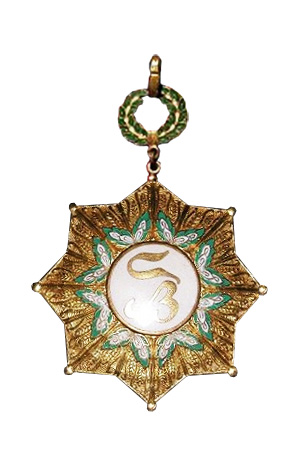
Made of gold-plated silver, the order’s badge has the shape of an eight-rayed star with an inner medallion surrounded by stylized rays in the shape of rice leaves, on which the stylized letters “G” and “S” are placed. The inner medallion is enameled in white and the letters are gilded. 

The ribbon of the Order of Gabriela Silang is adorned with vibrant hues of red, accented by striking borders in yellow and blue, symbolizing courage, unity, and loyalty.

The Philippine Legion of Honor

The Philippine Legion of Honor was established in 1947 and is awarded to both civilians and members of the military, Filipino or foreign.

The Philippine Legion of Honor (or Lehiyong Pandangal ng Pilipinas in Filipino, Legión de Honor Filipina in Spanish) was established by President Manuel Roxas on July 3, 1947, through Philippine Army Circular No. 60.

Modeled after the Legion of Merit of the United States of America, it was designed to recognize both civilians and military personnel, whether Filipino or foreign. 

Presently, the Philippine Legion of Honor is awarded to individuals who have rendered valuable and meritorious service pertaining to the military affairs of the Republic of the Philippines. As such, it holds the distinction of being the principal order of military merit in the country.

To underscore the significance of civil service in military matters, as well as its role in upholding the honor of the Republic of the Philippines and contributing to nation-building, the Philippine Legion of Honor is bestowed on the anniversary of the declaration of Philippine Independence

The Philippine Legion of Honor Classes

Initially, mirroring the structure of the U.S. Legion of Merit, the Philippine Legion of Honor comprised four classes, referred to as degrees, with Legionnaire representing the basic rank and Chief Commander being the highest. Following the overhaul of the Philippine system of orders and decorations in 2003, the classes of the Philippine Legion of Honor were rebranded as “ranks” instead of “degrees,” and the ranks were expanded.

Today, the civilian segment ranks are:

  • Chief Commander (CCLH) (Punong Komandante) – Granted to a civilian for a lifetime of distinguished service in public affairs not otherwise qualifying for the Quezon Service Cross, or to a former or incumbent head of state and/or government.

  • Grand Commander (GCLH) (Marangal na Komandante) – Bestowed upon a civilian for extraordinary acts of service that significantly impact the military sphere of the Philippines, or upon individuals such as crown princes, Vice Presidents, Senate Presidents, Speakers of the House, Chief Justices, or their equivalents in other nations, as well as foreign ministers or officials of cabinet rank, Ambassadors, Undersecretaries, Assistant Secretaries, or others of similar rank, for their lifelong contributions to the military field.

  • Grand Officer (GOLH) (Marangal na Pinuno) – Awarded to a civilian for acts of exemplary merit benefiting the Republic of the Philippines, or to individuals holding positions such as chargé d’affaires, Ministers, Minister Counselors, Consul Generals, Executive Directors, or those of comparable rank.

  • Commander (CLH) (Komandante) – Conferred upon a civilian for conspicuous acts of merit that serve the interests of the Republic of the Philippines, or to individuals holding positions like Chargé d’affaires, Counselors, First Secretaries, Consul Generals in the consular section of an Embassy, Consular officers with a rank exceeding Second Secretary, Directors, or others of similar standing.

  • Officer (OLH) (Pinuno) – Granted to a civilian for commendable acts of merit benefiting the Republic of the Philippines, or to individuals such as Second Secretaries, Consuls, Assistant Directors, or those with similar positions.

  • Legionnaire (LLH) (Lehiyonaryo) – Conferred upon a civilian for acts of merit that benefit the Republic of the Philippines, or to individuals holding positions like Third Secretaries, Vice Consuls, Attachés, Principal Assistants, or others of similar rank.
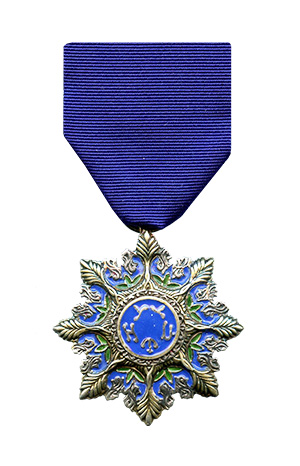
The Order of Lakandula

The Order of Lakandula was established in 2003 and is one of the highest civilian orders of the Philippines.

The Order of Lakandula (or Orden ni Lakandula in Filipino) stands as one of the Philippines’ most esteemed civilian honors, established on September 19, 2003. It is bestowed in recognition of exceptional political and civic merit, paying homage to Lakandula’s legacy of leadership, prudence, fortitude, courage, and resolve in serving one’s people.

As outlined in the Honors Code of the Philippines (Executive Order 236, September 19, 2003), the criteria for conferring the Order of Lakandula are delineated in Section 5, II. This prestigious award is granted to a Filipino or foreign citizen who:

  • a. Demonstrates a lifelong dedication to the betterment of society through their actions and endeavors;
  • b. Serves as a model of conduct and character for the Filipino people to emulate;
  • c. Exhibits remarkable deeds warranting special recognition, such as enduring personal sacrifice for the preservation of democracy and the territorial integrity of the Philippines, dedicating oneself to peaceful conflict resolution, or displaying exceptional commitment to fostering mutual understanding, cultural exchange, justice, and respectful relationships among individuals; or
  • d. Engages in acts traditionally acknowledged by presidential awards, including commendable political and civic service.

The Order of Lakandula Classes

There are seven classes or ranks for the Order of Lakandula:

  1. Grand Collar (Supremo): Bestowed upon an individual who has endured significant hardships in defense of the democratic principles or territorial integrity of the Republic of the Philippines, or upon a former or current head of state or government.

  2. Grand Cross (Bayani): Conferred upon an individual dedicated to resolving conflicts peacefully, serving as a role model for the Filipino people, or holding high-ranking positions such as Crown Prince, Vice President, Senate President, Speaker of the House, Chief Justice, Foreign Minister, Ambassador, Undersecretary, or Assistant Secretary.

  3. Grand Officer (Marangal na Pinuno): Granted to an individual demonstrating lifelong commitment to political and civic welfare, or holding positions such as Chargé d’affaires e.d., Minister, Minister Counselor, Consul General, Executive Director, or similar ranks.

  4. Commander (Komandante): Bestowed upon individuals showing exceptional dedication to political and civic welfare, or holding positions like Chargé d’affaires a.i., Counselor, First Secretary, Consul General in an Embassy’s consular section, Director, or equivalent ranks.

  5. Officer (Pinuno): Awarded to individuals with commendable dedication to political and civic welfare, or holding positions like Second Secretary, Consul, Assistant Director, or similar ranks.

  6. Member (Kagawad): Given to individuals displaying meritorious dedication to political and civic welfare, or holding positions like Third Secretary, Vice Consul, Attaché, Principal Assistant, or equivalent ranks.

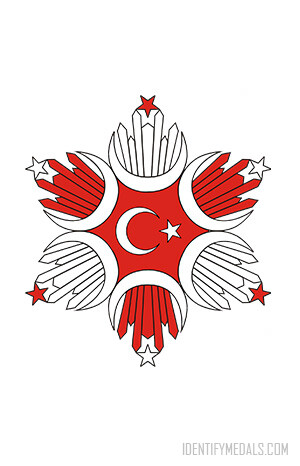
  7. Champion for Life (Kampeon Habang Buhay): The most recently established rank, created in 2006 by President Gloria M. Arroyo. Initially positioned after the Pinuno rank, it was later aligned with the Order of National Artists.

Order of Merit of the Republic of Turkey

Order of Merit of the Republic of Turkey (Türkiye Cumhuriyeti Liyakat Nişanı) is awarded to foreign scientists, academics, and artists.

The Order of Merit of the Republic of Turkey (or Türkiye Cumhuriyeti Liyakat Nişanı in Turkish) is conferred by the President of Turkey based on recommendations from relevant Cabinet members, taking into account input from the Ministry of Foreign Affairs and the Atatürk Supreme Council for Culture, Language, and History.

This honor is bestowed upon foreign scientists, academics, artists, and intellectuals as a token of appreciation for their efforts in promoting and highlighting the Republic of Turkey on the global stage through their contributions to science and the arts.

  • Eligibility: Foreign scientists, academics, artists and intellectuals.
  • “Given to people who foreign nationals in recognition of their contributions for international promotion and glorification of the Republic of Turkey in science and arts.”

The Order of the Republic of Turkey

The Order of the Republic (Türkiye Cumhuriyeti Cumhuriyet Nişanı) is the second highest Turkish state order after the Order of the State.

The Order of the Republic (or Türkiye Cumhuriyeti Cumhuriyet Nişanı in Turkish) holds the distinction of being the second-highest state order in Turkey, following the Order of the State.

It is awarded by the President of Turkey, upon the recommendation of the Council of Ministers, to individuals such as prime ministers, ministers, and foreign mission members. This recognition is bestowed in appreciation of their efforts to foster closer ties and strengthen friendly relations between their nations and the Republic of Turkey.

  • Eligibility: Foreign Prime Ministers, Ministers and foreign representative members.
  • Awarded for: “Given to people for the development of friendly relations and with the Republic of Turkey.”

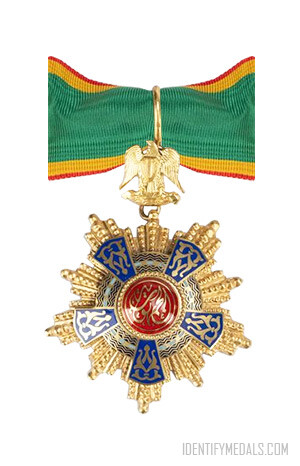
The Order of The Republic (Egypt)

The Order of The Republic is an Egyptian order of knighthood established in 1953 to celebrate the rebirth of the Republic of Egypt.

The Order of the Republic (وسام الجمهورية) was stablished initially under law no. 528/1953, later replaced by law no. 12/1972. It now falls under the authority of the President. 

This prestigious Egyptian order is bestowed upon heads of ministries, as well as Egyptian and foreign individuals who have rendered invaluable services to Egypt.

The Order comprises five classes, each based on the recipient’s contributions and social standing:

  • First Class (adorned with the grand sash)
  • Second Class
  • Third Class
  • Fourth Class
  • Fifth Classes.

The Order of The Republic Design

The insignia of the Egyptian Order of the Republic features a five-pointed star adorned with blue enamel and embellished with Islamic inscriptions.

At its core lies a circular gold emblem adorned with red enamel, within which the Arabic word “Republic” is inscribed. Gilded silver rays emanate from the star’s corners. Similarly, the order resembles the medallion but is of a smaller size.

The medal is fastened to the sash via a clip bearing Islamic inscriptions.