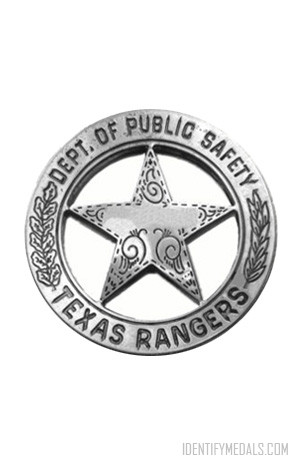
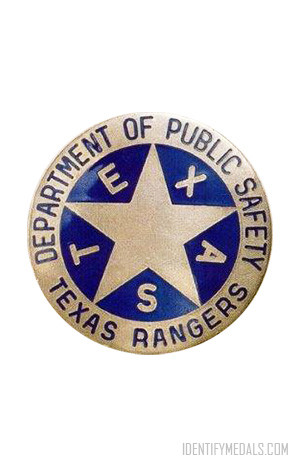


The Texas Rangers Ira Aten Badge

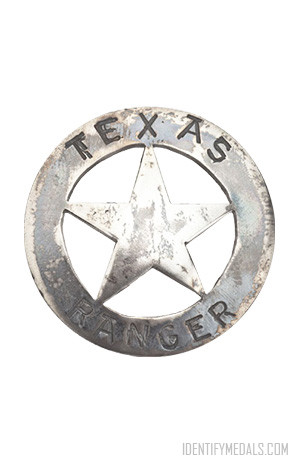
The Texas Rangers Ira Aten Badge dates to the 1880s. It is the earliest surviving Texas Rangers badge known and belonged to Ira Aten.
The Texas Rangers Ira Aten Badge dates to the 1880s. It is the earliest surviving Texas Rangers badge known and belonged to Ira Aten. 
Ira Aten (September 3, 1862 – August 5, 1953) was a Texas Ranger born in Cairo, Illinois. Aten was assigned to the counties bordering the Rio Grande, and due to the rough nature of this area, he became involved in numerous dangerous encounters. He was inducted into the Texas Rangers Hall of Fame.

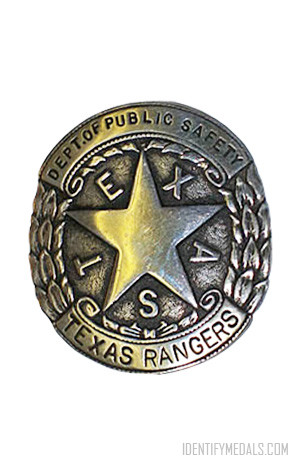
Other Texas Rangers Badges

Find Texas Rangers Badges Online

Right Now on eBay 
Clicking a link to eBay may result in a referral commission being paid if a purchase is made.
Loading...

Further Reading About the Texas Rangers

The WW1 Royal Tank Corps Cap Badge

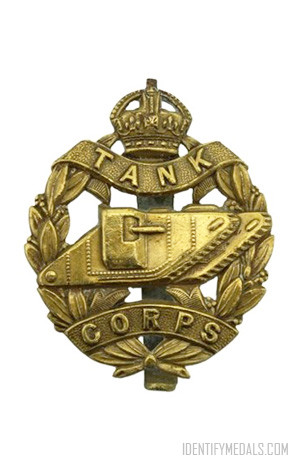
The Royal Tank Corps Cap Badge is a First World War brass King’s crown cap badge for members of the Tank Corps.

The Royal Tank Corps Cap Badge is a First World War brass King’s crown cap badge for members of the Tank Corps.

The Royal Tank Regiment (RTR) is a division of the British Army specializing in armored warfare. Previously referred to as the Tank Corps and the Royal Tank Corps, it operates under the Royal Armoured Corps. On July 5, 2012, plans were announced to merge the operational regiments—1st Royal Tank Regiment (1RTR) and 2nd Royal Tank Regiment (2RTR)—into a unified regiment named The Royal Tank Regiment, effective 2014.

Tanks made their debut at the Battle of Flers-Courcelette in September 1916, part of the larger Battle of the Somme in World War I. During this period, the six tank companies were organized under the Heavy Section of the Machine Gun Corps (MGC).

The Royal Tank Corps Cap Badge Design

The cap badge measures 48 millimeters by 40 millimeters and is stuck in brass. The obverse features a Mark I tank and the words “Tank” and “Corps”. The reverse has a slider.

The Royal Tank Regiment Cap Badge

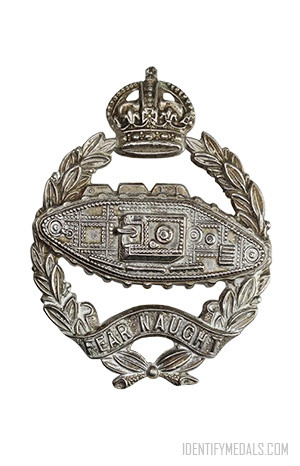
The Royal Tank Regiment Cap Badge is a WW2 badge given to members of the Royal Tank Regiment (previously known as Tank Corps).

The Royal Tank Regiment Cap Badge is a WW2 badge given to members of the Royal Tank Regiment (previously known as Tank Corps).

The badge is struck in white metal and depicts a WW1 tank in the center, surrounded by a laurel wreath and surmounted by a King George V crown. Under the tank is the inscription “Fear Naught”.

The badge measures 3.5 centimeters by 4.5 centimeters.

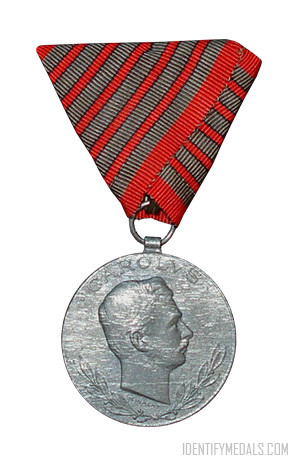
The Wound Medal (Austria-Hungary)

The Wound Medal (Austria-Hungary) a decoration of the Empire of Austria-Hungary established on August 12, 1917 by Emperor Karl I.

The Wound Medal is a decoration of the Empire of Austria-Hungary established on August 12, 1917 by Emperor Karl I.

The medal was awarded to service members of the Austro-Hungarian armed forces and to persons attached to the Austro-Hungarian armed forces who were wounded as a result of combat operations. It could also be awarded to persons who were disabled or suffered serious damage to their health in connection with military actions.

The Wound Medal Design

The Wound Medal is made of zinc and measures 38-mm in diameter. There are variations with both a dull gray and with a polished surface.

The obverse features a bust of Emperor Karl with his name in Latin “CAROLUS” above and a wreath of laurels below. Between the bust and the laurels in smaller letters was the name of the designer of the medal, R.(Richard) PLACHT, 1880 Kratzau – 1962 Vienna. The reverse featured the words LAESO MILITI (“to the wounded soldier”) and the date in Roman numerals “MCMXVIII” (1918).

The medal is suspended from an Austrian-style trifold ribbon, 39-mm in width, gray-green with 4-mm wide red edge stripes. The number of wounds was indicated by narrower 2-mm wide red stripes, edged in black, centered on the ribbon. No stripes indicated an award for someone invalided out of service. One stripe indicated a single wound, two stripes two wounds, etc.

The Order of Prince Edward Island

The Order of Prince Edward Island (Ordre de Île-du-Prince-Édouard in French), instituted in 1996, is a civilian honor for merit in the Canadian province of Prince Edward Island.

The Order is intended to honor current or former Prince Edward Island residents for conspicuous achievements in any field. It’s considered the highest honor amongst all others conferred by the Prince Edward Island Crown. The Order of Prince Edward Island is intended to honor who have demonstrated a high level of individual excellence and achievement in any field, having made “remarkable contributions to the social, economic and cultural life of [Prince Edward Island] and its people“.

The Order of Prince Edward Island Design

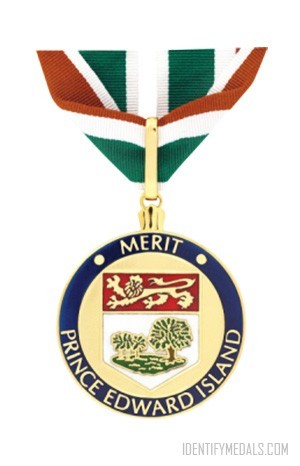
New Members of the order are presented with an insignia. The main badge, called the Medal of Merit, is a gold roundel medallion.

The obverse is made in enamel and bears, at its center, the escutcheon of the arms of Prince Edward Island surrounded by a blue collar with the words “MERIT • PRINCE EDWARD ISLAND”.

The ribbon is patterned with vertical stripes in green, white, and rust, reflecting the colors of the province’s foliage and oxidized soil.

Men wear the medallion suspended from the ribbon at the collar and women carry theirs on a ribbon bow at the left chest.

The Tank Combat Badge of the Luftwaffe

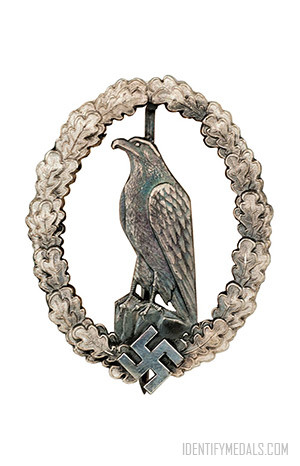
The Tank Combat Badge of the Luftwaffe is a Third Reich / Nazi Germany Luftwaffe War Badge awarded during the Second World War.

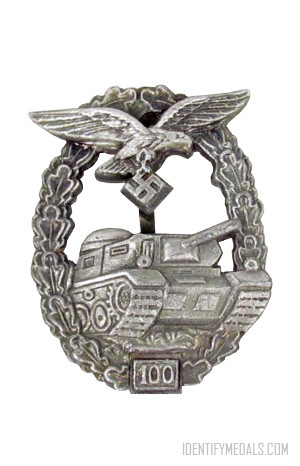
The Tank Combat Badge of the Luftwaffe (Or Luftwaffe Panzer Badge, Panzerkampfabzeichen der Luftwaffe German) was a World War II German military decoration instituted on 3 November 1944 by Reichsmarshall Goring to honor the panzer troops of the Luftwaffe field divisions (until then, qualified Luftwaffe personnel were awarded the Heer Panzer Badge).

The badge had two designs:

  • All Silver: Awarded to tank commanders, gunners, drivers, radiomen, repair crews and their medical personnel.
  • Silver with Black Wreath: Awarded to Panzer grenadiers, armored reconnaissance units, and the medical personnel attached to them.

Both badge styles were awarded for three combat engagements on three different days.

The Tank Combat Badge of the Luftwaffe Design

The badge is an oval wreath composed of eight oak leaves on the left and seven oak leaves on the right. The first design was entirely silver and the second had a black wreath.

The badge was presented in a paper packet with the name of the award printed on the outside. 

More Luftwaffe War Badges

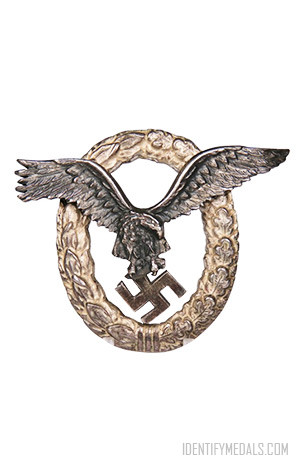
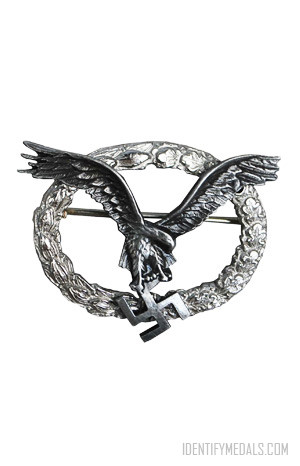
Awarded to members of the German Luftwaffe for their achievements and contributions to air warfare, the Luftwaffe War Badges symbolized excellence, courage, and skill in aerial combat and support roles. Explore the complete collection below:

The Ground Assault Badge of the Luftwaffe

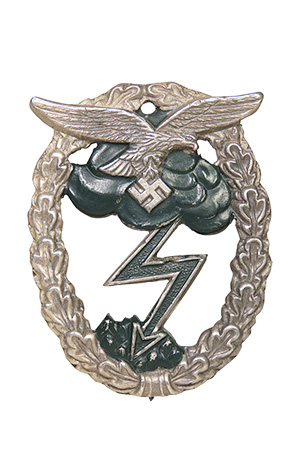
The Ground Assault Badge of the Luftwaffe is a Third Reich / Nazi Germany Luftwaffe War Badge awarded during the Second World War.

The Ground Assault Badge of the Luftwaffe (Erdkampfabzeichen der Luftwaffein German) was a World War II German military decoration instituted on 31 March 1942 by commander-in-chief Hermann Göring and awarded for achievement in ground combat. 

The criteria was the participation in three separate combat operations on separate days. Luftwaffe soldiers who had already been awarded medals or orders of the Heer such as General Assault Badge or the Infantry Assault Badge, were required to exchange their badges for the Ground Assault Badge of the Luftwaffe.

The badge was awarded in four classes based on the number of combat operations:

  • 2nd grade (II. Stufe) for 25 eligible operations,
  • 3rd grade (III. Stufe) for 50 eligible operations,
  • 4th grade (IV. Stufe) for 75 eligible operations,
  • 5th grade (V. Stufe) for 100 eligible operations.

The Ground Assault Badge of the Luftwaffe Design

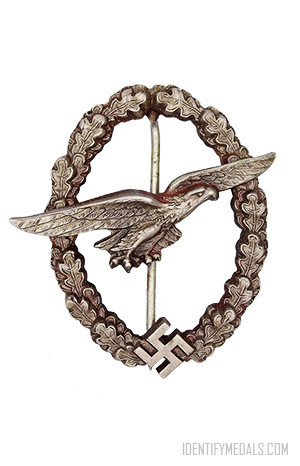
Designed by Professor Sigmund von Weech, the badge consists of a Luftwaffe eagle, clawing a Swastika, flying above a storm cloud, from which a lightning bolt strikes rough ground.

More Luftwaffe War Badges

Awarded to members of the German Luftwaffe for their achievements and contributions to air warfare, the Luftwaffe War Badges symbolized excellence, courage, and skill in aerial combat and support roles. Explore the complete collection below:

The Anti-Aircraft Flak Battle Badge

The Anti-Aircraft Flak Battle Badge is a Third Reich / Nazi Germany Luftwaffe War Badge awarded during the Second World War.

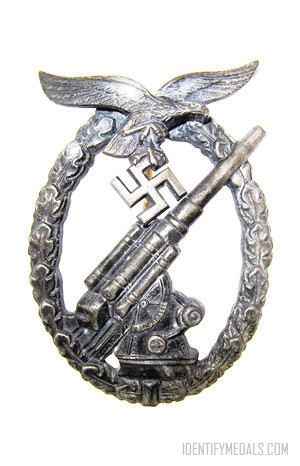
The Anti-Aircraft Flak Battle Badge (Flak-Kampfabzeichen der Luftwaffein German) was a World War II German military decoration instituted on 10 January 1941 by the Commander in Chief of the Luftwaffe Hermann Göring to commemorate soldiers or servicemen of the Flak Artillery who distinguished themselves in action against enemy aerial or ground attacks. 

The Anti-Aircraft Flak Battle Badge Design

The badge was worn on the lower part of the left breast pocket of the service tunic, underneath the 1st class Iron Cross if awarded.

More Luftwaffe War Badges

Awarded to members of the German Luftwaffe for their achievements and contributions to air warfare, the Luftwaffe War Badges symbolized excellence, courage, and skill in aerial combat and support roles. Explore the complete collection below:

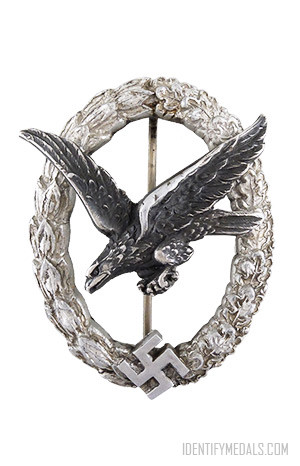
The Luftwaffe Parachutist Badge

The Luftwaffe Parachutist Badge is a Third Reich / Nazi Germany Luftwaffe War Badge awarded during the Second World War.

The Luftwaffe Parachutist Badge (Fallschirmschützenabzeichen in German) was a World War II German military decoration instituted on 5 November 1936 and awarded to qualified parachutists of the Wehrmacht and the Waffen-SS.

The badge was first established by order of Hermann Göring and originally given to Luftwaffe personnel after completion of the required number of six jumps. A recipient had to re-qualify for the badge each year.

An army version was introduced on 1 September 1937, in which the swastika was relocated to the top of the wreath and surmounted by a smaller upright eagle. 

The Luftwaffe Parachutist Badge Design

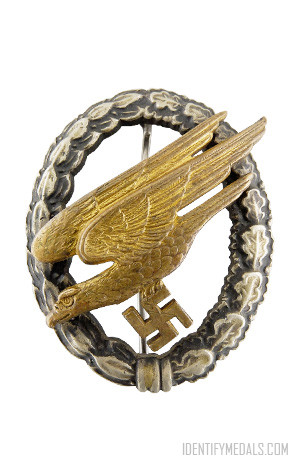
The Luftwaffe Parachutist Badge depicts a diving eagle with a swastika in its claws surrounded by a silver wreath. The original construction was made of gold-finished bronze for the eagle and oxidized silver plate for the laurel leaves.

In 1937, the construction of the badge was changed to aluminum and in late 1942 to a metal alloy. A cloth version of the badge was also authorized in 1937, to be worn on a flight jacket.

More Luftwaffe War Badges

Awarded to members of the German Luftwaffe for their achievements and contributions to air warfare, the Luftwaffe War Badges symbolized excellence, courage, and skill in aerial combat and support roles. Explore the complete collection below:

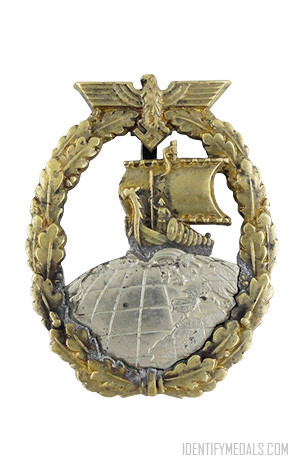
The Auxiliary Cruiser Badge

The Auxiliary Cruiser Badge is a Military Service Badge (Naval War / Kriegsmarine) from the Third Reich, Germany, Second World War.

The Auxiliary Cruiser Badge (Kriegsabzeichen für Hilfskreuzer in German) is a war badge awarded to Kriegsmarine soldiers during World War II. It was instituted on 24 April 1941 and given to officers and men of the Kriegsmarine for service on Auxiliary Cruisers or the supply ships that supported them for a successful large voyage.

The Auxiliary Cruiser Badge Design

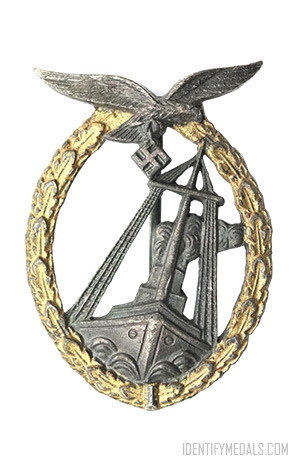
The badge bears a Viking ship above the northern hemisphere globe, surrounded by oak leaves.

More Naval War Badges

The Naval War Badges (Kriegsmarine) badges were awarded to sailors, officers, and personnel of the Kriegsmarine who demonstrated exceptional skill, bravery, and dedication in naval warfare. Explore the complete collection below: