The D. Afonso Henriques Medal

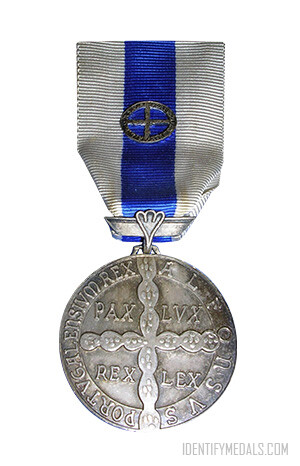
The D. Afonso Henriques Medal is a Portuguese military medal established in 1985 and awarded for high competence within the Portuguese Army.

The Medal of D. Afonso Henriques – Army Merit is a Portuguese military decoration, established on October 11, 1985, originally named the Medal of D. Afonso Henriques – Patron of the Army.

The award recognizes military personnel and civilians, both national and foreign, who demonstrate exceptional technical-professional competence, extraordinary performance, and significant personal qualities, thereby contributing to the efficiency, prestige, and mission fulfillment of the Portuguese Army.

This medal is one of the first three branch-specific medals created in 1985 for each branch of the Armed Forces. It preceded the Medal of the Cross of Saint George, established in 2000 by the General Staff of the Armed Forces, and the Medal of National Defense, introduced by the Ministry of Defense in 2002.

The medal is awarded according to the recipient’s rank and contributions. General officers and colonels are eligible for the 1st Class (MPAH), while lieutenant colonels and majors can receive the 2nd Class (MSAH). The 3rd Class (MTAH) is designated for other officers and sergeant majors, and the 4th Class (MQAH) is for other sergeants and enlisted personnel.
The Distinguished Service Medal (Portugal)

The Distinguished Service Medal is a military decoration that honors effort for the Fatherland or for the country’s military institutions.

The Military Medal for Distinguished Services is a Portuguese military decoration awarded for outstanding and extraordinary military services or notable acts connected to the Navy, Army, or Air Force.

Originally established on October 2, 1863, by decree of the Secretary of State for War Affairs, the medal was initially named the Military Medal for Good Services. It was the second of three classes of the military medal at the time. Between 1863 and 1919, the Military Medal for Good Services (now Distinguished Services) was available in two classes: gold (MOBS / MOSD) and silver (MPBS / MPSD). By Decree No. 6093 of September 11, 1919, a bronze degree (MBBS / MBSD) was added to make the medal accessible to sergeants and enlisted men who were previously ineligible.

In 1946, through Decree No. 35667 of May 28, the medal was renamed the Military Medal for Distinguished Services and adopted the design it retains today.

The Distinguished Service Medal Grades

The Distinguished Service Medal is awarded in three degrees:

  • Gold Grade (MOSD)
  • Silver Grade (MPSD)
  • Bronze Grade (MBSD)

The degree is granted based on the achievements and not the rank of the recipient.

When awarded for achievements in a military campaign, the Distinguished Service Medal is conferred with a palm:

  • Gold with Palm (MOSD)
  • Silver with Palm (MPSD)
  • Bronze with Palm (MBSD)

The Distinguished Service Medal Design

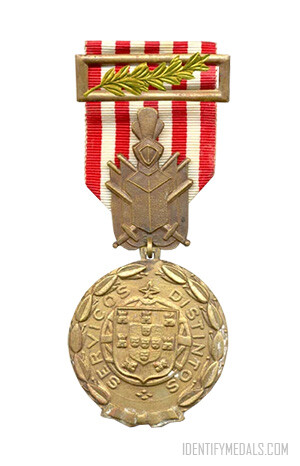
The medal is circular and typically bears the national coat of arms on the obverse side, symbolizing the honor and service to the nation. Surrounding the emblem are inscriptions denoting the degree of the medal (Gold, Silver, or Bronze) and the purpose of the award. The reverse side may include the recipient’s name and the date of the award.

The medal is suspended from a ribbon whose color scheme may vary according to the degree. When awarded with a palm, the ribbon includes a palm leaf, indicating that the recipient’s actions were performed in the context of a military campaign. This addition highlights the exceptional nature of the recipient’s service in challenging and dangerous circumstances.

The National Service Medals (Norway)

The National Service Medals were established on 1 May 1982 and are awarded in recognition of completed initial service in the armed forces.

The Norwegian National Service Medal (or Forsvarets vernedyktighetsmedaljer in Norwegian) is awarded to individuals upon the completion of their mandatory military service, which typically lasts one year, or six months for those in the Home Guard.

The Norwegian National Service Medal not only recognizes the completion of mandatory military service but also symbolizes the commitment and dedication of individuals to the defense and security of Norway.

The medal is available in four distinct versions, each representing a different branch of the Norwegian Armed Forces: the Army, the Air Force, the Navy, and the Home Guard.

The National Service Medal Design

The obverse design of the Norwegian National Service Medal varies slightly depending on the branch of service it represents. The reverse features the branch’s name along with the armed forces motto, “for fred og frihet” (in Bokmål) or “for fred og fridom” (in Nynorsk), which translates to “for peace and freedom.”

The Norwegian National Service Medal is uniquely designed to represent the distinct branches of the Norwegian Armed Forces. Each version of the medal comes with a distinct ribbon that corresponds to the specific branch of service, too. These ribbons are worn as part of the medal’s insignia and serve to identify the branch in which the recipient served.

The National Service Medals - Awards from Norway

Army Version

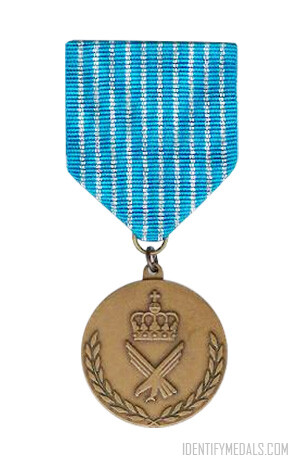
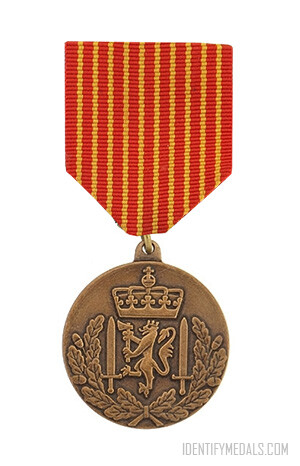
The Army version of the National Service Medal features the crest of the Norwegian Army on the obverse. This emblem is a symbol of the strength, discipline, and commitment required of those who serve in the Army.

The reverse side of the medal includes the name of the Army along with the armed forces motto “for fred og frihet” (for peace and freedom), emphasizing the Army’s role in national defense and peacekeeping.

The ribbon for the Army version is designed in red and yellow.

Air Force Version

The Air Force version of the National Service Medal displays the crest of the Norwegian Air Force on the obverse. This crest signifies the advanced technology, skill, and strategic importance of the Air Force. The reverse side carries the Air Force’s name and the motto, reinforcing the branch’s dedication to protecting Norway’s airspace and contributing to international peace efforts.

The ribbon accompanying the Air Force medal is blue and silver, reflecting the sky and the innovative spirit of the Air Force.

The National Service Medals - Air Force version, obverse.
The National Service Medals - Navy version, obverse.

Navy Version

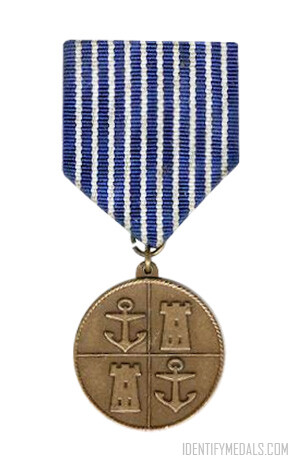
The Navy version of the National Service Medal is adorned with the crest of the Norwegian Navy on the obverse. This emblem represents the maritime heritage, bravery, and tactical expertise of naval personnel. The reverse side includes the name of the Navy and the armed forces motto, highlighting the Navy’s crucial role in securing Norway’s waters and participating in global maritime operations.

The Navy ribbon is designed with nautical colors: navy blue and white, symbolizing the sea and the naval tradition.

Home Guard Version

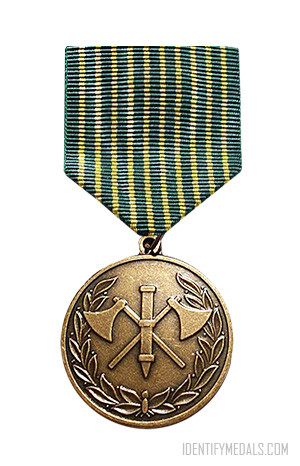
The Home Guard version of the National Service Medal features the crest of the Norwegian Home Guard on the obverse. This crest embodies the readiness, resilience, and community spirit of the Home Guard. The reverse side lists the Home Guard’s name and the motto, reflecting its mission to support and protect local communities in times of need.

The ribbon for the Home Guard medal incorporates colors that are distinct to this branch: Green and yellow.

The National Service Medals - Home Guard version, obverse.

The Norwegian Police Service Medal

The Police Service Medal was established in 2002 and is a civil decoration for long service in the Norwegian Police Service.

The Police Service Medal (or Politimedaljen in Norwegian) is a distinguished Norwegian civil decoration awarded to recognize long and dedicated service within the Norwegian Police Service.

This medal highlights the commitment and professionalism of the personnel who have dedicated significant portions of their careers to maintaining law and order in Norway.

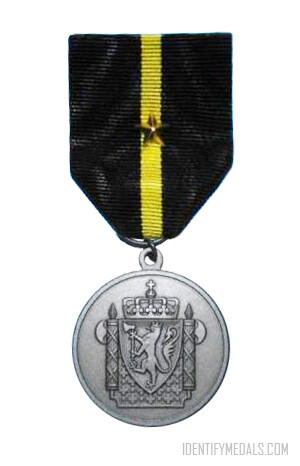
The Police Service Medal is awarded to individuals who have completed 25 years of service in the Norwegian Police Service. To further acknowledge prolonged dedication, a star is added to the ribbon for each additional five years of service, with a maximum of three stars, representing up to 40 years of exemplary service.

In the hierarchy of Norwegian decorations, the Police Service Medal ranks 41st. This placement underscores its importance in recognizing long-term commitment and service within the civil sector, particularly in law enforcement.

The Norwegian Police Service Medal Design

The medal is round and typically made of a high-quality metal, designed to endure and symbolize the enduring nature of the service it honors.

The obverse of the medal features the Norwegian Police Service emblem. This includes the traditional insignia, which often comprises symbols of justice and law enforcement, such as scales of justice or a lion, symbolizing strength and courage.

The reverse of the medal typically bears inscriptions that denote the nature of the award. This might include phrases like “For Long Service” or similar sentiments that recognize the commitment and dedication of the recipient.

The medal is suspended from a ribbon that is black with a central yellow line.

The Norwegian Police Service Medal Ribbons

Stars are added to the ribbons to represent years of service:

  • Ordinary (25 years)
  • One Star (30 years)
  • Two Stars (35 years)
  • Three Stars (40 years)

The King Haakon VII Commemorative Medal

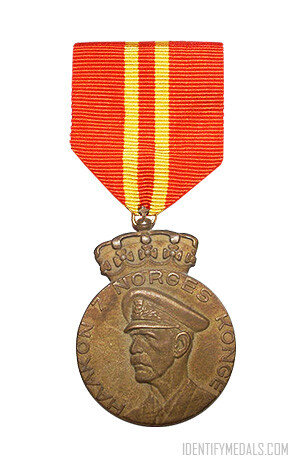
The King Haakon VII Commemorative Medal was established in 1957 to commemorate the deceased monarch on the occasion of his funeral.

The King Haakon VII Commemorative Medal of October 1, 1957 (or Kong Haakon VIIs minnemedalje 1. oktober 1957 in Norwegian) is a Norwegian award established to honor the late monarch on the occasion of his funeral, which took place on October 1, 1957.

The commemorative medal was awarded to individuals who performed duties related to King Haakon VII’s funeral. The gold version of the medal was awarded 26 times, predominantly to military personnel. The silver version was awarded 54 times, with 48 of those medals given to officers of the army, navy, and air force who led honor detachments at the funeral.

This medal holds the 30th position in the Norwegian order of precedence for decorations.

The King Haakon VII Commemorative Medal Design

The medal is available in both gold and silver.

The obverse features a depiction of King Haakon VII without his crown, crafted by the engraver Ivar Throndsen. Surrounding the portrait is the inscription “HAAKON • VII • NORGES • KONGE” (Haakon VII King of Norway).

The reverse showcases the royal monogram. The medal is topped with a royal crown and is suspended from a red ribbon. The ribbon includes a silver clasp inscribed with “1. OKTOBER 1957” (October 1, 1957).

The Royal House Centennial Medal (Norway)

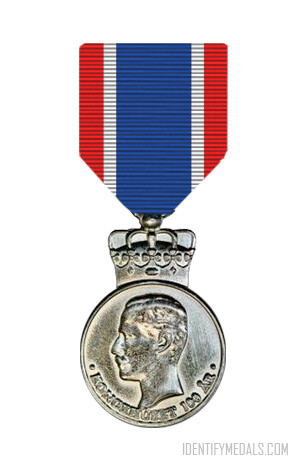
The Royal House Centennial Medal was established in 2005 by Harald V of Norway to commemorate the centennial of the Norwegian royal family.

The Royal House Centennial Medal (or Kongehusets 100-årsmedalje in Norwegian) is a distinguished Norwegian award established by King Harald V to commemorate the centennial of the Norwegian royal family.

The Royal House Centennial Medal was awarded as part of the celebrations for the centennial of Norwegian independence and the royal family in 2005.

Recipients included members of the Norwegian royal family, descendants of King Haakon VII and Queen Maud, members of the Royal Court, government officials, the presidium of the Norwegian Parliament, county governors, bishops of the Church of Norway, police directors, other officials, and individuals who assisted the royal family. A total of 400 medals were produced, with 366 being awarded.

The medal holds the 29th position in the Norwegian order of precedence for decorations.

The Royal House Centennial Medal Design

The Royal House Centennial Medal is crafted from silver and measures 30 mm in diameter. The medal features a royal crown affixed to the top.

The obverse depicts King Haakon VII along with the inscription “KONGEHUSET 100 ÅR” (The Royal House 100 Years). The reverse showcases a wreath made of oak leaves, with the motto “ALT FOR NORGE” (Everything for Norway) inscribed above the wreath, and the dates “1905–2005” below.

The medal is suspended from a blue ribbon with red and white edges, reflecting the colors of the Norwegian flag. This color scheme was also used for the ribbon of the Order of the Norwegian Lion. The medal was produced by the Carl Poellath company.

The King’s Commemorative Medal (Norway)

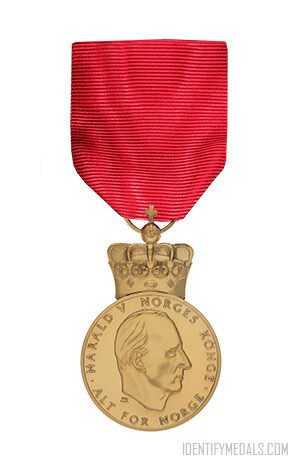
The King’s Commemorative Medal is a royal decoration of Norway established in 1906 by King Haakon VII and awarded in gold and silver grades.

The H.M. The King’s Commemorative Medal (or H.M. Kongens erindringsmedalje in Norwegian) is a prestigious royal decoration in Norway.

Established in 1906 by King Haakon VII, the medal is awarded to individuals who have rendered particularly meritorious service to the King. The medal is available in two grades: gold and silver.

The gold medal ranks 28th in the Norwegian order of wear, positioned just below the Antarctic Medal and above The Royal House Centenary Medal. The silver medal ranks 38th, below King Olav V’s 100th Anniversary Medal and above the Defence Service Medal.

The King’s Commemorative Medal Design

The medal is round and crafted from either gold or silver.

The obverse features the effigy of the reigning monarch, surrounded by the monarch’s name and motto. For King Harald V, his right-facing effigy is depicted with the inscription “HARALD V NORGES KONGE” above and his motto “ALT FOR NORGE” below.

The reverse side of the medal showcases the monarch’s monogram. The medal is topped with a depiction of the Crown of Norway, and it is suspended by a ring that passes through the orb on the crown. The ribbon attached to the medal is red, reflecting the color of the Norwegian flag.

The Norwegian Korea Medal

The Norwegian Korea Medal is a Norwegian medal awarded for at least two months of service during the Korean War.

The Norwegian Korea Medal (or Den norske Koreamedalje in Norwegian) is a campaign medal that was established by the Norwegian government to recognize the service of individuals who participated in the Korean War.

Specifically, this medal was awarded to those who completed at least two months of service at the Norwegian Mobile Army Surgical Hospital (NORMASH) during the conflict. This unit played a vital role in treating wounded soldiers and offering essential medical care under challenging conditions. By awarding this medal, the Norwegian government acknowledged the significant contributions and sacrifices made by these individuals.

In the Norwegian honors system, the Norwegian Korea Medal holds the 25th position in the order of precedence. It ranks just below The King’s Medal of Merit for Service in the Home Guard and above the Maudheim Medal. This placement reflects the importance of the medal within the broader context of Norwegian military and civil awards.

The Norwegian Korea Medal Design

The obverse side of the medal features a prominent and detailed representation of a stylized lion, which is part of the Norwegian coat of arms. The lion is standing on its hind legs, holding an axe, symbolizing Norway’s historical strength and resilience.

The reverse side of the medal bears a simple yet powerful inscription “For Deltakelse” (For Participation), acknowledging the recipient’s contribution to the Korean War efforts. Encircling this inscription is a laurel wreath, which traditionally symbolizes honor, victory, and recognition of achievement.

The medal is suspended from a ribbon that incorporates the national colors of Norway.

The Defense Medal 1940–1945 Medal

The Defense Medal 1940–1945 Medal was awarded to military and civilian personnel who participated in the fight against the German invasion.

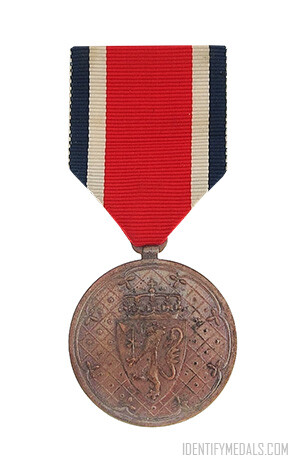
The Defence Medal 1940–1945 (or Deltagermedaljen 9. april 1940 – 8. mai 1945/Deltakarmedaljen 9. april 1940 – 8. mai 1945 in Norwegian) is awarded to military and civilian personnel who participated in the fight against the German invasion and occupation of Norway from 1940 to 1945.

This medal can be awarded to both Norwegian and foreign citizens. Due to the large number of participants and the challenge of identifying all eligible recipients, the medal may still be awarded.

The Defense Medal 1940–1945 Medal Criteria

The medal was awarded to individuals who met one of the following criteria:

  • Participating in the 1940 campaign in Norway for five days or more.
  • Serving in the Norwegian armed forces and merchant fleet outside of Norway for four months or more (or less if serving in units involved in the liberation of Norway).
  • Participating in the Finnmark campaign (winter 1944-45) for one month or more.
  • Allied soldiers who participated in the liberation of Norway and served for one month or more.
  • Serving in the resistance forces for four months or more.

As of 2017, the Defence Medal 1940–1945 ranks 23rd among Norwegian decorations.

The Defense Medal 1940–1945 Medal Design

The Defence Medal 1940–1945 is made of bronze. The medal is crafted by the goldsmith firm J. Tostrup in Oslo.

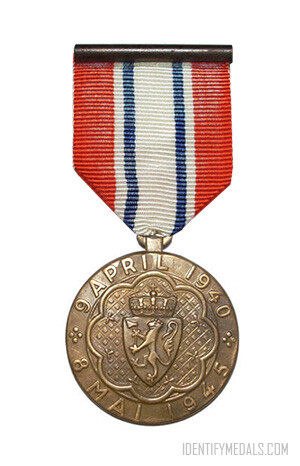
The obverse features the coat of arms with the inscription “9 April 1940 – 8 Mai 1945.”

The reverse displays the royal flag, the national flag, and another flag, all beneath a narrow circle inscribed with “DELTAGER I KAMPEN” (Participant in the struggle), surrounded by a chain.

The medal is suspended from a ribbon in the Norwegian national colors. A rosette may be added to the ribbon for recipients who have distinguished themselves multiple times. 

The Defense Service Medal (Norway)

The Defense Service Medal was established in 1982 and is awarded for outstanding or noteworthy service to the Norwegian Armed Forces.

The Defense Service Medal with Laurel Branch (or Forsvarsmedaljen med laurbærgren in Norwegian) is a prestigious military medal in Norway. Established on May 1, 1982, this medal honors outstanding or noteworthy service to the Norwegian Armed Forces.

It can be awarded to both Norwegian and foreign individuals, whether they are civilians or military personnel.

The Defense Service Medal Design

The Defence Service Medal with Laurel Branch is a round, embossed medal made of silver.

The obverse features the depiction of three swords placed side by side, with their blades pointing upwards.

The reverse bears the inscription “FORSVARET – FOR FORTJENESTER” (ARMED FORCES – FOR MERIT). The medal is suspended from a red ribbon with a central vertical stripe of silver.

A laurel branch device can be attached to the suspension ribbon of the medal, as well as to the service ribbon worn on undress uniforms, symbolizing the recipient’s meritorious service.