
Tag: Articles – Collecting
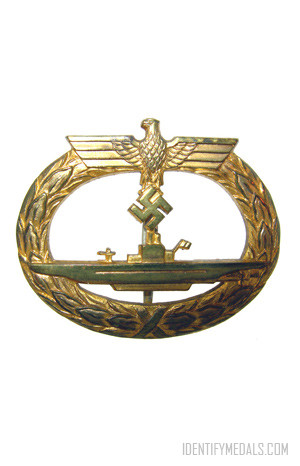
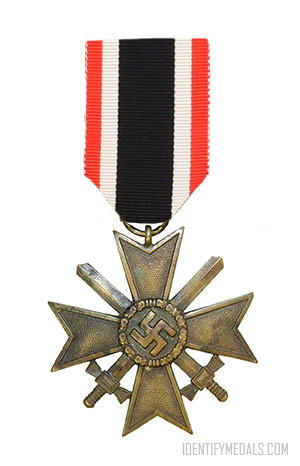
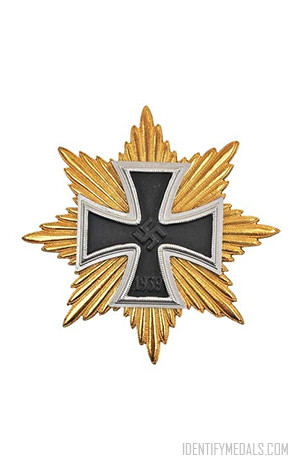
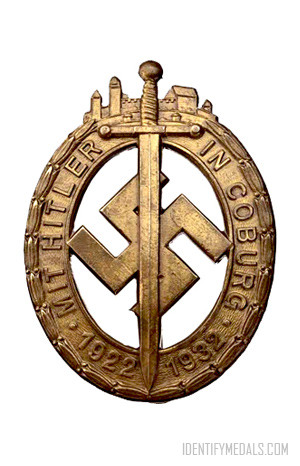
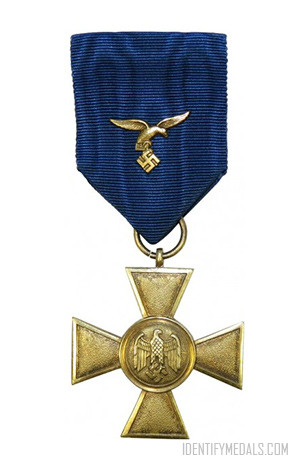
How to Start Collecting Medals, Badges and Awards
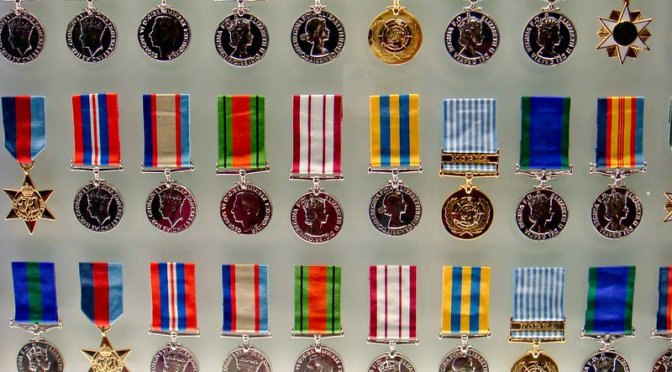
If you’ve been reading the articles on Identify Medals, there’s a good chance that you fit into one of two categories: 1) you are a medal collector, or 2) you are interested in becoming one. If you are the latter, this article will give you a broad overview of how to start collecting medals so that it can be a rewarding and enjoyable hobby!
1. Figure Out Your Approach
The first step in starting to collecting medals is to decide what your approach is. Rather than haphazardly collecting medals, you probably want to consider the types of medals you’d like to find. This will help you hone your focus.
Coin World suggests that you can adopt one of four approaches to collecting medals:
- Build a Set
- Collect an Artist
- Focus on an Individual Subject
- Profile an Event
I would posit that for military medals, it would be easiest to adopt the first or fourth approaches to collecting medals.
As an example of the first approach, you could put together a set of medals from a specific war or country. If you want to start small, putting together a set of Civil War medals is a great start because if you remember from a previous article, it only takes 2 medals to have a complete set!
By contrast, you might not want to start with putting together a set of USSR or Third Reich medals because you’ll have a lot more to collect! However, if you want this to be a lifetime activity, maybe you’d want to start with a larger collection.
For the fourth approach, you could focus on a specific battle of a war or a specific region. For example, maybe you’d want to collect all the medals and decorations that were awarded in northern France during World War I.
While the second approach is likely less conducive for military medals—unless you happen to really like the style of a certain artist, you could focus on collecting all the medals of a particular military hero like Erwin Rommel, for example.
I personally believe that this could be the most rewarding way to approach collecting medals. If you couple campaign medals with an individual award, you will be putting together a service member’s individual story, making it a historically significant group of medals that any collector would prize.
Plus, you could consider getting involved with your local museum and putting together a small exhibit about that service member and loaning your medals to the museum temporarily. This could be a great way to find a lot of meaning in your collecting. I personally would love this option because it tells a story and who doesn’t like stories?
2. Read Up on Your Event/Individual/War
Once you’ve figured out how you’re going to approach medal collecting, I’d encourage you to read up on your event/individual/war. This probably seems like an interesting suggestion, as it seemingly has nothing to do with medals. However, by reading up and visiting museums that pertain to your event/individual/war, you’ll have a better idea of what medals to look for.
As an example, I’m a huge history buff with a particular interest in World War II, and if I ever get into medal collecting (I have one right now!), I would definitely collect medals from World War II. But there are so many, and I’m constantly learning about more.
For example, I visited the Airborne Museum in Fayetteville, North Carolina recently, and I learned about seven new medals that I had never heard of before. Staying informed about your event/individual/war will not only give you more ideas of medals to find but also will make the process less mechanical and more enjoyable.
3. Take Advantage of Different Sources to Find Medals
With the age of the internet, you have so many options available to you for finding medals. You can buy medals online from various auction houses, eBay, or even links on our website here at Identify Medals.
Obviously, though, the important part is to make sure that you use reputable dealers to avoid fake medals. You can browse the Medal News magazine as well as the annual Medal Yearbook to get an idea of what medals are available and what price you should be prepared to pay.
Dan Wade from JustCollecting, a trading website, encourages medal collectors to ask about the back story, how the seller got the medal, and look at the medal in person (if possible!).
If you’re willing to spend a bit more time searching, you can always try garage/yard sales, antique fairs, flea markets, thrift stores, and medal collectors fairs. If you go to any of these, it’s going to be a bit more like finding a diamond in the rough, and you may not find anything if you go looking for a specific medal.
However, if you’re open to seeing what’s out there and don’t have a specific medal in your mind, places like antique fairs and flea markets can be great options because they are likely going to be quite a bit cheaper.
As a side note, make sure that you pay the right price. Know what factors contribute to the difference in medal pricing. The battle in which the medal was awarded, the type of medal, the grade of the medal, and the condition of the medal all impact a medal’s price.
If a medal is in excellent condition, but the ribbon isn’t, you can always get a replacement ribbon. But remember to keep the original in case you ever want to sell the medal or for posterity’s sake.
Learn More About Your Newly Found Hobby
In addition to staying up-to-date about the focus of your medals, you should learn more about your newly found hobby. This will not only help ensure that you purchase genuine and not fake medals but also it will give you a greater appreciation for medals as a whole.
You could consider joining a medals society. For Americans, the Orders & Medals Society of America is the logical choice. Brits might look into the Birmingham Medal Society or the Orders, Medals, and Research Society.
You might also look into what books and articles you can read about medal collecting. One example includes Colin Narbeth’s book, Collecting Military Medals: A Beginner’s Guide. Also, don’t overlook a quick Google search about tips for medal collecting. The internet is replete with resources available to you, so be sure to use them.
You can even look up fun activities online like designing your own medal or taking this military medal quiz. Don’t forget to enjoy yourself even as you immerse yourself in the seriousness of prices and searching.
Conclusion
In the end, have fun! What makes military medals especially unique is that they tell the story of so many brave men and women who have been willing to sacrifice their lives for our freedom. And that’s something that’s worth memorializing.
Sources:
- http://www.rogersstudy.co.uk/medals/tips.html
- https://www.coinworld.com/news/world-coins/2016/11/starting-a-medal-collection-daunting-numismatic-area.all.html
- https://www.warhistoryonline.com/articles/top-5-tips-for-collecting-war-medals.html
- https://www.omsa.org
- https://www.thisismoney.co.uk/money/diyinvesting/article-4437408/How-invest-medal-collection.html
Guest Contributor: Rachel Basinger is a former history teacher turned freelance writer and editor. She loves studying military history, especially the World Wars, and of course military medals. She has authored three history books for young adults and transcribed interviews of World War II veterans. In her free time, Rachel is a voracious reader and is a runner who completed her first half marathon in May 2019.
Resources Guide: How to Identify Military Medals and Badges
In this detailed guide, I explain the different ways in which you can identify some of your military medals, badges, or awards online.
In this guide, I explain the different ways in which you can identify some of your military medals, badges or awards online. I apologize but as much as I would like to help, I’m no medal expert – rather an education enthusiast. My knowledge is limited to certain periods and countries only. There are, however, great places where experts and collectors are willing to help. You can find them in the lists below.
Medal Identification Tools
Tools in This Site
If you haven’t already, you can start by visiting the Military Medals database. The medals on this site are categorized by country and time period, so this might be a good start if you believe you know the origin or estimated age of a medal.
The best place to ask for help identifying medals is the Forum (sorry, I don’t have the resources to keep the forum running).
I’ve also been working on a tool to identify medals also based on their shape and material. My collection of images is still not complete, but if your medal is from the United States or United Kingdom, you’ll probably find it in the Medal Identifier (unfortunately, the tool has broken. I’ll try to update on this soon).
Other Places to Identify Medals
Wikipedia has the largest collection of military medals and awards, but you will need to know what you’re looking for if you want to use it as a way of identifying. Go to the Wikipedia Military Medals page to read more.
Some Reddit channels can be great for asking for help identifying medals. You can read how to create a Reddit account at this link. I especially recommend Militaria Collecting and Medals:
You might also want to try:
- https://www.reddit.com/r/AskHistorians/
- https://www.reddit.com/r/Militariacollecting/
- https://www.reddit.com/r/militaria/
And I’ve been lucky asking here as well:
Reddit channels about militaria and other useful resources by country:
- https://www.reddit.com/r/GermanMilitaria/ (Germany)
- http://www.onlinemedals.co.uk/medal-encyclopaedia (United Kingdom)
- http://www.petergh.f2s.com/medals.htm (United Kingdom ribbons)
- https://www.medalsofamerica.com/content–name-army-medals-and-ribbons-chart/ (United States)
Using Google’s Reverse Image Search
This tool allows you to use a picture to find related images from the web. A lot of times, these will tell you what you’re looking for. When you search with a picture, your results may include similar images to one you have taken, the websites that contain these images and other sizes of the picture you searched with.
All you need to do to use this feature is to upload an image, go to Google Images, then Search by image 


You can read more about Google’s reverse image search here.
What’s the Worth, Value and Price of Military Medals?
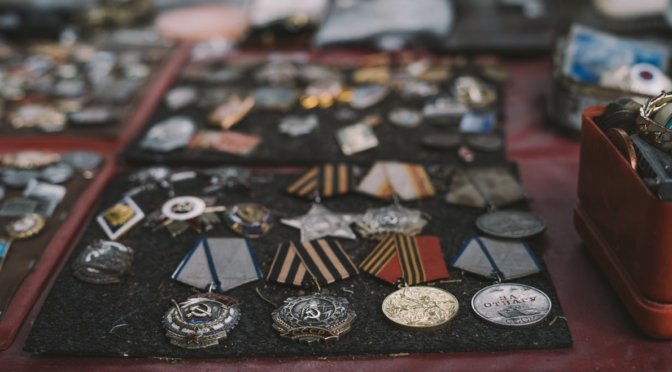
The reason many of us collect military medals is because they allow us to discover not only major historical events, but also people’s experiences in such extreme circumstances. They help us appreciate the value of the sacrifices soldiers have made all around the world and, unlike coins which are created in large numbers, they relate to a person’s particular path.
It’s hard to determine the worth of such objects, but the monetary value is something we can calculate based on scarcity and other similar factors. In this article we’ll go through them one by one.
The Value of a Military Medal
Military medals hold various forms of value. For instance, there’s their bouillon value, sentimental value, and collector value, to their insurance value. So, let’s delve into these to see how they contribute to the overall significance and worth of military medals.
Bullion Value
The bullion value of a military medal or award is the value of the metal with which it has been made, for example silver, gold or platinum. The bullion value is measured in dollars and per ounce, although the number can vary on a daily basis as is the case with all precious metals. The bullion value is not the final value of a medal, but only that of its material.
The first thing you need to is to find the fineness of the metal. For gold, the quality is measured in karats, which refers to the purity and ranges from 1 to 24. You can get its percentage purity by dividing any of these numbers by 24. For example, if you have 24K, you get 1.0 which means 100% pure gold.
Once you have this value, all you need to do is weight the medal (in grams) and multiply this value by the metal’s fineness. Then, multiply the result by the daily metal price. If you were to melt your medal, this would be its bullion value. You can use:
Sentimental Value
A medal, especially one that has been in your family for generations or was given to you by a person you care for, can be priceless. Therefore, this value cannot be measured in terms of money.
These medals often represent the bravery, sacrifice, and service of individuals and are cherished as treasured heirlooms, carrying profound meaning and memories. Many medal collectors (me included) consider themselves as the current custodian of a medal, rather than the owner. This fact actually offers comfort to those that have to part with their family heirlooms.
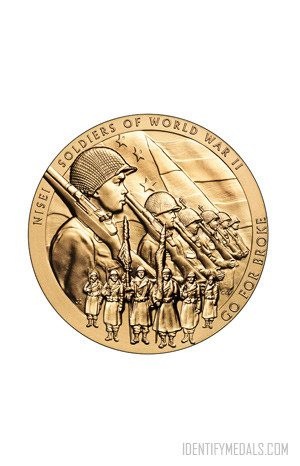
The medal with the highest bullion value is the Congressional Gold Medal, awarded by the United States Congress.
Collector Value
When a medal hasn’t belonged to a family member, we consider it as part of a ‘secondary market’. These medals tend to change hands frequently and usually hold a current market value. In other words, their price is calculated based on how much a collector wants them.
Nowadays, World War II medals can fetch as little as $5 to $10. The main reason is that these medals are usually unnamed and can’t be easily linked to a recipient. Others, however, have been issued in small quantities and have a higher collector’s value. In 2009, a Victoria Cross and Bar awarded to Capt Noel Chavasse for service in the First World War sold for over £1.5m.
Military medals are generally divided into two large groups: Those awarded for gallantry, and those awarded for taking part in a campaign.
Insurance Value
You calculate the insurance value of a medal based on how much you would need to pay to locate a similar one. This should include the time to locate it as well. The insurance value is not always easy to determine, so we will go into more detail in the next section.
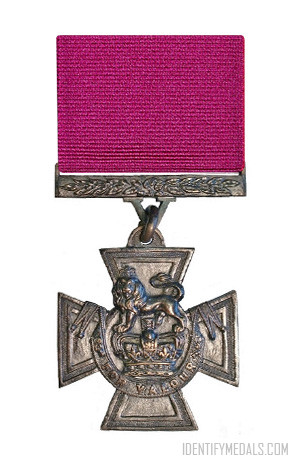
The Victoria Cross holds immense appeal and is highly sought after by military medal collectors and enthusiasts.
Appraising a Military Medal
Appraising a military medal involves considering two key aspects: condition and provenance. Collectors and appraisers assess factors such as wear, damage, and overall preservation. Medals in excellent condition, with minimal signs of wear or damage, generally command higher values compared to those in poor condition. Furthermore, the more comprehensive and well-documented the provenance, the greater the potential impact on the medal’s value.
Condition
There are many factors that come in play when appraising a military medal.
The first one is the condition, whether its highpoints have any wear and the edges are free from nicks. A medal which has lots of wear, edge knocks or is fire damaged is worth less than one that is in an overall ‘good’ condition.
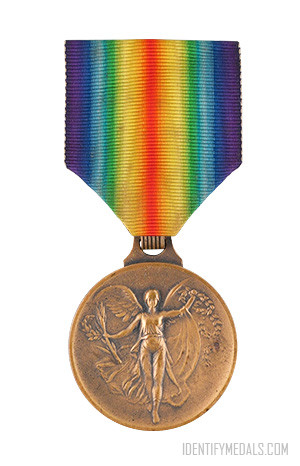
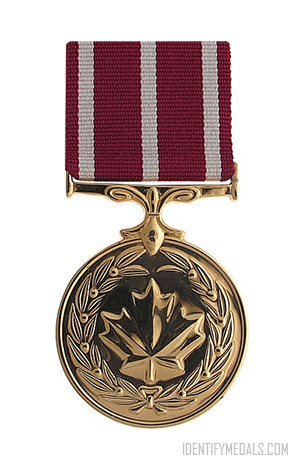
The medal grading terminology based on condition is as follows:
- Fine (F): Medal shows some slight wear, surface marks and edge knocks.
- Good Fine (G.F): Worn but shows clear signs of wear.
- Very Fine (V.F): Shows clear wear on high relief of medal but otherwise displays little wear.
- Good Very Fine (G.V.F): Shows very few marks or blemishes and/or deeply toned.
- Extremely Fine (E.F): Shows little wear if any at all.
- Mint (M): As close as possible to the condition in which it was issued by the mint.
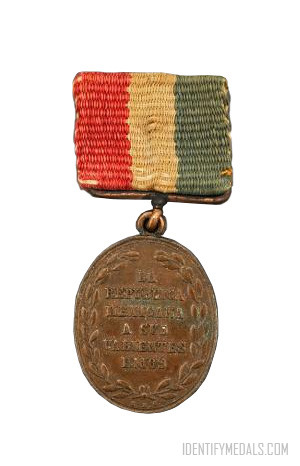
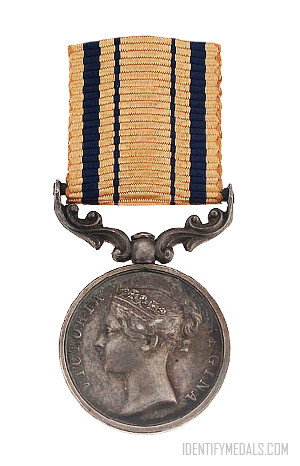
Provenance
Condition plays an important part in appraising a military medal, but what’s also incredibly important is its background.
What medal is it, and to whom was it given? How many of it were awarded, and how many are available? Does it have its original ribbon and box of issue? Is there paperwork to follow its provenance?
Collectors are particularly interested in the stories that led to the awards. This is why having documents or related ephemera can significantly add to a medal’s value. They help prove provenance, and create historical interest.
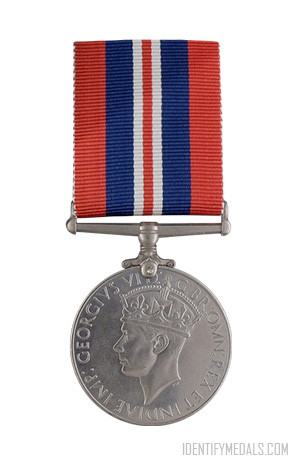
Some medals were issued in large numbers, which brings their monetary value down. This is for example the case of the British War medal – £10 because they were awarded to any British Empire combatant. The Victoria Cross, on the other hand, only counts with 1,357 medals in existence, making it the holy grail for collectors. Almost every VC from the First World War surpasses £100,000.
It’s hard to determine the worth of such objects, but the monetary value is something we can calculate based on scarcity and other similar factors.
Conclusion: The Value of a Medal
The combination of condition and provenance helps determine the overall value of a military medal.
An exceptional condition coupled with a well-documented and illustrious provenance can significantly enhance a medal’s worth. However, it’s important to consult experienced professionals, such as military medal experts or reputable appraisers, who possess the necessary knowledge and expertise to accurately evaluate and appraise these historical artifacts
Books About Collecting Medals
Display Cases and Collecting Accessories
Military Medals Display Cases: How to Showcase your Medals
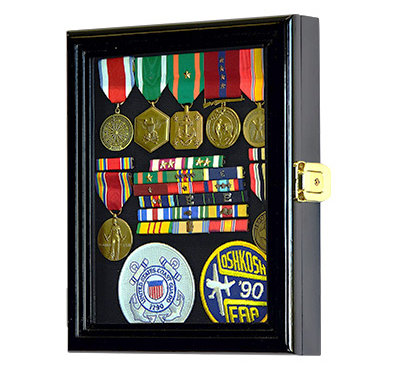
For veterans and their families, military award display cases occupy a place of honor in the home as a testament to personal achievements and career, as well as an object of historical significance. There are several ways to display a medal collection, and each person or family can choose one that best adapts to their need – or create one themselves.
Shadowbox display cases physically protect medals and awards and come in different shapes and sizes. There are wall-mounted display cases with space for medals and awards, as well as memorial boxes that can incorporate skill badges, patches, company insignia, and flags. Further enhancements can be achieved by using mementos such as photos, dog tags, and signed letters of commendation.
How to Use Medal Display Cases
According to the general protocol for displaying medals, the highest honors should be placed to the top left in order of precedence. It’s also advised to assemble medals of the same category together. For example, all the stars, with the highest-ranking to the top left, and then patches, pins, and ribbons.
Making your Own Medal Display Case
There are several videos online with detailed instructions on how to make your own medal display cases. These are some of our favorites:
Buying a Medal Display Case
Wall-Mounted Medal Display Cases
Wall-mounted cases are a good way of displaying large quantities of medals and became a feature in your home. It’s important that you plan your display of medals and awards beforehand, so you know how large a display case you may want. Wall-mounted cases come in different styles and are made of different materials. Here are some of our recommendations:
Frame Display Cases
Frame display cases are perfect for smaller collections of medals. They usually come in two styles: Transparent (ideal to be able to see both sides of a medal) or with a back layer made of cloth, plastic or wood (for displaying one side only). A lot of coin display frames can be used for medals, so we’ve included some below as well.
Memorial Display Cases
Memorial display cases for medals and awards usually include space for other objects and the flag. Flags need to be folded in a specific (but generally shared) way. Here’s a video on how to do it.
Display Boxes
Horizontal display boxes are also ideal for larger collections of medals and awards. With a glass top, they can be used to display objects, but can also potentially be stacked and stored. These boxes can be made of wood, metal or plastic. Here are some of our favourite ones: