The Medal of a Liberated France

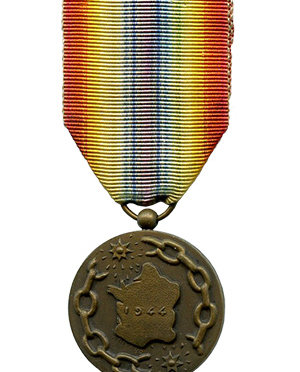
The Medal of a Liberated France was a decoration of the French Republic awarded for contributions to the liberation from German occupation.

The Medal of a liberated France (or “Médaille de la France libérée”) was a decoration of the French Republic awarded to French and foreign nationals that had made a notable contribution to the liberation of France from the German occupation. It was originally named the “Medal of Gratitude of a Liberated France”.

The Medal of a liberated France was created by decree on 12 September 1947. It could be awarded to soldiers of the allied armies who had participated in war operations on the soil of Metropolitan France, soldiers of allied armies who served as liaison with the French forces or to French nationals who made a notable contribution to the liberation of Metropolitan France or soil under French mandate between 18 June 1940 and 20 August 1945.

The Medal of a liberated France Design

The Medal of a liberated France measures 35mm in diameter and it’s a circular medal struck from bronze.

The obverse bears the relief image of France with the relief date “1944” at its center. A relief chain encircles the image of France with two breaks in its links, one North-east, the other South-west, symbolizing the allied landings. The reverse bears the relief image of a Fasces below a Phrygian cap bisecting the initials “R.F.” and the relief inscription “LA FRANCE A SES LIBERATEURS” along the upper and lower circumference.

The medal hangs from a 36mm wide rainbow coloured silk moiré ribbon with the purple at center.

The Commemorative Medal for Voluntary Service in Free France

The Commemorative Medal for Voluntary Service in Free France is a French commemorative war medal and awarded during WW2.

The Commemorative medal for voluntary service in Free France (or Médaille commémorative des services volontaires dans la France libre in French) is a French commemorative war medal awarded to members of the Free French Forces who fought the Axis forces on most fronts during World War II. It was established by decree on 4 April 1946.

The Free French Forces were especially active in North Africa where they particularly distinguished themselves during the Battle of Bir Hakeim. Also part of the whole, the Free French Naval Forces and Free French Air Force, although limited in numbers and equipment nonetheless took part in most major engagements alongside allied forces including in the Soviet Union.

The Commemorative medal for voluntary service in Free France was awarded to all persons, civilian or military, French or foreign nationals who had voluntarily contracted in the Free French Forces prior to 1 August 1943 (for soldiers), or who had effectively served Free France on the territories controlled by the National Committee in London and in foreign countries prior to 1 August 1943 (for civil servants).

The Commemorative medal for voluntary service in Free France Design

The Commemorative medal for voluntary service in Free France was struck from silvered bronze in the shape of a Cross of Lorraine. Its obverse bears the relief inscription on two lines “FRANCE” on the upper horizontal arm and “LIBRE” on the lower arm. Its reverse bears the dates “18 JUIN 1940” on the upper arm and “8 MAI 1945” on the lower arm.

The Commemorative medal for voluntary service in Free France hangs from a dark blue silk moiré ribbon adorned with 2 mm wide red oblique stripes separated by 4 mm.

The 1943-1944 Italian Campaign Medal (France)

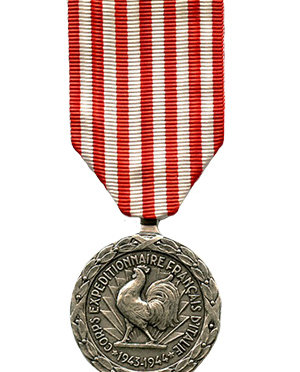
The 1943–1944 Italian campaign medal is a campaign medal awarded to soldiers and sailors of the French Expeditionary Corps of Italy.

The 1943–1944 Italian campaign medal (or Médaille commémorative de la campagne d’Italie 1943-1944 in French) is a French commemorative campaign medal awarded to soldiers and sailors who served on Italian soil or Italian waters as part of the “French Expeditionary Corps of Italy”. The corps participated in the allied amphibious landing and the ensuing campaign in Italy in 1943 and 1944.

Composed in part of Frenchmen from North Africa and in part with colonial troops, the CEF covered itself with glory during this long campaign and especially during the battle of the GariglianoIn January 1953, Parliament approved the creation of a distinct medal to adequately recognize the valour in combat and the sacrifice of the men of the CEF – who lost more than 7,000 members.

The 1943–1944 Italian Campaign Medal Design

The 1943–1944 Italian Campaign Medal measures 36mm in diameter and is made of silvered bronze medal.

Its obverse bore the left profile view of a Gallic rooster in front of Sun rays surrounded by the relief circular inscription “CORPS EXPÉDITIONAIRE FRANÇAIS D’ITALIE * 1943-1944 *” within a relief laurel wreath along the entire medal circumference. On the reverse, within the same relief laurel wreath, the circular inscription “RÉPUBLIQUE FRANÇAISE” at the bottom a relief five-pointed star, in the center, the relief inscription “CEF”.

The 1943–1944 Italian Campaign Medal hangs from a ribbon passing through a suspension ring. The 36mm wide silk moiré ribbon is composed of seven red and six white alternating vertical stripes of equal width.

The 1939–1945 Commemorative War Medal (France)

The 1939–1945 Commemorative War Medal is a medal of France established in 1946 to recognize individual participation in the Second World War.

The 1939–1945 Commemorative War Medal (or “Médaille commémorative de la guerre 1939–1945” in French) is a commemorative medal of France established in 1946 to recognize individual participation in the Second World War.

The medal was awarded to all soldiers serving under French authority or under a French government in a state of war against the Axis nations, as well as present on board a warship or armed merchant vessel, to French citizens, military or civilian, who fought against the Axis forces or their representatives, and to foreign military who served as Frenchmen in formations at war against the Axis forces.

The 1939–1945 Commemorative War Medal Design

The 1939–1945 Commemorative war medal is hexagonal in shape and struck from bronze. It measures 28mm wide and 38mm high excluding the suspension loop.

The obverse of the medal bears the relief image of a rooster superimposed in front of a Cross of Lorraine. The reverse shows a relief semi circular inscription “RÉPUBLIQUE FRANÇAISE” over a sprig of laurel leaves and the inscription on three lines “GUERRE” “1939” “1945”.

The George Medal

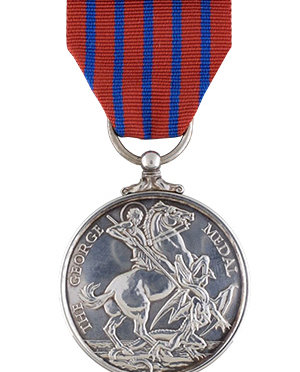
The George Medal (or GM) is a decoration of the United Kingdom and Commonwealth instituted in 1940 by King George VI for gallantry.

The George Medal (or GM) is a decoration of the United Kingdom and Commonwealth instituted on 24 September 1940 by King George VI as an award for gallantry “not in the face of the enemy” where the services were not so outstanding as to merit the George Cross.

During the height of the Blitz in 1940, there was a strong desire to reward the many acts of civilian courage. The existing awards were not judged suitable to meet the new situation, so it was decided that the George Cross and the GM would be instituted to recognize both civilian gallantry in the face of enemy bombing and brave deeds more generally.

The King announced the new awards by saying:

In order that they should be worthily and promptly recognized, I have decided to create, at once, a new mark of honor for men and women in all walks of civilian life. I propose to give my name to this new distinction, which will consist of the George Cross, which will rank next to the Victoria Cross, and the George Medal for wider distribution.

The warrant for the GM, dated 24 January 1941, was published in The London Gazette on 31 January 1941. Although the original warrant did not explicitly permit it to be awarded posthumously, this was changed in December 1977 to allow posthumous awards.

Recipients are entitled to the post-nominal letters GM.

The George Medal Design

The medal is circular and struck in silver. It measures 36 mm (1.4 in) in diameter.

The obverse depicts the crowned effigy of the reigning monarch. To date, there have been four types:

  • George VI, 1940 to 1948. Inscribed GEORGIVS VI D: G: BR: OMN: REX ET INDIAE IMP.
  • George VI, 1948 to 1952. Inscribed GEORGIVS VI DEI: GRA: BRITT: OMN: REX FID: DEF:
  • Elizabeth II, 1952 to late 1950s. Inscribed ELIZABETH II D: G: BR: OMN: REGINA F.D.
  • Elizabeth II, late 1950s to date. Inscribed ELIZABETH II DEI GRATIA REGINA F.D.

The reverse shows Saint George on horseback slaying the dragon on the coast of England, with the legend THE GEORGE MEDAL around the top edge of the medal.

The ribbon is 31.7 mm (1.25 in) wide, crimson with five narrow blue stripes. The name of the recipient is engraved on the rim of the medal, although some Army awards have impressed naming.

Find This Medal

Right Now on eBay 
Clicking a link to eBay may result in a referral commission being paid if a purchase is made.
Loading...

The Newfoundland Volunteer War Service Medal

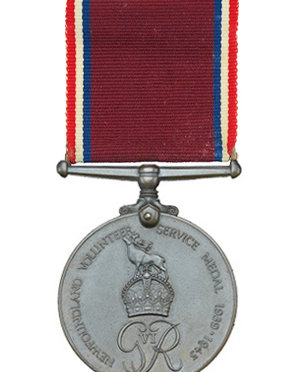
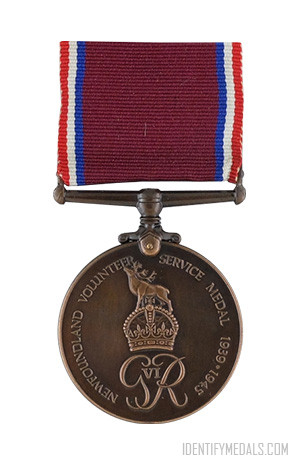
The Newfoundland Volunteer War Service Medal is a British medal created to honor those from Newfoundland & Labrador.

The Newfoundland Volunteer War Service Medal is a British medal created to honor those from Newfoundland & Labrador who served in the British Forces outside of the province from September 3, 1939 through September 2, 1945.

The medal was specifically created to honor service with the British Imperial Forces, the Newfoundland Overseas Forestry Unit, the Merchant Navy and the Newfoundland Regiment, or any other unit or organization prescribed by the Lieutenant Governor in Council. It was issued to those who did not receive a volunteer war service medal from another country, and those who had volunteered and served in units contributed by the Dominion of Newfoundland to the allied war effort.

The Newfoundland Volunteer War Service Medal Design

The Newfoundland Volunteer War Service medal is circular, made of bronze and measures 36 millimeters (1.4 in) in diameter.

The obverse has the legend NEWFOUNDLAND VOLUNTEER SERVICE MEDAL 1939-45 around the edge and bears the Crown of King George VI surmounted by a Newfoundland stag caribou. The reverse bears a depictions of Britannia standing, with a spear in her right hand and the sun’s rays behind her. Two lions encircle each side with their heads towards the bottom. The medal is numbered to an applicant on the rim.

The New Zealand War Service Medal

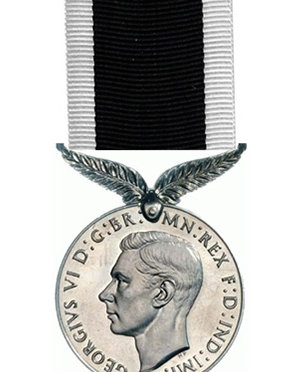
The New Zealand War Service Medal (NZWSM) was awarded to members of the New Zealand armed forces and Reserves during WW2.

The New Zealand War Service Medal (or NZWSM) was awarded to members of the New Zealand armed forces, the National Military Reserve and the Home Guard, as well as the New Zealand Merchant Navy and Naval Auxiliary Patrol Service.

The NZWSM was awarded for 28 days’ full-time aggregated service or six months’ part-time aggregated service between 3 September 1939 and 2 September 1945. Service brought to an end by death on duty, or due to wounds sustained on duty, or honorable discharge as a result of such wounds, automatically qualified for award of the medal.

The New Zealand War Service Medal Design

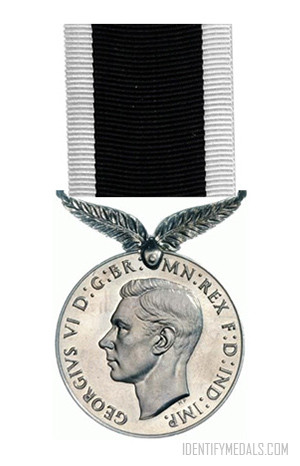
The obverse of the medal shows the uncrowned effigy of King George VI, facing left, with the legend “GEORGIVS VI D:G:BR:OMN:REX F:D:IND:IMP.”

The reverse (designed by the historian and typographer Dr John Beaglehole and the wood engraver E Mervyn Taylor) has the inscription “FOR SERVICE TO NEW ZEALAND 1939-1945” above a fern leaf. It was the first distinctively ‘New Zealand’ campaign medal, emphasized by the use of the fern leaf motif on the reverse and suspension, and the national colors of black and white in the ribbon.

Find This Campaign Medal

Right Now on eBay 
Clicking a link to eBay may result in a referral commission being paid if a purchase is made.
Loading...

More WW2 British Campaign Medals

During World War II (1939–1945) British campaign medals were awarded to members of the British Armed Forces and civilians for active service in specific military campaigns or operations. These included:

The War Medal 1939-1945 Obverse

The War Medal 1939-1945

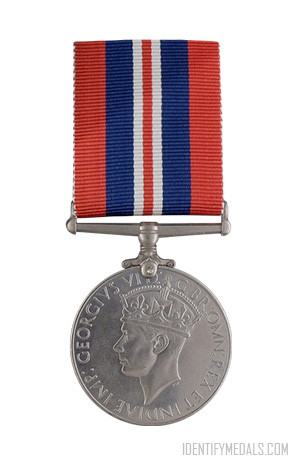
The War Medal 1939–1945 is a British campaign medal instituted by the United Kingdom on 16 August 1945. The medal was awarded to subjects of the British Commonwealth who had served full-time.

Read More »
WW2 Medals and Awards: The Arctic Star

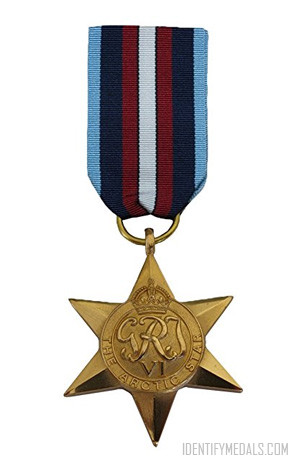
The Arctic Star

The Arctic Star is a military campaign medal which was instituted for service on the Arctic Convoys north of the Arctic Circle in WW2. 

Read More »
WW2 Medals and Awards: The Pacific Star

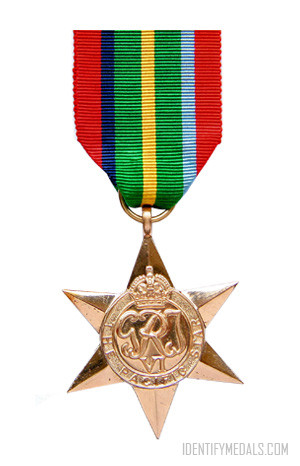
The Pacific Star

The Pacific Star is a British military campaign medal instituted by the United Kingdom in 1945 for those who served in the Pacific Campaign.

Read More »

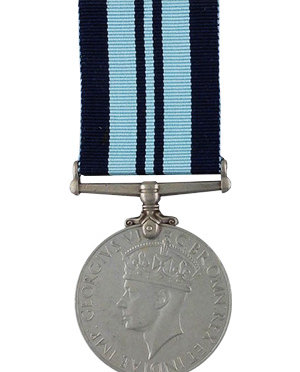
The India Service Medal

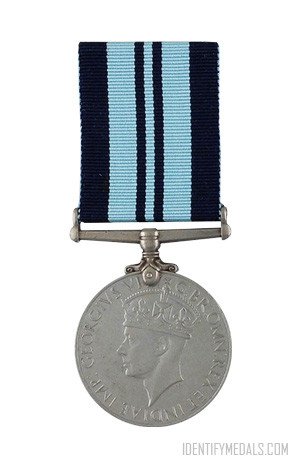
The India Service Medal – 1939-1945 is a Commonwealth campaign medal awarded to Indian Forces for three years service in India in WW2.

The India Service Medal – 1939-1945 is a Commonwealth campaign medal awarded to Indian Forces for three years non-operational service in India during the Second World War.

The India Service Medal was awarded to Forces including Reserve, State and Womens’ forces, for at least three years non-operational service in India between 3 September 1939 and 2 September 1945. It was issued in addition to, and worn immediately after, British campaign World War II medals (although those eligible for the Defence Medal could not receive the India Service Medal as well).

The India Service Medal - 1939-1945 Design

The India Service Medal is circular and made of cupro-nickel. It measures 36mm in diameter.

The obverse of the medal has the crowned effigy of King George VI facing left, with the legend “GEORGIVS VI D:G:BR:OMN:REX ET INDIAE IMP.” The reverse shows a relief map of India and the words “INDIA” above and “1939-45” below.

The medal was awarded unnamed.

Find This Campaign Medal

Right Now on eBay 
Clicking a link to eBay may result in a referral commission being paid if a purchase is made.
Loading...

More WW2 British Campaign Medals

During World War II (1939–1945) British campaign medals were awarded to members of the British Armed Forces and civilians for active service in specific military campaigns or operations. These included:

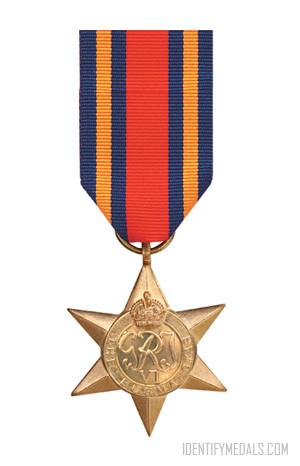
WW2 Medals and Awards: The Burma Star

The Burma Star

The Burma Star is a military campaign medal for award to subjects of the British Commonwealth who served in the Burma Campaign.

Read More »
WW2 Medals and Awards: The Africa Star

The Africa Star

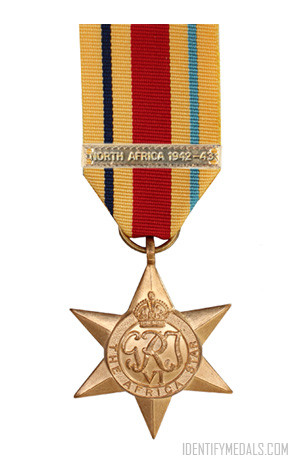
The Africa Star is a military campaign medal awarded to those who served in the Second World War specifically in North Africa. 

Read More »

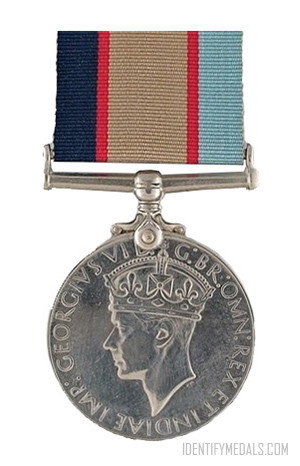
The Australian Service Medal 1939-1945

The Australia Service Medal 1939–1945 is a military medal (Great Britain, Australia) that recognizes service in Australia’s armed forces, Mercantile Marine, and Volunteer Defence Corps during World War II.

The Australia Service Medal 1939–1945 is a military medal (Great Britain, Australia) that recognizes service in Australia’s armed forces, Mercantile Marine, and Volunteer Defence Corps during World War II. This award was instituted in 1949.

Australian Forces during the Second World War also qualified for the campaign stars and medals authorized for all British and Commonwealth Forces.

Qualifying Period for the Australian Service Medal 1939-1945

The qualifying period was, at first, at least 18 months of full-time service at home or overseas, or at least three years of part-time service, between the dates of 3 September 1939 and 2 September 1945 – and no minimum qualifying period was required for those killed, wounded, or disabled due to service. This qualifying period was changed on 16 August 1996, when it was reduced to 30 days for full-time service and 90 days for part-time service.

Order of Wear for the Australian Service Medal 1939-1945

The Australia Service Medal worn immediately after the War Medal 1939–1945.

The Australia Service Medal 1939–1945 Design

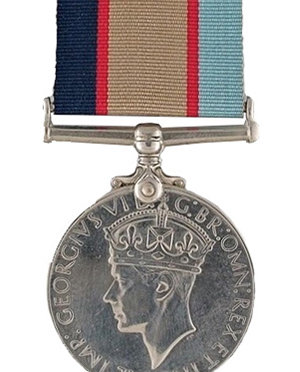
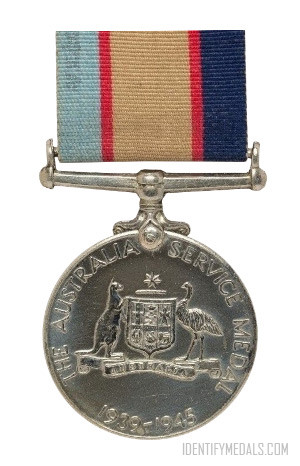
The Medal is circular and made of cupro-nickel. It measures 36 millimeters (1.4 inches) in diameter and has the recipient’s name is impressed on the rim.

The obverse of the medal shows the crowned effigy of King George VI and surrounded by the inscription GEORGIVS VI D:G:BR:OMN:REX ET INDIAE IMP. The reverse of the Australian Service Medal 1939-1945 shows the coat of arms of the Commonwealth of Australia surrounded by the words ‘THE AUSTRALIA SERVICE MEDAL 1939–1945’.

Ribbon 

The ribbon measures 32 millimeters (1.3 inches) wide and has a wide khaki central stripe (represents the Army), flanked by two narrow red stripes. The edge stripes are dark blue on the left and light blue on the right (representing the Mercantile Marine, Navy, and Air Force respectively). 

The Australia Service Medal 1939–1945 Images

WW2 Medals and Awards: The Australia Service Medal
The Australia Service Medal 1939-1945 - Obverse
Australia Service Medal 1939 - 1945 Reverse
The Australia Service Medal 1939-1945 - Reverse

Ribbon Bar

Australia Service Medal 1939–1945 - Ribbon bar

The ribbon bar, like the ribbon of the Australia Service Medal 1939-1945, has a wide khaki central stripe flanked by two narrow red stripes (dark blue on the left and light blue on the right).

More About This Medal

There are two official documents you can access through the Australian government’s Defence Website:

Find This Campaign Medal

Right Now on eBay 
Clicking a link to eBay may result in a referral commission being paid if a purchase is made.
Loading...

More WW2 British Campaign Medals

During World War II (1939–1945) British campaign medals were awarded to members of the British Armed Forces and civilians for active service in specific military campaigns or operations. These included:

WW2 Medals and Awards: The Africa Star

The Africa Star

The Africa Star is a military campaign medal awarded to those who served in the Second World War specifically in North Africa. 

Read More »
WW2 Medals and Awards: The Pacific Star

The Pacific Star

The Pacific Star is a British military campaign medal instituted by the United Kingdom in 1945 for those who served in the Pacific Campaign.

Read More »
The War Medal 1939-1945 Obverse

The War Medal 1939-1945

The War Medal 1939–1945 is a British campaign medal instituted by the United Kingdom on 16 August 1945. The medal was awarded to subjects of the British Commonwealth who had served full-time.

Read More »

The Canadian Volunteer Service Medal

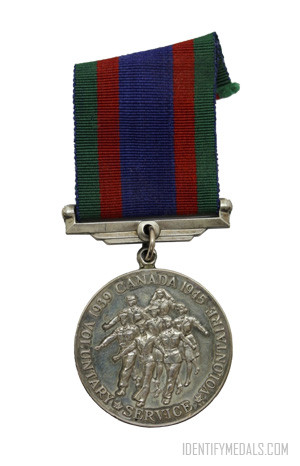
The Canadian Volunteer Service Medal is a British medal granted to persons of any rank in the Naval, Military or Air Forces of Canada.

The Canadian Volunteer Service Medal is a British medal granted to persons of any rank in the Naval, Military or Air Forces of Canada who voluntarily served on Active Service from September 3, 1939, to March 1, 1947.

Members of the Naval, Military or Air Forces of Canada were eligible if they had voluntarily served on Active Service and honourably completed eighteen months (540 days) total service.

The Canadian Volunteer Service Medal Design

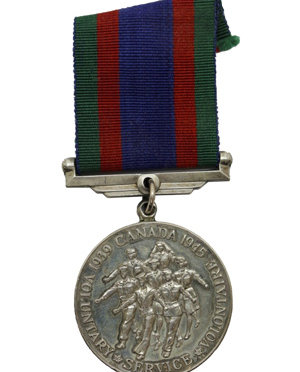
The medal is circular and made of silver (.925 fine silver). It measures 1.42 inches (36 mm) in diameter.

The obverse depicts seven marching figures, representing men and women of the army, air force, navy and nursing service. Around the rim is the inscription 1939 CANADA 1945 VOLUNTARY SERVICE VOLONTAIRE. The seven marching figures were based on real people taken from the National Defence photographs. The reverse shows the coat of arms of CanadaMedals were issued unnamed. The medal was designed by the war artist Major Charles Comfort.

A total of 650,000 medals were awarded.

Find This Campaign Medal

Right Now on eBay 
Clicking a link to eBay may result in a referral commission being paid if a purchase is made.
Loading...

More WW2 British Campaign Medals

During World War II (1939–1945) British campaign medals were awarded to members of the British Armed Forces and civilians for active service in specific military campaigns or operations. These included:

The War Medal 1939-1945 Obverse

The War Medal 1939-1945

The War Medal 1939–1945 is a British campaign medal instituted by the United Kingdom on 16 August 1945. The medal was awarded to subjects of the British Commonwealth who had served full-time.

Read More »
WW2 Medals and Awards: The Pacific Star

The Pacific Star

The Pacific Star is a British military campaign medal instituted by the United Kingdom in 1945 for those who served in the Pacific Campaign.

Read More »