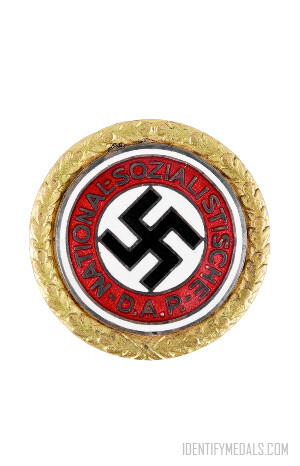
The NSDAP Golden Party Badge

The NSDAP Golden Party Badge was one of the most prestigious decorations awarded by the party during the Third Reich era in Germany.

The NSDAP Golden Party Badge, or Gold Party Badge, was one of the most prestigious decorations awarded by the National Socialist German Workers’ Party (NSDAP) during the Third Reich era in Germany. Instituted in 1933, it was primarily intended to honor loyal and long-standing members of the Nazi Party who had made significant contributions to the party’s cause.

The awarding of the Golden Party Badge was a highly prestigious honor, signifying the recipient’s status as a trusted and valued member of the Nazi Party elite. It was often presented in formal ceremonies or special events, further emphasizing its significance within the party hierarchy.

The criteria for receiving the Golden Party Badge were stringent, requiring a minimum of ten years of uninterrupted membership in the NSDAP, along with a record of exceptional service and dedication to the party’s goals. Additionally, candidates needed the personal approval of Adolf Hitler himself.

The NSDAP Golden Party Badge Design

The NSDAP gold badge was crafted in solid gold and features the Nazi Party eagle emblem surrounded by a wreath of oak leaves in the obverse.

The badge was available in two sizes: 30mm for uniform wear and 25mm for civilian attire. On the reverse of each badge is a unique membership number. The value of the badge increases as the serial number on the reverse decreases. Adolf Hitler wore the NSDAP badge number 7.

Two authorized manufacturers produced the badge: Deschler & Sohn and Joseph Fuess, both headquartered in Munich. Recipients wore the NSDAP badge on the left breast of their uniform, symbolizing their allegiance to the Nazi ideology and leadership.
Medal Makers: N.S Meyer Inc. (New York)

Among the most esteemed medal makers, NS Meyer Inc stands as a renowned name synonymous with quality and tradition.

N.S. Meyer Inc. was a prominent manufacturer of military insignia, medals, and related accessories, based in New York. Founded in the early 20th century, it gained renown for its production of high-quality military decorations and regalia, including medals, ribbons, and badges. The business was so successful that it operated for almost a hundred years (until 2000, when it was acquired by Vanguard). 

The company supplied these items to various branches of the U.S. Armed Forces and other organizations. N.S. Meyer Inc. played a significant role in outfitting military personnel with distinctive and prestigious awards, contributing to the tradition and heritage of military service.

The History of N.S Meyer

The following information has been researched by 14to42.net, a wonderful resource that aims to catalog all the signage within the vicinity spanning from 14th Street to 42nd Street in New York City. 

Simon Meyer appeared in the U.S. Census of 1880, residing at 922 7th St., NW, Washington, D.C. At that time, his son Nathan was ten years old and born in the District of Columbia. Twenty years later, in 1900, the Meyers were still living in Washington, where Nathan, now 30, was recorded. Simon’s occupation was listed as “Clothing Merchant“. 

Tracking Simon N. Meyer through the city directories of Washington, D.C., during the 1880s and 1890s, it appears that the business transitioned from millinery goods to “gold and silver trimmings” early on.

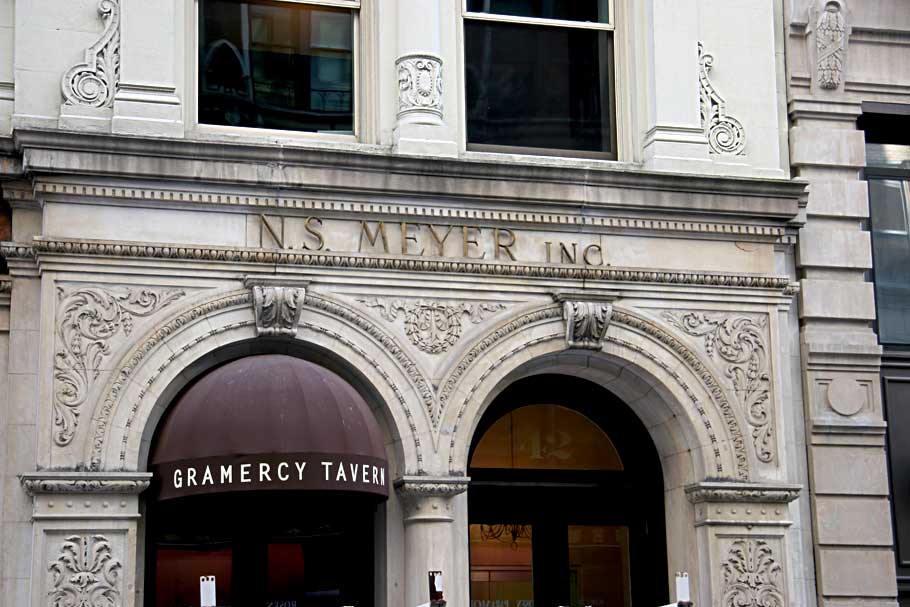
N. S. Meyer, Inc., 42 E. 20th St. (2007). Image courtesy of 14 to 42.net.

By 1885, the business was categorized under “Regalia,” indicating that he was likely selling medals, insignia, and other military equipment by then. Although Nathan seemed to play an active role in the business, it was always known under Simon’s name, S. N. Meyer.

Nathan Meyer established his own business in New York under the name N. S. Meyer, located at 79 5th Ave. in 1906, initially listed as “Army and Navy Equipment” in the Manhattan telephone directory. N. S. Meyer operated in New York from 1906 to 2000. Letterhead from 1920 indicates their location at 103 5th Ave., where they remained for the last thirty years, from 1971 to 2000. According to The TMCA News, in 2000, they were acquired by Vanguard, another military goods supplier.

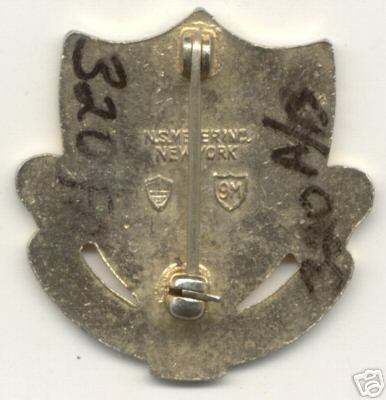
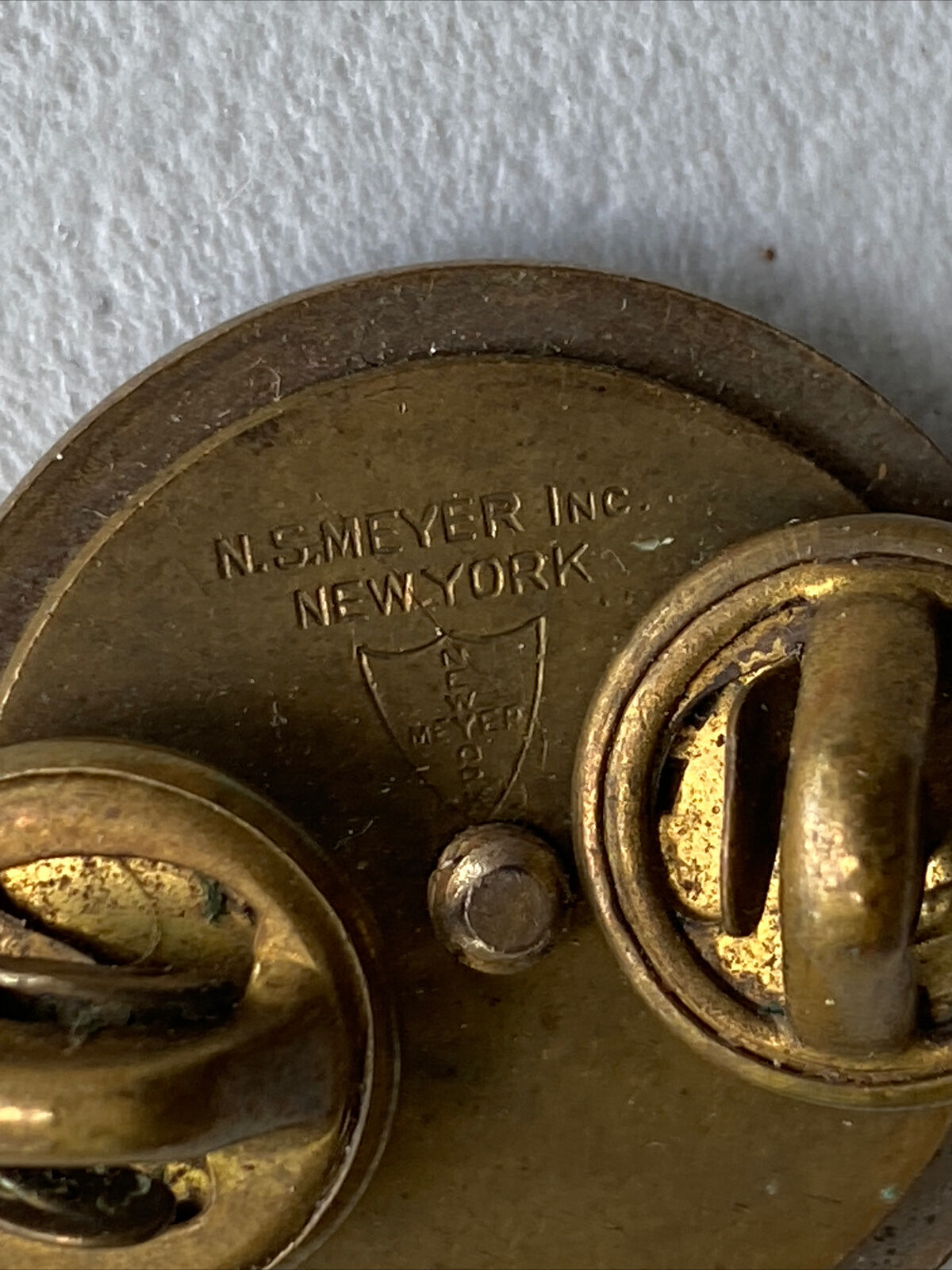
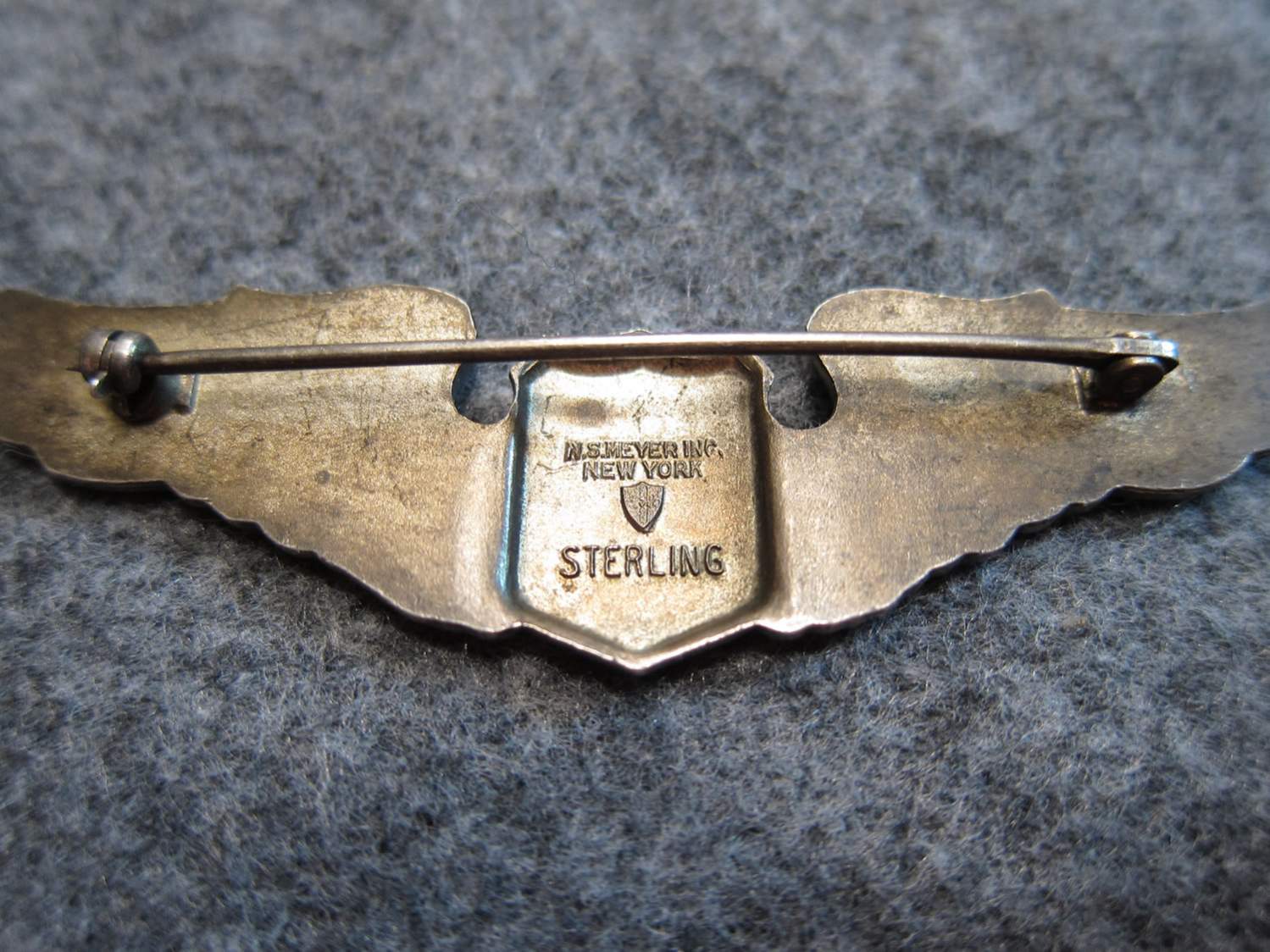
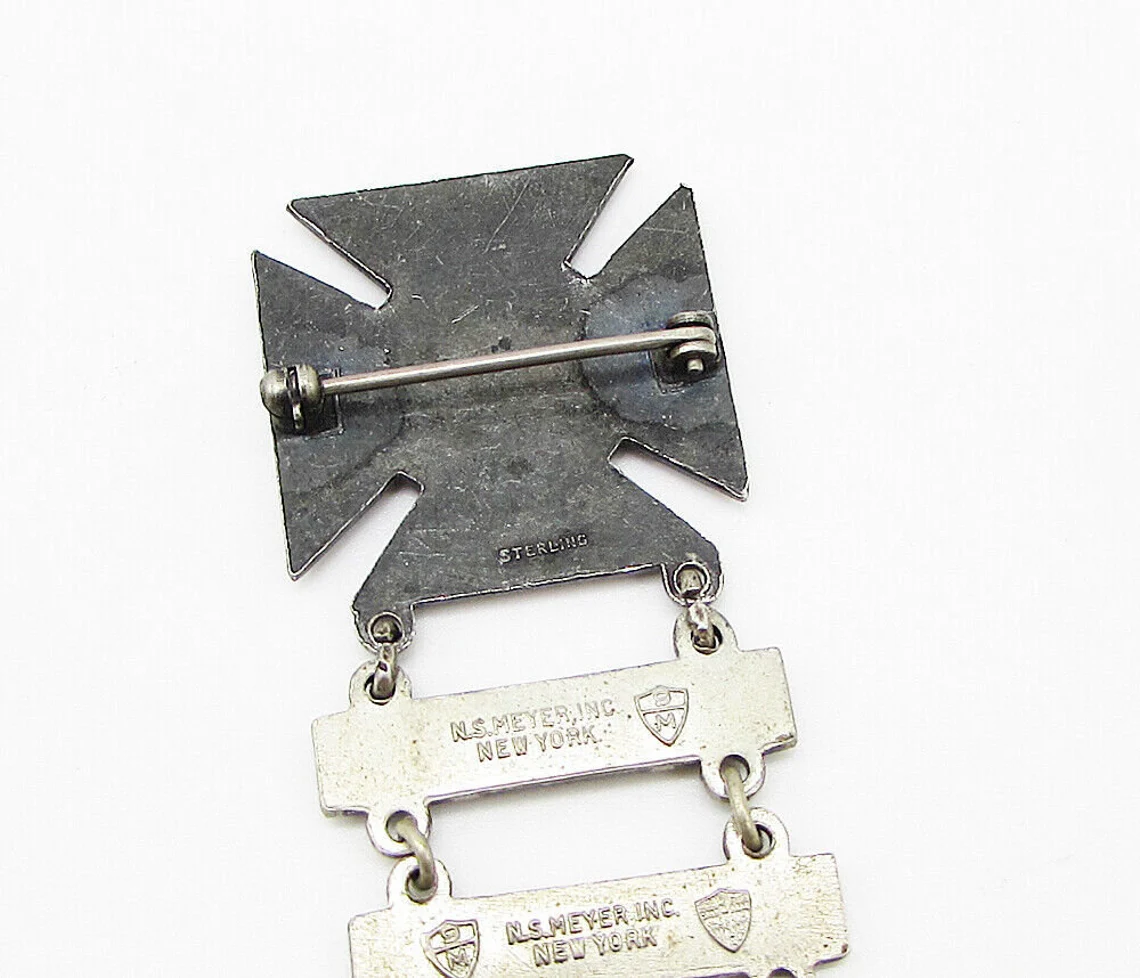
Examples of N.S Meyer Mark

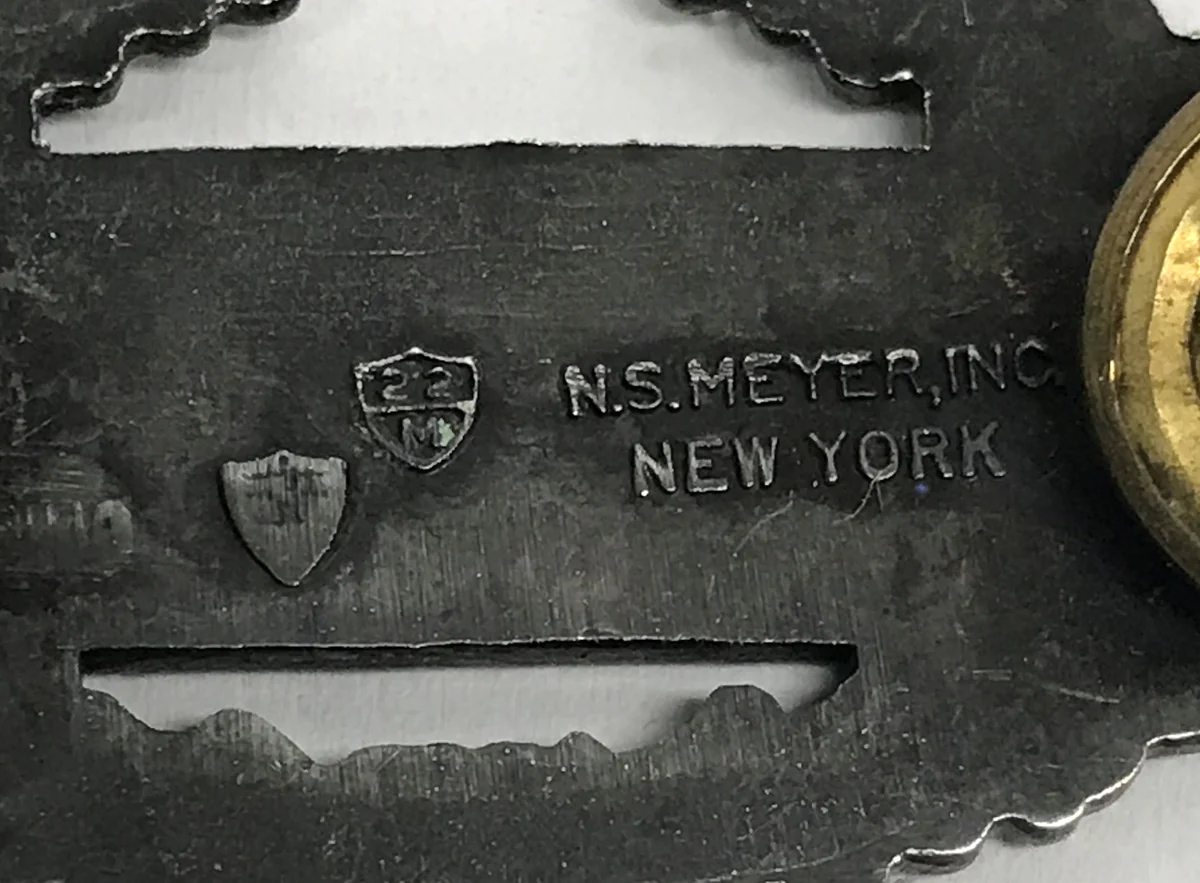
The NS Meyer mark is often found on various military insignia, medals, and other uniform accessories produced by the company (and serves as a recognizable symbol of the quality and authenticity of their products).

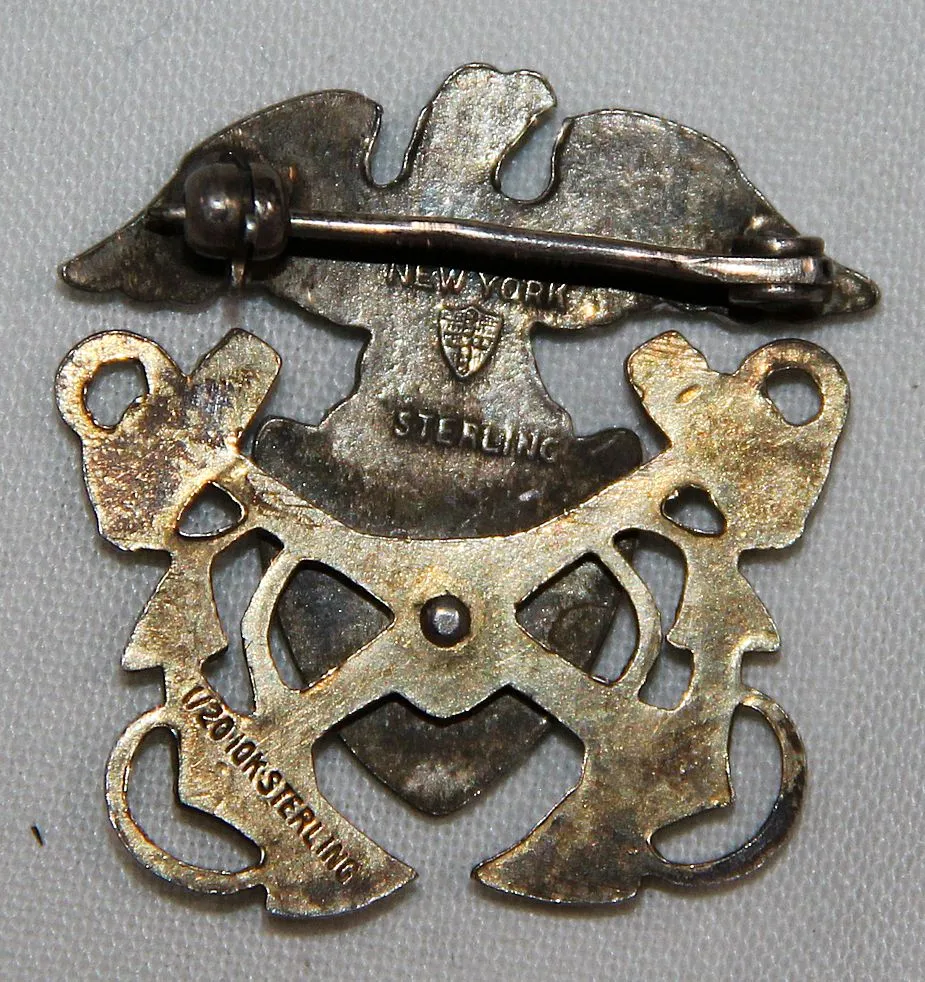
The N.S Meyer mark design typically featured a shield design with “MEYER” running vertically and “NEW YORK” horizontally, forming a cross shape where they intersect at the letter “Y”. However, this mark underwent slight alterations in time, for example transitioning between being incised or raised. 

Many medals and insignia also include the material used in the manufacture of the piece. You can see examples below.

About The British Armed Forces’ Operational Service Medal (OSM)

The Operational Service Medal is a group of campaign medals introduced in 1999 and awarded by the British Armed Forces.

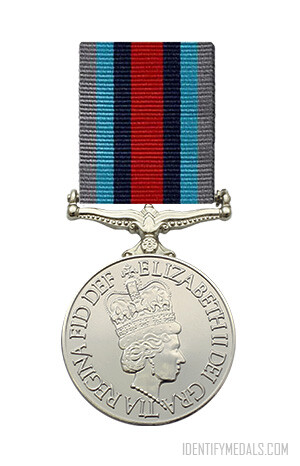
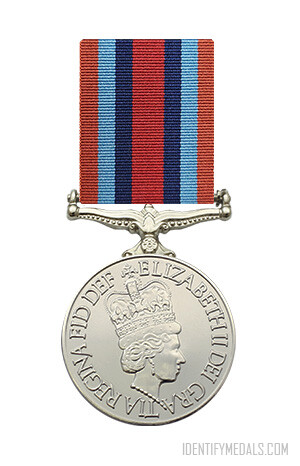
Introduced in 1999 to succeed the General Service Medal, the Operational Service Medal (OSM) is a series of campaign medals bestowed by the British armed forces. While the medal design remains uniform (as of March 2024, the Operational Service Medal has been conferred for four distinct campaigns), each campaign is distinguished by its unique ribbon. 

The Four Different OSM Medals

As of March 2024, there are four distinct versions of the OSM, each representing specific operational deployments. These are:

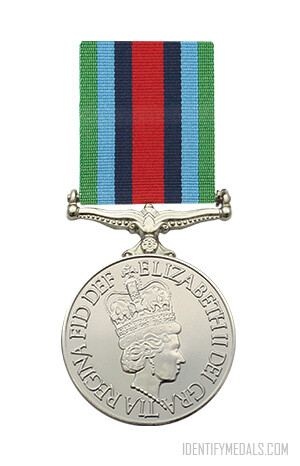
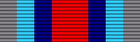
  • OSM Sierra Leone: Awarded for service in Sierra Leone, this medal features a ribbon with a central red bar flanked by navy blue and light blue bars, with outer green edges. The initial Operational Service Medal (OSM) was conferred for participation in Operation Palliser, the UK’s involvement in the Sierra Leone Civil War spanning from May 2000 to July 2002.

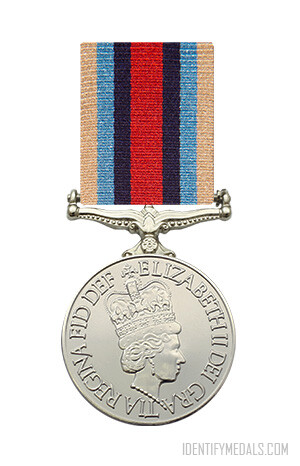
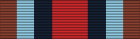
  • OSM Afghanistan: This medal is conferred for service in Afghanistan and is distinguished by its ribbon, which follows the same pattern as the OSM Sierra Leone but with buff-colored outer edges. The Operational Service Medal (OSM) for Afghanistan was granted for participation in the Afghan War, which covered Operation Veritas, Operation Herrick, Operation Toral, and other associated operations falling under those overarching missions.

  • OSM Democratic Republic of Congo: Awarded for service in the Democratic Republic of Congo, this medal’s ribbon mirrors the central red, navy blue, and light blue design, with ochre-colored outer edges. The Operational Service Medal (OSM) for the Democratic Republic of Congo was conferred upon all British personnel who served during the period of June to September 2003 as part of Operation Coral. This operation marked the British contribution to the multinational peacekeeping effort led by France in the Democratic Republic of Congo, occurring during the latter phases of the Second Congo War.

  • OSM Iraq and Syria: Recognizing service in Iraq and Syria, this medal’s ribbon maintains the central red and blue pattern but features grey outer edges. The Operational Service Medal (OSM) for Iraq and Syria was granted to individuals who served during Operation Shader, the United Kingdom’s participation in the military campaign against ISIL in Iraq and Syria.

The OSM Medal Design

The medal is circular an bears, on the obverse, the effigy of Queen Elizabeth II accompanied by the inscription “ELIZABETH II DEI GRATIA REGINA FID. DEF.” On the reverse, the design showcases the Union Flag is encircled by a band reading “FOR OPERATIONAL SERVICE” positioned atop a four-pointed star symbolizing the cardinal directions.

The OSM Clasps

Some of the Operational Service Medal have clasps, or small decorative bars or rosettes, that are awarded alongside the main medal to denote specific additional qualifications or periods of service. These clasps serve to further recognize the diverse experiences and contributions of military personnel in various operational theaters.

For example, the OSM for the Democratic Republic of Congo is accompanied by the “DROC” clasp, indicating service in that specific campaign and the OSM for Sierra Leone has a silver rosette for personnel who took part in Operation Maidenly or Operation Barras.

The OSM Ribbons

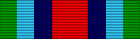
The OMS for Sierra Leone ribbon.
The ribbon for the OMS for Sierra Leone.
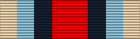
The OMS for Afghanistan Ribbon.
The ribbon for the OMS for Afghanistan.
The OMS for Iraq and Syria ribbon.
The ribbon for the OMS for Iraq and Syria.
The OMS for Congo ribbon.
The ribbon for the OMS for Congo.

The ribbon design for each variant of the medal maintains a consistent layout, featuring a prominent red central bar bordered by navy blue on either side. Adjacent to the navy blue sections are light blue bars, symbolizing the three branches of the armed services. 

Each ribbon is distinguished by unique edge bars of distinct colors: green for Sierra Leone, buff for Afghanistan, ochre for the Democratic Republic of Congo, and grey for Iraq and Syria.

Buy an OSM Medal Online

Right Now on eBay 
Clicking a link to eBay may result in a referral commission being paid if a purchase is made.
Loading...

The Operational Service Medal for Congo

The Operational Service Medal for Congo was awarded to all British personnel that served between June and September 2003 on Operation Coral.

The Operational Service Medal for the Democratic Republic of Congo is a campaign medal conferred upon all British personnel who served during the period of June to September 2003 as part of Operation Coral. This operation marked the British contribution to the multinational peacekeeping effort led by France in the Democratic Republic of Congo, occurring during the latter phases of the Second Congo War.

The Operational Service Medal (also known as OSM) was established in 1999 to replace the General Service Medal (1962) for all new operations. A separate medal of the same design is awarded for each campaign, differentiated by a distinct ribbon. 

The General Service Medal for Congo Qualifying Criteria

The medal with a clasp is conferred for either 25 days of continuous service in Bunia, located in the Ituri Province of the Congo, or completion of five round-trip operational flights between Entebbe and Bunia. This service must have taken place between June 14 and September 10, 2003, as part of Operation Coral.

There is no specific minimum duration required for individuals who were killed, wounded, or disabled during operations, or for those who received decorations for their operational service, including commendations and mentions in dispatches.

The service that qualifies for the Operational Service Medal also contributes towards the period necessary to receive the Accumulated Campaign Service Medal.

British military personnel who served with United Nations forces in the Congo from November 30, 1999, for a minimum of 90 days as part of the MONUC or MONUSCO missions are eligible to wear the United Nations Medal with the appropriate ribbon.

The General Service Medal for Congo Design

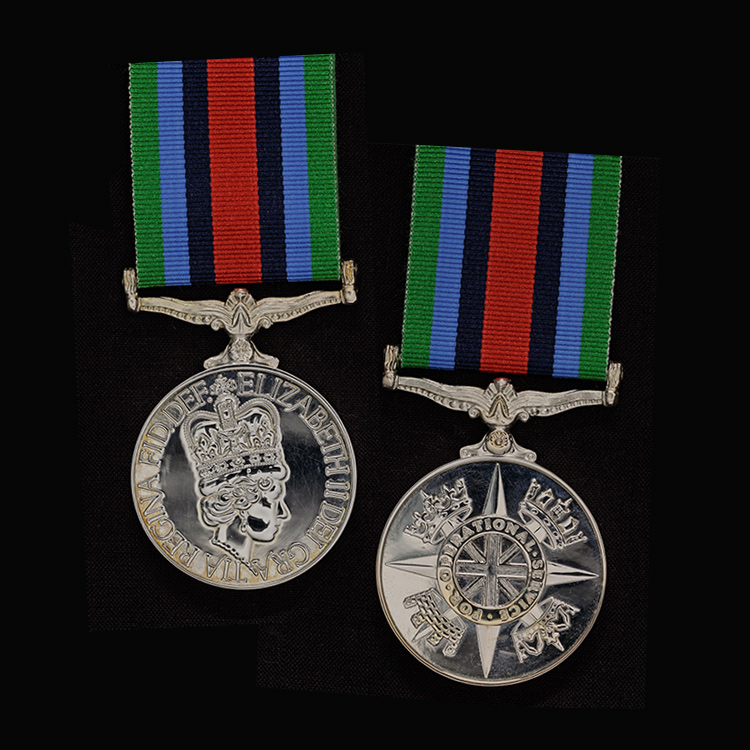
The Operational Service Medal for the Democratic Republic of Congo features a silver circular design.

On the obverse side, it displays the crowned effigy of Queen Elizabeth II along with the inscription ELIZABETH II DEI GRATIA REGINA FID. DEF.

The reverse side showcases the Union Flag encircled by the inscription FOR OPERATIONAL SERVICE, with the four primary compass points depicted alongside four Coronets: Royal (top left), Naval (top right), Mural-Army (bottom left), and Astral-Royal Air Force (bottom right).

Its ribbon consists of a wide central red stripe flanked by navy blue and light blue stripes, symbolizing the three services, and an outer stripe of ochre representing the Congolese landscape.

Each medal is accompanied by a DROC clasp, with a silver rosette indicating the clasp when worn on the ribbon bar.

The General Service Medal Variants

The OSM has been awarded for four separate campaigns, each with a distinctive ribbon. The other three are:

Buy an OSM Medal Online

Right Now on eBay 
Clicking a link to eBay may result in a referral commission being paid if a purchase is made.
Loading...

Mounting Your Military Medals: A Detailed DIY Guide

A thorough guide to help you mount your medals and badges, including techniques, tricks, and recommended products.

Mounting medals helps protect them from damage and wear. Why? Because, by securing them in a display, they are less likely to get scratched, bent, or tarnished over time. But that’s not all! Mounting medals also allows you to to display achievements and honors, serving as a reminder of the recipient’s accomplishments.

Many people use display cases to show their medal collection, many of which already come with everything you need to arrange them. But what if you want to create your own custom medal display? This process might be easier than you thought. In this guide, I will share some of the products I use to display my medals – and explain a few tips to make the job faster and more efficient. 

Types of Medal Mounting

Let’s start by exploring the different types of medal mountings there are.

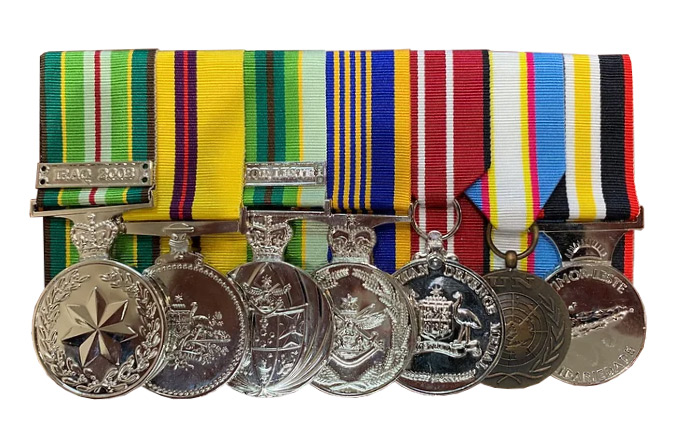
Collectors have several types of mounting methods to display and preserve their medals. The most popular ones are court mounting and swing mounting. Due to the reduced labor involved in the swing mount method of mounting, it is somewhat less expensive compared to the court mount style. Let’s compare further.

Court Mounting

The medals are arranged on a stiff backing material, such as felt or cardboard, with each medal sewn individually onto the backing. This method creates a neat and uniform appearance, with the medals closely spaced and aligned in a straight row.

Medal mounting: Court style
Medal mounting: Court style.

Swing Mounting

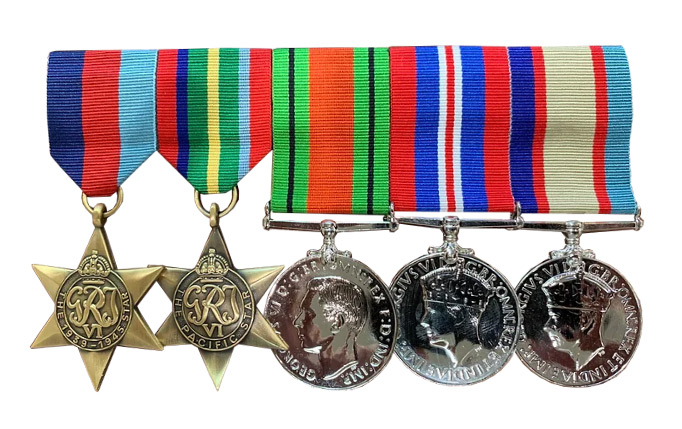
The medals are attached to a bar or brooch pin, allowing them to swing freely when worn. This method is commonly used for wearing medals on uniforms or formal attire, as it allows for easy removal.

Medal mounting: Swing style
Medal mounting: Swing style.

Other types of mounting include:

  • Bar mounting: The medals are affixed to a metal bar, which is then pinned onto clothing or a display board. This method is suitable for displaying multiple medals in a more compact and organized manner.
  • Ribbon mounting: The medals are attached to ribbon bars or backing cards and the ribbons are arranged in the correct order and spacing to represent each medal’s corresponding colors and patterns. This method is very popular for displaying medals in cases or frames, as it allows you to easy remove and rearrange the ribbons.
  • Frame mounting: The medals are mounted in a display frame or shadow box (here are some examples and where to get them) and are usually arranged on a felt or velvet backing. This method allows you to showcase your entire medal collection in a decorative and protective manner, so it’s ideal for wall-mounted displays.

Different scenarios may call for specific methods. For example, if you’re preparing for a formal event where you’ll be wearing your medals, swing mounting offers convenience and ease of attachment. On the other hand, if you’re curating a display for your home or office, frame mounting provides an elegant and protective way to exhibit your medals.

Before You Get Started:
Tips for Mounting Medals

Mounting medals is a rewarding way to display and preserve your collection, but no matter the method you choose, there are a couple of things to keep in mind before you go after the materials.

First of all, and before mounting, ensure that your medals are clean and free from any dirt or residue. You can use a soft cloth and gentle cleaning solution to remove any debris.

It’s also important to, whenever possible, opt for mounting supplies made from durable and non-reactive materials such as brass, stainless steel, or acrylic to ensure longevity and protection for your medals.

Take accurate measurements of your medals and mounting materials, too, and plan their arrangement beforehand. You should consider factors such as size, shape, and significance. A good idea is to group similar medals together and leave space for future additions if needed.

Different Materials For Mounting Medals

Some common materials used for mounting medals include brooch bars, buckram, glue, cloth, and ribbons. Let’s talk a little more about each of these and how you can you use them in your own DIY medal mounting projects. 

Brooch and Medal Mounting Bars

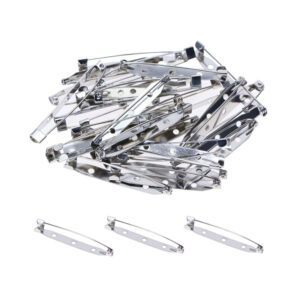
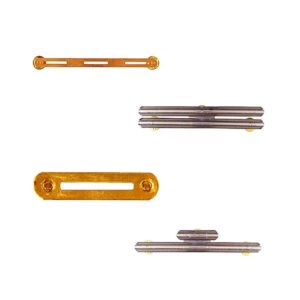
Brooch bars are metal bars with pin clasps attached, allowing medals to be worn as badges on clothing. They provide a convenient and secure way to display medals for ceremonial or formal occasions. Here are two popular choices (the second includes several models, and are usually the preferred choice for American medals):

Archival Tape and Adhesive Dots

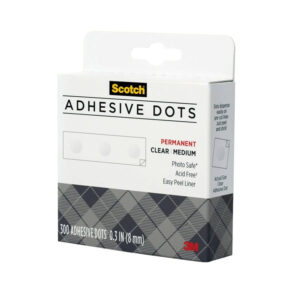
Archival tape, adhesive dots, and craft glue are all often used to attach medals to mounting boards or frames. All of these options provide a strong and durable bond, but it’s essential to use a non-acidic and archival-quality materials to prevent damage to the medals over time.

Buckram

Buckram is a stiff, woven fabric commonly used as a backing material for mounting medals. It provides stability and support, ensuring that medals remain flat and securely in place within a frame or display case.

Soft Cloth

Soft cloth materials such as felt or velvet are often used as backings or linings for medal displays. They provide a cushioned surface that protects the medals from scratches and abrasions while adding an elegant and polished look to the display.

Medal Ribbons

Ribbons are an integral part of many medals, used to suspend them from bars or to wear them around the neck. High-quality ribbons made from silk or grosgrain add a touch of sophistication to medal displays and ensure that they are presented properly.

Because there are so many medal ribbons, we recommend you visit a specialized store. 

Other Products

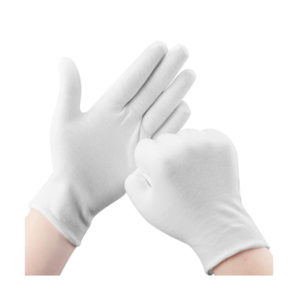
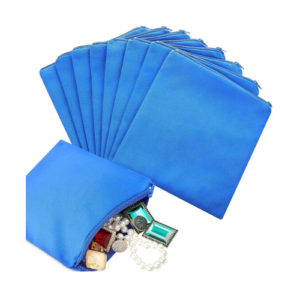
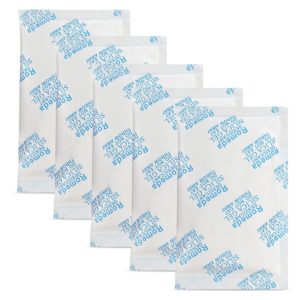
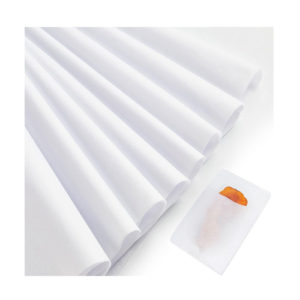
More supplies, accessories, and products to keep your medals well-protected from dust, and humidity, as well as cleaning and keeping your collection neatly organized.

FAQs: Mounting Medals

How should I clean and prepare my medals before mounting them?
Before mounting your medals, it’s essential to clean them properly to preserve their appearance and integrity. Use a soft, lint-free cloth to gently wipe away any dust or fingerprints. Avoid using harsh chemicals or abrasive materials that can damage the medals. For stubborn dirt, a mixture of mild soap and warm water can be used with a soft brush, but be sure to dry the medals thoroughly afterward. If your medals have ribbons, ensure they are clean and pressed.

What are the different methods for mounting medals?
There are several methods for mounting medals, each suitable for different purposes and preferences. Court mounting involves attaching the medals to a rigid backing, ensuring they lie flat and do not overlap, often used for formal occasions. Swing mounting allows medals to hang freely from a brooch bar, giving them movement. This method is more traditional and can be seen in historical displays. Additionally, framing is another popular method, where medals are mounted in a shadow box or frame, providing protection and an attractive presentation for display purposes.

Can I mount my medals myself, or should I seek professional help?
While it is possible to mount your medals yourself, especially if you have some crafting skills, seeking professional help is often recommended for the best results. Professional medal mounters have the expertise and tools to ensure your medals are mounted securely and attractively. They can advise on the appropriate mounting method based on the type of medals and your display preferences. DIY mounting can be a rewarding project, but it requires precision and care to avoid damaging the medals. If in doubt, professional services can provide peace of mind and a polished final product.

The Medal for Merit (USA)

The Medal for Merit was created during World War II to award civilians for distinguished and exceptionally meritorious conduct.

The Medal for Merit stood as the preeminent civilian honor within the United States, bestowed by the President. Originating in World War II, it was conferred upon individuals who showcased exceptional merit in rendering outstanding service during the war effort, following the declaration of emergency by the President on September 8, 1939. 

The medal could be awarded to:

“Civilians of the nations prosecuting the war under the joint declaration of the United Nations and of other friendly foreign nations”

Individuals from foreign nations were eligible to be honored with the award for exhibiting remarkable merit or bravery in support of the Allied war efforts against the Axis Powers, too. The inaugural non-American recipient of this distinction was Sir Edward Wilfred Harry Travis, Director of the British Government Code and Cypher School during World War II, recognized on January 12, 1946.

The Medal for Merit Design

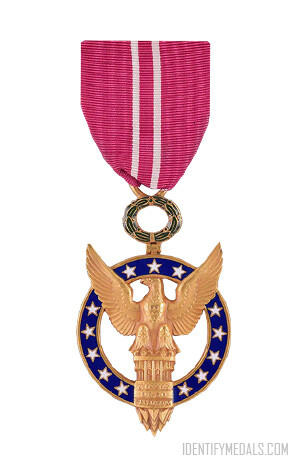
The Medal for Merit is made of gold-finished bronze and decorated with enamel. It features a bold eagle and a circle of white stars on a dark blue background. 

The ribbon is red with two thin central white lines.

Right Now on eBay 
Clicking a link to eBay may result in a referral commission being paid if a purchase is made.
Loading...

Top 10 Flying Aces of the United States During World War II

Flying aces are military aviators recognized for downing a minimum of five enemy aircraft. These are the top USA aces.

During World War II, the United States produced a significant number of flying aces, skilled pilots who distinguished themselves by shooting down numerous enemy aircraft in aerial combat. These aces played a crucial role in the air war over Europe and the Pacific, contributing to the Allies’ victory.

One of the most famous American flying aces of World War II was Richard Bong, who became the highest-scoring American ace of all time. Flying P-38 Lightning aircraft in the Pacific Theater, Bong shot down 40 Japanese aircraft, making him a legend in the annals of military aviation. Another notable American ace was Francis “Gabby” Gabreski, who flew P-47 Thunderbolts and P-51 Mustangs in both the European and Pacific Theaters. Gabreski scored 28 aerial victories, becoming one of the top American aces of the war.

These flying aces, along with many others, demonstrated exceptional skill, courage, and determination in combat, contributing significantly to the success of Allied air operations during World War II. Their exploits continue to be celebrated as a testament to the bravery and heroism of those who served in the skies during the war.

What is a Flying Ace, and How Many Does the USA Have?

A fighting ace, flying ace or air ace is a military aviator who has achieved a certain number of aerial victories in combat. The specific criteria for being designated as a flying ace vary by country and era, but typically, a pilot must shoot down a certain number of enemy aircraft to earn this title. During World War I, for example, most countries considered a pilot with five or more confirmed aerial victories to be a flying ace.

In the United States, the term “flying ace” generally refers to pilots who achieved this distinction during World War I and World War II, although it can also apply to pilots from other conflicts.

During World War II, the United States had numerous flying aces who achieved significant kill scores. We don’t have exact numbers, but estimates indicate that there were around 1,439 aces in total across all participating countries during the war.

Top 10 Flying Aces of the United States

Below is the list of the top aces from the United States that fought during World War II. When possible, I’ve also included some of the distinctions they received. The score shown is based on that shown by the American Fighter Aces Association

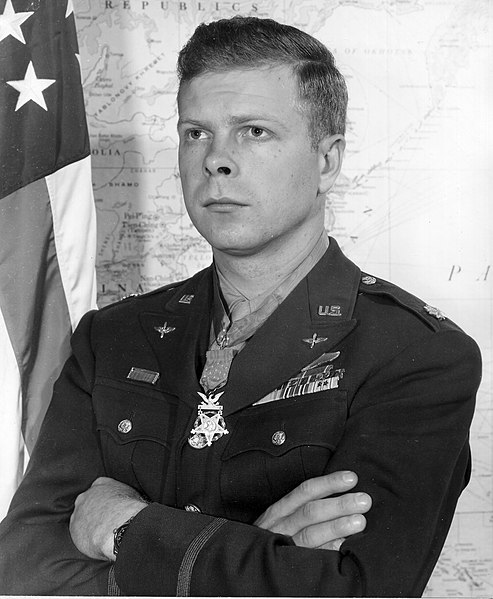
#1 - Richard "Dick" Ira Bong

Score: 40

Richard "Dick" Ira Bong (September 24, 1920 – August 6, 1945)
Major Bong c. 1945.
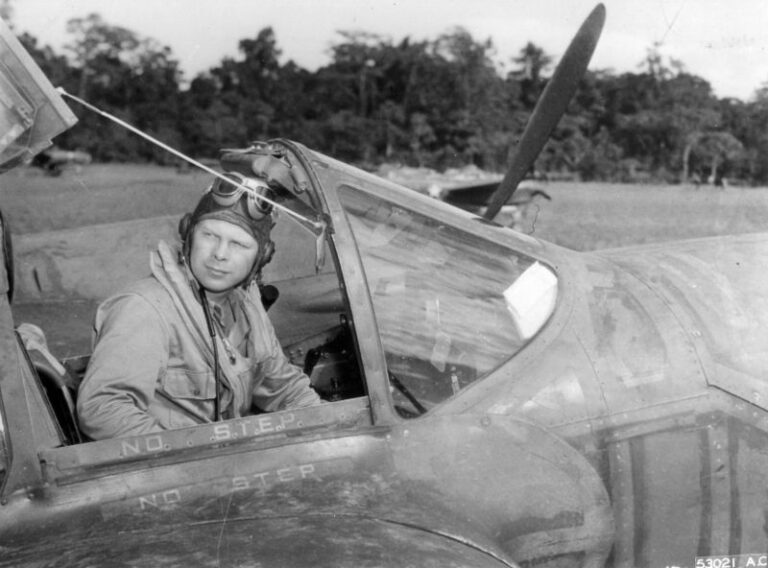
Major Bong in his P-38
Major Bong in his P-38.

Richard “Dick” Ira Bong was one of the most celebrated American flying aces of World War II. Born on September 24, 1920, in Superior, Wisconsin, Bong demonstrated an early interest in aviation, earning his pilot’s license before he even graduated from high school. He enlisted in the United States Army Air Forces (USAAF) in 1941, shortly before the United States entered World War II.

Bong trained as a pilot and was eventually assigned to the Pacific theater, where he flew the Lockheed P-38 Lightning, a twin-engine fighter aircraft. He quickly distinguished himself as a skilled and fearless pilot, known for his precise marksmanship and aggressive tactics in aerial combat.

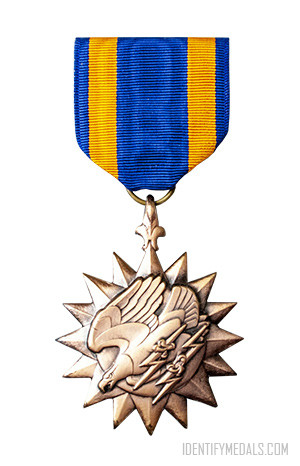
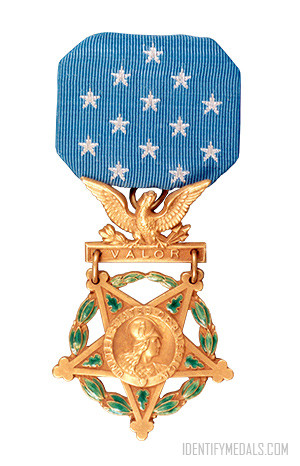
Bong’s combat career reached its peak during his service in the Southwest Pacific Theater, particularly in the defense of New Guinea and the Philippines. Flying his P-38 named “Marge,” Bong shot down a remarkable total of 40 Japanese aircraft, making him the top American fighter ace of World War II. His tally of aerial victories earned him numerous awards and accolades, including the Medal of Honor, the United States’ highest military decoration.

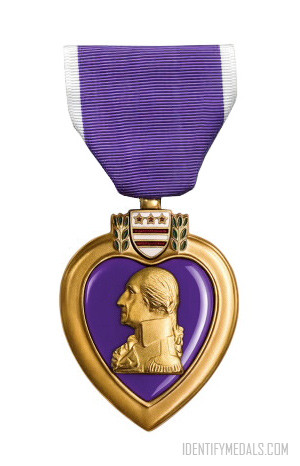
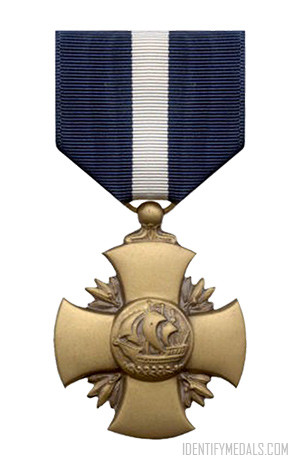
Medals and Awards

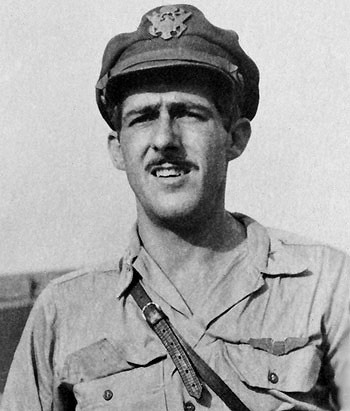
#2 - Thomas "Tommy" Buchanan McGuire Jr.

Score: 38

Thomas Buchanan McGuire
Thomas Buchanan McGuire Jr. (August 1, 1920 – January 7, 1945)
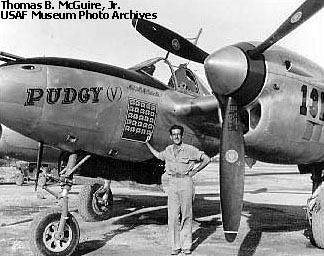
Major McGuire, commander of the 431st Fighter Squadron, next to his P-38L Pudgy (V) in 1944.

Thomas Buchanan McGuire Jr., known as Tommy McGuire, was an American fighter pilot and flying ace during World War II. Born on August 1, 1920, in Ridgewood, New Jersey, McGuire demonstrated an early passion for aviation. He attended the United States Military Academy at West Point and graduated in 1941.

After completing flight training, McGuire joined the United States Army Air Forces (USAAF) and was eventually assigned to the Pacific Theater of Operations. He flew the Lockheed P-38 Lightning, a twin-engine fighter known for its speed and firepower.

McGuire quickly gained a reputation as an exceptional pilot and marksman. He engaged in numerous aerial combat missions, primarily in the Southwest Pacific, where he participated in the defense of New Guinea and the Philippines.

McGuire’s combat prowess was highlighted by his extraordinary success in air-to-air combat. He became one of the top American aces of World War II, credited with shooting down 38 enemy aircraft. His achievements earned him the distinction of being the second-highest scoring American ace of the war, behind Richard Bong.

Despite his remarkable success, McGuire’s combat career was tragically cut short. On January 7, 1945, during a mission over the Philippines, his P-38 developed engine trouble. Rather than bailing out and risking the aircraft crashing into a populated area, McGuire chose to attempt a risky landing. Tragically, his aircraft crashed, and McGuire was killed instantly. He was posthumously awarded the Medal of Honor for his extraordinary heroism and self-sacrifice.

Medals and Awards

#3 - Francis Stanley "Gabby" Gabreski

Score: 34.5

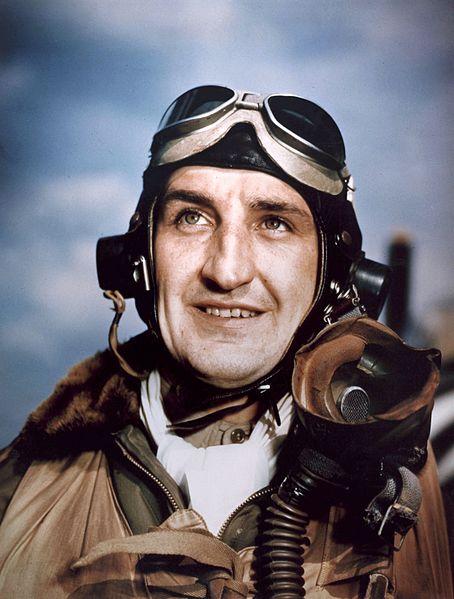
Francis Stanley "Gabby" Gabreski
Francis Stanley "Gabby" Gabreski in his pilot suit.
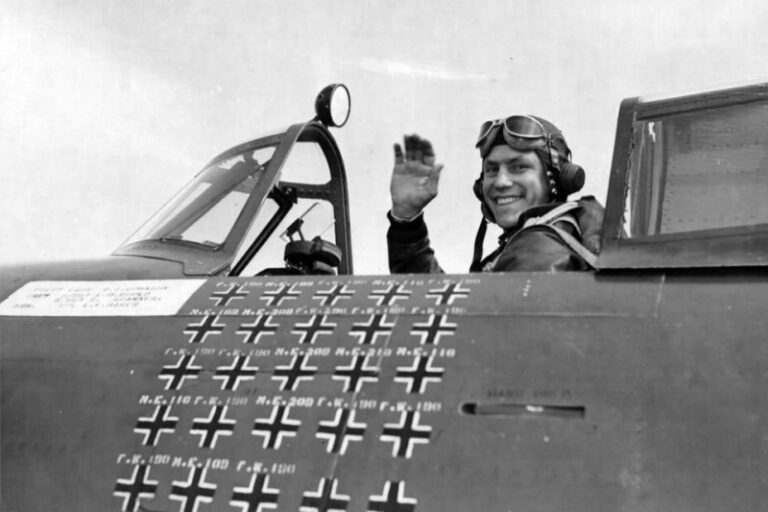
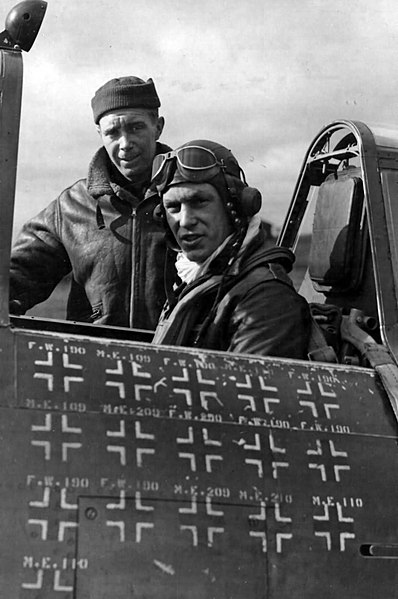
Gabreski in the cockpit of his P-47 after his 28th victory
Gabreski in the cockpit of his P-47 after his 28th victory.

Francis Stanley “Gabby” Gabreski was one of the most renowned American fighter pilots of World War II and the Korean War. Born on January 28, 1919, in Oil City, Pennsylvania, Gabreski developed a passion for aviation at a young age. He attended Notre Dame University for a year before enlisting in the United States Army Air Corps in 1940.

During World War II, Gabreski flew P-47 Thunderbolts in the European Theater of Operations, primarily with the 56th Fighter Group. He quickly established himself as an exceptional pilot, earning a reputation for his aggressive flying style and marksmanship.
Gabreski became one of America’s leading aces of the war, credited with shooting down 28 enemy aircraft. He achieved this remarkable feat despite enduring his share of challenges, including being shot down himself and evading capture by German forces for several months.
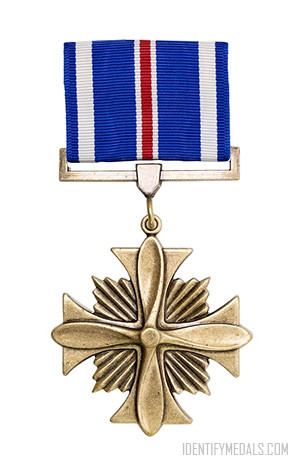
In addition to his combat success, Gabreski’s leadership qualities were highly regarded. He eventually rose to the rank of colonel and commanded the 61st Fighter Squadron, where he continued to inspire his fellow pilots with his courage and determination.

After World War II, Gabreski remained in the military and transitioned to jet aircraft during the Korean War. He flew the F-86 Sabre and added six more aerial victories to his tally, making him one of the few pilots to achieve ace status in both World War II and the Korean War.

Medals and Awards

#4 - Captain David McCampbell

Score: 34

Captain David McCampbell (January 16, 1910 – June 30, 1996)
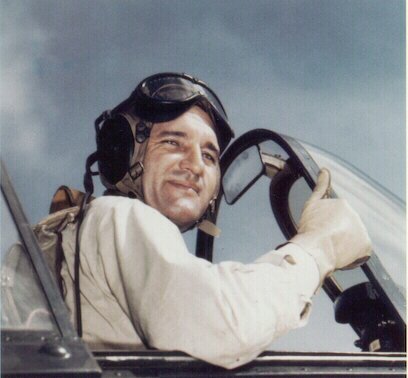
David McCampbell in the cockpit c. 1943.
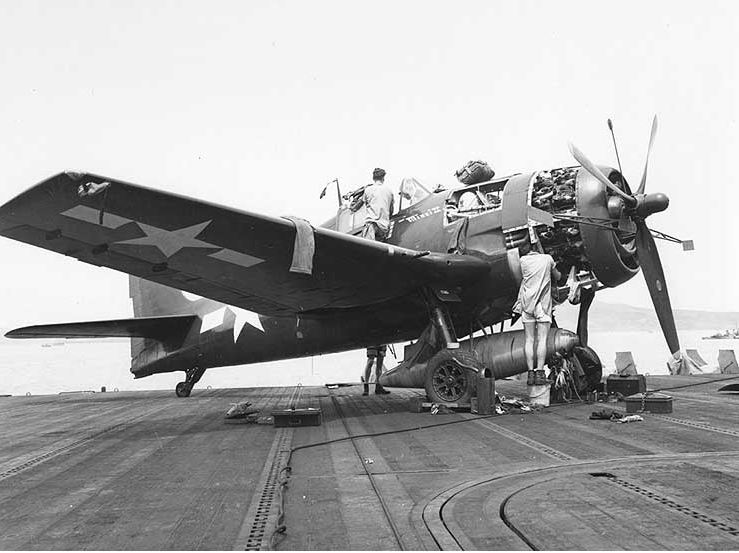
McCampbell's F6F-5 Hellcat fighter on board the aircraft carrier USS Essex 30 July 1944
McCampbell's F6F-5 Hellcat fighter on board the aircraft carrier USS Essex 30 July 1944.

David McCampbell was an American naval aviator and fighter pilot who distinguished himself as one of the top flying aces of World War II. Born on January 16, 1910, in Bessemer, Alabama, McCampbell developed a passion for aviation at an early age. He attended the United States Naval Academy and graduated in 1933.

During World War II, McCampbell served as a fighter pilot in the Pacific Theater of Operations. He initially flew Grumman F4F Wildcats with Fighting Squadron 15 (VF-15) aboard the aircraft carrier USS Essex. McCampbell quickly established himself as an exceptional pilot and leader, earning the respect of his fellow aviators.

McCampbell’s combat prowess became evident during the Battle of the Philippine Sea in June 1944, also known as the “Great Marianas Turkey Shoot.” On June 19, McCampbell led a group of F6F Hellcat fighters from VF-15 in an engagement against Japanese aircraft. In the span of nine minutes, he shot down seven enemy planes, an extraordinary feat that earned him the Medal of Honor, the highest military decoration awarded by the United States.

Throughout the war, McCampbell continued to excel in aerial combat, amassing a total of 34 confirmed aerial victories, making him the U.S. Navy’s all-time leading ace.

Medals and Awards

#5: Robert Samuel Johnson

Score: 27

Robert Samuel Johnson (February 21, 1920 – December 27, 1998)
Robert Samuel Johnson. Photo received 22 May 1944 from Signal Corps, released to public 26 May 1945.
Johnson being greeted by crew chief Pappy Gould on return from a mission in March 1944
Johnson being greeted by crew chief Pappy Gould on return from a mission in March.

Robert Samuel Johnson, commonly known as “Bob” Johnson, was an esteemed American fighter pilot and flying ace during World War II. Born on February 21, 1920, in Lawton, Oklahoma, Johnson developed a passion for aviation from an early age. He attended the United States Military Academy at West Point and graduated in 1942.

During World War II, Johnson joined the U.S. Army Air Forces and became a pilot, flying the P-47 Thunderbolt fighter aircraft. He was assigned to the 61st Fighter Squadron, 56th Fighter Group, known as the “Zemke’s Wolfpack,” named after their legendary leader, Hubert “Hub” Zemke.

Johnson quickly demonstrated exceptional skill and bravery in aerial combat. He became known for his aggressive tactics and tenacity in engaging enemy aircraft. His combat record speaks volumes about his proficiency as a fighter pilot.

One of Johnson’s most notable engagements occurred on January 27, 1944, during a mission over Germany. In a single day, he shot down four German fighters, becoming an ace in a matter of minutes. Over the course of his combat career, Johnson achieved a total of 27 confirmed aerial victories, making him one of the top American aces of World War II.

Johnson’s leadership qualities and combat prowess earned him the respect of his fellow pilots and superiors. He was known for his cool demeanor under fire and his willingness to mentor younger pilots.

After the war, Johnson continued to serve in the U.S. Air Force, holding various command and staff positions. He retired as a colonel in 1966 but remained active in aviation circles, sharing his experiences and insights with future generations of pilots.

Medals and Awards

#6: Colonel Charles Henry "Mac" MacDonald

Score: 27

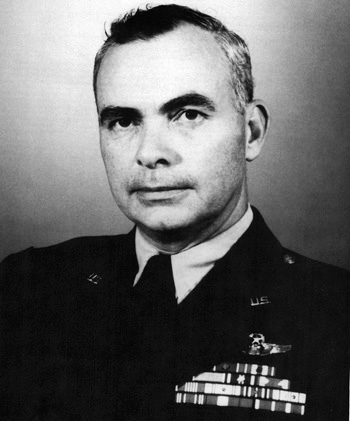
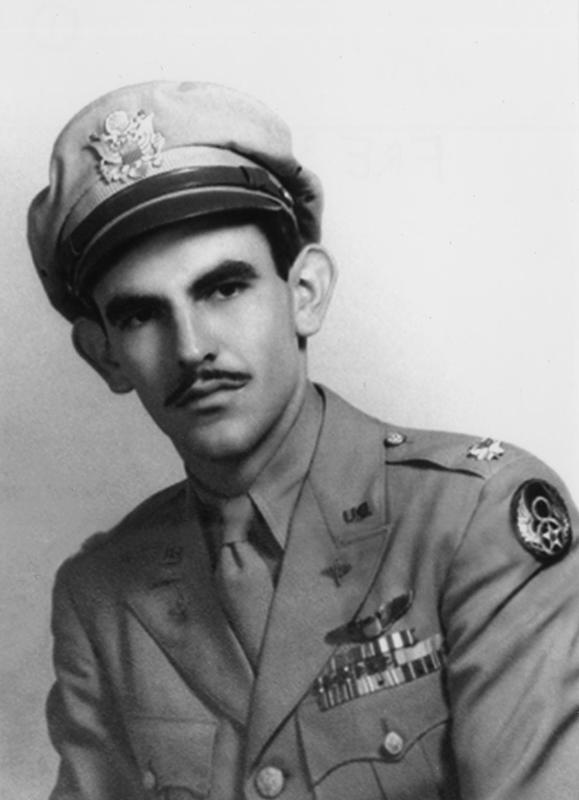
Col. Charles H. MacDonald
Col. Charles H. MacDonald.
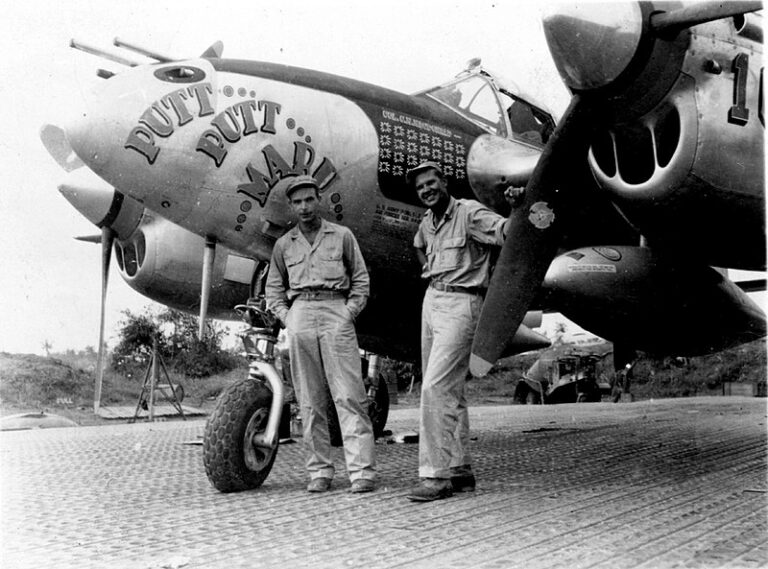
MacDonald and Al Nelson in the Pacific with MacDonald's P-38J Lightning "Putt Putt Maru".

Colonel Charles Henry “Mac” MacDonald was an American fighter pilot and flying ace who distinguished himself during World War II. Born on July 6, 1915, in Pittsfield, Massachusetts, MacDonald developed an early interest in aviation and enlisted in the U.S. Army Air Corps in 1939.

During World War II, MacDonald served as a pilot in the European Theater of Operations, flying the P-47 Thunderbolt with the 56th Fighter Group, known as the “Wolfpack.” He quickly proved himself to be a skilled and aggressive pilot, earning a reputation for his tenacity and combat prowess.

MacDonald achieved ace status by shooting down five or more enemy aircraft in aerial combat. He excelled in air-to-air engagements against German fighters, contributing significantly to the air superiority efforts of the Allied forces.

One of MacDonald’s most notable achievements occurred on January 11, 1944, during a mission over Germany. Flying his P-47 Thunderbolt, he engaged a large formation of enemy fighters, leading his squadron in a fierce dogfight. In the intense aerial battle, MacDonald shot down four enemy planes, bringing his total number of aerial victories to six.

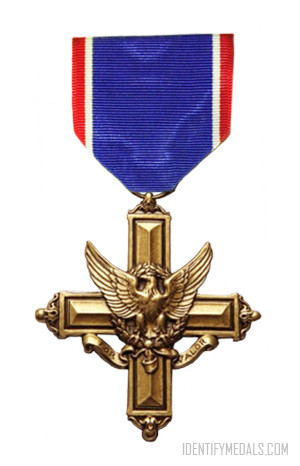
For his exceptional leadership and combat skill, MacDonald was awarded the Distinguished Service Cross, the second-highest military decoration of the United States Army, for his actions on that day.

Medals and Awards

#7: George Earl Preddy Jr.

Score: 26.8

George Earl Preddy Jr. (February 5, 1919 – December 25, 1944)
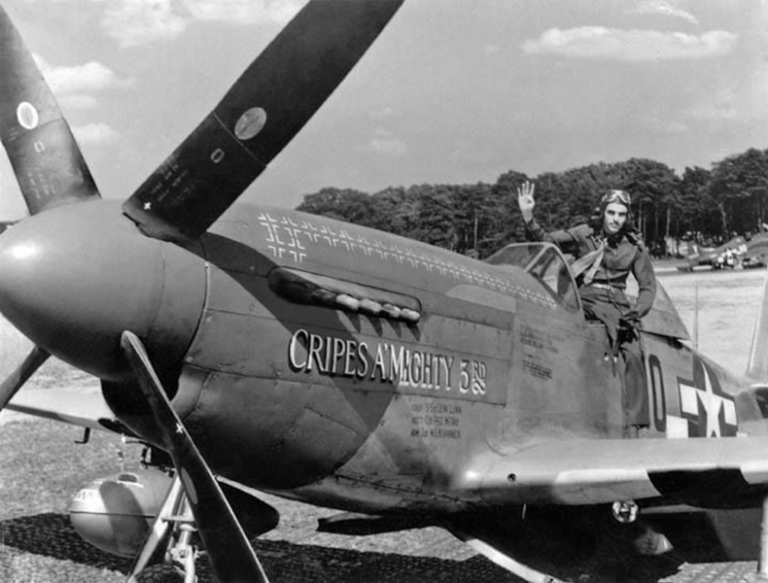
Major George E "Ratsy" Preddy Jr. of the 352nd Fighter Group in the cockpit of his P-51 Mustang
Major George E "Ratsy" Preddy Jr. of the 352nd Fighter Group in the cockpit of his P-51 Mustang.

George Earl Preddy Jr. was an American fighter pilot and one of the top-scoring aces of the United States Army Air Forces (USAAF) during World War II. Born on February 5, 1919, in Greensboro, North Carolina, Preddy grew up with a passion for flying and joined the USAAF in 1941.

Preddy initially flew P-40 Warhawks in North Africa before transitioning to the P-51 Mustang, where he achieved the majority of his victories. Known for his exceptional marksmanship, Preddy quickly rose to prominence as a skilled and aggressive fighter pilot.

Preddy’s combat record includes numerous aerial victories against enemy aircraft, earning him the title of ace. He demonstrated exceptional skill and courage in air-to-air combat, often leading his squadron with determination and tactical acumen.

One of Preddy’s most significant engagements occurred on Christmas Day in 1944 during the Battle of the Bulge. Leading a group of P-51 Mustang, Preddy intercepted a formation of German fighters and bombers over Belgium. In the ensuing dogfight, he shot down multiple enemy aircraft, including several Focke-Wulf Fw 190 fighters.

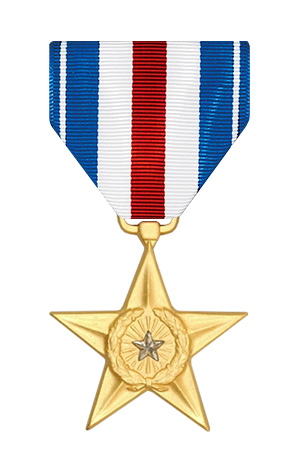
During his illustrious career, Preddy achieved a total of 26 confirmed aerial victories, making him one of the top-scoring American aces of World War II. His achievements in combat earned him numerous awards and decorations, including the Distinguished Service Cross, Silver Star, and Distinguished Flying Cross.

Medals and Awards

#8: Joseph Jacob "Joe" Foss

Score: 26

Joseph Jacob Foss (April 17, 1915 – January 1, 2003)
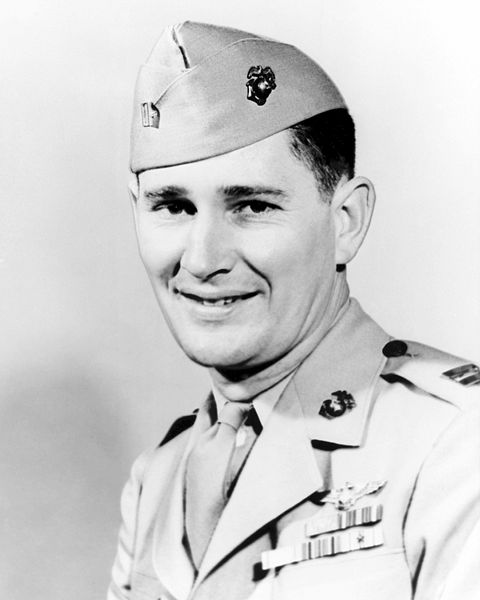
Captain Joe Foss, U.S. Marine Corps.
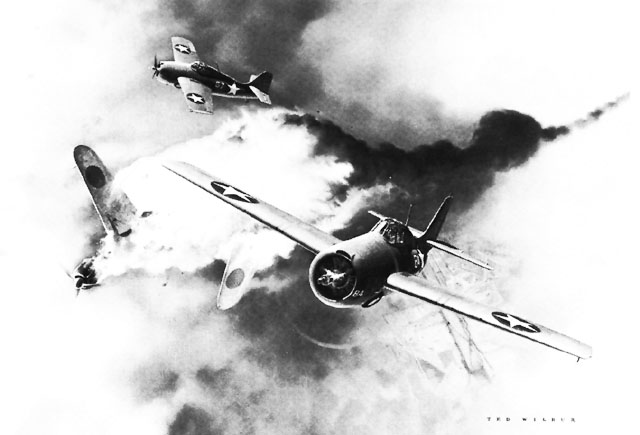
Watercolor of U.S. Marine Captain Joe Foss shooting down a Zero over Guadalcanal in October 1942
Watercolor of U.S. Marine Captain Joe Foss shooting down a Zero over Guadalcanal in October 1942.

Joseph Jacob Foss was an American fighter pilot and flying ace who achieved remarkable success during World War II. Born on April 17, 1915, in Sioux Falls, South Dakota, Foss developed a passion for aviation from a young age.

Foss joined the United States Marine Corps (USMC) in 1940 and quickly distinguished himself as an exceptional pilot. He initially flew Grumman F4F Wildcats and later transitioned to the newer F4U Corsair.

During his service in the Pacific theater, Foss demonstrated exceptional courage and skill in aerial combat, earning a reputation as one of the top fighter pilots of the war. He was known for his aggressive tactics and sharp shooting abilities.

Foss’s combat record includes 26 confirmed aerial victories, making him one of the leading American aces of World War II. His most notable achievements came during the Guadalcanal Campaign, where he played a pivotal role in defending the strategic island from Japanese air attacks.

On October 9, 1942, Foss shot down an impressive three Japanese aircraft in a single engagement, showcasing his exceptional flying skills and combat prowess. For his actions during the Guadalcanal Campaign, Foss was awarded the Medal of Honor, the United States’ highest military decoration.

After the war, Foss continued to serve in various roles, including as a politician, businessman, and television host. He served as the Governor of South Dakota from 1955 to 1959 and later as the Commissioner of the American Football League (AFL).

Medals and Awards

#9: General John Charles Meyer

Score: 26

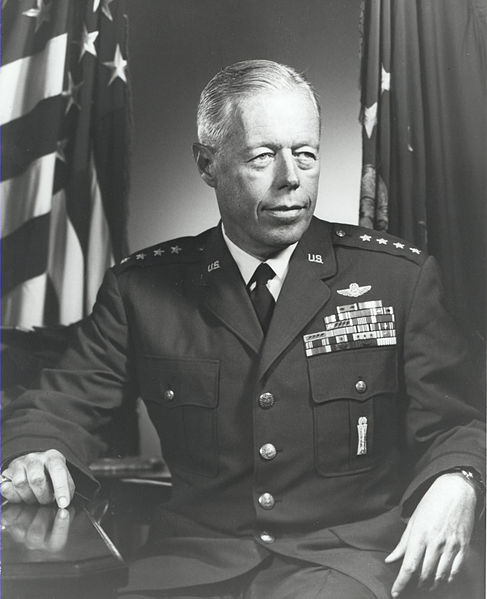
General John C. Meyer
General John Charles Meyer (April 3, 1919 – December 2, 1975)
Air Force Vice Chief of Staff General John C. Meyer with Army Chief of Staff General William C. Westmoreland
Air Force Vice Chief of Staff General John C. Meyer with Army Chief of Staff General William C. Westmoreland.

General John Charles Meyer, born on December 14, 1919, in Chicago, Illinois, was an esteemed American aviator and military leader. He distinguished himself as a skilled fighter pilot during World War II and later rose through the ranks to become a highly respected Air Force officer.

Meyer began his military career in 1941 when he enlisted in the United States Army Air Forces (USAAF) shortly before the United States entered World War II. He underwent flight training and eventually became a fighter pilot.

During the war, Meyer served in the European Theater of Operations, where he flew P-47 Thunderbolts and P-51 Mustangs. He quickly demonstrated his exceptional flying abilities and combat skills, earning a reputation as a courageous and effective fighter pilot.

Meyer’s combat record includes multiple aerial victories against enemy aircraft, making him a flying ace. He also participated in numerous missions, providing close air support to ground forces and conducting bomber escort missions deep into enemy territory.

One of Meyer’s most notable achievements occurred on January 11, 1944, when he engaged a large formation of German fighters over France. In a fierce aerial battle, he shot down several enemy aircraft, demonstrating his exceptional marksmanship and aerial combat tactics.

For his gallantry and skill in combat, Meyer was awarded the Distinguished Service Cross, the United States’ second-highest military decoration for valor in combat. He also received the Distinguished Flying Cross and numerous other awards for his wartime service.

Medals and Awards

#10: Edward Vernon Rickenbacker

Score: 26

Edward Vernon Rickenbacker (born Edward Rickenbacher, October 8, 1890 – July 23, 1973)
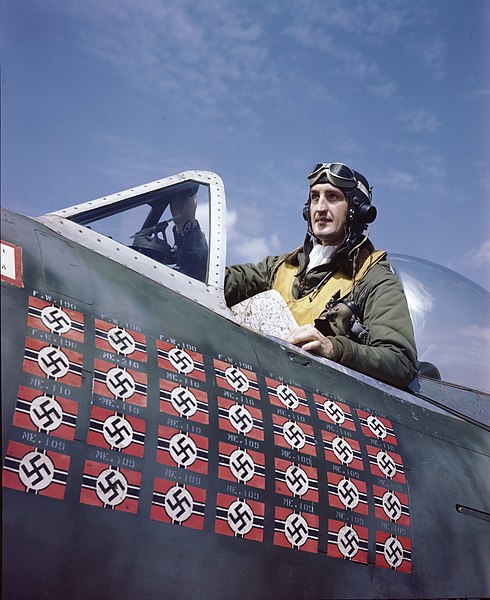
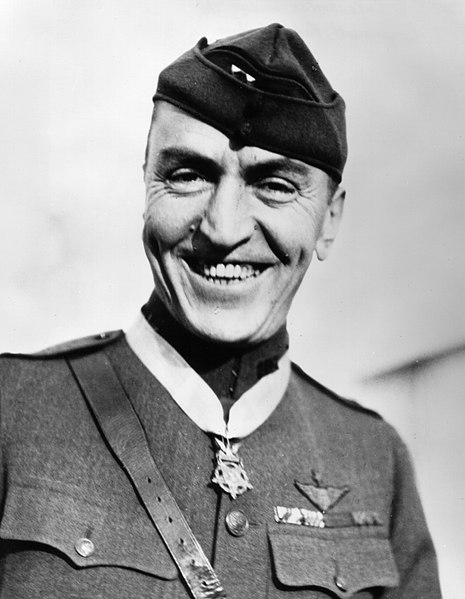
Rickenbacker wearing the Medal of Honor in 1931.
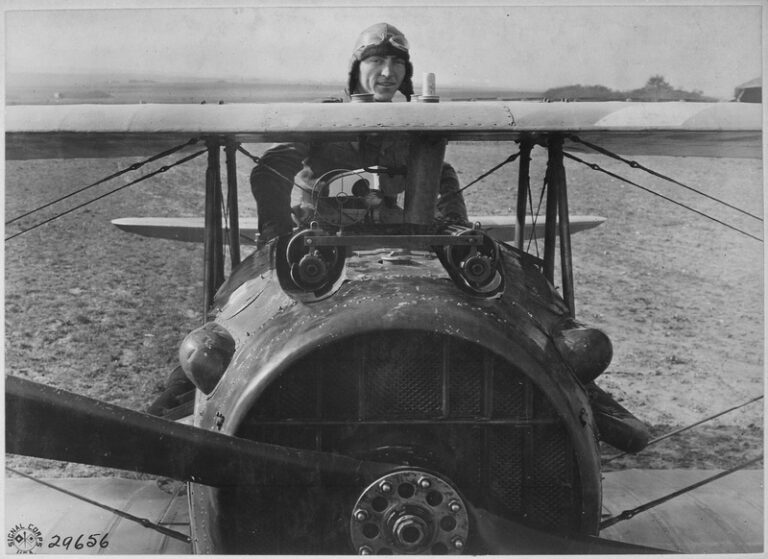
Rickenbacker in his SPAD S.XIII
Rickenbacker in his SPAD S.XIII.

Edward Vernon Rickenbacker, born on October 8, 1890, was an iconic American fighter pilot, race car driver, and business executive. He is best known for his remarkable achievements as a flying ace during World War I, where he became one of the most celebrated and decorated pilots of the conflict.

Rickenbacker’s journey to becoming a flying ace was unconventional. Before the war, he gained fame as a race car driver, competing in numerous prestigious events such as the Indianapolis 500. With the outbreak of World War I, Rickenbacker saw an opportunity to serve his country and enlisted in the United States Army.

Initially assigned to non-combat roles due to his age and civilian background, Rickenbacker persisted in his desire to become a pilot. After completing flight training, he was commissioned as a first lieutenant and assigned to the 94th Aero Squadron, an American fighter unit deployed to the Western Front in France.

Flying the nimble SPAD XIII fighter aircraft, Rickenbacker quickly demonstrated his exceptional flying skills and combat prowess. Despite his initial struggles to adjust to aerial combat, he soon became one of the squadron’s most skilled pilots.

Rickenbacker’s combat record is impressive, with 26 confirmed aerial victories, making him the leading American ace of World War I. His daring exploits in the air earned him the nickname “Ace of Aces” and made him a national hero.

Medals and Awards

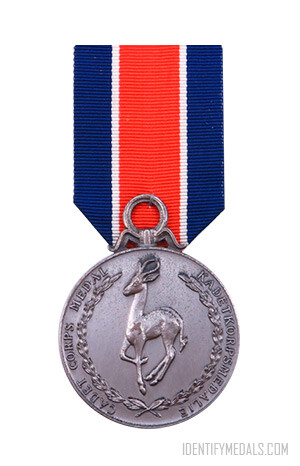
The Cadet Corps Medal

The Cadet Corps Medal was established by the Republic of South Africa in 1966 for twenty years of effective service in the School Cadet Corps.

The Cadet Corps Medal, established by the Republic of South Africa in 1966, honored officers in the School Cadet Corps for twenty years of effective service. A clasp could be earned after thirty years of qualifying service.

Recipients of the Cadet Corps Medal were officers in the School Cadet Corps recognized for twenty years of commendable service, which did not necessarily need to be continuous. An additional clasp could be granted after thirty years of qualifying service.

The initial recipients of the Cadet Corps Medal were announced in South African Defence Force Order 134/67 on November 24, 1967. Subsequently, deserving officers in the Cadet Corps received the medal annually.

The Cadet Corps Medal Design

The Cadet Corps Medal is a silver medallion, 38 millimetres in diameter and 3 millimetres thick, featuring a raised rim. It portrays the prancing springbok emblem of the School Cadet Corps of the South African Defence Force, encircled by a wreath of proteas. The inscription “CADET CORPS MEDAL” appears on the left, with “KADETKORPSMEDALJE” on the right.

On the reverse side, there is a raised rim and the pre-2000 South African Coat of Arms is displayed.

The ribbon measures 32 millimetres wide and consists of an 8 millimetres wide dark blue band, followed by a 1½ millimetres wide white band, repeated in reverse order, and separated by a 13 millimetres wide orange band. These colors represent the pre-1994 South African flag.

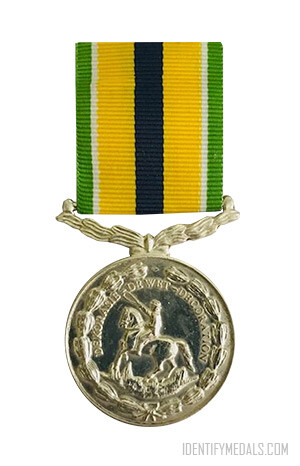
The De Wet Decoration

The De Wet Decoration was established by the Republic of South Africa in 1965 as a military long service award.

The De Wet Decoration, designated by post-nominal letters DWD, was established by the Republic of South Africa in 1965 as a military long service award. Initially, it was exclusively granted to officers serving in the Commandos, the rural civil defense division of the South African Defence Force, in recognition of twenty years of commendable service and exemplary conduct. However, in 1986, eligibility for the decoration was extended to all ranks within the Commandos.

Recipients of the De Wet Decoration could be honored with a clasp after completing thirty years of dedicated service. In instances where the decoration is not worn, individuals holding the clasp adorn a button featuring the letters “DWD” enclosed within a circle on their ribbon bar.

The De Wet Decoration Design

The De Wet Decoration is a circular silver medallion, measuring 38 millimeters in diameter and 3 millimeters in thickness. It features an image of General Christiaan de Wet on horseback during the Second Boer War, surrounded by a wreath of proteas. The inscription “DEKORASIE ~ DE WET ~ DECORATION” borders the depiction.

On the reverse side, the pre-1994 South African Coat of Arms is displayed, with the decoration number impressed or engraved beneath it.

The ribbon measures 32 millimeters in width and consists of alternating bands of green, white, and yellow. Specifically, there is a 3 millimeters wide green band, followed by a 2 millimeters wide white band, and an 8 millimeters wide yellow band. These bands are repeated in reverse order, separated by a 6 millimeters wide dark blue band positioned at the center.

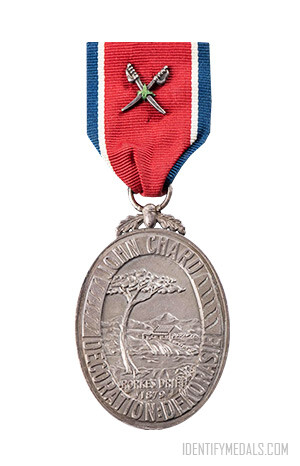
The John Chard Decoration

The John Chard Decoration was a military accolade for long service, established by the Union of South Africa on April 6, 1952.

The John Chard Decoration, designated by the post-nominal letters JCD, was a military accolade for long service, established by the Union of South Africa on April 6, 1952. It was conferred upon members of the Citizen Force of the South African Defence Force in recognition of twenty years of meritorious service and commendable conduct. Additional clasps could be granted for thirty and forty years of service, respectively.

This decoration was bestowed upon all ranks of the Citizen Force for twenty years of efficient service, which did not necessarily need to be continuous. Initially, it was one of only three awards for long service that granted recipients the use of post-nominal letters. The other two were the De Wet Decoration (DWD), presented to Commando members, and the now-defunct Efficiency Decoration (ED).

The John Chard Decoration Design

The John Chard Decoration is an oval silver medallion, measuring 39 millimetres wide, 51 millimetres high, and 3 millimetres thick. It portrays a scene from the 1879 battle at Rorke’s Drift in Natal, featuring a tree, the river, and the mission station. This was the site where Lieutenant Chard and ten of his men earned the Victoria Cross (VC). The depiction is inscribed with “RORKE’S DRIFT 1879” and encircled by the words “JOHN CHARD” at the top and “DECORATION : DEKORASIE” at the bottom.

The reverse side features the pre-1994 South African coat of arms. Original decorations, produced by the South African Mint, exhibit a raised rim and a separately crafted ribbon suspender affixed to the top of the decoration, as shown in the illustration above. The decoration number was either impressed or engraved at the bottom on the rim.

The ribbon mirrors that of the John Chard Medal, measuring 32 millimetres wide. It consists of alternating dark blue, white, and dark red bands, each with varying widths (3 millimetres, 2 millimetres, and 22 millimetres respectively).