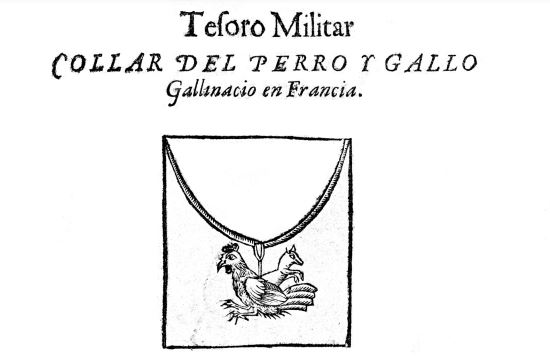

The Order of the Rooster and the Dog

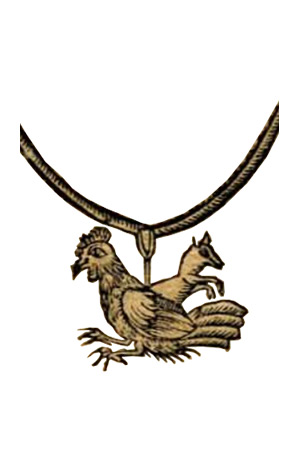
The Order of the Rooster and the Dog is an order of legendary origins in France. It’s not clear whether it actually existed or not.

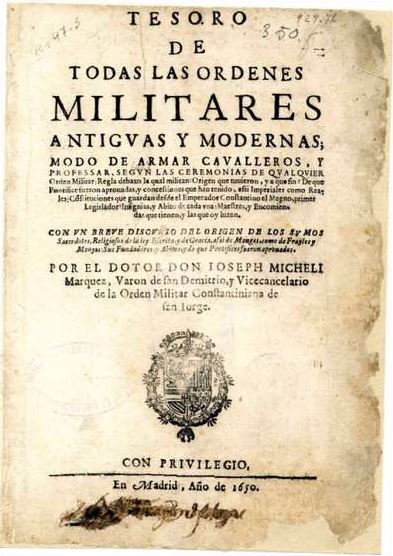
The Order is mentioned in the book “Tesoro de todas las ordenes militares antiguas y modernas” (Treasures of all Old and Modern Military Orders), published in 1650 and held by the Pitts Theology Library. You can see this book at Europeana and the Biblioteca Virtual de Defensa.

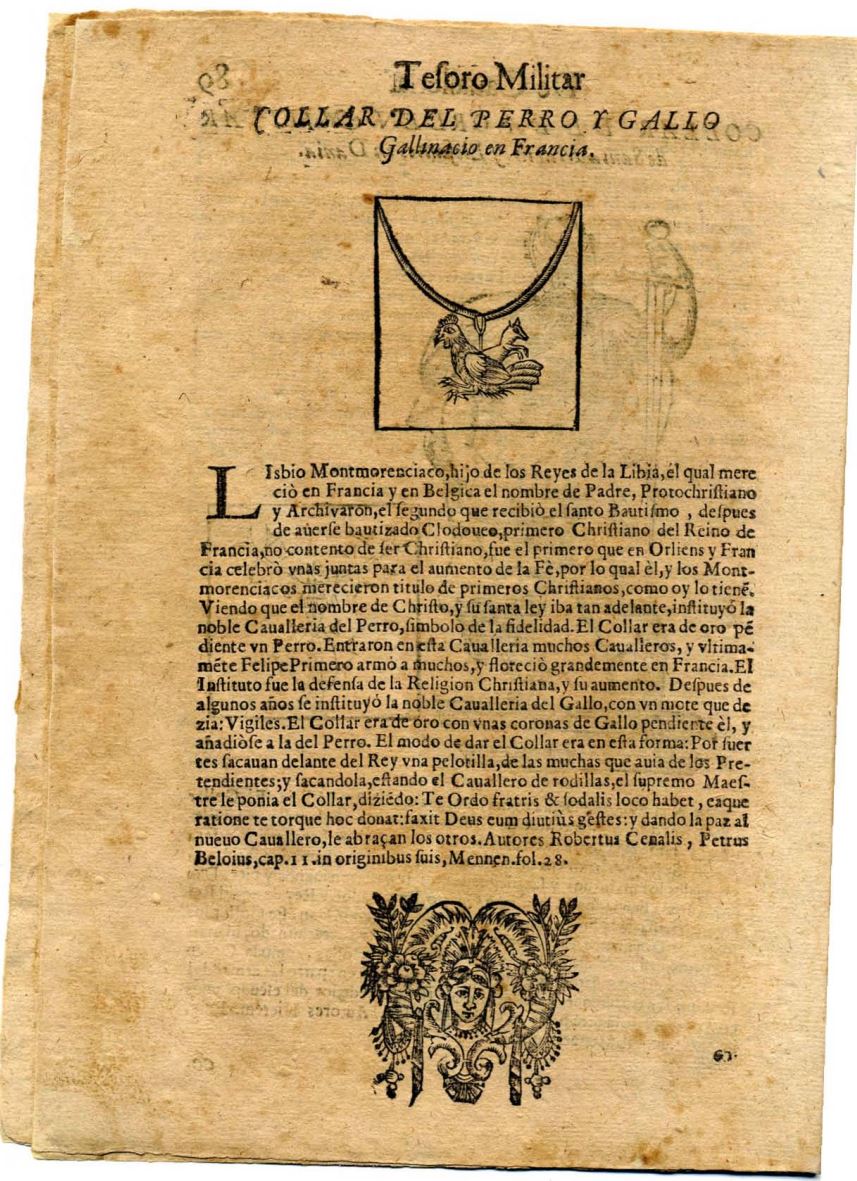
This is a description I translated from the original book:

“Lisbio Montmorenciaco, son of the Kings of Libya, who was called after his father in France and Belgium, baptized Clodoueo, first Christian in the Kingdom of Orliens and France (…) he was the first to celebrate in Orleans and France mass?. Seeing how the name of Christ and his holy faith were ahead, he instituted the noble “Cavalleria del Perro” (Knighthood of the Dog) as a symbol of fidelity. The collar was solid gold, and the pendant had a dog. Many knights were part of it, and ultimately Philip I armed many, and [the order] flowered in France. After some years, they instituted the Noble Knighthood of the Rooster, which had a gold necklace, and added the dog.”

Original source:

The Order of the Garter: The History and Medals of This Order of Chivalry

The Order of the Garter was founded in 1348 and consists of 25 knights. Here is its history, notable characters, and meaning of its insignia.
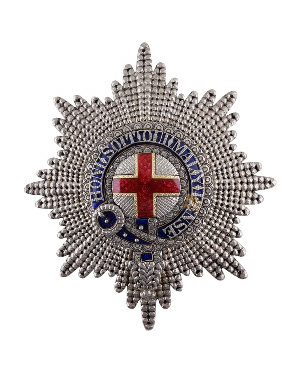
The Order of the Garter was founded in 1348 and consists of 25 knights. In this article, we will explore its history (since it was created by Edward III in England to the present day, as it is still awarded to members and Companions), learn about some if its most notable characters, and review the meaning of its insignia in its different iteration through time.

When Was the Order of the Garter Founded (And Why)?

The Most Noble Order of the Garter was founded in 1348, when King Edward III claimed the French throne. It’s worth noting, however, that the Complete Peerage, a comprehensive work on the aristocracy of the British Isles first published in 1887, states the order had knighted some members in 1344. 

The Victoria Cross Clasps

Although there have been a little less than 1,400 Victoria Crosses awarded, only three men in history have received more than one – enabling them to add a bar to the medal’s ribbon. These were:

Arthur Martin Leake by Bassano

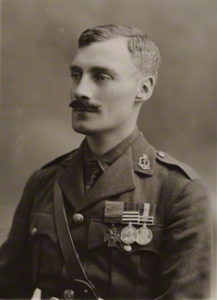
Lt. Col. Arthur Martin-Leake

Lt. Col. Arthur Martin-Leake of the Imperial Yeomanry was the first person to ever receive two Victoria Crosses. The first one, he got during the Boer War in 1902 when he helped several wounded soldiers during a battle in Vlakfontein (he was shot three times and refused aid until everyone else was treated). The second, when he was 40 years old and signed up for the Royal Medical Corps in WW1. He again rescued several injured soldiers and received the bar for his actions. 

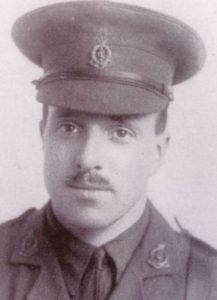
Capt. Noel Godfrey Chavasse

Capt. Noel Godfrey Chavasse

Capt. Noel Godfrey Chavasse was also part of the Royal Army Medical Corps. He received his first Victoria Cross in 1916, for rescuing 20 wounded men in the line of fire in Guillemont, France. He carried several of them 500 yards, from No Man’s Land, under enemy fire. One year later, he continued to treat men and search for injured troops until he was exhausted from his own wounds and died in August 1917. Both his Victoria Cross awards were given to him for actions during WW1. 

Captain Charles Upham

Captain Charles Upham

Captain Charles Upham was a man from New Zealand – and someone the Germans couldn’t seem to keep down! He got his first Victoria Cross in Crete, Greece, in 1941. His citation contained so many acts of gallantry that it’d be hard to pick just one. He was awarded his second Victoria Cross during the First Battle of El Alamein in 1942. Upham was wounded and captured by the Germans. During his time as a POW he made several attempts to escape – so many that he was finally interned at  Colditz Castle for the rest of the war. 

The Sea Battle Badge of the Luftwaffe

The Sea Battle Badge was a German award instituted in 1944 and given to crews of Luftwaffe supply ships, air/sea rescue launches, and vessels.

The Sea Battle Badge was a German award instituted in 1944 and given to crews of Luftwaffe supply ships, air/sea rescue launches, and other special vessels (working on the surface). It’s worth mentioning that Germany had no aircraft carriers or a navy air branch. 

The eligibility criteria were quite broad: Any military or civilian Luftwaffe personnel as eligible – as long as they were not also awarded another badge. There were a number of days at sea required, however:

  • Leaders and crew of supply ships: 60 days in the North or East sea, between 5 and 20 degrees longitude and south of the 60th degree of latitude or 20 days in the Mediterranean, including the Aegean and the Black Sea.
  • Leaders and crew of air and sea rescue boats: 20 days with a minimum of one rescue attempt or a three-hour sea duration each day, or 10 days with a successful rescue.

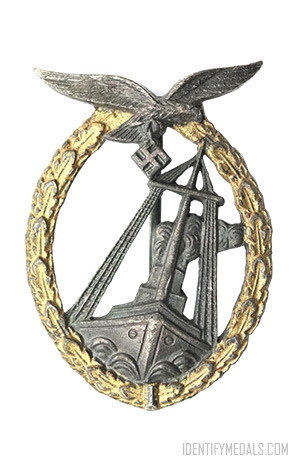
The badge has the Luftwaffe eagle and a swastika with a 30-degree-tilted sea vessel in the center, all surrounded by a gilt wreath made of oak leaves. 

More Luftwaffe War Badges

Awarded to members of the German Luftwaffe for their achievements and contributions to air warfare, the Luftwaffe War Badges symbolized excellence, courage, and skill in aerial combat and support roles. Explore the complete collection below:

The Glider Badge of the Luftwaffe

The Glider Badge of the Luftwaffe was a German award instituted in 1940 and awarded to pilots who had done the glider training course.

The Glider Badge of the Luftwaffe was a German award instituted in 1940 and awarded to pilots who had done the glider training course. 

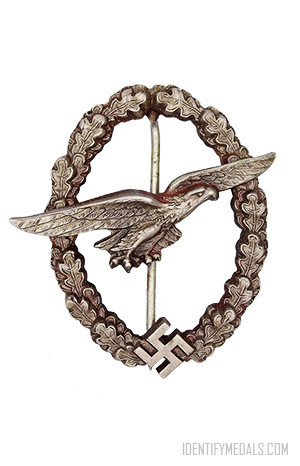
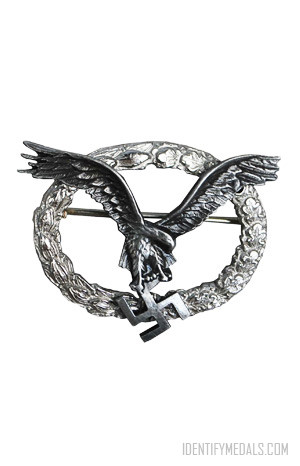
The badge consists of an eagle in flight, with wings spread and spanning the full width of the insignia, and a swastika on top of a circular wreath made of silver oak leaves (unlike other Luftwaffe badges, it’s only oak ones). The Glider Badge was usually made of aluminum, nickel-silver, zinc, or tombak. There was also a cloth version of it. 

More Luftwaffe War Badges

Awarded to members of the German Luftwaffe for their achievements and contributions to air warfare, the Luftwaffe War Badges symbolized excellence, courage, and skill in aerial combat and support roles. Explore the complete collection below:

The Radio Operator Badge of the Luftwaffe

The Radio Operator Badge of the Luftwaffe was a German award given to radio and gunner qualified personnel with training or operations.

The Radio Operator Badge of the Luftwaffe was a German award given to radio operators, gunners, and mechanics (qualified personnel) that had succeeded in the training course (two months at least) and had at least five operational flights. These criteria was shortened if the recipient had been wounded in action.

This badge was later replaced by the Gunner and Flight Engineer Badge of the Luftwaffe. 

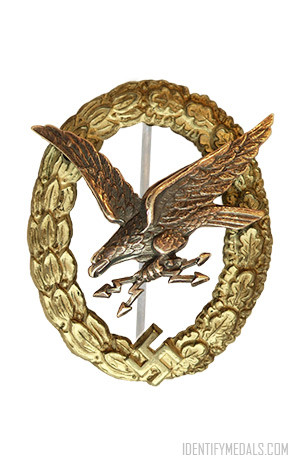
The badge is shaped like an oval and shows an eagle carrying two crossed lightning bolts in its claws. There is also a swastika and a wreath made of oak and laurel leaves. The Radio Operator badges were usually made of different metals such as tombak, silver-nickel, pot metal, and zinc. There was also a cloth version authorized later that has silver wire embroidery. 

More Luftwaffe War Badges

Awarded to members of the German Luftwaffe for their achievements and contributions to air warfare, the Luftwaffe War Badges symbolized excellence, courage, and skill in aerial combat and support roles. Explore the complete collection below:

The Air Gunner and Flight Engineer Badge of the Luftwaffe

The Air Gunner and Flight Engineer Badge was a German award given to Luftwaffe flight engineers, air gunners, and aircrew meteorologists.

The Air Gunner and Flight Engineer Badge was a German award given to (and worn by) Luftwaffe flight engineers, air gunners, and aircrew meteorologists. The requirement was to complete two months of training or to have participated in five operational flights. 

The badge could be awarded at an earlier stage if the recipient had suffered wounds during an operational flight. 

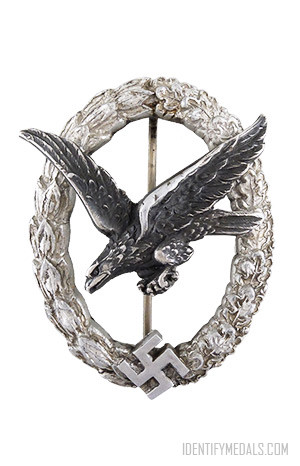
The badge shows an eagle in flight. At the bottom is a swastika. The design is surmounted by a wreath of laurel leaves and oak leaves (the wreath is made of silver). 

The first Air Gunner badges were made in tombak, although there are also examples in kreigsmetal and zinc. The eagle was sometimes made of aluminum and the wreath zinc. 

More Luftwaffe War Badges

Awarded to members of the German Luftwaffe for their achievements and contributions to air warfare, the Luftwaffe War Badges symbolized excellence, courage, and skill in aerial combat and support roles. Explore the complete collection below:

The Observer Badge of the Luftwaffe

The Observer Badge of the Luftwaffe was a German award for qualifying service established in 1935 and instituted in 1936.

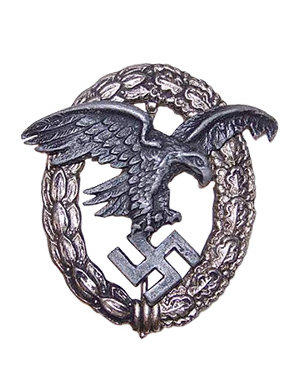
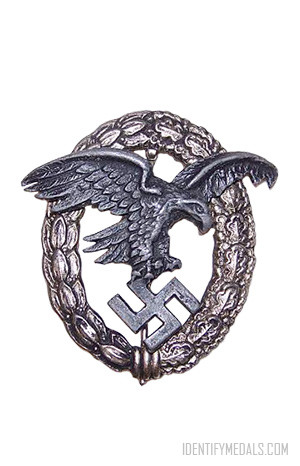
The Observer Badge of the Luftwaffe was a German award for qualifying service established in 1935 (provisions) and instituted in 1936. It was one of the first set of badges for which Reichsmarchall Göring gave specifications. 

The badge was awarded after completing two months of qualifying service and five operational flights as an observer, or if the recipient was wounded while posted as an observer (before completing the 5 flights). 

It’s not known how many Observer badges were awarded. The shape is oval and slightly convex. An eagle is over-imposed on a wreath of laurel leaves (on the right) and oak leaves (on the left). The material used for the Observer badge were tombac, aluminum, and zinc. Measures can vary slightly according to the manufacturer.

More Luftwaffe War Badges

Awarded to members of the German Luftwaffe for their achievements and contributions to air warfare, the Luftwaffe War Badges symbolized excellence, courage, and skill in aerial combat and support roles. Explore the complete collection below:

The Retired Pilot Badge of the Luftwaffe

The Retired Pilot Badge of the Luftwaffe was a German award given to personnel honorably discharged from their flying duties.

The Retired Pilot Badge of the Luftwaffe was a German award given to personnel honorably discharged from their flying duties. The badge was instituted on 26 March 1936 as the Flyer’s Commemorative Badge by the Minister of Aviation and the Commander in Chief of the Luftwaffe. 

The badge was awarded to pilots, observers, air gunners, and paratroopers of the Luftwaffe. It’s estimated that only 800 of these badges were created. They were awarded only before the outbreak of the war. 

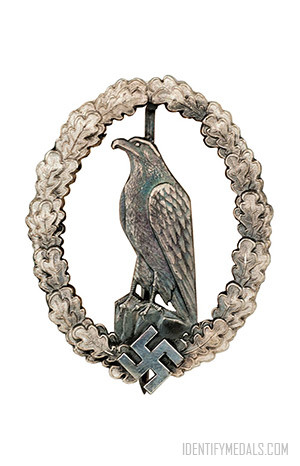
The Retired Pilot Badge features an eagle perched on top of a large rock and it surmounted o a wreath of oak leaves. While the wreath was usually polished silver, the eagle had an oxidized look and was darker. Earlier badges were produced in silver and aluminum, with lower quality ones issued as replacements (these are not official, however). 

Retired Pilot Badge Design

The Retired Pilot Badge features an eagle perched on top of a large rock and it surmounted o a wreath of oak leaves. While the wreath was usually polished silver, the eagle had an oxidized look and was darker.

Earlier badges were produced in silver and aluminum, with lower quality ones issued as replacements (these are not official, however). 

More Luftwaffe War Badges

Awarded to members of the German Luftwaffe for their achievements and contributions to air warfare, the Luftwaffe War Badges symbolized excellence, courage, and skill in aerial combat and support roles. Explore the complete collection below:

The Pilot Badge of the Luftwaffe

The Pilot Badge of the Luftwaffe was a WW2 German award instituted in 1935 by Reichsmarchall Hermann Göring.

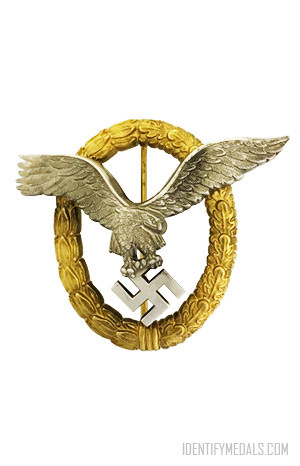
The Pilot Badge of the Luftwaffe was a German award instituted in 1935 by Reichsmarchall Hermann Göring. 

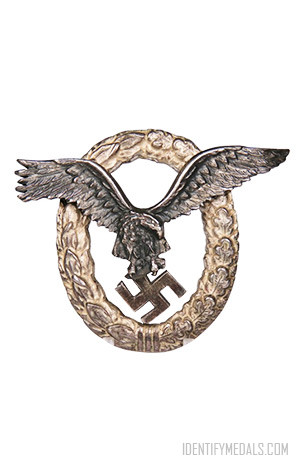
The badge can be found made in several different materials; for example, nickel-silver, aluminium, plated allow, lacquered zinc, etc. The versions made before the ear (and in the early stages of it) tend to be of higher quality, while the later Pilot badges are made of alloys and aluminium (the ones made of this material, which was deemed inadequate, are rarer and more valuable). 

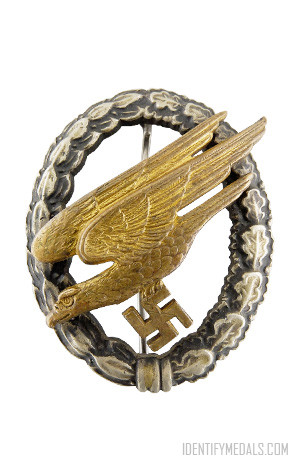
The Pilot Badge shows a massive swooping eagle that is clutching a swastika in its talons. Both are superimposed on a wreath made of laurel leaves on the left and oak leaves o the right. 

More Luftwaffe War Badges

Awarded to members of the German Luftwaffe for their achievements and contributions to air warfare, the Luftwaffe War Badges symbolized excellence, courage, and skill in aerial combat and support roles. Explore the complete collection below:

The Air Crew Badge of the Luftwaffe

The Air Crew Badge of the Luftwaffe was a WW2 German award and one of the earliest flight related badges of the air program.
The Air Crew Badge was a German award and one of the earliest flight-related badges in the country. The badge was used in the infancy of Germany’s air program. It rewarded pilots and crew members of the German Air Sports Association. It’s hard to tell when the badge was implemented, exactly, but it has been in use since 1933.

Because the Luftwaffe was banned by the Versailles treaty, the Association became a cover to the banned German Air Force until April 1st, 1935. That’s when the Luftwaffe gained official sanction.

The Air Crew Badge became the official Pilot-Observer badge of the Luftwaffe on January 19th, 1935 and was soon replaced by a newer version and then removed from circulation.  This makes it one of the most difficult and rarest of all the Luftwaffe badges. 

More Luftwaffe War Badges

Awarded to members of the German Luftwaffe for their achievements and contributions to air warfare, the Luftwaffe War Badges symbolized excellence, courage, and skill in aerial combat and support roles. Explore the complete collection below: