Imperial Order of Christ (Brazil)

The Imperial Order of Christ is a Brazilian order of chivalry instituted in 1822 and awarded for notable services to religion.

The Imperial Order of Christ (also known as The Imperial Order of Our Lord Jesus Christ or Imperial Ordem de Nosso Senhor Jesus Cristo in Portuguese) is a Brazilian order of chivalry established on 7 December 1822 and awarded for notable services to religion.

The Order of Christ was instituted by emperor Pedro I of Brazil and is based on the Portuguese Order of Christ, which was founded in 1316-1319 by King Dom Dinis and Pope John XXII. 

Classes of the Order of Christ

The Order of Christ has three grades. These are:

  • Grand Cross: The badge is worn on a sash on the right shoulder.
  • Commander: The badge is worn o a necklet.
  • Knight: The badge is worn on a ribbon on the left side of the chest.

The Order of Christ Medal Design

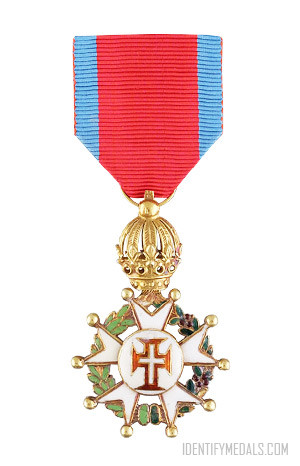
The Brazilian Order of Christ is based on the Portuguese order carrying the same name, with one difference: The badge had an added Imperial Crown of Brazil and the ribbon is different.

The obverse of the insignia for Civil Knights is a Latin cross with silver gilt and red enamel. The border is chiseled and has insets of white enamel. Military Knights is a Maltese cross with ball-tipped finials and a laurel wreath between the arms.

The star of the order has 22 asymmetrical arms of rays and a central white enamel disc with a miniature cross above it. On top of the star is the Sacred Heart of Christ. 

The ribbon of the Order of Christ is red with small blue stripes on each side.
Imperial Order of the Rose

The Imperial Order of the Rose was a Brazilian order of chivalry created by Emperor Pedro I of Brazil in 1829 to commemorate his marriage.

The Imperial Order of the Rose was a Brazilian order of chivalry created by Emperor Pedro I in 1829 to commemorate his marriage to Amélie of Leuchtenberg. 

The order was canceled in 1890 by the interim government of the First Brazilian Republic. When Emperor Pedro II was deposed in 1889, the order continued as a house order being awarded by the Heads of the House of Orleans-Braganza (pretenders of the throne). 

Today, the Grand Mastership of the Order is disputed between the two branches Petrópolis and Vassouras of the Brazilian Imperial family. 

Classes of the Order of the Rose

The Order of the Rose had six degreed:

  • Grand Cross: Limited to 16 recipients and styled “Excellency”.
  • Grand Dignitary: Limited to 16 recipients and styled “Senhor”.
  • Dignitary: Limited to 32 recipients and styled “Senhor”.
  • Commander: With an unlimited number of recipients and styled “Senhor”
  • Official: With an unlimited number of recipients and styled “Honorary Colonel”.
  • Knight: With an unlimited number of recipients and styled “Honorary Captain”.

The Order of the Rose Medal Design

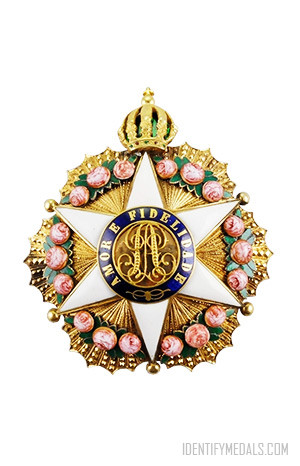
The obverse of the insignia consists of a white star with six-pointed tips joined by a garland of roses. In the center is a medallion with the interlaced letters P and A embossed and surrounded y a blue ferret border that rad “Love and Fidelity”. 

The reverse is the same but with the inscription “2-8-1829” and the legend “PEDRO AND AMÉLIA”.

National Order of Merit (Brazil)

The National Order of Merit is a Brazilian decoration awarded to those who have rendered services relevant to the nation of Brazil.

The National Order of Merit (or Ordem Nacional do Mérito in Portuguese) is a Brazilian decoration awarded to those who have rendered services relevant to the nation of Brazil (both Brazilian citizens over 25 years old and foreigners considered worthy of the distinction).

The Order of Merit was established on 4 September 1946 during the government of President Eurico Gaspar Dutra. The Grand Master of the order is the President of Brazil, and the necklace is always transferred to their successor.

Classes of the National Order of Merit

The Order of Merit has five grades. The number of awards is limited for each of them.

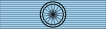
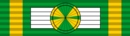
  • National Order of Merit - Grand Cross (Brazil) - ribbon bar.png Grand Cross: 45 awards at a time.
  • National Order of Merit - Grand Officer (Brazil) - ribbon bar.png Grand Officer: 150 awards at a time.
  • National Order of Merit - Commander (Brazil) - ribbon bar.png Commander: 350 awards at a time.
  • National Order of Merit - Officer (Brazil) - ribbon bar.png Officer: 650 awards at a time.
  • National Order of Merit - Knight (Brazil) - ribbon bar.png Knight: Unlimited awards at a time.

The National Order of Merit Medal Design

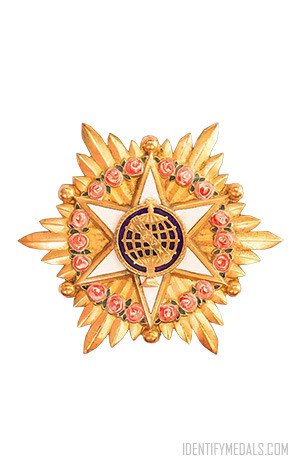
The Order of Merit’s insignia is a gold star with six beams, enameled in white with a wreath of roses. On the obverse, the center is an armillary sphere, also made of gold, in a blue field. The reverse reads the caption: “National Order of Merit“.

The design was inspired by the Imperial Order of the Rose, created by Jean-Baptiste Debret in 1829.

The necklace is made of two chains alternately ornamented with allegorical armillary and pink spheres. 

Order of the Southern Cross

The Order of the Southern Cross is a Brazilian order of chivalry established in 1822 for the coronation of Pedro I.

The Order of the Southern Cross (or Ordem Nacional do Cruzeiro do Sul in Portuguese) is a Brazilian order of chivalry established on 1 December 1822 for the coronation of Pedro I of Brazil, the empire’s first monarch. 

The order is awarded “as a token of gratitude and recognition for those who have rendered significant service to the Brazilian nation”. The Grand Master of the Order of the Southern Cross is the President of Brazil. 

Originally known as the Imperial Order of the Cross (or Ordem Imperial do Cruzeiro in Portuguese), the first knights were also appointed when the monarch was crowned. Although Brazil had shared orders of chivalry with Portugal before the country’s independence, the Order of the Cross was the first purely Brazilian order.

From the proclamation of the Republic until the revolution of 1930 (what’s known as the Old Republic), national orders ceased to exist. This changed when, in 1832, the Order of the Southern Cross was the first to be re-established. Today, it’s considered the senior Brazilian National Order. 

The order continues to be used by both branches of the Brazilian Imperial family, but it’s no longer recognized by the Republic of Brazil. 

Classes of the Order of the Southern Cross

In 1932, the republican version of the Order had the same five grades as the old imperial version. The Order of the Southern Cross is now awarded in six classes:

  • BRA - Order of the Southern Cross - Grand Cross BAR.svg Grand Collar: The highest rank, usually restricted to foreign Heads of State.
  • BRA - Order of the Southern Cross - Grand Cross BAR.svg Grand Cross
  • BRA - Order of the Southern Cross - Grand Officer BAR.svg Gand Officer
  • BRA - Order of the Southern Cross - Commander BAR.svg Commander
  • BRA - Order of the Southern Cross - Officer BAR.svg Officer
  • BRA - Order of the Southern Cross - Knight BAR.svg Knight

The Order of the Southern Cross Medal Design

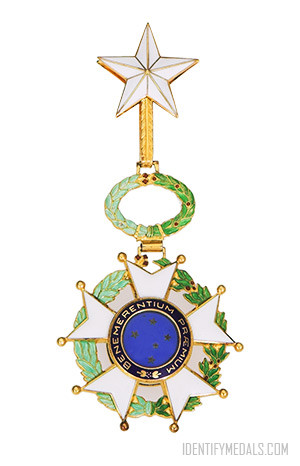
The insignia of the Order of the Southern Cross is a five-point white enamelled star edged with golden silver. It seats on a crown and is surmounted by a garland made of coffee and tobacco leaves. In the obverse, in the center is a blue sky field with the constellation of the Southern Cross, and in the circumference is the inscription “Benemerentium Premium” (“an award for merit”). The reverse shows the effigy of the Republic in gold and the inscription “Federative Republic of Brazil” (Art. 2 of the Regulations).

The Grand Collar of the Order of the Southern Cross is a chain from which the badge of the order is suspended.

The Star of the Order is a plaque modelled after the badge of the Order and is worn on the left breast.

The Order of King Abdulaziz

The Order of King Abdulaziz is a Saudi Arabian order instituted by King Faisal on 20 March 1971 (and formerly called Great Chain of Badr).

The Order of King Abdulaziz is an Order of merit of Saudi Arabia named after Abdulaziz Al Saud, the founder of the modern Saudi state. The order was introduced by decree on 20 March 1971 by King Faisal, although the order had been awarded before – albeit unsystematically. Then, it was usually referred to as the Great Chain of Badr.

The order is awarded to both citizens of Saudi Arabia and foreigners that have shown meritorious service to the Kingdom. The nominations are made by the Council of Ministers, although it’s the King that confers awards himself when he determines it appropriate.

The number of Saudi conferments is limited annually. There can be no more than 20 grand sashes of the distinguished class. Up to 40, 60, 80 and 100 awards can be granted to members of the 1st, 2nd, 3rd and 4th classes, respectively.

The collar of the order is regarded as a distinct honor but confers the highest rank in the Order of Abdulaziz Al Saud.

Classes of the Order of King Abdulaziz

There are six classes to the Order of King Abdulaziz. These are:

  • Special Class: A sash with a pendant is worn on the right shoulder and a star on the left chest.
  • Distinguished First Class: The insignia is worn on a necklet, plus a golden star on the left chest.
  • First Class: Worn on a necklet, plus a silver star on the left chest.
  • Second Class: Worn on a necklet;
  • Third Class: A badge is worn on a ribbon with a rosette on the left chest;
  • Fourth Class: A badge is worn on a ribbon on the left chest.
The Order of King Abdulaziz Medal Design

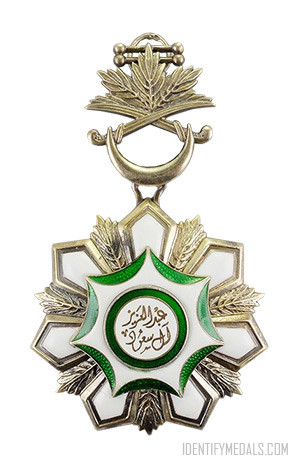
The Order of King Abdulaziz is a seven-pointed gold star with lozenge-shaped arms and white enamel panels with gold laurel branches. 

The suspension is a gold crescent with crossed swords and laurel spray. 

In the center, on the obverse, is a circular white enamel medallion with an inscription in gilt Arabic letters reading ‘Abdul-Aziz al-Saud’ and a gold-edged green enamel ring. 

The reverse is plain gold. 

Earlier versions of the Order of King Abdulaziz were typically produced by Bichay in Cairo, Egypt.

Flying Aces: Erich Alfred Hartmann, the Most Successful Fighter Ace of WW2

Erich Alfred Hartmann was a Geman fighter pilot and the most successful fighter ace of World War II. Here’s his story and medals.

Erich Alfred Hartmann was a Geman fighter pilot. Not only did he fly 1,404 combat missions, but he was also the most successful fighter ace 🔗 of World War II. Here’s his story and the medals he was awarded for his actions.

Who Was Erich Alfred Hartmann?

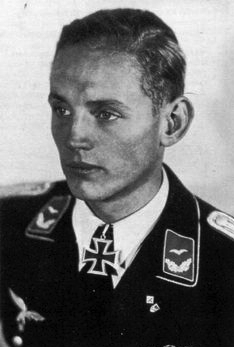
Erich Hartmann as a Luftwaffe Leutnant (1942–1944).
Erich Hartmann as a Luftwaffe Leutnant (1942–1944). Image courtesy of Wikimedia Commons.

Erich Alfred Hartmann was born on 19 April 1922 in Weissach, Württemberg, Germany. He spent his childhood in China because his father had to work there after the economic depression that followed World War I. When the Chinese Civil War erupted in 1928, the family had to return to Germany. 

Hartmann attended Volksschule in Weil im Schönbuch and gymnasium in Böblingen, the National Political Institutes of Education in Rottweil, and Korntal, where he obtained his Abitur. Korntal was also where Hartmann met his wife-to-be, Ursula. 

His flying career began soon after when he joined the Glider training program of the fledgling Luftwaffe. In fact, he was taught to fly by his mother, Elisabeth Wilhelmine Machtholf, one of the first female gliders in the country! Although the Hartmanns had owned a light aircraft, they had been forced to sell it in 1932.

The rise to power of the Nazi Party in 1933 resulted in increased support for gliding – reason why his mother was able to open a blub in Weil im Schönbuch where she served as an instructor. 

The Early Military Career of Erich Alfred Hartmann

Erich Alfred Hartmann’s military career began in 1 October 1940, when he started training with the 10th Flying Regiment in Neukuhren. He soon progressed to making his first flight as an instructor with the the Luftkriegsschule 2 (Air War School 2) in Berlin-Gatow. Hartmann then moved on to advanced flight training at pre-fighter school 2 in Lachen-Speyerdorf on 1 November 1941.

Lachen-Speyerdorf was where Hartmann learned gunnery skills and combat techniques. Between 1 March 1942 and 20 August 1942, he actually learned to fly the Messerschmitt Bf 109 🔗

Although Hartmann was a talented pilot, his training didn’t always go smoothly. In 1942, he ignored regulations to perform acrobatics using his Bf 109, which led to a week of confinement and a loss of two-thirds of his pay. Of this event, Hartmann actually said:

That week confined to my room actually saved my life. I had been scheduled to go up on a gunnery flight the afternoon that I was confined. My roommate took the flight instead of me, in an aircraft I had been scheduled to fly. Shortly after he took off, while on his way to the gunnery range, he developed engine trouble and had to crash-land near the Hindenburg-Kattowitz railroad. He was killed in the crash.

He learned from this experience, as he later passed on his credo to younger pilots. This was the idea that you should fly with your head, not your muscles. 

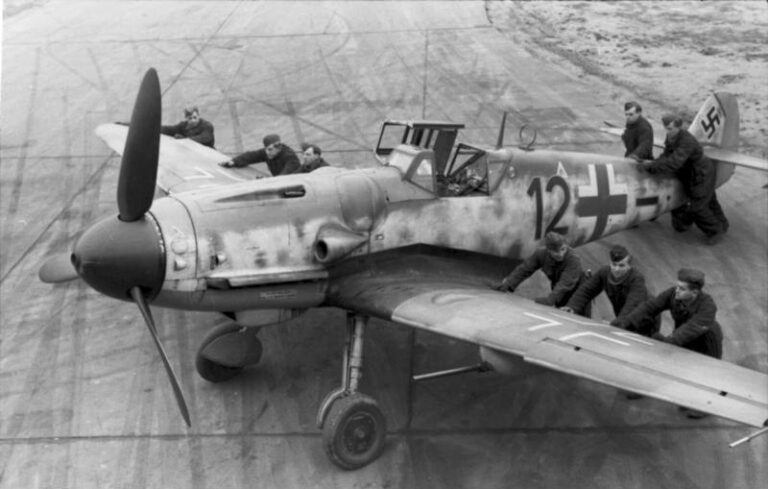
A Messerschmitt Me 109 aircraft.
A Messerschmitt Me 109 aircraft. Image courtesy of Wikipedia.
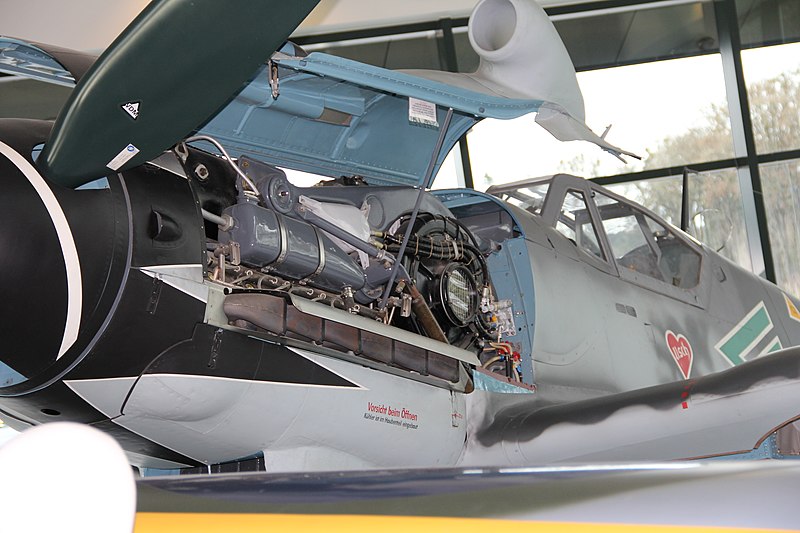
Bf 109 in the Hartmann color scheme.
Bf 109 in the Hartmann color scheme on display at the Evergreen Aviation & Space Museum. Image courtesy of Wikipedia.

Erich Alfred Hartmann During World War II

Erich Alfred Hartmann’s first assignment was as pat of the wing called Jagdgeschwader 52 (or JG 52), on the Eastern Front in the Soviet Union. Although the wing was equipped with Messerschmitts Me 109s, Hartmann and other pilots were instructed with ferrying Junkers Ju 87 Stukas down to Mariupol. During his fist flight, he actually had a brake failure and crashed the Stuka, destroying the controller’s hut. He was then assigned to III Gruppe of JG 52, led by group commander Major Hubertus von Bonin. During this time, he flew with experienced pilots such as Hans Dammers, Josef Zwernemann, and Alfred Grislawski (who said of Hartmann that he was a talented pilot). 

Perhaps one of the reasons why Hartmann became a success had to do also with his place as wingman to Paule Roßmann, who became a sort of teacher to him. with the help of these other pilots, Hartmann soon adopted the tactic “See – Decide – Attack – Break,” which had originated from Roßmann’s solution to being injured in one arm (“Stand off, evaluate the situation, select a target that was not taking evasive action, and destroy it at close range).

Erich Alfred Hartmann's Fighting Techniques

Hartmann was a master of stalk-and-ambush tactics. This meant that he preferred to ambush and fire at close range instead of dogfighting his enemies. When asked about his victories, Hartmann frequently explained that, along with firing at close range, Soviet maneuvers and defensive armament were inadequate, too. 

Here are some of the things that characterized Erich Alfred Hartmann’s method of attack:

  • Hold fire until the enemy aircraft is extremely close (20 meters/66 feet or less).
  • When attacking, unleash a short burst at point blank.

Additionally, Hartmann would also:

  • Only reveal his position at the last minute.
  • Compensate for low muzzle velocity by using higher ones (for exampe, those of the Bf 109 model). 
  • Shoot accurately and use less ammunition.
  • Prevent the adversary from making evasive maneuvers.

Once Hartmann got the kill, he immediately vacated the area. Survival was paramount, as another pilot could re-enter the zone and have combat advantage. 

Hartmann's Fighter Ace Victories - The Total Count

Erich Alfred Hartmann survived 1,400 missiles over the course of the Second World War. In total, he’s believed to have downed 352 allied aircraft (mostly Soviet, but also American). This makes him the most successful fighter ace in history. 

His ability to take on enemy aircraft was so effective, it’s said many Soviet pilots evaded his plane as soon as they would recognize the black tulip he had gotten painted on his aircraft. They’d rather retreat back to their base than face the ace.

Hartmann's Karaya 1 and Black Tulip

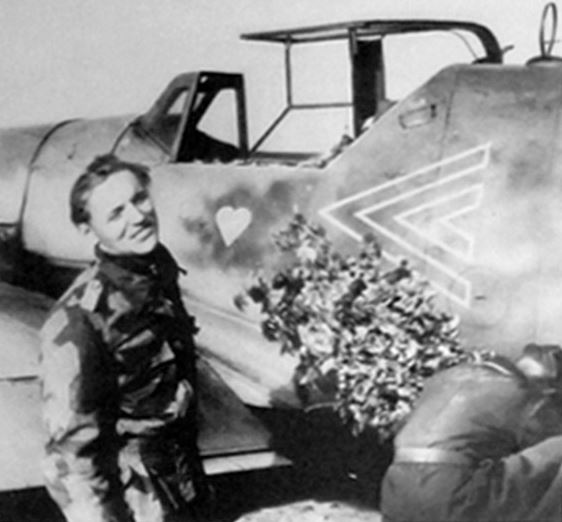
Hartmann used a scheme in the shape of a black tulip on the engine cowling. Soon, Soviet pilots became familiar with both the symbol of the black tulip he had flown on a few occasions and his radio call sign of Karaya 1, and put a price of 10,000 rubles on his head. An interesting fact is that, because many pilots didn’t want to face Hartmann, the Germans would allocate his plane to novices because they could fly it in relative safety. 

Hartmann had the tulip removed on 21 March 1944, after his kill rate dropped due to the reluctance of Soviet pilots. With the symbol gone, his aircraft claimed over 50 victories in the following two months. 

Erich Alfred Hartmann's Military Medals

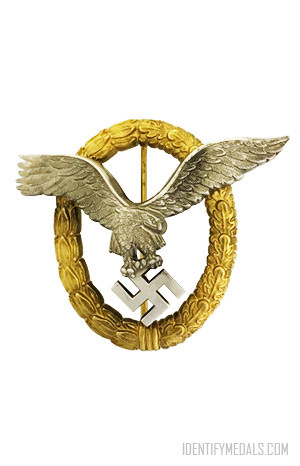
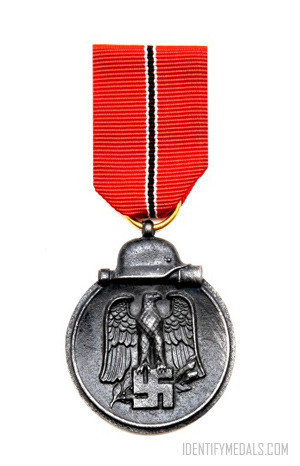
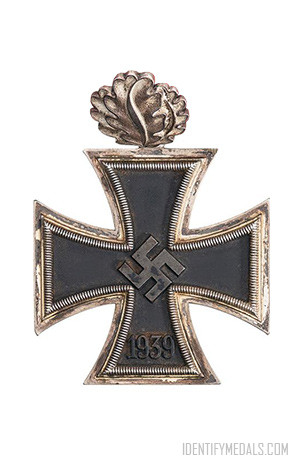
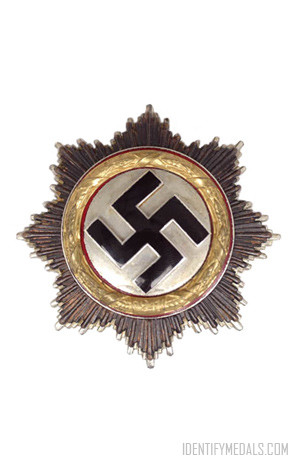
Erich Alfred Hartmann received multiple medals during his career. The first one was the Knight’s Cross of the Iron Cross (or Ritterkreuz des Eisernen Kreuzes in German), which was awarded to him on 29 October 1943. After passing the 3000mark on 24 August 1044, Hartmann was summoned to the “Wolf’s Lair” (Führerhauptquartier Wolfsschanze), Adolf Hitler’s military headquarters close to Rastenburg, where he was awarded the Diamonds to the Knight’s Cross. Other medals given to Hartmann include the Front Flying Clasp of the Luftwaffe in Gold with Pennant “1300”, the Pilot/Observer Badge in Gold with Diamonds, the Eastern Front Medal, the Iron Cross (2nd and 1st class), the Honour Goblet of the Luftwaffe, the German Cross in Gold, and the Knight’s Cross of the Iron Cross with Oak Leaves, Swords and Diamonds.

The Value Of a Purple Heart: A Thorough Guide to The Medal’s Worth

The Purple Heart is a symbol of honor, sacrifice, and bravery. But is there a standard monetary value for this important award?

The Purple Heart award, which is given to members of the United States Armed Forces who are wounded or killed in combat, does not have a monetary value in the same way that a commodity or currency does. It is a symbol of honor, sacrifice, and bravery, and its worth is measured in the recognition and respect it carries. The Purple Heart award is, therefore, not something that is typically bought or sold on the open market.

It is possible to find Purple Heart medals for sale through collectors, auctions, or military surplus stores. The price, however, can vary significantly depending on factors such as the medal’s condition, the recipient’s history, and the overall demand among collectors.

In this guide, we will explore some of the latest average values of the Purple Heart medal and discuss the important ethical considerations you should take into account when dealing with such military awards. I will also include some current auctions, so scroll down if you want to see whether there are any Purple Hearts for sale right now.

What Is The Purple Heart?

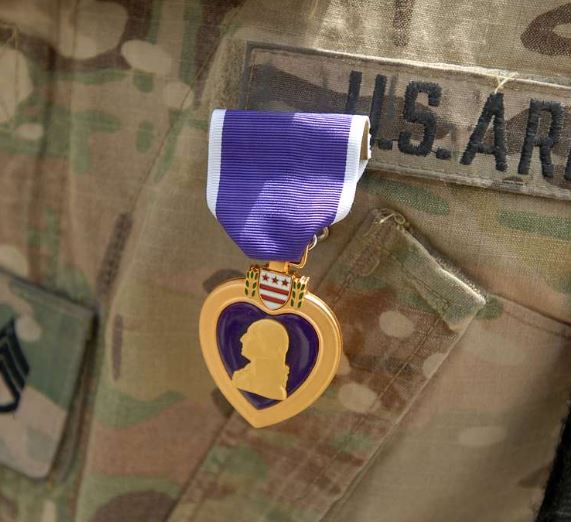
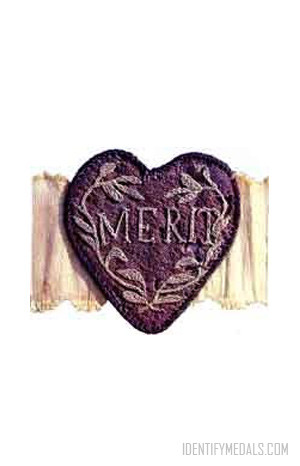
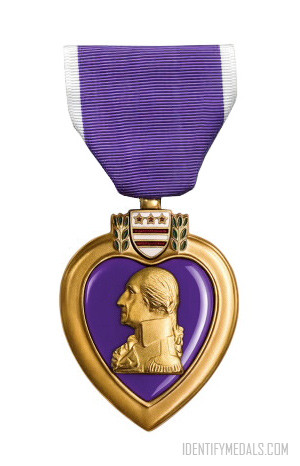
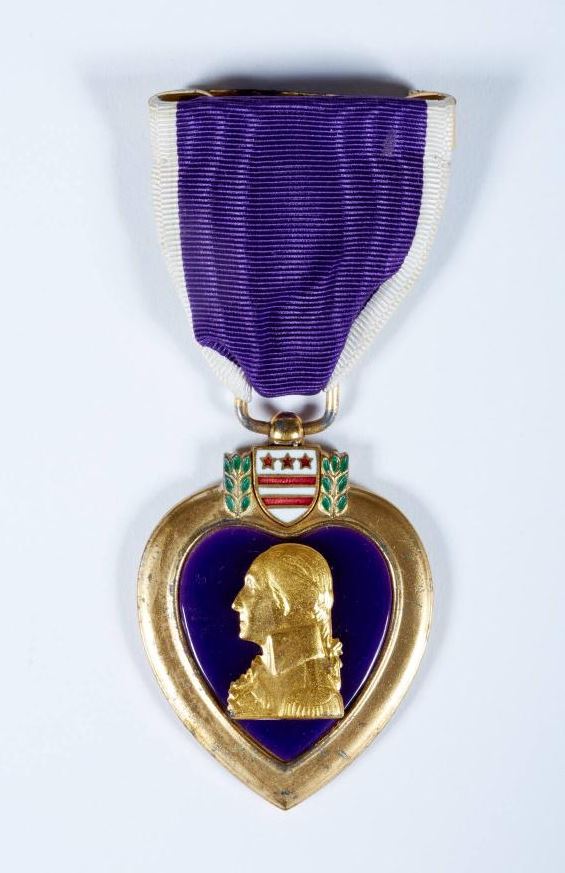
The Purple Heart is a United States military decoration established by General George Washington in 1782 as the Badge of Military Merit. Initially, the decoration was awarded for “any singularly meritorious action.”

In 1932, on the bicentennial of Washington’s birth, the Purple Heart was revived and redesigned as a heart-shaped medal with a profile of George Washington and the inscription “For Military Merit.” The medal is awarded to members of the U.S. Armed Forces who have been wounded or killed in action against an enemy of the United States or as a result of an act of any such enemy, or posthumously to the next of kin of such individuals.

The Purple Heart is a symbol of courage, sacrifice, and devotion to duty, and it is highly esteemed among military personnel and their families. Recipients of the Purple Heart are honored for their bravery and their willingness to make sacrifices for their country.

What's the Average Price of a Purple Heart?

Let’s start by remembering that selling or purchasing military decorations, including the Purple Heart, is regulated by federal law, and there are restrictions and requirements for buying, selling, and owning such items depending on where you are. 

The Purple Heart is not awarded with any financial compensation attached to it. Its value lies in the recognition of the recipient’s sacrifice and service to their country.

Having said this, if we look at the latest auctions, we can see that most prices for Purple Hearts range from $65+ USD for bronze gilt/enameled versions to over $800 for specific decorations. Purple Hearts from World War II are also pricier, typically valued between $300 to $400 due to the continued interest in that era. For instance, one of the most decorated American combat soldiers of World War II, Audie Murphy received multiple Purple Hearts. His medals are highly valuable due to his fame and heroic actions.

Here are a few examples of past real auctions of Purple Hearts from various auction platforms and houses:

  • Heritage Auctions: In August 2018, a Purple Heart awarded posthumously to a World War II Marine killed in action at Iwo Jima sold for $4,182. The medal was accompanied by an official citation, photographs, and other personal effects, significantly increasing its value due to the provenance and historical significance.

  • Bonhams: In a June 2015 auction, a collection including a Purple Heart awarded to a soldier who served during World War I and World War II sold for $2,500. This grouping also contained other service medals and documents that detailed the soldier’s service history.

  • RR Auction: In February 2019, a Purple Heart awarded to a sailor killed during the attack on Pearl Harbor was sold for $7,500. The medal came with a certificate, personal letters, and photographs, providing a rich historical context and increasing its appeal to collectors.

  • Goldin Auctions: In September 2020, a Vietnam War Purple Heart awarded to a soldier who was killed in action, along with his Silver Star and Bronze Star medals, sold for $3,000. The comprehensive nature of the medal group and the detailed history of the recipient contributed to the final price.

  • Sotheby’s: In a notable auction, a Purple Heart awarded to a World War I soldier, along with his Distinguished Service Cross, was sold for $15,000. This medal grouping was particularly valuable due to the Distinguished Service Cross, one of the highest military decorations awarded for extraordinary heroism.

Factors Influencing Purple Heart Values

The value of a Purple Heart is determined by several factors including the recipient’s history, the condition of the medal, and the accompanying documentation.

Recipient’s History

The value of a Purple Heart is significantly influenced by the history of its recipient. Medals awarded to notable individuals or those involved in significant historical events tend to have higher value. For example, a Purple Heart awarded to a soldier involved in D-Day or the Battle of Iwo Jima would be more valuable due to the historical significance of these events.

Condition of the Medal

The physical condition of the medal is a crucial factor. Medals in mint or excellent condition fetch higher prices compared to those that are damaged or worn. The presence of the original ribbon, presentation case, and any accompanying insignia also enhances the medal’s value.

Accompanying Documentation

Documentation that accompanies a Purple Heart, such as award certificates, letters of commendation, or personal letters, adds significant value. These documents provide provenance and authenticity, making the medal more desirable to collectors. For instance, a Purple Heart with detailed service records and personal stories of the recipient can command a higher price.

What Was The Most Expensive Purple Heart Ever Sold?

The most expensive Purple Heart ever sold was a medal posthumously awarded to John F. Kennedy, which was auctioned at RR Auction in September 2014 for $200,000.

John F. Kennedy, the 35th President of the United States, received the Purple Heart for injuries he sustained during his service in World War II. As a Navy lieutenant, Kennedy was serving as the commander of Motor Torpedo Boat PT-109 in the Pacific theater when his boat was rammed by a Japanese destroyer on August 2, 1943. The collision caused the boat to split in two, and Kennedy and his crew were thrown into the water.

Despite suffering from back injuries, Kennedy managed to help his injured crew members to safety and led them to a nearby island, where they awaited rescue. For his courageous actions and leadership during this incident, Kennedy was awarded the Purple Heart, among other decorations.

If you’re interested in reading more about Kennedy’s Purple Heart, the Purple Heart Foundation tells the full story.

The Purple Heart Medal was presented to J. G. Lieutenant John F. Kennedy for his service in WWII.
The Purple Heart Medal was presented to J. G. Lieutenant John F. Kennedy for his service in WWII. Image courtesy of the National Archives.

Celebrating Purple Heart Awardees with Collectibles

You can buy Purple Heart memorabilia and collectibles on eBay. The platform offers a variety of items related to the Purple Heart, including medals, certificates, and other memorabilia. When searching, you’ll find both original and reproduction items, so it’s important to carefully read descriptions and verify the authenticity of the collectibles.

Right Now on eBay 
Clicking a link to eBay may result in a referral commission being paid if a purchase is made.
Loading...

Authentication Tips for Purple Heart Medals

Check for Official Markings

  • Engraving: Authentic Purple Hearts often have the recipient’s name engraved on the back. Posthumous medals may include the words “For Military Merit.”
  • Material and Quality: Genuine medals are made from high-quality materials and exhibit precise craftsmanship. Be wary of poor-quality reproductions.

Consult Experts and Reputable Dealers

  • Professional Appraisers: Seek out appraisers with experience in military memorabilia.
  • Reputable Dealers: Purchase from well-known and trusted dealers who specialize in military medals and have good reviews.

Documentation and Provenance

  • Original Paperwork: Accompanying documentation such as award certificates, military service records, and personal letters enhance authenticity.
  • Service History Verification: Cross-check the recipient’s service history and medal award dates with official military records.

Research and Community

  • Online Forums and Groups: Join forums and groups dedicated to military memorabilia for advice and verification from enthusiasts and experts.
  • Auction Houses: Review listings and sales from reputable auction houses for examples and comparisons.

Everything You Always Wanted to Know About Olympic Medals

An article covering the most common questions about Olympic medals, from how they are made to how much a gold one is worth.

Olympic medals are awarded to people competing in the Olympic Games, a leading international sporting event featuring competitions with thousands of athletes from all over the globe. 

In this article, we will go through the most common questions about Olympic medals, from how they are made to how much a gold one is worth. We got some ground to cover, so let’s get started. 

What are the Olympic Games and Their Medals?

The Olympic Games are held every four years (with some exceptions), alternating between Summer and Winter Olympics every two years. Although you might be quite familiar with these events (watching them on TV or, if you’re lucky, attending them in person), you might not be aware that the games are more than a thousand years old! That’s right, the Olympic Games we watch today are inspired by the original and ancient Olympic Games held in Olympia, Greece, in the 8th century. 

The Medal Ceremony

The people finishing in first, second, and third place in Olympic events receive medals (made of gold, silver, and bronze, respectively). These medals are awarded at a medal ceremony held after the conclusion of the event. The three winners stand on top of a three-tiered rostrum (or pulpit) and are awarded the medals by a member of the IOC. Then, the national flags of each athelete is raised, and the national anthem of the gold winner is played. 

Most Commonly Asked Questions About Olympic Medals

There are plenty of articles online covering everything about the Olympic Games, but this site specializes in medals, so let’s go through a few facts and stories about them, shall we?

The first Olympic Games medals designed by the Paris Mint.

Are Olympic Gold Medals Really Made of Gold?

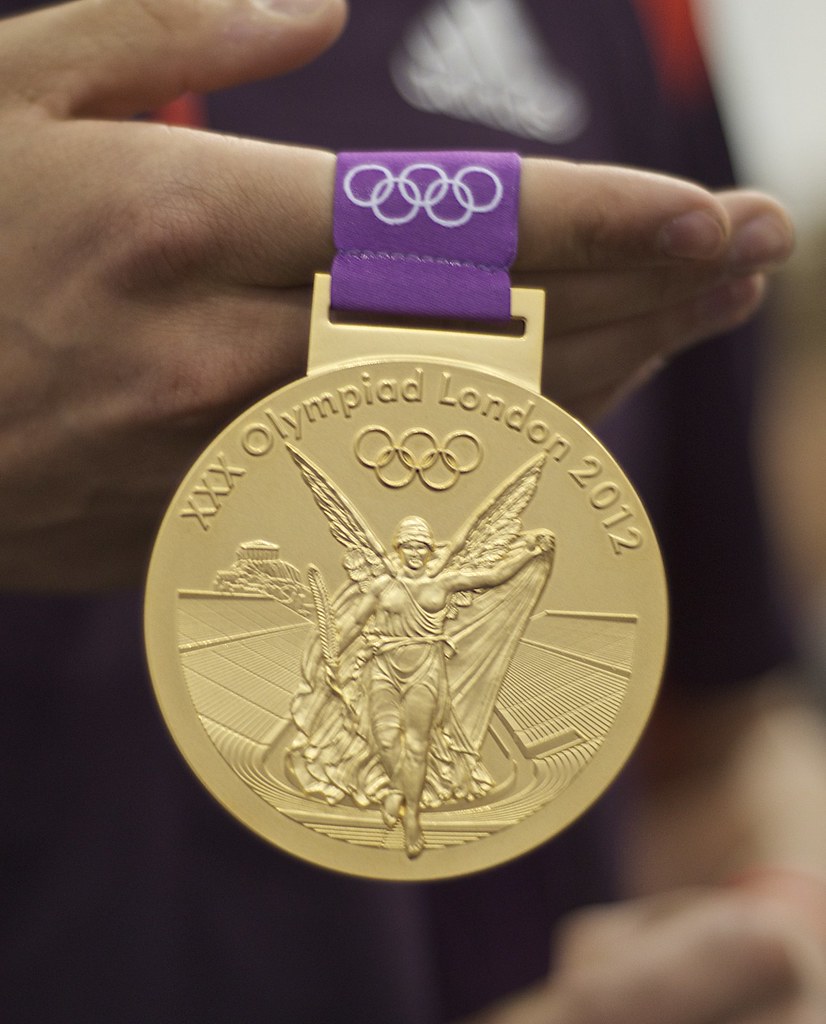
Kind of! Until 1912, gold medals awarded to sport event winners were made of solid gold. However, this regulation changed over time. Today, an Olympic gold medal must have at least six grams of pure gold. The gold in these medals is usually on the plating. Silver medals, in case you were wondering, are made of pure silver and bronze ones are 95% copper and 5% zinc. 

How Much Are Olympic Medals Worth?

You might be surprised to hear that Olympic medals (gold medals in particular, as they are the most sought-after) are not extremely expensive. In fact, if you look at listings today, you might find medals from 2020 Tokyo for as little as $500. Silver medals are worth around $250 and bronze medals… well, let’s just say some of them cost as much as a coffee.

Who Designed the Olympic Medals?

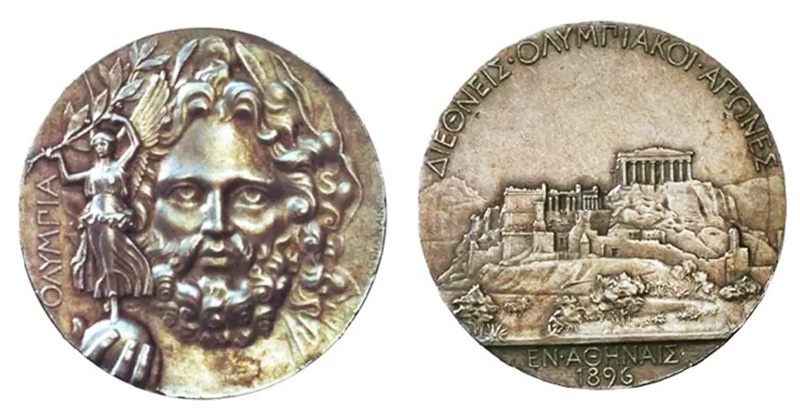
The first Olympic medals, which were created in 186, were designed by Jules-Clément Chaplain, a French sculptor. They depicted Zeus holding Nike, the Greek goddess of victory (and, on the reverse, the Acropolis). These Olympic medals were struck in the Paris Mint (the 1900 Olympic Games were held in that city). Since then, medals for the games are the responsibility of the city hosting the event.

Where to Buy Olympic Medals

Right Now on eBay 
Clicking a link to eBay may result in a referral commission being paid if a purchase is made.
Loading...

Medal of Bravery (Canada)

The Medal of Bravery (Médaille de la Bravoure in French) is a decoration given to Canadian citizens (civilians or members of the forces) for acts of bravery in hazardous circumstances. The medal is within the Canadian system of honors and is the third-highest award for bravery. It was created in 1972 and can be presented to both living and deceased individuals. Recipients the ability to use the post-nominal letters MB.

The Medal of Bravery Design

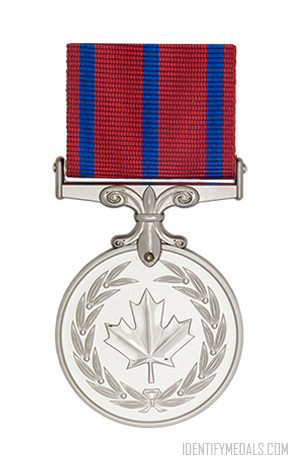
The Medal of Bravery is a silver medal measuring 31.8 millimetres (1.25 in) in diameter.

The obverse of the medal bears a maple leaf surrounded by a laurel wreath. On the reverse is the Royal Cypher of the reigning monarch, a St. Edward’s Crown, and the inscription BRAVERY • BRAVOURE. The name and rank of the recipient is engraved on the medal’s edge.

The insignia is worn on the left chest, on a 31.8mm wide red with three vertical blue stripes ribbon.

For men, the medal hungs from a bar, and for women, on a ribbon bow.

Individuals already possessing a Medal of Bravery can be awarded the decoration again (for subsequent acts of bravery), in which case a silver medal bar bearing a maple leaf is added on the original ribbon. 

The Order of the Lion (France)

The Order of the Lion was an Order of Knighthood established by Enguerrand I of Coucy, to immortalize his killing of one such dangerous animal.

The Order of the Lion was an Order of Knighthood established by Enguerrand I of Coucy (some sources say it was actually his son Enguerrand II who created it) to immortalize his killing of one such dangerous animal.

Enguerrand I was the Lord of Coucy from 1086 until 1116 when he died. He was a man of ‘many scandals,’ including adultery and divorce. He’s also said to have kidnapped Sibyl of Château-Porcien, wife of Godfrey I, Count of Namur.

This Order of Knighthood was described by Gustav Adolph Ackermann, who mentions it as part of the historical orders of France.