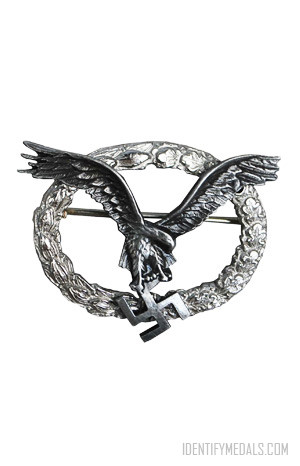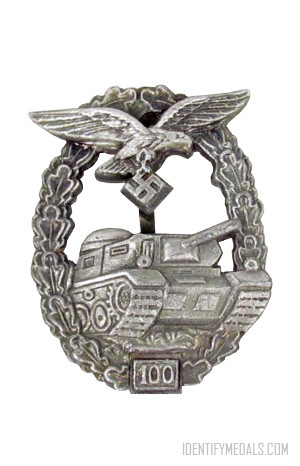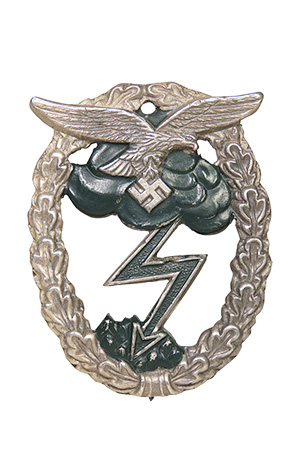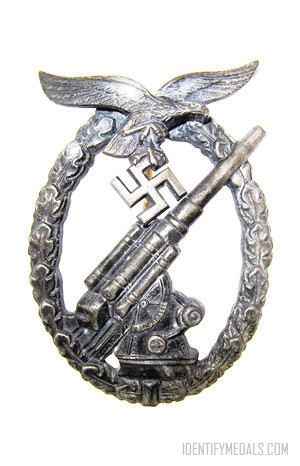
All the Badges of the Luftwaffe – Photos, Recipients, and History

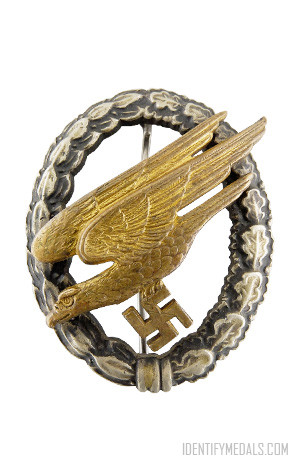
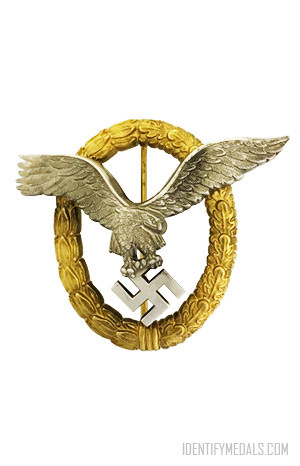
The German Luftwaffe was established in 1933. During its history, it awarded several flight qualification badges that were unique in design.

The German Luftwaffe was established in 1933. During its history, it awarded several flight qualification badges (or Luftwaffe Badges) that were rather unique in design. The Luftwaffe was, also, a significant departure from the more conservative, Prussian-style uniforms – a reflection of Germany’s powerful air force in the late 1930s. 

The Luftwaffe only had two commanders-in-chief throughout its entire history: Hermann Göring during the war and Generalfeldmarschall Robert Ritter von Greim (for just the last two weeks of the conflict).

A Short History of the Luftwaffe and its Badges

When it was founded in 1933, the German Luftwaffe was comprised of some of the best air-minded youth. Senior leadership was quite special too; recruited from civilian corporations and German services, they were some of the country’s best and brightest. 

During 1939 and 1940, the Luftwaffe was instrumental in the German victories across Poland and Western Europe (as well as operations over the Soviet Union, North Africa, and Southern Europe), although they failed to secure a victory during the Battle of Britain. From 1942 on, Allied bombing nearly destroyed the Luftwaffe’s fighting arm (which triggered a transition of its ground support towards the Luftwaffe Field Divisions). 

The Luftwaffe was disbanded in 1946, after the defeat of Germany during the Second World War. It’s estimated that over 75,000 Luftwaffe aircraft were destroyed or significantly damaged during the war (even though German pilots claimed 70,000 aerial victories). The Luftwaffe was deeply involved in Nazi war crimes, and a significant percentage of aircraft were produced in concentration camps. The Luftwaffe ground troops also committed bloody massacres in Italy, Greece, and Poland.

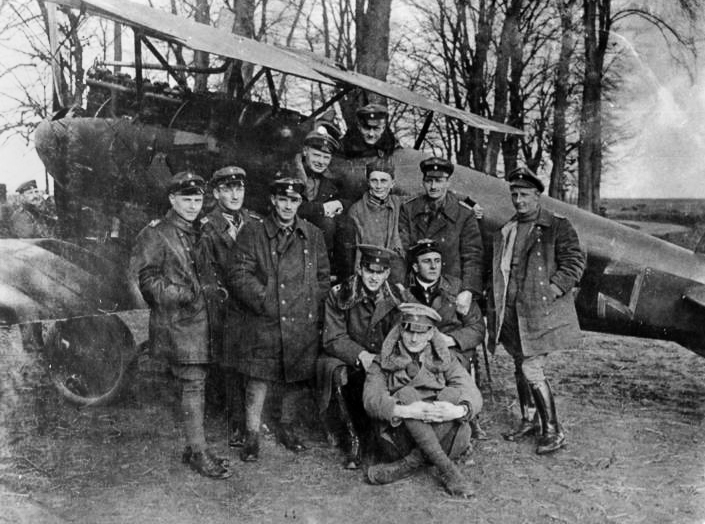
Manfred von Richthofen with other members of Jasta 11, 1917 as part of the Luftstreitkräfte. Image courtesy of Wikipdia,
Manfred von Richthofen with other members of Jasta 11, 1917 as part of the Luftstreitkräfte. Image courtesy of Wikipdia.

What Are All the Luftwaffe Badges?

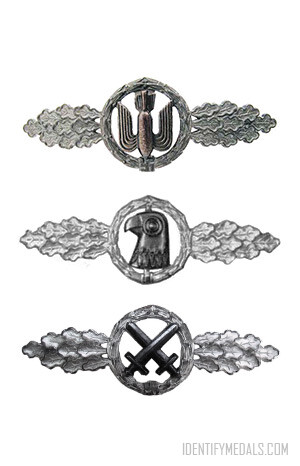
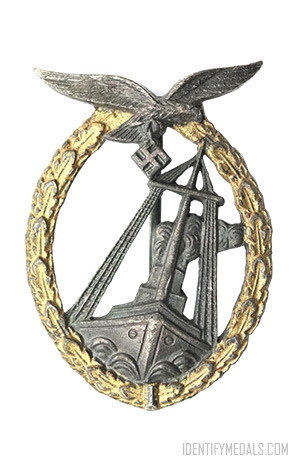
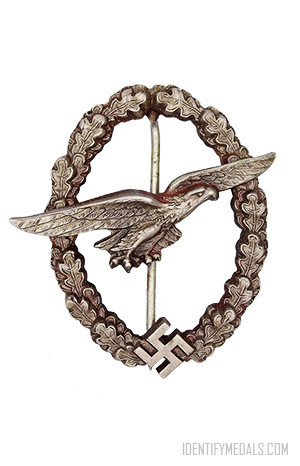
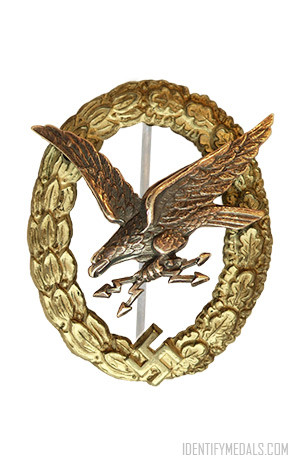
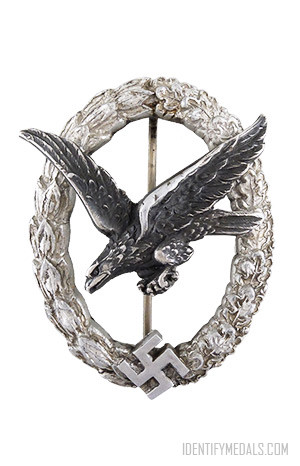
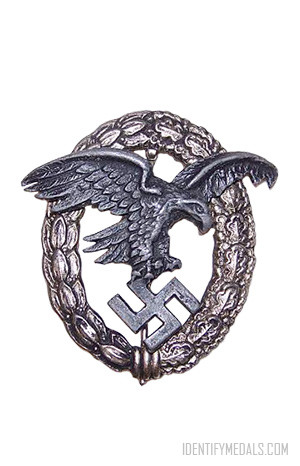
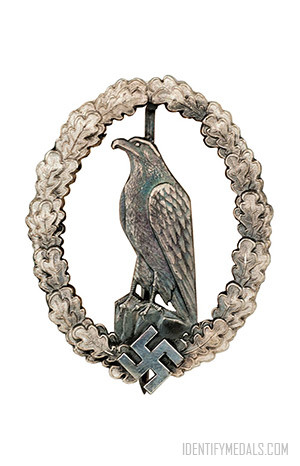
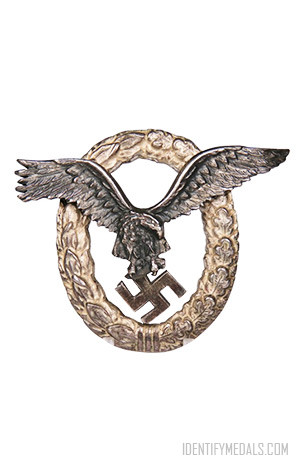
The complete list of Luftwaffe badges is as follows (you can click on these to find out more, or scroll down to see images of all the badges. Clicking on those can also take you to the independent pages):

The Luftwaffe's Organization and Ranks

The Luftwaffe had, at the start of the war, four fleets (each responsible for about a quarter of Germany). More fleets were created as the war progressed and German rule expanded. The ranks were similar to other air forces of the time, although the officers maintained their rank while performing functions.

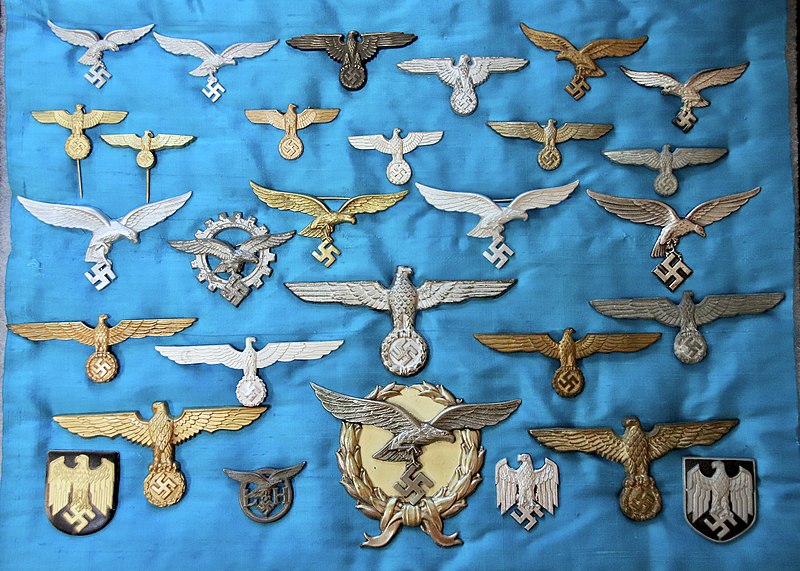
The Luftwaffe Badges and Images

It’s worth noting that the Luftwaffe badges are qualification awards, representing an attained skill (and not someone’s participation in a combat operation). This is why these badges are different when compared to other Wehrmacht war badges. 

The Luftwaffe badges were produced from the mid-1930s until 1945, making them some of the longest-running series of Third Reich awards. You can click on the images below to go to each of the badge’s individual page:

Find Luftwaffe Badges to Buy Online

Right Now on eBay 
Clicking a link to eBay may result in a referral commission being paid if a purchase is made.
Loading...

The NATO Medal

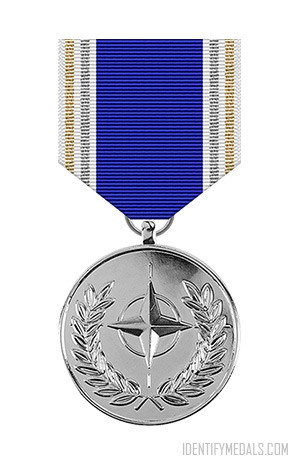
The NATO Medal is an international military decoration awarded to militaries under the authority of the North Atlantic Treaty Organization.

The NATO Medal is an international military decoration established in 1996 and awarded to various militaries under the authority of the North Atlantic Treaty Organization (NATO).

The medal was instituted to recognize individuals who had served in Former Yugoslavia in the Implementation Force (IFOR) as part of Operation Joint Endeavor. In 1999, a new ribbon was introduced for participants in Operation Allied Force in Kosovo and, later, further ribbons were established for each NATO operation as they became more common.

The NATO Medal Design

There are currently 14 versions of the NATO Medal:

  • One medal design for service in the former Yugoslavia, Kosovo, and North Macedonia.
  • Two medal designs for service during Article 5 operations (Eagle Assist, Active Endeavour).
  • Eight medal designs for Non-Article 5 NATO operations (International Security Assistance Force Afghanistan or ISAF, Resolute Support, Balkans, NATO Training Mission-Iraq or NTM-I, Africa, AMIS, OUP-Libya, and Pakistan).

NATO settled on three ribbon styles in early 2003. There is one for the NATO Meritorious Service Medal, one for Article 5 operations, and one for non-Article 5 operations.

Find NATO Medals Online

What is a Cross Pattée and Why are so Many Military Medals this Shape?

Many military medals and awards are shaped like a cross with four arms that get narrow towards the center. This is called a cross pattée, and it’s a type of Christian cross that appears in early medieval art. But why is this such a popular shape when it comes to military medals? In this article, we will explore where the cross pattée shape comes from, and how it was used throughout history for military awards and more.

What is a Cross Patée and Where Does it Come From?

cross pattée (or cross patty, cross formée/formy, croix pattée or Tatzenkreuz) is a type of cross that has arms that narrow at the center, and usually flare in a curve or straight-line shape to become broader at the perimeter. The name comes from a French adjective meaning, literally, “footed cross” (patte means foot, usually of an animal). 

The form appears for the first time (recorded) in early medieval art. For example, there is a treasure binding given by Queen Theodelinda (d. 628) to Monza Cathedral that features it in metal. There is also an 8th-century gospel cover (Lindau Gospels) in the Morgan Library displaying a cross pattéee. 

Variants of the Cross Pattée

There are several variants of the cross pattée. Some have concave arms, others less curvature. Some add a sharp point to the lower limb, and others have arms so large they come close to filling a square.

Some common variations include:

Concave Arms: Some versions of the cross pattée feature arms that curve inward, creating a concave appearance.

Less Curvature: Other variants have arms with minimal curvature, giving them a straighter, more angular look.

Pointed Lower Limb: In certain designs, the lower limb ends in a sharp point, adding an aggressive and dynamic aspect to the cross.

Expanded Arms: Some crosses pattée have arms that are so wide they nearly fill the entire square they are inscribed in, creating a bold and prominent shape.

Symbolic Meaning of the Cross Pattée

The cross pattée has been associated with religion, with philosophy, and with the military. For example, it has been used as:

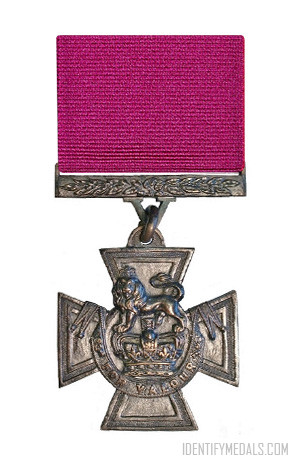
  • A Symbol of Valor: Representing honor and dignity since the Middle Ages. For example, in Britain, the Victoria Cross is still the most prestigious award for members of the British Armed Forces.
  • A Symbol of Christianity: First used by the Templar Knights and Teutonic Knights, both of which are military orders. The fact that they were religious contributed to the pattée cross still being used in many religious orders. 
  • A Symbol of Nationality: As one of the earliest heraldic designs and an emblem of nationality still used by armed forces to decorate vehicles, aircraft, and publications.

Historical Uses of the Cross Patée

The cross pattée has been used in a variety of contexts. For example, the Teutonic Knights used it as a Crusader order – wearing the emblem as a plain straight black cross on a white field. King Frederick William III of Prussia also used a cross pattée as a decoration for military valor. Today, the cross is still used widely; for example, as a traditional Royal Symbol in Canada, the coat of arms of various French communes, the flag of Georgia and Montenegro, and many instances of Portuguese heraldry among many others.

The Cross Patée and the Crusades

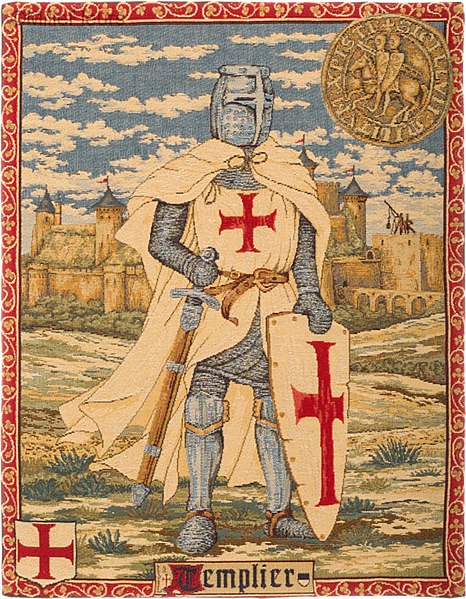
The Crusades were a series of religious wars fought between Muslims and Christians from the year 1096 until 1291. The symbol was used by Christian military orders such as the Teutonic Knights and Templar Knights as they protected European travelers to the Holy Land. The Templars used white robes marked with a red cross. Although this was a cross pattée, there was no single style used. The knights adopted several variations. 

The Cross Patée in Prussia and the German Empire

After the Knights Templars were dissolved as an order, the insignia became insignificant. In 1813, the cross pattée rose in popularity again when King Frederick William III began to use it as a symbol of military valor. He created the Iron Cross (EK 1813) as a military award for service in the Prussian War of Liberation. The medal was revived by William I (the first German Emperor) in 1870 for the Franco-Prussian War. 

A tapestry of Louis of Burgundy in Knight Templars attire. Image courtesy of Wikipedia.

The Cross Patée in the World Wars

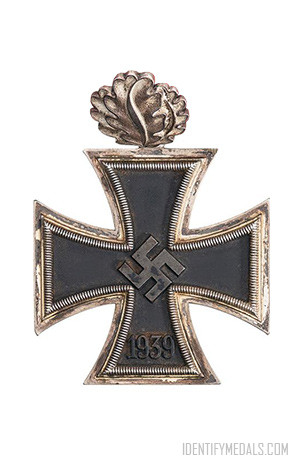
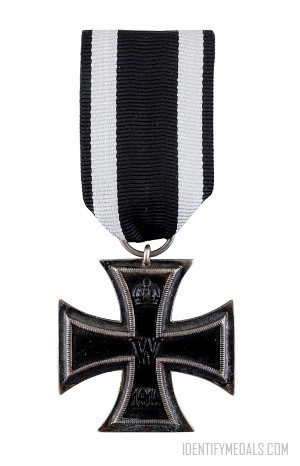
The Prussian and German Imperial military used a cross pattée cap badge, especially the Andsturm and Landwehr troops (this distinguished them from other armies). Iron Crosses (EK 1914) were given until the end of the Great War. In 1939, Adolf Hitler revived the emblem once more, but incorporated the swastika symbol into the Iron Cross (EK 1939), at the center of the cross pattée insignia. 

The Cross Patée in Military Medals

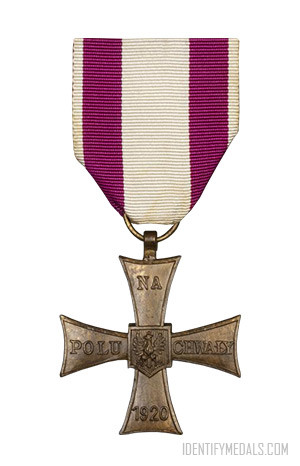
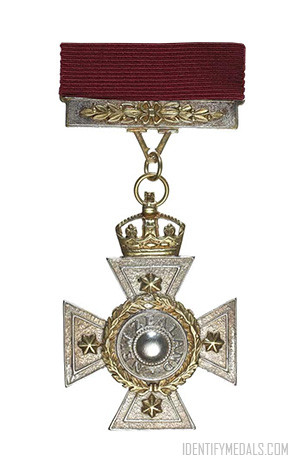
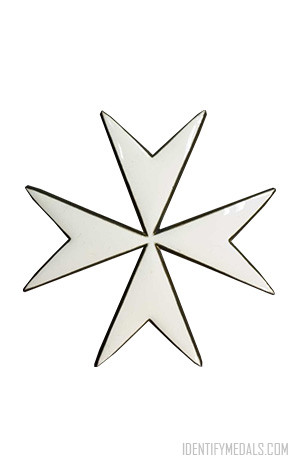
These are some of the military medals and orders that use the cross pattée shape for their insignia:

The Confederate Medal of Honor: History, Facts, and Recipients

The Confederate Medal of Honor was created by the Sons of Confederate Veterans to award gallantry and bravery during the Civil War. This decoration was created as a response to the Medal of Honor not being meant for Americans who fought for the South. The Confederate Medal of Honor is little known but it is bestowed by the Sons of Confederate Veterans for those whose bravery in battle can be proven.

What is the Confederate Medal of Honor?

The Confederate Medal of Honor is an award created in 1977 and meant for Americans who fought for the South during the Civil War. In order to (posthumously) receive the award, a person has to prove bravery in battle to the private group’s satisfaction. The medal was created to honor incredible acts that had received little or no recognition during and after the war. 

The Origins of the Confederate Medal of Honor

There is a Civil War-era precedent for the Confederate Medal of Honor: In 1862, Confederate President Jefferson Davis signed a law authorizing medals for courage on the battlefield. However, none was issued because Gen. Robert E. Lee refused to award individual citations for valor and used, instead, noteworthy performance mentions. 

What Does the Confederate Medal of Honor Look Like?

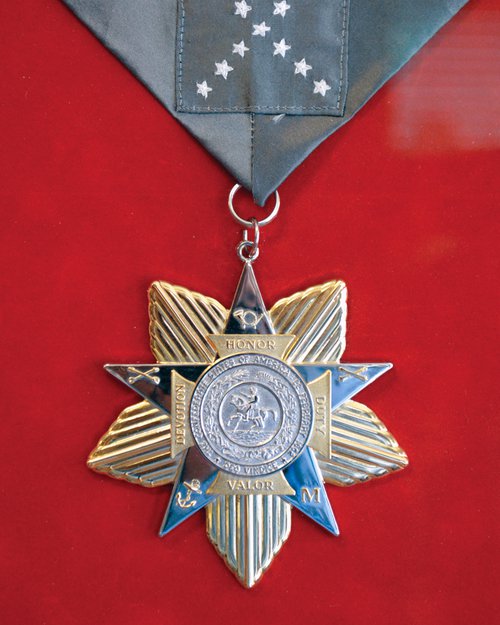
The medal is a 10-pointed star (or two 5-pointed stars superimposed on each other) and is struck in silver and bronze. It bears the Great Seal of the Confederate States and the inscription “Honor. Duty. Valor. Devotion“. Museums and libraries can be sent and display the medals, provided they do so properly. 

Who Received the First Confederate Medal of Honor?

The first person awarded the medal was Pvt. Samuel Davis of Smyrna, Tennessee. He was captured by Union troops and hanged in 1863 as a spy. He was only 21. 

The Confederate Medal of Honor

Controversies Surrong the Confederate Medal of Honor

Not everyone agrees Confederate soldiers should be awarded medals. For example, Hancock Town Councilman Sinclair Hamilton equated honoring Confederates to endorsing slavery. However, many believe it’s wrong to stereotype Confederate fighters as those wishing to retain slavery. Most of the men awarded the Confederate Medal of Honor show extraordinary character. For example, James Breathed was given one because he kept a cannon from falling into enemy hands with little regard for his own safety (two horses were actually shot out from under him during battle). 

The Congressional Medal of Honor Society (which represents U.S. Medal of Honor winners) has said they don’t endorse the program but don’t mind its existence provided the Sons of Confederate Veterans call this medal the Confederate Medal of Honor and not the Medal of Honor. 

Contacting the Sons of Confederate Veterans

The SCV is the oldest hereditary organization for male descendants of Confederate soldiers. The group is based in Columbia, Tennessee, and has 29,000 members. They are a patriotic, historical, benevolent, fraternal, and non-political group. They don’t embrace or espouse acts or ideologies of racial and religious bigotry and condemn the misuse of sacred symbols and flags. membership is open to all male descendants of Confederate armed forces veterans. 

> Link to the SCV website
> Apply for membership

Appying for a Confederate Medal of Honor

You can apply for the Confederate Medal of Honor through the Sons of Confederate Veterans group. Most recommendations are derived from the Confederate Roll of Honor.

Recipients must be shown to have “distinguished themselves conspicuously by gallantry, bravery, and intrepidity at the risk of life, above and beyond the call of duty, while engaged in action against the enemy of the Confederate States of America.” 

List of Confederate Medal of Honor Recipients

The Confederate Medal of Honor has been awarded 50 times since its establishment in 1977. This is quite a small number compared to the 3,487 Medals of Honor roll, which includes about 1,500 soldiers who fought for the Union. The reason is, according to the Sons of Confederate Veterans, is that their medal is given less freely. The recipients of the Confederate Medal of Honor are usually low-to-middle-ranking figures. 

Notable recipients include:

Maj. Gen. Camille de Polignac
Maj. Gen. Patrick R. Cleburne (KIA)
Robert Wyche Davis (Later a member of the U.S. House of Representatives from Florida for 8 years)
Brig. Gen. Wade Hampton III (Later promoted to Lt.Gen. of the Cavalry Corps Army of Northern Virginia)
Brig. Gen. W. Dorsey Pender (KIA) West Point Class of 1854
Brig. Gen. Richard B. Garnett (KIA) West Point Class of 1841
Brig. Gen. Thomas Green (KIA) As a major, commanded the artillery at the Battle of San Jacinto under General Sam Houston.
Col. Nathan Bedford Forrest (Later promoted to Lt.Gen. of the Cavalry Corps Army of Tennessee)
Col. Henry K. Burgwyn (KIA) VMI Class of 1861
Capt. Isaac Newton BrownCSN of the CSS Arkansas
Lieut. (acting Capt.) Charles William ReadCSN for a raid with 21 sailors that destroyed or captured 21 U.S. ships.
Maj. John Pelham (KIA) West Point Class of 1861 (Posthumously promoted to Lt.Col. as J.E.B. Stuart‘s artillery chief)
Maj. Henry Wirz
Capt. John Singleton Mosby (Later promoted to Col. of the 43rd Virginia Cavalry)
First Lieut. Richard W. Dowling (Later promoted to Maj. of the 1st Texas Artillery) for the Second Battle of Sabine Pass
David Owen Dodd
The entire 8-man crew of the CSS H.L. Hunley (KIA)
Nurse Juliet Opie Hopkins (WIA in 1862)

Medals of Valor: The Origins of the Victoria Cross and Bar

The Victoria Cross (or VC) is the highest military decoration of various Commonwealth countries. In this article, we will explore the origins of this award and how it became such an important recognition for gallantry within the British armed forces.

The Introduction of the Victoria Cross and the Crimean War

The Victoria Cross was introduced on 19th January 1856 by Queen Victoria. The initial goal was to honor acts of valor during the Crimean War. The cross was and still is awarded to the recipient or next of kin by the British monarch at a special investiture held at Buckingham Palace. 

The Crimen War was one of the first wars with modern reporting. In 1854, and after 40 years of peace, Britain found itself involved in a major war against Russia. before this war, there was no official standardized system to recognize gallantry within the British forces. There were orders such as the Order of the Bath and some brevet promotions. However, the structure was rather limited because they were confined to those that could be noticed by commanders in the field (usually, the commander’s own staff). 

Other European countries did have awards that didn’t discriminate against rank or class (for example, France had the Légion d’honneur (Legion of Honour) and The Netherlands gave the Order of William. In consequence, a feeling grew amongst the public and in the Royal Court to create a new award for gallantry that wasn’t connected to a man’s lengthy or meritorious service. Queen Victoria created the Victoria Cross on 29th January 1856 and the order was backdated to 1854 to recognize acts of valors that had happened during the Crimean War.

The Gunmetal in the Victoria Cross: Russian or Chinese?

When Queen Victoria instructed the War Office to strike a new medal that could recognize valor no matter the birth or class, the award was supposed to be a simple decoration. She vetoed with Prince Albert the name “The Military Order of Victoria” and instead went for a simpler “Victoria Cross”.

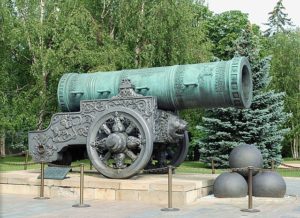
There is a traditional explanation for the source of the metal from which the Victoria Cross is struck: A Russian cannon captured at the siege of Sevastopol (specifically, the bronze cascabels of two cannons – the remainders of which are still stored in a vault in Donnington, Telford. Enough to create about 80 to 85 more Vcitoria Crosses).

Recent research has shown there is a larger variety of origins for the gunmetal that makes the medals. Apparently, a lot of it came from Chinese cannons that were possibly captured by the Russians in 1855. 

A view of the Tsar Cannon, showing the Lion's head cast into the carriage.
A view of the Tsar Cannon, a large early modern period artillery piece, showing the Lion's head cast into the carriage. Image courtesy of Wikipedia.

The Design of the Victoria Cross: Maltese or Pattéee, Red or Crimson?

Interestingly, the original Warrant Clause 1 states that the Victoria Cross is a “Maltese cross of bronze” – not a cross pattée. This discrepancy was never corrected! The ribbon was also stated as “red”, however, it is defined by most commentators as “wine-red” or crimson. 

The Victoria Cross Clasps

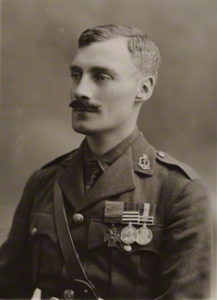
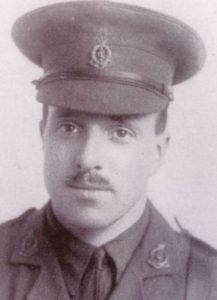
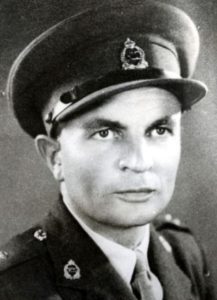
Although there have been a little less than 1,400 Victoria Crosses awarded, only three men in history have received more than one – enabling them to add a bar to the medal’s ribbon. These were:

Arthur Martin Leake by Bassano

Lt. Col. Arthur Martin-Leake

Lt. Col. Arthur Martin-Leake of the Imperial Yeomanry was the first person to ever receive two Victoria Crosses. The first one, he got during the Boer War in 1902 when he helped several wounded soldiers during a battle in Vlakfontein (he was shot three times and refused aid until everyone else was treated). The second, when he was 40 years old and signed up for the Royal Medical Corps in WW1. He again rescued several injured soldiers and received the bar for his actions. 

Capt. Noel Godfrey Chavasse

Capt. Noel Godfrey Chavasse

Capt. Noel Godfrey Chavasse was also part of the Royal Army Medical Corps. He received his first Victoria Cross in 1916, for rescuing 20 wounded men in the line of fire in Guillemont, France. He carried several of them 500 yards, from No Man’s Land, under enemy fire. One year later, he continued to treat men and search for injured troops until he was exhausted from his own wounds and died in August 1917. Both his Victoria Cross awards were given to him for actions during WW1. 

Captain Charles Upham

Captain Charles Upham

Captain Charles Upham was a man from New Zealand – and someone the Germans couldn’t seem to keep down! He got his first Victoria Cross in Crete, Greece, in 1941. His citation contained so many acts of gallantry that it’d be hard to pick just one. He was awarded his second Victoria Cross during the First Battle of El Alamein in 1942. Upham was wounded and captured by the Germans. During his time as a POW he made several attempts to escape – so many that he was finally interned at  Colditz Castle for the rest of the war. 

What’s the Symbolism of the U.S Medal of Honor Insignia?

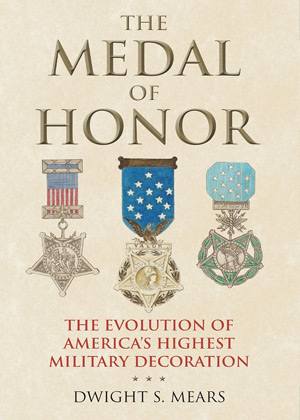
The Medal of Honor is the highest award in the United States. Its design is not casual but actually filled with symbolism. Let’s explore the insignia and what it means (you can learn more about this medal in the article “15 Secrets and Facts About the U.S. Medal of Honor“.

What Does the Medal of Honor Symbolize?

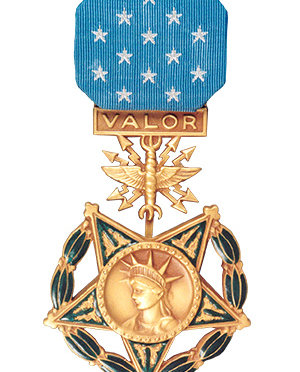
The Medal of Honor is awarded in three distinct variants: One for the Department of the Army (given to soldiers), one for the Department of the Navy (given to sailors, marines, and coast guardsmen), and one for the Department of the Air Force (given to airmen and Space Force guardians).  The three awards consist of a five-pointed star but the motives in the center vary depending on the branch of the military. 

The Medal of Honor has different meanings but the most commonly agreed on are valor and heroism. The award can also mean sacrifice, service, and dedication. To many, the Medal of Honor’s significance is personal and linked to various powerful emotions. In terms of definition, however, the medal is given to those who have distinguished themselves in action by risking their life and showing personal bravery so conspicuous that it requires an award reserved for the bravest of the brave. 

What does the Medal of Honor Design Mean?

As we mentioned, the medal has three variants with slight design variations. 

American Medals and Awards: The Medal of Honor (Army Version)
The Medal of Honor: Army Version

Army Version

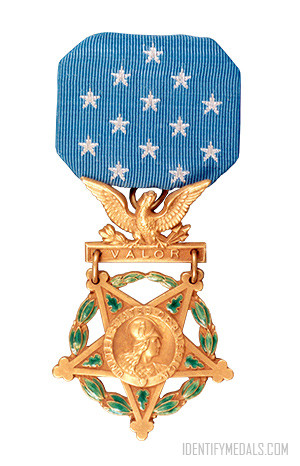
The US Army Medal of Honor is a five-pointed bronze star, with trefoils on each tip. Each ray has a green oak leaf. The star is surrounded by a green laurel wreath and suspended from a gold bar with the word “valor” held by an eagle. The center of the star shows the head of the Roman goddess Minerva. Around her head are the words “United States of America”. The reverse of the Army Medal of Honor has the engraving “The Congress to [Recipient’s Name]“.

  • The laurel wreath symbolizes victory
  • The eagle symbolizes the United States
  • The goddess Minerva is the goddess of wisdom and war.
  • The oak leaves symbolize strength.
American Medals and Awards: The Medal of Honor (Navy Version)
The Medal of Honor: Navy Version

Navy Version

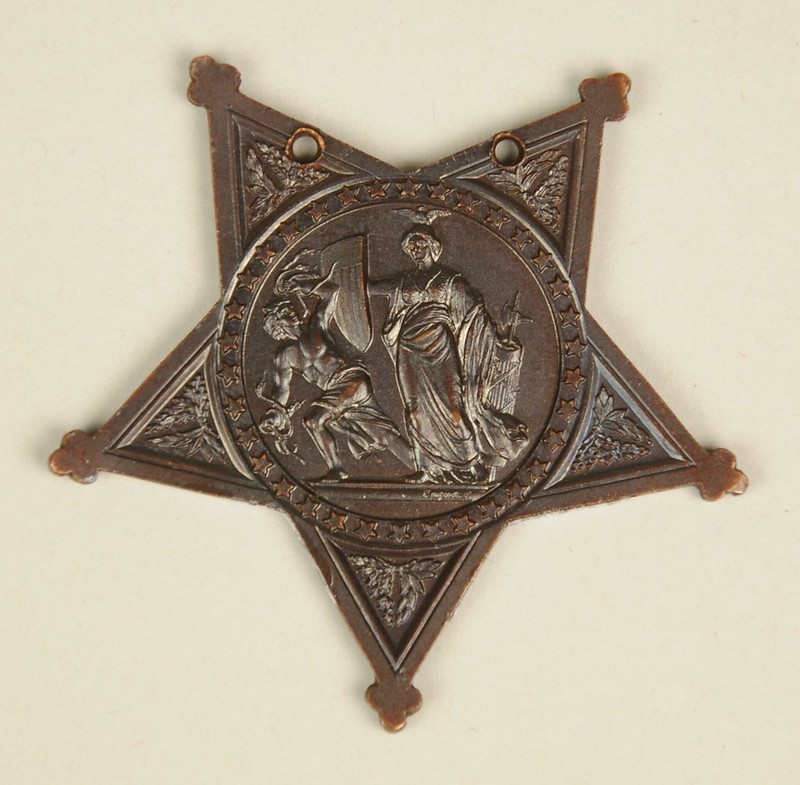
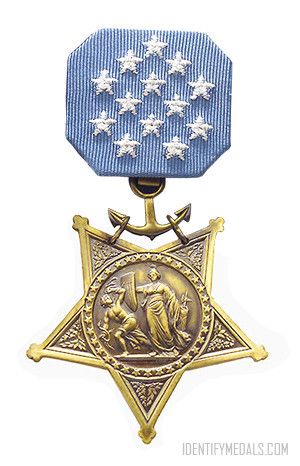
The US Navy Medal of Honor is also a five-pointed bronze star, with trefoils on each tip and ending each ray in a green oak leaf. Unlike the Army version of the Medal of Honor, the Navy variant’s star is not surrounded by a laurel wreath. The center of the medal shows the Roman goddess Minerva too, but in this case she’s standing with her left hand resting on a bundle of rods. Her right hand holds a shield with the coat of arms of the United States. Minerva s repulsing snakes. 

  • The oak leaves symbolize strength.
  • The goddess Minerva is the goddess of wisdom and war.
  • Her shield represents the defense of the United States.
  • The snakes represent discord.
American Medals and Awards: Medal of Honor (Airforce)
The Medal of Honor: Air Force Version

Air Force Version

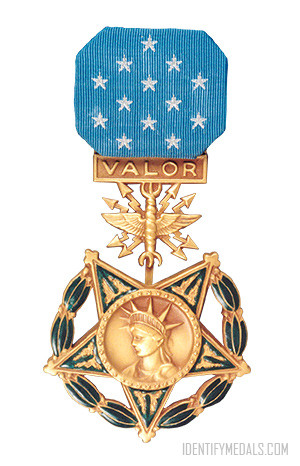
The US Air Force Medal of Honor is a five-pointed bronze star, too, with trefoils on each tip, a green laurel wreath around the medal, and a crown of laurel and oak on a green background. The center of the medal shows an annulet of 34 stars circling the head of the Statue of Liberty. The word valor is inscribed above an adaptation of the thunderbolt from the coat of arms of the Air Force.

  • The oak leaves symbolize strength.
  • The laurel wreath symbolizes victory
  • The oak leaves symbolize strength.
  • The Statue of Liberty represents beauty, wisdom, and strength

15 Secrets and Facts You Didn’t Know About the Medal of Honor

The Medal of Honor (MOH, or Congressional Medal of Honor) is the United States’ most prestigious and highest military decoration. It’s awarded to American soldiers, sailors, airmen, guardians, coast guardsmen, and marines for distinguished acts of valor. The medal is presented by the President of the United States in the name of the United States Congress. 

In this article, we will explore some secrets and facts about the Medal of Honor that you might not know yet. 

If you want to learn more about the Medal of Honor’s history, see the different insignia designs and explore stories about its recipients, you can also read our Medal of Honor page

Medal of Honor Interesting Facts

There are many curious facts about the Medal of Honor you will probably find quite interesting. We will start with the more “known” ones and then deep-dive into some of this award’s better-kept secrets.

15. There are actually three Medal of Honor variants

Our first fact is a relatively well-known one: The Medal of Honor comes in three distinct variants: One for the Department of the Army (awarded to soldiers), one for the Department of the Navy (awarded to sailors, marines, and coast guardsmen of the Department of Homeland Security), and one for the Department of the Air Force (awarded to airmen and Space Force guardians).  The designs vary slightly, although the three awards consist of a five-pointed star with different motives in the center. You can see them in more detail in these pictures:

American Medals and Awards: The Medal of Honor (Army Version)
The Medal of Honor: Army Version
American Medals and Awards: The Medal of Honor (Navy Version)
The Medal of Honor: Navy Version
American Medals and Awards: Medal of Honor (Airforce)
The Medal of Honor: Air Force Version

14. Half of all Medals of Honor awarded were given during the Civil War

To date, almost half of all awarded Medals of Honor were given during the American Civil War (1523). Other conflicts in which people received numerous medals were the Indian Campaigns (426 Medal of Honor recipients), World War II (472 recipients), and the Vietnam War (262 recipients). The medal was never meant for soldiers who fought in the south, however, there is a “Confederate Medal of Honor” that is bestowed by the Sons of Confederate Veterans for proven bravery in battle.

13. Only 19 people have received the medal twice

To date, nobody has received more than two Medal of Honor awards. The last person to get two was John J. Kelly, on October 03, 1918, and the first was Thomas Custer, for two actions that took part several days apart during the Civil War. The full list of Medal of Honor double-recipients is: Frank Baldwin, Smedley Butler, John Cooper, Louis Cukela, Thomas Custer, Daniel Daly, Henry Hogan, Ernest A. Janson, John J. Kelly, John King, Matej Kocak, John Lafferty, John C. McCloy, Patrick Mullen, John H. Pruitt, Robert Sweeney, Albert Weisbogel, Louis Williams, and William Wilson.

12. The first African American recipient was a soldier born as a slave

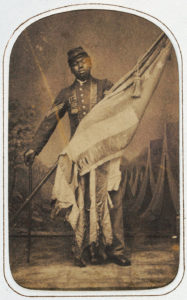
The first African-American recipient of the Medal of Honor was William Harvey Carney, a soldier who was born as a slave. Carney was born in Norfolk, Virginia, in 1840. It’s not certain how he made his way to freedom, but it’s likely he escaped through the Underground Railroad and joined his father in Massachusetts.

Carney joined the Volunteer Infantry in March 1863 and was promoted to sergeant due to his heroic actions during the Battle of Fort Wagner in Charleston, South Carolina. This is where he earned his Medal of Honor, when he retrieved the U.S flag after another soldier was killed and marched forward with it despite serious wounds. When he finally managed to return to his own lines and turned the colors to another survivor, he said:  “Boys, I only did my duty; the old flag never touched the ground!

Medal of Honor recipients: William Harvey Carney c. 1864
William Harvey Carney c. 1864

11. The design of the Navy Medal of Honor is the most symbolic one

The Navy Medal of Honor design (seen in the insignia variations gallery above) showcases several unique elements that represent the effort to reunite the United States. For example, the central insignia features Minerva, the Roman goddess of war and wisdom. She holds a shield and is surrounded by 34 stars 0 one for every state of the union, including also the confederate states. You can read more about the symbolism of the Medal of Honor in this article

10. Non-Americans can also receive the Medal of Honor

You don’t need to be a United States citizen to receive this award. In fact, over 800 Medals of Honor have been given to non-citizens (for example, 65 to Canadians). However, you do need to be serving in the United States military to be eligible. 

9. There is only one female recipient of the Medal of Honor

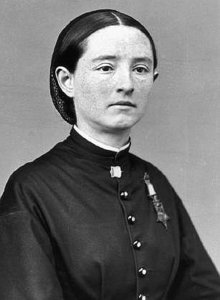
The first and only woman awarded the Medal of Honor is Mary E. Walker, a suffragette and graduate of medicine who “rendered valuable service to the Government in (…) an earnest and untiring variety of wars”. Walker served as an assistant surgeon in Louisville Ky. and as a contract surgeon in the service of the United States. She tended to sick and wounded soldiers in both the field and hospitals and to the detriment of her own health. 

Walker was captured by the Confederates in April 1864 and held as a prisoner of war for about four months (she was charged with being a spy because she was wearing men’s clothes). After the war, when she was released from government contract, she lobbied for a promotion to major for her services. President Andrew Johnson awarded her instead with the Medal of Honor – something that was seen as a rather unorthodox reward for a woman.

You can read more about Dr. Mary E. Walker in this article

Photo of Mary Edwards Walker. Source: Wikipedia.

8. People that have received the Medal of Honor are also saluted by Superior Officers

No matter the rank, if a person was awarded a Medal of Honor they will be saluted by anyone above them – including by the Joint Chiefs and even the President! As an awardee, you will also be invited to Presidential Inaugurations – for life. Military members are not required or mandated to salute Medal of Honor recipients, but they are encouraged to do so, especially when the person is physically wearing the medal, no matter if they are in military or civilian clothes. 

7. The Medal of Honor has been awarded to fathers, sons, and brothers

There are many pairs of brothers and fathers and sons that have received this award. For example, Arthur and Douglas McArthur, and President Theodore Roosevelt, and Theodore Roosevelt Jr. To date, five pairs of brothers have received the Medal of Honor. For example, Antoine and Julien Gaujot are the only two brothers to receive the medal in two different military campaigns (Antoine got his while serving in the Philippines at the Battle of San Mateo and Julien while serving on the border with Mexico). 

6. The first recipient ever was an Ohio Private

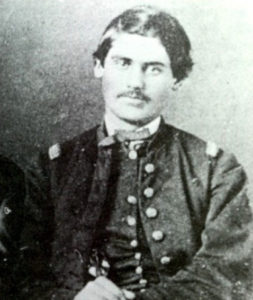
The fist man to ever receive the Medal of Honor was Jacob Parrott (July 17, 1843 – December 22, 1908), a Private (highest rank achieved First Lieutenant) with the Ohio Infantry. He was one of 19 men who penetrated almost 200 miles north into enemy territory to capture a railroad train in Big Shanty, Ga.

The group’s goal was to destroy the track and the bridges between Atlanta and Chattanooga. After infiltrating Confederate lines and hijacking the locomotive, they were captured and imprisoned. Parrott and 14 others were able to escape after being beaten to make them talk. He met President Abraham Lincoln and was given the Medal of Honor by Secretary of War Edwin M. Stanton. 

Medal of Honor recipients: Jacob Parrott
A photograph of Jacob Parrott c. 1863.

5. The majority of Medal of Honor recipients receive the award posthumously

Unfortunately, due to the nature of this award, a large number of people have been given the Medal of Honor posthumously. For example, a large number of African-Americans received it after death due to the rampant racial segregation and racism of their contemporary time. The Department of the Army performed an investigation in 1990 to review any deceased service members that had deserved the medal and not gotten it. An example of a posthumous Medal of Honor is that of Freddie Stowers – who became in charge of his platoon when a lieutenant and several NCOs were killed during WW1. He encouraged the platoon to continue the advance, and they managed to dispatch a German trench line. Unfortunately, during a second advance, Stowers was shot twice and died due to blood loss. His platoon drove out the second trench line and took the hill. 

4. Many Medals of Honor have been revoked

In the 20th century, an extensive review was carried and over 900 medals were revoked – including those of Dr. Walker (who refused to return it and continued to wear it until her death) and Buffalo Bill. Eventually, however, both medals were restored. others were not. For example, Asa Bird Gardiner received a Medal of Honor because he wrote a letter to the War Department and received one as a souvenir. Some revoked medals took longer to happen. For example, it wasn’t until 2019 that Congress rescinded the medals given to the 7th Cavalry who massacred 250 Lakota Sioux men, women, and children at Wounded Knee, South Dakota in 1890. 

3. Unknown soldiers have also received the medal

Since the Great War (World War I), several American soldiers have been awarded the Medal of Honor. Because the recipients are unknown, their medals are kept at the Tomb of the Unknown Soldier in Washington, D.C.

2.The medal of Honor almost wasn't established

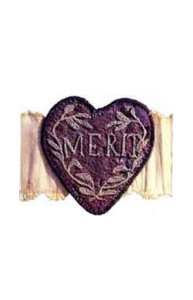
The idea of an award for meritorious or heroic action was frowned upon by many. There had been a decoration established by George Washington, known as the Badge of Military Merit, but it had fallen into disuse (so had its successor, the Certificate of Merit which was bestowed during the Mexican-American War).

After the Civil War broke out, in 1861, a proposal was made to Winfield Scott (general-in-chief of the Union Army) to create a new award. Scott, a respected commander, scoffed at the idea and said it ‘smacked of European tradition’. Only after he had retired was the Medal Honor presented to Congress by its supporters – and approved as a decoration. 

The Badge of Military Merit - American Pre-WW1 Medals & Awards

1. The youngest Medal of Honor recipient was just 11 years old

When asked to imagine a candidate for a Medal of Honor, many would picture soldiers fighting wars. However, the youngest recipient of the medal was just 11-year-old Willie Johnston, who enlisted in the Union Army alongside his father. During the Civil War, he served as a drummer boy with the 3rd Vermont Infantry. The unit had to retreat down the Virginia Peninsula in June 1862, when they were overpowered by Confederate forces. Along the way, the men had to get rid of their equipment to move faster. Young Wilie, however, kept his drum and later played for the entire division. When Abraham Lincoln heard about the boy’s bravery, he recommended him to receive a Medal of Honor. Thus, he became the youngest recipient (being six years younger than the next youngest person, Jack Lucas, a 17-year-old marine who shielded fellow squad members from grenades at Iwo Jima).

How to Distinguish a Genuine Military Medal from a Fake One

In this article, we will highlight some of the factors that can help you distinguish fake military medals from real ones. The question is, after all, a rather important one. Many of us have acquired or inherited medals and want to make sure they belonged to an actual person. But how can we find out if our medals are the real thing? Here are some tips and tricks to distinguish fake military medals and awards. 

People are awarded military and civil medals for a variety of reasons. Because they served during war in specific campaigns or tours, they show heroic acts of valor or courage, or they provided others with superior service. Most military medals consist of an insignia and a ribbon. The designs and colors vary a lot, and ribbons are usually unique to each particular medal. 

Real Medals vs Fake Medals: What's the Difference?

In simple terms, a real medal is the one that was awarded to a person or group of people by a government or organization. You might lose your medal or request one for a relative that, for example, served in the Great War. Even if the medal is recently manufactured, it would still be considered authentic

However, not all medals we see in the market are real. Many are, in fact, fakes. You can go on Amazon today and find many replicas. These medals are identified as such, so we’re not going to consider them in the same category as those that were specifically created to deceive others. 
What Are Real Military Medals Made of?

The majority of military medals and clasps are usually made of solid silver, bronze, lead, and on rare occasions gold. Imitations or replicas, on the other hand, are mostly created in lead (sometimes with an anodized finish to make them look glossier).
This is primarily because it is a relatively inexpensive and easily moldable material. Lead can be cast into detailed shapes, making it suitable for replicating the intricate designs of medals. Additionally, the weight of lead can give these replicas a more substantial feel, somewhat similar to the original medals

Some very special medals are minted from precious materials – for example, the Congressional Medal of Honor (which is crafted from bronze and then gilded with 24-karat gold). A few unique medals are also hand-painted, which makes them quite difficult to replicate. 

Medals Made of Real Gold

  • Nobel Prize Medals: Awarded annually in various categories including Peace, Literature, Chemistry, Physics, and Medicine, these medals are crafted from 18-karat recycled gold and weigh approximately 175 grams.

  • Olympic Gold Medals: While modern Olympic gold medals are primarily composed of silver and coated with at least 6 grams of pure gold, earlier versions (such as those from the 1904 Olympics) were made entirely of solid gold.

  • St. George’s Cross for Bravery (Russia): Awarded for acts of bravery and courage in combat, the 1st class of this decoration is made from solid gold.

Medals Made of Real Silver

  • Olympic Silver Medals: Awarded to athletes who achieve second place in their events, these medals are composed of 92.5% pure silver.

  • Military Cross (United Kingdom): Awarded to British and Commonwealth military personnel for exemplary gallantry during active operations against the enemy on land, it is made from solid silver.

  • Silver Star (United States): The third-highest military decoration for valor, awarded to members of the U.S. Armed Forces for gallantry in action, is crafted from solid silver.

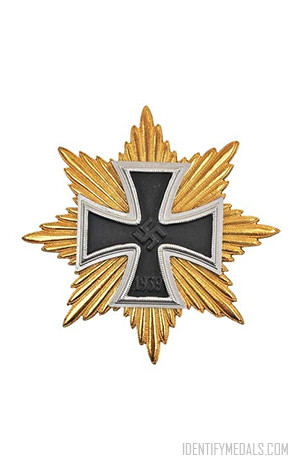
Nazi Germany and Third Reich Medals - The Grand Cross of the Iron Cross

A Popular Fake: The WW2 Iron Cross

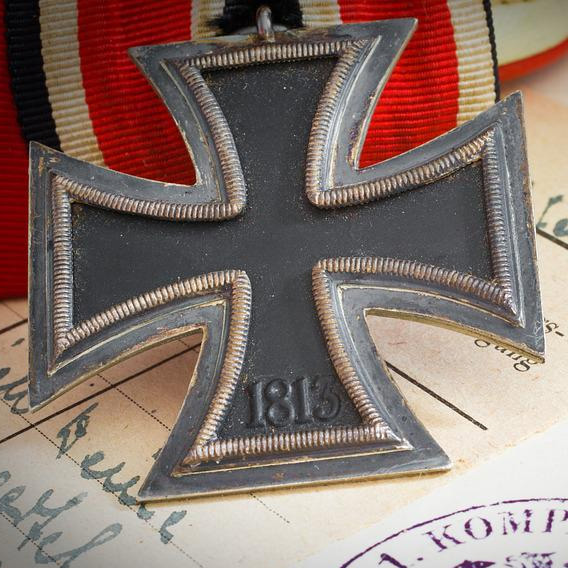
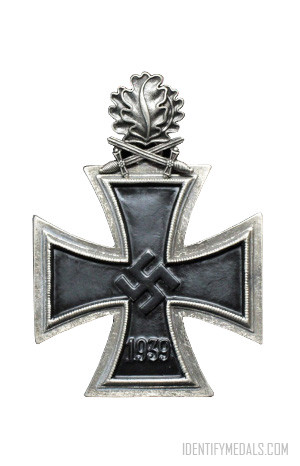
The Iron Cross, first introduced in 1813 during the Napoleonic Wars, was brought back during the Second World War. it was issued in three classes: Grand Cross, Knight’s Cross, and Iron Cross – with several degrees for each of them. The most common Iron Cross during WW2 was the Icon Cross 2nd Class, which was awarded to recognize performance on the battlefield. Over four million were given out during the second war.

The original Iron Cross 2nd Class was made of three separate parts. The core layer, for example, is made of iron. If your Iron Cross 2nd class is not magnetic… then it’s probably not an authentic Iron Cross. The original medals were also made to high standards, something you can test by putting pressure on the ends (if it yields or bends, it’s probably a fake). Another way to test the authenticity of the Iron Cross is to test the ribbon. It should be made of cotton, so if you put it under some UV light, it should not glow brightly (you can also burn a thread and see how flammable it is, but we DON’T recommend doing this to any medal!). Read more about the Iron Cross >

How Are Real Medals Created?

Many medals are cast by pouring molten metal into molds – which are in turn created using wood and wax. Most designs begin with preparatory drawings and models made from plaster, beeswax, or stone. The real cast is usually made by a specialist foundry. Once the poured metal is solidified, the medal is cleaned. Sometimes, the details are enhanced with metalworking tools and chemical solutions (for example, to create a more attractive color effect). 

Another popular method for creating military medals and awards is by striking them. This means, forcing two engraved medal dies with an image onto a blank disc of a metal that is softer. The resulting designs are usually lower in relief and have crisp and sharp outlines. 

Who Creates Fake Medals and Why?

Unfortunately, the main reason why some people end up buying fake medals instead of authentic ones is that there’s someone interested in making a profit – no matter the ethical implications of such an enterprise. 

The goal of a fake medal is to give the impression that they are authentic. This turns the hobby of medal collecting (especially those who enjoy looking over rarer medals) a bit of a minefield. 

The Most Common Fake Components of Military Medals

As a medal collector, you should be particularly aware of re-named medals – or medals where the name was added later. It’s also common for some medals to have clasps added after their award. 

Re-Named Fake Medals

Some people alter medals by re-naming them. For example, to add the name of a distinguished or rare regiment or person and attract higher prices. You can identify re-named medals by looking at the cross-section of the lower rim. If it appears thinner than other areas of the medal, this could mean the metal was removed – and so was the original naming. 

Keep in mind that some people lose their medals and get a replacement from a pawnbroker – and then get their name stamped or engraved over the original one. Some collectors consider these medals acceptable, provided there is a verified medal roll that ensures entitlement. 

Fake Medal Clasps

Another usual problem with fake medals is fake clasps. Many medals are issued without any – even though there might have been clasps authorized for them. Some sellers buy clasps separately and add them to the ribbon, while others make copies to try and raise the value of the medals. 

Some clasps are easy to identify as fake. They have, for example, different rivets. There’s also the chance that it’s just the rivets that are new, and the rest of the clasp is original. It’s quite difficult to distinguish real medal clasps from fake ones, so the best way to investigate this is to check the medal roll and see what the recipient was awarded. 

How to Avoid Buying Fake Medals

You should always watch out for fake medals and reproductions. Unfortunately, this happens practically in all collecting communities. Some fakes have become so good that they are practically indistinguishable from the real thing.

The best way to avoid buying a fake military medal is to always buy yours from trusted private collections or dealers’ shops. Although many dealers themselves struggle to tell real from fake medals, they will have more resources to link them to a particular recipient. 

It’s essential to always try to see the medal in person, as there will be details that are only visible to the eye (not to mention, photos can be manipulated or simply belong to a different product than the one you receive). It’s only be seeing a medal that you will be able to spot things that seem odd or out of place. 

You should also take a hard look at the medal with a magnifying glass. For example, make sure all the markings are sharply struck. If the medal was worn a lot, there should also be points where there is more use. Some fake medal makers put them in the ground or apply chemicals to erode the medals, but they can’t yet imitate the look of wear due to continuous use. 

In general, our advice is to only buy medals from dealers you trust and know. Everyone can make mistakes, but dealers will give you a level of certainty you might not achieve on your own. 

Further Reading About Collecting Medals

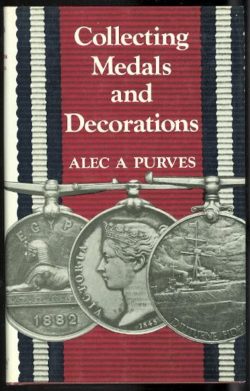
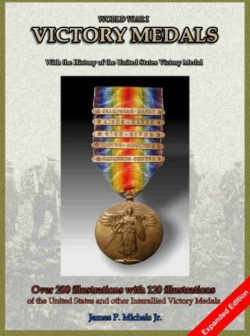
Engaging in further reading about collecting medals can be immensely beneficial in identifying fakes. By reading specialized books, articles, and guides, collectors arm themselves with the information necessary to make informed decisions and avoid counterfeit items. Here are some good places to get started (you can also see a full list of resources for medal collectors here):

Most Important Medals Symbolizing the Reign of Belgium’s King Leopold II

In this article, we take a look at the history of some of the most important Belgian medals worn by military soldiers and civil servants during the reign of King Leopold ll (an particularly in recognition for activities linked to the Congo Free State). We will explore how and why they were created, who were they awarded to, and whether they are still in use today. 

Who was King Leopold II?

Leopold II (Léopold Louis Philippe Marie Victor; born 9 April 1835) reigned Belgium from 1865 until his death in 1909. He was the second King of the Belgians, and the ruler of the Congo Free State (1885 to 1908).

Leopold II was the second but eldest surviving son of Leopold I, the first King of the Belgians, who had reigned from 1831, and Louise, the daughter of  King Louis Philippe of France.

He became king in 1865 when he was 30 years old. His reign was marked by numerous political developments (such as free, secular, and compulsory primary schools, the right of workers to form labor unions, laws against child labor, and universal male suffrage). Unfortunately, Leopold II is also popular for the atrocities committed during the founding and development of the Congo Free State.

King Leopold II's Military

Leopold II emphasized military defense and strove to make Belgium less vulnerable by building military fortresses. During the Franco-Prussian war, he preserved the country’s neutrality. His army was a combination of lottery and volunteers, and later a system in which one son of each family had to serve in the military. He also built defensive fortresses at Liège, Namur, and Antwerp. 

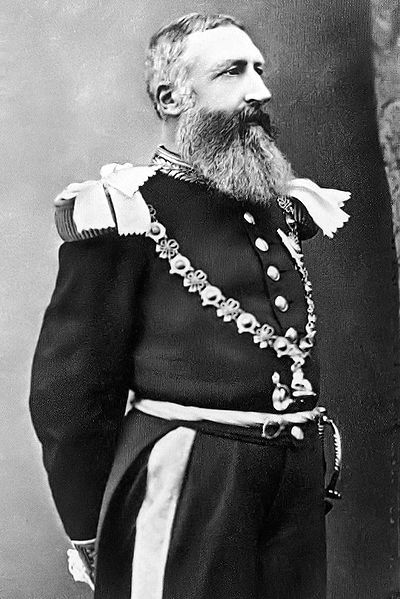
King Leopold II of Belgium wearing the Order of the Garter collar. Image courtesy of Wikipedia.

The Creation and Atrocities of the Congo Free State

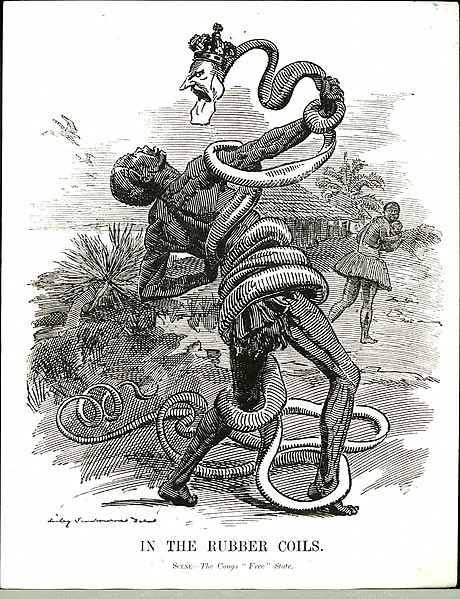
A 1906 Punch cartoon by Edward Linley Sambourne depicting Leopold II as a rubber snake entangling a Congolese rubber collector. Image courtesy of Wikipedia.

Leopold II was the founder and owner of the Congo Free State, a large state and absolute monarchy in Africa. He used explorer Henry Morton Stanley to lay claim to an area in what is now the Democratic Republic of Congo. Although he promised to improve the lives of people there, millions of Congolese inhabitants (including children) were assassinated, mutilated, or died from disease during his rule.

Leopold II used the Congo for his personal enrichment, establishing quotas for rubber collection that, if not achieved, were punishable by death. The King also extracted a fortune from the Congo by collecting ivory and sap from rubber plants. These profits allowed him to build numerous urban and public works in Brussels, Ostend, and Antwerp – the reason why people called him “The Builder King” (Koning-Bouwheer / Roi-Bâtisseur). 

It’s estimated that some 10 million people died under his brutal and exploitative regime. 

Military Medals During King Leopold II's Reign

Leopold II reigned from 1865 until his death in 1909 – exactly 44 years. This is, to this day, the longest reign of any Belgian monarch. During his position, Leopold II established several medals – the majority of them in relation to the Free Congo State. 

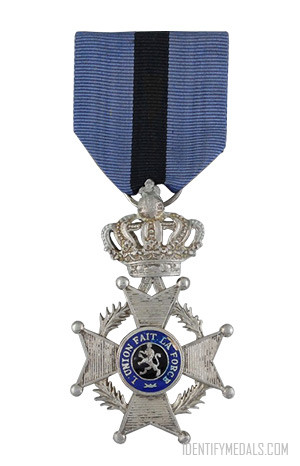
One of the most popular medals that were established during the reign of Leopold II is the Order of Leopold II, which was established on 24 August 1900 as an Order of Congo. This Order was incorporated into the Belgian awards system in 1908 when Congo was handed over to Belgium. The Order of the African Star is also a medal established during the reign of Leopold II and awarded to people for “the promotion of African civilization”. The Order of the Crown is (to this day) one of Belgium’s highest honors, and was created to recognize heroic deeds and distinguished services in the Congo Free State. The Royal Order of the Lion was also established during Leopold II’s reign and was awarded for services to the Congo and its ruler. Lastly, the Military Decoration for Exceptional Service was established in 1873 and awarded to non-commissioned officers and other ranks for uninterrupted service.

The Order of Leopold II is an order of Belgium established on 24 August 1900 and named in honor of King Leopold II. It’s awarded for meritorious service to the sovereign of Belgium, and as a token of his personal goodwill to both Belgians and foreigners, as well as a diplomatic gift of merit.

The order (awarded by royal decree) has become a long service order for people in the civil service and is awarded alternatively with the Order of the Crown, as the Order of Leopold is awarded under rarer circumstances.

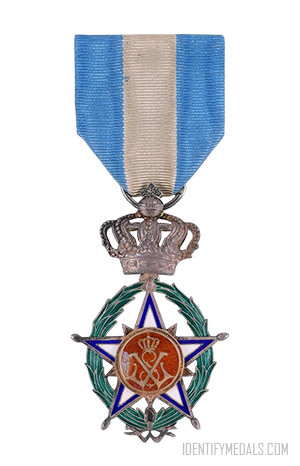
The Order of the African Star (Orde van de Afrikaanse Ster / Ordre de l’Étoile africaine) was established on 30 December 1888 by Leopold II of Belgium and awarded for services to Congo and for the “promotion of African civilization in general”.

The Order was incorporated into the Belgian honors system on 10 October 1908 following the annexation of the Congo Free State by Belgium. The motto of the Order is “Labour and progress”. The Grand Master is the King of the Belgians, and although the Congo is no longer a Belgian colony, it is still considered to be a Belgian Order by tradition.

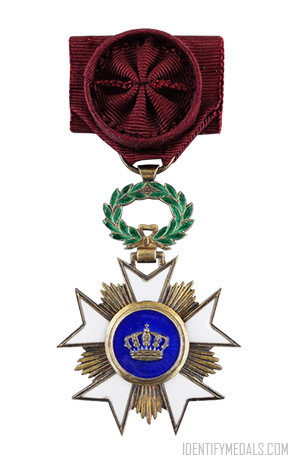
The Order of the Crown (Ordre de la Couronne / Kroonorde) is a national order of the Kingdom of Belgium established on 15 October 1897. It’s one of Belgium’s highest honors.

The Order was established by King Leopold II and initially intended to recognize heroic deeds and distinguished service achieved for service in the Congo Free State. In 1908, the Order of the Crown was made a national honor of Belgium, junior to the Order of Leopold.

Currently, the Order is awarded (by Royal Decree) for meritorious service in public employment and for distinguished artistic, literary or scientific achievements, as well as for commercial or industrial services in Belgium or Africa.

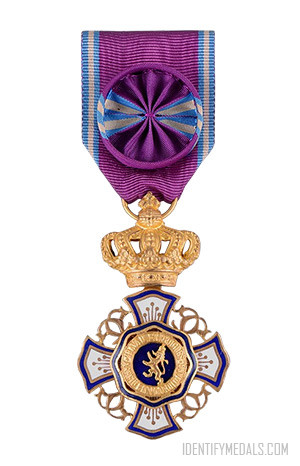
The Royal Order of the Lion (Ordre Royal du Lion / Koninklijke orde van de Leeuw) was established on 9 April 1891 by King Leopold II of Belgium in his capacity as ruler of the Congo Free State. It was awarded for services to the Congo and its ruler that did not deserve the award of the Order of the African Star and were not necessarily performed from within Belgian Congo.

The Order was incorporated into the Belgian honors system following the annexation of the Congo Free State by Belgium. The motto of the Order is “Labour and progress”.

The central disc depicts the crowned Belgian lion on a blue enamel background surrounded by a silver ring with the motto of the Congo Travail et Progrès and a scalloped channel of blue enamel.

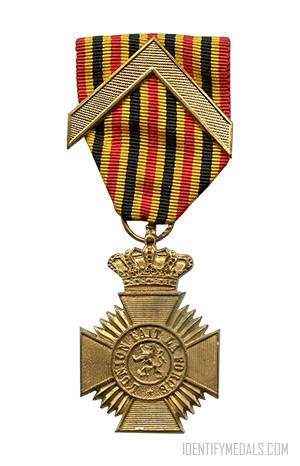
The Military Decoration (Décoration Militaire / Militaire Ereteken) is a military award of the Kingdom of Belgium established on December 23, 1873 and awarded to non-commissioned officers and other ranks of the Belgian Armed Forces for loyal and uninterrupted service.

The Decoration is awarded in two classes: Military personnel below the rank of Officer are awarded the second class after ten years of service. Five years after the award, they are awarded the first class of the medal.

The award is a gilt cross pattée surmounted by the royal crown of Belgium with four rays between the cross arms.

"Second" King of the Belgians?

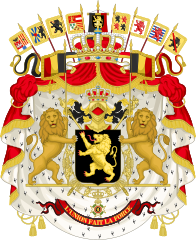
Royal coat of arms of Belgium. Image courtesy of Wikipedia.

Belgium is a constitutional and hereditary monarchy (and the monarch is the king or queen of the Belgians (Koning(in) der Belgen / Roi / Reine des Belges / König(in) der Belgie) and the country’s head of state. 

Since its independence in 1830, Belgium has had seven kings. The first regent was Erasme-Louis, Baron Surlet de Chokier, who ascended on 25 February 1831, and the first King – designated by the National Congress – was Leopold of Saxe-Coburg and Gotha. Because he swore allegiance on 21 July, this has since become a national holiday for all citizens of Belgium. 

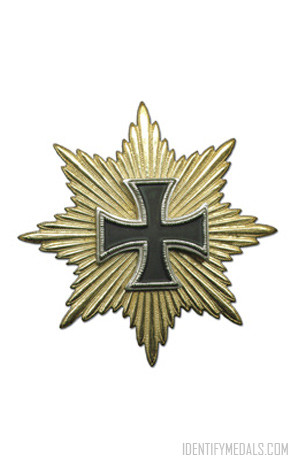
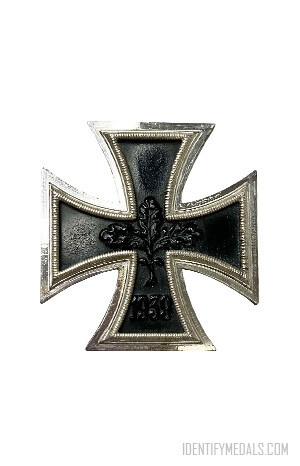
The Iron Cross: History & Types of this Prussian German Military Medal

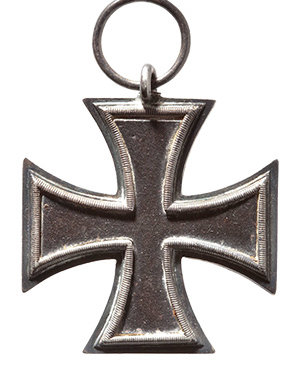
The Iron Cross was a Prussian military decoration established in 1813. This award from Napoleonic times also became popular in Nazi Germany.

The Iron Cross was a Prussian military decoration established in 1813. This award from Napoleonic times also became popular in Nazi Germany. The Iron Cross was almost always a military decoration, although there are instances of it being awarded to civilians for performing military functions.

When was the Iron Cross Established?

The Iron Cross was established by King Frederick William III of Prussia on 17 March 1813 during the Napoleonic Wars. This award is commonly referred to as EK 1813 (from Eisernes Kreuz, Iron Cross in German). The medal was backdated to the birthday of the King’s late wife Queen Louise, on 10 March. She was the first person to ever receive this award, posthumously. 

What's the Meaning of the Iron Cross?

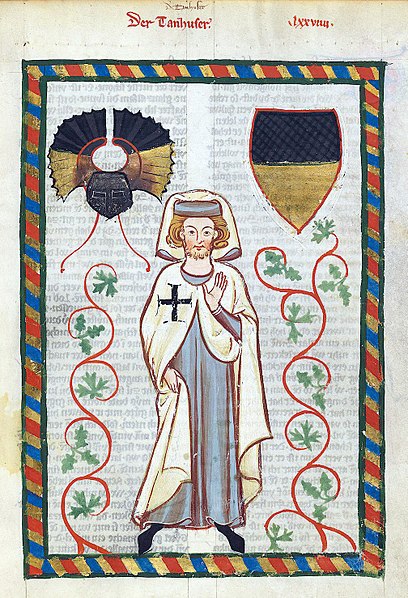
Tannhäuser in the habit of the Teutonic Knights, from the Codex Manesse. Image courtesy of Wikipedia.

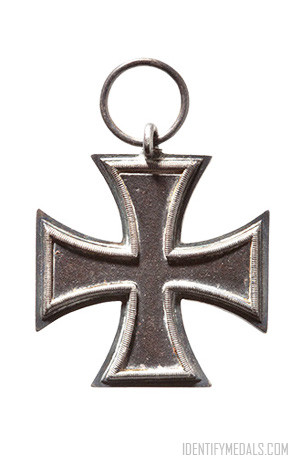
The Iron Cross’ design, which is black with a white or silver outline, derives from the cross pattée of the Teutonic Order, a Catholic religious order founded as a military order around 1190 in Acre, Jerusalem.

This cross was sometimes used by knights (a small voluntary and mercenary military membership for the protection of Christians in the Holy Land and the Baltics in the Middle Ages) from the 13th century. The Teutonic Knights have actually been known as Zakon Krzyżacki in Polish (“Order of the Cross”).

The Prussian Army also used a black cross pattée symbol on the succeeding German Army from 1871 to March–April 1918, when the Balkenkreuz replaced it. 

What are the Different Iron Crosses?

The Iron Cross, being one of the most prestigious military decorations in German history, has had several different classes and variations – each with its own criteria and significance. Here are the main types of Iron Crosses and the time periods to which they belong:

Iron Crosses for Sale

Right Now on eBay 
Clicking a link to eBay may result in a referral commission being paid if a purchase is made.
Loading...

Further Reading About the Iron Cross