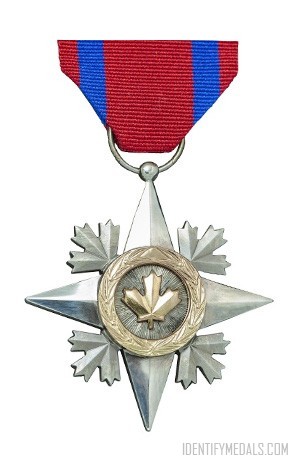
The Star of Courage

The Star of Courage (Étoile du Courage in French) is a decoration established on 1 May 1972 and  the second highest award for bravery within the Canadian system of honors. Queen Elizabeth II, on the advice of her Cabinet under Prime Minister Pierre Trudeau, created the Star of Courage to recognize acts of great bravery. 

The medal is presented to both living and deceased individuals deemed to have performed “acts of conspicuous courage in circumstances of great periland grants recipients the ability to use post-nominal letters SC (for Anglophones) and EC (for Francophones). 

Any person, living or deceased, may be nominated for the Star of Courage. It’s not necessary for the person who carried out the act be a Canadian.

The Star of Courage Design

The badge is a 38 millimeters (1.5 in) wide silver compass star Celeste with a maple leaf in each angle.

On the obverse is a gold roundel bearing a maple leaf surrounded by a laurel wreath. The reverse bears on the upper arm the Royal Cypher of the reigning monarch beneath a St. Edward’s Crown, symbolizing the Canadian monarch’s role as the fount of honor, and the inscription COURAGE. Below this is engraved the name and rank of the recipient.

Mean wear the medallion on the left chest, on a 38 millimeters (1.5 in) wide, red with two vertical blue stripes ribbon. Women, on a ribbon bow and pinned to the left chest.
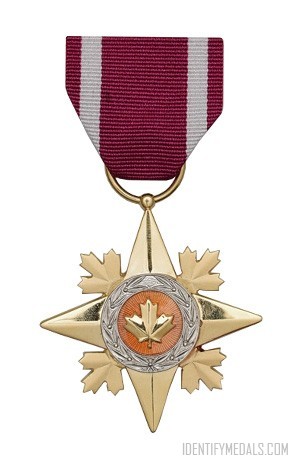
The Star of Military Valor (Canada)

The Star of Military Valor (SMV) is a decoration presented to members of the Canadian Forces for distinguished and valiant service.

The Star of Military Valor (Étoile de la vaillance militaire in French) is a decoration established on 2 February 1993 and presented to members of the Canadian Forces for distinguished and valiant service.

Within the Canadian system of honors, the Star of Military Valor is the second highest award for military valor, and one of three honors for military valor gifted by the Canadian monarch, generally through his or her viceroy-in-Council. Recipients receive the ability to use the post-nominal letters SMV.

The Order is presented to both living and deceased members of the Canadian Forces who have demonstrated “distinguished and valiant service in the presence of the enemy“.

The Star of Military Valor Design

The Order is a gold star with four points with a maple leaf in each of the angles.

On the obverse, superimposed in the center, is a gold maple leaf on a sanguine field surrounded by a silver wreath of laurel. On the reverse is a Royal Cypher and Crown and the inscription “PRO VALORE”. Below hem is engraved the rank and name of the recipient.

The ribbon is crimson and measures 32 millimeters in width. It has two vertical white stripes 4 mm in width each. The Star is suspended by means of a plain gold link. The bar is a plain gold bar with a maple leaf in the center.

The Alberta Order of Excellence

The Alberta Order of Excellence (or Ordre d’excellence de l’Alberta in French) is a civilian honor for merit in the Canadian province of Alberta. The Order was instituted in 1979 and is intended to honor current or former Alberta residents for conspicuous achievements in any field. it’s described as the highest honor amongst all others conferred by the Canadian Crown in right of Alberta.

Canadian citizenship is a requirement and only 10 people may be inducted each year. The process of finding qualified individuals begins with submissions from the public to the Council of the Alberta Order of Excellence.

The Alberta Order of Excellence Design

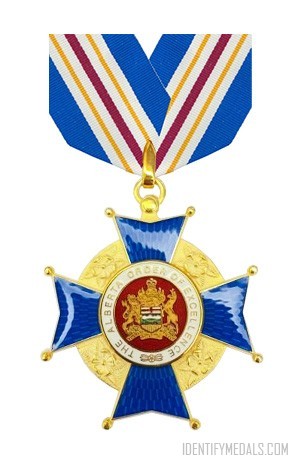
Members of the Order are presented with an insignia. The main emblem of the Alberta Order of Excellence is a 51 millimeters (2.0 in) wide gold cross pattée medallion with the equidistant arms consisting of a transparent blue enamel over gold patterned to resemble prairie wheat.

One the obverse, the cross is layered between a burnished gold disk bearing roses and rose leaves, and another roundel with the coat of arms of Alberta on a red enamel background, surrounded by a white circle bearing the inscription “The Alberta Order of Excellence”. On the reverse is a maple leaf supported by a sheaf of wheat.

The ribbon is patterned with vertical stripes in blue, burgundy, white, and gold, reflecting the colors of the provincial coat of arms. Men wear the medallion suspended from the ribbon at the collar, and women on a ribbon bow at the left chest. 

The Order of British Columbia

The Order of British Columbia (Ordre de la Colombie-Britannique in French) is a civilian honor for merit in the Canadian province of British Columbia. The Order was Instituted in 1989 and it’s administered by the Governor-in-Council.

The Order of British Columbia is intended to honor current or former British Columbia residents for conspicuous achievements in any field. It’s the highest honor amongst all others conferred by the British Columbia Crown.

The process of finding qualified individuals begins with submissions from the public to the Order of British Columbia’s advisory council. Posthumous nominations are not accepted.

The Order of British Columbia Design

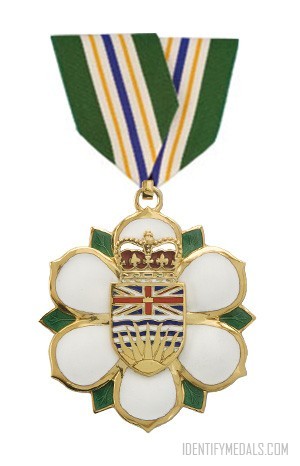
New Members of the Order are presented with an insignia consisting of a gold medallion in the form of a stylized flower of the Pacific Dogwood—the official provincial flower.

The obverse is made in white enamel with gold edging, and bears at its center the escutcheon of the arms of British Columbia, all surmounted by a St. Edward’s Crown symbolizing the Canadian monarch’s role as the fount of honor.

The ribbon has vertical stripes in green, white, blue, and gold, reflecting the colors of the provincial coat of arms.

Men wear the medallion suspended from a ribbon at the collar, and women carry theirs on a ribbon bow at the left chest.

The Order of Ontario

The Order of Ontario (Ordre de l’Ontario in French), instituted in 1986, is the most prestigious official honor in the Canadian province of Ontario. This civilian order is administered by the Lieutenant Governor-in-Council and is intended to honor current or former Ontario residents who have demonstrated a high level of individual excellence and achievement in any field, demonstrating “the best of Ontario’s caring and diverse society and [whose] lives have benefited society in Ontario and elsewhere”.

Canadian citizenship is not a requirement to be awarded the Order of Ontario. The process of finding qualified individuals begins with submissions from the public to the Ontario Honours and Awards Secretariat. The new Members are entitled to use the post-nominal letters OOnt.


The Order of Ontario Design

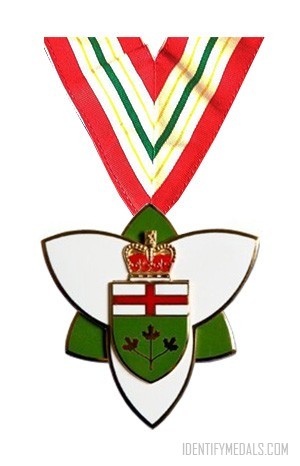
New Members of the Order are presented with an insignia. The main badge is a gold medallion in the form of a stylized trillium, the official provincial flower.

The obverse of the medal is made in white enamel with gold edging, bearing at its center the escutcheon of the arms of Ontario, surmounted by a St. Edward’s Crown symbolizing the Canadian monarch’s role as the fount of honor. 

The reverse has the name of the Member engraved, along with the date of his or her investiture.

The ribbon is patterned with vertical stripes in red, green, white, and gold, reflecting the colors within the provincial coat of arms.

The insignia is worn suspended from this ribbon at the collar (for men) while women may carry theirs on a ribbon bow at the left chest.

The Saskatchewan Order of Merit

The Saskatchewan Order of Merit (Ordre du Mérite de la Saskatchewan in French) is a a civilian honor instituted in 1985 for merit in the Canadian province of Saskatchewan. The order is administered by the Governor-in-Council and is intended to honor current or former Saskatchewan residents who have demonstrated a high level of individual excellence and achievement in any field, improving the “social, cultural and economic well-being of the province and its residents”.

The process of finding qualified individuals begins with call for nominations put out each spring by the Saskatchewan Honors Advisory Council.

The Saskatchewan Order of Merit Design

Members of the Order are presented with the insignia at a ceremony held either at Government House in Regina or at a venue in Saskatoon.

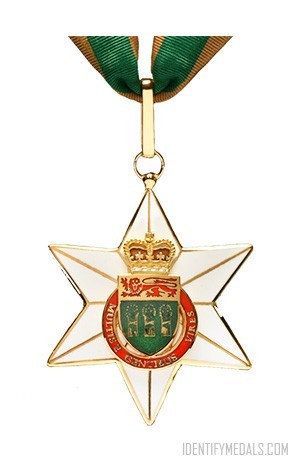
The main emblem of the order is a silver medallion in the form of a six pointed star, an abstract rendition of a western red lilly, the province’s official flower.

The obverse is coated in white enamel and bears the escutcheon of Her Majesty’s Arms in right of Saskatchewan within a circular ribbon that displays the provincial motto—Multis E Gentibus Vires (From many peoples strength). This is topped by a St. Edward’s Crown symbolizing the Canadian monarch’s role as the fount of honor.

This ribbon is green-gold-green with a vertical striped pattern. It’s held at the collar for men, and on a bow pinned at the left chest for women. 

The National Order of Quebec

  • Time PeriodPost-WW2
  • Institution: 26 June 1902
  • Country: Commonwealth Realms, Canada

The National Order of Quebec (l’Ordre national du Québec in French) is a civilian honor for merit in the Canadian province of Quebec. It was instituted in 1984 and administered by the Governor-in-Council to current or former Quebec residents for conspicuous achievements in any field. The Order is the highest honor in Quebec.

The order contains three grades, each with accordant post-nominal letters:

  • Grand Officer (grand officier/grande officières) (GOQ)
  • Officer (officier/officières) (OQ)
  • Knight (chevalier/chevalière) (CQ)

The National Order of Quebec Design

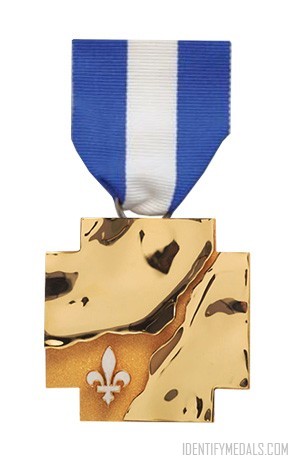
Members are presented with various insignia of the organization: a medallion, miniature, and button. They were all designed by Madeleine Dansereau, who was inspired by the heraldic elements of the provincial flag (the colors blue and white for the ribbon and the fleur-de-lis).

The badge of a Grand Officer is two 18kt gold plates in the shape of a cross. They are formed by two 60 millimeters (2.4 in) by 40 millimeters (1.6 in) arms, symmetrically superimposed atop one another. The obverse is a high-polish, rusticated surface with a white enamel fleur-de-lis on the lower left corner. On the reverse is inscribed the order’s motto—Honneur au peuple du Québec (homage to the people of Quebec) and a serial number.

The badge for Officers is nearly identical but made of arms 50 millimeters (2.0 in) long by 25 millimeters (0.98 in) wide. Knights have a brushed silver medallion with a 40 millimeters (1.6 in) diameter. Each member also receives miniature versions of their insignia.

The Most Venerable Order of the Hospital of St. John of Jerusalem

The Most Venerable Order of the Hospital of St. John of Jerusalem is a working order of charitably minded men and women established in 1888.

The Most Venerable Order of the Hospital of St. John of Jerusalem, and also known as the Order of St John or St John International, is a British royal order of chivalry constituted in 1888 by Queen Victoria and dedicated to St John the Baptist, an itinerant preacher in the early 1st century AD.

The order can be tracked back to the Knights Hospitaller in the Middle Ages. The Knights Hospitalle were a medieval and early modern Catholic military order, later known as the Order of Malta. A faction moved to Britain in the early 1830s and became associated with the founding in 1882 of the St John Ophthalmic Hospital near the old city of Jerusalem and the St John Ambulance Brigade in 1887.

The Order of St John is also known for the health organizations it has founded, such as St John Ambulance and St John Eye Hospital Group. 

The Order of the Hospital of St. John of Jerusalem Design

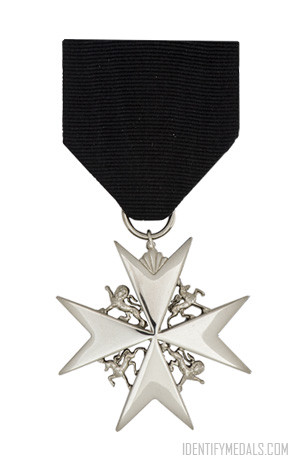
The insignia of the Order is a Maltese cross, or eight-pointed cross in white enamel set in silver-colored metal. The cross is embellished in each of its main angles with lions and unicorns, with a lion in the top left and bottom right angles. 

The insignia of a Bailiff or Dame Grand Cross consists of a breast star and a sash badge. The insignia of a Knight or Dame of Justice or of Grace is a breast star and a neck badge. The insignia of a Commander is a neck badge, the Officer insignia is silver and enameled white, and he insignia of a Member is also worn on the left breast but is bright silver without enamel.

The badges have a ring attached to the top through which the ribbon passes. The ribbon for all grades is black watered.

The Order of Military Merit (Canada)

The Order of Military Merit (CMM) is a Canadian national order established in 1972 to recognize conspicuous merit and exceptional service.

The Order of Military Merit (Ordre du mérite militair in French) is a Canadian military honor for merit, the second highest order administered on behalf of the Canadian monarch. The Order was created in 1972 to replace a grouping within the Order of Canada and recognize members of the Canadian Forces who have demonstrated dedication and devotion beyond the call of duty, achieving conspicuous merit and exceptional military service. 

The Canadian monarch is the fount of honor and is thus at the apex of the Order of Military Merit as its sovereign. The governor general of Canada serves as the fellowship’s chancellor and the chief of the Defence Staff as the principal commander. There are no limits to the population of any grade, and promotions are possible although rare.

The Order has three grades:

  • Commander: For outstanding meritorious service and demonstrated leadership in duties of great responsibility. 
  • Officer: For outstanding meritorious service in duties of responsibility. 
  • Member: For exceptional service or performance of duty.

The Order of Military Merit Design

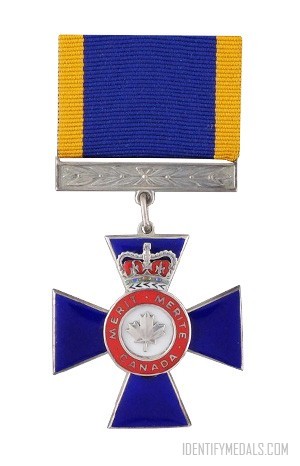
The badge of the order is a blue-enameled, straight-end cross pattée.

The insignia is edged in gold and bears, on the obverse, a red maple leaf in its center, on a white background, surrounded by an annulus enameled red which bears the inscription “MERIT-MERITE-CANADA” in gold. The annulus is surmounted by the Royal Crown enameled in full colors.

The reverse is plain with the exception of an inventory number. The Commander’s insignia has a small link at the top, to which is attached a larger ring, and the ribbon passes through this for wearing around the neck.

The ribbon of the Order is blue and measures 38 millimeters wide.

The Order of Canada

The Order of Canada (CC) is a Canadian national order established in 1967 to recognize outstanding merit or distinguished service.

  • Time Period: Post-WW2
  • Institution: 17 April 1967
  • Country: Canada
  • Terms: C.C. – O.C. – C.M.

The Order of Canada (Ordre du Canada in French) is a Canadian national order and the second highest honor for merit after the Order of Merit. This award is considered the centerpiece of Canada’s honor system and is designed to exemplify the highest qualities that can enrich the lives of citizens and contemporaries.

The three-tiered order was established in 1967 to coincide with the centennial of the Canadian Confederation, and the first members were appointed 1 July 1967. The award was designed to recognize the outstanding merit or distinguished service of Canadians who make a major difference to Canada through lifelong contributions in every field of endeavor, as well as the efforts by non-Canadians who have made the world better by their actions – or those who exemplify the order’s motto, “desiderantes meliorem patriam” (They desire a better country“, a phrase taken from Hebrews 11:16).

The sovereign of the order is the reigning Canadian monarch. The Governor General administers the order on their behalf as Chancellor and Principal Companion. Thousands of people have been appointed to the Order of Canada, including scientists, musicians, politicians, artists, athletes, business people, film stars, and benefactors.

The Order of Canada Levels

The Order of Canada has three levels: Companion, Officer, and Member.

  • Companion: Awarded for outstanding achievement and merit of the highest degree. There can be a maximum of 15 Companions appointed each year (for a total of 150).
  • Officer: Awarded for the achievement of merit of a high degree, particularly in service to Canada or humanity as a whole. There can be a maximum of 46 Officers appointed each year.
  • Member: Awarded for distinguished service in or to a specific activity, field, locality, or group. There can be a maximum of 92 members appointed each year.

The Order of Canada Design

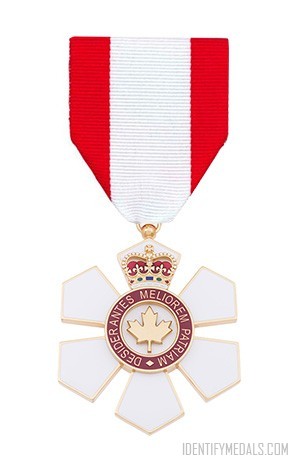
The badge of the Order is a stylized snowflake with six points and a red annulus at its center. The design of this insignia dates from 1967 and is credited to Bruce Beatty, C.M., S.O.M., C.D. 

On the obverse is a stylized maple leaf struck in fine silver, circumscribed with the motto of the Order, “Desiderantes meliorem patriam” (“They desire a better country”), surmounted by the Royal Crown (St. Edward’s Crown). The insignia is composed of three individual pieces: the snowflake, the annulus, and the maple leaf. The color is added to the badge by hand through a unique application of opaque and translucent viscous enamel. The reverse of the Order of Canada reads CANADA written within a circle as well as a serial number placed in a box below.

The ribbon of the Order of Canada is white, 38 mm wide, and has red edges (9 mm). If undressed, a maple leaf of red, gold, or silver is worn on the ribbon. There is also a miniature for wearing in evening dress.