The Wound Medal (Austria-Hungary)

The Wound Medal (Austria-Hungary) a decoration of the Empire of Austria-Hungary established on August 12, 1917 by Emperor Karl I.

The Wound Medal is a decoration of the Empire of Austria-Hungary established on August 12, 1917 by Emperor Karl I.

The medal was awarded to service members of the Austro-Hungarian armed forces and to persons attached to the Austro-Hungarian armed forces who were wounded as a result of combat operations. It could also be awarded to persons who were disabled or suffered serious damage to their health in connection with military actions.

The Wound Medal Design

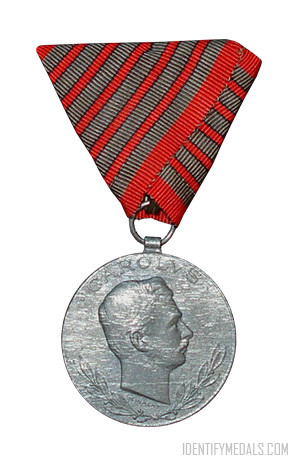
The Wound Medal is made of zinc and measures 38-mm in diameter. There are variations with both a dull gray and with a polished surface.

The obverse features a bust of Emperor Karl with his name in Latin “CAROLUS” above and a wreath of laurels below. Between the bust and the laurels in smaller letters was the name of the designer of the medal, R.(Richard) PLACHT, 1880 Kratzau – 1962 Vienna. The reverse featured the words LAESO MILITI (“to the wounded soldier”) and the date in Roman numerals “MCMXVIII” (1918).

The medal is suspended from an Austrian-style trifold ribbon, 39-mm in width, gray-green with 4-mm wide red edge stripes. The number of wounds was indicated by narrower 2-mm wide red stripes, edged in black, centered on the ribbon. No stripes indicated an award for someone invalided out of service. One stripe indicated a single wound, two stripes two wounds, etc.
The Karl Troop Cross

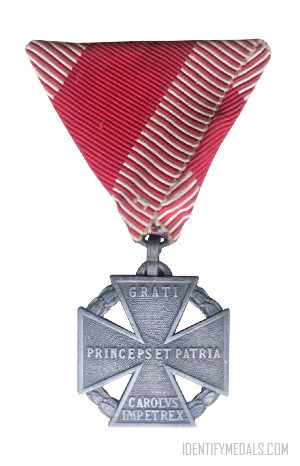
The Karl Troop Cross is a medal of Austria-Hungary created on 13 December 1916 and awarded for service up to the end of the First World War.

The Karl Troop Cross (or Karl-Truppenkreuz in German) is an Austro-Hungarian medal instituted on 13 December 1916 by Emperor Karl I.

The medal was awarded for service up to the end of the First World War to soldiers and sailors of all arms of the Austro-Hungarian armed forces, regardless of rank, who had been with a combatant unit for at least twelve weeks and who had participated in at least one battle. Members of the air service who made ten flights over enemy lines were also eligible.

The Karl Troop Cross Design

The medal is cross pattée resting on a laurel wreath made of zinc.

The obverse shows the Latin inscription “GRATI PRINCEPS ET PATRIA, CAROLVS IMP.ET REX“, (A grateful prince and country, Karl, Emperor and King). The reverse bears the Austrian Imperial and Hungarian Royal crowns above the letter “C” (for Carolus) with the inscription “VITAM ET SANGVINEM“, (“With life and blood“) and the date MDCCCCXVI, (1916).

The cross was worn on the left chest from a red ribbon with alternate red-white side strips towards each edge.

The Order of Yukon

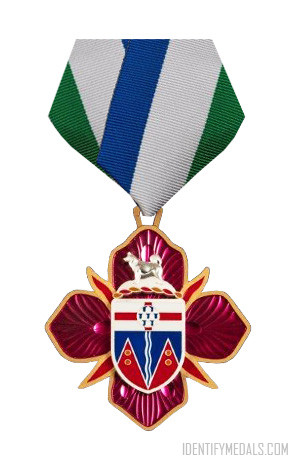
The Order of Yukon (Ordre du Yukon in French), instituted on 1 January 2020, is a civilian honor for merit in the Canadian territory of Yukon. It is the highest honor which can be bestowed by the Government of Yukon. 

The Order is intended to honor current and former residents of the territory for significant contributions to the advancement of Yukon society. The Order of Yukon was first proposed in 2016, following public consultation and created by the passage of the Order of Yukon Act in 2018. 

Inductees are entitled to use the postnominal letters OY.

The Order of the Northwest Territories

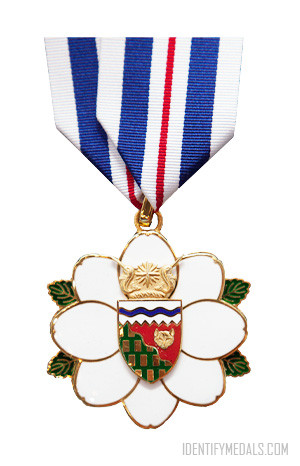
The Order of the Northwest Territories (Ordre des Territoires du Nord-Ouest in French), instituted on 7 October 2015, is a civil honor for merit in the Canadian territory of the Northwest Territories. 

The Order It is intended to honor current and former residents of the territory who have served with the great distinction and excelling in any field of endeavor for the benefit the people of the Northwest Territories and others. The order may be awarded to no more than three persons annually.

The Order of Nunavut

The Order of Nunavut (Ordre du Nunavut in French, ᓄᓇᕗᒻᒥ ᐃᓕᓴᖅᓯᔾᔪᑦ ᐅᔭᒥᒃ / Nangariyauyunut Nunavunmi in Inuktitut), instituted in 2010, is a civilian honor for merit in the Canadian territory of Nunavut.

The Order was created by the passage of the Order of Nunavut Act and is intended to honor current and former residents of the territory (or the territory which became Nunavut) for outstanding contribution to the cultural, social, or economic well-being of Nunavut. A maximum of three individuals may be inducted by the Commissioner of Nunavut each year. 

The Order of Newfoundland and Labrador

The Order of Newfoundland and Labrador (Ordre du Terre-Neuve-et-Labrador in French), instituted in 2001, is a civilian honor for merit in the Canadian province of Newfoundland and Labrador. It is the highest honor amongst all others conferred by the Newfoundland and Labrador Crown.

The Order of Newfoundland and Labrador is intended to honor any current or former longtime resident of Newfoundland and Labrador who has demonstrated a high level of individual excellence and achievement in any field, having “demonstrated excellence and achievement in any field of endeavor benefiting in an outstanding manner Newfoundland and Labrador and its residents.

The Order of Newfoundland and Labrador Design

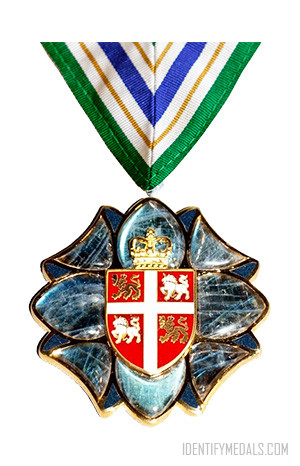
New Members are presented with an insignia. The badge consists of a gold medallion in the form of a stylized sarracenia purpurea (or purple pitcher plant)—the official provincial flower.

The obverse is made in marbleized green enamel with gold edging, and bearing at its center the escutcheon of the arms of Newfoundland and Labrador, all surmounted by a St. Edward’s Crown symbolizing the Canadian monarch’s role as the fount of honor.

The ribbon is patterned with vertical stripes in blue, white, and two shades of green; men wear the medallion suspended from this ribbon at the collar, while women carry theirs on a ribbon bow at the left chest. 

The Order of Nova Scotia

The Order of Nova Scotia (Ordre de la Nouvelle-Écosse in French), instituted on 2 August 2001, is a civilian honor for merit in the Canadian province of Nova Scotia. The Order the highest honor amongst all others conferred by the Nova Scotia Crown.

The Order of Nova Scotia is intended to honor any current or former longtime resident of Nova Scotia who has demonstrated a high level of individual excellence and achievement in any field, having “distinguished themselves in many fields of endeavor and having brought honor and prestige to themselves and to Nova Scotia.” Canadian citizenship is a requirement, and those who are elected or appointed members of a governmental body are ineligible as long as they hold office.

The Order of Nova Scotia Design

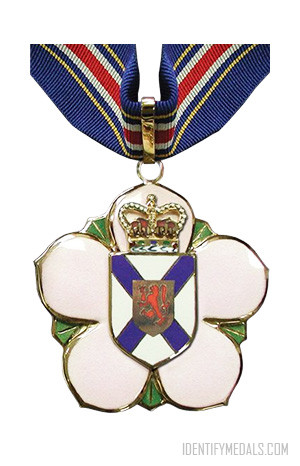
New Members are presented with an insignia. The badge consists of a gold medallion in the form of a stylized epigaea repens (or mayflower)—the official provincial flower.

The obverse is made in white enamel with gold edging, and bearing at its center the escutcheon of the arms of Nova Scotia, surmounted by a St. Edward’s Crown symbolizing the Canadian monarch’s role as the fount of honor.

The ribbon is patterned with vertical stripes in red, blue, gold, and white; men wear the medallion suspended from this ribbon at the collar, while women carry theirs on a ribbon bow at the left chest. 

The Order of New Brunswick

The Order of New Brunswick (Ordre du Nouveau Brunswick in French), instituted in 2000, a civilian honor for merit in the Canadian province of New Brunswick. The Order is described as the highest honor amongst all others conferred by the New Brunswick Crown.

The Order of New Brunswick is intended to honor any current or former longtime resident of New Brunswick who has demonstrated a high level of individual excellence and achievement in any field, having made “outstanding contributions to the social, cultural or economic well-being of New Brunswick and its residents“. Canadian citizenship is a requirement, and those who are elected or appointed members of a governmental body are ineligible as long as they hold office.

The Order of New Brunswick Design

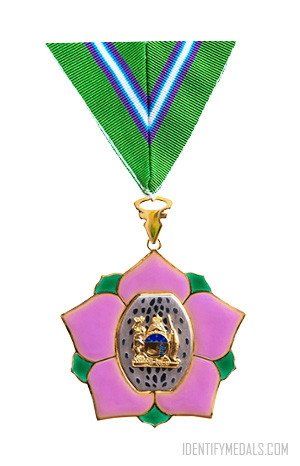
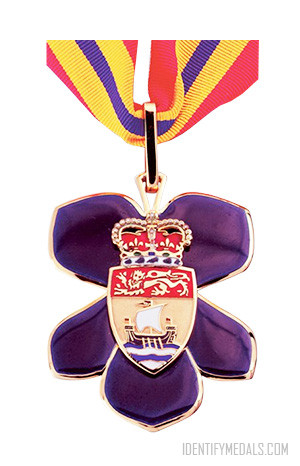
New Members are presented with the order’s insignia. The badge consists of a gold medallion in the form of a stylized viola cucullata (or purple violet)—the official provincial flower.

The obverse is made in violet enamel with gold edging, and bearing at its center the escutcheon of the arms of New Brunswick, surmounted by a St. Edward’s Crown symbolizing the Canadian monarch’s role as the fount of honor.

The ribbon is patterned with vertical stripes in blue, red, and gold. Men wear the medallion suspended from this ribbon at the collar, and women carry theirs on a ribbon bow at the left chest.

The Order of Manitoba

The Order of Manitoba (Ordre du Manitoba in French), instituted in 1999, is a civilian honor for merit in the Canadian province of Manitoba. The Order is intended to honor current or former Manitoba residents for conspicuous achievements in any field. It’s the highest honor amongst all others conferred by the Manitoba Crown.

The Order of Manitoba is awarded to those who has demonstrated a high level of individual excellence and achievement in any field, “benefiting in an outstanding manner the social, cultural or economic well being of Manitoba and its residents“. 

There are no limits on how many people can belong to the order, though inductions are limited to eight per year. Canadian citizenship is a requirement to be awarded the Order.

The Order of Manitoba Design

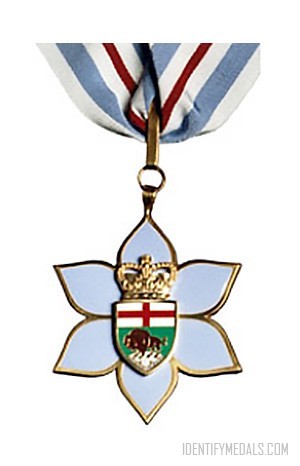
New Members are presented with an insignia. The badge is a gold medallion in the form of a stylized crocus—the official provincial flower.

The obverse is made in white enamel with gold edging, and bears at its center the escutcheon of the arms of Manitoba surmounted by a St. Edward’s Crown symbolizing the Canadian monarch’s role as the fount of honor.

The ribbon is patterned with vertical stripes in red, blue, and white. Men wear the medallion suspended from a ribbon at the collar, and women carry theirs on a ribbon bow at the left chest. 

The Order of Prince Edward Island

The Order of Prince Edward Island (Ordre de Île-du-Prince-Édouard in French), instituted in 1996, is a civilian honor for merit in the Canadian province of Prince Edward Island.

The Order is intended to honor current or former Prince Edward Island residents for conspicuous achievements in any field. It’s considered the highest honor amongst all others conferred by the Prince Edward Island Crown. The Order of Prince Edward Island is intended to honor who have demonstrated a high level of individual excellence and achievement in any field, having made “remarkable contributions to the social, economic and cultural life of [Prince Edward Island] and its people“.

The Order of Prince Edward Island Design

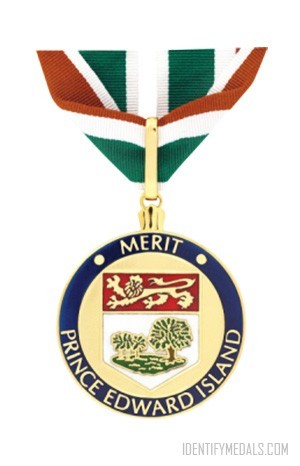
New Members of the order are presented with an insignia. The main badge, called the Medal of Merit, is a gold roundel medallion.

The obverse is made in enamel and bears, at its center, the escutcheon of the arms of Prince Edward Island surrounded by a blue collar with the words “MERIT • PRINCE EDWARD ISLAND”.

The ribbon is patterned with vertical stripes in green, white, and rust, reflecting the colors of the province’s foliage and oxidized soil.

Men wear the medallion suspended from the ribbon at the collar and women carry theirs on a ribbon bow at the left chest.