The Meritorious Military Pilot of the German Democratic Republic

The Meritorious Military Pilot of the German Democratic Republic was the highest title awarded by the RDG to military pilots.

The Meritorious Military Pilot of the GDR (or Verdienter Militärflieger der DDR in German) was the highest honorary title awarded to military pilots of the East German National People’s Army. Instituted on August 1, 1974, by the Council of Ministers of the GDR, this prestigious title was bestowed in the form of a medal and was awarded until the dissolution of the GDR in 1990.

Award Criteria

This honorary title was granted to military pilots who demonstrated:

  • Distinguished performance, with outstanding results in both political and military duties.
  • Exceptional contributions to the development and combat readiness of the National People’s Army (NPA).
  • A Class I performance level.
  • An incident-free aviation record. The number of recipients was limited to 10 military pilots per year.

The Pilot of the GDR (DDR) Medal Design

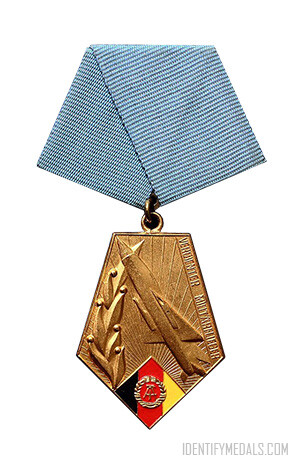
The golden medal was shaped like a pentagon, measuring 31.5 mm in width and 41.5 mm in height. At the bottom tip, the emblem of the NPA, featuring the enameled flag of the German Democratic Republic (GDR), was displayed. The medal’s main design included a MiG-23 or MiG-21 aircraft ascending steeply against a bright rising sun, with a laurel branch on the left and the inscription “VERDIENTER MILITÄRFLIEGER” on the right. The reverse side of the medal was glossy and plain.

Versions

  • 1974–1976: Made from gold-colored nonferrous metal, varnished, with a size of 40.5 × 30 mm including an arched eye. It was mounted on a small medal bar measuring 14 × 25 mm.
  • 1976–1989: Similar to the previous version but with a round eye, mounted on a pentagon bar with a gibbon bar measuring 14 × 25 mm. This version was also brass-plated, and the reverse side featured additional ornamentation.

Buy this Medal

Right Now on eBay 
Clicking a link to eBay may result in a referral commission being paid if a purchase is made.
Loading...

The Meritorious Member of State Security Medal

The Member of State Security Medal was established in 1969 and awarded for outstanding contributions to the protection of the state.

The Honor Title of Meritorious Member of State Security (or Ehrentitel Verdienter Mitarbeiter der Staatssicherheit in German) was an esteemed award in the GDR or East Germany.

It was established to recognize individuals for their exceptional service and contributions to the state security apparatus, known as the Stasi (Ministerium für Staatssicherheit, MfS).

The title was introduced to formally acknowledge and reward significant achievements, dedication, and loyalty among members of the Stasi. Its primary purpose was to incentivize and honor outstanding service that significantly contributed to the effectiveness and operational success of the state security services. In other words, the decoration aimed to boost morale and encourage continued excellence among the Stasi members.

The Meritorious Member of State Security Medal Criteria

The award was given to members of the Stasi who demonstrated exceptional merit, outstanding achievements, and notable contributions to state security.

Recipients were selected based on their dedication, innovative efforts, and impactful actions that enhanced the operational capabilities of the Stasi. This included uncovering espionage, thwarting threats to the state, and other significant contributions to state security.

The Meritorious Member of State Security Medal Design

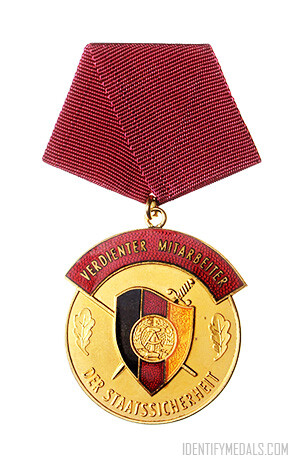
The medal featured symbolic elements representative of the Stasi and the GDR, including the flag.

The title and accompanying medal were presented during formal ceremonies. High-ranking officials from the Stasi and the GDR government often participated in these ceremonies to emphasize the importance of the award and the recognition of the recipient’s contributions.

Right Now on eBay 
Clicking a link to eBay may result in a referral commission being paid if a purchase is made.
Loading...

The Hero of Labor (DDR)

The Hero of Labor was created by the German Democratic Republic and awarded for for supporting the socialist economy.

The title Hero of Labor (or Held der Arbeit in German) was a prestigious award in the German Democratic Republic (GDR) conferred to individuals who made significant contributions to the socialist economy.

Instituted on 19 April 1950, this honor was typically awarded for exceptional increases in factory output, agricultural yields, or other substantial contributions to economic development.

The Hero of Labor Award Criteria

Each year, the award was limited to a maximum of 50 recipients. This restriction emphasized the exclusivity and prestige of the honor. The recipients were often workers, engineers, and agriculturalists who demonstrated extraordinary dedication and innovation in their respective fields.

The goal was to incentivize and recognize efforts that aligned with the socialist principles of the GDR, fostering a culture of productivity and excellence.

The Hero of Labor Design

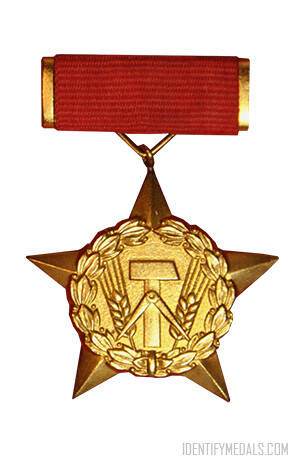
The Hero of Labor medal was a distinctive and symbolic piece of craftsmanship. The medal featured imagery representing labor and industry, such as hammer and sickle motifs, gears, and wheat sheaves. These elements symbolized the unity of workers and peasants in building the socialist state.

Central to the medal’s design was a gold star, a common symbol of excellence and achievement in socialist iconography. This star signified the recipient’s outstanding contributions to the nation’s economic progress.

The medal was suspended from a red ribbon, a color associated with socialism and the labor movement, and often included engravings of the recipient’s name and the date of the award.

Buy this Medal

Right Now on eBay 
Clicking a link to eBay may result in a referral commission being paid if a purchase is made.
Loading...

The Hero of the German Democratic Republic

The Hero of the German Democratic Republic (GDR) was an Honorary Title awarded by the East German state and its most prestigious award.

The Hero of the German Democratic Republic (or Held der Arbeit in German) was the highest honor awarded by East Germany, accompanied by a gold star medal, certificate, and financial reward.

Established by the politburo of the Socialist Unity Party on 29 October 1975, it was first awarded on 28 November 1975.

The first recipient was General Heinz Hoffmann on his 65th birthday. The first foreign recipient was Leonid Brezhnev, who was honored three times. Only two recipients, cosmonauts Vladimir Kovalyonok and Aleksander Ivanchenkov, are still alive today. The last citizen of the GDR to bear the title was Sigmund Jähn, who passed away in 2019.

A total of 17 awards were given to 11 recipients.

The Hero of the German Democratic Republic Award Criteria

The title was awarded to individuals who demonstrated extraordinary service or acts of heroism that contributed significantly to the development, international standing, military security, or authority of the GDR. Eligible recipients included combatants against fascism, servicemen of the National People’s Army, civilians cooperating with the armed services, foreign nationals in exceptional cases, and cosmonauts, who were also honored as Cosmonaut of the German Democratic Republic.

The Hero of the German Democratic Republic Privileges

The five-pointed gold star medal was similar to the Soviet Union’s Hero of the Soviet Union. Recipients also received a certificate and financial reward. After 1978, the Order of Karl Marx was a prerequisite for this honor. Both the medal and the certificate had to be returned to the state upon the recipient’s death.

Originally, up to 10 awards could be given annually, with recipients eligible for multiple awards, leading to titles such as “twice Hero” or, uniquely for Leonid Brezhnev, “three times Hero” of the GDR.

The Hero of the German Democratic Republic Design

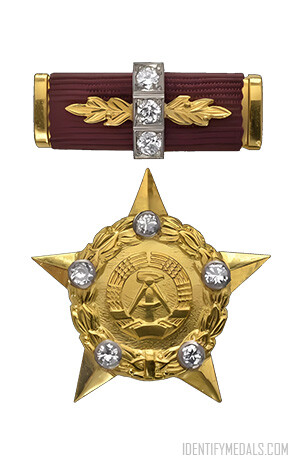
The design of the Hero of the German Democratic Republic (GDR) medal is inspired by the Soviet Hero of the Soviet Union award. The medal features a five-pointed gold star, symbolizing excellence and achievement. 

The main component of the award was a gold star with five points, which was worn on the left side of the chest. The star was polished and made to stand out, signifying the highest level of honor and valor recognized by the state.

The medal is suspended from a red ribbon, reflecting the socialist values and heritage of the GDR. The red color symbolized the socialist ideology and the connection to the broader communist movement. The ribbon was designed to be worn on the uniform, making the award highly visible.

Alongside the medal, recipients were presented with a certificate documenting their achievements and the reasons for their recognition and a financial reward.

Buy this Medal

Right Now on eBay 
Clicking a link to eBay may result in a referral commission being paid if a purchase is made.
Loading...

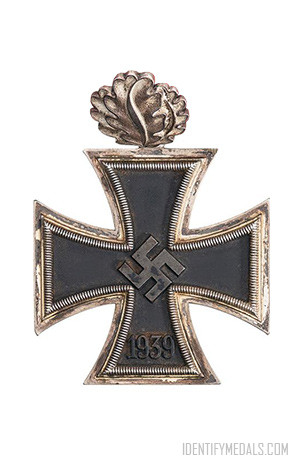
The Iron Cross (EK 1957)

The Iron Cross 1957 was introduced to allow German veterans to wear their WWII decorations in a denazified form.

Institution: 26 July 1957
Country: Germany

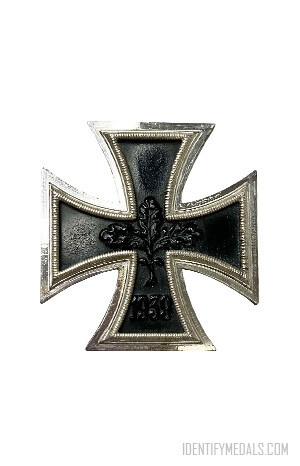
The Iron Cross 1957 was officially established on July 26, 1957. It aimed to honor the bravery and leadership of those who had served during World War II while adhering to new legal requirements.

Following the end of World War II, Germany underwent significant political and social changes, including the denazification process to remove Nazi symbols from public life. By the mid-1950s, many German veterans sought recognition for their wartime service without the stigma associated with Nazi imagery. In response, the Federal Republic of Germany (West Germany) introduced the Iron Cross 1957.

This version allowed veterans to wear their decorations in a form that conformed to post-war regulations, promoting reconciliation and respect for individual bravery.

The Iron Cross 1957 Criteria

The criteria for the Iron Cross 1957 remained the same as those of the 1939 version. It was awarded to recognize acts of bravery and leadership in combat. Veterans who had earned the Iron Cross during World War II were eligible to wear the 1957 version, ensuring that their wartime service could be publicly acknowledged without the associated Nazi symbols

More Variations of the Iron Cross

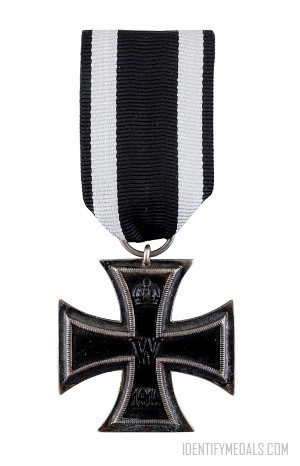
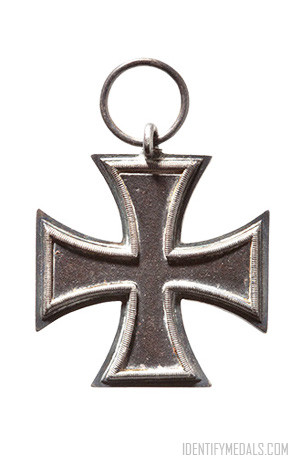
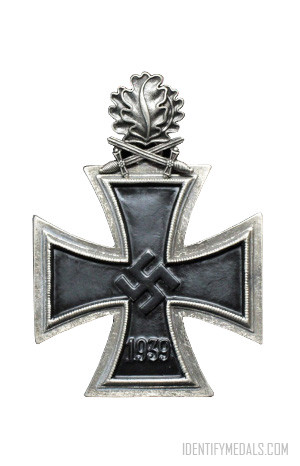
The Iron Cross, a prestigious German military decoration, has undergone several variations since its inception. For example, the Iron Cross 1813 was instituted during the Napoleonic Wars by King Frederick William III of Prussia, the Iron Cross 1914 was awarded during World War I, it was reinstated by Kaiser Wilhelm II, and the Iron Cross 1939 was revived by Adolf Hitler for World War II, with modifications including a swastika.

Find the Iron Cross Medal Online

Right Now on eBay 
Clicking a link to eBay may result in a referral commission being paid if a purchase is made.
Loading...

Further Reading About the Iron Cross

Discover the stories behind the Iron Cross with these compelling books and delve into the rich history and significance of this prestigious military decoration.

The Charlotte Cross

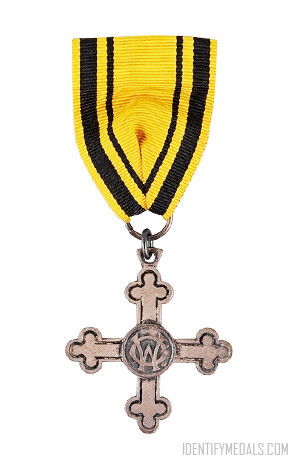
The Charlotte Cross was a decoration founded in 1916 by King Wilhelm II to honor his wife and awarded for care-related services.

The Charlotte Cross, established on January 5, 1916 by King Wilhelm II in tribute to his wife, Queen Charlotte, was bestowed upon individuals regardless of rank, who demonstrated exceptional care for the sick and wounded in times of war. It also recognized other valuable caregiving services during World War I.

The Charlotte Cross Design

The emblem comprises a silvered white metal cross botonny, featuring a central medallion. The front of the medallion displays the intertwined initials “C” and “W” for Charlotte and Wilhelm, while the reverse side bears the year 1916.

Initially crafted from pure silver, the crosses changed to other materials at the onset of World War I.

It was tradition to wear the emblem on the left breast, attached to a yellow ribbon bordered by narrow and wide black stripes on either side.

The SS Edelweiss Cap Badge

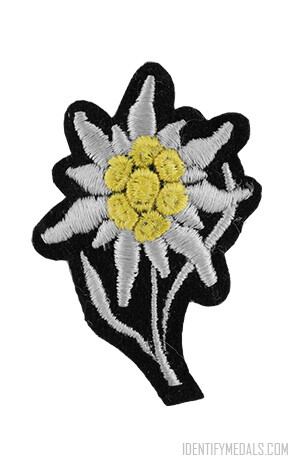
The SS Edelweiss Cap Badge was an award given by the Third Reich regime to Waffen-SS Mountain Troops serving in Norway.

The SS Edelweiss Cap Badge was an award established on 15th April 1941 and given by the Third Reich regime to Waffen-SS Mountain Troops serving in Norway.

In October 1940, Waffen-SS Mountain Troops stationed in Norway began wearing Army-style attire. Subsequently, on April 15, 1941, authorization was extended to all SS-Mountain Troops to don the Mountain Cap.

The choice of the Edelweiss was deliberate, as it thrives in the challenging conditions of high Alpine elevations, symbolizing resilience and fortitude.

The SS Edelweiss Cap Badge Design

The Officer’s Edelweiss badge was crafted from either bullion or aluminum thread, reflecting superior quality. In contrast, badges for Non-Commissioned Officers and enlisted men were of lesser quality and made from regular thread.

The Edelweiss Badge was affixed to the left side of the cap. The emblem held significant symbolism, not only representing the German mountain troops but also embodying qualities of bravery and courage. 

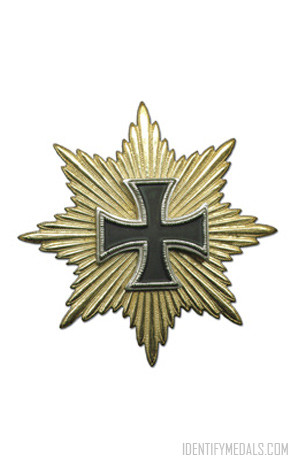
The German Knight’s Cross Freikorps Detachment Von Randow

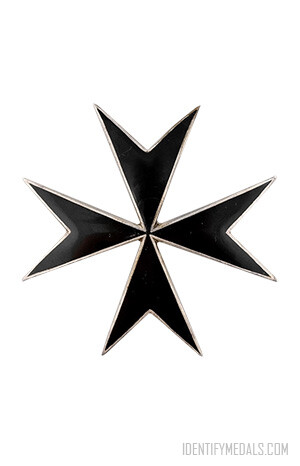
The German Knight’s Cross Freikorps Detachment Von Randow (or Randow Cross) was created by Captain Alfred von Randow in March 1919.

The Freikorps Detachment von Randow German Knight’s Cross, also known as the “Randow Cross,” was created and designed by Captain Alfred von Randow in March 1919. It was primarily bestowed upon members of the Volunteer Detachment von Randow, a unit formed on January 5, 1919, tasked with ensuring security in the Baltic region.

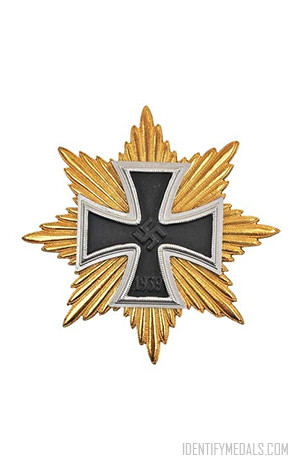
This decoration aimed to foster camaraderie within the unit and serve as a memento of past experiences. Initially, it comprised two grades: the standard Knight’s Cross and a Silver Breast Star. The Grand Cross, accompanied by the Breast Star in Gold, was bestowed upon Commanders who displayed extraordinary merit. The Knight’s Cross was awarded for four months of exemplary service, while the Silver Breast Star recognized six months of commendable service.

The first ceremony honoring recipients took place on April 12, 1919, just nine days after the initial batch of crosses was delivered. Recipients received their awards along with certificates. In May 1919, two additional grades were introduced: the Gold Breast Star and the Grand Cross. The Knight’s Cross was further divided into I and II Class.

Although primarily awarded between 1919 and 1923, sporadic awards continued until 1928. Following the NSDAP’s rise to power in 1933, the award was entirely discontinued.

The Randow Cross Design

The cross features a quadrilateral eight-point design with black enamel. Because it was produced by several German manufacturers, its size may vary depending on the maker.

The I Class Cross was traditionally worn on the left breast pocket, secured by a vertical pin and the II Class Cross was worn suspended from a black ribbon, adorned with a clasp in the shape of crossed swords and a crown. Both the Breast Star in Silver and Gold were affixed to the tunic pocket. The Grand Cross was worn as a decorative neckpiece.

The NSDAP Golden Party Badge

The NSDAP Golden Party Badge was one of the most prestigious decorations awarded by the party during the Third Reich era in Germany.

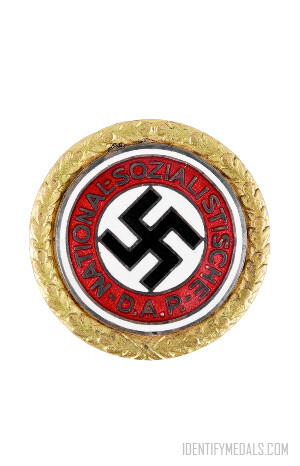
The NSDAP Golden Party Badge, or Gold Party Badge, was one of the most prestigious decorations awarded by the National Socialist German Workers’ Party (NSDAP) during the Third Reich era in Germany. Instituted in 1933, it was primarily intended to honor loyal and long-standing members of the Nazi Party who had made significant contributions to the party’s cause.

The awarding of the Golden Party Badge was a highly prestigious honor, signifying the recipient’s status as a trusted and valued member of the Nazi Party elite. It was often presented in formal ceremonies or special events, further emphasizing its significance within the party hierarchy.

The criteria for receiving the Golden Party Badge were stringent, requiring a minimum of ten years of uninterrupted membership in the NSDAP, along with a record of exceptional service and dedication to the party’s goals. Additionally, candidates needed the personal approval of Adolf Hitler himself.

The NSDAP Golden Party Badge Design

The NSDAP gold badge was crafted in solid gold and features the Nazi Party eagle emblem surrounded by a wreath of oak leaves in the obverse.

The badge was available in two sizes: 30mm for uniform wear and 25mm for civilian attire. On the reverse of each badge is a unique membership number. The value of the badge increases as the serial number on the reverse decreases. Adolf Hitler wore the NSDAP badge number 7.

Two authorized manufacturers produced the badge: Deschler & Sohn and Joseph Fuess, both headquartered in Munich. Recipients wore the NSDAP badge on the left breast of their uniform, symbolizing their allegiance to the Nazi ideology and leadership.

The Lorient Shield (Projected)

The Lorient Shield (Lorientschild) was a projected WW2 Third Reich decoration planned for participants in the Siege of Lorient (1944–45).

The Lorient Shield (or Lorientschild in German) was a projected World War II German military decoration to be awarded to German forces that took part in the Siege of Lorient, 1944–45.

Although some Lirient Shields were awarded, they were never officially instituted. So, they are very hard to authenticate and there is a lot of discussion online about which ones might be real. 

The Lorient Shield Design

The original Lorient Shields were made crudely in a besieged town. They are believed to be made of stamped brass sheets and even copper, old fish cans, and the bodywork of cars abandoned in the siege. 

More Nazi Germany Shields (Ärmelschilde)

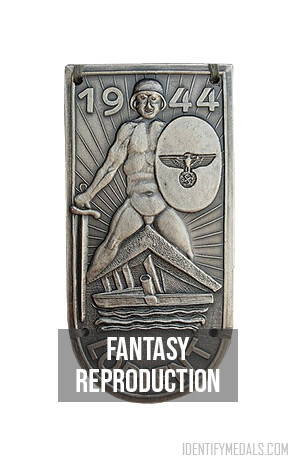
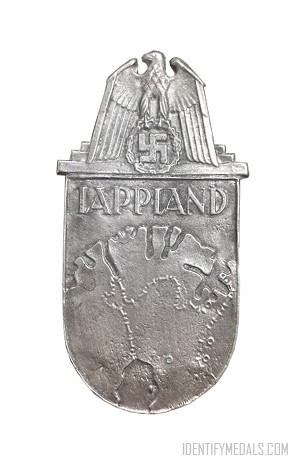
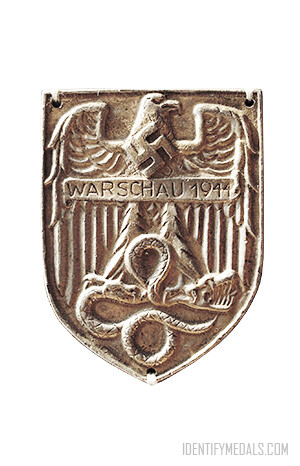
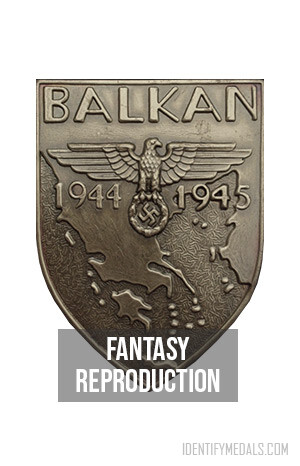
These campaign shields were awarded to members of the Wehrmacht (the unified armed forces of Nazi Germany from 1935 to 1945). They were given for participation in specific battles or campaigns and worn on the left upper arm of the uniform jacket.

German WW2 Nazi Awards: The Warsaw Shield

The Warsaw Shield

The Warsaw Shield (Ärmelschild Warschau) is a German military decoration for those who took part in the suppression of the Warsaw uprising.

Read More »