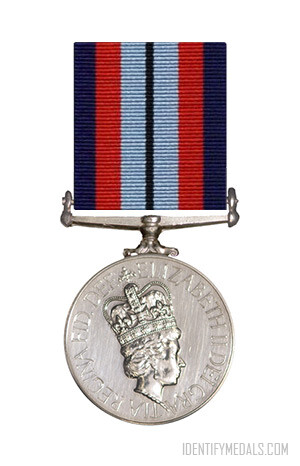
The New Zealand Armed Forces Award

The New Zealand Armed Forces Award was established on 6 May 1985 and is awarded for 15 years of unblemished service.

The New Zealand Armed Forces Award is a long service decoration designated for Regular Force Officers of the New Zealand Defence Force.

It was instituted on 6 May 1985, originally recognizing 15 years of exemplary service. However, on 14 August 2020, updated criteria were announced, reducing the service requirement to 14 years for the initial award, and making clasps available for every subsequent seven years of service.

The New Zealand Armed Forces Award Design

The New Zealand Armed Forces Award is a circular silver medal. The obverse features the crowned effigy of Her Majesty The Queen, encircled by the inscription “ELIZABETH II DEI GRATIA REGINA FID. DEF.”

The reverse displays an eagle with spread wings superimposed over two crossed swords pointing upwards, topped by a Naval Crown. Two fern fronds, with stems crossed at the base, lie behind the swords. The design is bordered by the inscription “New Zealand” at the top and “Armed Forces Award” at the bottom. The symbols on the reverse represent the three branches of the New Zealand Defence Force: the Army, the Royal Navy, and the Air Force.

The medal hangs from a ribbon colored dark blue, crimson, and light blue, representing the three services, with a central black stripe symbolizing New Zealand. Subsequent awards are indicated by a clasp on the medal’s suspension ribbon or a rosette on the service ribbon worn in undress.

Find This Medal

Right Now on eBay 
Clicking a link to eBay may result in a referral commission being paid if a purchase is made.
Loading...

The Papua New Guinea Independence Medal

The Papua New Guinea Independence Medal was established to commemorate the transition to the full independence of Papua New Guinea.

The Papua New Guinea Independence Medal was established in 1975 to mark Papua New Guinea’s transition from self-government to full independence from Australia.

It is part of the Papua New Guinea honors system.

Notable recipients of this medal include:

The Papua New Guinea Independence Medal Design

There are three versions of the Papua New Guinea Independence Medal.

The first version was introduced in 1975 and features the inscriptions “ELIZABETH II DEI GRATIA REGINA F.D.” and “PAPUA NEW GUINEA INDEPENDENCE 1975.” It was awarded from 1973 to 1975 to defense force members and citizens in recognition of outstanding service. This medal has a ring suspension and a smooth surface.

The second version was introduced in 1985 to commemorate the 10th anniversary of independence. It was awarded to civilian and military personnel who made significant contributions to the state since independence. This version bears the inscriptions “PAPUA NEW GUINEA ELIZABETH II DEI GRATIA REGINA F.D.” and “INDEPENDENCE 1975-1985.” It also has a ring suspension and a smooth surface.

The third version was introduced in 2005 to mark the 30th anniversary of independence. The obverse inscription reads “30TH INDEPENDENCE ANNIVERSARY 1975-2005.” This version features a bar suspension and a rayed surface.

The Queen Elizabeth II Coronation Medal

The medal, established in 1953, was given as a personal memento from the Queen to members of the Royal Family and selected officers of state.

The Queen Elizabeth II Coronation Medal is a commemorative medal established on 2 June 1953 and instituted to celebrate the coronation of Queen Elizabeth II.

This medal was given as a personal memento from the Queen to members of the Royal Family and selected officers of state, including members of the Royal Household, government officials, mayors, public servants, local government officials, and members of the navy, army, air force, and police in Britain, as well as her colonies and Dominions. It was also awarded to members of the Mount Everest expedition, two of whom reached the summit four days before the coronation. The medal was struck at the Royal Mint and distributed immediately after the coronation.

For Coronation and Jubilee medals, up until 1977, the practice was for the authorities in the United Kingdom to decide on the total number to be produced and then allocate a proportion to each of the Commonwealth countries, Crown dependencies, and other possessions of the Crown. The government of each territory had the discretion to decide who would receive a medal and for what reasons.

In total, 129,051 medals were awarded, including:

  • 11,561 to Australians.
  • 12,500 to Canadians.

The Queen Elizabeth II Coronation Medal Design

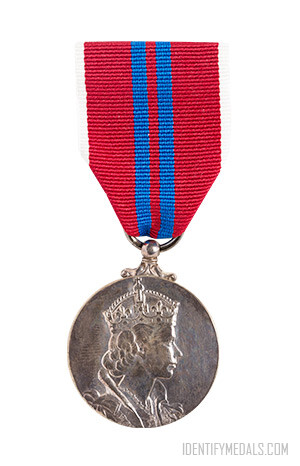
The Queen Elizabeth II Coronation Medal is a silver disk measuring 1.25 inches in diameter. The obverse features a crowned effigy of Queen Elizabeth II, facing right, adorned in a high-collared ermine cloak and wearing a Tudor Crown along with the Collar of the Garter and Badge of the Bath. It lacks a raised rim and any inscriptions.

The reverse displays the Royal Cypher “EiiR” topped by a large crown, with the inscription “QUEEN ELIZABETH II CROWNED 2nd JUNE 1953” around the edge. The medal was designed by Cecil Thomas.

The dark red ribbon is 1.25 inches (32 mm) wide, featuring 2 mm wide white edges and two narrow dark blue stripes in the center, each 2 mm wide and 1.6 mm apart.

The New Zealand Suffrage Centennial Medal 1993

The New Zealand Suffrage Centennial Medal was established on 1 July 1993 to commemorate Women’s suffrage in New Zealand.

The New Zealand Suffrage Centennial Medal 1993 was officially established through a Royal Warrant on July 1, 1993. Its purpose was to honor and celebrate Women’s suffrage in New Zealand and to acknowledge the substantial contributions made by individuals, both from New Zealand and the Commonwealth, to advance women’s rights and address women’s issues within New Zealand. Notably, this medal was exclusively awarded in the year 1993.

The background of this commemorative medal is closely tied to the achievement of Women’s suffrage in New Zealand, which was realized with the passing of the Electoral Act 1893 on September 19, 1893. To mark the centennial anniversary of this historic event, the medal was created. It aimed to pay tribute to those New Zealanders and other Commonwealth citizens who had made significant and recognizable contributions to women’s rights or women’s issues within New Zealand. In total, the medal was presented to 544 deserving individuals.

The New Zealand Suffrage Centennial Medal 1993 Design

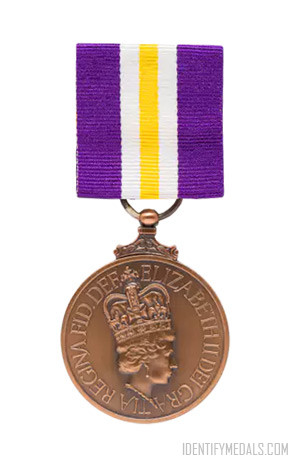
The medal, crafted in bronze with an antique finish, takes on a circular form.

On its obverse it features the crowned effigy of Queen Elizabeth II. Meanwhile, the reverse side of the medal carries the inscription “1893 The New Zealand Suffrage Centennial 1993.” This inscription is elegantly encircled by a combination of a fern frond and a sprig of camellia foliage, culminating in a single flower. These elements are artistically intertwined, their stems crossed and tied together with a graceful bow at the base.

The medal is attached to a ribbon that is 32 mm wide. This ribbon is predominantly purple, with three slim stripes in the center—white, yellow, and white. When worn by a woman, the medal may be elegantly suspended using the ribbon, which can be shaped into a bow for added distinction.

The New Zealand 1990 Commemoration Medal

The New Zealand 1990 Commemoration Medal was awarded in 1990 to celebrate the 150th anniversary of the signing of the Treaty of Waitangi.

The New Zealand 1990 Commemoration Medal, also known as the Sesquicentennial Medal, was established by Queen Elizabeth II through a Royal Warrant on February 9, 1990.

It was specifically intended for award during the year 1990, and around 3,000 individuals were initially chosen to receive it in recognition of their contributions to various aspects of New Zealand life, particularly in connection with the 1990 celebrations. Ultimately, 3,632 medals were conferred.

This medal holds significance as it was issued on the 150th anniversary of the signing of the Treaty of Waitangi on February 6, 1840, by representatives of the British Crown and various Māori chiefs from New Zealand’s North Island.

The New Zealand 1990 Commemoration Medal is an official decoration to be worn on all appropriate occasions. In the order of precedence, it follows Coronation and Jubilee medals but precedes long service decorations and medals. Each recipient is also presented with a certificate bearing the signatures of the Queen, the Governor-General, and the Prime Minister.

The New Zealand 1990 Commemoration Medal Design

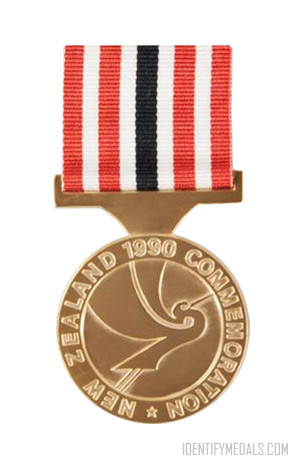
The New Zealand 1990 Commemoration Medal is a gilt metal, circular in shape.

On the obverse, it bears the Effigy of the Sovereign surrounded by the inscription “ELIZABETH II • QUEEN OF NEW ZEALAND”. On the reverse is the official 1990 Symbol (a stylized Kotuku, White Heron) and the inscription “NEW ZEALAND 1990 COMMEMORATION”.

The medal is suspended by a ribbon, 32 millimeters in width, consisting of nine narrow stripes of red ochre, white, red ochre, white, black, white, red ochre, white, and red ochre.

Find This Medal

Right Now on eBay 
Clicking a link to eBay may result in a referral commission being paid if a purchase is made.
Loading...

The New Zealand Special Service Medal

The New Zealand Special Service Medal (NZSSM) was established by royal warrant by Elizabeth II in 2002 for military service.

The New Zealand Special Service Medal (NZSSM) was officially instituted by Queen Elizabeth II through a royal warrant on July 23, 2002. This medal is designed to acknowledge military service that wouldn’t typically qualify for a Campaign medal.

The New Zealand Special Service Medal Ribbons

There are three conditions under which the medal is awarded: New Zealand Special Service Medal (Nuclear Testing), New Zealand Special Service Medal (Asian Tsunami), and New Zealand Special Service Medal (Erebus).

New Zealand Special Service Medal (Nuclear Testing)

The NZSSM (Nuclear Testing) is a retrospective honor, established on July 24, 2002, and is bestowed upon individuals who were part of a New Zealand Government mission during atmospheric nuclear tests in the 1950s and one test in 1973.

The tests recognized by this medal were at Maralinga, South Australia, Malden Island, Christmas Island, Nevada Test Site, Enewetak Atoll, and Moruroa.

New Zealand Special Service Medal (Asian Tsunami)

he NZSSM (Asian Tsunami) was created on December 22, 2005, to honor those who helped after the 2004 Indian Ocean earthquake and tsunami.

To earn this medal, you needed to serve for at least 7 days between December 26, 2004, and February 28, 2005, or for at least 14 days from December 26, 2004, to December 26, 2005. This service involved providing relief, helping with recovery, and aiding in reconstruction in countries affected by the tsunami. 

New Zealand Special Service Medal (Erebus)

The NZSSM (Erebus) was created in November 2006 to honor those who served in the aftermath of the Air New Zealand Flight 901 crash on Mount Erebus, Ross Island, Antarctica, on November 28, 1979. Qualifying service includes activities like body recovery, crash investigation, and victim identification.

The New Zealand Special Service Medal Design

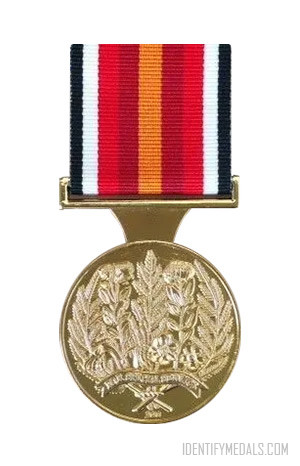
The medal is a round one made of gold-plated base metal. On the obverse, there is the New Zealand Coat of Arms, and on the back, there’s a lovely bouquet of native New Zealand flowers, including fern fronds, Pohutukawa, Manuka, Kowhai, and Mount Cook Lily. At the bottom of the bouquet, there’s a scroll that says “FOR SPECIAL SERVICE.

This design is the same for all three medals.

The ribbon is 32 mm wide, and the ribbon’s design can vary depending on the circumstances for which the medal is awarded.

Find This Medal

Right Now on eBay 
Clicking a link to eBay may result in a referral commission being paid if a purchase is made.
Loading...

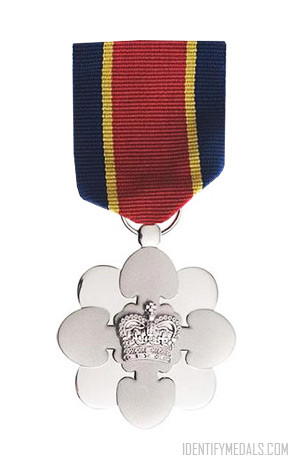
The New Zealand Distinguished Service Decoration

The New Zealand Distinguished Service Decoration (DSD) was instituted as a Royal Honor in 2007 to recognize distinguished military service.

The New Zealand Distinguished Service Decoration (DSD) was established by Royal Warrant in 2007 as a prestigious New Zealand Royal Honor, designed to commend exceptional military service. This decoration recognizes the distinguished contributions of regular, territorial, and reserve members within the New Zealand Defence Force.

Prior to 1995, such commendable service was acknowledged through the presentation of the British Empire Medal (Military Division). However, following the transition to a fully New Zealand Honors system in 1996, these Commonwealth awards were no longer available for recognition of New Zealand military personnel.

The New Zealand Distinguished Service Decoration Eligibility Criteria

The Distinguished Service Decoration is open to all members of the New Zealand Defence Force, as well as uniformed individuals from allied forces operating alongside or in conjunction with New Zealand military units.

It may be conferred for exceptional performance of military duties, whether in warlike or non-warlike operations, or for individual contributions to peacetime and humanitarian efforts that bring significant credit to the New Zealand Defence Force. Such acts must substantially contribute, through unwavering devotion to duty, commitment, discernment, or the application of skills, to the execution of operational deployments, military training, military operations, or the management and execution of projects or activities bearing significant implications for the current or future capabilities of the New Zealand Defence Force.

The Distinguished Service Decoration can be awarded for a singular remarkable achievement or for a cumulative record of extraordinary service rendered over an extended period.

The New Zealand Distinguished Service Decoration Design

The medal, crafted from sterling silver, takes the form of a kotiate, a traditional Māori war club featuring eight blades.

At the heart of the kotiate, on the obverse, one finds the depiction of St Edward’s Crown. The blades are arranged in an alternating pattern of frosted and polished silver.

On the reverse side, you’ll find the inscription “FOR DISTINGUISHED SERVICE,” accompanied by its Māori counterpart, “MO NGA TE MAHI KAHURANGI.

The ribbon adorning the medal is characterized by a dark blue base with a prominent red center stripe flanked by two narrow yellow stripes that separate the red from the blue.

Find This Medal

Right Now on eBay 
Clicking a link to eBay may result in a referral commission being paid if a purchase is made.
Loading...

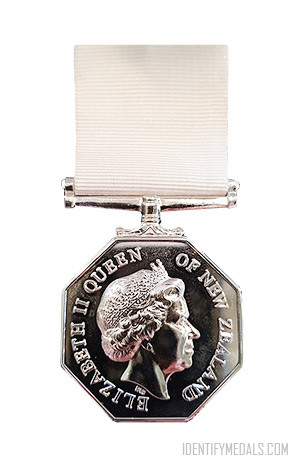
The New Zealand Antarctic Medal

The New Zealand Antarctic Medal was established on 1 September 2006 as a New Zealand royal honor to replace the British Polar Medal.

The New Zealand Antarctic Medal, established on September 1, 2006, as a New Zealand royal honor, was introduced to replace the British Polar Medal (the Polar Medal, initiated in 1904, was bestowed upon individuals who had made significant contributions to polar exploration and knowledge). Recipients of this prestigious award had braved the formidable challenges and hardships posed by polar environments, whether on land, sea, or in the air.

In 1995, the Prime Minister’s Honors Advisory Committee recommended the establishment of the Polar Medal under a New Zealand royal warrant. Simultaneously, they proposed renaming it as “The Antarctic Medal” to better align with New Zealand’s accomplishments and endeavors in Antarctica. On September 1, 2006, Queen Elizabeth II formally instituted the New Zealand Antarctic Medal.

The New Zealand Antarctic Medal is conferred upon New Zealanders and other individuals who, either independently or as part of a New Zealand mission in the Antarctic region, have made exceptional contributions to exploration, scientific research, conservation, environmental protection, or the advancement of knowledge related to Antarctica. Additionally, it may be awarded to those who have supported New Zealand’s objectives or operations in the Antarctic region. Notably, the Medal is not granted for acts of bravery, short-term feats of extreme endurance, long service, or general service in Antarctica.

The New Zealand Antarctic Medal Design

The obverse of the New Zealand Antarctic Medal features Queen Elizabeth II. The ribbon is white. 

Find Antarctic Medals

Right Now on eBay 
Clicking a link to eBay may result in a referral commission being paid if a purchase is made.
Loading...

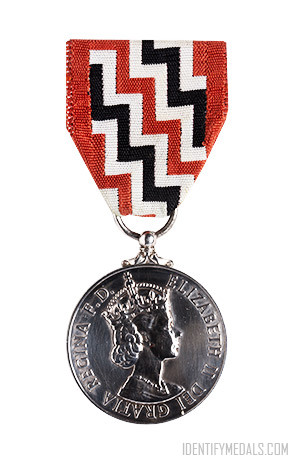
The New Zealand Queen’s Service Medal

The New Zealand Queen’s Medal is awarded by the government of New Zealand to recognize volunteer service to the community and public service.

The Queen’s Service Medal is a medal bestowed by the New Zealand government to acknowledge and honor volunteer contributions to the community, as well as public service in elected or appointed positions.

This medal was established in 1975 and has a connection to the Queen’s Service Order. The QSM took over the role of the Imperial Service Medal as a New Zealand award.

The New Zealand Queen’s Service Medal Design

There are two versions of the Queen’s Service Medal: 1975-2007 and 2007-present. 

The original medal measured 36 millimeters (1.4 inches) in diameter, was crafted from sterling silver. Its obverse featured the same effigy of Queen Elizabeth II as the Queen’s Service Order badge, encircled by her Royal styles and titles, “ELIZABETH II DEI GRATIA REGINA F.D.” On the reverse, the New Zealand Coat of Arms was displayed, accompanied by the inscription “The Queen’s Service Medal” and the specific sub-division, either “for Community Service” or “for Public Services.” The recipient’s initials and name were engraved on the medal’s rim. These medals were manufactured by the Royal Mint.

The current medal, also composed of sterling silver and measuring 36 mm in diameter, showcases the Ian Rank-Broadley designed effigy of Queen Elizabeth II on its obverse. The effigy is surrounded by her Royal styles and titles, “ELIZABETH II QUEEN OF NEW ZEALAND.” The reverse side features the New Zealand Coat of Arms, bordered by the inscription “The Queen’s Service Medal” above and “for service – MO NGA MAHI NUI” below. 

Both versions of the medal hang from a 36 mm wide ribbon. It has narrow red ochre (kokowhai) stripes along the edges, while the center displays alternating stripes of red ochre, white, and black, forming a descending step pattern from left to right. This design draws inspiration from the Māori Poutama pattern found in Tukutuku wall panels, symbolizing the “stairway to heaven,” although in this context, it represents the “steps of service.”

Find This Medal

Right Now on eBay 
Clicking a link to eBay may result in a referral commission being paid if a purchase is made.
Loading...

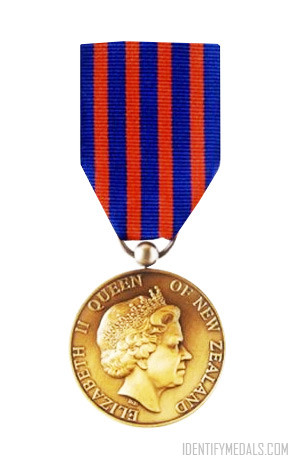
The New Zealand Bravery Medal

The New Zealand Bravery Medal (NZBM) was instituted i n1999 and is the fourth-level civil decoration of New Zealand.

The New Zealand Bravery Medal (NZBM) holds the distinction of being the fourth-level civil decoration within New Zealand’s honors system.

Its establishment occurred through a Royal Warrant on September 20, 1999, marking a significant shift towards an indigenous New Zealand Bravery system, replacing British bravery awards. This esteemed medal, which can also be posthumously awarded, is granted in recognition of “acts of bravery.” While primarily a civilian honor, it is extended to members of the armed forces who demonstrate acts of bravery in non-operational situations. This allowance is made since New Zealand’s gallantry awards are typically reserved for individuals involved in war, warlike operational service, and peacekeeping missions.

To acknowledge continued acts of exceptional bravery deserving of recognition, bars may be added to the NZBM. Those who are honored with the New Zealand Bravery Medal are entitled to use the postnominal letters NZBM.

The New Zealand Bravery Medal Design

The New Zealand Bravery Medal is a bronze disk measuring 28 mm in diameter. 

The ribbon is 32 mm wide and has nine equal and alternating stripes of bright blue and crimson.

Find This Medal

Right Now on eBay 
Clicking a link to eBay may result in a referral commission being paid if a purchase is made.
Loading...