Order of Pedro I

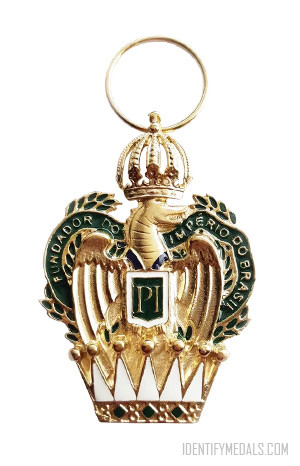
The Order of Pedro I is a Brazilian order of chivalry instituted in 1826 by Emperor Pedro I and considered the rarest of the country’s orders.

The Order of Pedro I (or Imperial Ordem de Pedro Primeiro in Portuguese) is a Brazilian order of chivalry instituted in 16 April 1826 by Emperor Pedro I and considered the rarest of the country’s Imperial orders.

The Order of Pedro I was canceled on 22 March 1890 by the interim government of the United States of Brazil. Since the deposition of the last Brazilian monarch in 1889, it continues to be used as a house order by the Heads of the Orleans-Berganza house. The Grand Mastership, like many other Brazilian imperial orders, is shared between the branches of Petrópolis and Vassouras.

Classes of the Order of Pedro I

The Imperial Order of Pedro I has the following classes:

  • Grand Cross (Grã-Cruz)
  • Commander (Comendador)
  • Knight (Cavaleiro)

The Order of Pedro I Medal Design

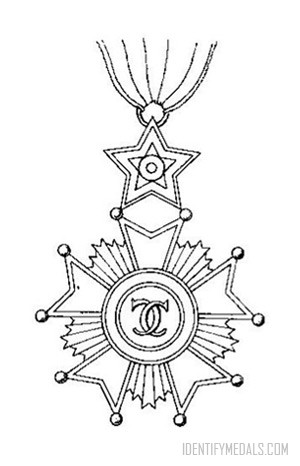
The insignia of the Grand Cross of the Order of Pedro I is a gold-winged dragon (referencing the House of Braganza) with a red sole garnished with coffee branches and the inscription “Founder of the Empire of Brazil”. The insignia is topped with an imperial crown and a green ribbon. The reverse is the same except that the dragon is complete with its tail and without the crown of the city.
Order of Saint James of the Sword

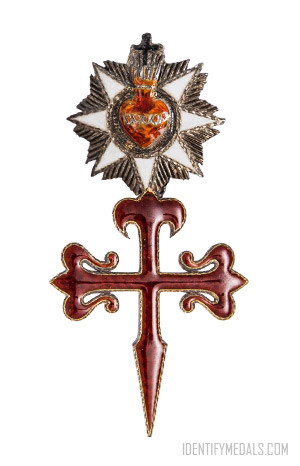
The Order of Saint James of the Sword was an honorific order of the Empire of Brazil established in 1843 and nationalized by Pedro I.

  • Time Period: Pre-WW1
  • Institution: 9 September 1843
  • Country: Brazil

The Imperial Order of Saint James of the Sword (or Imperial Ordem de Sant’Iago da Espada in Portuguese) was an honorific order of the Empire of Brazil established on 9 September 1843 and nationalized by Pedro I of Brazil after the reform proposed by  Dona Maria II of Portugal and recommended by the Judiciary.

While the Portuguese Order of Saint James of the Sword (on which this Brazilian one is based) was offered to people who made advancements in science, literature, and art, the Brazilian counterpart was reserved exclusively for military personnel (especially of Pedro I and his son Dom Pedro II). 

The Imperial Order of Saint James of the Sword was canceled as a national order by the interim government of the United States of Brazil on 22 March 1890. Since then, it continues to be awarded by the Heads of the Orleans-Braganza house, and the Petrópolis and Vassouras branches of the Imperial family dispute its Gand Mastership. 

Classes of the Order of th Sword

The Imperial Order of Saint James of the Sword has the following classes:

  • Grand Cross (Grã-Cruz)
  • Commander (Comendador)
  • Knight (Cavaleiro)

Imperial Order of St. Benedict of Avis

The Imperial Order of St. Benedict of Avis is a Brazilian military order established in 1843 and awarded in three grades.

  • Time Period: Pre-WW1
  • Institution: 9 September 1843
  • Country: Brazil

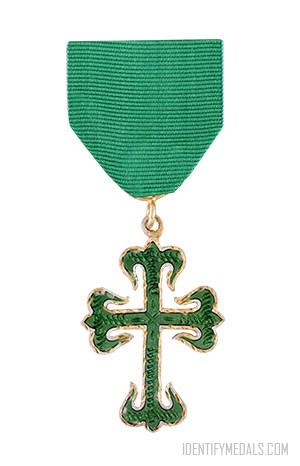
The Imperial Order of St. Benedict of Avis (or Imperial Ordem de São Bento de Avis in Portuguese) is a military order established on 9 September 1843 and awarded in three grades. 

It’s believed this order originates from the Portuguese Military Order of Aviz – which, in turn, dates back to medieval times. Other theories inlve a Spanish origin based on the Order of Calatrava.

The Order of Avis had a religious character, which was deprived in September 1843 when the Republic was proclaimed. 

Since the deposition of Emperor Pedro II (the last Brazilian monarch), the order continues to be used as a house order awarded by the Heads of the House of Orleans-Braganza. The Grand Mastership of the order is disputed between the Petrópolis and Vassouras branches of the Imperial family. 

Classes of the Order of Avis

The Order of Avis has the following classes:

  • Grand Cross (Grã-Cruz)
  • Commander (Comendador)
  • Knight (Cavaleiro)

The Order of Avis Medal Design

The obverse of the Order of Avis’ insignia is a white star with five forked tips and doorknobs. It sits on a garland of tobacco and coffee branches, and the pendant has an imperial crown. In the center is a white medallion with a florid green cross embroidered in gold. 

The Knight’s insignia is a green enamelled florid cross.

Order of Columbus

The Order of Columbus was a Brazilian order of merit instituted in 1890, right after the abolition of Imperial Brazilian Orders.

The Order of Columbus (or Ordem de Colombo in Portuguese) was a Brazilian order of merit instituted on 6 June 1890, right after the abolition of all the Imperial Brazilian Orders. 

When the first constitution of the Brazilian republic was created, the Order of Columbus was abolished (24 February 1891).

Classes of the Order of Columbus

The Order of Columbus had the following grades:

  • Grandmaster
  • Grand Cross (12 real and 24 honorary)
  • Grand Officer (50 dignataries)
  • Officer (150 of them)
  • Knights (An unlimited number)

Imperial Order of Christ (Brazil)

The Imperial Order of Christ is a Brazilian order of chivalry instituted in 1822 and awarded for notable services to religion.

The Imperial Order of Christ (also known as The Imperial Order of Our Lord Jesus Christ or Imperial Ordem de Nosso Senhor Jesus Cristo in Portuguese) is a Brazilian order of chivalry established on 7 December 1822 and awarded for notable services to religion.

The Order of Christ was instituted by emperor Pedro I of Brazil and is based on the Portuguese Order of Christ, which was founded in 1316-1319 by King Dom Dinis and Pope John XXII. 

Classes of the Order of Christ

The Order of Christ has three grades. These are:

  • Grand Cross: The badge is worn on a sash on the right shoulder.
  • Commander: The badge is worn o a necklet.
  • Knight: The badge is worn on a ribbon on the left side of the chest.

The Order of Christ Medal Design

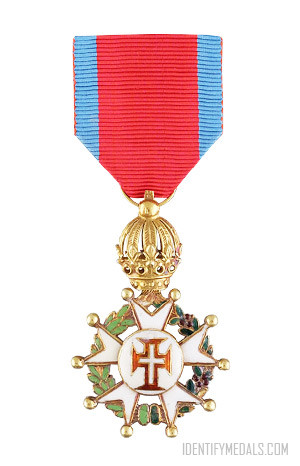
The Brazilian Order of Christ is based on the Portuguese order carrying the same name, with one difference: The badge had an added Imperial Crown of Brazil and the ribbon is different.

The obverse of the insignia for Civil Knights is a Latin cross with silver gilt and red enamel. The border is chiseled and has insets of white enamel. Military Knights is a Maltese cross with ball-tipped finials and a laurel wreath between the arms.

The star of the order has 22 asymmetrical arms of rays and a central white enamel disc with a miniature cross above it. On top of the star is the Sacred Heart of Christ. 

The ribbon of the Order of Christ is red with small blue stripes on each side.

Imperial Order of the Rose

The Imperial Order of the Rose was a Brazilian order of chivalry created by Emperor Pedro I of Brazil in 1829 to commemorate his marriage.

The Imperial Order of the Rose was a Brazilian order of chivalry created by Emperor Pedro I in 1829 to commemorate his marriage to Amélie of Leuchtenberg. 

The order was canceled in 1890 by the interim government of the First Brazilian Republic. When Emperor Pedro II was deposed in 1889, the order continued as a house order being awarded by the Heads of the House of Orleans-Braganza (pretenders of the throne). 

Today, the Grand Mastership of the Order is disputed between the two branches Petrópolis and Vassouras of the Brazilian Imperial family. 

Classes of the Order of the Rose

The Order of the Rose had six degreed:

  • Grand Cross: Limited to 16 recipients and styled “Excellency”.
  • Grand Dignitary: Limited to 16 recipients and styled “Senhor”.
  • Dignitary: Limited to 32 recipients and styled “Senhor”.
  • Commander: With an unlimited number of recipients and styled “Senhor”
  • Official: With an unlimited number of recipients and styled “Honorary Colonel”.
  • Knight: With an unlimited number of recipients and styled “Honorary Captain”.

The Order of the Rose Medal Design

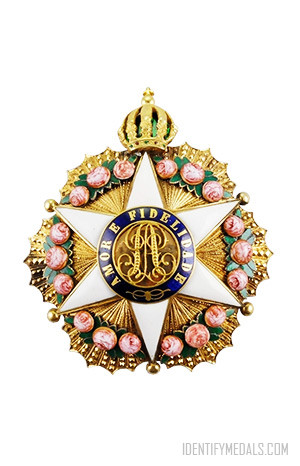
The obverse of the insignia consists of a white star with six-pointed tips joined by a garland of roses. In the center is a medallion with the interlaced letters P and A embossed and surrounded y a blue ferret border that rad “Love and Fidelity”. 

The reverse is the same but with the inscription “2-8-1829” and the legend “PEDRO AND AMÉLIA”.

Order of the Southern Cross

The Order of the Southern Cross is a Brazilian order of chivalry established in 1822 for the coronation of Pedro I.

The Order of the Southern Cross (or Ordem Nacional do Cruzeiro do Sul in Portuguese) is a Brazilian order of chivalry established on 1 December 1822 for the coronation of Pedro I of Brazil, the empire’s first monarch. 

The order is awarded “as a token of gratitude and recognition for those who have rendered significant service to the Brazilian nation”. The Grand Master of the Order of the Southern Cross is the President of Brazil. 

Originally known as the Imperial Order of the Cross (or Ordem Imperial do Cruzeiro in Portuguese), the first knights were also appointed when the monarch was crowned. Although Brazil had shared orders of chivalry with Portugal before the country’s independence, the Order of the Cross was the first purely Brazilian order.

From the proclamation of the Republic until the revolution of 1930 (what’s known as the Old Republic), national orders ceased to exist. This changed when, in 1832, the Order of the Southern Cross was the first to be re-established. Today, it’s considered the senior Brazilian National Order. 

The order continues to be used by both branches of the Brazilian Imperial family, but it’s no longer recognized by the Republic of Brazil. 

Classes of the Order of the Southern Cross

In 1932, the republican version of the Order had the same five grades as the old imperial version. The Order of the Southern Cross is now awarded in six classes:

  • BRA - Order of the Southern Cross - Grand Cross BAR.svg Grand Collar: The highest rank, usually restricted to foreign Heads of State.
  • BRA - Order of the Southern Cross - Grand Cross BAR.svg Grand Cross
  • BRA - Order of the Southern Cross - Grand Officer BAR.svg Gand Officer
  • BRA - Order of the Southern Cross - Commander BAR.svg Commander
  • BRA - Order of the Southern Cross - Officer BAR.svg Officer
  • BRA - Order of the Southern Cross - Knight BAR.svg Knight

The Order of the Southern Cross Medal Design

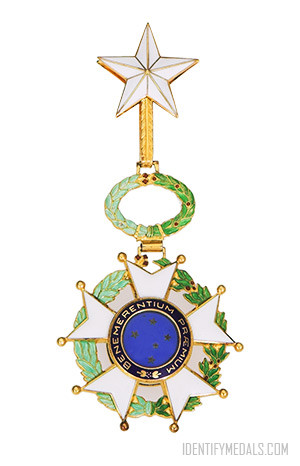
The insignia of the Order of the Southern Cross is a five-point white enamelled star edged with golden silver. It seats on a crown and is surmounted by a garland made of coffee and tobacco leaves. In the obverse, in the center is a blue sky field with the constellation of the Southern Cross, and in the circumference is the inscription “Benemerentium Premium” (“an award for merit”). The reverse shows the effigy of the Republic in gold and the inscription “Federative Republic of Brazil” (Art. 2 of the Regulations).

The Grand Collar of the Order of the Southern Cross is a chain from which the badge of the order is suspended.

The Star of the Order is a plaque modelled after the badge of the Order and is worn on the left breast.

The Order of the Lion (France)

The Order of the Lion was an Order of Knighthood established by Enguerrand I of Coucy, to immortalize his killing of one such dangerous animal.

The Order of the Lion was an Order of Knighthood established by Enguerrand I of Coucy (some sources say it was actually his son Enguerrand II who created it) to immortalize his killing of one such dangerous animal.

Enguerrand I was the Lord of Coucy from 1086 until 1116 when he died. He was a man of ‘many scandals,’ including adultery and divorce. He’s also said to have kidnapped Sibyl of Château-Porcien, wife of Godfrey I, Count of Namur.

This Order of Knighthood was described by Gustav Adolph Ackermann, who mentions it as part of the historical orders of France.

The Order of the Rooster and the Dog

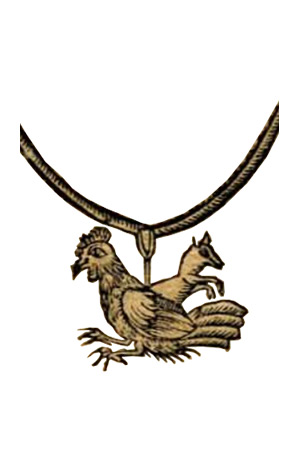
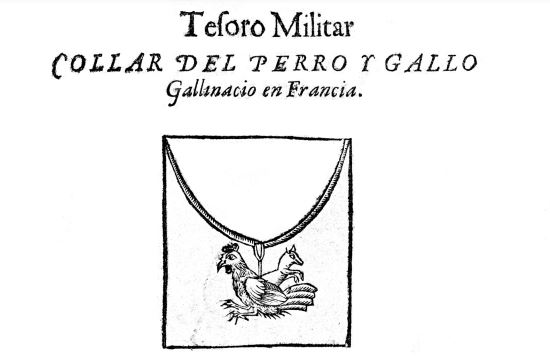
The Order of the Rooster and the Dog is an order of legendary origins in France. It’s not clear whether it actually existed or not.

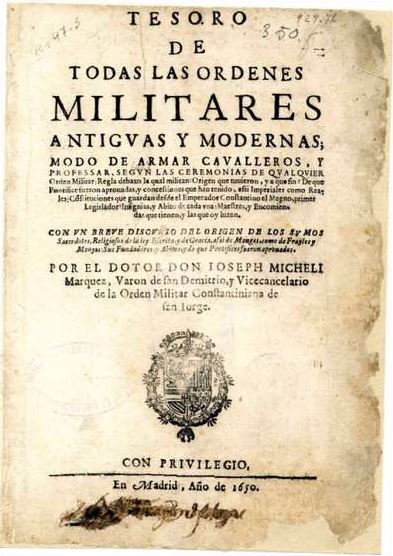
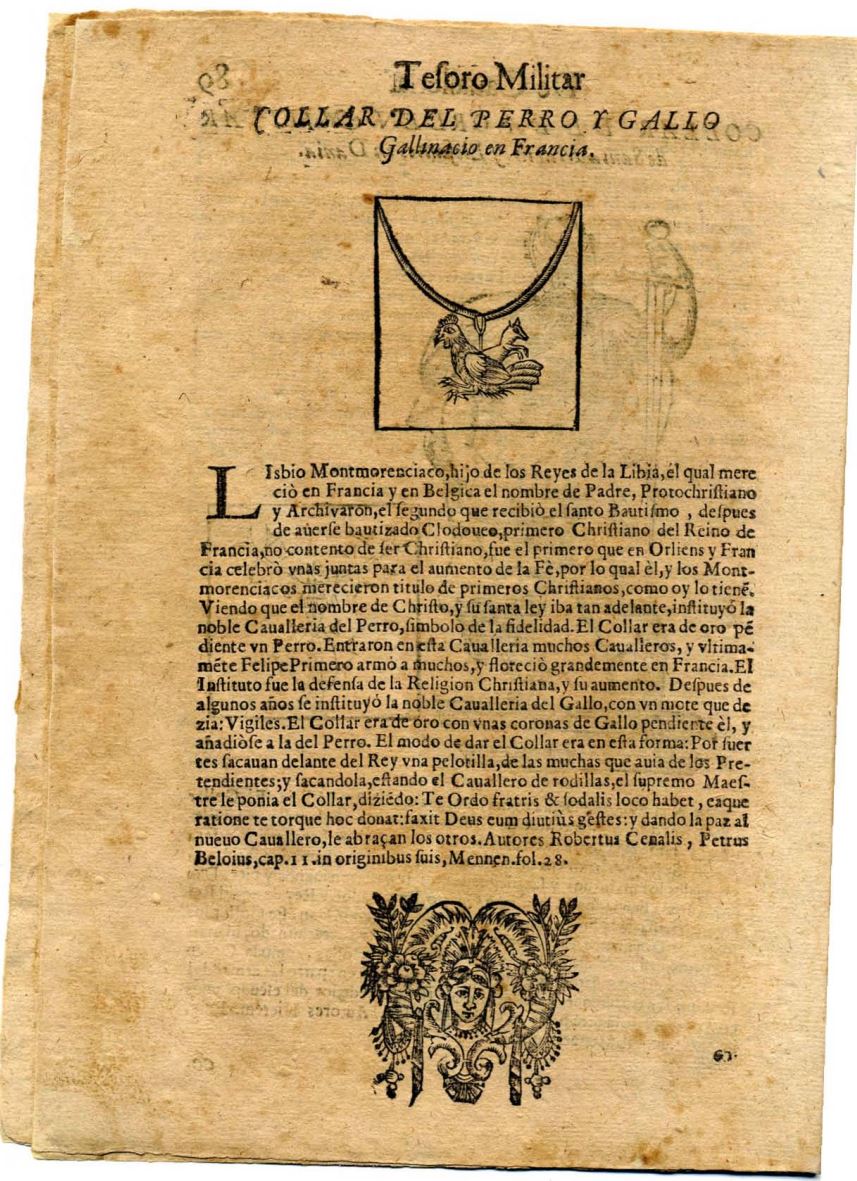
The Order is mentioned in the book “Tesoro de todas las ordenes militares antiguas y modernas” (Treasures of all Old and Modern Military Orders), published in 1650 and held by the Pitts Theology Library. You can see this book at Europeana and the Biblioteca Virtual de Defensa.

This is a description I translated from the original book:

“Lisbio Montmorenciaco, son of the Kings of Libya, who was called after his father in France and Belgium, baptized Clodoueo, first Christian in the Kingdom of Orliens and France (…) he was the first to celebrate in Orleans and France mass?. Seeing how the name of Christ and his holy faith were ahead, he instituted the noble “Cavalleria del Perro” (Knighthood of the Dog) as a symbol of fidelity. The collar was solid gold, and the pendant had a dog. Many knights were part of it, and ultimately Philip I armed many, and [the order] flowered in France. After some years, they instituted the Noble Knighthood of the Rooster, which had a gold necklace, and added the dog.”

Original source:

The Long Service Decoration (Bourbon-Parma Lucca)

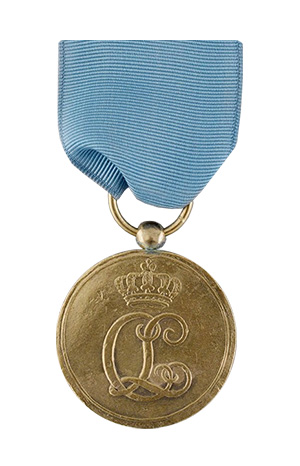
The Long Service Decoration (Bourbon-Parma Lucca) is a medal instituted in 1833 and awarded to NCO’s and Enlisted Men for ten years’ service.

The Long Service Decoration (or Decorazioni di servizio per gli ufficiali e sottufficiali in Italian, also Medaglia di Anzianitá) is a medal instituted in 1833 and awarded to NCO’s and Enlisted Men who had served at least ten (round medal) or thirty years (cross).

The medal was created during the period of the House of Bourbon-Parma, a cadet branch of the Spanish royal family. Their members once ruled as Duke of Parma and Piacenza, Guastalla, and Lucca.

The Long Service Decoration Design

The medal is round, struck in bronze gilt and measures 33 mm (wide) x 37.7 mm (hight) inclusive of its laterally-pierced ball suspension.