The Medal for Heroic Deeds (Norway)

The Medal for Heroic Deeds was instituted in 1885 and is awarded for honorable actions in saving lives. It originally had three classes.

The Medal for Heroic Deeds was established in Norway by royal resolution on August 19, 1885, to honor individuals for commendable acts in saving lives or performing similar brave deeds. Initially, the medal was available in three classes, but since 1905, it has only been awarded in gold and silver.

To qualify for the gold medal, the recipient must have executed an exceptionally notable rescue operation where their own life was at significant risk.

The Medal for Heroic Deeds Design

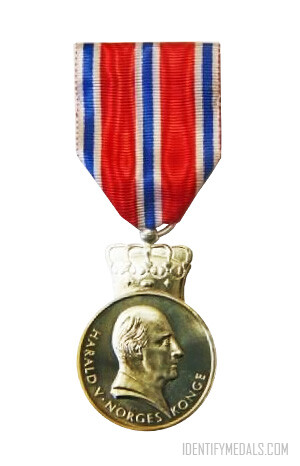
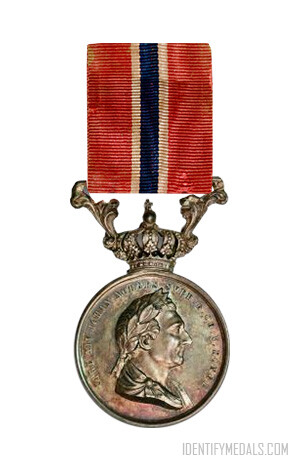
The medal is topped with the Crown of Norway, and the obverse features the portrait, name, and title of the reigning monarch. Currently, it displays the image of King Harald V of Norway, with the inscription «Harald den 5, Norges Konge» (Harald the Fifth, King of Norway).

The reverse side showcases an oak wreath and bears the words «For edel dåd» (For noble deed).

The ribbon accompanying the medal reflects the national colors of Norway: red, white, and blue.
The Order of St. Olav

The Royal Norwegian Order of Saint Olav was instituted by King Oscar I in 1847 and is a Norwegian order of chivalry.

The Royal Norwegian Order of Saint Olav (or Den Kongelige Norske Sankt Olavs Orden; or Sanct Olafs Orden, the old Norwegian name) is a prestigious order of chivalry established by King Oscar I on August 21, 1847. Named after King Olav II, who is venerated as St. Olav, this order honors remarkable achievements for the benefit of Norway and humanity.

In 1904, shortly before the union with Sweden was dissolved in 1905, King Oscar II instituted the Order of the Norwegian Lion. However, no appointments were made by his successor, King Haakon VII, making the Order of St. Olav the sole order of chivalry in Norway for the next 80 years. The reigning monarch of Norway serves as the Grand Master of the order, which has been used to recognize outstanding contributions.

Since 1985, the order has been primarily awarded to Norwegian citizens, though foreign heads of state and royalty may still be honored as a courtesy.

Grades and Classes

The Order of Saint Olav consists of three main grades, with some grades further divided into classes. It recognizes both civilian and military contributions, with the Grand Cross being the highest distinction. The collar is a separate honor awarded to recipients of the Grand Cross who are deemed exceptionally worthy.

  • Grand Cross (Storkors): Awarded to heads of state as a courtesy and, in rare cases, to individuals for merit. Recipients wear the badge on a collar (chain) along with a star on the left chest. If the collar is not worn, the badge may be worn on a sash over the right shoulder.
  • Commander: This grade is divided into two classes:
    • Commander with Star (Kommandør med stjerne): Recipients wear the badge on a necklet and a star on the left chest.
    • Commander (Kommandør): Recipients wear the badge on a necklet.
  • Knight: This grade is also divided into two classes:
    • Knight 1st Class (Ridder av 1. klasse): Recipients wear the badge on a ribbon on the left chest.
    • Knight (Ridder): Recipients wear the badge on a ribbon on the left chest.

The Order of St. Olav Design

The collar of the Order is made of gold and features a series of decorative elements: five enamelled and crowned “O” monograms, five enamelled and crowned Norwegian coat-of-arms, and ten gold crosses bottony, each flanked by two battle axes with silver blades and golden shafts, a design also seen in the coat of arms of the Church of Norway.

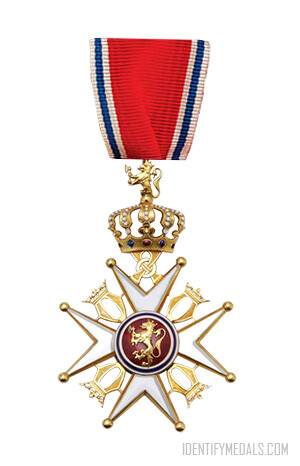
The badge of the Order is a white enamelled Maltese Cross. For the knight class, the cross is silver, while for higher classes it is gilt. Between the arms of the cross are crowned “O” monograms. The central disc on the obverse side is red, showcasing a golden Norwegian lion holding a battle-axe. The reverse disc bears King Oscar’s motto, “Ret og Sandhed” (“Justice and Truth”), and both discs are surrounded by a white-blue-white ring. The cross is topped with a crown, and military awards include crossed swords between the crown and the cross.

The star of the Order for the Grand Cross is an eight-pointed silver star with faceted rays, featuring the badge of the Order minus the crown. The star for the Commander with Star is a silver faceted Maltese Cross with gilt crowned “O” monograms between the arms. The central disc is red with a golden Norwegian lion bearing a battle-axe, surrounded by a white-blue-white ring.

The ribbon of the Order is red with white-blue-white edge stripes.

The Medal for Outstanding Civic Service

The Medal for Outstanding Civic Service was established in 1819 and is the second highest ranked Norwegian medal.

The Medal for Outstanding Civic Service (or Medaljen for Borgerdåd in Norwegian), is the second highest-ranked medal in Norway. This prestigious award was first established by a Royal Resolution on April 10, 1819, and was subsequently modified by another Royal Resolution on April 13, 1844. The medal was conferred by the cabinet in a meeting presided over by the King, based on recommendations from the Norwegian Ministry of Justice.

The medal was divided into two grades: the first class in gold and the second class in silver. It recognized individuals who rendered exceptional service to society. However, in the spring of 2004, the medal ceased to be awarded.

In terms of the Norwegian order of precedence, recipients of the Medal for Outstanding Civic Service are ranked second, positioned after recipients of the War Cross with Sword and before holders of the Royal Norwegian Order of St. Olav.

The Medal for Outstanding Civic Service Design

The medal is circular and comes in two classes: gold for the first class and silver for the second class, symbolizing the level of achievement and distinction of the recipient.

The obverse of the medal features an intricate design, including the image of the reigning monarch at the time of its institution, surrounded by a detailed border.

The medal is suspended from a red ribbon with a central blue and white stripe.

The Royal Family Order of Haakon VII

The Royal Family Order of Haakon VII was established in 1906 and bestowed by the Sovereign on members of the Norwegian royal family.

The Royal Family Order of Haakon VII (or Kong Haakon VIIs Husorden in Norwegian) is a distinguished honor that was personally conferred by King Haakon VII on members of the Norwegian royal family.

The Royal Family Order of Haakon VII is not just a ceremonial symbol but also a mark of distinction, reflecting the recipient’s service, dedication, and loyalty to the crown and the country. It serves as a unique honor, highlighting the personal appreciation and acknowledgment from the monarch to the family members who have supported and upheld the values and responsibilities of the monarchy.

King Haakon VII, who reigned from 1905 to 1957, established this order to honor and recognize the support of his family members. During his reign, he guided Norway through significant events, including its transition to independence and the challenging times of World War II.

Among the recipients of this prestigious order are key figures in the Norwegian royal family. For instance:

As of now, Princess Astrid, Mrs. Ferner, is the only living recipient of the Royal Family Order of Haakon VII. Her receipt of the honor underscores her enduring service and contributions to the royal family and Norway.

The Royal Family Order of Haakon VII Design

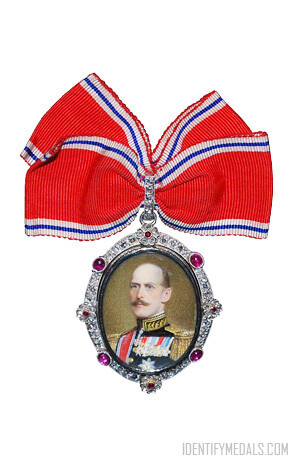
The insignia of the Royal Family Order includes a portrait of King Haakon VII, set in an ornate frame and suspended from a ribbon.

The ribbon is red with blue borders with a white fimbriation.

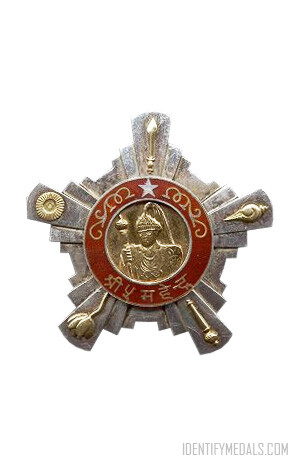
The Order of the Footprint of Nepal

The Order of the Footprint of Nepal was founded by King Mahendra in 1962. It’s awarded for significant contributions to national prestige.

  • Time Period: Pre-WW1
  • Institution: 16 December 1962
  • Country: Nepal

The Order of the Footprint of Nepal (or Nepal Shripada) was established by King Mahendra on December 16, 1962.

This prestigious award is exclusively conferred upon Nepalese citizens who have made significant contributions to enhancing the national prestige of Nepal.

The order comprises various ranks, including:

  • The Sovereign (Parama-Ujjwala-Kirtimaya-Nepal-Shripada)
  • The Grand Master (Ati-Ujjwala-Kirtimaya-Nepal-Shripada).

Additionally, there are five classes of ordinary members:

  • Maha-Ujjwala-Kirtimaya-Nepal-Shripada
  • Ujjwala-Kirtimaya-Nepal-Shripada
  • Sukirtmaya-Nepal-Shripada
  • Kirtimaya-Nepal-Shripada
  • Nepal-Shripada.

Each class reflects a different level of recognition for the recipient’s service and dedication to the country, symbolizing their esteemed contributions to Nepal’s honor and reputation.

The Order of the Footprint of Nepal Design

The ribbon is red with a narrow blue central stripe and 2 white edge stripes on each side.

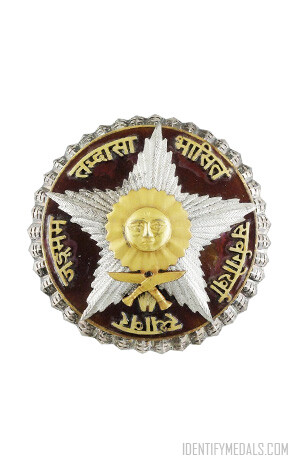
The Most Puissant Order of the Gurkha Right Hand

The Most Puissant Order of the Gurkha Right Hand was originally established by King Prithvi in 1896 and is composed of several ranks.

The Most Puissant Order of the Gurkha Right Hand (or गोरखा दक्षिण बाहु; Gorkha-Dakshina Bahu in Nepali) was originally an order of knighthood established by King Prithvi in 1896. It was later revived and reformed by King Tribhuvan on September 7, 1932.

The award was conferred upon both military personnel and civilians, including foreign nationals, for distinguished contributions to the nation in various fields such as arts, literature, sports, science, and social service. It held the status of the second highest honor in the Kingdom of Nepal, following the Order of Tri Shakti Patta.

This order is composed of several ranks, including:

  • The Sovereign (Parama-Suprasidha-Prabala-Gorkha-Dakshina-Bahu)
  • The Grand Master (Ati-Suprasidha-Prabala-Gorkha-Dakshina-Bahu)
  • Ordinary members, who are classified into five levels:
    • 1. Suprasidha-Prabala-Gorkha-Dakshina-Bahu
    • 2. Prasidha-Prabala-Gorkha-Dakshina-Bahu
    • 3. Suprabala-Gorkha-Dakshina-Bahu
    • 4. Prabala-Gorkha-Dakshina-Bahu
    • 5. Gorkha-Dakshina-Bahu.

Additionally, the order includes a medal (Gorkha-Dakshina-Bahu-Padak) which was introduced by King Tribhuvan in 1936.

The Most Puissant Order of the Gurkha Right Hand Design

The ribbon associated with the order is officially designated as saffron in color. This distinctive hue not only adds to the ceremonial prestige of the award but also carries cultural and symbolic significance.

Saffron is a color deeply rooted in various traditions, often representing sacrifice, valor, and dedication, thus aligning perfectly with the honor’s purpose of recognizing distinguished contributions to the nation.

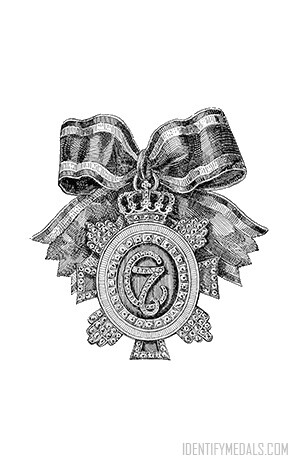
The Order of Christian VII

The Order of Christian VII was a Danish order of knighthood established in 1774 and designed to replace the Order of Mathilde.

The Order of Christian VII, also known as “Tessera Concordiæ” or “Christian VIIs Orden” in Danish, was a knighthood order established on October 21, 1774, by King Christian VII of Denmark. It was created to replace the Order of Mathilde after Queen Caroline Mathilde’s banishment in 1772.

This order was exclusively for the Danish royal family, awarded to both men and women.  The order fell into disuse after the death of Queen-Dowager Juliana Maria in 1796.

The Order of Christian VII Design

Men wore the insignia on the left breast, while women wore it on a bow on their left shoulder. Notably, Danish Princess Louise Augusta was depicted wearing it in a 1784 portrait by Jens Juel.

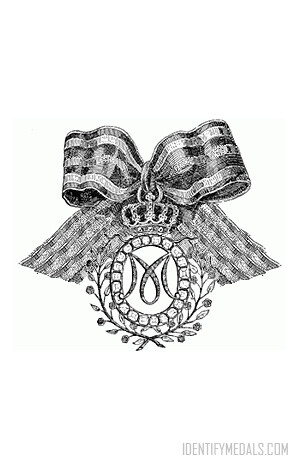
The Order of Mathilde

The Order of Mathilde was created in 1771 by the queen of Denmark-Norway, Caroline Matilda, on the birthday of Christian VII of Denmark.

The Order of Mathilde (or Mathildeordenen in Danish) was a Danish royal order established by Queen Caroline Matilda of Denmark-Norway on January 29, 1771, coinciding with King Christian VII’s birthday.

Named after the queen, the order ceased to be used following her banishment the next year. It was awarded to members of the royal family and close associates, including followers of the queen and her lover Johann Friedrich Struensee.

Eleven of the twelve recipients received it on the day of its creation, with Louise von Plessen being awarded in her absence while in exile at Celle.

The Ordre de l’Union Parfaite

The Ordre de l’Union Parfaite was established in 1732 and given to women to celebrate the tenth anniversary of Sophie Magdalene’s marriage.

The Ordre de l’Union Parfaite was established by Queen consort Sophie Magdalene of Denmark and Norway on 7 August 1732 to mark the tenth anniversary of her marriage to King Christian VI. 

The French name translates to the Order of the Perfect Union or Order of Friendship, reflecting the common use of French in royal courts of the time.

This order, awarded to both men and women, bore the motto “In felicissimæ Unionis Memoriam” (“In Commemoration of the Happiest [Marital] Union”). Conferral of the Order ceased after the Queen’s death on 7 May 1770.

The Ordre de l’Union Parfaite Design

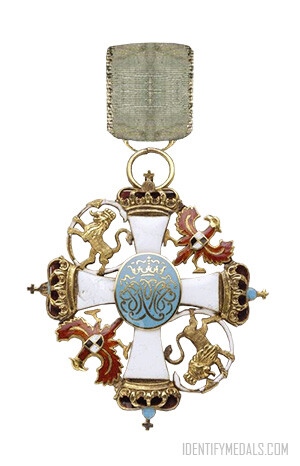
The badge or “jewel” of the Order was a white enamelled cross with each arm capped by a golden crown. Between the arms were alternating golden Norwegian lions holding a halberd and red-enamelled, golden-headed Brandenburg eagles.

The center featured a blue oval medallion, encircled by diamonds, displaying the crowned intertwined monograms of Sophie Magdalene and Christian VI.

The dark blue silk ribbon, edged with silver, was worn differently by gender: gentlemen wore the cross in a left buttonhole of their coats, while ladies wore it on their left breasts.

The Order of the Armed Arm

The Order of the Armed Arm was an order of chivalry of Denmark established in 1616 and later merged with the Order of the Elephant.

The Danish Order of the Armed Arm (or den Væbnede Arms Orden in Danish) was a chivalric order established by Christian IV of Denmark in 1616, with the knighting of twelve noblemen.

It was created to honor those who had distinguished themselves in the Kalmar War and was first and only bestowed on 2 December 1616 during celebrations in Kolding for the enfeoffment of Slesvig to Frederick III, Duke of Holstein-Gottorp.

The order was later merged with the Order of the Elephant in 1633-1634 and is considered a predecessor of the Order of the Dannebrog. The badges of the Order of the Elephant issued in 1633 were augmented on the reverse with the badge of the Order of the Armed Arm. This addition was removed in the following year’s issue. In 1634, Christian IV offered the two surviving knights, Christen Friis and Albret Skeel, the option to exchange their Armed Arm badges for the Elephant. There exists a specimen with the monogram of Christian V, indicating he considered reviving the order, but he ultimately established the Order of the Dannebrog in 1671.

The Order of the Armed Arm Design

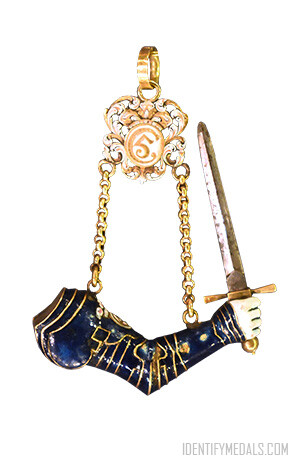
The badge of the Order was worn around the neck on a blue ribbon and featured two chains hanging from a clasp. At the ends of the chains was a diamond-studded, armor-plated arm holding a drawn sword, earning the order the names “Order of the Drawn Sword” or “Order of the Sword.”

It bears the year 1617, marking the centenary of Martin Luther’s 95 Theses, symbolizing the struggle for Protestantism.