The Order of Saint Isabel

The Order of Saint Isabel was created in 1801 in honor of Queen Saint Isabel, consort of Portuguese King Denis I.

The Order of Queen Saint Isabel (or Ordem da Rainha Santa Isabel in Portuguese) is a Roman Catholic dynastic order currently headed by the Duchess of Braganza as its Grand Mistress.

The Order was established on 4 November 1801 by King John VI of Portugal in honor of Queen Saint Isabel, the consort of King Denis I of Portugal. King John VI invested his wife, Carlota Joaquina, as the first Grand Mistress of the Order.

Following the replacement of the monarchy with a republic on 5 October 1910, the Order, being dynastic in nature, continued to be conferred by the exiled King Manuel II of Portugal. After his death, the Order’s Grand Mistress insignia continued to be used by the Queen and Queen Mother.

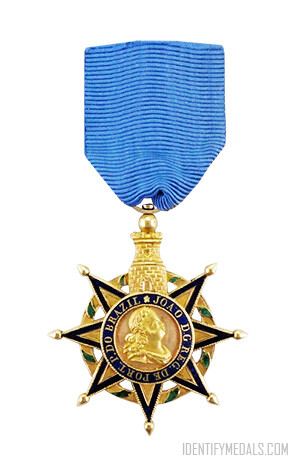
In 1986, Duarte Pio, Duke of Braganza, re-established the Order of Saint Isabel as an honorific dynastic order of the Portuguese Royal Family, asserting his role as its Sovereign Grand Master. The Duchess of Braganza, as the current Grand Mistress, honors Portuguese noblewomen on Saint Isabel’s feast day, celebrated annually on 4 July at the Monastery of Santa Clara-a-Nova in Coimbra. Since 2000, the Royal House has also bestowed the Order on various queens, princesses, and women dedicated to supporting Portuguese charities.

The Order of Saint Isabel Design

The insignia of the Order features a sash that is pale pink with a white stripe in the center.

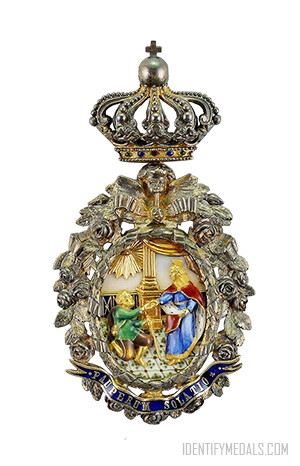
The accompanying crowned medallion depicts Queen Saint Isabel giving money to a poor man, surrounded by a frame adorned with roses, symbolizing the Queen’s miracle of the roses.

The motto of the insignia is “Pauperum Solatio,” which means “Consolation of the Poor.

The Order of Saint Michael of the Wing

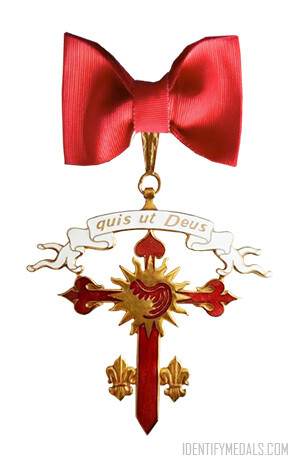
The Order of Saint Michael of the Wing is a Portuguese Roman Catholic dynastic order founded around 1147 for the Conquest of Santarém.

The Royal Equestrian and Military Order of Saint Michael of the Wing (or Ordo Equitum Sancti Michaelis sive de Ala in Latin, Real Ordem Equestre e Militar de São Miguel da Ala in Portuguese) is a dynastic Roman Catholic order believed to have been founded in 1147 by King Afonso I of Portugal at the Alcobaça Monastery.

The order was established to commemorate the Conquest of Santarém from the Moors, with the name honoring Saint Archangel Michael, who is said to have appeared in the form of a wing in the sky to aid in the victory.

The medieval history of the Order, including claims of recognition by Pope Alexander III in 1171, is largely based on documents from the 16th to the 18th century. The International Commission on Orders of Chivalry classifies it as an “Institution of chivalric character,” founded as a chivalric order and later revived by the dynastic successors of the original authority (2004). Originally, the knights of the Order were under the jurisdiction of the Abbot of the Cistercian Alcobaça Monastery and shared prayers and duties with other military orders during the Reconquista.

The Order is considered to have been revived twice: first in 1828 or 1848 by King Miguel I of Portugal to support the Miguelist movement, and secondly in 1981 by later Portuguese monarchists, with recognition by the Royal House of Braganza in 1986.

The Order of Saint Michael of the Wing Ranks

The Royal Equestrian and Military Order of Saint Michael of the Wing features several ranks, each with distinct insignia and purposes:

  • Grand Collar: This rank, marked by an insignia surmounted by a crown, is exclusively reserved for the Grand Master. Members of the grand council, such as the Grand Chancellor and Chancellor, wear it without the crown.
  • Grand Cross with Collar of the Royal Brotherhood: This collar, worn by the Grand Master, Royal Patrons, Bishops, Vice-Chancellors, Grand Chaplains, and Judges, as well as Delegates of the Royal Brotherhood when in representative roles, can also be bestowed on royalty, heads of state, and VIP members of the Order for extraordinary services. This collar, instituted in 2021 for the Order’s 850th anniversary, differs from the Grand Collar of the Order.
  • Grand Cross: Worn with a cross on a sash over the right shoulder and a gold plaque on the chest.
  • Grand Officer: Worn with a cross around the neck and a gold breast star.
  • Commander: Worn with a cross around the neck and a silver breast star.
  • Knight: Worn with a cross around the neck, similar in size to the Commander’s cross.

The Order of Saint Michael of the Wing Design

The insignia of the Order of Saint Michael of the Wing is highly symbolic and varies by rank. The Grand Collar, exclusive to the Grand Master, features an elaborate design with a crown. The Grand Cross with Collar of the Royal Brotherhood, instituted in 2021, is notable for its special use in the Order’s anniversary and for its distinction from the traditional Grand Collar.

For the Grand Cross, a cross is worn on a sash draped over the right shoulder, accompanied by a gold plaque. Grand Officers wear the cross around their necks with a gold breast star, while Commanders wear a similar neck cross with a silver breast star. Knights wear a neck cross of the same size as that of the Commanders.

The Order of Entrepreneurial Merit

Order of Entrepreneurial Merit is intended to distinguish entrepreneur or workers for outstanding service in promoting the economic sector.

The Order of Entrepreneurial Merit (or Ordem do Mérito Empresarial in Portuguese) is the most junior of the Portuguese civil orders of merit, established to honor entrepreneurs and workers who have made outstanding contributions to the appreciation and services in various economic sectors.

The Order is divided into three categories: Agricultural, Commercial, and Industrial, each corresponding to specific economic sectors, which is reflected in their respective insignia.

The Order was originally established on 4 June 1893 by King Charles I as the “Civil Order of Agricultural and Industrial Merit” during his visit to Beja. It was abolished with the founding of the Portuguese republic and reformulated in 1926. In 1991, it was renamed the “Order of Agricultural, Industrial and Commercial Merit,” recognizing contributions to the trade and service sectors by adding a third class. Legislation in 2011 renamed it to the current “Order of Entrepreneurial Merit,” maintaining the three categories and extending the Commercial Class of Merit to include the tourism sector. The statutes also allow for the recognition of worker merit within their respective sectors.

The Order of Entrepreneurial Merit Grades

The Order is awarded in three categories, each with five classes:

Category of Agricultural Merit (Classe do Mérito Agrícola)

  • Grand Cross (Grã-Cruz – GCMA)
  • Grand Officer (Grande-Oficial – GOMA)
  • Commander (Comendador – ComMA)
  • Officer (Oficial – OMA)
  • Medal (Medalha – MedMA)
  • Honorary Member (Membro Honorário – MHMA)

Recognizes outstanding service in the promotion or enhancement of agriculture, livestock, fish, and forest resources.

Category of Commercial Merit (Classe do Mérito Comercial)

  • Grand Cross (Grã-Cruz – GCMC)
  • Grand Officer (Grande-Oficial – GOMC)
  • Commander (Comendador – ComMC)
  • Officer (Oficial – OMC)
  • Medal (Medalha – MedMC)
  • Honorary Member (Membro Honorário – MHMC)

Honors significant contributions to commerce, tourism, and related services.

Category of Industrial Merit (Classe do Mérito Industrial)

  • Grand Cross (Grã-Cruz – GCMI)
  • Grand Officer (Grande-Oficial – GOMI)
  • Commander (Comendador – ComMI)
  • Officer (Oficial – OMI)
  • Medal (Medalha – MedMI)
  • Honorary Member (Membro Honorário – MHMI)

Awards those who have rendered notable service in the promotion or enhancement of industry.

The Order of Entrepreneurial Merit Design

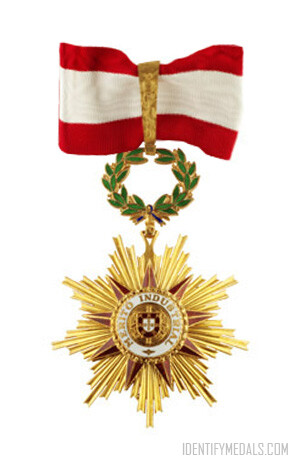
The star for all three categories is a nine-pointed enamel star, differentiated by color: green for Agricultural Merit, blue for Commercial Merit, and red for Industrial Merit. At the center of the star is the national coat of arms in gold, surrounded by a white enamel border inscribed with “Agricultural,” “Commercial,” or “Industrial” Merit in gold-enamel letters.

This star is centered on a nine-pointed plaque, in gold for Grand Cross and Grand Officer, and in silver for Commander. Between each arm of the star is a five-pointed enamel star matching the category color.

The badge is a miniature version of the star without the five-pointed stars between its arms, suspended from two crossed green enamel palms. It is worn on a sash for Grand Cross, a necklet for Grand Officer and Commander, and a ribbon on the left chest for Officer and Medal.

The ribbon for each category is made of moire silk: green and white for Agricultural Merit, blue and white for Commercial Merit, and red and white for Industrial Merit.

Military Order of Saint James of the Sword

The Military Order of Saint James of the Sword was founded in 1172 and s endorsed by papal legate Cardinal Hyacinthus of Acardo.

The Military Order of Saint James of the Sword (or Ordem Militar de Sant’Iago da Espada in Portuguese) is a distinguished Portuguese order of chivalry. Its full title is the Ancient, Most Noble, and Enlightened Military Order of Saint James of the Sword, of the Scientific, Literary, and Artistic Merit.

History

Founded in 1172, the Order originated from the Order of Santiago, established in the Kingdom of León in 1170 to protect pilgrims traveling to Santiago de Compostela. The Order expanded into Portugal in 1172 under King Afonso I, who granted them lands, but they were expelled in 1179 due to conflicts with León. They returned in 1186 under King Sancho I.

The Order played a significant role in the Reconquista and later Portuguese conquests, such as the capture of Ceuta in 1415. In 1288, King Denis of Portugal separated the Portuguese branch from the Castilian Order, which was confirmed by Pope John XXII in 1320.

Transition and Modern Era

During the 1383–1385 Portuguese succession crisis, the Order supported John I. In 1418, the mastership was secured for his son, and eventually, the Order’s leadership became intertwined with the Portuguese royal family.

In 1789, Pope Pius VI and Queen Maria I reformed the Order into a secular institution. The Order lost its properties and privileges after the 1834 liberal revolution. Though abolished in 1910 with the fall of the monarchy, the Order was later re-established as an order of merit.

The Order of Saint James of the Sword Grades

The Order of St. James of the Sword, as currently awarded by the Portuguese government, has six classes:

  • Grand Collar (GColSE): Wears the badge of the Order on a special collar (chain) and the gold star of the Order on the left chest.
  • Grand Cross (GCSE): Wears the badge of the Order on a gilt collar (chain) or on a sash over the right shoulder, and the gold star of the Order on the left chest.
  • Grand Officer (GOSE): Wears the badge of the Order on a gilt collar (chain) and the gold star of the Order on the left chest.
  • Commander (ComSE): Wears the badge of the Order on a gilt collar (chain) and the silver star of the Order on the left chest.
  • Officer (OSE): Wears the badge of the Order on a gilt collar (chain) and on a ribbon with a rosette on the left chest.
  • Knight (CavSE) or Dame (DamSE): Wears the badge of the Order on a silver collar (chain) and on a plain ribbon on the left chest.
The Order of Saint James of the Sword Design

The insignia of the Order prominently features the Cross of St. James.

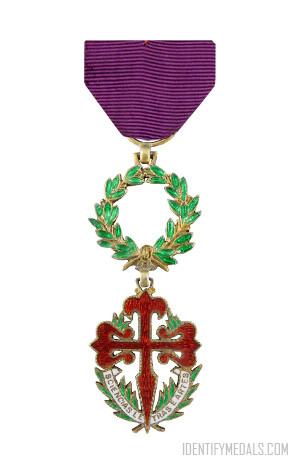
The badge is a gilt cross with red enamel, similar to the Order’s emblem but with a longer lower arm, encircled by a wreath of green-enameled palm leaves. At the bottom of the badge is a white-enameled scroll with the inscription “Ciência Letras e Artes” (Science, Literature, and Art). The Grand Collar badge differs by having no scroll and a laurel wreath instead of palm leaves.

During the monarchy, the badge was topped by the Sacred Heart of Christ.

The star of the Order has 22 asymmetrical rays, gilt for the Grand Collar, Grand Cross, and Grand Officer, and silver for the Commander. The central disc is white enamel with a miniature of the modern badge. Under the monarchy, the Sacred Heart of Christ was placed at the top of the star.

The ribbon of the Order is plain lilac.

The Military Order of Aviz

The Military Order of Aviz is a Portuguese order of chivalry founded in 1146. It gave its name and coat of arms to the Aviz Dynasty.

The Military Order of Saint Benedict of Aviz, established in 1146, is a Portuguese order of chivalry. Initially known as the Knights of Saint Benedict of Aviz, it gained prominence for its military role during the Reconquista and later became tied to the Aviz Dynasty (1385-1580). The order was originally a monastic military group inspired by the Knights Templar.

King Afonso I granted the knights the town of Évora in 1166, and they were first known as the Friars of Santa Maria of Évora. After capturing Aviz, the order adopted the Benedictine rule and became the Knights of Saint Benedict of Aviz. They gained wealth and influence, especially during the Age of Discoveries, and their mission evolved from military conquest to aiding Portuguese expeditions.

In 1789, Pope Pius VI and Queen Maria I secularized the order. It was briefly abolished in 1910 with the end of the monarchy but was revived in 1917 as an order of merit. Today, the Military Order of Aviz is one of the “Ancient Military Orders” and is awarded for outstanding military service. It is administered by a chancellor and a council of eight members, appointed by the President of the Republic, who serves as grand master.

The Military Order of Aviz Grades

The Order of Aviz, as currently awarded by the Portuguese government, is divided into six classes:

  • Grand Collar (GColA): Introduced in 2021, it outranks all other classes.
  • Grand Cross (GCA): Wears the badge of the Order on a sash over the right shoulder, and the gold star of the Order on the left chest.
  • Grand Officer (GOA): Wears the badge of the Order on a necklet, and the gold star of the Order on the left chest.
  • Commander (ComA): Wears the badge of the Order on a necklet, and the silver star of the Order on the left chest.
  • Officer (OA): Wears the badge of the Order on a ribbon with a rosette on the left chest.
  • Knight (CvA) or Dame (DmA): Wears the badge of the Order on a plain ribbon on the left chest.
The Military Order of Aviz Design

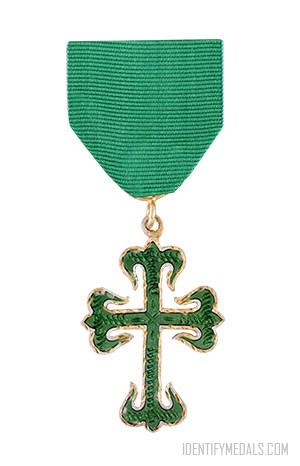
The badge of the Order features a gilt cross with green enamel, similar to the Order’s emblem but with an elongated lower arm. Under the monarchy, this badge was topped with the Sacred Heart of Christ.

The star of the Order is an eight-pointed, faceted star, gilt for the Grand Cross and Grand Officer, and silver for the Commander. The central disc is white enamel, displaying a miniature of the modern badge. During the monarchy, the star also included the Sacred Heart of Christ at the top.

The ribbon of the Order is plain green.

The Military Order of Christ

The Military Order of Christ was founded in 1319 after the Templars were abolished. It is one of the Ancient Military Orders.

The Military Order of Christ is the reconstituted form of the former Knights Templar in Portugal. Originally established in 1319 with the support of King Denis of Portugal, the order emerged after the Knights Templar were disbanded by Pope Clement V in 1312. Unlike other European monarchs, King Denis refused to persecute the Templars and instead transformed them into the Order of Christ.

This transformation was recognized by Pope John XXII in 1319, allowing the new order to inherit the Templars’ assets. The Order of Christ played a significant role in Portugal’s history, especially during the Age of Discoveries, amassing considerable wealth and influence. In 1789, Queen Maria I secularized the order. Although it was extinguished with the fall of the Portuguese monarchy in 1910, it was revived in 1917, with the President of Portugal serving as its Grand Master.

Today, the Military Order of Christ, alongside the Orders of Aviz and St. James of the Sword, forms the “Ancient Military Orders,” managed by a chancellor and council appointed by the President. It now honors outstanding service to the Republic and can be awarded to both military officers and civilians, including foreigners, members of parliament, the diplomatic corps, the judiciary, the civil service, and other public authorities.

The Military Order of Christ Grades

The Order of Christ, as currently awarded by the Portuguese government, is divided into six classes:

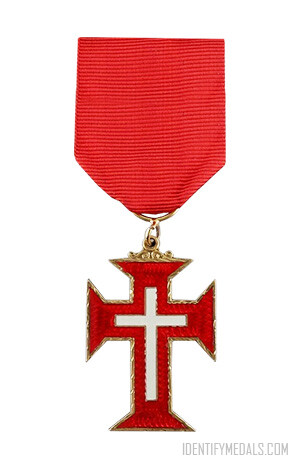
  • Grand Collar (GCol): Wears a grand collar, the badge of the Order on a sash over the right shoulder, and the star of the Order in gold on the left chest. This rank was introduced in 2021.
  • Grand Cross (GCC): Wears the badge of the Order on a sash over the right shoulder, and the star of the Order in gold on the left chest.
  • Grand Officer (GOC): Wears the badge of the Order on a necklet, and the star of the Order in gold on the left chest.
  • Commander (ComC): Wears the badge of the Order on a necklet, and the star of the Order in silver on the left chest.
  • Officer (OC): Wears the badge of the Order on a ribbon with a rosette on the left chest.
  • Knight (CvC) or Dame (DmC): Wears the badge of the Order on a plain ribbon on the left chest.
The Military Order of Christ Design

The grand collar of the Order features alternating simple crosses of the Order and armillary spheres, all gilded and connected by a double chain of simple links. At the center are two interlocked branches of quercus coccifera, also gilded. The cross of the Order hangs from the necklace, surrounded by an open-cut laurel wreath with its fruits, tied with crossed ribbons, all in gold.

The badge of the Order is a gilt cross with enamel, resembling the Order’s emblem but with a longer lower arm. Historically, civil knights wore a badge with the Sacred Heart of Christ above it, while military knights had a gilt, blue, and white enamel Maltese Cross with shields resembling the Portuguese coat of arms, surrounded by a palm wreath and topped by a gilt crown.

The star of the Order has 22 asymmetrical rays, gilt for Grand Cross and Grand Officer, and silver for Commander. The central disc is white enamel with a miniature of the modern badge. During the monarchy, the Sacred Heart of Christ was at the top of the star.

The ribbon of the Order is plain red.

The Military Order of the Tower and Sword

The Military Order of the Tower and Sword is a Portuguese order of knighthood created by King Afonso V in 1459 as the Order of the Sword.

The Ancient and Most Noble Military Order of the Tower and Sword, of Valor, Loyalty, and Merit, originally established by King Afonso V in 1459 as the Order of the Sword, is the highest honor in the Portuguese honors system.

Initially created to reward those who participated in military conquests in Africa, the order fell into disuse after the conquest of Tangiers and Asilah. It was revived in 1808 by Prince Regent John, later John VI, to commemorate the royal family’s safe arrival in Brazil after Napoleon’s invasion of Portugal, and was renamed the Royal Order of the Tower and Sword. It was available to both Portuguese and foreigners for military, political, or civilian achievements.

The Order of the Tower and Sword's History

In 1832, Peter, Duke of Braganza, reformed the order, giving it its current name. The order saw further modifications, including the addition of the Grand Officer class in 1896 and the retention of the order after the 1910 abolition of other military orders following the establishment of the republic. The President of Portugal became the order’s Grand Master and a member of the Grand Cross. The Grand Collar, added in 1939, was initially for heads of state with notable military deeds but later restricted to former Portuguese presidents, with few exceptions.

The 1986 Organic Law of the Honorary Orders and the 2011 Law of Honorary Orders maintained the exclusivity of the Grand Collar for former Portuguese presidents while also allowing it to be awarded to foreign heads of state and individuals of exceptional achievements.

The Order of the Tower and Sword's Grades

The Order of the Tower and Sword, as currently awarded by the Portuguese government, is divided into six classes:

  • Grand Collar (GColTE): Wears the badge of the Order on a special collar (chain) and the gold star of the Order on the left chest.
  • Grand Cross (GCTE): Wears the badge of the Order on a collar (chain) or on a sash over the right shoulder, and the gold star of the Order on the left chest.
  • Grand Officer (GOTE): Wears the badge of the Order on a necklet and the gold star of the Order on the left chest.
  • Commander (ComTE): Wears the silver star of the Order on the left chest.
  • Officer (OTE): Wears the badge of the Order on a ribbon with a rosette on the left chest.
  • Knight or Dame (CavTE) / Dame (DamTE): Wears the badge of the Order on a plain ribbon on the left chest.
The Order of the Tower and Sword Design

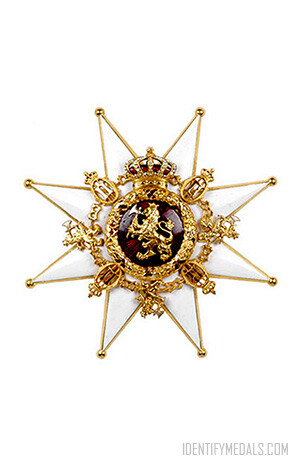
The badge of the Order features a five-pointed gilt star with white enamel and one point directed downward. It includes a wreath of green enamel oak leaves between the star’s points and is topped by a gilt tower.

The obverse central disc displays a sword encircled by oak leaves on a white enamel background, surrounded by a blue enamel ring inscribed with the motto “Valor Lealdade e Mérito” (Valour, Loyalty, and Merit).

The reverse central disc shows the Portuguese coat of arms, encircled by a blue enamel ring with the inscription “República Portuguesa” (Portuguese Republic).

The star of the Order is a five-pointed faceted star, gilt for the Grand Collar, Grand Cross, and Grand Officer, and silver for Commander. It features the front design of the badge (without the oak leaf wreath) superimposed on it. The ribbon of the Order is blue, and the fourragère is solid blue.

The Order of the Norwegian Lion

The Order of the Norwegian Lion was established by King Oscar II in 1904 and was used to appoint knights in memory of important events.

  • Time Period: Pre-WW1
  • Institution: 10 September 1904
  • Country: Norway

The Order of the Norwegian Lion (or Den norske løve in Norwegian) was a prestigious Norwegian order of knighthood established by King Oscar II on January 21, 1904. It was created “in memory of the glorious events associated with Norway’s venerable Coat of Arms,” aiming to honor distinguished service and achievements.

The establishment of the Order of the Norwegian Lion was part of King Oscar II’s effort to elevate the Norwegian honors system to be on par with its Swedish counterpart. Specifically, it was intended to serve as an equivalent in rank to the Swedish Order of the Seraphim. This was because knights of the Norwegian Order of St. Olav were considered junior to the knights of the Seraphim within the shared Swedish-Norwegian royal court. The creation of this new order aimed to address this disparity and give Norwegian honors equal standing.

However, the expansion of the Norwegian honors system received mixed reactions from Norwegian politicians. Some saw it as an important step in recognizing Norwegian achievements, while others viewed it with skepticism, considering it unnecessary or politically motivated.

History

The Order of the Norwegian Lion was short-lived due to the political changes that followed its establishment. The Union between Sweden and Norway was dissolved in 1905, and no Norwegian knights were appointed before this dissolution. King Haakon VII, who ascended to the throne after the dissolution, chose not to appoint any new knights to this order. Eventually, he formally repealed the order in a Court resolution on March 11, 1952.

Last Living Knight

The last living knight of the Order of the Norwegian Lion was King Gustaf VI Adolf of Sweden, who passed away in 1973. His death marked the end of an era for this prestigious yet short-lived Norwegian order.

The Order of the Lion Design

The obverse of the medal prominently featured the Norwegian lion, a key element of Norway’s coat of arms. The lion was depicted in a heraldic stance, often holding a battle-axe, which is a traditional symbol of Norwegian royalty and strength.

The reverse of the medal bore the inscription detailing the order and its purpose, surrounded by ornate designs that emphasized its significance and grandeur.

The star of the order was an elaborate and radiant design, often enameled in white and gold, further emphasizing the order’s prestige. It was worn on the left chest and signified the knight’s distinguished status.

The ribbon of the Order of the Norwegian Lion was typically a striking combination of red and white, reflecting the colors of the Norwegian flag. This ribbon was worn over the shoulder, crossing the chest, and supporting the medal.

The King’s Commemorative Medal (Norway)

The King’s Commemorative Medal is a royal decoration of Norway established in 1906 by King Haakon VII and awarded in gold and silver grades.

The H.M. The King’s Commemorative Medal (or H.M. Kongens erindringsmedalje in Norwegian) is a prestigious royal decoration in Norway.

Established in 1906 by King Haakon VII, the medal is awarded to individuals who have rendered particularly meritorious service to the King. The medal is available in two grades: gold and silver.

The gold medal ranks 28th in the Norwegian order of wear, positioned just below the Antarctic Medal and above The Royal House Centenary Medal. The silver medal ranks 38th, below King Olav V’s 100th Anniversary Medal and above the Defence Service Medal.

The King’s Commemorative Medal Design

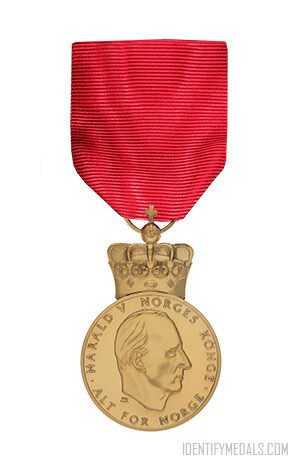
The medal is round and crafted from either gold or silver.

The obverse features the effigy of the reigning monarch, surrounded by the monarch’s name and motto. For King Harald V, his right-facing effigy is depicted with the inscription “HARALD V NORGES KONGE” above and his motto “ALT FOR NORGE” below.

The reverse side of the medal showcases the monarch’s monogram. The medal is topped with a depiction of the Crown of Norway, and it is suspended by a ring that passes through the orb on the crown. The ribbon attached to the medal is red, reflecting the color of the Norwegian flag.

The King’s Medal of Merit

The King’s Medal of Merit was instituted in 1908 and is awarded for meritorious achievements in art, science, and public service.

The King’s Medal of Merit (or Kongens fortjenstmedalje in Norwegian) is a distinguished Norwegian award established in 1908 to honor notable accomplishments in the fields of art, science, business, and public service.

The medal is available in two classes: gold and silver. The gold medal is awarded for extraordinary achievements of significant importance to the nation and society, while the silver medal is given for noteworthy but lesser accomplishments. The medal is attached to a ribbon featuring the colors of the Royal Standard of Norway.

In terms of precedence, the gold medal ranks eighth among Norwegian orders and medals, whereas the silver medal ranks eleventh.

The King’s Medal of Merit Ribbon Bars

The Maudheim Medal

The Maudheim Medal (Maudheimmedaljen) was established by King Haakon VII of Norway on November 14, 1951, to honor the participants of the Norwegian-British-Swedish Antarctic Expedition of 1949–1952. This medal was awarded to recognize the efforts of those involved in the expedition, which was notable for being the first to Antarctica that included an international team of scientists. During the expedition, the team established a base named Maudheim on the Quar Ice Shelf along the coast of Queen Maud Land in February 1950.

The Antarctic Medal

The Antarctic Medal is a Norwegian civil decoration established by King Olav V on February 3, 1960. It was awarded to individuals involved in the Sixth Norwegian Antarctic Expedition. This medal holds the 27th position in the order of precedence of Norwegian honors, ranking below the Maudheim Medal but above H. M. The King’s Commemorative Medal in Gold. A total of 37 individuals associated with the Sixth Norwegian Antarctic Expedition received this medal.

The King’s Medal of Merit Design

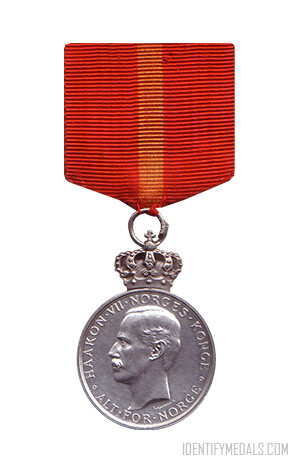
The obverse of the medal features the head of the reigning Monarch along with their name and motto. As of 2015, there have been three versions: Haakon VII (1908–1957), Olav V (1957–1991), and Harald V (since 1991).

The reverse of the medal displays a wreath encircling the words “KONGENS FORTJENSTMEDALJE” (Royal Medal of Merit), with the recipient’s name engraved within the wreath.

The ribbon is red with a yellow stripe running down the center.