The Cross for the Yucatán

The Cross for the Yucatán was issued for the suppression of revolts and for general military service as the army put down rebellions. 

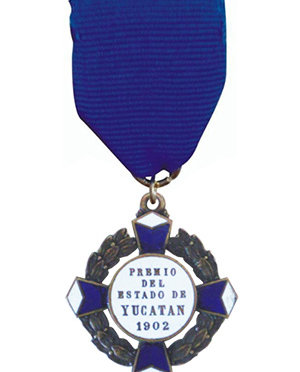
The Cross for the Yucatán was a medal issued during the twentieth century for the suppression of revolts and for general military service as the Mexican army put down rebellions by Mayan Indians.

In Spanish colonial times, the Yucatán (like most of New Spain) population operated under a legal caste system: peninsulares (officials born in Spain) were at the top, the criollos of Spanish descent in the next level, followed by the mestizo population (of mixed European-Amerindian descent), then descendants of the natives who had collaborated with the Spanish conquest of Yucatán, and at the bottom were the other native indios.

The Caste War of Yucatán (1847–1901) began with the revolt of native Maya people of Yucatán, Mexico against the European-descended population, called Yucatecos. The latter had long held political and economic control of the region. A lengthy war ensued between the Yucateco forces in the north-west of the Yucatán and the independent Maya in the south-east.

The war officially ended in 1901 when the Mexican army occupied the Maya capital of Chan Santa Cruz and subdued neighboring areas. Another formal end was made in 1915, when a Mexican general was sent to subdue the territory. However, skirmishes with small settlements that refused to acknowledge Mexican control continued until 1933.
The Order of the Spanish Republic

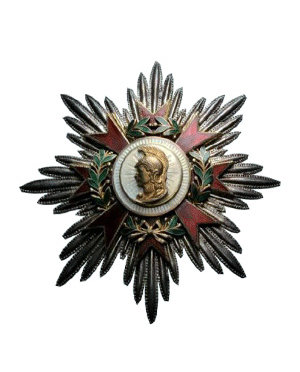
The Order of the Spanish Republic (Orden de la República) was founded in 1932 in the Second Spanish Republic for civil and military merit.

The Order of the Spanish Republic (or Orden de la República Española) was founded in 1932 in the Second Spanish Republic for civil and military merit to the state. It replaced the orders of merit of the former Spanish Monarchy and had the mural crown instead of the royal one.

After the military defeat of the Spanish Republic, Gen. Francisco Franco abolished all Republican Orders and instituted new ones.

The Spanish Republican government in exile issued one order which was a simple medal with a ribbon in the Spanish republican colors.

The Order of the Spanish Republic Design

The order had the usual five degrees. There was a special collar for heads of state and two medals were attached to this order of merit.

The ribbon was red with a white border.

The Order of Civil Merit

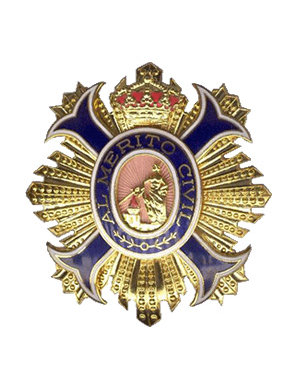
The Order of Civil Merit (or Orden del Mérito Civil) was established by King Alfonso XIII of Spain in 1926 to recognize “the civic virtue of officers in the service of the Nation, as well as extraordinary service by Spanish and foreign citizens for the benefit of Spain.”

At the origin, it consisted of four categories: Grand Cross, Commander by Number, Commander, Knight, and Silver Cross (lower rank).

The Provisional Government of the Republic, by decree of 24 July 1931, abolished this order and other orders of the State, except that of Isabel the Catholic, and wanted to replace them with the creation of the Order of the Republic. Saved this interregnum, by Decree of 7 November 1942 restores the Order of Civil Merit, with his previous features, privileges and seniority, with the following categories: Grand Cross, Cordon (designation of the Grand Cross when given to women), Commander of Number, Commander, Officer, Knight, Knot (name of degree Knight when given to women) and Silver Cross, approving its rules by decree of 3 February 1945.

By Royal Decree 2396/1998 of 6 November 1998, published in the Boletín Oficial del Estado 279 of 21 November 1998 (and subsequent correction published in the BOE 40 of 16 February 1999), the approval of the new regulations proceeded, bringing together in one legal text all regulations which were scattered. The current regulation makes a detailed discussion of the merits to be considered for grant, of formal requirements to be met by proposals for entry and promotion within the Order, stating the legitimate authorities to do them, and reporting procedures that can be instructed in order to determine the suitability of granting.

The Order of Civil Merit Design

The Order of Civil Merit comes in seven classes as follows:

  • Collar (Collar) – Order’s Collar.
  • Grand Cross (Gran Cruz) – Sash and Plaque (Golden Order’s Star).
  • Commander by Number (Encomienda de Número) – Plaque (Silver Order’s Star).
  • Commander (Encomienda) – Golden order’s star on a necklet.
  • Officer’s Cross (Cruz de Oficial) – Golden order’s cross hanging from a ribbon.
  • Knight’s Cross (Cruz) – Silver order’s cross hanging from a ribbon.
  • Silver Cross (Cruz de Plata) – Simpler silver cross hanging from a ribbon.

The War Cross (Spain)

The War Cross (or Cruz de Guerra) is a high military award of Spain to recognise battlefield bravery.

The decoration aims to prize those who have realized actions or facts of great efficiency, or they have given excellent services, both with valor during a continued period, inside one armed conflicts or of military operations involving or could involve resort to force, and carrying military abilities or remarkable command skills.

The medal was established in 1938 (BOE. Núm. 526) and has four different types:

  • Gran Cruz
  • Cruz de Guerra para Jefes
  • Cruz de Guerra para oficiales y suboficiales
  • Cruz de Guerra para Cabos y Soldados

The Spanish War Cross is modified by the Royal Decree 1 Royal Decree 1040/2003, 1 August (Spanish Official Gazette No. 177) that reduced the categories to one, Cruz (Cross) establishing an insignia with a new design.

The Civil Order of Alfonso XII

The Civil Order of Alfonso XII (or Orden Civil de Alfonso XII) is a Spanish honorific decoration named for King Alfonso XII (1857–1885) established by Royal Decree on 23 May 1902 with the purpose of rewarding achievements in the fields of education, science, culture, teaching, and research.

According to Article 3 of the Royal Decree, the order is composed of three categories:

  • Grand Cross (Gran Cruz)
  • Commander (Encomienda)
  • Chevalier (Caballero)

Royal Decree 954/1988, of 2 September, finalized its replacement with the Civil Order of Alfonso X, the Wise, “adapting its norms to the social conditions of the present time and to the democratic principles on which the legal system is based.

The Civil Order of Alfonso XII Design

The order is a multi-piece construction made of silver and enamels. It measures 85.5 mm x 85.5 mm and has a vertical pinback flanked by dual prongs.

The Insigned Order of the Golden Fleece

The Order of the Golden Fleece is a Roman Catholic Order of chivalry founded by Duke Philip the Good in 1430 to celebrate his marriage.

The Order of the Golden Fleece (or Orden del Toisón de Oro in Spanish) is a Roman Catholic order of chivalry founded in Bruges by the Burgundian duke Philip the Good in 1430, to celebrate his marriage to the Portuguese princess Isabella.

Having had only 1,200 recipients ever since its establishment, the Spanish Order of the Golden Fleece has been referred to as the most prestigious and exclusive order of chivalry in the world, both historically and contemporaneously. Unlike any other distinction, the Golden Fleece is only granted for life, meaning it must be returned to the Spanish Monarch whenever the recipient deceases.

The choice of the Golden Fleece of Colchis as the symbol of a Christian order caused some controversy, not so much because of its pagan context, which could be incorporated in chivalric ideals, as in the Nine Worthies, but because the feats of Jason, familiar to all, were not without causes of reproach. The bishop of Châlons, chancellor of the Order, rescued the fleece’s reputation by identifying it instead with the fleece of Gideon that received the dew of Heaven.

Today, two branches of the Order exist, namely the Spanish and the Austrian Fleece; the current grand masters are Felipe VI, King of Spain, and Karl von Habsburg, grandson of Emperor Charles I of Austria, respectively.

The Prohibition on Belonging to Other Orders

Non-royal knights of the Golden Fleece were forbidden to belong to any other order of knighthood. This rule was a strict and fundamental tenet of the order’s regulations. This prohibition was intended to uphold the exclusivity and prestige of the Golden Fleece, ensuring that membership in the order remained a singular honor and distinction.

By forbidding non-royal knights from joining other orders of knighthood, the Order of the Golden Fleece sought to emphasize the special status accorded to its members. It aimed to prevent dilution of the order’s significance and to maintain a sense of unity and loyalty among its knights.

This rule also served to reinforce the sense of camaraderie and brotherhood among the members of the Golden Fleece. By prohibiting external affiliations, the order fostered a strong bond among its knights, who shared a common commitment to upholding the ideals and values of chivalry.

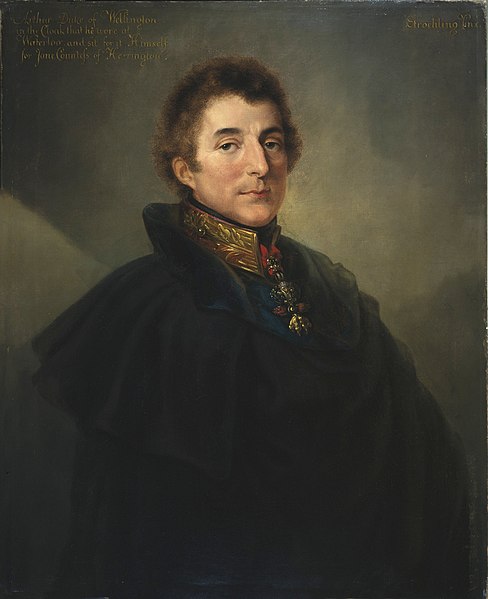
The Duke of Wellington wearing the Spanish Fleece in 1820.
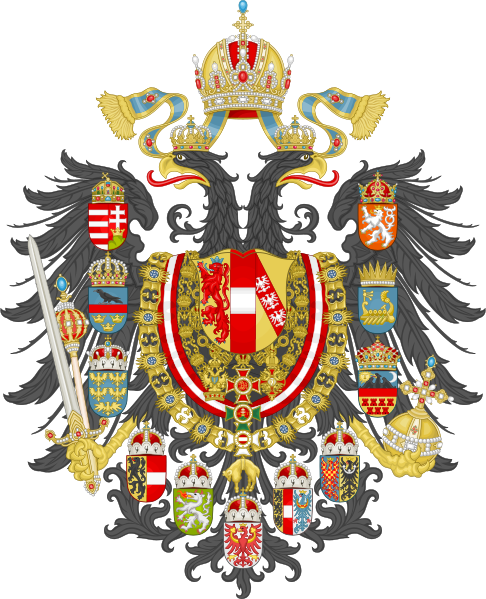
Imperial Coat of Arms of the Austro-Hungarian Empire with the Golden Fleece.
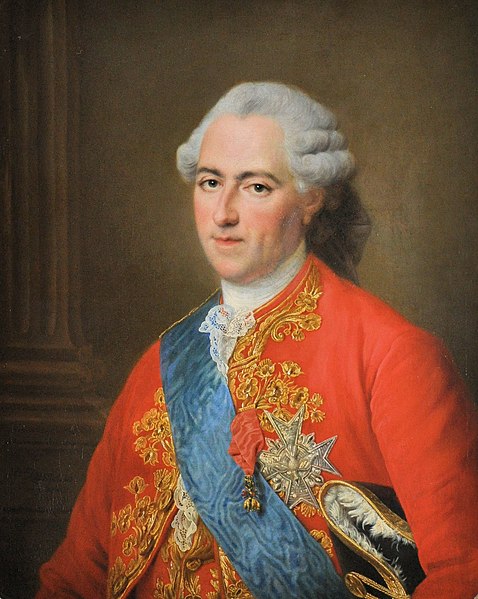
Louis XV of France wearing the Spanish Fleece in 1773
Louis XV of France wearing the Spanish Fleece in 1773.

The Order of the Golden Fleece Medal Design

Surrounding the central image of the Golden Fleece are various symbols and motifs that hold significance within the order’s tradition. These may include heraldic elements such as crowns, crosses, and fleur-de-lis, as well as symbolic animals like lions and eagles. These symbols represent the virtues and values upheld by members of the order, including loyalty, faith, and nobility.

The badge of the Order, in the form of a sheepskin, was suspended from a jewelled collar of firesteels in the shape of the letter B, for Burgundy, linked by flints; with the motto “Pretium Laborum Non Vile” (“No Mean Reward for Labours”) engraved on the front of the central link, and Philip’s motto “Non Aliud” (“I will have no other”) on the back.

Overall, the design of the Order of the Golden Fleece medal is steeped in tradition and symbolism, reflecting the esteemed history and heritage of one of Europe’s oldest and most illustrious orders of chivalry.

Famous Members of The Order of The Golden Fleece

  1. King Philip IV of Spain: Philip IV was the Spanish monarch during the 17th century and a prominent member of the Order of the Golden Fleece. He played a significant role in the politics and affairs of Europe during his reign.

  2. Emperor Charles V: Charles V, also known as Charles I of Spain, was one of the most powerful rulers of the 16th century. As the Holy Roman Emperor and King of Spain, he wielded immense influence and was a key figure in European politics and warfare.

  3. King Henry VIII of England: Henry VIII, infamous for his six marriages and his role in the English Reformation, was also a member of the Order of the Golden Fleece. His reign had a profound impact on English history and the wider European stage.

  4. Emperor Maximilian I: Maximilian I, Holy Roman Emperor from 1493 until his death in 1519, was a patron of the arts and a key figure in the Renaissance. He expanded the influence of the Habsburg dynasty and played a significant role in shaping the politics of his time.

  5. King Louis XIV of France: Louis XIV, also known as the Sun King, ruled France for over 72 years and was one of the most powerful monarchs in European history. His reign was characterized by lavish court life, artistic patronage, and military conquests.

The Order of Saharan Merit

The Order of Saharan Merit (Ordre du Mérite Saharien) was established in 1958 for social, scientific, economic or admin services in Sahara.

The Order of Saharan Merit (or Ordre du Mérite Saharien) was established in 1958 as a reward for social, scientific, economic or administrative services rendered by French or foreign persons who participated in the development of Saharan regions.

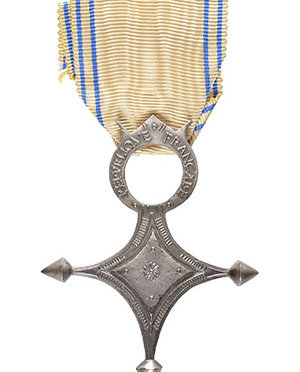
The medal is fashioned in the form of the Agadez cross, a traditional emblem of the Tuareg clans inhabiting the area of the former Sultanate of Agadez in Agadez, Niger.

The order was deprecated by decree on 3 December 1963, and superseded by the Ordre National du Mérite. Extant members of the order are permitted to wear their original decorations.

The Order has three classes:

  • Commandeur (Commander)
  • Officier (Officer)
  • Chevalier (Knight)

The National Medal of Recognition for Victims of Terrorism

The National Recognition Medal for Victims of Terrorism is a national medal of France awarded to French victims of terrorism.

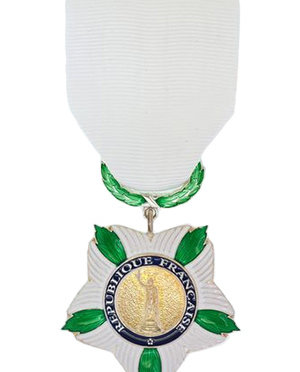
The National Recognition Medal for Victims of Terrorism (or Médaille nationale de reconnaissance aux victimes du terrorisme) is a national medal of France awarded to French victims of terrorism.

Established by presidential decree on July 12, 2016, it may be awarded to French or foreign nationals who are victims of terrorism in France or abroad. The medal may be awarded to a retroactive date of January 1, 2006.

The medal was created to give a proper recognition to the sacrifice of terrorism victims while still maintaining the award criterion of existing national honors such as the Legion of Honor.

The Aeronautical Medal

The Aeronautical Medal (“Médaille de l’Aéronautique”) is a French decoration awarded to military personnel and civilians for outstanding aeronautics.

The Aeronautical Medal (or “Médaille de l’Aéronautique”) is a state decoration of France established by the decree of 14 February 14. It is awarded to both military personnel and civilians for outstanding accomplishments related to the field of aeronautics.

Originally envisioned before the Second World War, it was intended as an equal to the Order of Maritime Merit. The intent was to create an aerial order of merit intended for civilian and military personnel working in aeronautics. The war temporarily put an end to the project until February 1945.

Recipients are chosen by a council presided by a member of the office of the secretary of state for the armed forces (air) that will be composed of:

  • the chief of staff of the air force,
  • the director of the aeronautical administration control department,
  • the technical and industry director to the secretary of state for the armed forces (air),
  • a member named by decree of the minister for public works, transport and tourism, representing the ministry,
  • a representative of the aerial navigation companies named for two years by decree of the minister for public works, transport and tourism,
  • a personality with a history of exceptional services in aeronautics named for two years by decree of the secretary of state for the armed forces (air).

The Aeronautical Medal is limited to no more than 275 new recipients per year, it is awarded twice annually on 1 January and 14 July.

The Aeronautical Medal Design

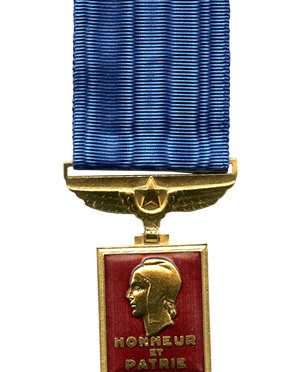
The medal is rectangular and of gilt metal. The obverse bears the gilt left profile of Marianne from the 1940s representing France, below Marianne, the gilt inscription “Honneur et Patrie” (Honour and Country). The reverse bears the inscription on four lines “MÉDAILLE DE L’AÉRONAUTIQUE 1945” (AERONAUTICAL MEDAL 1945).

The medal is enameled in red except for Marianne, the inscription and a 2 mm exterior border. The medal is suspended to a 37 mm wide royal blue silk moiré ribbon by a wing shaped pendant with a relief five pointed star at its center and an horizontal slot to receive the ribbon.

The Royal Order of Cambodia

The Royal Order of Cambodia (Ordre Royal du Cambodge) was a colonial chivalric order in French Cambodia and is still in use in the present day.

The Royal Order of Cambodia (គ្រឿងឥស្សរិយយសព្រះរាជាណាចក្រកម្ពុជា; or Ordre royal du Cambodge) was a French colonial chivalric order in French Cambodia and is still in use in present-day Cambodia.

For French appointments, the recipient had to be at least 29 years old and enter the Order first as a knight, to be promoted to a higher grade after a certain period. In 1948 France ceased granting the order. Formally it remained a French colonial policy, but it was now only granted by the King of Cambodia.

On September 1, 1950 the (colonial) French medal system was reformed. The Order of the Star of Anjouan and the Order of the Black Star were formalized as French Overseas Orders. In 1955, Cambodia became independent. The order was approved by King Norodom Sihanouk during his government and also granted during his exile in Beijing. Even after the restoration of the Khmer dynasty, it remained the highest Cambodian distinction.

The Royal Order of Cambodia Design

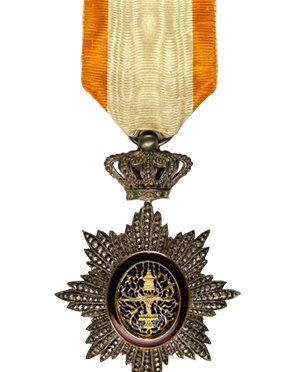
The medal of the order comes in many different forms, as a slightly elongated silver or gold star surmounted by a Cambodian crown and with an image of the king’s crown and coat of arms in gold on a violet-blue background and surrounded by a red circle. The reverse of the medal is left rough. To promote the order if it was awarded by the French, the Cambodian crown was replaced with a European one surmounted by a small cross, and in the early years, the order was even awarded without any crown.

The central image on the star of the order is the same as the medal, though the crown is missing and the rays are usually smooth. The star is elongated, with the vertical rays longer than the horizontal rays. The regalia of Knights is in silver, whilst those of the higher grades are gold. The medal and star are equally for civilians and soldiers. The ribbon of the order was originally green with a red border, changing in 1899 to white with an orange border (in the same year the French government changed the colours of the ribbons of all five colonial orders), before reverting to the original black ribbon when it became a purely Cambodian order again.