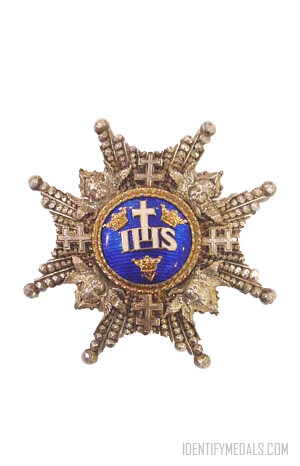
The Order of the Seraphim

The Order of the Seraphim is a Swedish order of chivalry established in 1748, originally to supervisors of the Seraphim Hospital.

The Royal Order of the Seraphim, known in Swedish as Kungliga Serafimerorden, was established by King Frederick I on February 23, 1748, along with the Order of the Sword and the Order of the Polar Star.

The order, named after the Seraphim, a category of angels, is the highest order of chivalry in Sweden. It consists of a single class, conferring the title of Knight (referred to as Member for women and Member of the Cloth for clergymen).

In 1975, as part of a reorganization of Swedish orders, appointments of Swedish citizens to the various orders ceased (except for foreign heads of state). In 1995, revisions to the law allowed for conferrals upon members of the royal family and on December 20, 2022, the Swedish Government issued a new regulation repealing the 1974 restriction, thereby once again permitting conferrals of the Royal Orders to Swedish citizens, effective from February 1, 2023.

The History of the Order of the Seraphim

Upon its establishment in 1748, the knights of the Order of thr Seraphim were tasked with overseeing the major hospitals and mental asylums in Sweden, notably the Seraphim Hospital in Stockholm, which remained a prominent medical institution until its closure in 1980.

However, as the 19th century progressed, this obligation became obsolete due to the establishment of professional boards of physicians and other experts, rendering the supervision by the Knights of the Seraphim unnecessary.

The Order of the Seraphim Design

The emblem of the Order features a white-enamelled gold Maltese Cross, with a gold patriarchal cross adorning each arm and gold seraphim positioned between the arms, their wings encompassing the central medallion.

On the obverse medallion, blue enamel serves as the backdrop for a white-enamelled “IHS” Christogram, flanked by three gold crowns above and representations of the three nails used in the crucifixion of Jesus Christ below. The reverse medallion, also in blue enamel, bears the white-enamelled letters “FRS” (Fredericus, Rex Sueciae, Frederick King of Sweden), honoring the Order’s founder. The emblem is suspended from a royal crown crafted from gold and enamel. 

The star of the Order mirrors the design of the badge’s front side, excluding the royal crown. However, it is entirely crafted from silver, with the central medallion enameled like that on the badge but larger in size.

The ribbon is pale blue, a hue referred to in Sweden as seraphim blue. 
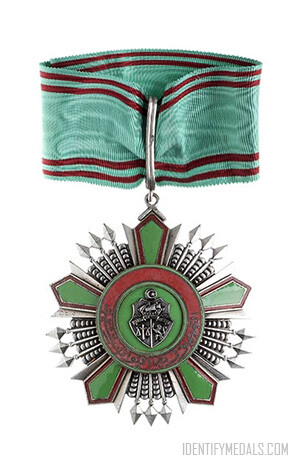
The Order of the Republic of Tunisia

The Order of the Republic of Tunisia is a decoration awarded to those who have contributed to the establishment of the Republic.

  • Time Period: Post-WW2
  • Institution: 16 March 1959
  • Country: Tunisia

The Order of the Republic of Tunisia is a decoration awarded to those who have contributed to the establishment of the Republic, the strengthening of its institutions, and the development of the regime.

The order was established on 16 March 1959 and can be given to both Tunisians and foreigners.

It has five classes:

  • Grand Cordon
  • Grand Officer
  • Commander
  • Officer
  • Knight

Order of the Republic of Tunisia Design

The insignia is a cross struck in silver and enameled. The ribbon is green with two red stripes on the sides.

The Order of the Lion of Malawi

The Order of the Lion of Malawi is the highest state order and the second-highest honor bestowed by the government of Malawi.

  • Time Period: Post-WW2
  • Institution: July 1966
  • Country: Malawi

The Order of the Lion of Malawi is the highest state order and the second-highest honor bestowed by the government of Malawi. 

The Order was established by President Hastings Kamuzu Banda in 1967 and held the distinction of being the second-highest honor conferred by the government of the Republic of Malawi during Banda’s presidential tenure (1966-94). It comprised five classes along with a medal, recognizing individuals “For distinguished and outstanding services to the people of Malawi.”

Banda unveiled the inception of the order alongside several other new accolades in July 1966, concurrent with Malawi’s transition to a republic. This proclamation took place in Zomba, then the capital of Malawi.

Both Malawian civilians and military personnel, as well as foreign nationals, were eligible for consideration for the order. However, in 2008, following three years of review, the Malawian government opted to deactivate the Order of the Lion, though existing appointees retained the privilege of wearing the insignia corresponding to their grade.

Order of the Lion Design

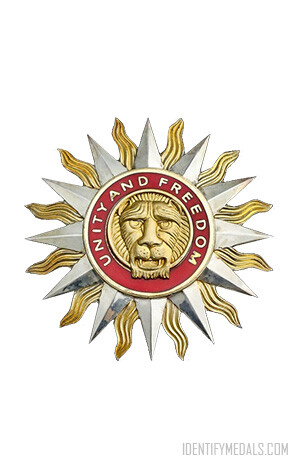
The insignia of the Order of the Lion takes the form of a cross, showcasing a central medallion depicting the visage of a lion, encircled by a red banner bearing the Malawian motto, “Unity and Freedom.” This design is consistent across the medals of higher grades within the order, where the lion medallion is overlaid onto a green enameled cross.

The ribbon of the order is adorned in red, flanked by two golden stripes running along each side.

Recipients of the Grand Commander and Grand Officer distinctions also receive a badge, which incorporates the lion medallion set against stars. The Grand Commander’s badge features twelve rays extending between the points of a twelve-pointed star, while the Grand Officer’s badge displays a ten-pointed star with alternating lengths, set atop an inverted pentagon.

The Order of Mono

The Order of Mono is the highest order of chivalry in Togo. It is conferred upon Togolese civilians and military personnel.

  • Time Period: Post-WW2
  • Institution: 2 September 1961
  • Country: Togo

Founded in Togo in 1961, the Order of Mono is awarded for distinguished service to the nation and contributions to the promotion of national unity, democracy, and development. It is named after the Mono River, which flows through Togo and forms part of its border with Benin.

The Order of Mono was established on September 2, 1961, by President Sylvanus Olympio. It has five grades:

  • Grand Cross
  • Grand Officer
  • Commander
  • Officer
  • Knight

Only a limited number of Togolese citizens can be appointed to, and hold, each grade at any one time. The grade of Knight is limited to 1000 Togolese, 500 for Officer, 100 for Commander, 50 for Grand Officer and 10 for Grand Cross. Honorary awards, given to foreign nationals, do not count towards these limits.

The Order of Mono Design

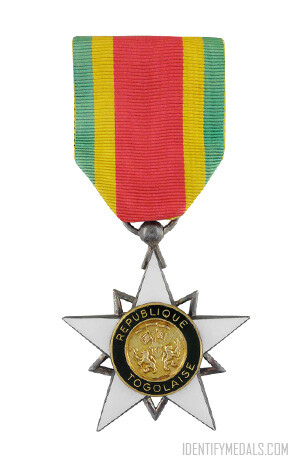
Crafted in silver gilt with white and green enamels. On the obverse side, a circular central medallion displays the arms of the Togolese Republic, encircled by a green enamel ring inscribed with “Republique Togolaise” (Togolese Republic).

The reverse side features a plain gilt surface with a circular central medallion bearing the inscription “Travail Liberté Patrie” (Work, Liberty, Country).

The Order of the Star of Ghana

The Order of the Star of Ghana is a Ghanaian award given to individuals who have helped the cause of the country.

  • Time Period: Post-WW2
  • Institution: 1 July 1960
  • Country: Ghana

The Order of the Star of Ghana is the second-highest honor conferred by the Government of Ghana upon individuals who have contributed significantly to the country.

Those bestowed with this award are honored during a state ceremony presided over by the President of the Republic.

Previously the highest national honor, the Order of the Star of Ghana was succeeded by the Grand Order of the Star and Eagles of Ghana on June 23, 2008.

The order has three grades:

  • Companion (CSG) – Honorary Division, Civil Division.
  • Officer (OSG) – Honorary Division, Civil Division, Military Division.
  • Member (MSG) – Honorary Division, Civil Division, Military Division, Police Division.

The Order of the Star of Ghana Design

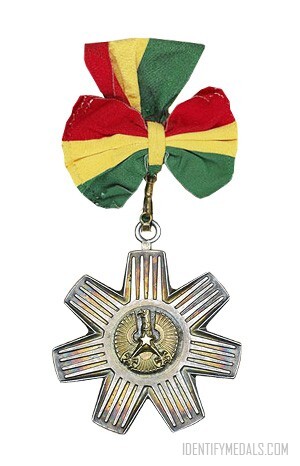
The badge comprises a star with seven bold points centered around an eagle and a five-pointed star.

The ribbon features three colors: green, yellow, and red.

The River Benue Star

The River Benue Star is a Nigerian medal awarded to commissioned officers for distinguished acts of gallantry in the course of duty.

The River Benue Star is a Nigerian medal awarded to commissioned officers of the Nigerian Armed Forces for distinguished acts of gallantry in the course of duty.

The River Niger Star Design

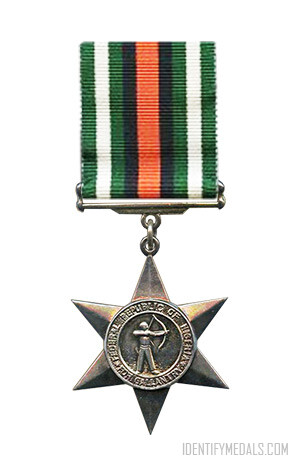
The medal is a six-sided star and bears the inscription “Federal Republic of Nigeria – Gallantry” in the obverse.

The ribbon is green with white edge stripes and a black-edged red central stripe.

The River Niger Star

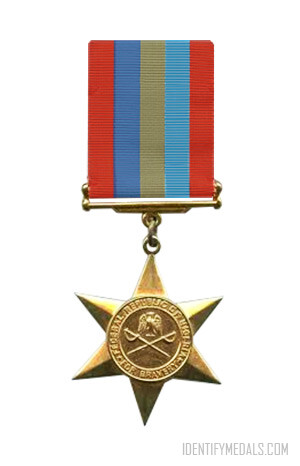
The River Niger Star is a Nigerian medal awarded to officers of the Nigerian Armed Forces in recognition of outstanding bravery.

The River Niger Star was awarded to commissioned officers of the Nigerian Armed Forces for exceptional valor demonstrated in combat situations. 

The River Niger Star Design

The medal is a star. The front side bears an inscription, although limited information about this decoration is accessible.

The ribbon is red, dark blue, khaki, and light blue/green.

The Order of the Federal Republic (Nigeria)

The Order of the Federal Republic is a Nigerian order of merit and one of the highest honors bestowed by the country.

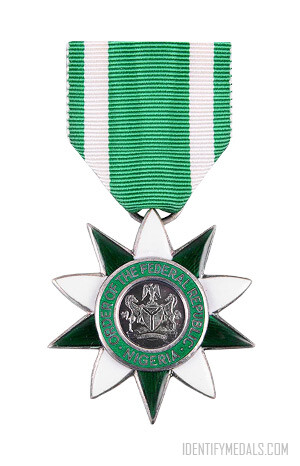
The Order of the Federal Republic (OFR), established in 1963 by the Federal Republic of Nigeria and stands as one of the country’s two prestigious orders of merit, with precedence over the Order of the Niger.

At the apex of this honor is the Grand Commander in the Order of the Federal Republic and the Grand Commander in the Order of the Niger, reserved for the President and Vice-President, respectively. Notably, the Presiding Judge in the Supreme Court and the Chairman of the Senate hold ex officio positions as Commanders in the Order of the Niger.

The order has four grades:

  • Grand Commander of the Order of the Federal Republic (GCFR)
  • Commander of the Order of the Federal Republic (CFR)
  • Officer of the Order of the Federal Republic (OFR)
  • Member of the Order of the Federal Republic (MFR)

The Order of the Federal Republic Design

The insignia of the order varies considerably depending on the grade, but consists of a star and a central disc with the inscription “Order of the Federal Republic”. 

The ribbon is green and white. The Military Division has an additional thin red line in the center. 

The Order the Niger

The Order of the Niger was one of the two orders of merit established by Nigeria after it became an independent country.

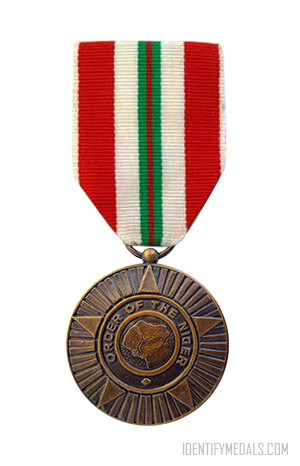
The Order of the Niger is an order of merit with a Civil Division and a Military Division established in 1960. 

Nigeria achieved independence on October 1, 1960, and subsequently became the Federal Republic of Nigeria in 1963. Following this transition, two prestigious orders of merit were established: the Order of the Niger and the Order of the Federal Republic.

The highest distinctions, the Grand Commander in the Order of the Federal Republic and the Grand Commander in the Order of the Niger, are conferred upon the President and Vice-President respectively. Additionally, the presiding judge of the Supreme Court and the chairman of the Senate are automatically invested as Commanders in the Order of the Niger by virtue of their positions.

The grades of the Order of the Niger are:

  • Grand Commander of the Order of the Niger (GCON)
  • Commander of the Order of the Niger (CON)
  • Officer of the Order of the Niger (OON)
  • Member of the Order of the Niger (MON)

The Order of the Niger Design

The insignia of the order varies considerably depending on the grade, but consists of a star and a central disc with the inscription “Order of the Niger”. 

The ribbon is red, white, and green. The Military Division has an additional thin red line in the middle. 

The New Zealand Bravery Decoration

The New Zealand Bravery Decoration (or NZBD) is the third-level civil decoration of New Zealand. It was established in 1999.

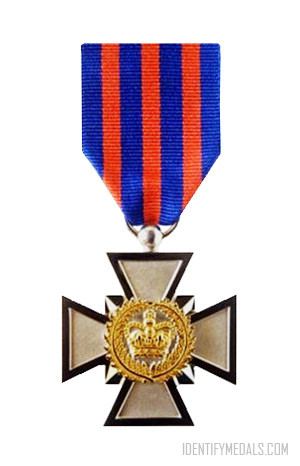
The New Zealand Bravery Decoration (NZBD) stands as the third-tier civil decoration within New Zealand’s honors system.

Its inception took place through a royal warrant on September 20, 1999, marking a significant shift towards a unique New Zealand Bravery system to replace British bravery awards. This esteemed medal, which can also be conferred posthumously, is bestowed in recognition of “remarkable acts of bravery in perilous situations.” While predominantly a civilian honor, it is extended to members of the armed forces who exhibit acts of bravery in non-operational scenarios. This allowance is made as New Zealand’s gallantry awards are typically reserved for those involved in war, warlike operational service, and peacekeeping missions.

To acknowledge ongoing acts of extraordinary bravery deserving of recognition, bars may be added to the NZBD. Those who are honored with the New Zealand Bravery Decoration are entitled to use the postnominal letters NZBD.

The New Zealand Bravery Decoration Design

The New Zealand Bravery Decoration measures 45mm in diameter.

The obverse is a faceted cross pattée surmounted by a small faceted four-pointed star with the Royal Crown and fern frond wreath emblem. The reverse has the inscription “FOR BRAVERY – MO TE MAIA“.

The suspension is a ring suspension.

Find This Medal

Right Now on eBay 
Clicking a link to eBay may result in a referral commission being paid if a purchase is made.
Loading...