
The Burma Star

The Burma Star is a military campaign medal for award to subjects of the British Commonwealth who served in the Burma Campaign.

The Burma Star is a military campaign medal, instituted by the United Kingdom in May 1945 for award to subjects of the British Commonwealth who served in the Second World War, specifically in the Burma Campaign from 1941 to 1945.

Eight campaign stars and nine clasps were initially instituted for campaign service during the Second World War. No-one could be awarded more than five (now six) campaign stars and no-one could be awarded more than one clasp to any one campaign star.

The Burma Campaign took place between 11 December 1941 and 2 September 1945, when Japanese forces invaded Burma and drove British forces back to the Indian border. The Allies were not in a position to strike back and regain a foothold in Burma until early in 1944. Prisoners of War were forced by their Japanese captors to labour on projects such as railway construction and were frequently tortured and starved. Approximately 13,000 British soldiers and 2,000 civilians died in Japanese prisoner camps.

The Burma Star Design

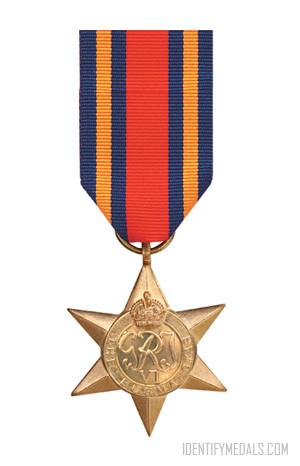
The set of nine campaign stars was designed by the Royal Mint engravers. They are six-pointed stars, struck in a yellow copper zinc alloy to fit into a 44 millimeters diameter circle. All of them all have a ring suspender which passes through an eyelet above the uppermost point of the star.

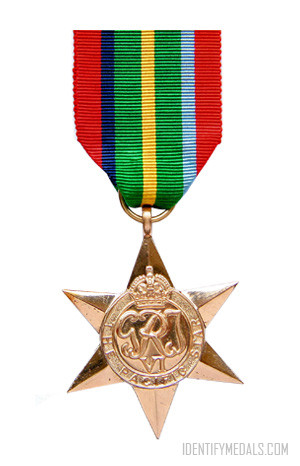
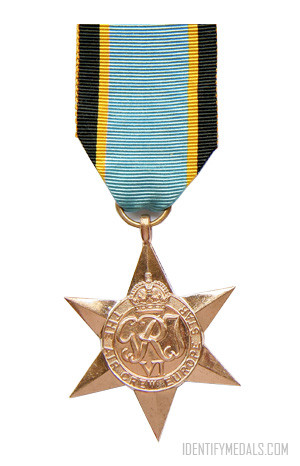
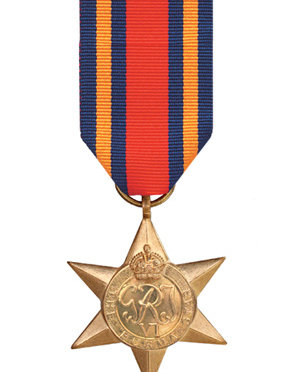
The obverse has a central design of the Royal Cypher “GRI VI”, surmounted by a crown and the inscription “THE BURMA STAR”. The reverse is plain and, as with the other Second World War campaign medals, a no engraving policy was applied.

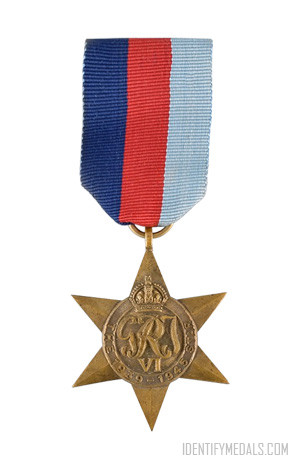
The ribbon is 32 millimeters wide, with a 3½ millimeters wide navy blue band (representing the British Naval forces), a 4 millimeters wide dark yellow band (representing the sun) and a 3½ millimeters wide navy blue band, repeated and separated by a 10 millimeters wide Army red band (representing the Commonwealth Armies).

The clasp was designed to be sewn onto the medal’s ribbon and struck in a yellow copper-zinc alloy. The frame has an inside edge that resembles the perforated edge of a postage stamp.

Find This Campaign Medal

Right Now on eBay 
Clicking a link to eBay may result in a referral commission being paid if a purchase is made.
Loading...

More WW2 British Campaign Medals

During World War II (1939–1945) British campaign medals were awarded to members of the British Armed Forces and civilians for active service in specific military campaigns or operations. These included:

WW2 Medals and Awards: The Burma Star

The Burma Star

The Burma Star is a military campaign medal for award to subjects of the British Commonwealth who served in the Burma Campaign.

Read More »
WW2 Medals and Awards: The Italy Star

The Italy Star

The Italy Star is a military campaign medal, instituted by the United Kingdom in May 1945 for service in the Italian Campaign 1943 to 1945.

Read More »

The Atlantic Star

The Atlantic Star is a military campaign medal, instituted by the United Kingdom in May 1945 for the Battle of the Atlantic.

The Atlantic Star is a military campaign medal, instituted by the United Kingdom in May 1945 for award to subjects of the British Commonwealth for service in the Second World War. It was awarded specifically to those who took part in the Battle of the Atlantic, the longest continuous campaign of the war, which took place between 3 September 1939 and 8 May 1945, as German U-boats attacked convoys transporting vital supplies from America and the Colonies to Britain.

The Atlantic Star was intended primarily for award to those who served in shipping convoys and their escorts and anti-submarine forces, as well as to those who served on fast merchant ships which sailed alone. 

The Atlantic Star Design

British uniform regulations stipulated that no one person could be awarded more than one clasp to any one campaign star. The set of nine campaign stars was designed by the Royal Mint engravers.

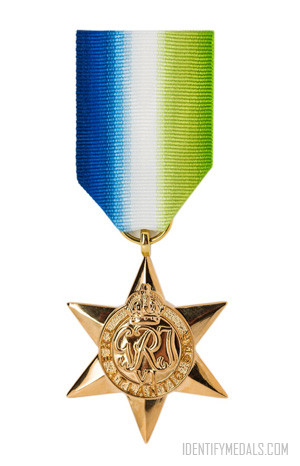
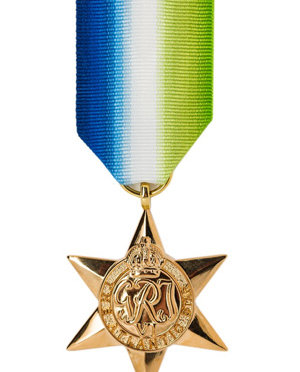
They are six–pointed stars, struck in yellow copper zinc alloy to fit into a 44 millimetres diameter circle. The obverse has a central design of the Royal Cypher “GRI VI”, surmounted by a crown and the inscription “THE ATLANTIC STAR”. The reverse is plain and, as with the other Second World War campaign medals, a no-engraving policy was applied.

Find This Campaign Medal

Right Now on eBay 
Clicking a link to eBay may result in a referral commission being paid if a purchase is made.
Loading...

More WW2 British Campaign Medals

During World War II (1939–1945) British campaign medals were awarded to members of the British Armed Forces and civilians for active service in specific military campaigns or operations. These included:

The War Medal 1939-1945 Obverse

The War Medal 1939-1945

The War Medal 1939–1945 is a British campaign medal instituted by the United Kingdom on 16 August 1945. The medal was awarded to subjects of the British Commonwealth who had served full-time.

Read More »
WW2 Medals and Awards: The Arctic Star

The Arctic Star

The Arctic Star is a military campaign medal which was instituted for service on the Arctic Convoys north of the Arctic Circle in WW2. 

Read More »

The Arctic Star

The Arctic Star is a military campaign medal which was instituted for service on the Arctic Convoys north of the Arctic Circle in WW2. 

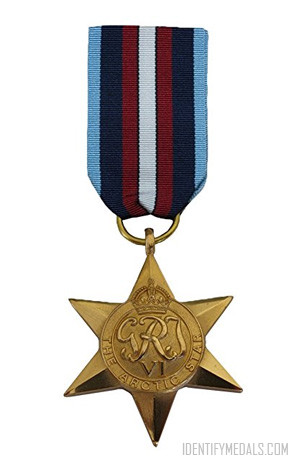
The Arctic Star is a military campaign medal which was instituted by the United Kingdom on 19 December 2012 for award to subjects of the British Commonwealth for service in the Second World War, specifically on the Arctic Convoys north of the Arctic Circle.

The Arctic Star is a retrospective award and was approved by the Queen and announced in late 2012. The institution of this medal was the end result of a 16-year-long campaign by veterans who stressed that service in the arctic convoys north of the Arctic Circle was entirely different from that in the Atlantic, for which the Atlantic Star had been awarded. This is the first British medal to be instituted and awarded using a dead monarch’s cypher or effigy, who did not give permission for it to be instituted.

The Arctic Star Medal Design

The set of nine campaign stars was designed by the Royal Mint engravers. They are six–pointed stars, struck in yellow copper zinc alloy to fit into a 44 millimetres diameter circle. The obverse has a central design of the George VI Royal Cypher “GRI VI”, surmounted by a crown and with the inscription “THE ARCTIC STAR”. The reverse is plain and follows a no-engraving policy.

The medal was awarded unnamed, although some recipients chose to have their medals privately engraved. The ribbon is 32 millimetres wide, with a 3½ millimetres wide Air Force blue band, a 6 millimetres wide Navy blue band, a 4 millimetres wide red band and a ¼ millimetre wide black pinstripe band, repeated in reverse order and separated by a 4½ millimetres wide white band. The three colours represent the forces which were involved in the campaign, light blue for the Air Forces, dark blue for the Navy and red for the Merchant Navy, while the central white band, edged in black, represents the Arctic.

As many as 120,000 veterans or their next-of-kin are believed to be eligible for the Arctic Star.

The Arctic Star is therefore worn proceeded by the Atlantic Star and succeeded by the Air Crew Europe Star.

Find This Campaign Medal

Right Now on eBay 
Clicking a link to eBay may result in a referral commission being paid if a purchase is made.
Loading...

More WW2 British Campaign Medals

During World War II (1939–1945) British campaign medals were awarded to members of the British Armed Forces and civilians for active service in specific military campaigns or operations. These included:

WW2 Medals and Awards: The Pacific Star

The Pacific Star

The Pacific Star is a British military campaign medal instituted by the United Kingdom in 1945 for those who served in the Pacific Campaign.

Read More »

The Air Crew Europe Star

The Air Crew Europe Star is a military campaign medal awarded to subjects of the British Commonwealth for service in the Second World War.

The Air Crew Europe Star is a military campaign medal instituted by the United Kingdom in May 1945. It was awarded to subjects of the British Commonwealth for service in the Second World War. No-one could be awarded more than five (now six) campaign stars and no-one could be awarded more than one clasp to any one campaign star.

The Air Crew Europe Star commemorated flying operations from the United Kingdom over Europe and was intended primarily for award to air crew. The strategic bombing campaign against German industrial cities, military installations and a wide variety of other targets continued throughout World War Two and made a decisive contribution to Allied victory. 

The Air Crew Europe Star Design

The set of nine campaign stars was designed by the Royal Mint engravers. They are six–pointed stars, struck in yellow copper zinc alloy to fit into a 44 millimetres diameter circle. 

The obverse has a central design of the Royal Cypher “GRI VI”, surmounted by a crown and the inscription “THE AIR CREW EUROPE STAR”. The reverse is plain and usually shows no engraving.

Find This Campaign Medal

Right Now on eBay 
Clicking a link to eBay may result in a referral commission being paid if a purchase is made.
Loading...

More WW2 British Campaign Medals

During World War II (1939–1945) British campaign medals were awarded to members of the British Armed Forces and civilians for active service in specific military campaigns or operations. These included:

The War Medal 1939-1945 Obverse

The War Medal 1939-1945

The War Medal 1939–1945 is a British campaign medal instituted by the United Kingdom on 16 August 1945. The medal was awarded to subjects of the British Commonwealth who had served full-time.

Read More »
WW2 Medals and Awards: The Africa Star

The Africa Star

The Africa Star is a military campaign medal awarded to those who served in the Second World War specifically in North Africa. 

Read More »
WW2 Medals and Awards: The Burma Star

The Burma Star

The Burma Star is a military campaign medal for award to subjects of the British Commonwealth who served in the Burma Campaign.

Read More »

The Africa Star

The Africa Star is a military campaign medal awarded to those who served in the Second World War specifically in North Africa. 

The Africa Star is a military campaign medal, instituted by the United Kingdom on 8 July 1943 for award to subjects of the British Commonwealth who served in the Second World War between 10 June 1940 and 12 May 1943 inclusive, specifically in North Africa. No-one could be awarded more than five (now six) campaign stars and no-one could be awarded more than one clasp to any one campaign star. 

Between June 1940 and May 1943 British forces fought in North Africa against the Germans and Italians, who then controlled of large areas of Egypt, Libya and Tunisia (and the Suez Canal). The British eventually secured victory on 12 May 1943 when the remaining German forces surrendered at Tunis.  The operational area of the medal includes the whole of the area between the Suez Canal and the Strait of Gibraltar, together with Malta, Abyssinia, Kenya, the Sudan, both Somalilands and Eritrea.

The Africa Star Design

The set of nine campaign stars was designed by the Royal Mint engravers. They are six-pointed stars, struck in a yellow copper zinc alloy to fit into a 44 millimeters diameter circle. All of them all have a ring suspender which passes through an eyelet above the uppermost point of the star.

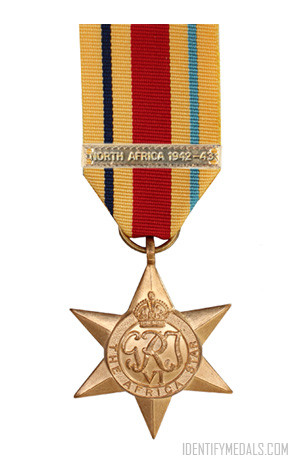
The obverse has a central design of the Royal Cypher “GRI VI”, surmounted by a crown and the inscription  “THE AFRICA STAR”. The reverse is plain and followed a no engraving policy  applied by all but three British Commonwealth countries.

The ribbon measures 32 millimeters wide and has a 5 millimeters wide pale buff band (representing the Sahara Desert), a 1½ millimeters wide Navy blue band (representing the Merchant Navy), a 5 millimeters wide pale buff band, a 9 millimeters wide Army red band, a 5 millimeters wide pale buff band, a 1½ millimeters wide Air Force blue band and a 5 millimeters wide pale buff band.

Regulations issued in 1945 only allow one clasp, the first one qualified for, to be worn with the Africa Star (inscribed “NORTH AFRICA 1942–43”, “8th ARMY” or “1st ARMY”)

Find This Campaign Medal

Right Now on eBay 
Clicking a link to eBay may result in a referral commission being paid if a purchase is made.
Loading...

More WW2 British Campaign Medals

During World War II (1939–1945) British campaign medals were awarded to members of the British Armed Forces and civilians for active service in specific military campaigns or operations. These included:

The War Medal 1939-1945 Obverse

The War Medal 1939-1945

The War Medal 1939–1945 is a British campaign medal instituted by the United Kingdom on 16 August 1945. The medal was awarded to subjects of the British Commonwealth who had served full-time.

Read More »
WW2 Medals and Awards: The Africa Star

The Africa Star

The Africa Star is a military campaign medal awarded to those who served in the Second World War specifically in North Africa. 

Read More »
WW2 Medals and Awards: The Arctic Star

The Arctic Star

The Arctic Star is a military campaign medal which was instituted for service on the Arctic Convoys north of the Arctic Circle in WW2. 

Read More »

The 1939-1945 Star

The 1939–1945 Star is a military campaign medal instituted by the United Kingdom on 8 July 1943 for operational service overseas.
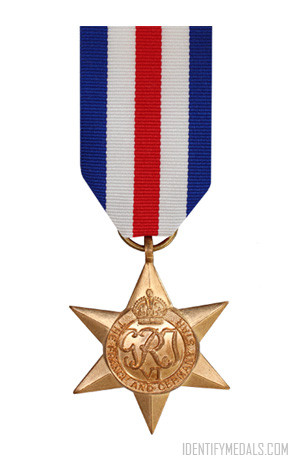
The 1939–1945 Star is a military campaign medal instituted on 8 July 1943 by the United Kingdom to award to subjects of the British Commonwealth for service in the Second World War during specified periods of operational service overseas (between 3 September 1939 and 2 September 1945). The broad criteria was 180 days of service with more specific criteria depending on the service arm.

The 1939–43 Star was awarded to 1,600,000 officers and men. The order of wear of the Second World War campaign stars was determined by their respective campaign start dates and by the campaign’s duration.

The 1939–1945 Star Design

The set of nine campaign stars was designed by the Royal Mint engravers. They are six-pointed stars, struck in yellow copper zinc alloy to fit into a 44 millimeters diameter circle.

The obverse of the 1939-1945 star has a central design of the Royal Cypher “GRI VI“, surmounted by a crown and a circlet in which is inscribed “THE 1939–1945 STAR“. The reverse is plain and, as with the other Second World War campaign medals, a no-engraving policy was applied by all but three British Commonwealth countries (but the recipient’s name was impressed on the reverse for Australians, Indians and South Africans).

The 1939–1945 Star Clasps

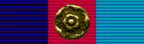
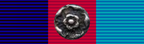
There are two clasps for the 1939-1945 Star: The Battle of Britain clasp and the Bomber Command clasp. Both clasps were struck in bronze and had a frame with an inside edge resembling the perforated edge of a postage stamp. The clasps are denoted by a golden or silver-gilt rosette worn on the ribbon bar. There were two clasps instituted to be worn on the medal ribbon: A Battle of Britain clasp and a Bomber Command clasp.

The Battle of Britain clasp was awarded to those who had participated in the Battle of Britain military campaign. This is the rarest one as it was given to aircrew members of stipulated squadrons of Fighter Command who had flown at least one operational sortie between 00.01 hrs 10th July and 23.59 hrs 31st Oct 1940. A total of 2,936 men qualified for it.

The Bomber Command clasp was instituted on 26 February 2013 (belated) and given to those who played a central role in the strategic bombing of Germany in World War II, participating in at least one operational sortie in a Royal Air Force Bomber Command operational unit between 3 September 1939 and 8 May 1945 inclusive. In total 364,514 operational sorties were flown and 8,325 aircraft were lost in action. 

The 1939-1945 Star Ribbon

The 1939-1945 Star - Ribbon

Ribbon with rosette for the Battle of Britain

The 1939-1945 Star - The Battle of Britain Clasp Rosette
The 1939-1945 Star - The Battle of Britain Clasp

Ribbon with rosette for the Bomber Command

The 1939-1945 Star - The Bomber Command Clasp Rosette
The 1939-1945 Star - The Bomber Command Clasp

Find This Campaign Medal

Right Now on eBay 
Clicking a link to eBay may result in a referral commission being paid if a purchase is made.
Loading...

More WW2 British Campaign Medals

During World War II (1939–1945) British campaign medals were awarded to members of the British Armed Forces and civilians for active service in specific military campaigns or operations. These included:

WW2 Medals and Awards: The Pacific Star

The Pacific Star

The Pacific Star is a British military campaign medal instituted by the United Kingdom in 1945 for those who served in the Pacific Campaign.

Read More »
The War Medal 1939-1945 Obverse

The War Medal 1939-1945

The War Medal 1939–1945 is a British campaign medal instituted by the United Kingdom on 16 August 1945. The medal was awarded to subjects of the British Commonwealth who had served full-time.

Read More »

Further Reading

The Silver Star Medal (USA)

The Silver Star Medal is the United States Armed Forces’s third-highest personal decoration for gallantry and valor in combat.

The Silver Star Medal (known unofficially as the Silver Star or SSM) is the United States Armed Forces’ third-highest personal decoration for valor in combat. The medal is awarded primarily to members of the United States Armed Forces for gallantry in action against an enemy of the United States, so long as the action did not justify one of the next higher valor awards.

Throughout its history, the Silver Star has been awarded to numerous deserving individuals who have demonstrated extraordinary valor and bravery in defense of the United States. It remains a highly esteemed medal within the U.S. military, honoring the exceptional sacrifices made by service members.

The Silver Star Medal was also awarded for singular acts of valor or heroism over a brief period, such as one or two days of a battle.

The History of the Silver Star Medal

The Silver Star was established on July 19, 1932, by an act of the U.S. Congress. It was initially created as the “Silver Star Medal” and was primarily intended to recognize the heroism of individuals in the U.S. Army during World War I. The medal was retroactively authorized to be awarded for acts of valor dating back to April 6, 1917, the entry of the United States into World War I.

Over time, the eligibility for the Silver Star was expanded beyond the Army to include all branches of the U.S. armed forces. This includes the Army, Navy, Marine Corps, Air Force, and Coast Guard. It is awarded to members of these branches for gallantry in action against an enemy of the United States.

The Silver Star Criteria and Recognition

The Silver Star is awarded for acts of extraordinary heroism, typically involving great personal risk and bravery. It is often bestowed upon those who display exceptional valor in combat, where their lives are in immediate danger.

The actions for which the Silver Star is awarded must be of such a high degree that they are worthy of recognition above and beyond the requirements for other medals.

The Silver Star Medal Design

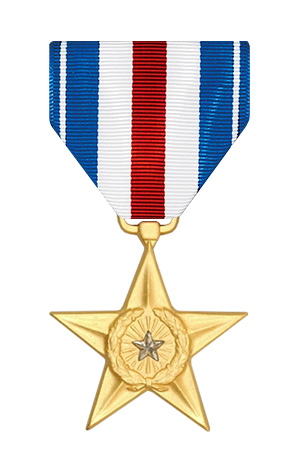
The Silver Star Medal is a gold five-pointed star measuring 1 12 inches (38 mm) in diameter.

Its obverse shows a laurel wreath encircling rays and a silver star superimposed in the center. The reverse has the inscription FOR GALLANTRY IN ACTION.

The medal is worn as a ribbon on the uniform, and the recipient also receives a medal with an appropriate citation that details the specific acts of valor or distinguished service.

The Department of Defense does not keep extensive records for the Silver Star Medal, but independent groups estimate that some 100,000 to 150,000 SSMs were awarded.

Right Now on eBay 
Clicking a link to eBay may result in a referral commission being paid if a purchase is made.
Loading...
]