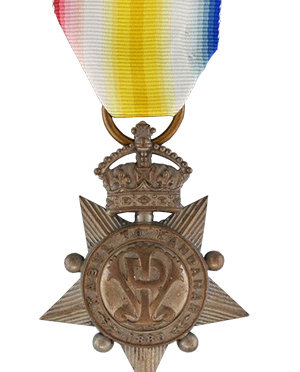
The Kabul to Kandahar Star

The Kabul to Kandahar Star was awarded to British and Indian troops who had participated in the 320 mile march from Kabul to Kandahar.

The Kabul to Kandahar Star (or the Roberts Star or Kandahar Bronze Star) was awarded to British and Indian troops who had participated in the 320 mile march from Kabul to Kandahar in Afghanistan between 9 and 31 August 1880. It was also awarded to the troops stationed en route at Kelat-i-Ghilzie, who accompanied General Roberts on the final ninety miles to Kandahar.

The march took place to relieve Kandahar, where a British force was being besieged by Afghan forces. On reaching Kandahar, Roberts decisively beat the Afghans on 1 September 1880 at the Battle of Kandahar and lifted the siege. The war was concluded soon after.

Just over 11,000 Kabul to Kandahar Stars were awarded, all recipients also receiving the Afghanistan Medal, usually with the ‘Kandahar’ bar.

The Kabul to Kandahar Medal Design

The Kabul to Kandahar medal is a bronze five-pointed star measuring 62mm high and 48mm wide and suspended by the Imperial Crown. The medal was made from guns captured at the Battle of Kandahar.

The obverse displays, in the middle, the royal monogram “VRI” surrounded by the text “Kabul to Kandahar 1880”. The reverse is plain with a hollow center, with the name of the recipient around the edge.
The Gwalior Star (Punniar)

The Gwalior Star is a Campaign medal presented to the soldiers of the British Army and Bengal Army who took part in the Gwalior Campaign.

The Gwalior Star is a Campaign medal presented to the soldiers of the British Army and the British led Bengal Army who took part in the 1843 Gwalior Campaign by the Honourable East India Company.

Tensions between the East India Company and the State of Gwalior had been growing and finally led to a British advance into Gwalior early in December 1843.

On December 29, 1843, the British Army defeated Maharaja Shrimant Jayaji Rao Scindia, and regained control of Gwalior. The first division of the army, commanded by General Sir Hugh Gough, was victorious at the Battle of Maharajpoor. Major-General Grey, with the second division, was victorious at the Battle of Punniar on the same day.

The Gwalior Star Medal Design

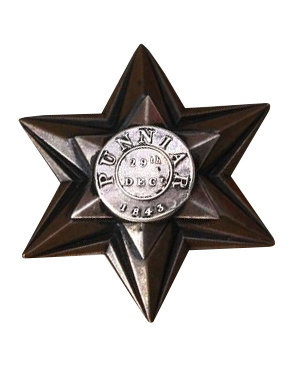
The Gwalior medal is a six pointed star and measures 50 millimeters (2.0 in) diameter. It’s made of bronze from guns captured during the Gwalior Campaign.

In the obverse, the center of the star is a silver disk, which bears the Date 29th Dec, 1843 and the name of one of the Gwalior Campaign battles, either Maharajpoor or Punniar. The reverse of the medal is plain and engraved with the name and regiment of the soldier to whom the medal was awarded.

Manufactured at the Calcutta Mint, this medal was presented by the British India Government originally as a star with a clip on the back to be worn on the breast. Eventually most of these were fitted with a ring or bar of varying design.

The ribbon used was the common ribbon used on many East India Company medals: a red-white-yellow-white-blue gradient ribbon such as that found on the Candahar, Ghuznee, Cabul Medal.

The Gwalior Star (Maharajpoor)

The Gwalior Star is a campaign medal presented to the soldiers of the British Army and the British led Bengal Army for the Gwalior Campaign.

The Gwalior Star is a Campaign medal presented to the soldiers of the British Army and the British led Bengal Army who took part in the 1843 Gwalior Campaign by the Honourable East India Company.

Tensions between the East India Company and the State of Gwalior had been growing and finally led to a British advance into Gwalior early in December 1843.

On December 29, 1843, the British Army defeated Maharaja Shrimant Jayaji Rao Scindia, and regained control of Gwalior. The first division of the army, commanded by General Sir Hugh Gough, was victorious at the Battle of Maharajpoor. Major-General Grey, with the second division, was victorious at the Battle of Punniar on the same day.

The Gwalior Star Medal Design

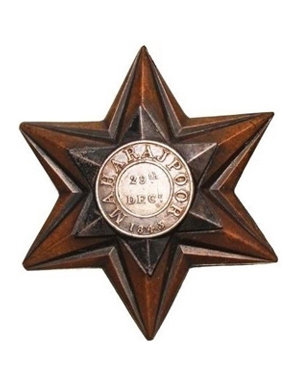
The Gwalior medal is a six pointed star and measures 50 millimeters (2.0 in) diameter. It’s made of bronze from guns captured during the Gwalior Campaign.

In the obverse, the center of the star is a silver disk, which bears the Date 29th Dec, 1843 and the name of one of the Gwalior Campaign battles, either Maharajpoor or Punniar. The reverse of the medal is plain and engraved with the name and regiment of the soldier to whom the medal was awarded.

Manufactured at the Calcutta Mint, this medal was presented by the British India Government originally as a star with a clip on the back to be worn on the breast. Eventually most of these were fitted with a ring or bar of varying design.

The ribbon used was the common ribbon used on many East India Company medals: a red-white-yellow-white-blue gradient ribbon such as that found on the Candahar, Ghuznee, Cabul Medal.

The Indian Order of Merit

The Indian Order of Merit (IOM) is a military and civilian decoration of British India established in 1837on 1 May 1837.

Time Period: Pre-WW1
Year of Institution: 1 May 1837
Country: Great Britain

The Indian Order of Merit (also known as IOM) is a military and civilian decoration of British India established in 1837 by General Order of the Governor-General of India, No. 94 of 1 May 1837.

Following the Partition of India in 1947 it was decided to discontinue the award, and a separate Indian honours system was developed in 1954 to act retrospectively.

For a long period of time the IOM was the highest decoration that a native member of the British Indian Army could receive and initially it had three divisions. This was changed in 1911 when Indian servicemen became eligible for the Victoria Cross.

A civilian division of the IOM also existed between 1902 and 1939, however, it was only conferred very rarely. The name of the medal was changed in 1902 to avoid confusion with a British Order of the same name.

The Indian Order of Merit Medal Design

The medal was originally introduced with three classes: First, second and third classes.

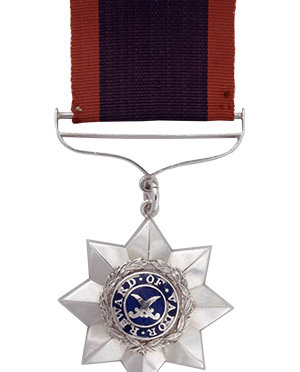
The Third Class is an eight pointed dull silver star with blue circle surrounded by silver laurels. In the middle, with crossed swords and the words, the words Awarded for Valour were written (this was changed to Awarded for Gallantry in 1944.)

The Second Class is an eight pointed shiny silver star with blue circle, surrounded by gold laurels in the middle, with crossed swords and the words Awarded for Valour, this was changed to Awarded for Gallantry in 1944.

The First Class is an eight pointed gold star with blue circle, surrounded by gold laurels in the middle, with crossed swords and the words Awarded for Valour, this was changed to Awarded for Gallantry in 1944.

The ribbon is dark blue and flanked by two red stripes of about a sixth of the width.

The Order of the Bath Medal

The Most Honorable Order of the Bath is a British order of chivalry founded by King George I in 1725 and turned into a Military Order.

The Most Honorable Order of the Bath (also knows previously as “The Most Honorable Military Order of the Bath“) is a British order of chivalry founded by King George I on 18 May 1725 and erected into a regular Military Order.

The name Order of the Bath is derived from the ancient practice of ritual purification by bathing, symbolizing spiritual cleansing and renewal. In medieval times, knights were often ceremonially bathed before being dubbed into chivalric orders, signifying their commitment to noble ideals and virtues. The knights product of this ceremony were known as “Knights of the Bath“.

The Order was re-organized in 1815 in two divisions: Military and Civil. Members can belong to either the Civil or the Military Division. Before 1815, the order had only a single class (Knight Companion), but it no longer exists.

The Order of the Bath Classes

The Order of the Bath consists of three classes, each with its own distinctive medal. These three classes of the Order of the Bath recognize different levels of achievement and service to the British Crown. 

  • Knight Grand Cross (GCB): The highest class of the Order is awarded for the most exceptional acts of service and gallantry. Recipients of this honor are entitled to wear a star and a badge. 

  • Knight Commander (KCB): The second class is awarded for distinguished service and gallantry. Recipients of this honor are entitled to wear a star and a badge suspended from a crimson ribbon worn around the neck.

  • Companion (CB): The third and lowest class is awarded for meritorious service and gallantry. Recipients are entitled to wear a badge only.

A Brief History of the Order of the Bath

The origins of the Order can be traced back to the medieval period, with its establishment formally documented in the early 18th century. The modern incarnation of the Order of the Bath was founded by King George I of Great Britain in 1725. The king established the order as a means of recognizing and rewarding military and civil merit within his realm. 

During the Napoleonic Wars of the late 18th and early 19th centuries, the Order of the Bath experienced a period of revival and expansion. It became one of the most prestigious honors bestowed by the British Crown, awarded to military officers and civil servants for distinguished service, bravery, and leadership in times of conflict.

Over the centuries, the Order of the Bath has continued to evolve, adapting to changes in British society and the nature of warfare. It remains an important institution, honoring individuals who have made significant contributions to the nation, both in times of war and peace.

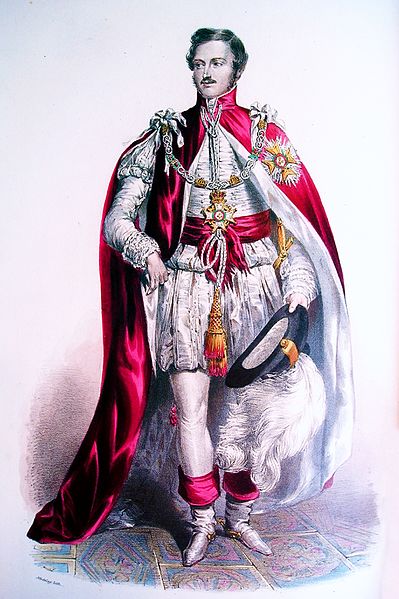
Prince Albert, the Prince Consort, Great Master 1843–1861.

The Most Honorable Order of the Bath Medal Design

Members of the Order wear elaborate costumes on important occasions (such as its quadrennial installation ceremonies and coronations), which vary by rank.

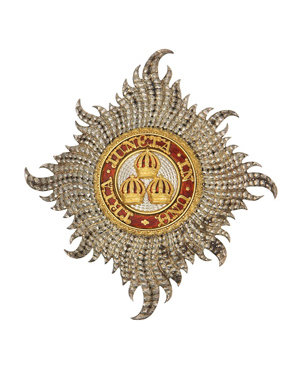
The star is a silver flaming star surmounted by a circular gold band enameled red bearing the motto around the top and laurel around the foot. It encloses three gold crowns enameled in red. The collar chain is made of gold and composed of nine crowns and eight devices (a rose, a thistle, and a shamrock), connected by gold, white-enameled knots. The collar badge is a skeletal gold badge with an oval collar and the inscription “TRIA JUNCTA IN UNO” (or “Three joined in one” in Latin) in white enameled letters. The inscription encloses a thistle, rose, and shamrock. The sash badge is similar to the collar one, but smaller and without white enamel. The ribbon is 38 millimeters and deep red.

The military badge is a gold Maltese Cross of eight points, enameled in white. Each point of the cross is decorated by a small gold ball, and each angle has a small figure of a lion. The center of the cross shows three crowns on the obverse side, and a rose, a thistle and a shamrock emanating from a scepter on the reverse. Both are surrounded by a red circular ring bearing the motto of the Order and flanked by two laurel branches, above a scroll bearing the words Ich Dien in gold letters.

The civil badge is a plain gold oval bearing three crowns on the obverse side, and a rose, a thistle, and a shamrock, emanating from a scepter on the reverse side; both emblems are surrounded by a ring bearing the motto of the Order.

The U.S. Medal of Honor

The Medal of Honor is the United States of America’s most prestigious personal military decoration, awarded for acts of valor.

The Medal of Honor is the United States of America’s highest and most prestigious personal military decoration. It may be awarded to recognize U.S. military service members who distinguished themselves by acts of valor and is normally awarded by the President of the United States in the name of the U.S. Congress. The Medal of Honor is the oldest continuously issued combat decoration of the United States armed forces.

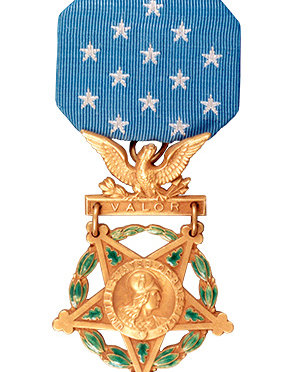
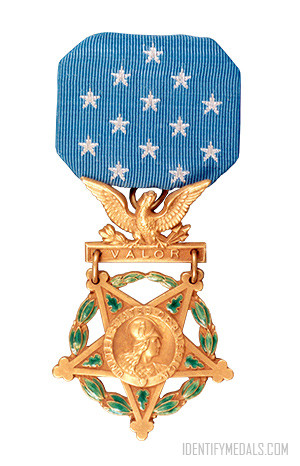
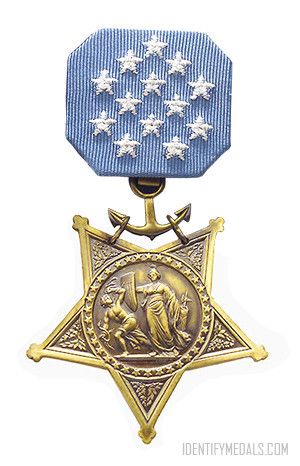
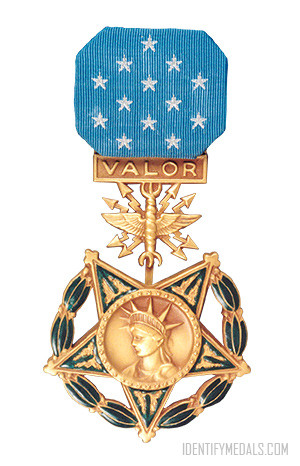
There are three versions of the Medal of Honor insignia. One for the Army, one for the Navy, and one for the Air Force. 

The History of the Medal of Honor

Signed into law by President Abraham Lincoln, a Navy Medal of Honor was first authorized on December 21, 1861 followed by an Army Medal of Honor, which was approved on July 14, 1862.

Over 40 percent of the Medals of Honor awarded to date—1,522 out of 3,464 medals—were bestowed during the Civil War. In fact, some Civil War Medals of Honor years after the end of the war, including Andrew Jackson Smith whose medal was awarded in 2001 and Alonzo Cushing in 2014. 

The first Medals of Honor were given to participants of Andrews’ Raid or the Great Locomotive Chase with Private Jacob Parrot as the first person ever to be awarded this medal of America. At least 32 Medals of Honor were awarded to African-Americans, and William Harvey Carney was the first. Born a slave in Virginia, he finally found freedom in Massachusetts. He volunteered to join the 54th Massachusetts Infantry Regiment, the first African-American unit in the northern states although it was led by white officers.

Tasked with taking Fort Wagner, a beachhead fortification that protected the southern Charleston Harbor, the 54th was chosen for the second attack. The Union flag bearer was killed as the soldiers stormed the fort, but Carney stepped in and held the flag for the remainder of the battle, never losing possession of the flag despite several injuries. Unfortunately, the 54th was forced to retreat, but, as Carney said after the battle, “the old flag never touched the ground.” Carney was awarded the Medal of Honor in 1900, thirty-five years after the end of the Civil War.

Individuals who have received two Medals of Honor are rare, and Thomas Ward Custer is a part of this elite group, receiving both medals for actions during the American Civil War

Personnel of the Marine Corps and Coast Guard receive the Navy version (it was created as a Navy version in 1861 named the “Medal of Valor”). According to the Medal of Honor Historical Society of the United States, 3,519 Medals of Honor have been awarded to the nation’s soldiers, sailors, airmen, Marines, and Coast Guardsmen since the medal’s creation. Less than half of them awarded for actions during the four years of the American Civil War.

American Medals and Awards: The Medal of Honor (Army Version)
The Medal of Honor: Army Version
American Medals and Awards: The Medal of Honor (Navy Version)
The Medal of Honor: Navy Version
American Medals and Awards: Medal of Honor (Airforce)
The Medal of Honor: Air Force Version

The Medal of Honor During World War I and World War II

During World War I and World War II, numerous individuals received the Medal of Honor for their extraordinary valor and heroism in combat.

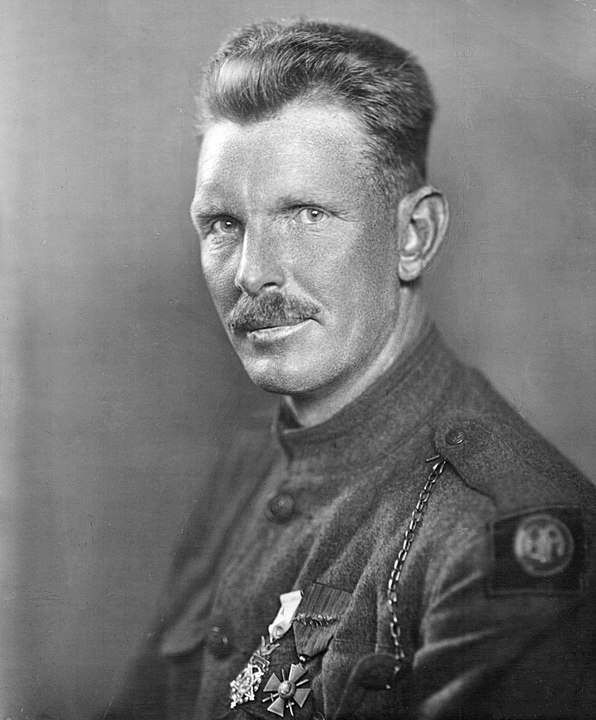
During World War I (1914-1918), the Medal of Honor was awarded for acts of bravery in various theaters of the war, including the Western Front in Europe, the Italian Front, and other areas of conflict. Recipients demonstrated exceptional courage in the face of enemy fire, often risking their lives to save their comrades or achieve critical objectives. One notable recipient during this world war was Sergeant Alvin York, who single-handedly captured 132 German soldiers during the Meuse-Argonne Offensive in 1918.

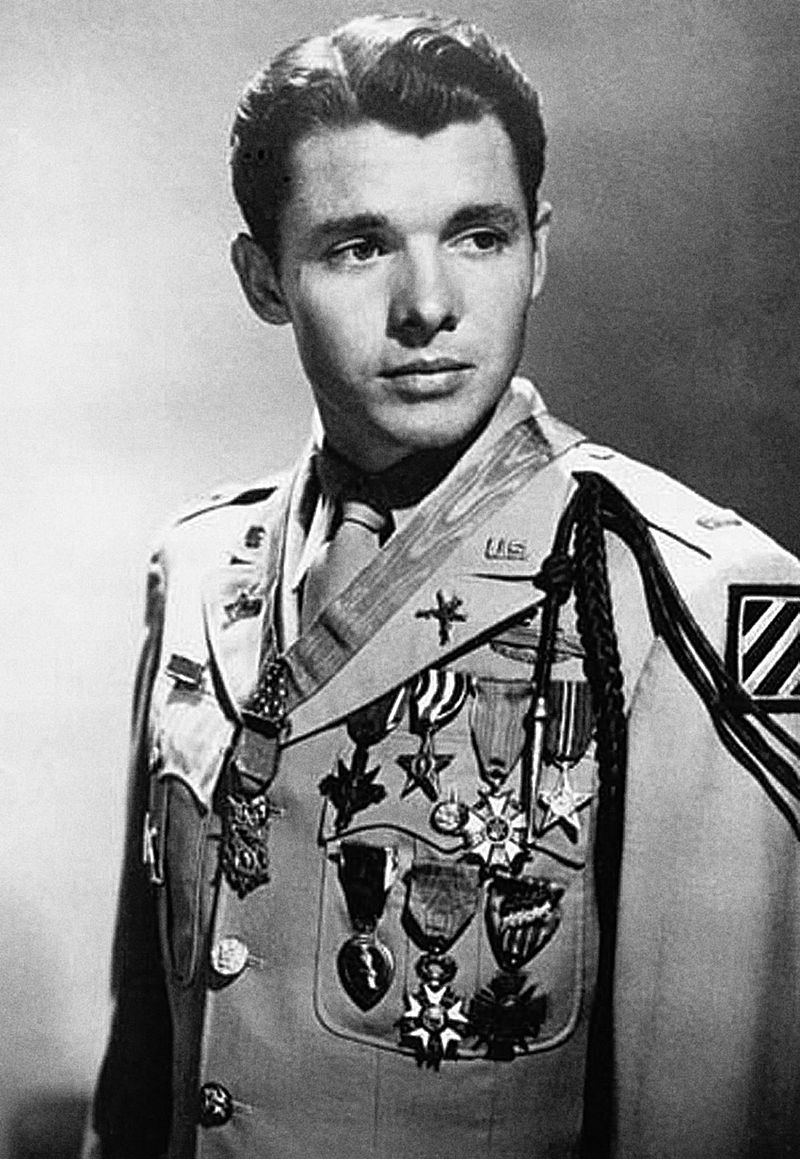
In World War II (1939-1945), the Medal of Honor continued to be awarded for acts of extraordinary heroism in combat. Recipients demonstrated exceptional bravery and selflessness in a wide range of theaters, including the Pacific, European, African, and Mediterranean theaters of war. One of the most celebrated recipients of the Medal of Honor during World War II was Sergeant Audie Murphy, who received the medal for his actions during the Battle of Holtzwihr in France, where he single-handedly repelled a German attack and called in artillery fire on enemy positions.

Alvin Cullum York (December 13, 1887 – September 2, 1964)
Alvin York in uniform, 1919, wearing the Medal of Honor and French Croix de Guerre with Palm.
Audie Murphy photographed in 1948 wearing the U.S. Army khaki "Class A" (tropical service) uniform with full-size medals. Source: Wikipedia.

The Medal of Honor Design

After World War I, the Navy decided to separate the Medal of Honor into two versions: One for combat and one for non-combat. The original upside-down star was designated as the non-combat version and a new pattern of the medal pendant, in cross form, was designed by the Tiffany Company in 1919.

It was to be presented to a sailor or marine who “in action involving actual conflict with the enemy, distinguish[es] himself conspicuously by gallantry and intrepidity at the risk of his life above and beyond the call of duty. 

Due to its prestige and status, the Medal of Honor is afforded special protection under U.S. law against any unauthorized adornment, sale, or manufacture, which includes any associated ribbon or badge.

Read more about the symbolism of the Medal of Honor:

Famous U.S. Medal of Honor Recipients

These individuals represent just a few of the many courageous recipients of the Medal of Honor who have demonstrated extraordinary bravery and selflessness in service to their country. Here are five famous recipients of the U.S. Medal of Honor:

  • Audie Murphy: Audie Murphy, a World War II veteran, is one of the most decorated American soldiers in history. He received the Medal of Honor for his actions during the Battle of Holtzwihr in France in 1945.

  • Alvin C. York: Alvin C. York was a World War I soldier and is renowned for his heroic actions during the Meuse-Argonne Offensive in 1918. He received the Medal of Honor for his bravery and leadership in capturing numerous German soldiers.

  • Desmond Doss: Desmond Doss, a conscientious objector during World War II, served as a combat medic. He was awarded the Medal of Honor for his extraordinary bravery and dedication to saving lives during the Battle of Okinawa.

  • Sal Giunta: Staff Sergeant Salvatore Giunta became the first living recipient of the Medal of Honor since the Vietnam War. He was honored for his actions during the War in Afghanistan in 2007 when he saved fellow soldiers from enemy fire.

  • Michael P. Murphy: Navy SEAL Lieutenant Michael P. Murphy was posthumously awarded the Medal of Honor for his courageous actions during Operation Red Wings in Afghanistan in 2005. He sacrificed his life while attempting to call for reinforcements to rescue his team.

The Colonial Order of the Star of Italy

The Colonial Order of the Star of Italy was founded as a colonial order of knighthood on 18 June 1914 by King Victor Emmanuel III.

The Colonial Order of the Star of Italy (or Ordine coloniale della Stella d’Italia in Italian) was founded as a colonial order of knighthood on 18 June 1914 by King Victor Emmanuel III.

It was awarded to soldiers deployed to the colony of Libya. The order had fallen into abeyance by 1943, when Allied forces conquered the colonies of Italian North Africa. This marked the end of Italy’s colonial ambitions and the order’s active issuance.

The Colonial Order of the Star of Italy Medal Design

The Colonial Order of the Star of Italy medal is shaped like a star, with white, green and red enamel. The obverse shows the initial EV and the year 1911.

The Pacific Star

The Pacific Star is a British military campaign medal instituted by the United Kingdom in 1945 for those who served in the Pacific Campaign.

The Pacific Star is a military campaign medal of the British Commonwealth nations, including the United Kingdom, Australia, and New Zealand. It was established in 1945 to recognize service in the Pacific Theater during World War II.

The Pacific Star was awarded to members of the British and Commonwealth forces who served in specified territories and operational areas in the Pacific region between December 7, 1941, and September 2, 1945. These areas included Southeast Asia, the Pacific Ocean, and the Indian Ocean.

The Pacific Star serves as a symbol of recognition for the bravery, dedication, and sacrifices made by military personnel who served in the challenging and often harsh conditions of the Pacific Theater during World War II. It honors their contributions to the Allied efforts in the region.

The Pacific Star Design

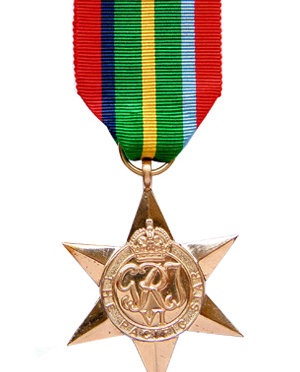
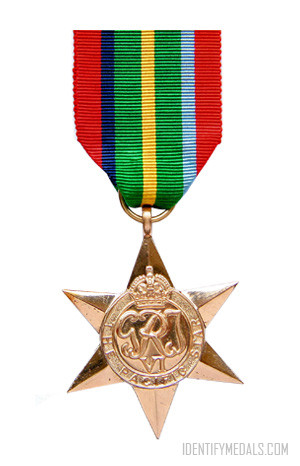
The set of nine campaign stars was designed by the Royal Mint engravers. They are six–pointed stars, struck in yellow copper zinc alloy to fit into a 44 millimetres diameter circle.

The obverse has a central design of the Royal Cypher “GRI VI”, surmounted by a crown and the inscription “THE PACIFIC STAR”.

The reverse is plain and follows a no-engraving policy.

The ribbon of the Pacific Star medal consists of three equal vertical stripes of color: The left and right stripes of the ribbon are dark blue, representing the vast expanse of the Pacific Ocean, and the central stripe is light blue, symbolizing the tropical skies and waters of the Pacific Theater.

The combination of dark and light blue stripes on the ribbon represents the unique and challenging environment in which military personnel served during the Pacific campaign of World War II.

Find This Campaign Medal

Right Now on eBay 
Clicking a link to eBay may result in a referral commission being paid if a purchase is made.
Loading...

More WW2 British Campaign Medals

During World War II (1939–1945) British campaign medals were awarded to members of the British Armed Forces and civilians for active service in specific military campaigns or operations. These included:

WW2 Medals and Awards: The Italy Star

The Italy Star

The Italy Star is a military campaign medal, instituted by the United Kingdom in May 1945 for service in the Italian Campaign 1943 to 1945.

Read More »
WW2 Medals and Awards: The Pacific Star

The Pacific Star

The Pacific Star is a British military campaign medal instituted by the United Kingdom in 1945 for those who served in the Pacific Campaign.

Read More »

The Italy Star

The Italy Star is a military campaign medal, instituted by the United Kingdom in May 1945 for service in the Italian Campaign 1943 to 1945.

The Italy Star is a military campaign medal, instituted by the United Kingdom in May 1945 for award to subjects of the British Commonwealth who served in the Italian Campaign from 1943 to 1945.

After their victory in North Africa, the Allies used their positions in Tunisia and Malta to invade Sicily (from 10 July to 17 August 1943). After this swift victory, the Allies pressed on into Italy and, when the Italian Campaign began on 3 September 1943, became the first Allied forces to land back on mainland Europe since the Canadian-led Dieppe Raid on 19 August, 1942. They also invaded Italian occupied Greece, Yugoslavia, Corsica and Sardinia. The campaign in Italy itself continued until the end of the war in Europe on 8 May 1945.

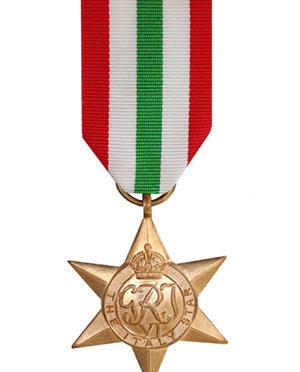
The set of nine campaign stars was designed by the Royal Mint engravers. They are six–pointed stars, struck in yellow copper zinc alloy to fit into a 44 millimetres diameter circle. The obverse has a central design of the Royal Cypher “GRI VI”, surmounted by a crown and the inscription “THE ITALY STAR”. The reverse is plain and follows a no-engraving policy.

The Italy Star Design

The set of nine campaign stars was designed by the Royal Mint engravers. They are six-pointed stars, struck in a yellow copper zinc alloy to fit into a 44 millimeters diameter circle. All of them all have a ring suspender which passes through an eyelet above the uppermost point of the star.

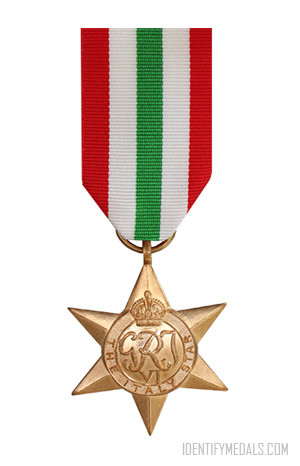
The obverse has a central design of the Royal Cypher “GRI VI”, surmounted by a crown and the inscription “THE ITALY STAR”. The reverse is plain and follows a no-engraving policy.

The ribbon measures 32 millimeters wide, with a 7 millimeters wide red band and a 6 millimeters wide white band, repeated in reverse order and separated by a 6 millimeters wide green band (representing the Flag of Italy).

Find This Campaign Medal

Right Now on eBay 
Clicking a link to eBay may result in a referral commission being paid if a purchase is made.
Loading...

More WW2 British Campaign Medals

During World War II (1939–1945) British campaign medals were awarded to members of the British Armed Forces and civilians for active service in specific military campaigns or operations. These included:

WW2 Medals and Awards: The Arctic Star

The Arctic Star

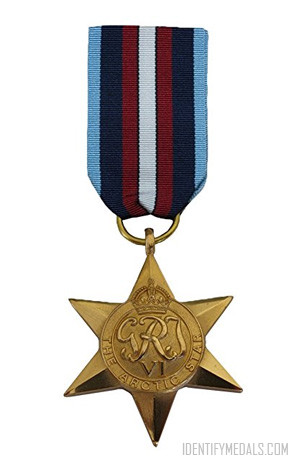
The Arctic Star is a military campaign medal which was instituted for service on the Arctic Convoys north of the Arctic Circle in WW2. 

Read More »
WW2 Medals and Awards: The Italy Star

The Italy Star

The Italy Star is a military campaign medal, instituted by the United Kingdom in May 1945 for service in the Italian Campaign 1943 to 1945.

Read More »
WW2 Medals and Awards: The Pacific Star

The Pacific Star

The Pacific Star is a British military campaign medal instituted by the United Kingdom in 1945 for those who served in the Pacific Campaign.

Read More »
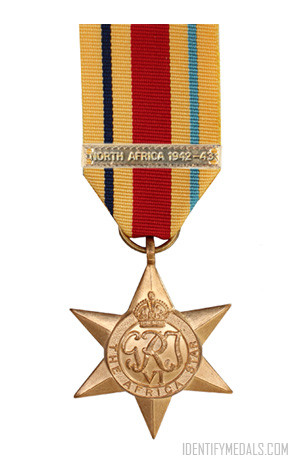
WW2 Medals and Awards: The Africa Star

The Africa Star

The Africa Star is a military campaign medal awarded to those who served in the Second World War specifically in North Africa. 

Read More »

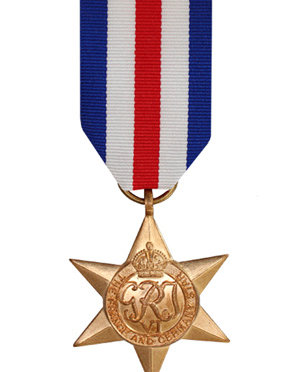
The France and Germany Star

The France and Germany Star is a military campaign medal awarded to subjects of the British Commonwealth who served during WW2.

The France and Germany Star is a military campaign medal established by the United Kingdom in May 1945 and awarded to subjects of the British Commonwealth that had served between 6 June 1944 and 8 May 1945 in France, Belgium, Luxembourg, the Netherlands or Germany and adjacent sea areas.

The Allies launched their final campaign in Northwest Europe on D-Day on 6 June 1944. Over the next eleven months, the allied forces advanced across Western Europe and liberated German-occupied France, Belgium, and the Netherlands.

Personnel who qualified for the France and Germany Star, the Atlantic Star or the Air Crew Europe Star were awarded only that star for which they first qualified and a clasp in respect of the first earned of the other two stars.

The France and Germany Star Design

The set of nine campaign stars was designed by the Royal Mint engravers. They are six-pointed stars, struck in a yellow copper zinc alloy to fit into a 44 millimeters diameter circle. All of them all have a ring suspender which passes through an eyelet above the uppermost point of the star.

The obverse of the medal has a central design of the Royal Cypher “GRI VI“, surmounted by a crown and the inscription “THE FRANCE AND GERMANY STAR“. The reverse is plain and follows a no-engraving policy (the British Honours Committee decided that WW2 campaign medals would be issued unnamed, except for Indians, South Africans and Australians).

Find This Campaign Medal

Right Now on eBay 
Clicking a link to eBay may result in a referral commission being paid if a purchase is made.
Loading...

More WW2 British Campaign Medals

During World War II (1939–1945) British campaign medals were awarded to members of the British Armed Forces and civilians for active service in specific military campaigns or operations. These included:

WW2 Medals and Awards: The Pacific Star

The Pacific Star

The Pacific Star is a British military campaign medal instituted by the United Kingdom in 1945 for those who served in the Pacific Campaign.

Read More »
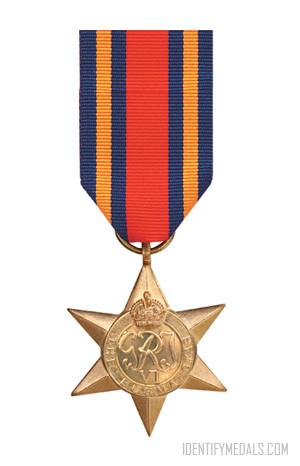
WW2 Medals and Awards: The Burma Star

The Burma Star

The Burma Star is a military campaign medal for award to subjects of the British Commonwealth who served in the Burma Campaign.

Read More »
WW2 Medals and Awards: The Arctic Star

The Arctic Star

The Arctic Star is a military campaign medal which was instituted for service on the Arctic Convoys north of the Arctic Circle in WW2. 

Read More »