John McCain: A Lifetime of Service to America

Born on August 29, 1936 at Coco Solo Naval Station in the Panama Canal Zone when it was a U.S. territory, John McCain grew up in a family that had multiple examples of service to America. Both his father and grandfather were distinguished Navy Admirals, and McCain would follow in their footsteps as well as participating in politics in his later life. 

Admired on both the right and the left, John McCain dedicated his life to serving the American people and was willing to endure great pain and suffering to fulfill that duty.

Who Was John McCain?

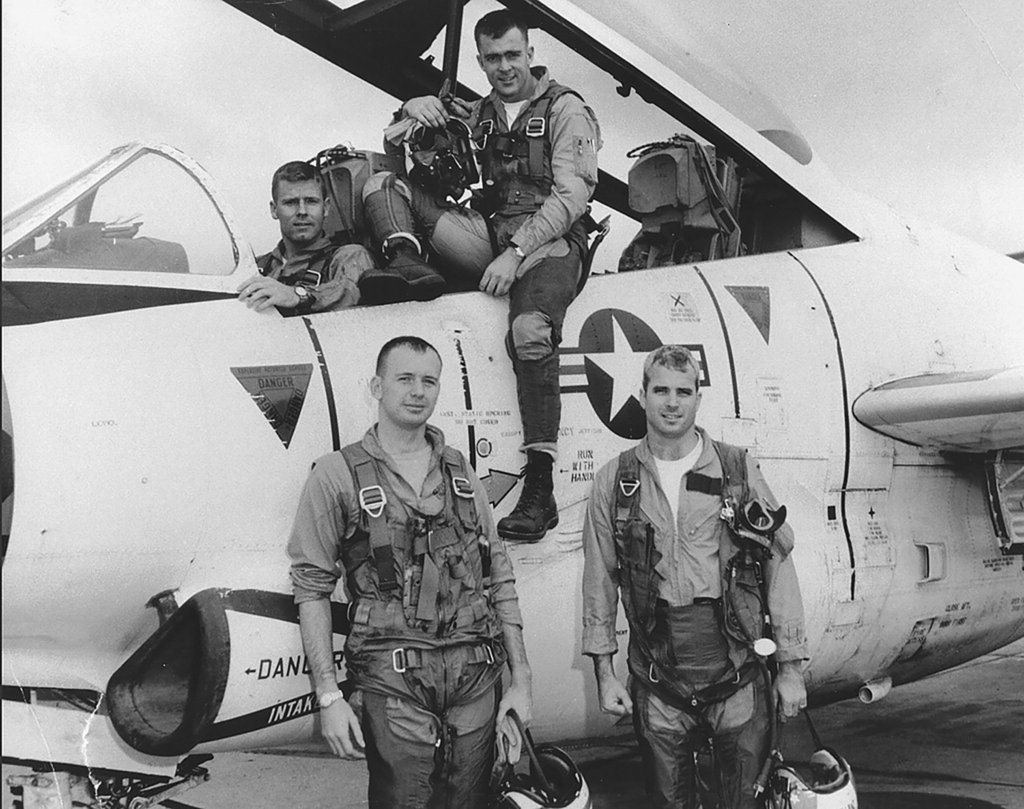
Lieutenant McCain (front right) with his squadron and T-2 Buckeye trainer, 1965
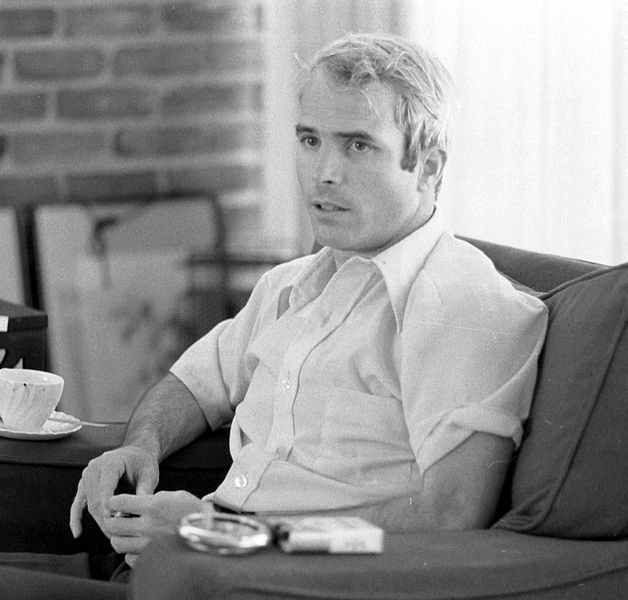
Interview with McCain, April 1974
Interview with McCain, April 1974. Source: Wikipedia.

As a military brat, McCain moved frequently as a child and attended 20 different schools throughout his childhood. He attended the Naval Academy, graduating near the bottom of his class in 1958 and became a Naval aviator for the 22 years, including serving in North Vietnam during the Vietnam War.

Although his father and grandfather had always been well-known in the military, McCain began to be recognized for his own service after his lengthy imprisonment in Vietnam. McCain’s 23rd bombing mission over North Vietnam on October 26, 1967 went terribly wrong when a missile struck his plane, forcing McCain to eject. In the process, he was knocked unconscious, broke both his arms and his leg, and taken prisoner.

McCain was a prisoner of war in the camp now known as “Hanoi Hilton”, a prison used by the French colonists in French Indochina for political prisoners, and later by North Vietnam for U.S. prisoners of war during the Vietnam War. He did not receive the medical treatment that he desperately needed and endured years of torture, spending much of his time in solitary confinement. The friendship of his fellow POWs like Air Force Majors George “Bud” Day and Norris Overly and his Christian faith kept him going during this time.

In late June, as McCain’s father was preparing to assume command of the U.S. forces in the Pacific, the North Vietnamese gave McCain the opportunity to accept an early release, which McCain denied. It was good that he did because the North Vietnamese had hoped to demoralize the American people and other POWs that POWs with privileged parents like McCain could escape, but others could not.

Since POWs were released based on their date of capture, McCain was finally released on March 14, 1973. He continued his service in the Navy once he returned home, including his last duty assignment of serving as naval liaison to the United States Senate. McCain retired from the Navy on April 1, 1981, with the rank of captain.

John McCain and the House of Representatives

Soon thereafter McCain was elected to the U.S. House of Representatives as a representative from Arizona in 1982 and served for two terms. Four years later, he was elected to the United States Senate in 1986, taking the seat formerly held by Republican Barry Goldwater. Throughout his career in the U.S. Senate, McCain served as the Chairman of the Senate Committees on Indian Affairs, Commerce, Science and Transportation, and the Armed Services.

McCain had media reputation of being a “maverick” due to his willingness to vote differently than his party on particular issues, including his stances on gun control and gay/lesbian issues. He is most well-known for the campaign finance reform bill of 2002—the McCain-Feingold Act.  

In 2000, McCain attempted to run for president, but lost the primary to George W. Bush of Texas, who later became the 43rd president. In 2008, McCain again ran for president and was the Republican Party’s nominee for president and chose Governor Sarah Palin as his running mate, losing the election to Barack Obama and Joe Biden.

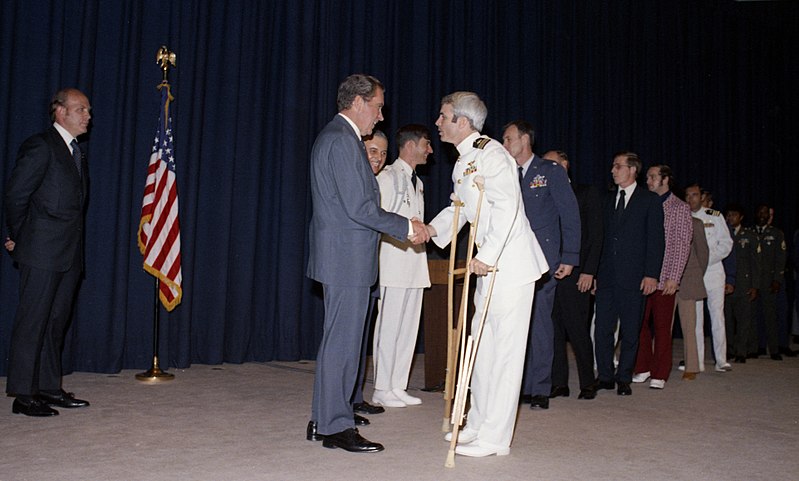
President Richard Nixon Greets Former Vietnam Prisoner of War John McCain, Jr. at a Pre-POW Dinner Reception, 5/24/1973
President Richard Nixon Greets Former Vietnam Prisoner of War John McCain, Jr. at a Pre-POW Dinner Reception, 5/24/1973. Source: Wikipedia.

Even though he lost the presidency, McCain continued to serve in the Senate for 10 years after the presidential election in 2008 until his death in 2018, becoming one of America’s longest-serving politicians.

In his personal life, McCain met and married Carol Shepp in 1965 while stationed at Meridian Naval Air Station, adopting her two sons from a previous marriage, Doug and Andy. A daughter Sidney was born in 1966. In the late 1970s, McCain’s marriage failed, and their divorce was final in April 1980.

The next month, McCain married Cindy Hensley whom he had met in 1979 in Hawaii. They would have four children together: daughter Meghan who was born in 1984, John Sidney “Jack” McCain IV who was born in 1985, James Hensley McCain who was born in 1988, and Bridget who was adopted in 1991.

McCain also coauthored a variety of booksFaith of My Fathers (1999), Worth the Fighting For: A Memoir (2002), Why Courage Matters: The Way to a Braver Life (2004), Hard Call: Great Decisions and the Extraordinary People Who Made Them (2007), Thirteen Soldiers: A Personal History of Americans at War (2014), and The Restless Wave: Good Times, Just Causes, Great Fights, and Other Appreciations (2018).

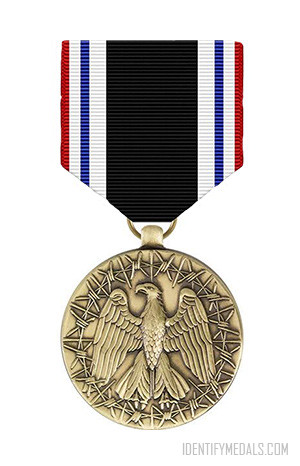
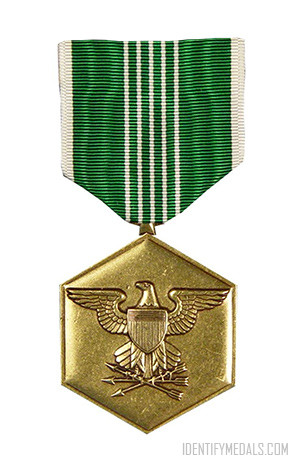
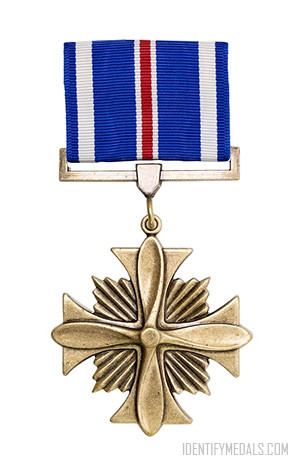
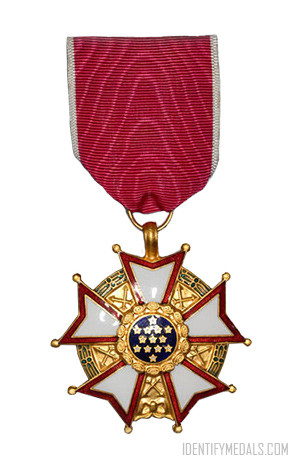
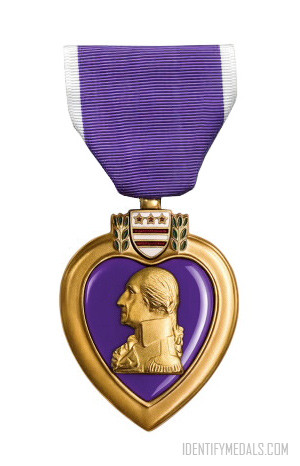
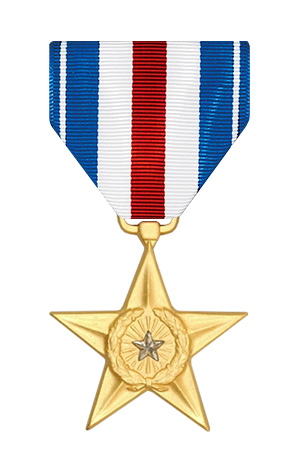
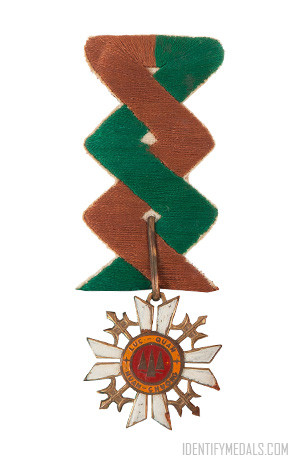
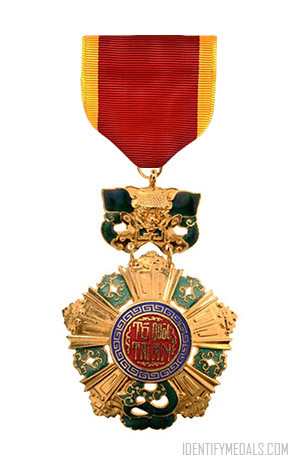
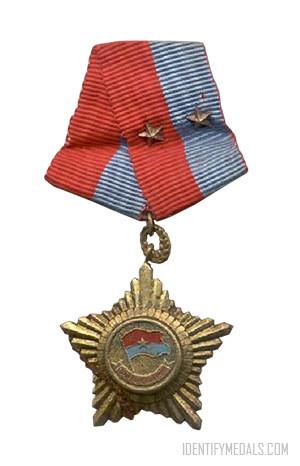
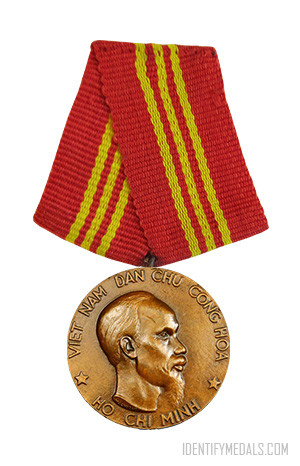
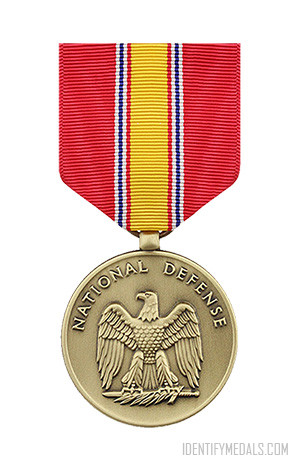
Some of John McCain’s medals:

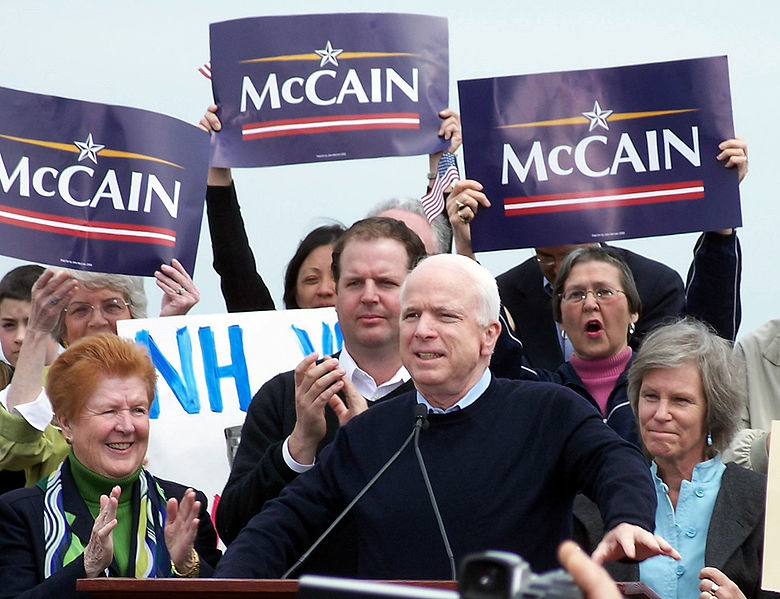
McCain formally announces his candidacy for president in Portsmouth, New Hampshire, 2007
McCain formally announces his candidacy for president in Portsmouth, New Hampshire, 2007. Source: Wikipedia.
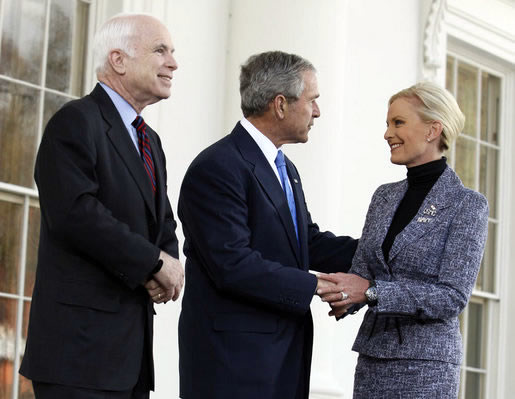
Republican presidential nominee Senator John McCain and his wife Cindy with President George W. Bush at the White House, Wednesday, March 5, 2008.
Republican presidential nominee Senator John McCain and his wife Cindy with President George W. Bush at the White House, Wednesday, March 5, 2008. Source: Wikipedia.
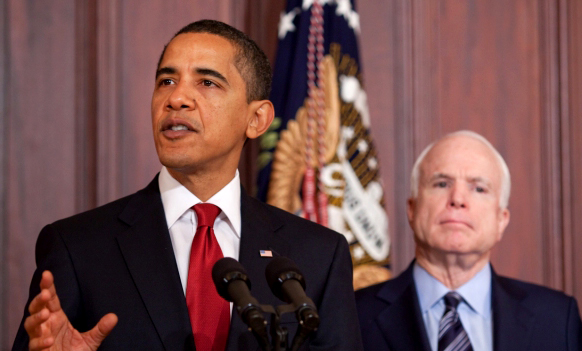
President Barack Obama and Senator John McCain in a press conference, taking place on March 4, 2009.
President Barack Obama and Senator John McCain in a press conference, taking place on March 4, 2009. Source: Wikipedia.

Although some Republicans see McCain as a controversial political figure due to his unorthodox political decisions—he chose to vote down a bill that would repeal the Affordable Health Care Act (NBC News had the apt title: “McCain hated Obamacare. He also saved it.”), almost all Americans have a huge respect for McCain’s military service, especially given the years that he served as a POW.

For his service and as a prisoner-of-war, McCain received the Silver Star, the Distinguished Flying Cross, the Legion of Merit with Combat ‘V’ and one gold star, the Bronze Star Medal with Combat ‘V’ and two gold stars, two Purple Hearts, the Navy Commendation Medal, and the Prisoner-of-War medal. In October 2017, McCain received the Liberty Medal.

Diagnosed with a type of brain cancer in July 2017, McCain decided to discontinue treatment on August 24, 2018, dying on August 25, 2018. McCain’s remains laid in state at the U.S. Capitol Rotunda, a high honor that has been presented to fewer than three dozen people, including Abraham Lincoln, John F. Kennedy, and Ronald Reagan.

Sources


Guest Contributor: Rachel Basinger is a former history teacher turned freelance writer and editor. She loves studying military history, especially the World Wars, and of course military medals. She has authored three history books for young adults and transcribed interviews of World War II veterans. In her free time, Rachel is a voracious reader and is a runner who completed her first half marathon in May 2019.

What Makes Vietnam War Medals Especially Unique

Did you know that some Vietnam War medals and decorations are especially unique because they were issued by South Vietnam, a country that ceased to exist after North Vietnam’s victory? Even so, U.S. military members who received foreign South Vietnamese decorations and medals are still authorized to wear them.

Due to the fall of South Vietnam, the official records of individuals who received awards from that country disappeared, although some U.S. military units maintained records of those awards. While South Vietnam issued a variety of awards and decorations, the U.S. only issued one medal specifically pertaining to the Vietnam War.

In addition, perhaps due to the unpopularity of the war, the Department of Defense never created lists of individuals who received military medals during the Vietnam War except for the Medal of Honor. Typically, the awards were only recorded in personnel records of casualties. In 2002, a team of volunteers began to record some medals awarded to each Vietnam War casualty.

In 2013, the Virtual Wall began to create its own database for these awards, which includes the Medal of HonorDistinguished Service CrossNavy CrossAir Force CrossSilver StarDistinguished Flying CrossBronze Star for Valor, Bronze Star to Meritorious Service or Achievement, Purple HeartAir Medal, Good Conduct Medal, and two foreign awards—Vietnam Gallantry Cross and Vietnam Military Merit Medal.

Here is just a small sample of the medals, awards, and decorations issued during the Vietnam War, three of which we’ll cover more in-depth:

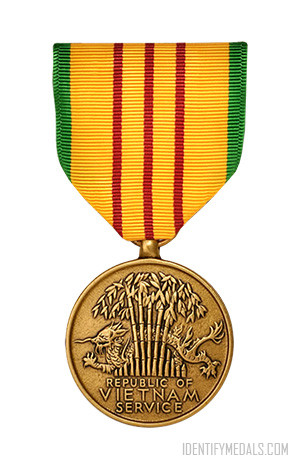
The Vietnam Service Medal

Authorized by executive order in 1965, the Vietnam Service Medal is a U.S. medal to honor service members who served in Vietnam, Laos, Cambodia, and/or Thailand from 1965 to 1973 for 30 consecutive or 60 nonconsecutive days.

The colors of the ribbon are green, yellow, and red, which represents the flag of the Republic of Vietnam at the time—yellow with red stripes running horizontally—and the green Vietnamese jungles. In addition, the three red stripes indicate the three ancient empires of Vietnam Tonkin, Annam, and Cochin China.

For those who participated in campaigns like the Tet counteroffensive in 1968 and the air offensive phases from 1966 to 1969, bronze stars on mounted on the ribbon for participation.

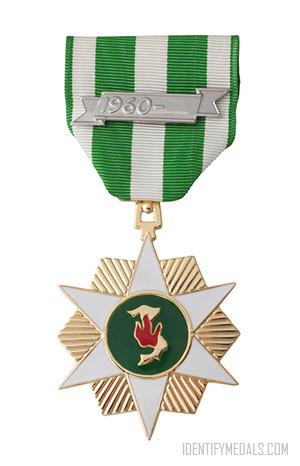
The Republic of Vietnam Campaign Medal

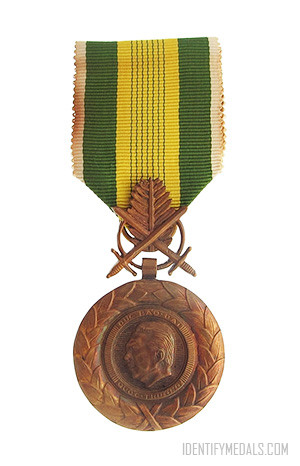
In addition to the U.S. medal, the Republic of Vietnam Campaign Medal is a foreign award, meaning a military decoration or award issued to American troops who aided that country in conflict. First introduced during the First Indochina War, the Republic of Vietnam Campaign Medal was authorized for wear on American service members as of December 1966 for their service in Vietnam.

In order to receive this medal, military members must have served in the Republic of Vietnam for six months between March 1, 1961 and March 28, 1973 or served outside Vietnam but gave combat support for six months or served less than six months but was wounded, captured and escaped enemy forces, or was killed in action.

What’s unique about the medal is that it comes with a default device, known as the 1960 device. It reads, “1960-”. Because they were produced and awarded during the war, it reads the start date of the conflict, but no end date was added.

Finally, its design helps to tell the story of the Vietnam War with the colors of the medal—green and white—to represent freedom and purity respectively. In addition, the medallion has a six pointed white enamel star, six golden rays between each point in the star, and a map of Vietnam in the center of the medallion. The putative red flames on the map represent the locations of the war.

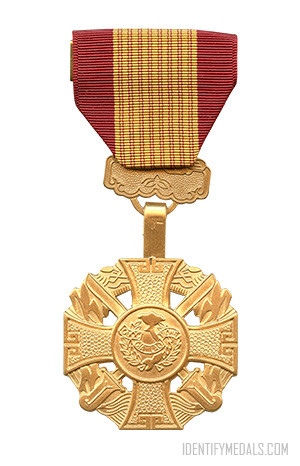
The Vietnam Gallantry Cross

Under the Department of the Army General Order (DAGO) 43, 1970, all military personnel of all branches were awarded the Vietnam Cross of Gallantry if they had served in Vietnam between March 1, 1961 and March 28, 1973.

In addition, according to DAGO 8, 1974, the Vietnam Gallantry Cross, Unit Citation with Palm was awarded to Headquarters U.S. Military Assistance Command (MACV) and all subordinate units during February 8, 1962 to March 28, 1973. This meant that all military personnel who were assigned to units that served in-country Vietnam during this period were considered as assigned to MACV, regardless of service or component.

In other words, the Republic of Vietnam authorized this award for all foreign military personnel and units for valorous achievement and participation during the Vietnam War. Equivalent to the French Croix de Guerre, the medal demonstrates South Vietnam’s gratitude to the American and Allied soldiers who worked, fought, and sacrificed themselves for the freedom of the Republic of Vietnam.

In closing, the Vietnam War has always been a touchy subject. Since the war was quite unpopular, many veterans were not welcomed when they returned, even if they did not personally agree with the conflict. In addition, many Vietnam War vets rarely talked about their experiences during the war and their service—until somewhat recently—went undiscussed.

As a result, besides the Medal of Honor and other prestigious U.S. decorations, many individuals do not know much about the Vietnam War medals, which is unfortunate because they are especially unique.

From the unique device attached to the Republic of Vietnam Campaign Medal to the fact that some medals were issued by a now defunct country—South Vietnam, the medals specifically connected to the Vietnam War have a distinctive story to tell.  

Sources:

Guest Contributor: Rachel Basinger is a former history teacher turned freelance writer and editor. She loves studying military history, especially the World Wars, and of course military medals. She has authored three history books for young adults and transcribed interviews of World War II veterans. In her free time, Rachel is a voracious reader and is a runner who completed her first half marathon in May 2019.

The Inspiring, Yet Tragic Story of Colleen Cain: The Coast Guard’s First Female Helicopter Pilot

On January 1982, the U.S. Coast Guard’s first female helicopter pilot tragically became the first female Coast Guard pilot killed in the line of duty.

On January 7, 1982, the U.S. Coast Guard’s first female helicopter pilot tragically became the first female Coast Guard pilot killed in the line of duty. While a devastating story, Lieutenant Colleen Cain continues to inspire today’s generation of female pilots in Coast Guard, and we can honor her short life by learning her story.

Who Was Colleen Cain?

Finland had never had normal relations with the Soviet Union. As this poor country broke free from the Tsardom of Russia and saw a political revolution ensuring the victory of the “Whites” against the Finnish Bolsheviks, it became the target of the Soviet Union.

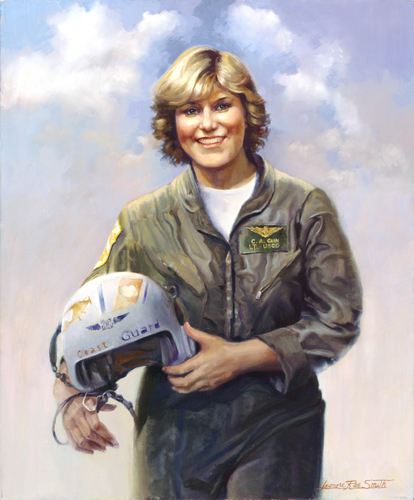
A portrait of Coast Guard heroine Lt. Colleen Cain by Leonora Rae Smith.

Born in 1953 and hailing from Burlington, Iowa, Cain graduated from the University of California in Santa Clara in 1974, two years before completing Officer Candidate School in 1976. She was extremely interested in being selected for flight training, so she obtained her Private Pilot’s License at her own expense (and on her own time!) in 1977.

In 1978, Cain’s dream came true as she began her military flight training in the Coast Guard, receiving her wings on June 8, 1979. She was Coast Guard Aviator #1988, the third female Coast Guard aviator and the first female HH-52 helicopter pilot.

Air Station Barbers Point, Hawaii was her first duty assignment. Tragically, she never had another. Even so, her short life was full. She flew many missions and earned qualifications as co-pilot, first pilot, and aircraft commander.
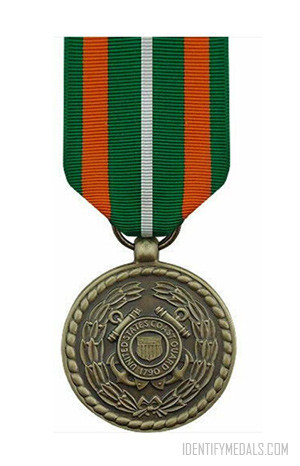
In fact, just one year after earning her wings, Cain flew a rescue mission in order to save a 3-year-old boy. He was on a fishing trip with his grandfather and slipped into the water. He was pulled from the water, and Cain resuscitated the boy. For her actions, she was awarded the Coast Guard’s Achievement Medal.
Colleen Cain's Last Flight

On January 7, 1982Cain and two other crew members launched in order to respond to a distress call from the Pan Am, a 74-foot fishing boat taking on water off Maui and in grave danger of sinking with seven people on board. When the helicopter lifted off at 4 a.m., there were torrential rains and heavy winds. Slightly over an hour later—around 5:15 a.m.—the Coast Guard had lost radio contact with the crew.

It wasn’t until nine hours later that another helicopter discovered the wreckage of Cain’s helicopter on a ridge in Molokai’s Wailua Valley. The chopper had crashed into the side of a mountain, and all the crew members of CG1420 were killed, including CainLieutenant Commander Horton “Buzz” Johnson, and Petty Officer 2nd Class David Thompson. Cain was not yet 30 years old.

Cain’s pilot Johnson was renown in his own right. He was a veteran of search-and-rescue missions and had been awarded the Distinguished Flying Cross—seldom given in peacetime—in 1976 for rescuing a man who had crashed a light plane on a mountainside during practically bad weather.

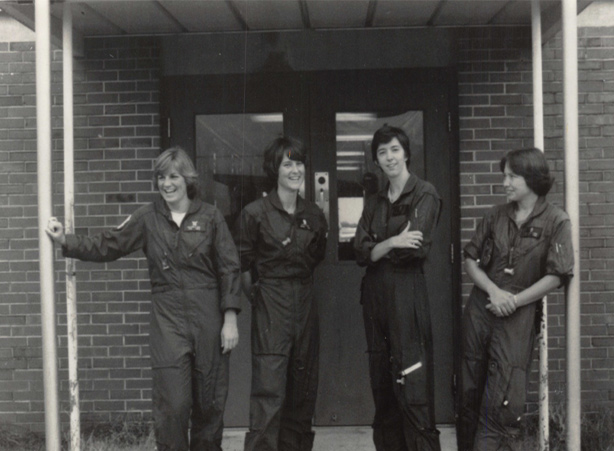
Group photo of Colleen Cain
Group photo of Colleen Cain.

Military leaders did not know whether Cain who was serving as co-pilot or Johnson who was the pilot were in control of the helicopter when it hit the Molokai Ridge, as the two had been taking turns at the wheel.

The Coast Guard faced difficulties in extricating the bodies of Cain and Johnson from the wrecked aircraft that dangled precariously on a steep slope at 2,200 feet. The other crew member, David Thompson, who had served as Aviation Machinist, had been thrown from the chopper upon hitting the cliff.

At the time of Cain’s death in 1982, she had been one of three pilots in the Coast Guard. Cain and one other woman were the first female helicopter pilots, and another woman flew fixed-wing aircraft.

Military leaders did not know whether Cain who was serving as co-pilot or Johnson who was the pilot were in control of the helicopter when it hit the Molokai Ridge, as the two had been taking turns at the wheel.

The Coast Guard faced difficulties in extricating the bodies of Cain and Johnson from the wrecked aircraft that dangled precariously on a steep slope at 2,200 feet. The other crew member, David Thompson, who had served as Aviation Machinist, had been thrown from the chopper upon hitting the cliff.

At the time of Cain’s death in 1982, she had been one of three pilots in the Coast Guard. Cain and one other woman were the first female helicopter pilots, and another woman flew fixed-wing aircraft.

Colleen Cain's Service

Even today years later, Cain is remembered for her service despite her short life of 29 years. In 1985, a 100-room residence hall at the Coast Guard Reserve Training Center in Yorktown, Virginia honored Cain with its name—“Cain Hall.”

In 2009, the Coast Guard dedicated a memorial at Air Station Barbers Point where Cain and the other crew members were stationed to honor the crews of CG1420 in 1982 as well as the more recent fatal crash of CG6505 in 2008.

Lieutenant Commander Charlotte Pittman, a Coast Guard helicopter pilot, speaking on behalf on all female pilots in the Coast Guard perhaps best remembered Cain’s life. Grateful for Cain’s service and her pioneering work, Pittman reflected on Cain’s sacrifice 30 years later. Like Cain, Pittman had been a reservist and wanted to be a Coast Guard helicopter pilot.

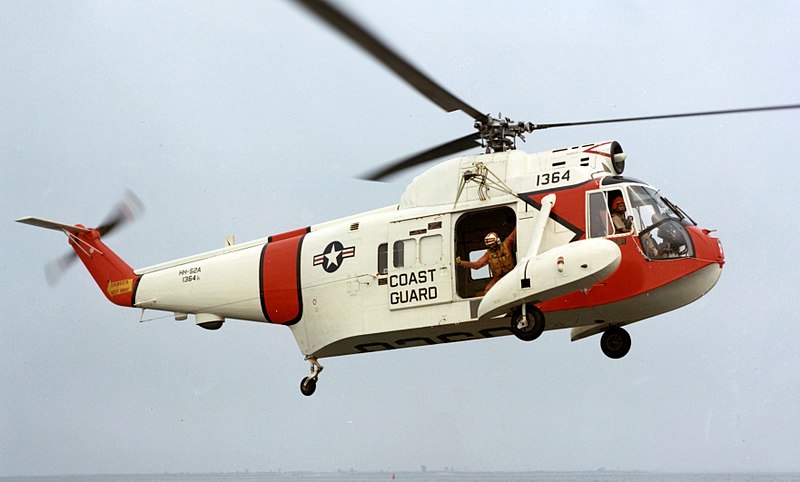
A U.S. Coast Guard HH-52A Seaguard helicopter.
A U.S. Coast Guard HH-52A Seaguard helicopter. Source: Wikipedia.
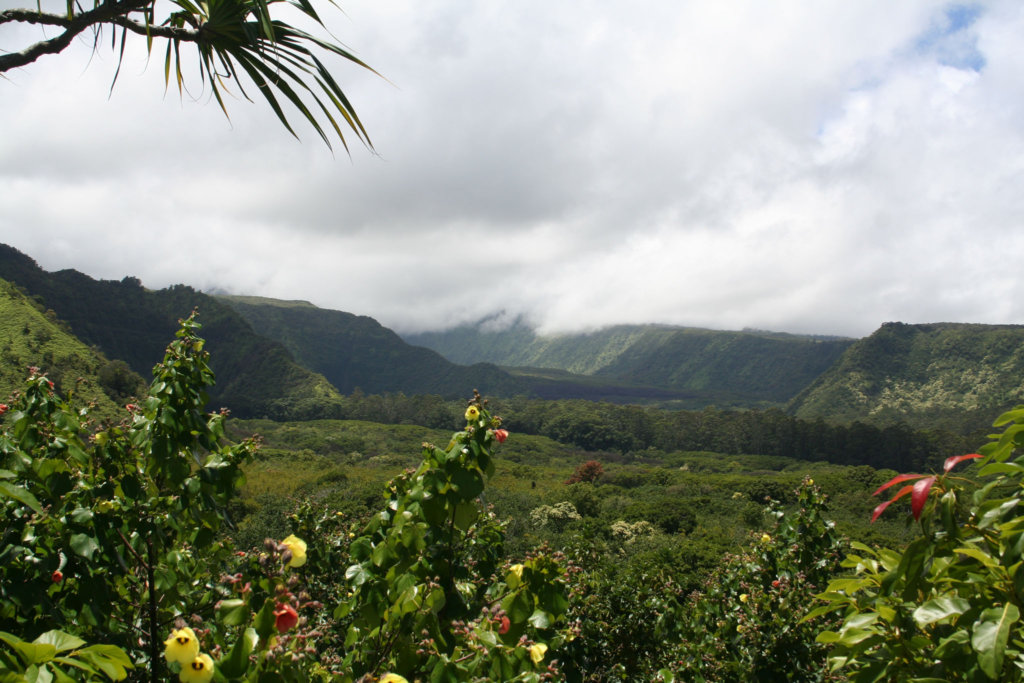
Wailua Valley State Wayside.
Wailua Valley State Wayside. Image courtesy of MauiGuidebook.

When Pittman earned her wings in 2001, she followed in the path that Cain had blazed twenty-two years prior. Even though Cain didn’t finish her first tour, Pittman admired her work and noted that Cain started a proud legacy of women in Coast Guard aviation.

Cain was part of a group of three officers and six enlisted women who demonstrated the role that women could play in military aviation, opening up the door for countless women in the future to pursue their dreams of military aviation. Known as the First Women of U.S. Coast Guard Aviation, nine women in the Coast Guard became aviators when the Coast Guard opened all aviation ratings to women on January 1, 1976.

In addition to Cain, other pioneering women included Vivien Crea and Janna Lambine (officers) and Erminia Chillon, Andrea Gardner, Dior Lowen Hubel, Kelly Mogk Larson, Robyn Rogers Norvell, and Elizabeth Uhrig (enlisted).

Unfortunately, Cain’s story has a sad ending, as she died much too young. However, it is an inspiration, as she was the Coast Guard’s first female helicopter pilot and a fitting model for future female aviators in the Coast Guard and other branches of the military.

Sources:

Guest Contributor: Rachel Basinger is a former history teacher turned freelance writer and editor. She loves studying military history, especially the World Wars, and of course military medals. She has authored three history books for young adults and transcribed interviews of World War II veterans. In her free time, Rachel is a voracious reader and is a runner who completed her first half marathon in May 2019.

The Falklands War: Military Medals from Argentina and the United Kingdom

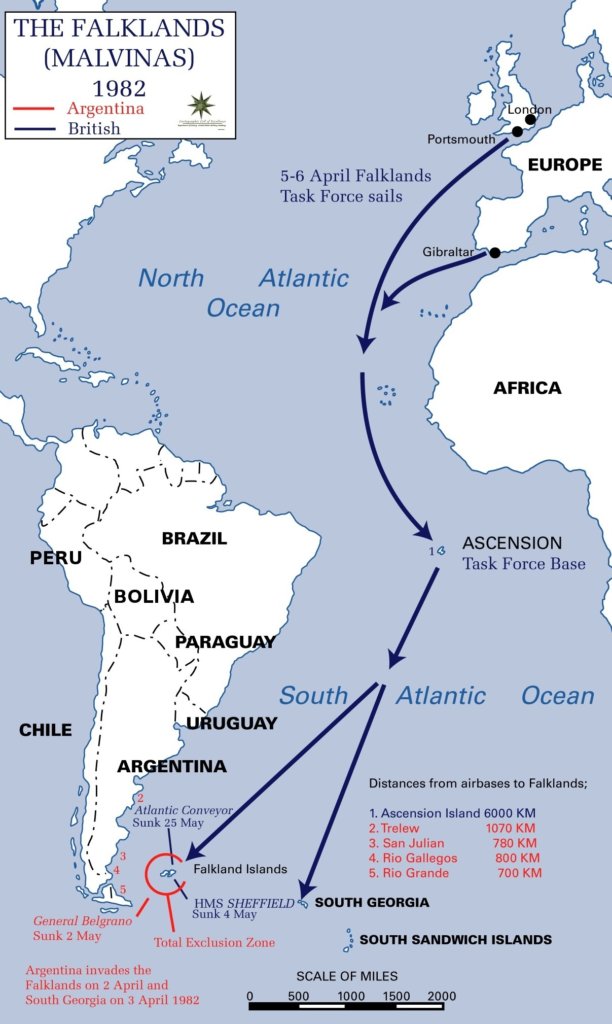
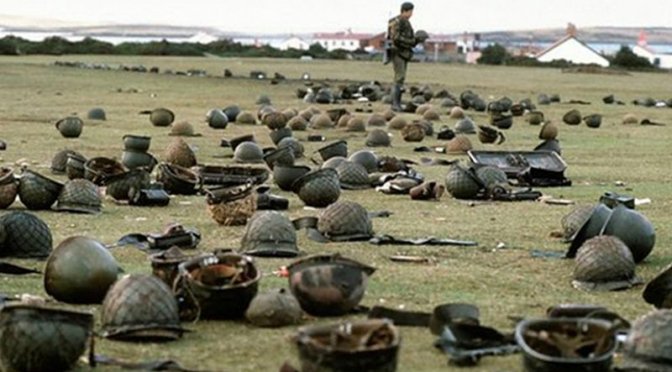
The Falklands War was a ten-week war between Argentina and the United Kingdom over two British dependent territories in the South Atlantic: the Falkland Islands, and its territorial dependency, the South Georgia and the South Sandwich Islands. 

Argentina suffered a state coup on March 24 th , 1976, and on April 2nd, 1982, the military government invaded and occupied the Falkland Islands in an attempt to rise the low public opinion regarding their political performance, as in the period from March, 1976 and December, 1983, 30,000 people were kidnapped, tortured and disappeared for being against the military government.

Decorations of the Falklands War

When it comes to the Falkland’s War decorations both Argentina and the United Kingdom medals to those who fought or performed outstandingly during the war.

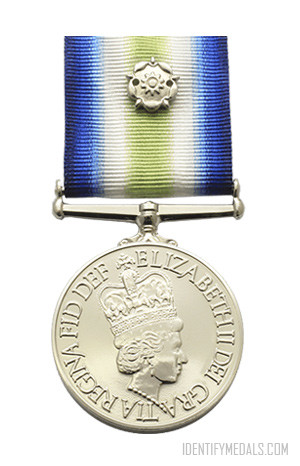
From the United Kingdom there’s just the South Atlantic Medal, which was awarded to British military personnel and civilians for service in the Falklands War of 1982. Over 33,000 of them were awarded.

Argentina, on the other hand, issued (at different points in time) several medals. The main ones being:

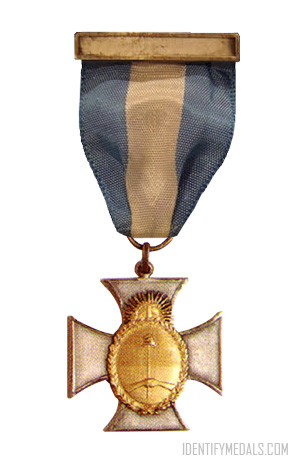
The Argentine Nation Cross to the Heroic Valour in Combat is the highest military decoration give by the Republic. It is granted to the military and security forces personnel, civilian police forces, Argentine or foreign, whom in combat motivated by extraordinary events have the character of a war function, perform isolated or in the exercise of command, a ponderable action that stands out considerably from the behavior patterns, usually considered correct. A total of 21 medals were given to Argentine heroes of the Falklands War, all of them having fought in the war, and eight of them having given the medal posthumously.

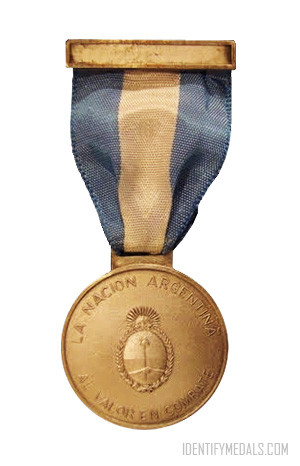
The Argentine Nation to the Valour in Combat Medal is the second highest military decoration given by the President of Argentina and it’s awarded to “Recognize acts during the Southern Atlantic war for merits, valour and heroism in the defense of the Motherland“. The medal can be given to Argentinian citizens as well as foreigners.

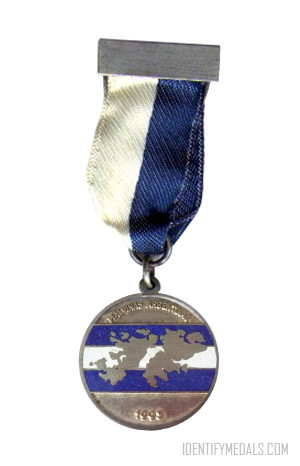
The Medal to the Fighters is a decoration given by the Argentinian Republic to everyone who fought in the territorial claim of the Falklands, South Georgia and South Sandwich Islands between April 2nd and June 14th 1982.

Argentinian Falklands War Decorations Recipients

The recipients of the Argentine decoration for service were:

  • Lieutenant Roberto Estévez (posthumously) for commanding, while severely injured by British bullets, his infantry troops and for guiding by radio the artillery fire in the first line of combat during Darwin’s battle. A last bullet impact ended his life.
  • Lieutenant Ernesto Emilio Espinosa (posthumously) covered from the top floor of Top Malo House farm, the retreat of all his fellows, while being surrounded and attack by special British forces, dying during action by the fire of enemy rifles, grenades and rockets.
  • First sergeant Mateo Antonio Sbert (posthumously) fought while being severely injured by enemy fire during the Top Malo House battle, and died in combat.
  • First Lieutenant Jorge Vizoso Posse fought with tremendous courage during the whole war, combating while being in disadvantage against the enemy’s special forces in the surroundings of Mount Kent, in spite of being isolated and injured, he kept fighting, forcing the enemy forces to retreat. He returnedby his own means to the Argentine lines, loosing a huge amount of blood.
  • Second Lieutenant Juan José Gómez Centurión led, while being in great material and numerical disadvantage, several counter attacks during Darwin’s battle.
  • Sergeant Roberto Bacilio Baruzzo fought in spite of being injured by bombardment splinters the day before Mount Harriet’s battle. He also transported injured soldiers under enemy fire and took them to a safe place, risking his life in several occasions, and continuing the fight body to body during those movements until he run out of ammunition, and even using his knife, until he fell prisoner of the Royal Marines.
Map of the Falklands War.
Map outlining the British recapture of the islands. Source: Wikipedia.
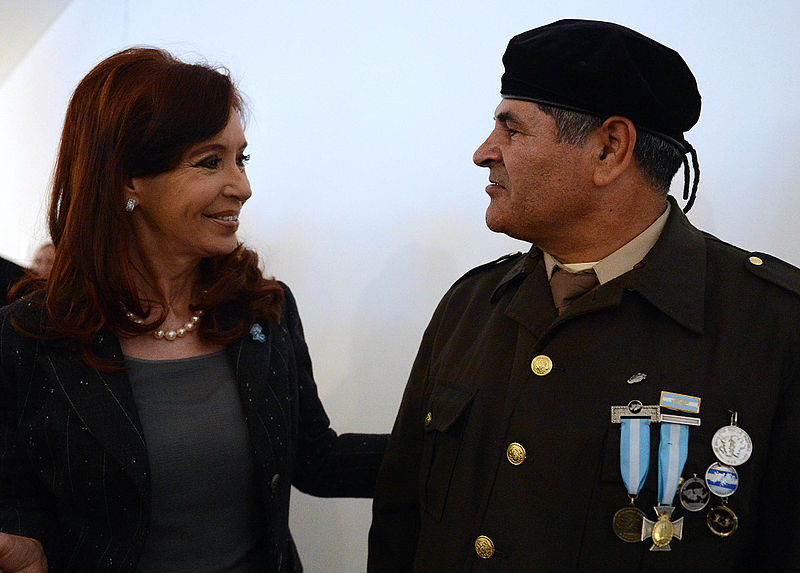
  • Conscript soldier Oscar Poltronieri operated a machine gun during the Mount Two Sisters’ battle, ignoring the retreat order, and staying fighting by himself, allowing the effective retreat of all his fellows to safer areas, and holding the enemy with only his machine gun, preventing the whole British offensive from moving forward.
  • Commander Pedro Edgardo Giachino (posthumously) led, without opening fire against the British troops, the assault to the governor’s house where, when entering there, was severely injured by the Royal Marine’s fire, and died the same day at the hospital.
  • Ship Lieutenant Guillermo Owen Crippa piloted an Aermacchi MB-339 in the first aerial attack, and attacked all by himself the British troop based in the San Carlos Port, conformed by twelve ships strongly defended by anti aerial artillery and missiles, he left the HMS British ship out of service and returned safe to his base at Argentine Port.
  • Corvette Liberty Carlos Daniel Vázquez conducted his section of shooters during the defense of Tumbledown against the attack of a British unit resorting to the fire of his own artillery, without caring about his own security, and resigning his position just after the third attack, when he had no ammunition left and his section was practically destroyed.
  • NCO Júlio Saturnino Castillo (posthumously) for showing devotion and loyalty to his subordinates and superiors repeatedly, and conducting his men until his last breath, when he jumped to save a subordinate that was being killed with bayonets. An Argentine Army’s ship was named after him.
  • Conscript Félix Ernesto Aguirre (posthumously) fought body to body, bearing an immense superiority of the enemy and the fire against his position. He got injured in his legs and besides that, he tries to help Second Lieutenant Silva who was deadly injured near him and got injured again, dying in his position.
  • Corvette Lieutenant Héctor Miño led successfully several counter attacks facing an immense numerical and material disadvantage, holding the British forces, where he is severely injured, and then took as prisoner by enemy forces.
  • Brigadier Ernesto Ureta, Commodore Gerardo Guillermo Isaac, Captain José Daniel Vázquez (posthumously) and Captain Omar Jesús Castillo (post mortem) piloted an A-4C Skyhawk each, attacking the aircraft carrier HMS Invincible, which was at the very center of the British defensive fleet, and was left out of service. Captain Vázquez and Captain Castillo were killed during the attack.
  • Commodore Pablo Carballo led his section in the attack of two British ships in the north of the Falklands islands.
President Cristina Fernández with conscripted soldier Oscar Poltronieri during his medal ceremony on 10 June 2014.
President Cristina Fernández with conscripted soldier Oscar Poltronieri during his medal ceremony on 10 June 2014. Source: Gobierno de la Nación.
  • Chief Petty Officer Carlos Omar Ortiz, for leaving the refuge in the middle of red alerts to assist injured staff under enemy fire and in combat zone.
  • Chief NCO Pedro Prudencio Miranda for offering himself as an explosive screwdriver volunteer, first disarming by himself an active bomb inside the Argentine ship Formosa, later on disarming bombs in an A-4Q plain that had landed in the base, and lastly disarming a bomb that he had notice was accidentally activated and was just about to explode.
  • Aircraftman José Raúl Ibáñez, for repelling by own decision an aerial attack against his ship by two enemy’s Harrier, immensely superior in armament and firepower. In spite of not being in charge of the machine gun, he did not hesitate when the operator was shot, and responded to the attacks, getting to damage one of the planes with a light gun that was not prepared to fight against planes, forcing the British aerial patrol to retreat.
  • These are just a few examples of the enormous courage of the Argentine men that fought with an immense armament and numerical disadvantage during the whole war.

The 9/11 Heroes Medal of Valor: Honoring and Remembering the Fallen Heroes

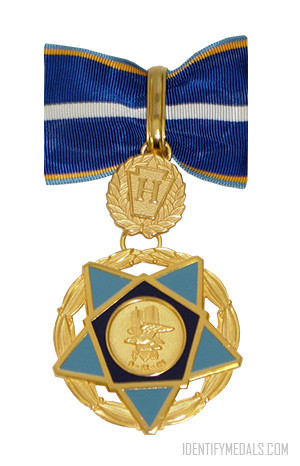
Many medals can be awarded posthumously, but the 9/11 Heroes Medal of Valor sadly did not have any living recipients. Created to honor the 442 first responders who were killed in the line of duty during the September 11, 2001 terrorist attacks.

Instead, the medals, which intentionally resemble the Public Safety Officer Medal of Valor and the military’s Medal of Honor, were presented by President George W. Bush to the families of the fallen officers at the White House on September 9, 2005.

The 9/11 Heroes Medal of Valor and Its Ceremony

During the ceremony nearly 4 years after the devastating terrorist attacks, President Bush would honor the lives of the public safety officers who died in the line of duty as well as comfort the families who were left behind and accepted the medals in remembrance of their deceased relatives. Around 1,200 family members and friends showed up at the ceremony to honor their friends and relatives who died on September 11.

Although not every name could be listed in President Bush’s brief speech, Attorney General Alberto Gonzales read all 442 names out loud so that all who gathered could honor every individual who gave his or her life on one of the most tragic days in American history.

The 442 public service officers included 343 New York City Fire Department members, 50 Port Authority police officers and assistants, 23 NYPD officers, 3 state court officers, and members of the Secret Service, FBI, and private ambulance workers.

At the conclusion of the last name, Gonzales began clapping, as a civilian salute to the sacrifice of the public safety officers and their families. After a loud ovation, a Marine Corps band called the “President’s Own” presented an emotional rendition of the “Battle Hymn of the Republic” before President Bush began to speak.

President Bush sadly could not take the time to tell the stories of every single one of those 442 men, but he did mention several.

Firefighter Donny Regan of Rescue Company 3 in Bronx had served for 17 years with the New York City Fire Department and was cited six times for bravery. Even though his son Peter lost his father on September 11, he still carried on his father’s legacy, serving in the Fire Department and later as a Marine reservist in Iraq.

Firefighter Ronnie Gies of Squad 288 in Queens had been with the New York Fire Department since 1988, and he rushed into the Twin Towers to save lives, as a video caught on that day illustrated. According to his wife, “You see him straight on, carrying equipment, with such a look of determination.”

Senior Court Officer Thomas Jurgens was one of roughly 25 New York State Court officers who responded after the plane hit the first tower. Even though he had been told to leave because the danger was too grave, Jurgens would not leave his post. He sent his last radio transmission from inside the burning tower with a simple, yet profound sentence: “There are people here who need our help.”

New York City Police Officer Moira Smith was known for not being afraid of danger. She even ran with the bulls in Pamplona, Spain. In 1991, she ran into a subway tunnel to save dozens of people who were trapped in what ended up being one of the worst subway accidents in New York history. That same fighting spirit shone on September 11, 2001 when she rushed into the burning towers of the World Trade Center. According to one person she helped to safety, he remembered Smith’s steady blue eyes and even voice despite the chaos and destruction around her. She was captured in the September 12 papers, an image of Smith assisting an injured man from the tower just before she rushed back in to save others. Unfortunately, she was not able to save anyone else, as the tower collapsed around her. Even though as one of Smith’s colleagues noted that she could have not rushed in and saved herself, “nothing would have stopped her saving one more person.”

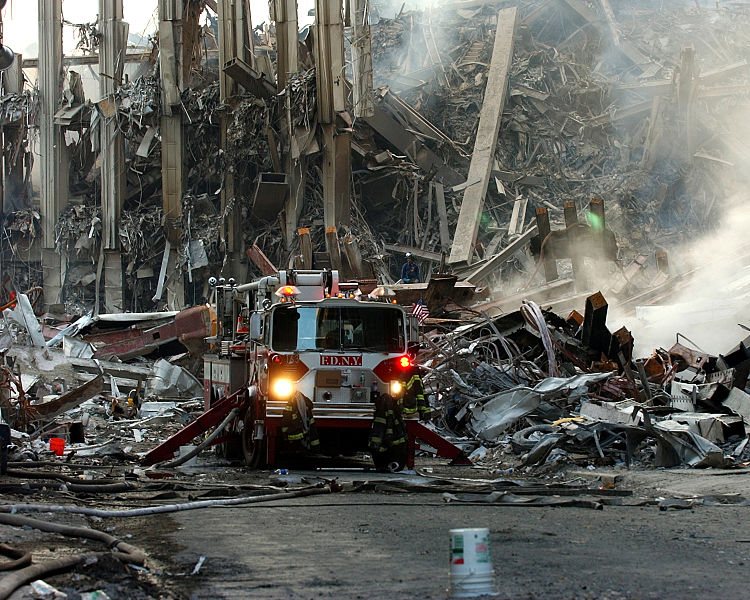
Ground Zero, New York City, N.Y. (Sept. 16, 2001) -- A lone fire engine at the crime scene in Manhattan where the World Trade Center collapsed following the Sept. 11 terrorist attack.
Ground Zero, New York City, N.Y. (Sept. 16, 2001) -- A lone fire engine at the crime scene in Manhattan where the World Trade Center collapsed following the Sept. 11 terrorist attack. Source: Wikipedia.

And these individuals that President Bush listed were only 4 of the incredible 442 men and women who put their lives on the line while on duty. Incredibly grateful for their sacrifice, President Bush ended his speech in a more hopeful tone:

And the legacy of peace and freedom we leave behind will be the greatest memorial to your fallen family members and friends.

The heroes of September the 11th will not be here to see that day. But their moms and dads and children and grandchildren can know a proud America will always stand in the long shadow of their service and sacrifice, and a proud nation will always remember them.

After President Bush and First Lady Laura Bush departed, families were lined up alphabetically in order to receive the medals from military officers spread out on the South Lawn of the White House.

Statement from FBI Director Robert Mueller

Later that day, FBI Director Robert Mueller would issued a statement noting the sacrifice of all of those who demonstrated “incomparable courage,” mentioning specifically Special Agent Leonard “Lenny” W. Hatton who had assisted with the evacuation of the World Trade Center. As Mueller noted, Hatton was last seen helping a victim escape one of the buildings before rushing back in to save more people.

The end of Mueller’s statement was a fitting honor not only to Hatton but also to the 441 other public safety officers who died on September 11, 2001 either at the World Trade Center or at the Pentagon.

This is a fitting tribute to those whose ultimate sacrifice saved so many. The impact of their courage is not limited to September 11. In truth, it will be felt for years to come—both in the lives of those they rescued from dire situations, and in the hearts of those who witnessed their bravery.

Lenny Hatton’s actions on September 11, 2001, exemplify the best of our nation. As his family receives his 9/11 Heroes Medal of Valor today, let us again pay tribute to his courage and honor his remarkable example of service and sacrifice.

Concluding Thoughts

As Sam Cannizzaro, who lost his son Brian, a firefighter, on September 11, stated, “Four years doesn’t make it easier—the pain doesn’t go away.” Even though it’s now been almost 18 years since 9/11, the pain is still there for those families and friends who lost loved ones.

And as September 11 becomes increasingly more an event of the past and of history, we as Americans have a greater honor and responsibility to remember those who gave their lives on that day.

Sources

Guest Contributor: Rachel Basinger is a former history teacher turned freelance writer and editor. She loves studying military history, especially the World Wars, and of course military medals. She has authored three history books for young adults and transcribed interviews of World War II veterans. In her free time, Rachel is a voracious reader and is a runner who completed her first half marathon in May 2019.