The Medal for the Victory over Germany in the Great Patriotic War

The Medal for the Victory over Germany was established in 1945 to denote military participation in the victory over Nazi Germany.

The Medal “For the Victory Over Germany in the Great Patriotic War 1941–1945” was a military decoration of the Soviet Union established on May 9, 1945 to denote military participation in the victory of the Soviet armed forces over Nazi Germany in the Great Patriotic War.

It was awarded to all military and civilian personnel of the Red Army, of the Navy and of the troops of the NKVD who were directly involved on the different fronts of World War II. Award of the medal was made on behalf of the Presidium of the Supreme Soviet of the USSR.

The Medal "For the Victory Over Germany in the Great Patriotic War 1941–1945" Design

The medal was 32mm in diameter, circular and made of brass, with a raised rim on both sides. It was worn on the left side of the chest.

On its obverse, the left profile bust of Joseph Stalin in the uniform of a Marshal of the Soviet Union, along the upper circumference of the medal, the relief inscription “OUR CAUSE IS RIGHTEOUS”, along the lower circumference of the medal, the relief inscription “WE ARE VICTORIOUS”. On the reverse, at the bottom, a small five pointed star, along the medal circumference, the relief inscription “FOR VICTORY OVER GERMANY”, in the center, the relief inscription on three rows “IN THE GREAT PATRIOTIC WAR OF 1941–45”.

Notable Recipients

Here are five notable recipients of the Medal “For the Victory over Germany in the Great Patriotic War 1941–1945”:

  1. Joseph Stalin: As the leader of the Soviet Union during World War II, Joseph Stalin played a crucial role in guiding the country to victory over Nazi Germany. His leadership, strategic decisions, and mobilization of resources were instrumental in the Soviet Union’s success on the Eastern Front.

  2. Georgy Zhukov: Marshal Georgy Zhukov was one of the most prominent Soviet military commanders during World War II. He played a key role in several major battles, including the defense of Moscow, the Battle of Stalingrad, and the Battle of Berlin. Zhukov’s tactical brilliance and leadership skills were vital to the Soviet victory over Germany.

  3. Vasily Zaytsev: Sergeant Vasily Zaytsev was a Soviet sniper who became famous for his remarkable marksmanship during the Battle of Stalingrad. He is credited with killing hundreds of enemy soldiers, including numerous German officers. Zaytsev’s exploits made him a symbol of Soviet resistance and contributed to the morale of Soviet troops.

  4. Lyudmila Pavlichenko: Sergeant Lyudmila Pavlichenko was one of the most successful female snipers in history. She recorded 309 confirmed kills during her service in World War II, making her one of the top snipers of the conflict. Pavlichenko’s courage and skill earned her widespread recognition and accolades, including the Medal “For the Victory over Germany”.

  5. Aleksandr Solzhenitsyn: While primarily known as a writer and dissident, Aleksandr Solzhenitsyn also served as a captain in the Red Army during World War II. He was awarded the Medal “For the Victory over Germany” for his contributions to the war effort. Solzhenitsyn later gained international acclaim for his literary works, including “One Day in the Life of Ivan Denisovich” and “The Gulag Archipelago”.
The Inter Allied Victory Medal (South Africa)

The South African Victory Medal was awarded to all those South Africans who were awarded the 1914–15 Star or the British War Medal.

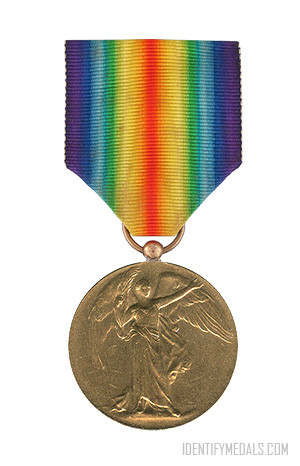
The Allied Victory Medal was recommended by an inter-allied committee in March 1919. Fourteen victorious countries finally awarded the medal after World War I, and each allied nation would design a ‘Victory Medal’ for award to their own nationals. Certain features were to be shared: a winged figure of Victory on the obverse and the same ribbon.

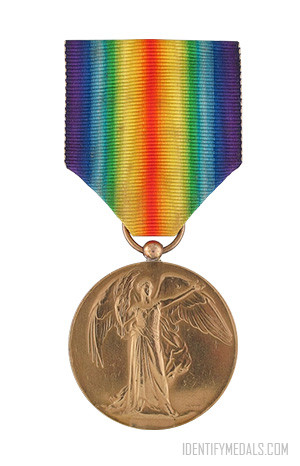
The South-African Victory medal was awarded to all those South Africans who were awarded the 1914–15 Star or the British War Medal. The Union of South Africa awarded its own version of the Victory Medal, identical to the British version on the obverse, but with the inscription on the reverse in English and Dutch, the two official languages of South Africa at the time. Recipients had to have entered a theatre of the war between 5 August 1914.

The South Africa Inter Allied Victory Medal Design

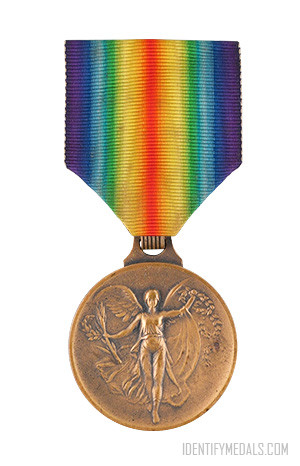
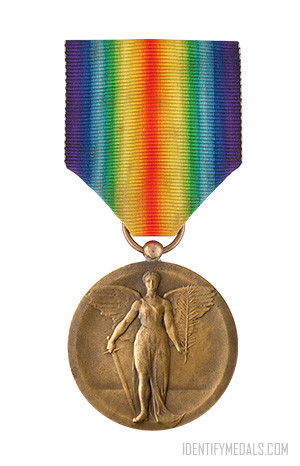
The Victory Medal measures 36 millimetres (1.4 in) in diameter and was designed by William McMillan. The design and ribbon was also adopted by Belgium, Brazil, Cuba, Czechoslovakia, France, Greece, Italy, Japan, Portugal, Romania, Siam, Union of South Africa and the USA. Each allied nation would design a ‘Victory Medal’ for award to their own nationals, all issues having certain common features, including a winged figure of victory on the obverse and the same ribbon.

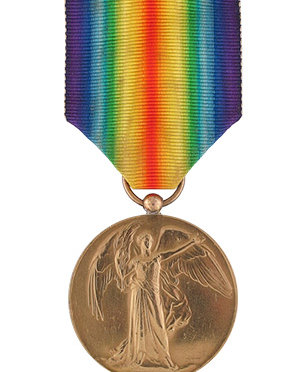
The obverse of the medal bears the winged, full-length and full-front figure of Victoria, with her left arm extended and holding a palm branch in her right hand. The reverse reads “THE GREAT WAR FOR CIVILISATION” in three lines above and “DE GROTE OORLOG VOOR DE BESCHAVING” in three lines below, with the two inscriptions separated by “•••••” and with the years “1914-1919”, all surrounded by a laurel wreath.

The 39 millimeters (1.5 in) wide watered ribbon has an iridescent color scheme, with the violet moving through to a central red stripe where both schemes meet. It attaches to the medal through a ring suspender. The recipient’s name, rank, service number and unit were impressed on the edge of the medal. The name of the regiment or corps was omitted on medals awarded to Army officers.

All the Inter-Allied Victory Medal Variations

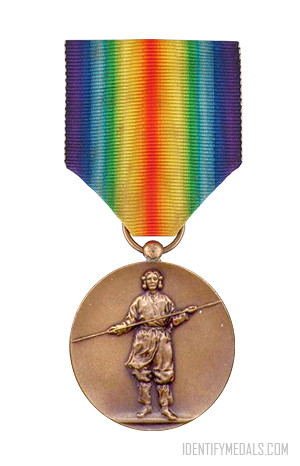
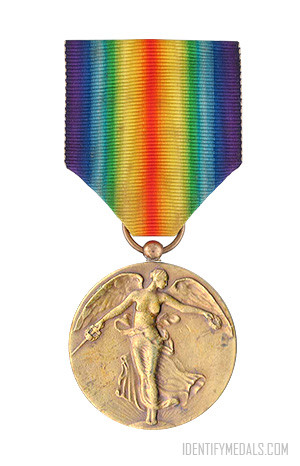
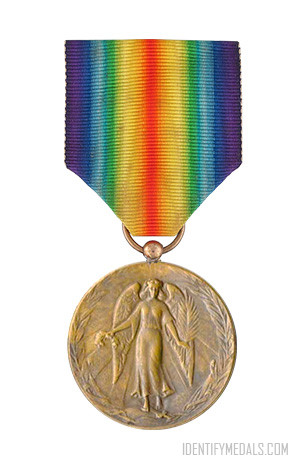
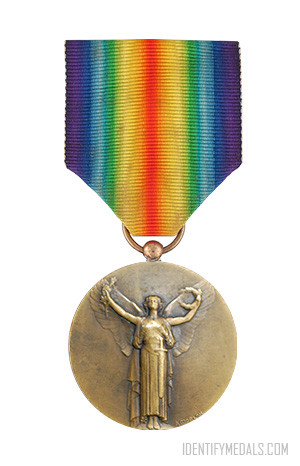
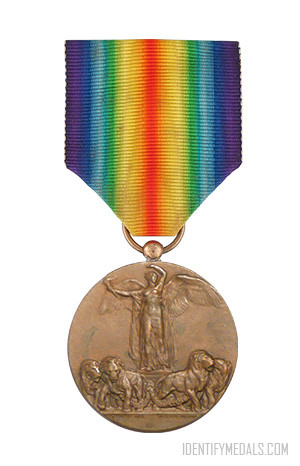
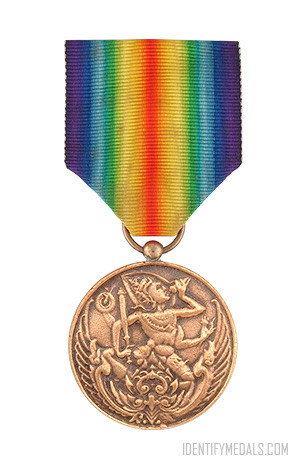
Although each country designed its own version of the Inter-Allied Victory Medal, all of them shared some common elements, such as a winged victory figure on the obverse and a similar ribbon with rainbow colors symbolizing unity among the Allies. Here are the versions for all countries:

Find an Inter-Allied Victory Medal Online

Right Now on eBay 
Clicking a link to eBay may result in a referral commission being paid if a purchase is made.
Loading...

The Inter Allied Victory Medal (Portugal)

The Portuguese Victory Medal was designed by Joao da Silva. Portugal had to defend against German attacks on her colonies.

The Allied Victory Medal was recommended by an inter-allied committee in March 1919. Fourteen victorious countries finally awarded the medal after World War I, and each allied nation would design a ‘Victory Medal’ for award to their own nationals. Certain features were to be shared: a winged figure of Victory on the obverse and the same ribbon.

Portugal had to defend against German attacks on her colonies, Angola and Mozambique, after it seized 72 German merchant ships that were in Portuguese harbors and Germany declared war on it.

The Portugal Inter Allied Victory Medal Design

The Victory Medal measures 36 millimeters (1.4 in) in diameter and was designed by William McMillan. The design and ribbon was also adopted by Belgium, Brazil, Cuba, Czechoslovakia, France, Greece, Italy, Japan, Portugal, Romania, Siam, Union of South Africa and the USA. Each allied nation would design a ‘Victory Medal’ for award to their own nationals, all issues having certain common features, including a winged figure of victory on the obverse and the same ribbon.

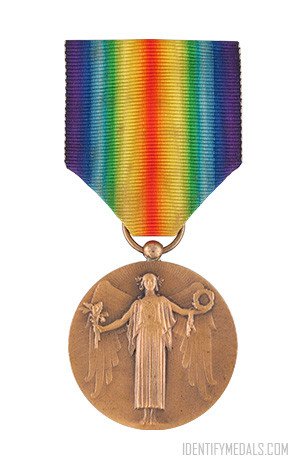
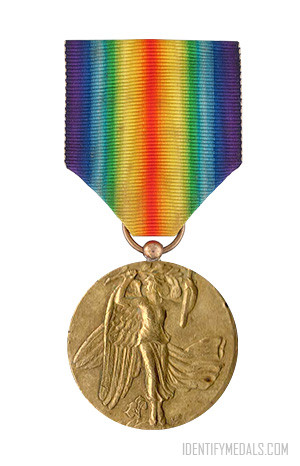
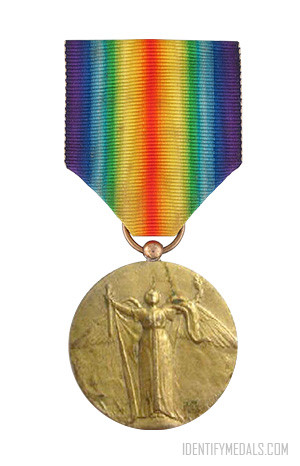
The obverse of the medal was designed by Joao da Silva, a renowned Portuguese sculptor of the time. The reverse reads “MEDALHA DA VITORIA” or “Victory Medal” (instead of the usual “The Great War for Civilization”) and omits the names of the allied nations.

The 39 millimeters (1.5 in) wide watered ribbon has an iridescent color scheme, with the violet moving through to a central red stripe where both schemes meet. It attaches to the medal through a ring suspender. The recipient’s name, rank, service number and unit were impressed on the edge of the medal. The name of the regiment or corps was omitted on medals awarded to Army officers.

All the Inter-Allied Victory Medal Variations

Although each country designed its own version of the Inter-Allied Victory Medal, all of them shared some common elements, such as a winged victory figure on the obverse and a similar ribbon with rainbow colors symbolizing unity among the Allies. Here are the versions for all countries:

Find an Inter-Allied Victory Medal Online

Right Now on eBay 
Clicking a link to eBay may result in a referral commission being paid if a purchase is made.
Loading...

The Inter Allied Victory Medal (United States)

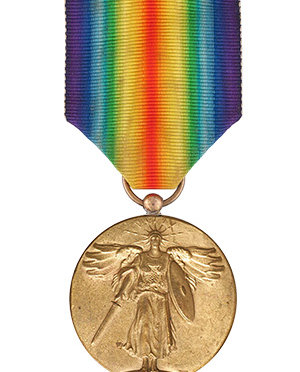
The American Victory Medal was designed by James Earle Fraser and awarded to military personnel for service between 1917 and 1918.

The Allied Victory Medal was recommended by an inter-allied committee in March 1919. Fourteen victorius countries finally awarded the medal after World War I, and each allied nation would design a ‘Victory Medal’ for award to their own nationals. Certain features were to be shared: a winged figure of Victory on the obverse and the same ribbon.

The American Victory Medal was awarded to military personnel for service between April 6, 1917, and November 11, 1918 with the American Expeditionary Forces in European Russia (November 12, 1918 to August 5, 1919) or the American Expeditionary Forces Siberia (November 23, 1918 to April 1, 1920).

Although originally intended to be established by an act of Congress, the bill authorizing the medal never passed and it had to be established by the military departments through general orders. The War Department published orders in April 1919, and the Navy on June 1919.

The Victory Medal was authorized with a large variety of devices to denote specific accomplishments, such as the Citation Star, Navy Commendation Star and several Battle Clasps.

The U.S. Inter-Allied Victory Medal Design

The Victory Medal measures 36 millimetres (1.4 in) in diameter and was designed by William McMillan. The design and ribbon was also adopted by Belgium, Brazil, Cuba, Czechoslovakia, France, Greece, Italy, Japan, Portugal, Romania, Siam, Union of South Africa and the USA. Each allied nation would design a ‘Victory Medal’ for award to their own nationals, all issues having certain common features, including a winged figure of victory on the obverse and the same ribbon.

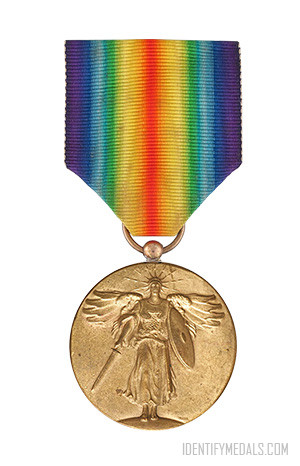
The obverse of the medal features a winged Victory holding a shield and sword on the front. The reverse bears “The Great War For Civilization” in capital letters curved along the top of the medal. Along the bottom of the back are six stars, three on either side of the center column of seven staffs wrapped in a cord. On left side of the staff it lists one World War I Allied country per line: France, Italy, Serbia, Japan, Montenegro, Russia, and Greece. On the right side of the staff the Allied country names read Great Britain, Belgium, Brazil, Portugal, Rumania(spelled with a U), andChina.

The 39 millimeters (1.5 in) wide watered ribbon has an iridescent color scheme, with the violet moving through to a central red stripe where both schemes meet. It attaches to the medal through a ring suspender. The recipient’s name, rank, service number and unit were impressed on the edge of the medal. The name of the regiment or corps was omitted on medals awarded to Army officers.

All the Inter-Allied Victory Medal Variations

Although each country designed its own version of the Inter-Allied Victory Medal, all of them shared some common elements, such as a winged victory figure on the obverse and a similar ribbon with rainbow colors symbolizing unity among the Allies. Here are the versions for all countries:

Find an Inter-Allied Victory Medal Online

Right Now on eBay 
Clicking a link to eBay may result in a referral commission being paid if a purchase is made.
Loading...

The Battle of Verdun Medal

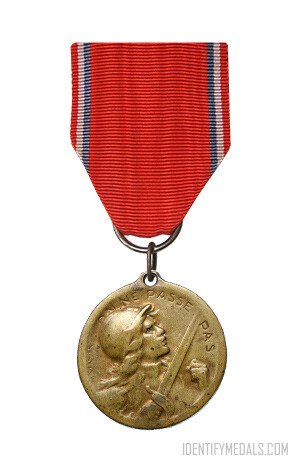
The Medal of Verdun was issued for those serving on the Argonne and St Mihiel sectors between 1914 and 1918 during the Battle of Verdun.

Created in late 1916 and even before the end of the battle, the Medal of Verdun was made for soldiers who, for several months under intense pressure from infantry attacks and heavy artillery pounding, held their ground during the WW1 Battle of Verdun.

Around 70% of all the French soldiers that were engaged in World War I participated to the battle of Verdun. Six or seven different designs were put forward for the medal but none were approved by the French Government and all remained unofficial awards that could not be worn on military uniform.

Originally intended to be “awarded to those who served on the Verdun front between 21 February 1916 and 2 November 1916″, the medal was, in fact, awarded to those who served anywhere on the Argonne and St Mihiel sectors between 31 July 1914 and 11 November 1918.

The Battle of Verdun Medal Design

The obverse shows the head of the Republic (a symbol of the Third French Republic) and the famous sentence pronounced by Robert Nivelle: “Ils ne passeront pas”, translated as: “They will not break through”. The reverse bears a French soldier and the inscription “EN AVANT S. QU AU BOUT” (“Forward, always forward” or “Forward until the end.”) The “S” stands for “sans,” which means “without,” so it could be interpreted as “Forward, without stopping, until the end.” Another reverse shows a twin castle gate with the inscriptions “VERDUN” and “21 FEVRIER 1916”.

The medal is fitted with a loose ring suspender and a piece of 37 mm red ribbon that has blue-white-red edges.

The original, and most commonly found, version was by Vernier but since supplies of this medal were inadequate, others created Verdun medals and at least seven versions of varying rarity are known. It is relatively common medal to find but it was an immense measure of respect in the civil life. It was carried with pride to show that these soldiers participated in the biggest attack France had to suffer in its history.

The Medal to the Fighters (Argentina)

The Medal to the Fighters is a decoration given by the Argentinian Republic to everyone who fought in the territorial claim of the Falklands, South Georgia and South Sandwich Islands between April 2nd and June 14th 1982.

The medal was established September 30th, 1984, during the government of Raúl Alfonsín and through Decree 3522. It was published in the official bulletin on November 9th, 1984.

A medal and certificate were awarded to everyone who fought in the war. The medal only has one class and can be awarded to civilians and military personnel. It can be awarded posthumously. A golden version of the medal is to be created for the 30th anniversary of the war.

The Medal to the Fighters Design

The medal is made of white metal. The obverse shows the Argentinian flag colors, a relief of the Falklands Islands and the last name of the fighter. The reverse bears the inscription “The Honorable Congress of the Nation to the Fighters”. This same text is repeated in the accompanying certificate.

The Defense Superior Service Medal

The Defense Superior Service Medal is a military decoration of the Department of Defense established by President Gerald R. Ford in 1976.

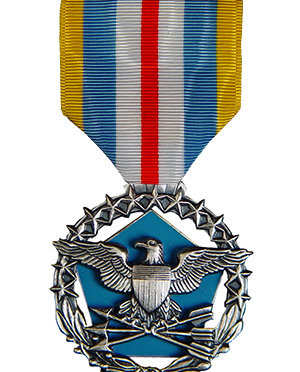
The Defense Superior Service Medal (or DSSM) is a senior American military decoration of the Department of Defense established by President Gerald R. Ford on February 6, 1976 and awarded to members of the United States Armed Forces who perform “superior meritorious service in a position of significant responsibility“.

The decoration is most often presented to senior officers in the flag and general officer grades. It is analogous to the Legion of Merit, but awarded for service in a “joint” duty capacity for a period of time exceeding 12 months. Service members assigned to or attached to a Joint Task Force as individuals, not members of a specific military service’s unit, can be eligible for the DSSM.

Joint or Department of Defense awards, including the Defense Superior Service Medal, may be awarded posthumously.

The Defense Superior Service Medal Design

When the Defense Superior Service Medal was created, it was decided that it should be done at the lowest possible cost and with as little involvement as possible. It’s because of this that it ranks just below the Defense Distinguished Service Medal for similar service, it was decided to use the same design as the Defense Distinguished Service Medal but finished in silver rather than gold and with a difference inscription on the back.

The medal has blue enamel and measures 1 7/8 inches (4.76 cm) in height overall. The obverse depicts a silver American eagle with outstretched wings superimposed over a medium blue pentagon. On its breast is the shield of the United States and in its talons are three crossed arrows in silver. The tips of the wings cover a surrounding arc of silver five-pointed stars encircling the top and sides of the pentagon, while the bottom is surrounded by a silver wreath encircling the base composed of a laurel branch on the left and an olive branch on the right.

The reverse is plain except for the inscription at the top, For Superior Service. Below in the pentagon is the inscription From The Secretary of Defense To.

The medal is suspended from a ribbon 1 3/8 inch (3.49 cm) in width composed of the following vertical stripes: Golden Yellow, Bluebird, White, Scarlet, White, Bluebird and Golden Yellow. 

Find This Medal Online

Right Now on eBay 
Clicking a link to eBay may result in a referral commission being paid if a purchase is made.
Loading...

Australian Active Service Medal

The Australian Active Service Medal (AASM) is an Australian military decoration that recognizes prescribed service in warlike operations.

The Australian Active Service Medal (or AASM) is an Australian military decoration created to recognize prescribed service in warlike operations, backdated to February 1975 and authorized on 13 September 1988.

The medal is awarded with a clasp to denote the prescribed operation and subsequent awards of the medal are made in the form of additional clasps. In 2012, it was announced that the medal would no longer be issued for future operations, and was replaced by the Australian Operational Service Medal.

The following clasps were authorised for issue with the AASM: Balkans, Cambodia, East Timor, ICAT, Iraq, Kuwait, Middle East, Namibia, Rwanda, Sierra Leone, Somalia and Vietnam.

Australian Active Service Medal Design

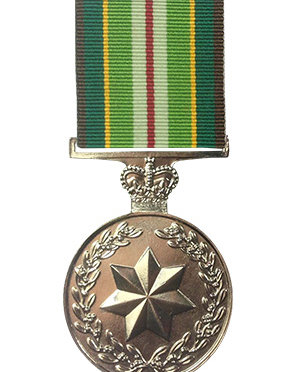
The AASM is a circular nickel-silver medal ensigned with the Crown of St Edward. The obverse has a Federation Star within a wreath of mimosa and bears a laurel wreath surrounding the inscription ‘FOR ACTIVE SERVICE’.

The medal ribbon is 32 millimetres wide and has a central red stripe to symbolize the danger of warlike operations. It is flanked by stripes of silver-green which in turn are flanked by stripes of light green, gold, dark green and brown. The ribbon bar consists of a strip of full-sized ribbon with no emblem.

The Medal for the Liberation of Kuwait (Canada)

The Gulf and Kuwait Medal as a Canadian medal created in 1990 to recognize the Canadian Forces who had directly participated in the Gulf War.

The Gulf and Kuwait Medal (or Médaille du Golfe et du Koweït in French) was a Canadian campaign medal created in 1990 by the monarch-in-Council to recognize members of the Canadian Forces who had directly participated in the Gulf War, either in the hostilities themselves or during the troop build-up prior to the invasion of Iraq.

The medal is, within the Canadian system of honors, the third highest of the war and operational service medals. Queen Elizabeth II, on the advice of her Cabinet under Prime Minister Brian Mulroney, created the medal to recognize members of the Canadian Forces. To qualify for the medal, individuals had to have served for 30 consecutive days between 2 August 1990 and 27 June 1991 in the region of the Persian Gulf, and those who for a minimum of one day engaged in direct combat with the enemy during the offensive that lasted from 16 January to 3 March 1991 were entitled to receive the additional medal bar.

In total, 4,436 medals were issued, along with 3,184 bars.

The Medal for the Liberation of Kuwait (Canada) Design

The medal was designed by Bruce W. Beatty. It measures 36 millimeters (1.4 in) diameter and is a rhodium plated tombac disc.

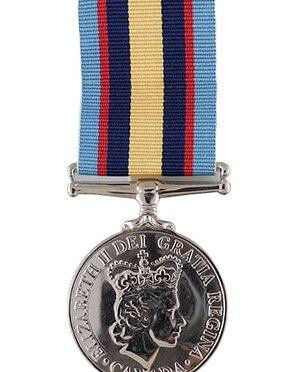
The obverse bears the Latin words ELIZABETH II DEI GRATIA REGINA (Elizabeth II, by the Grace of God, Queen) and CANADA surrounding an effigy of Queen Elizabeth II, symbolizing her roles as both fount of honor and Commander-in-Chief of the Canadian Forces. On the reverse is a laurel wreath with a maple leaf at its base encircling the words: GULF AND KUWAIT • 1990-1991 • LE GOLFE ET KUWAIT.

This medallion is worn at the left chest, suspended on a 31.8mm wide ribbon colored with vertical stripes in light blue, scarlet and dark blue, symmetrically flanking a sand colored central stripe. Originally, the Gulf and Kuwait medal was to have coincidentally had the same ribbon as the British Gulf Medal.

Should an individual already possessing a Gulf and Kuwait Medal be awarded the medal cupro-nickel and bearing a maple leaf bar for combat service, for wear on the ribbon from which the original medal is suspended.

The Medal for the Liberation of Kuwait (Bahrain)

The Medal for the Liberation of Kuwait (Bahrain) was an award given to members of Bahrain’s military for service during the First Gulf War.

The Medal for the Liberation of Kuwait (Bahrain version) was an award given to members of Bahrain’s military for service during the First Gulf War, 1990–91.

Bahrain played a limited but active role in the gulf war. Its ground forces were among the 3,000 Peninsula Shield force of the GCC (exclusive of Saudi Arabian and Kuwaiti troops) that were assigned to a support role during Operation Desert Storm as part of Joint Forces Command East. Bahrain was the primary coalition naval base and was the point of origin for coalition air operations against Iraqi targets.

Bahraini pilots joined other members of the coalition in flying strikes into Iraq. Three Scud missiles were aimed at Bahrain during the war. Only one landed in the country, and it did not hit a target area. There were no Bahraini combat deaths in the war.

The Medal for the Liberation of Kuwait (Bahrain) Design

The medal is struck in bronze and mounted for wear on broach.