The Incredible Story of John Basilone, U.S. Marine

The only Marine in World War II to receive the two highest U.S. military medals, John Basilone is an excellent example of a U.S. fighter.

If you aren’t a U.S. Marine, you might have not heard heard the name John Basilone before. He’s quite a legend in the United States Marine Corps and should be for the general population as well because of his incredible feats. So, let’s take a look at the story of Manila John and his medals.

The only Marine in World War II to receive the two highest U.S. military medals—the Medal of Honor and the Navy Cross, John Basilone is an excellent example of a U.S. Marine and a fighter well deserving of the medals he received.

Who Was John Basilone?

Born on November 4, 1916 in Ruritan, New Jersey, Basilone was the six of ten children in an Italian family and would grow up as a tough young man. Just before his 18th birthday, Basilone enlisted in the U.S. Army and served in the Philippines as an infantryman from 1934 to 1937. He would become known as “Manila John” due to his Army service in the Philippines.

Basilone as Field Cook

Before becoming known for his heroic actions in combat, Basilone served as a field cook in the United States Marine Corps. While stationed at various bases, including Quantico and Parris Island, he worked in the mess hall, preparing meals for his fellow Marines. This experience as a field cook provided Basilone with valuable skills and insights that would later serve him well during his combat deployments.

During his time there, Basilone became a champion boxer and absolutely adored life in the Philippines. Thus, when he returned to the States in 1937 and started working as a truck driver, it was not the life Basilone longed to leave, so he enlisted in the Marine Corps on June 3, 1940, in hopes of returning to his beloved Philippines.

Basilone was deployed to Guantanamo Bay, Cuba before he took part in the invasion of Guadalcanal in the Pacific, where he would achieve his renown. From August 1942 on, Basilone and his unit—1st Battalion, 7th Marines of the 1st Marine Division—were tasked with fighting the Japanese deep in the jungles of Guadalcanal, one of the hundreds of islands that comprise the Solomons.  

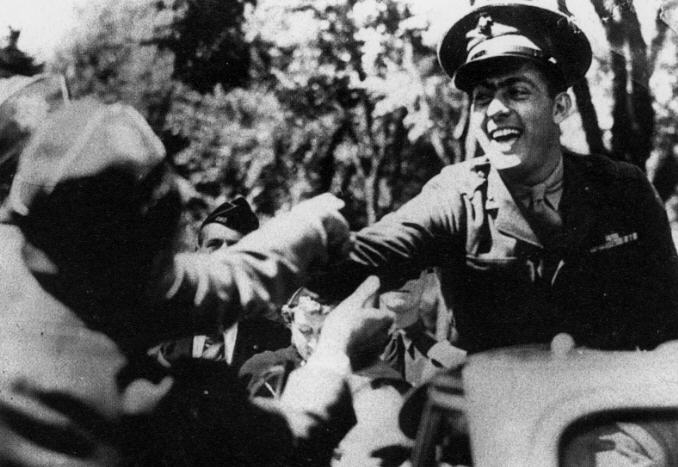
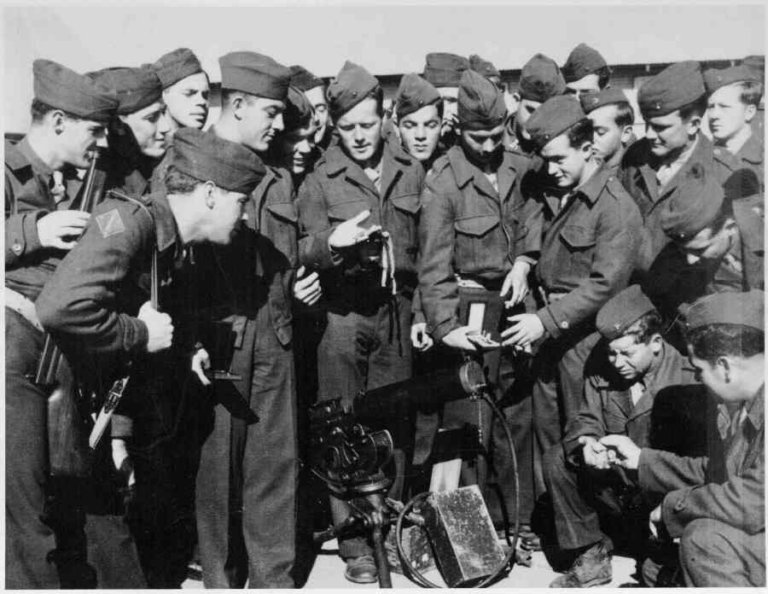
Sgt. Basilone receives the congratulations of his platoon.
Sgt. Basilone receives the congratulations of his platoon after receiving the Congressional Medal of Honor. Courtesy of The Raritan Library.

John Basilone's Extraordinary Heroism
(And the Military Medals He Received)

Late in the fall on the night of October 24, 1942, Basilone who was then a sergeant, was responsible for commanding two heavy  caliber fire sections (.30-caliber machine gun) from 1/7 that had the task of holding a narrow pass at Tenaru River. A Japanese regiment that numbered 3,000 men began to attack the small crews of Marines as they dug in for the night with grenades and mortar fire. The Marines successfully held off the attack until one gun crew was disabled by enemy fire.

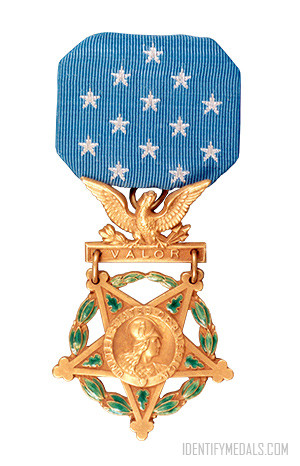
As Basilone’s Medal of Honor citation notes, Basilone carried roughly 90 pounds of weaponry and ammunition to the disabled gun pit, running a distance of 200 yards through enemy fire with total disregard for his own life. As he ran, Basilone killed several Japanese soldiers with his Colt .45 pistol.

John Basilone’s Citation for his Congressional Medal of Honor (Guadalcanal):

For extraordinary heroism and conspicuous gallantry in action against enemy Japanese forces, above and beyond the call of duty, while serving with the 1st Battalion, 7th Marines in the Lunga Area, Guadalcanal, Solomon Islands, on 24 and 25 of October 1942. While the enemy was hammering at the Marines defensive positions, Sgt. Basilone, in charge of 2 sections of heavy machine guns, fought valiantly to check the savage and determined assault. In a fierce frontal attack with the Japanese blasting his guns with grenades and mortar fire, one of Sgt. Basilone’s sections, with its “gun crews”, was put out of action, leaving only 2 men able to carry on. Moving an extra gun into position, he placed it in action, then, under continual fire, repaired another and personally manned it, gallantly holding his line until replacements arrives. A little later, with ammunition critically low and the supply lines cut off, Sgt. Basilone, at great risk to his own life and in the face of continued enemy attack, battled his way through hostile lines with urgently needed shells for his gunners, thereby contributing in large measure to the virtual annihilation of a Japanese regiment. His great personal valor and courageous initiative were in keeping with the highest traditions of the U.S. Naval Service.

Franklin D. Roosevelt

WW1 Medals and Awards: The Navy Cross

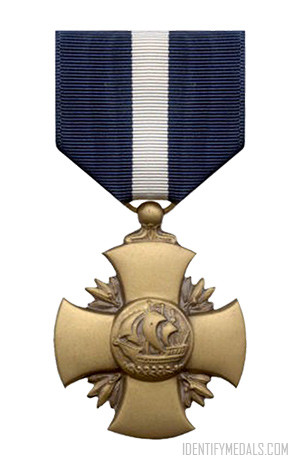
The Navy Cross

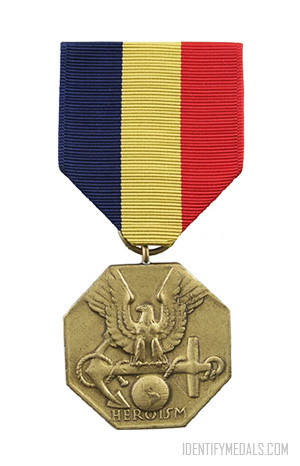
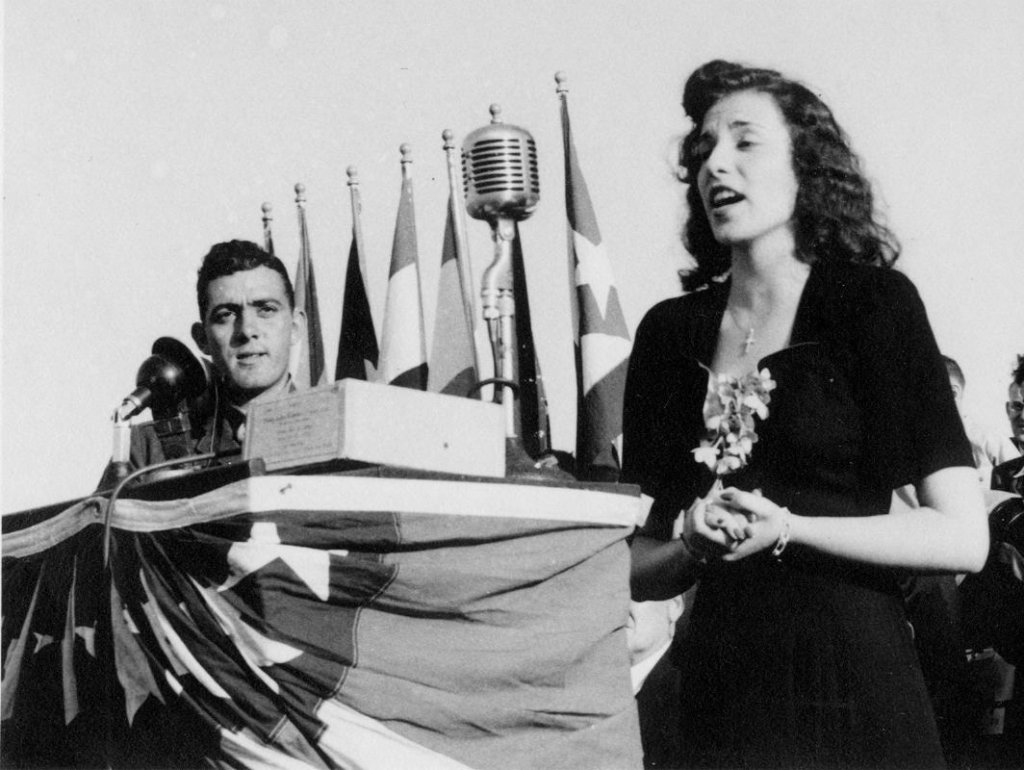
The Navy Cross is the United States military’s second-highest decoration and awarded to members of the Navy, Marine Corps, and Coast Guard. 
Read More »

John Basilone’s Citation for his Navy Cross (Iwo Jima):

“For extraordinary heroism while serving as a leader of a Machine-Gun Section of Company C, First Battalion, Twenty-Seventh Marines, Fifth Marine Division, in Action against enemy Japanese forces on Iwo Jima in the Volcano Islands, 19 February 1945. Shrewdly gauging the tactical situation shortly after landing when his company’s advance was held up by the concentrated fire of heavily fortified Japanese blockhouse, Gunnery Sergeant Basilone boldly defied The smashing bombardment of heavy caliber fire to work his way around the flank and up to a position directly on top of the blockhouse and then, attacking With grenades and demolitions, single-handedly destroyed the entire hostile strongpoint and its defending garrison. Consistently daring and aggressive as he fought his way over the battle-torn beach and up the sloping, gun-studded terraces toward Airfield Number One, he repeatedly exposed himself to the blasting fury of exploding shells and later in the day coolly proceeded to the aid of a friendly tank which had been trapped in an enemy mine field under intense mortar and artillery Barrages, skillfully guiding the heavy vehicle over the hazardous terrain to safety, despite the overwhelming volume of hostile fire. In the forefront of the assault at all times, he pushed forward with dauntless courage and iron determination until, moving upon the edge of the airfield, he fell, instantly by a bursting mortar shell. Stout-hearted and indomitable, Gunnery Sergeant Basilone by his intrepid initiative, outstanding professional skill and valiant spirit of self-sacrifice in the face of fanatic opposition, contributed materially to the advance of his company during the early critical period of the assault, and his unwavering devotion to his comrades and reflects the highest credit upon Gunnery Sergeant Basilone and the United States Naval Service.”

For a total of three days, Basilone ran back and forth between gun pits, supplying ammunition and assisting the junior Marines. He even lost his asbestos gloves, which were gloves used to hold or switch the hot barrels of the heavily used machine guns. Undeterred, Basilone used his bare hands to remove the barrel of his machine gun and take out an entire wave of Japanese soldiers during the height of the battle even though he burned his hands and arms in the process.

By the time reinforcements arrived for the Marines, Basilone and his gun crews had thwarted the entire Japanese regiment, but at great cost: only Basilone and two other Marines were left standing. Basilone himself killed at least 38 enemy soldiers, using the machine guns, his pistol, and even a machete.

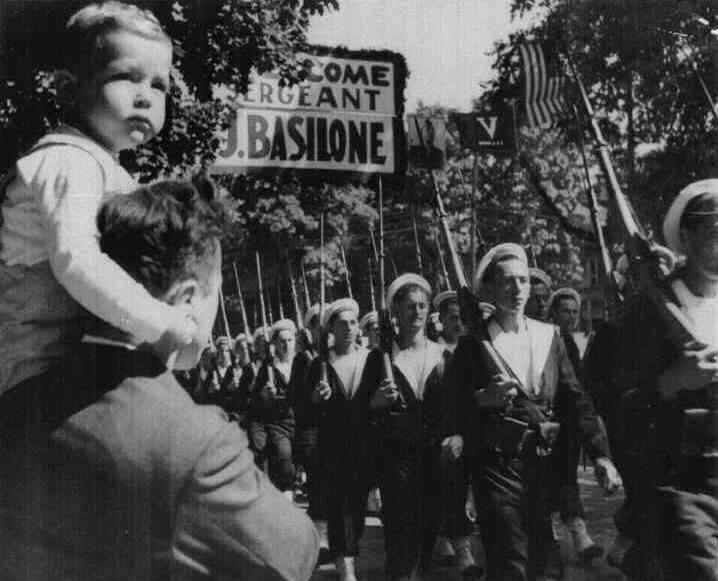
The 1943 Welcome Home Parade.
The 1943 Welcome Home Parade. Courtesy of The Raritan Library.
The 1943 Welcome Home Parade.
The 1943 Welcome Home Parade. Courtesy of The Raritan Library.
The 1943 Welcome Home Parade.
The 1943 Welcome Home Parade. Courtesy of The Raritan Library.
The 1943 Welcome Home Parade.
The 1943 Welcome Home Parade. Courtesy of The Raritan Library.

Due to his great acts of valor, he was awarded the Medal of Honor and promoted to Gunnery Sergeant Johh Basilone, becoming the first enlisted U.S. Marine to earn the Medal of Honor during World War II. He refused an opportunity to have President Franklin D. Roosevelt bestow the medal and instead opted to have the ceremony in the field with his unit.

As Basilone would note, “Only part of this medal belongs to me. Pieces of it belong to the boys who are still on Guadalcanal.”

John Basilone's Return Home

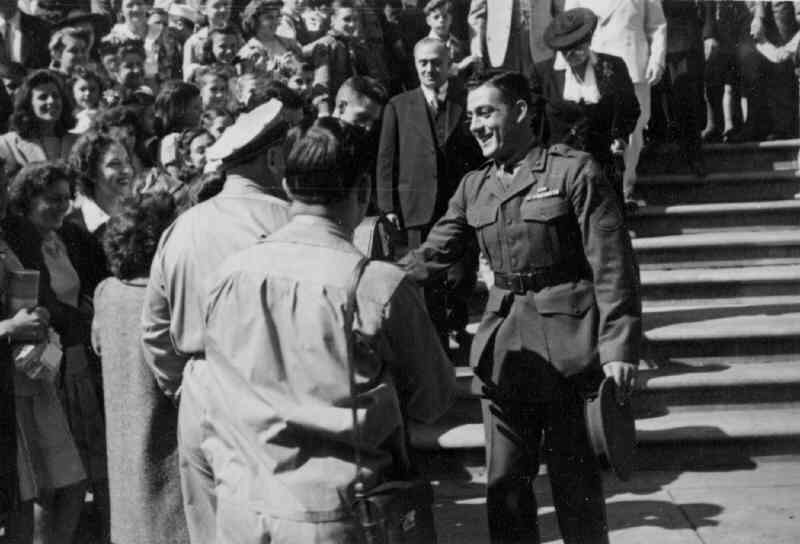
Basilone returned home to the United States for a homecoming parade in his hometown on September 19, 1943, and began to participate in war bond tours to raise money for the war effort. Even so, Basilone hated being away from his unit and the fighting and kept requesting to return to the Pacific, turning down a commission and an instructor position to get back with his men. He never completely liked all the attention from receiving the Medal of Honor. Basilone just wanted to be a plain Marine allegedly saying, “I ain’t no officer and I ain’t no museum piece. I belong back with my outfit.”

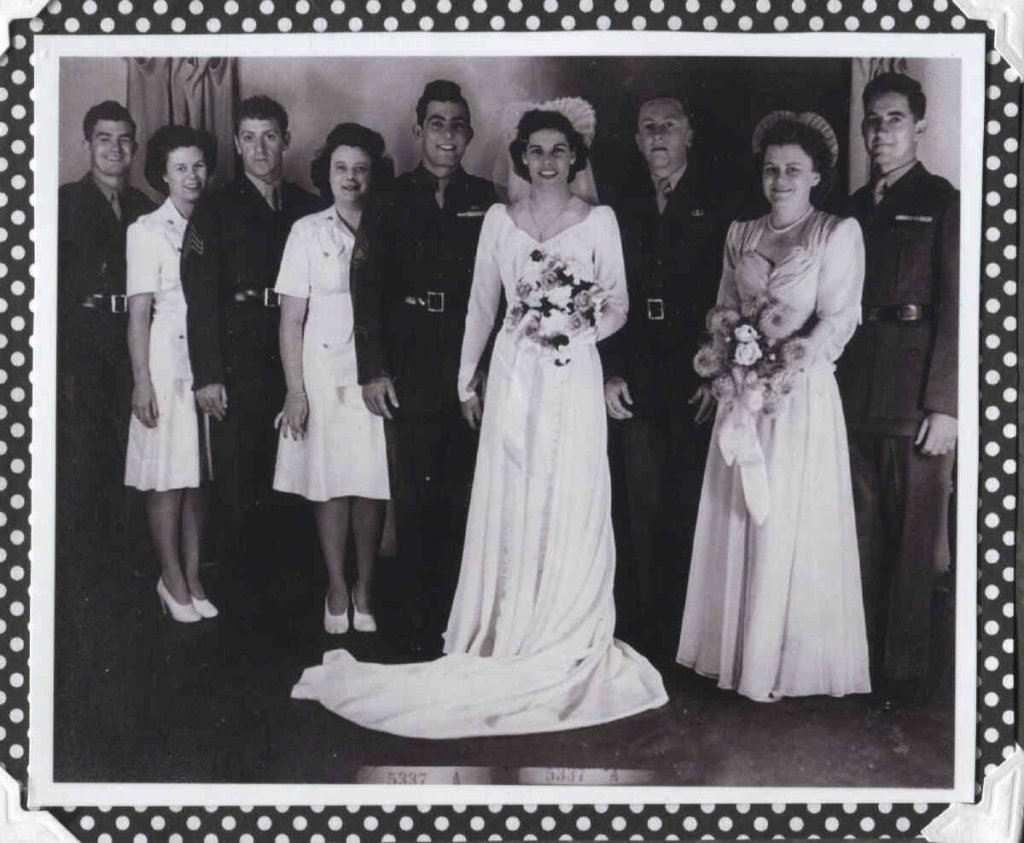
Basilone was sent to Camp Pendleton in California to complete additional training for combat in the Pacific where he ended up meeting his wife, a fellow Marine Sergeant named Lena Mae Riggi. The two would wed on July 10, 1944.

Basilone and Lena Liggi

Sgt Lena Mae Riggi Basilone played a significant role on the home front, supporting her husband and actively participating in war bond drives and other patriotic efforts. She, in fact, became a symbol of resilience and strength for many Americans during the war and left a lasting impact on the legacy of John Basilone and the spirit of American patriotism.

Wedding of John Basilone and Lena Riggi
Wedding of John Basilone and Lena Riggi - Married July 1944. Courtesy of The Raritan Library.

John Basilone And The 5th Division

In December 1944, Basilone returned to the Pacific, headed toward Iwo Jima. Serving with the 1st Battalion, 27th Marines, 5th Marine Division, Basilone stormed Red Beach on Iwo Jima on February 19, 1945. Leading his gunners up the steep black sand, Basilone and his unit were pinned down by enemy machine gun fire. As in Guadalcanal, Basilone started attacking a heavily-fortified blockhouse with grenades and demolitions, single-handedly destroying an enemy strong point. He fought his way toward an airfield and assisted a Marine tank trapped in an enemy mine field, guiding the vehicle over the deadly terrain to safety even though he was under intense mortar and artillery barrages. At the edge of the airfield, Basilone was killed by enemy Japanese forces due to mortar shrapnel, dying at the age of 28.

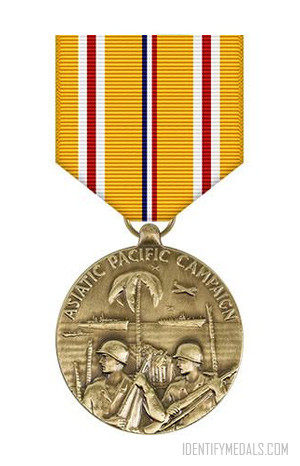
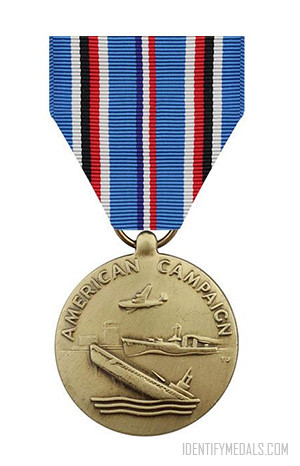
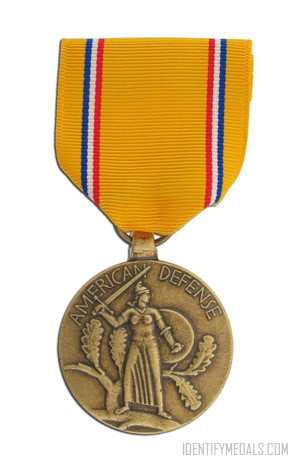
For his brave actions during the invasion, Basilone would posthumously receive the Purple Heart and the Navy Cross, becoming the only enlisted Marine in World War II to earn the Navy Cross posthumously. He received the Navy Presidential Unit Citation with one star, the American Defense Service medal with one star, the American Campaign medal, the Asiatic-Pacific Campaign medal, and the World War II Victory medal.
Other Accolades by John Basilone

In addition to his numerous medals, Basilone has received other accolades. In 1945, the U.S. Navy named a destroyer after Basilone, which his wife christened. His wife would never remarry and died at the age of 86 in 1999. She was buried wearing her wedding ring.

Additionally, Basilone was a central character in the HBO series The Pacific, appeared in the “Distinguished Marines” postage stamp series, and has another destroyer named after him—John Basilone—scheduled for commission in 2019. You can find Basilone’s grave in Section 12, Grave 384 in Arlington National Cemetery.

Truly a Marine to whom all Marines aspire and an incredible individual that we can all admire, John Basilone is an excellent example of the brave men and women who fought and died in World War II.

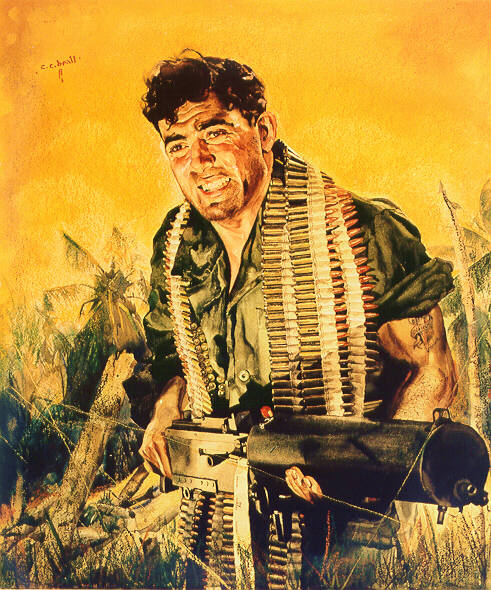
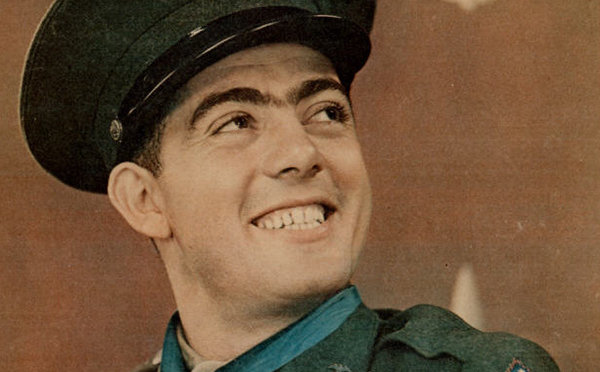
Portrait appeared on the cover of Colliers Magazine.
Portrait appeared on the cover of Colliers Magazine. Courtesy of The Raritan Library.
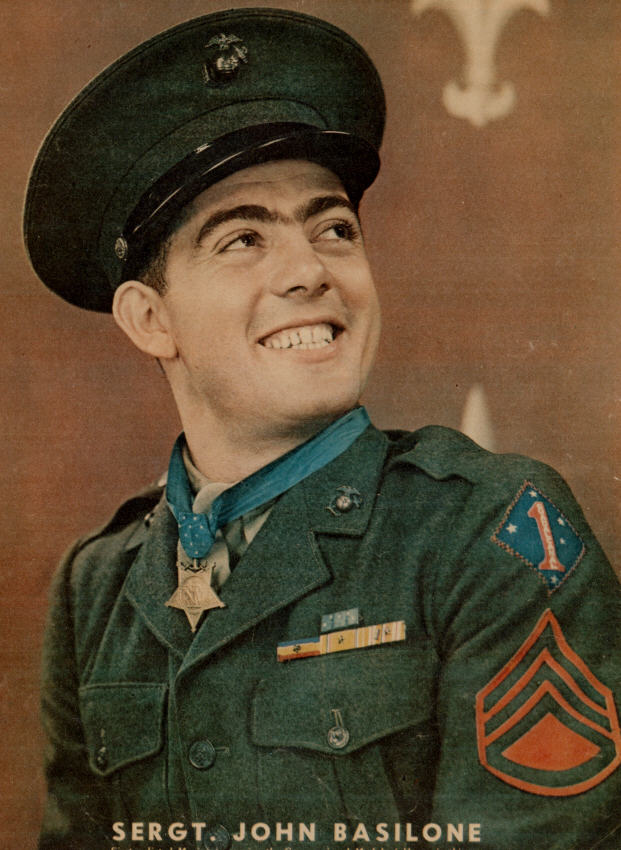
Photo of John Basilone appeared in The New York Daily News.
Photo of John Basilone appeared in The New York Daily News. Courtesy of The Raritan Library.
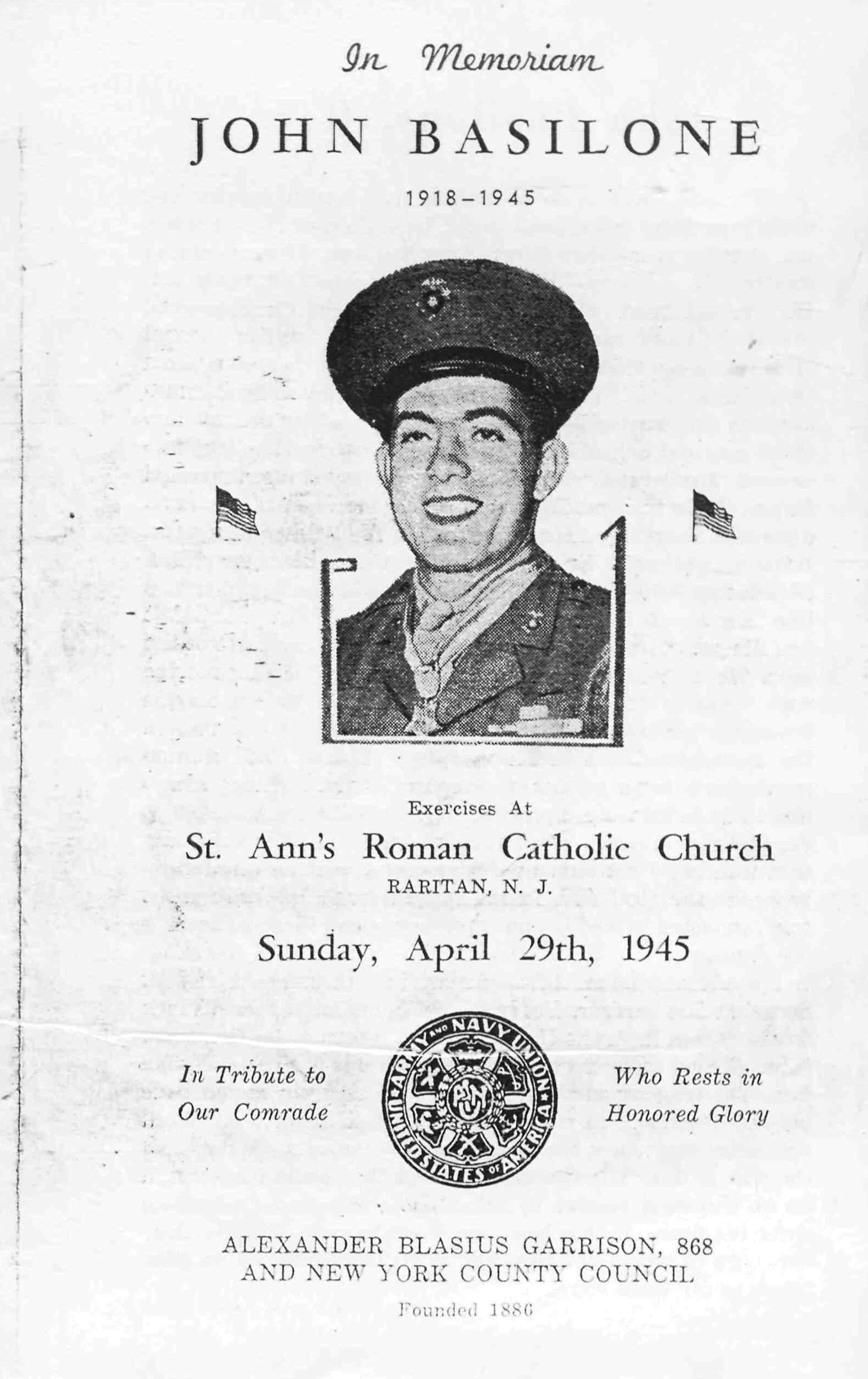
Program from 1945 Memorial Mass for John Basilone
Program from 1945 Memorial Mass for John Basilone. Courtesy of The Raritan Library.

Sources:

Guest Contributor: Rachel Basinger is a former history teacher turned freelance writer and editor. She loves studying military history, especially the World Wars, and of course military medals. She has authored three history books for young adults and transcribed interviews of World War II veterans. In her free time, Rachel is a voracious reader and is a runner who completed her first half marathon in May 2019.

How does the Congressional Gold Medal Differ from the Medal of Honor?

If you are a football fan like I am, you know that former Saints player Steve Gleason became the first NFL player to receive the Congressional Gold Medal, prompting my mom to ask me how it differs from the Congressional Medal of Honor. While the level of prestige is similar, both medals have a slightly different focus.

If you are a football fan like I am, you know that former Saints player Steve Gleason became the first NFL player to receive the Congressional Gold Medal, prompting my mom to ask me how it differs from the Congressional Medal of Honor. While the level of prestige is similar, both medals have a slightly different focus.

What's the Diference Between the Gold Medal and the Medal of Honor?

Like the Presidential Medal of Freedom, which is personally awarded by the President of the United States, the Congressional Gold Medal is awarded by an act of Congress. Both are considered the highest civilian award in the United States and are awarded to individuals who have performed an outstanding deed of service to the national interest, prosperity, or security of the United States.

American citizenship is not a requirement to receive the award.

By contrast, the Medal of Honor is a military award given for extreme bravery in action. It is specifically for a member of the U.S. Armed Force, and each service branch has a uniquely designed medal with the exception of the Coast Guard and the Marine Corps which both use the Navy’s medal. The Medal of Honor is presented personally to the recipient to the next of kin in the case of a posthumous award.
In order to receive the Medal of Honor, the chain of command can nominate a service member, followed by approval at each level of the command. This is the more common protocol. However, the other method is nomination by a member of Congress followed by approval by a special act of Congress. In either case, the President of the United States presents the Medal of Honor on behalf of Congress.

Although it is awarded by the Department of Defense “in the name of Congress,” it is not called the Congressional Medal of Honor even though many incorrectly do. It is simply the Medal of Honor. First issued during the American Civil War, it became the supreme honor by the time of the Spanish American War and has special protection under U.S. law due to its high status.

Guest Contributor: Rachel Basinger is a former history teacher turned freelance writer and editor. She loves studying military history, especially the World Wars, and of course military medals. She has authored three history books for young adults and transcribed interviews of World War II veterans. In her free time, Rachel is a voracious reader and is a runner who completed her first half marathon in May 2019.

It Only Takes Two, and Other Sundry Facts About American Civil War Medals

Even if you don’t know much about military medals, you probably know a thing or two about some of the medals awarded during World War I or World War II. But unless you’re a Civil War history buff, you may have no clue about the medals, decorations, and orders received during the American Civil War of 1861-1865.

It turns out that it doesn’t take many medals to have a complete U.S. Civil War collection unlike other military medal collections such as Third Reich medals or USSR medals. You only need two for an official Civil War medal collection!

Civil War Medals: The Medal of Honor

There was only one federally sponsored and issued medal during the Civil War, and that was the Medal of Honor, which was actually created during the Civil War. Signed into law by President Abraham Lincoln, a Navy Medal of Honor was first authorized on December 21, 1861 followed by an Army Medal of Honor, which was authorized on July 14, 1862.

Now the Medal of Honor is the highest military decoration that any member of the U.S. Armed Forces can receive, but it was the only decoration in the Civil War, and only enlisted personnel were eligible. Today the criteria to receive a Medal of Honor are very high, but it was different during the Civil War.

As an example, Secretary of War Edwin M. Stanton promised a Medal of Honor to any man who extended his enlistment in the 27th Maine Volunteer Regiment, and because there was no official list of names who did and didn’t, the War Department issued 864 Medals of Honor, one for every man in the unit. These 864 medals were later reviewed and revoked in 1916 by a military board.

Over 40 percent of the Medals of Honor awarded to date—1,522 out of 3,464 medals—were bestowed during the Civil War. In fact, some Civil War Medals of Honor years after the end of the war, including Andrew Jackson Smith whose medal was awarded in 2001 and Alonzo Cushing in 2014.

While we can’t begin to list everyone, some famous recipients include Private Jacob Parrot of Andrews’ Raid, William Harvey CarneyDr. Mary Walker, and Thomas Ward Custer.

The first Medals of Honor were given to participants of Andrews’ Raid or the Great Locomotive Chase with Private Jacob Parrot as the first person ever to be awarded the Medal of Honor.

During Andrews’ Raid named after James J. Andrews, 22 Union volunteers snuck behind enemy lines to Atlanta to steal a train to ride up north to Chattanooga. They also tried to burn bridges, destroy railroad tracks, and cut telegraph lines. The idea was to cut off Chattanooga, which was under control of the Confederates, from reinforcements just as the Union Army was attacking the city. Unfortunately, the raid failed, and some of the raiders were captured and executed. Even so, the raiders were regarded as heroes, and all but two of the military members received Medals of Honor, some posthumously.

At least 32 Medals of Honor were awarded to African-Americans, and William Harvey Carney was the first. Born a slave in Virginia, he finally found freedom in Massachusetts. He volunteered to join the 54th Massachusetts Infantry Regiment, the first African-American unit in the northern states although it was led by white officers.

Tasked with taking Fort Wagner, a beachhead fortification that protected the southern Charleston Harbor, the 54th was chosen for the second attack. The Union flag bearer was killed as the soldiers stormed the fort, but Carney stepped in and held the flag for the remainder of the battle, never losing possession of the flag despite several injuries. Unfortunately, the 54th was forced to retreat, but, as Carney said after the battle, “the old flag never touched the ground.” Carney was awarded the Medal of Honor in 1900, thirty-five years after the end of the Civil War.

Individuals who have received two Medals of Honor are rare, and Thomas Ward Custer is a part of this elite group, receiving both medals for actions during the Civil War. His first medal was awarded for actions during the Battle of Namozine Church where he led a cavalry charge while under fire, seized a Confederate flag, and took 14 Confederates prisoner. Custer’s second medal was awarded for actions three days later at the Battle of Sailor’s Creek where he again took a Confederate flag during a cavalry charge. Singlehandedly breaking a Confederate line, Custer charged at the Confederate flag-bearer, received a shot to the face before quickly recovering to kill the flag-bearer, and finally presented the flag to his brother, George Armstrong Custer.

Thomas Custer, George Custer, and one other brother would die at the Battle of Little Bighorn in 1876.

Civil War Medals: The Civil War Campaign Medal

The other state-issued medal was the Civil War Campaign Medalauthorized by the War Department in 1907 for both Union and Confederate veterans who had served between April 15, 1861 and April 9, 1865 or service in Texas through August 20, 1866.

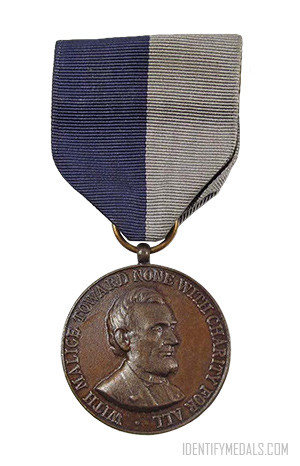
Referred to as a “badge” at the time, the Civil War Campaign Medal was first issued in 1909 (the medal was originally established as a badge because Congress would not approve a medal due to the costs involved.) The blue and gray ribbon denotes the respective uniform colors of the U.S. and Confederate troops. 

The medal was designed by Francis D. Millet, a noted sculptor who perished on the RMS Titanic in 1912. The monies necessary to mint and issue the medal were not appropriated by Congress until 1956 – 91 years after the war ended. The medal was then struck at the Philadelphia Mint. Its obverse displayed an engraved image of Abraham Lincoln while the Navy and Marine Corps versions depicted the USS Monitor and CSS Virginia‘s battle at Hampton Roads. The reverse has the words “The Civil War 1861-1865” encircled by a wreath. 

Civil War Medals: The Davis Guard Medal

In addition, the Confederacy awarded one medal during the Civil War known as the Davis Guard MedalExtremely rare, the medal was given to the Davis Guards, a militia company organized in Houston, Texas, for their actions at the Battle of Sabine Pass on September 1, 1863. 

Issued by the residents of Sabine Pass although sanctioned by the Confederacy, the medal was issued in gratitude for the Confederate men who held back a Union force numbering in the thousands. It was presented as a one-time award to exactly 50 men (in addition to the 49 members of the battery, the award was also presented to Jefferson Davis as the unit’s honorary commander)

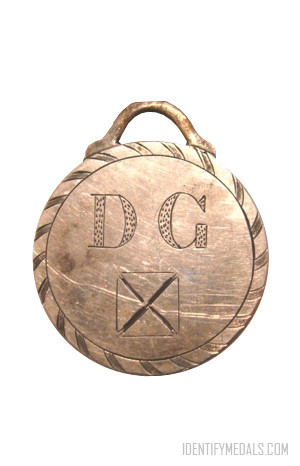
The medal consisted of a silver Mexican coin polished smooth with the letters “DG” on the front above a cross pattee. The reverse bore the inscription “Sabine Pass Sept. 23, 1864” in cursive script.

Civil War Medals: Other Medals

Even though you may have seen photos of Civil War soldiers or veterans with medals, most of these are medals from local military units or veteran medals of common organizations. As one example, many states awarded “first call” or “first defender” medals to individuals who voluntarily enlisted after President Lincoln’s first call to arms in April 1861.

Ohio was one of the first—if not the first—to issue state awards. Patterned after the British Crimean War Medal of 1854, 20,000 medals were produced immediately at the end of the war. The reverse of each medal is hand engraved to the recipient with his unit.

In addition, you should know that many of the awards given during the Civil War had some connection to capturing or saving regimental flags, which were the rallying point for the unit and guided its movements. Losing a flag could sometimes even disrupt a unit more than the death of the commanding officer.

In the end, you might want to consider starting a U.S. Civil War medal collection, as you’ll easily be able to say that you have all the official medals after just acquiring two! However, you might also enjoy trying to see how many different medals you could find from local units and veterans’ organizations. In that case, you’ll have to do a little bit more work!

Sources


Guest Contributor: Rachel Basinger is a former history teacher turned freelance writer and editor. She loves studying military history, especially the World Wars, and of course military medals. She has authored three history books for young adults and transcribed interviews of World War II veterans. In her free time, Rachel is a voracious reader and is a runner who completed her first half marathon in May 2019.

What Makes Vietnam War Medals Especially Unique

Did you know that some Vietnam War medals and decorations are especially unique because they were issued by South Vietnam, a country that ceased to exist after North Vietnam’s victory? Even so, U.S. military members who received foreign South Vietnamese decorations and medals are still authorized to wear them.

Due to the fall of South Vietnam, the official records of individuals who received awards from that country disappeared, although some U.S. military units maintained records of those awards. While South Vietnam issued a variety of awards and decorations, the U.S. only issued one medal specifically pertaining to the Vietnam War.

In addition, perhaps due to the unpopularity of the war, the Department of Defense never created lists of individuals who received military medals during the Vietnam War except for the Medal of Honor. Typically, the awards were only recorded in personnel records of casualties. In 2002, a team of volunteers began to record some medals awarded to each Vietnam War casualty.

In 2013, the Virtual Wall began to create its own database for these awards, which includes the Medal of HonorDistinguished Service CrossNavy CrossAir Force CrossSilver StarDistinguished Flying CrossBronze Star for Valor, Bronze Star to Meritorious Service or Achievement, Purple HeartAir Medal, Good Conduct Medal, and two foreign awards—Vietnam Gallantry Cross and Vietnam Military Merit Medal.

Here is just a small sample of the medals, awards, and decorations issued during the Vietnam War, three of which we’ll cover more in-depth:

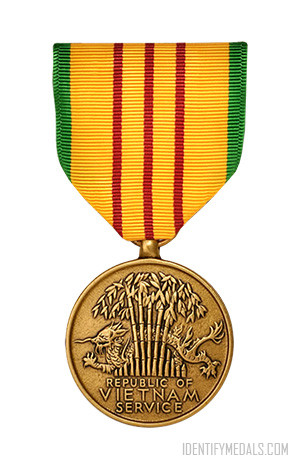
The Vietnam Service Medal

Authorized by executive order in 1965, the Vietnam Service Medal is a U.S. medal to honor service members who served in Vietnam, Laos, Cambodia, and/or Thailand from 1965 to 1973 for 30 consecutive or 60 nonconsecutive days.

The colors of the ribbon are green, yellow, and red, which represents the flag of the Republic of Vietnam at the time—yellow with red stripes running horizontally—and the green Vietnamese jungles. In addition, the three red stripes indicate the three ancient empires of Vietnam Tonkin, Annam, and Cochin China.

For those who participated in campaigns like the Tet counteroffensive in 1968 and the air offensive phases from 1966 to 1969, bronze stars on mounted on the ribbon for participation.

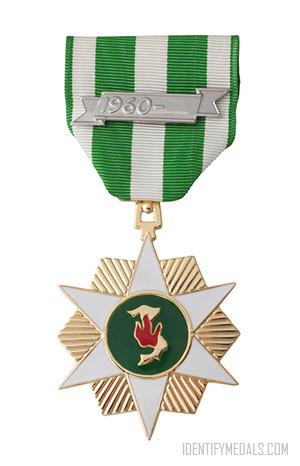
The Republic of Vietnam Campaign Medal

In addition to the U.S. medal, the Republic of Vietnam Campaign Medal is a foreign award, meaning a military decoration or award issued to American troops who aided that country in conflict. First introduced during the First Indochina War, the Republic of Vietnam Campaign Medal was authorized for wear on American service members as of December 1966 for their service in Vietnam.

In order to receive this medal, military members must have served in the Republic of Vietnam for six months between March 1, 1961 and March 28, 1973 or served outside Vietnam but gave combat support for six months or served less than six months but was wounded, captured and escaped enemy forces, or was killed in action.

What’s unique about the medal is that it comes with a default device, known as the 1960 device. It reads, “1960-”. Because they were produced and awarded during the war, it reads the start date of the conflict, but no end date was added.

Finally, its design helps to tell the story of the Vietnam War with the colors of the medal—green and white—to represent freedom and purity respectively. In addition, the medallion has a six pointed white enamel star, six golden rays between each point in the star, and a map of Vietnam in the center of the medallion. The putative red flames on the map represent the locations of the war.

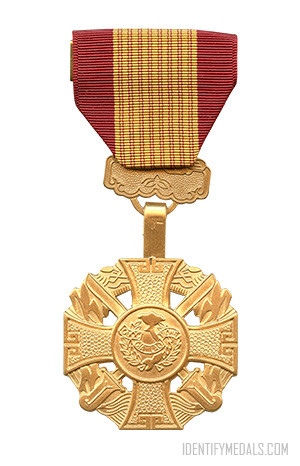
The Vietnam Gallantry Cross

Under the Department of the Army General Order (DAGO) 43, 1970, all military personnel of all branches were awarded the Vietnam Cross of Gallantry if they had served in Vietnam between March 1, 1961 and March 28, 1973.

In addition, according to DAGO 8, 1974, the Vietnam Gallantry Cross, Unit Citation with Palm was awarded to Headquarters U.S. Military Assistance Command (MACV) and all subordinate units during February 8, 1962 to March 28, 1973. This meant that all military personnel who were assigned to units that served in-country Vietnam during this period were considered as assigned to MACV, regardless of service or component.

In other words, the Republic of Vietnam authorized this award for all foreign military personnel and units for valorous achievement and participation during the Vietnam War. Equivalent to the French Croix de Guerre, the medal demonstrates South Vietnam’s gratitude to the American and Allied soldiers who worked, fought, and sacrificed themselves for the freedom of the Republic of Vietnam.

In closing, the Vietnam War has always been a touchy subject. Since the war was quite unpopular, many veterans were not welcomed when they returned, even if they did not personally agree with the conflict. In addition, many Vietnam War vets rarely talked about their experiences during the war and their service—until somewhat recently—went undiscussed.

As a result, besides the Medal of Honor and other prestigious U.S. decorations, many individuals do not know much about the Vietnam War medals, which is unfortunate because they are especially unique.

From the unique device attached to the Republic of Vietnam Campaign Medal to the fact that some medals were issued by a now defunct country—South Vietnam, the medals specifically connected to the Vietnam War have a distinctive story to tell.  

Sources:

Guest Contributor: Rachel Basinger is a former history teacher turned freelance writer and editor. She loves studying military history, especially the World Wars, and of course military medals. She has authored three history books for young adults and transcribed interviews of World War II veterans. In her free time, Rachel is a voracious reader and is a runner who completed her first half marathon in May 2019.

The Inspiring, Yet Tragic Story of Colleen Cain: The Coast Guard’s First Female Helicopter Pilot

On January 1982, the U.S. Coast Guard’s first female helicopter pilot tragically became the first female Coast Guard pilot killed in the line of duty.

On January 7, 1982, the U.S. Coast Guard’s first female helicopter pilot tragically became the first female Coast Guard pilot killed in the line of duty. While a devastating story, Lieutenant Colleen Cain continues to inspire today’s generation of female pilots in Coast Guard, and we can honor her short life by learning her story.

Who Was Colleen Cain?

Finland had never had normal relations with the Soviet Union. As this poor country broke free from the Tsardom of Russia and saw a political revolution ensuring the victory of the “Whites” against the Finnish Bolsheviks, it became the target of the Soviet Union.

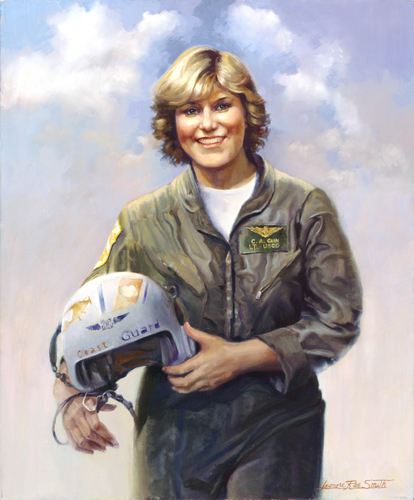
A portrait of Coast Guard heroine Lt. Colleen Cain by Leonora Rae Smith.

Born in 1953 and hailing from Burlington, Iowa, Cain graduated from the University of California in Santa Clara in 1974, two years before completing Officer Candidate School in 1976. She was extremely interested in being selected for flight training, so she obtained her Private Pilot’s License at her own expense (and on her own time!) in 1977.

In 1978, Cain’s dream came true as she began her military flight training in the Coast Guard, receiving her wings on June 8, 1979. She was Coast Guard Aviator #1988, the third female Coast Guard aviator and the first female HH-52 helicopter pilot.

Air Station Barbers Point, Hawaii was her first duty assignment. Tragically, she never had another. Even so, her short life was full. She flew many missions and earned qualifications as co-pilot, first pilot, and aircraft commander.

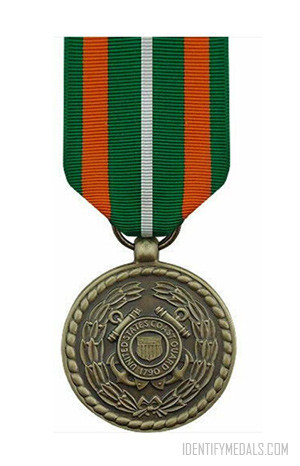
In fact, just one year after earning her wings, Cain flew a rescue mission in order to save a 3-year-old boy. He was on a fishing trip with his grandfather and slipped into the water. He was pulled from the water, and Cain resuscitated the boy. For her actions, she was awarded the Coast Guard’s Achievement Medal.
Colleen Cain's Last Flight

On January 7, 1982Cain and two other crew members launched in order to respond to a distress call from the Pan Am, a 74-foot fishing boat taking on water off Maui and in grave danger of sinking with seven people on board. When the helicopter lifted off at 4 a.m., there were torrential rains and heavy winds. Slightly over an hour later—around 5:15 a.m.—the Coast Guard had lost radio contact with the crew.

It wasn’t until nine hours later that another helicopter discovered the wreckage of Cain’s helicopter on a ridge in Molokai’s Wailua Valley. The chopper had crashed into the side of a mountain, and all the crew members of CG1420 were killed, including CainLieutenant Commander Horton “Buzz” Johnson, and Petty Officer 2nd Class David Thompson. Cain was not yet 30 years old.

Cain’s pilot Johnson was renown in his own right. He was a veteran of search-and-rescue missions and had been awarded the Distinguished Flying Cross—seldom given in peacetime—in 1976 for rescuing a man who had crashed a light plane on a mountainside during practically bad weather.

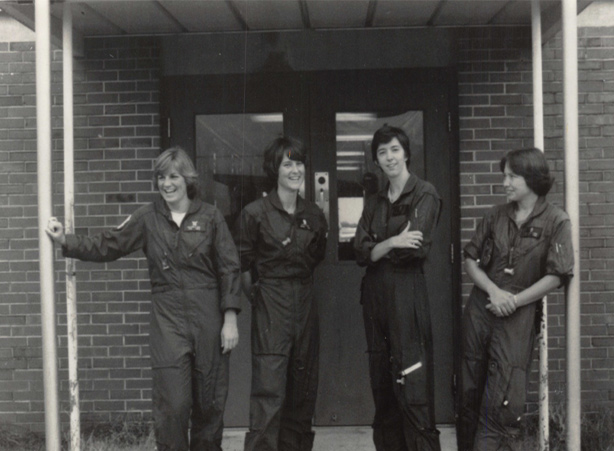
Group photo of Colleen Cain
Group photo of Colleen Cain.

Military leaders did not know whether Cain who was serving as co-pilot or Johnson who was the pilot were in control of the helicopter when it hit the Molokai Ridge, as the two had been taking turns at the wheel.

The Coast Guard faced difficulties in extricating the bodies of Cain and Johnson from the wrecked aircraft that dangled precariously on a steep slope at 2,200 feet. The other crew member, David Thompson, who had served as Aviation Machinist, had been thrown from the chopper upon hitting the cliff.

At the time of Cain’s death in 1982, she had been one of three pilots in the Coast Guard. Cain and one other woman were the first female helicopter pilots, and another woman flew fixed-wing aircraft.

Military leaders did not know whether Cain who was serving as co-pilot or Johnson who was the pilot were in control of the helicopter when it hit the Molokai Ridge, as the two had been taking turns at the wheel.

The Coast Guard faced difficulties in extricating the bodies of Cain and Johnson from the wrecked aircraft that dangled precariously on a steep slope at 2,200 feet. The other crew member, David Thompson, who had served as Aviation Machinist, had been thrown from the chopper upon hitting the cliff.

At the time of Cain’s death in 1982, she had been one of three pilots in the Coast Guard. Cain and one other woman were the first female helicopter pilots, and another woman flew fixed-wing aircraft.

Colleen Cain's Service

Even today years later, Cain is remembered for her service despite her short life of 29 years. In 1985, a 100-room residence hall at the Coast Guard Reserve Training Center in Yorktown, Virginia honored Cain with its name—“Cain Hall.”

In 2009, the Coast Guard dedicated a memorial at Air Station Barbers Point where Cain and the other crew members were stationed to honor the crews of CG1420 in 1982 as well as the more recent fatal crash of CG6505 in 2008.

Lieutenant Commander Charlotte Pittman, a Coast Guard helicopter pilot, speaking on behalf on all female pilots in the Coast Guard perhaps best remembered Cain’s life. Grateful for Cain’s service and her pioneering work, Pittman reflected on Cain’s sacrifice 30 years later. Like Cain, Pittman had been a reservist and wanted to be a Coast Guard helicopter pilot.

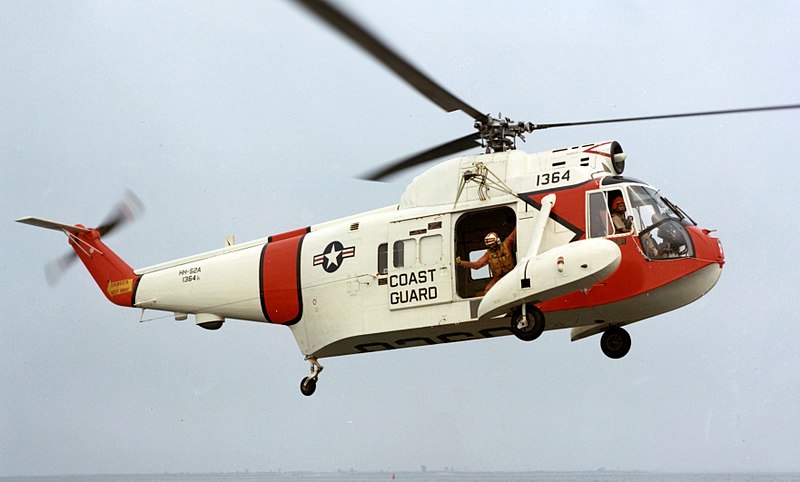
A U.S. Coast Guard HH-52A Seaguard helicopter.
A U.S. Coast Guard HH-52A Seaguard helicopter. Source: Wikipedia.
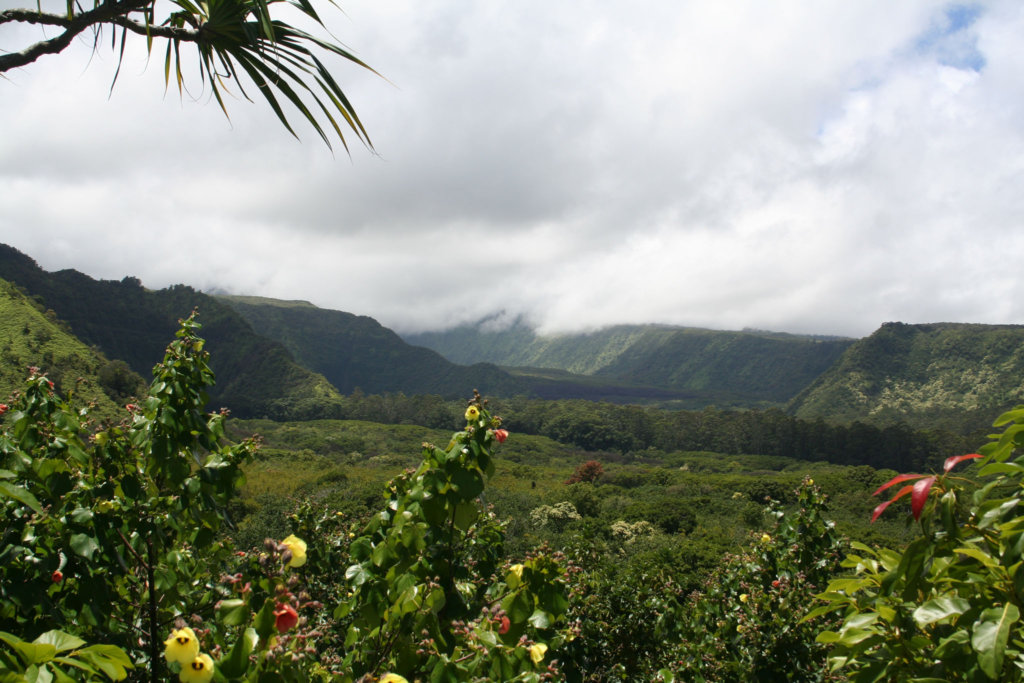
Wailua Valley State Wayside.
Wailua Valley State Wayside. Image courtesy of MauiGuidebook.

When Pittman earned her wings in 2001, she followed in the path that Cain had blazed twenty-two years prior. Even though Cain didn’t finish her first tour, Pittman admired her work and noted that Cain started a proud legacy of women in Coast Guard aviation.

Cain was part of a group of three officers and six enlisted women who demonstrated the role that women could play in military aviation, opening up the door for countless women in the future to pursue their dreams of military aviation. Known as the First Women of U.S. Coast Guard Aviation, nine women in the Coast Guard became aviators when the Coast Guard opened all aviation ratings to women on January 1, 1976.

In addition to Cain, other pioneering women included Vivien Crea and Janna Lambine (officers) and Erminia Chillon, Andrea Gardner, Dior Lowen Hubel, Kelly Mogk Larson, Robyn Rogers Norvell, and Elizabeth Uhrig (enlisted).

Unfortunately, Cain’s story has a sad ending, as she died much too young. However, it is an inspiration, as she was the Coast Guard’s first female helicopter pilot and a fitting model for future female aviators in the Coast Guard and other branches of the military.

Sources:

Guest Contributor: Rachel Basinger is a former history teacher turned freelance writer and editor. She loves studying military history, especially the World Wars, and of course military medals. She has authored three history books for young adults and transcribed interviews of World War II veterans. In her free time, Rachel is a voracious reader and is a runner who completed her first half marathon in May 2019.

Medals of The Few and The Proud: A Look at Marine Corps Medals

We all know the reputation of the Marine Corps as the toughest branch of the service, but there’s a good chance that unless you’re a Marine or you’re married to a Marine, you don’t know much about Marine Corps medals. But I’m going to change that today, as I give you a quick look at the medals our toughest service members receive.

There are several combat awards that are specifically awarded to individuals serving with the U.S. Navy and U.S. Marine Corps only. These include the Navy Cross Medal, the Navy Distinguished Service Medal, the Navy/Marine Corps Commendation Medal and the Navy/Marine Corps Achievement Medal. The Combat Distinguishing Device may be authorized for latter two medals.
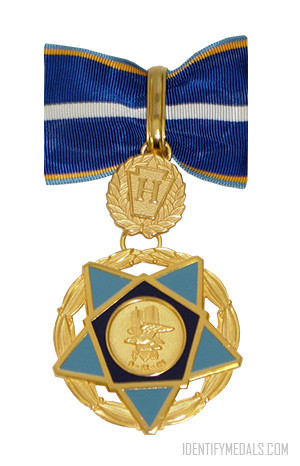
Navy Cross Medal

Just one step below the Medal of Honor, the Navy Cross Medal is awarded to individuals who have distinguished themselves by extraordinary heroism while serving with the Navy or Marine Corps. Because the Navy Cross Medal is a distinctive decoration, it is only awarded for acts performed in the presence of great danger or at great personal risk.

In order to receive the medal, they must demonstrate extraordinary heroism in one of three situations:


  1. While engaged in an action against an enemy of the United States;
  2. While engaged in military operations involving conflict with an opposing foreign force;
  3. While serving with friendly foreign forces engaged in an armed conflict against an opposing armed force, in which the United States is not a belligerent party.

Navy Distinguished Service Medal

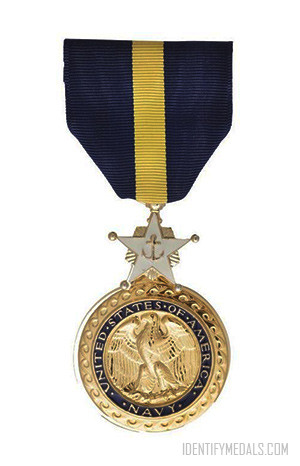
Slightly lower than the Navy Cross but just above the Silver Star Medal is the Navy Distinguished Service Medal. The Distinguished Service Medal is awarded to individuals who display exceptionally meritorious service to the United States in a duty of great responsibility.
Generally, the medal is just awarded to officers in principal commands at sea or in the field who have gone clearly above normal expectations and contributed to the success of a major command or project. As the requirements note, “If there is any doubt as to the degree of service involved, the Legion of Merit [a slightly lower award] is the more appropriate award.”

Navy/Marine Corps Commendation Medal

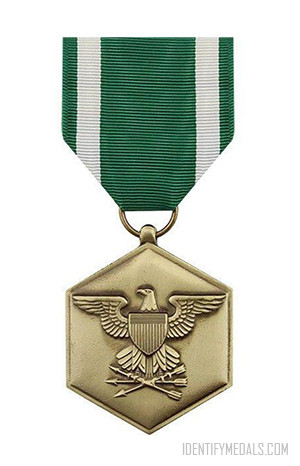
Awarded for acts since December 6, 1941, the Navy/Marine Corps Commendation Medal is a mid-level medal awarded to individuals who have distinguished themselves while serving with the U.S. naval service.

To receive the Navy/Marine Corps Commendation Medal, individuals must have demonstrated one of three characteristics:

  1. Acts of Heroism that merit special recognition but in not to the degree necessary for a Bronze Star Medal (combat) or for the Navy and Marine Corps Medal (non-combat)
  2. Meritorious Achievement that is outstanding and deserves to be recognized as it is a definite contribution to the naval service, yet is not to the level of a Bronze Star Medal or Air Medal (combat) or Meritorious Service Medal or Air Medal (non-combat)
  3. Meritorious Service that is above and beyond what is usually expected of an individual at a particular grade and rate and can be demonstrated in the individual’s fitness report or personnel records, yet is not to the level of a Bronze Star Medal or Air Medal (combat) or Meritorious Service Medal or Air Medal (non-combat)

Navy/Marine Corps Achievement Medal

Originally established on May 1, 1961, the Navy/Marine Corps Achievement Medal was first a ribbon-only award. The current military medal was authorized by the Secretary of the Navy on July 17, 1967.

It is lower than the Commendation Medal and is awarded to members of the U.S. Navy and U.S. Marine Corps or members of the armed forces of a friendly foreign nation that meet the eligibility requirements.

The Achievement Medal is given for meritorious service or achievement in combat or non-combat situations where such actions merit more recognition than a fitness report but do not warrant a Navy/Marine Corps Commendation Medal or higher. Additionally, the Achievement Medal may be awarded to members of the reserves that are junior officers or enlisted personnel.

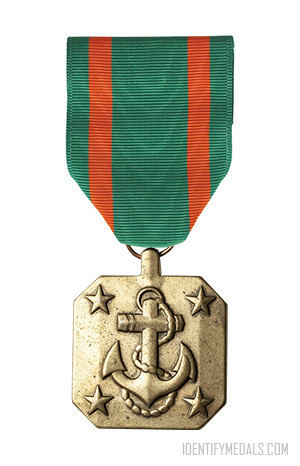
Designed by the Institute of Heraldry, the medal is a bronze square with clipped corners featuring a fouled anchor in the center. There are stars in each of the four corners. The back of the medal is blank so that the recipient’s name can be engraved, and the ribbon is myrtle green with stripers of orange near each edge. Additional awards are denoted by gold stars, and a Combat Distinguishing Device (Combat “V”) may be authorized.

To receive an Achievement Medal, individuals must demonstrate one of two characteristics:

  1. Professional achievement that clearly exceed the normal requirements and expectations given the individual’s grade and experience and be an important contribution that benefits the United States and the naval service
  2. Leadership achievement that is noteworthy, sustained or of such merit to earn singular recognition of the act(s), reflect well on the individual’s effort to accomplish the unit mission

While both medals—Commendation Medal and Achievement Medal—can also be given for non-combat situations, the Navy and Marine Corps also has a medal just for non-combat acts, the Navy and Marine Corps Medal.

Navy and Marine Corps Medal

Each branch of the service has its highest non-combat decoration. For the Army, it’s the Soldier’s Medal. For the Air Force, it’s the Airman’s Medal. For the Coast Guard, it’s the Coast Guard Medal. And for the Marines, it’s the Navy and Marine Corps Medal.

Established by an act of Congress on August 7, 1942 and first awarded during World War II, the Navy and Marine Corps Medal is a decoration higher than the Bronze Star Medal and is presented for heroism not involving conflict with the enemy to members of the U.S. Navy and U.S. Marine Corps.

If you’re curious about the order of precedence for Marine Corps medals and ribbons, you can visit this site that places the ribbons in order of precedence. In addition, you can also click on each ribbon to learn more about it. 

Hopefully, now you know just a bit more about what awards those serving with the U.S. Navy or U.S. Marine Corps can receive through our short look at Marine Corps Medals!


Sources:

Guest Contributor: Rachel Basinger is a former history teacher turned freelance writer and editor. She loves studying military history, especially the World Wars, and of course military medals. She has authored three history books for young adults and transcribed interviews of World War II veterans. In her free time, Rachel is a voracious reader and is a runner who completed her first half marathon in May 2019.

George Halas: Father of the NFL Who Also Served in Both World Wars

George Halas was a player, coach, and owner of the Chicago Bears. He also served in the Armed Forces and received the Bronze Star during WW2.

If you’re an NFL fan like I am, you know all the greats of the leagueGeorge Halas, player, coach, and owner of the Chicago Bears, definitely fits into that category. But what you might not know is that he served in the U.S. Armed Forces and even received the Bronze Star for his actions in the Pacific during World War II.

Let’s take a few moments to look at this incredible man who loved the sport of football so much but did not shirk from his duty to serve his country. Maybe this article will inspire you to read about all the other incredible NFL players who are also veterans!

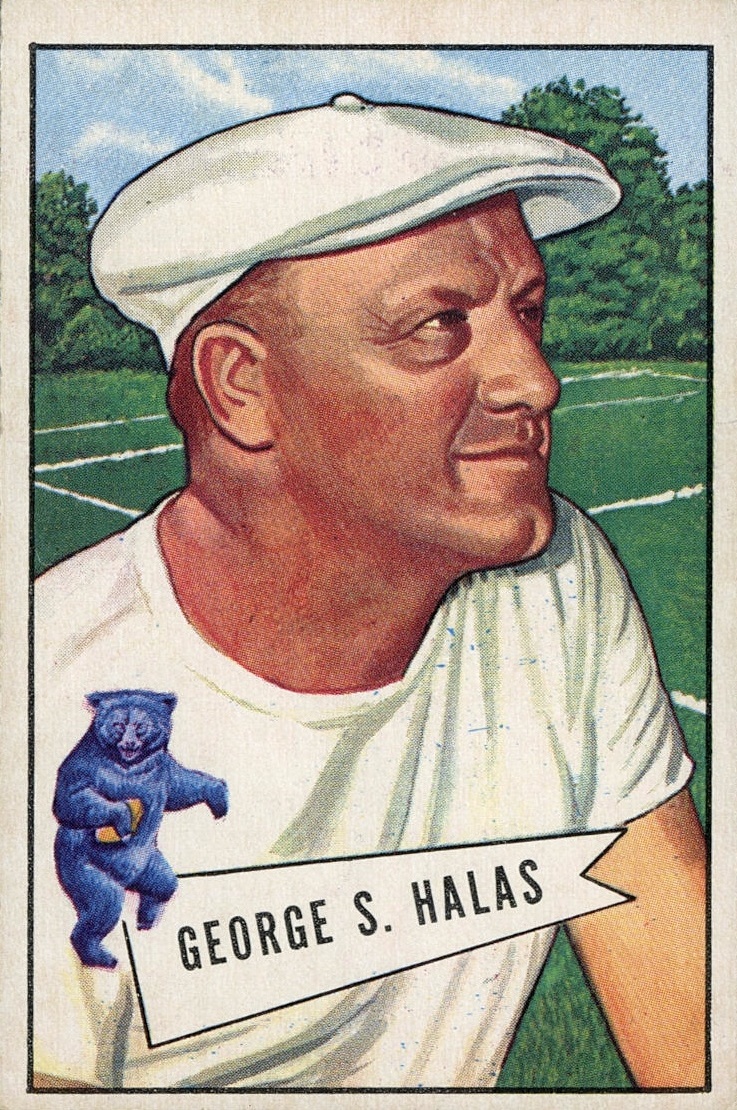
A George Halas sports card (#48) produced by Bowman Gum in 1952.
A George Halas sports card (#48) produced by Bowman Gum in 1952. Source: Wikipedia.

Who Was George Halas?

Born in Chicago on February 2, 1895, George Halas grew up in a very disciplined and frugal family. It’s no surprise then that he carefully saved money in order to attend the University of Illinois in Urbana-Champaign. He had been a sports nut since he was growing up, and he played football, baseball, and basketball in college.

Right before his final semester at Illinois, Halas enlisted in the United States Navy because the United States had World War I. Even though he did not complete all of the required coursework, Halas still later received his college degree. Assigned to Great Lakes Naval Base outside of Chicago, Halas was responsible for organizing the service football and basketball teams.

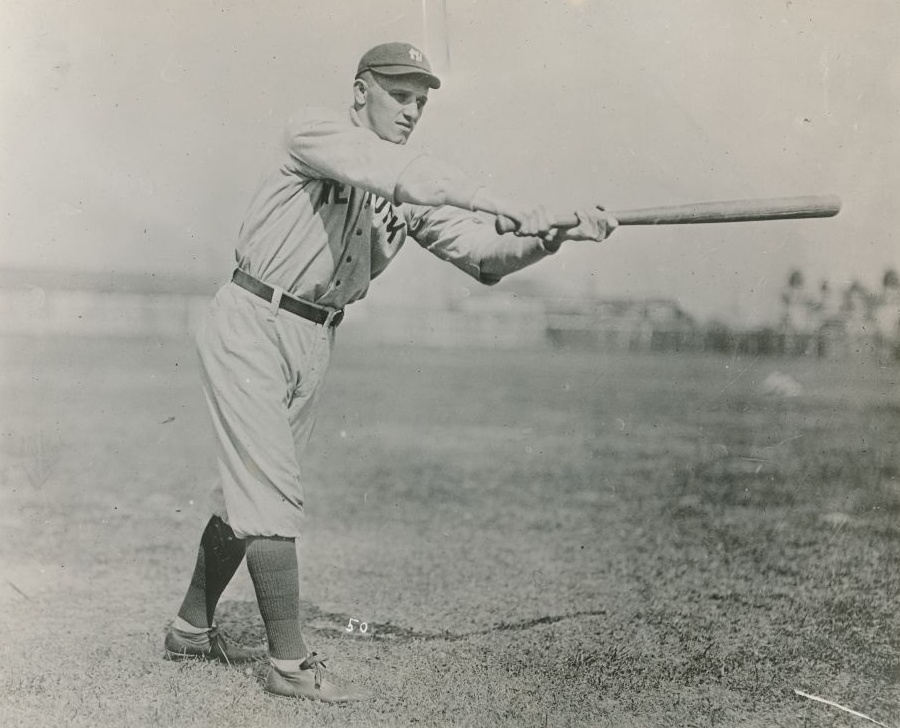
Halas’s first foray into the professional sports world was abysmal. Although he had gained a spot on the roster of the New York Yankees in 1919, a hip injury keep him relatively sidelined for a good portion of the season and he struggled when he hit the starting lineup.

George Halas After Baseball

His baseball career was over, so he returned to the Chicago area and worked for the railroad by day and played football on the weekends. In early 1920, Halas received a call from the Staley Starch Works, located in Decatur, Illinois. A.E. Staley, the owner of the company, wanted Halas to oversee the day-to-day operations of the manufacturing plant as well as organize and coach the company’s football and baseball teams. Halas was delighted.

Shortly after Halas arrived in Decatur, several club football teams of companies got together on September 17, 1920 in Canton, Ohio and formed the basic structure of the American Professional Football Association, which would later be renamed the National Football League (NFL) in 1924.

George Halas, "Papa Bear" New York Yankees Spring Training Hopeful
George Halas, "Papa Bear" New York Yankees Spring Training Hopeful. Source: Wikipedia.

Even though the Decatur team had had a successful season, A.E. Staley encouraged Halas to take the team to Chicago because the former didn’t think a professional football team could survive in Decatur. He offered Halas $5,000 to get started as long as Halas kept the team name of the Staleys for at least one season.

In 1922, Halas chose to rename the team the Bears to acknowledge the goodwill of William Veeck, Sr., the owner of the Chicago Clubs who allowed the Staleys to share Wrigley Field in exchange for a portion of the concessions, gate, and program sales.

In addition to coaching the Staleys and later Bears throughout the 1920s, Halas also played various positions on the team until he retired as a player after the 1929 season. In 1930, he hired another head coach for several years, who took the Bears to the 1932 championship. Perhaps because Halas wanted a championship himself, he returned to coaching. His 1933, 1940, and 1941 teams won the NFL championships with Halas as their head coach.

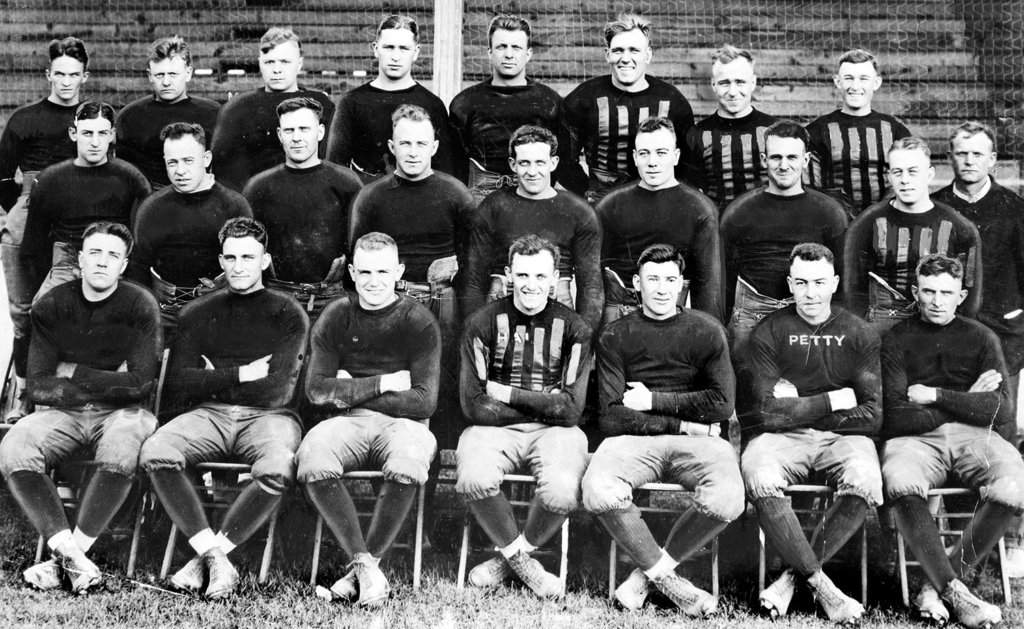
The 1920 Decatur Staleys football team. It would be later renamed "Chicago Bears".
The 1920 Decatur Staleys football team. It would be later renamed "Chicago Bears". Source: Wikipedia.

George Halas Enlists in the Navy

Following the attack on Pearl Harbor, Halas took a break from coaching for a while and re-enlisted in the Navy. He would spend the majority of his three years of service in the South Pacific, predominantly organizing R&R and entertainment for the troops there.

When he returned to the Bears at the end of the 1945 season, Halas led the Bears to yet another championship in 1946. Luke Johnsos and Hunk Anderson had won another title for the Bears in 1943.

The 1950s were a dry season for the Bears, as they won no championships, and Halas, who had come to be known as “Papa Bear” retired from coaching the Bears in 1955. Even though he continued to meddle on the sidelines for two years, Halas couldn’t stay away and returned to the head coach position.

He finally got his elusive one more championship in 1963. He would remain as Head Coach for several more years before finally giving up the reins, retiring after the 1967 season with 318 career wins and six NFL championships.

In 1982, Halas hired Mike Ditka, who had previously played with the Bears, as head coach, and a year later, Halas was diagnosed with pancreatic cancer, dying on October 31, 1983 at the age of 88.

Before he died, he gave Ditka a bottle of Dom Perignon champagne with the instructions that he wasn’t supposed to open it until Ditka won a Super Bowl. That happened on January 26, 1986 against the New England Patriots with a score of 46-10, and Ditka celebrated with that bottle of champagne!

Halas never forgot his service during the World Wars, though, as he hung a picture of Admiral Nimitz who Halas served under during World War II in his office. In addition, he helped start a Bears preseason tradition of the Armed Forces benefit game.

In a 1946 advertisement featuring a photo of Halas flanked by Nimitz and Dwight D. Eisenhower with Eisenhower handing Halas a football, the caption read: “We Must Carry the Ball for Them,” encouraging the general public to come to a game between the Bears and the Giants to support official relief agencies for the Army, Navy, and Army Air Forces.

Although Halas may be remembered more for his time in the NFL, we certainly can’t forget his service during both of the World Wars.

Sources

Guest Contributor: Rachel Basinger is a former history teacher turned freelance writer and editor. She loves studying military history, especially the World Wars, and of course military medals. She has authored three history books for young adults and transcribed interviews of World War II veterans. In her free time, Rachel is a voracious reader and is a runner who completed her first half marathon in May 2019.

The 9/11 Heroes Medal of Valor: Honoring and Remembering the Fallen Heroes

Many medals can be awarded posthumously, but the 9/11 Heroes Medal of Valor sadly did not have any living recipients. Created to honor the 442 first responders who were killed in the line of duty during the September 11, 2001 terrorist attacks.

Instead, the medals, which intentionally resemble the Public Safety Officer Medal of Valor and the military’s Medal of Honor, were presented by President George W. Bush to the families of the fallen officers at the White House on September 9, 2005.

The 9/11 Heroes Medal of Valor and Its Ceremony

During the ceremony nearly 4 years after the devastating terrorist attacks, President Bush would honor the lives of the public safety officers who died in the line of duty as well as comfort the families who were left behind and accepted the medals in remembrance of their deceased relatives. Around 1,200 family members and friends showed up at the ceremony to honor their friends and relatives who died on September 11.

Although not every name could be listed in President Bush’s brief speech, Attorney General Alberto Gonzales read all 442 names out loud so that all who gathered could honor every individual who gave his or her life on one of the most tragic days in American history.

The 442 public service officers included 343 New York City Fire Department members, 50 Port Authority police officers and assistants, 23 NYPD officers, 3 state court officers, and members of the Secret Service, FBI, and private ambulance workers.

At the conclusion of the last name, Gonzales began clapping, as a civilian salute to the sacrifice of the public safety officers and their families. After a loud ovation, a Marine Corps band called the “President’s Own” presented an emotional rendition of the “Battle Hymn of the Republic” before President Bush began to speak.

President Bush sadly could not take the time to tell the stories of every single one of those 442 men, but he did mention several.

Firefighter Donny Regan of Rescue Company 3 in Bronx had served for 17 years with the New York City Fire Department and was cited six times for bravery. Even though his son Peter lost his father on September 11, he still carried on his father’s legacy, serving in the Fire Department and later as a Marine reservist in Iraq.

Firefighter Ronnie Gies of Squad 288 in Queens had been with the New York Fire Department since 1988, and he rushed into the Twin Towers to save lives, as a video caught on that day illustrated. According to his wife, “You see him straight on, carrying equipment, with such a look of determination.”

Senior Court Officer Thomas Jurgens was one of roughly 25 New York State Court officers who responded after the plane hit the first tower. Even though he had been told to leave because the danger was too grave, Jurgens would not leave his post. He sent his last radio transmission from inside the burning tower with a simple, yet profound sentence: “There are people here who need our help.”

New York City Police Officer Moira Smith was known for not being afraid of danger. She even ran with the bulls in Pamplona, Spain. In 1991, she ran into a subway tunnel to save dozens of people who were trapped in what ended up being one of the worst subway accidents in New York history. That same fighting spirit shone on September 11, 2001 when she rushed into the burning towers of the World Trade Center. According to one person she helped to safety, he remembered Smith’s steady blue eyes and even voice despite the chaos and destruction around her. She was captured in the September 12 papers, an image of Smith assisting an injured man from the tower just before she rushed back in to save others. Unfortunately, she was not able to save anyone else, as the tower collapsed around her. Even though as one of Smith’s colleagues noted that she could have not rushed in and saved herself, “nothing would have stopped her saving one more person.”

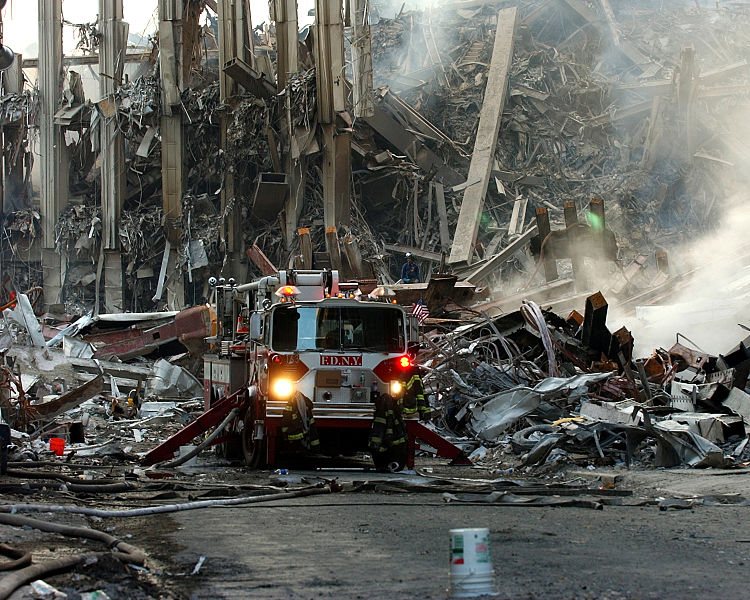
Ground Zero, New York City, N.Y. (Sept. 16, 2001) -- A lone fire engine at the crime scene in Manhattan where the World Trade Center collapsed following the Sept. 11 terrorist attack.
Ground Zero, New York City, N.Y. (Sept. 16, 2001) -- A lone fire engine at the crime scene in Manhattan where the World Trade Center collapsed following the Sept. 11 terrorist attack. Source: Wikipedia.

And these individuals that President Bush listed were only 4 of the incredible 442 men and women who put their lives on the line while on duty. Incredibly grateful for their sacrifice, President Bush ended his speech in a more hopeful tone:

And the legacy of peace and freedom we leave behind will be the greatest memorial to your fallen family members and friends.

The heroes of September the 11th will not be here to see that day. But their moms and dads and children and grandchildren can know a proud America will always stand in the long shadow of their service and sacrifice, and a proud nation will always remember them.

After President Bush and First Lady Laura Bush departed, families were lined up alphabetically in order to receive the medals from military officers spread out on the South Lawn of the White House.

Statement from FBI Director Robert Mueller

Later that day, FBI Director Robert Mueller would issued a statement noting the sacrifice of all of those who demonstrated “incomparable courage,” mentioning specifically Special Agent Leonard “Lenny” W. Hatton who had assisted with the evacuation of the World Trade Center. As Mueller noted, Hatton was last seen helping a victim escape one of the buildings before rushing back in to save more people.

The end of Mueller’s statement was a fitting honor not only to Hatton but also to the 441 other public safety officers who died on September 11, 2001 either at the World Trade Center or at the Pentagon.

This is a fitting tribute to those whose ultimate sacrifice saved so many. The impact of their courage is not limited to September 11. In truth, it will be felt for years to come—both in the lives of those they rescued from dire situations, and in the hearts of those who witnessed their bravery.

Lenny Hatton’s actions on September 11, 2001, exemplify the best of our nation. As his family receives his 9/11 Heroes Medal of Valor today, let us again pay tribute to his courage and honor his remarkable example of service and sacrifice.

Concluding Thoughts

As Sam Cannizzaro, who lost his son Brian, a firefighter, on September 11, stated, “Four years doesn’t make it easier—the pain doesn’t go away.” Even though it’s now been almost 18 years since 9/11, the pain is still there for those families and friends who lost loved ones.

And as September 11 becomes increasingly more an event of the past and of history, we as Americans have a greater honor and responsibility to remember those who gave their lives on that day.

Sources

Guest Contributor: Rachel Basinger is a former history teacher turned freelance writer and editor. She loves studying military history, especially the World Wars, and of course military medals. She has authored three history books for young adults and transcribed interviews of World War II veterans. In her free time, Rachel is a voracious reader and is a runner who completed her first half marathon in May 2019.

Tarawa: The Toughest Fortified Position Marines Faced in World War II

We’ve all heard of the famous battle of the Pacific—Midway, Iwo Jima, Okinawa— but there’s a good chance that you’ve never heard of Tarawa.

We’ve all heard of the famous battle of the Pacific—Midway, Iwo Jima, Okinawa, and maybe even Saipan and Tinian—but there’s a good chance that you’ve never heard of the Battle of Tarawa.

The Americans faced the most sophisticated Japanese defensive positions here that would not be replicated until Iwo Jima in 1945. Even so, yard for yard, Betio—the main island of Tarawa atoll—was the toughest fortified position the Marines would ever face in World War II.

Betio and the Gilbert Islands

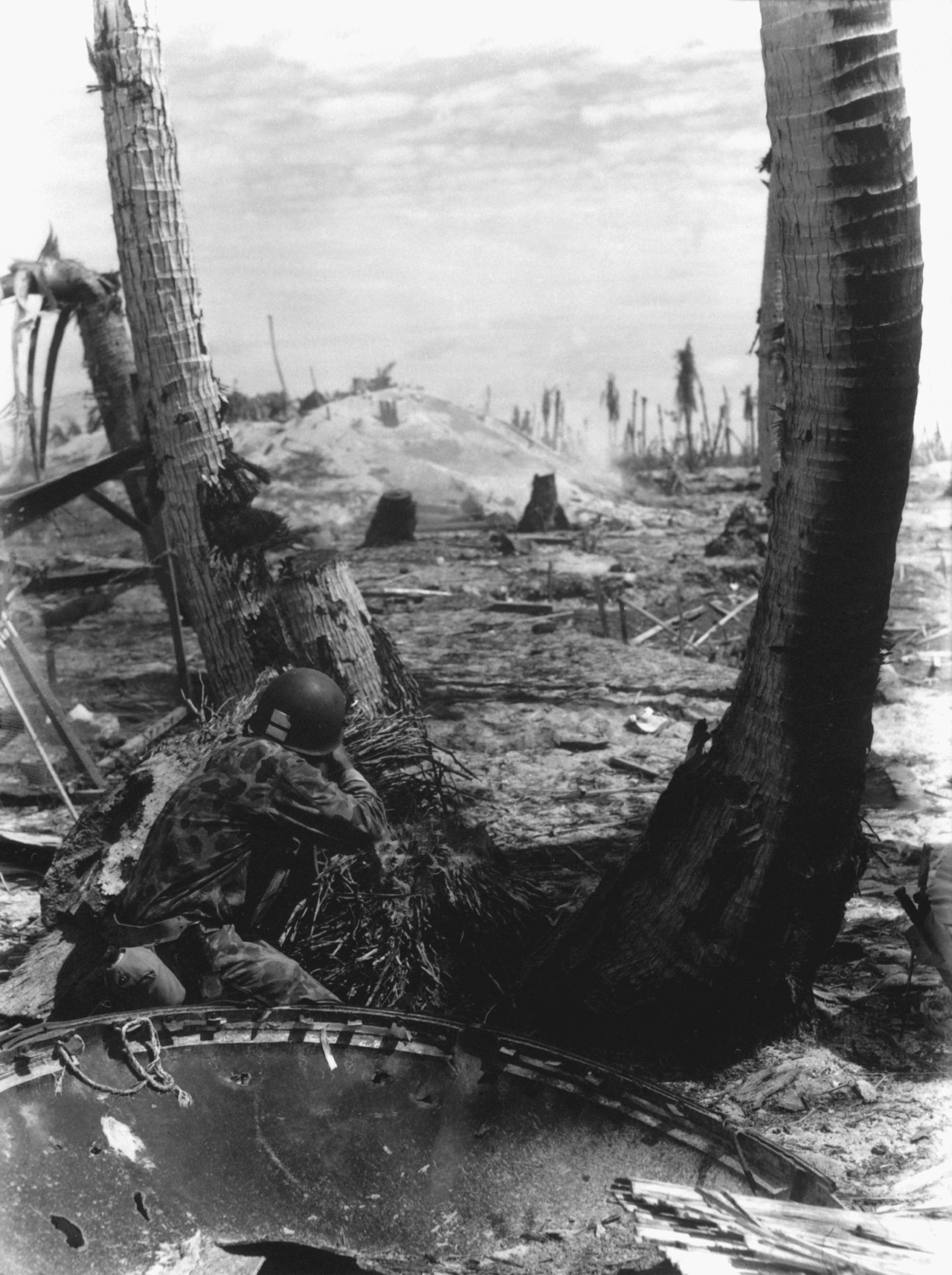
A Marine fires on a Japanese pillbox. November 1943. Image courtesy of US Navy.

Betio Island was three hundred acres, or the size of the Pentagon building and parking lots, and it was the centerpiece of the Gilberts invasion known as Operation Galvanic. The Americans hoped to seize the Gilberts in the Central Pacific as a first step to their continued island hopping toward Japan.

Betio and other islands in the Gilberts had the strategic benefit of airfields that would allow the Americans to reach new strategic points that were closer to Japanese strongholds in the Pacific. 

But it would take 76 hours of intense fighting—called “utmost savagery” by veterans—in order to finally seize the island from the Japanese defenders, many of whom were rikusentai, known by some as “Japanese Marines.”  

During that time, the Marines suffered almost as many killed-in-action casualties—over 1,000—as in the six-month Guadalcanal campaign from late 1942 to early 1943. In fact, the 2nd Marine Division would suffer a thousand casualties a day at Betio, the highest casualty rate sustained by any division in the war.

76 Hours of Battle (November 20-24, 1943)

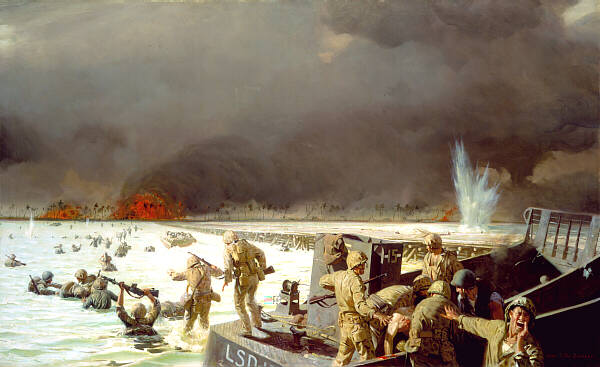
When the 2nd Marine Division of roughly 20,000 men—including the 2nd Marines, the 6th Marines, and the 8th Marines (infantry); the 10th Marines (artillery); and the 18th Marines (the composite engineer regiment)—landed on Betio on November 20, 1943, there was chaos within the first hour.

Although there had been a naval bombardment a couple of hours earlier, the Marines were not as surprised by the incredibly low tide as they were by the fact that so many of the Japanese had managed to survive the bombardment and were blasting away at those landing. 

Boats received heavy fire even before nearing the reef. “This isn’t going to be a cakewalk!” many Marines quickly realized. 

As the landing craft began to drop waves of Marines off, the later waves at first thought that the rows of Marines ahead of them along the beach were waiting for orders to move, but come to find out that they were dead. More soberly, veterans remembered that they couldn’t move without stepping on a body and that a man could lift his hand and get it shot off.

Things were not going as well as everyone thought or certainly wanted, especially in the first 30 hours. As the assault force commander Colonel David M. Shoup noted, “The situation does not look good ashore.” 

In hindsight, many military leaders believe that if the Japanese had decided to counterattack on the first night, there is a good chance that the Americans would have lost the battle

Major General Julian C. Smith, who led the division during the assault on Tarawa, later remarked, “The night of D-Day was the greatest danger to our landing forces . . . this was the crisis of the battle.”

"Tarawa, South Pacific, 1943" painting by Sergeant Tom Lovell, USMC. Imge courtesy of Marine Corps Combat Art Collection.

Fortuitously for the Americans, the commander of the Japanese garrison, Admiral Shibasaki and many of those working with him died on D-Day, leaving the Japanese forces temporarily somewhat chaotic.

But of course, the Marines who had to stay on Betio that first night didn’t know that information. One veteran thought that it was his last night on earth and tried to remember fun times with his wife and son. The darkness was very intimidating with land crabs scuttling around, crashing in the shadows, and wounded men crying for help.

The tide would not turn in the Americans’ favor until the afternoon of the second day. General Julian Smith called the 6th Marines out of reserve and ordered them to land on Betio where some units faced intense hand-to-hand combat. Many American casualties came from rifles, machine guns, and grenades.

On November 24, 1943 when the island was declared secured, it was riddled with bodies as were the nearby reefs. The only way someone could tell the difference between a Marine or a Japanese soldier was by the wrapped leggings that the Japanese wore.

Several smaller units landed on some of the other islands in the Gilberts to make sure that all Japanese forces had been removed, and on Christmas Eve 1943, the Gilbert Islands were officially free of the Japanese.

The Aftermath of Tarawa

Tarawa would never have the renown of larger battles like Iwo Jima or Okinawa, but it taught American military leaders two important concepts: 1) how to best handle an amphibious assault (some aspects of Tarawa went well while others didn’t) and 2) the realization that the Japanese would fight to the death—this was a new kind of enemy. 

It was also one of the first battles where Americans on the homefront got to experience more of the full brutality the military had faced with the documentary made soon after the battle with real footage from the battle, With the Marines at Tarawa.

Not surprisingly, bond sales went up by quite a bit, but at the same time, Marine recruitment went down by 35 percent. Not as many men were interested in signing up for the horrors of Tarawa.

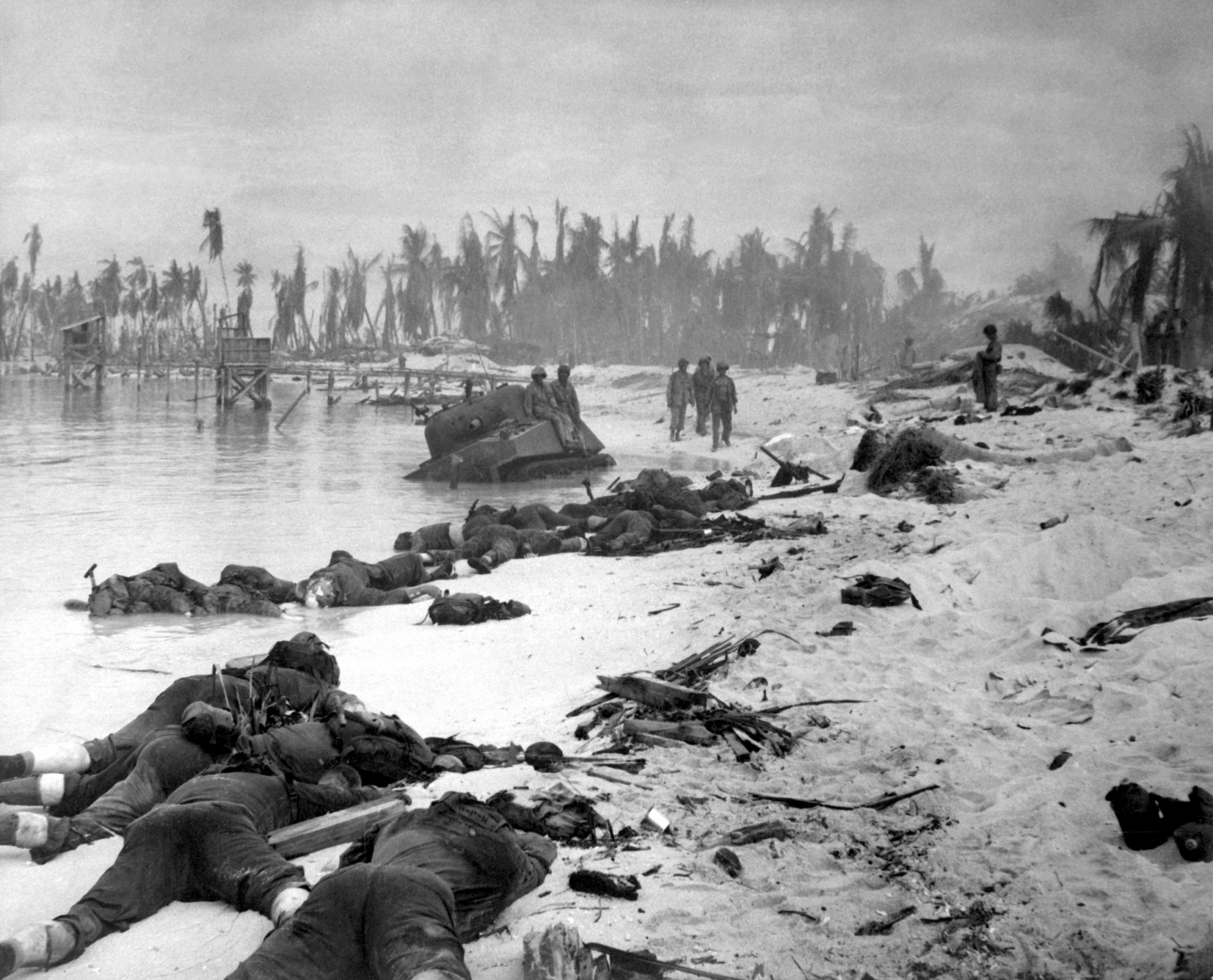
View of the beach of Betio Island, Tarawa Atoll, Gilbert Islands, after the U.S. invasion in November 1943. Image courtesy of U.S. Defense Visual Information Center.

Four men would receive the Medal of Honor, including the assault force commander Colonel David M. Shoup, who was a brand new commander when the battle began. He was the only living recipient of the award.

Shoup himself was on his feet directing the fight for roughly 50 hours, and many believe that without Shoup’s leadership, the Battle of Tarawa would have been a defeat. Shoup would survive the war, be appointed by President Eisenhower as Commandant of the Marine Corps in 1959, and be buried in Arlington National Cemetery after his death in 1983.

The Medals of Tarawa

Colonel Shoup’s Medal of Honor Citation

For conspicuous gallantry and intrepidity at the risk of his own life above and beyond the call of duty as Commanding Officer of all Marine Corps Troops in action against enemy Japanese forces on Betio Island, Tarawa Atoll, Gilbert Islands, from November 20 to 22, 1943. Although severely shocked by an exploding enemy shell soon after landing at the pier, and suffering from a serious, painful leg wound which had become infected, Colonel Shoup fearlessly exposed himself to the terrific, relentless artillery, machine-gun and rifle fire from hostile shore emplacements and, rallying his hesitant troops by his own inspiring herosim, gallantly led them across the fringing reefs to charge the heavily fortified island and reinforce our hard-pressed, thinly held lines. Upon arrival on shore, he assumed command of all landed troops and, working without rest under constant, withering enemy fire during the next two days, conducted smashing attacks against unbeliveable strong and fanatically defended Japanese positions despite innumerable obstacles and heavy casualties. By his brilliant leadership, daring tactics and selfless devotion to duty, Colonel Shoup was largely responsible for the final, decisive defeat of the enemy, and his indomitable fighting spirit reflects great credit upon the United States Naval Service.

In addition, General Julian Smith nominated 319 other men for the Navy Cross, the Distinguished Service MedalSilver Star, and Legion of Number. As Joseph E. Alexander noted in Utmost Savagery, a book well worth reading, “the total number of 2d Marine Division members nominated represented less than 5 percent of those who participated in the fighting, a healthy restraint.”

The savagery of Tarawa would soon be usurped by Iwo Jima where the Japanese had the opportunity to hide out in caves and inflict substantial amounts of damage on the American landing forces. 

Nonetheless, it remains a significant battle in its own right, as up until that point, every veterans of earlier battles in the Pacific and of other wars—including World War I—were amazed by the intense fighting and entrenched defensive positions that they encountered on Betio Island, Tarawa Atoll, in November 1943.

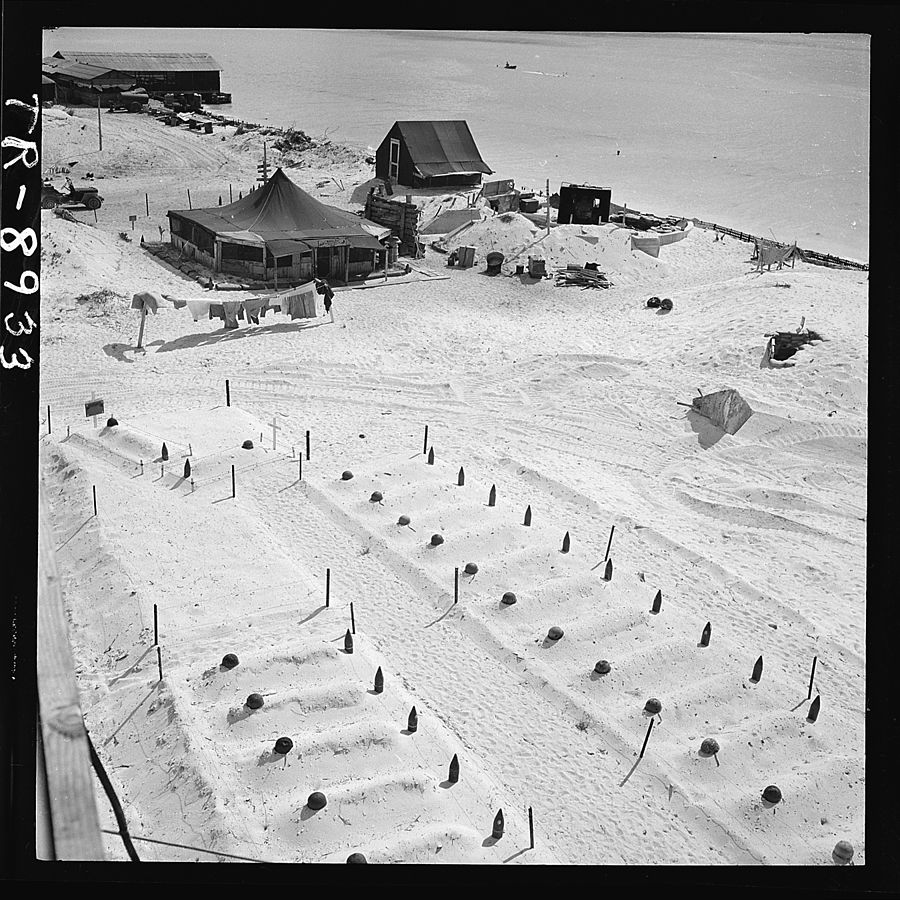
Graves of U.S. Marines who died taking Tarawa, before headstones were prepared. In the background are the first tents put up after occupation of the island. Image courtesy of Department of Defense.

Sources

Guest Contributor: Rachel Basinger is a former history teacher turned freelance writer and editor. She loves studying military history, especially the World Wars, and of course military medals. She has authored three history books for young adults and transcribed interviews of World War II veterans. In her free time, Rachel is a voracious reader and is a runner who completed her first half marathon in May 2019.

The Poetry of The Great War

During the First World War, numerous poems, novels, diaries, letters, and memoirs were written by men and women, frequently observing the effects of the war on soldiers, spaces, and the homefront. This need to record the experiences of those involved in WW1 produced a boom in publication of war literature, for example in Britain, in the late 1920s and early 1930s.

During the First World War, numerous poems, novels, diaries, letters, and memoirs were written by men and women, frequently observing the effects of the war on soldiers, spaces, and the homefront. This need to record the experiences of those involved in WW1 produced a boom in publication of war literature, for example in Britain, in the late 1920s and early 1930s.

WW1 Poets and Poems

Published poets wrote over two thousand poems about and during the war. Among the most popularly anthologized are lyrics by Siegfried Sassoon and Wilfred Owen, as well as poems by Ivor GurneyEdward ThomasCharles SorleyDavid Jones and Isaac Rosenberg. However, only a small fraction of the total poems written during the Great War is still known today, with several poets that were popular with contemporary readers becoming obscure as time past.

We have compiled here some of the poems available through wikipedia and other websites. Below, you can also find a list of published work.

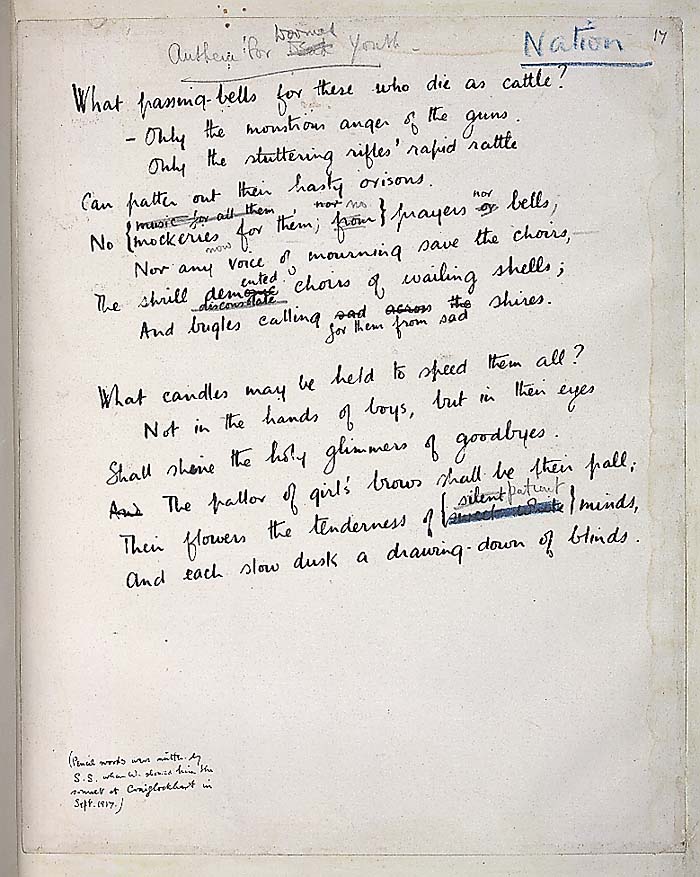
A scan of a final draft of Anthem for Doomed Youth by Wilfred Owen, penned by the author.
A scan of a final draft of Anthem for Doomed Youth by Wilfred Owen, penned by the author. From the book "Wilfred Owen: The Complete Poems and Fragments" (Jon Stallworthy, 1994) from the Oxford Text Archive. Wikimedia Commons.

The Great War - WW1 Poetry

How to Die 

by Siegfried Sassoon

Dark clouds are smouldering into red
While down the craters morning burns.
The dying soldier shifts his head
To watch the glory that returns:
He lifts his fingers toward the skies
Where holy brightness breaks in flame;
Radiance reflected in his eyes,
And on his lips a whispered name.

You’d think, to hear some people talk,
That lads go West with sobs and curses,
And sullen faces white as chalk,
Hankering for wreaths and tombs and hearses.
But they’ve been taught the way to do it
Like Christian soldiers; not with haste
And shuddering groans; but passing through it
With due regard for decent taste.

Kitchener

by George Orwell

NO STONE is set to mark his nation’s loss,
    No stately tomb enshrines his noble breast;
Not e’en the tribute of a wooden cross
    Can mark this hero’s rest.

He needs them not, his name untarnished stands,
    Remindful of the mighty deeds he worked,
Footprints of one, upon time’s changeful sands,
    Who ne’er his duty shirked.

Who follows in his steps no danger shuns,
    Nor stoops to conquer by a shameful deed,
An honest and unselfish race he runs,
    From fear and malice freed.

A Letter from the Front

by Henry Newbolt

WAS out early to-day, spying about
From the top of a haystack—such a lovely morning—
And when I mounted again to canter back
I saw across a field in the broad sunlight
A young Gunner Subaltern, stalking along
With a rook-rifle held at the ready, and—would you believe it?—
A domestic cat, soberly marching beside him.

So I laughed, and felt quite well disposed to the youngster,
And shouted out “the top of the morning” to him,
And wished him “Good sport!”—and then I remembered
My rank, and his, and what I ought to be doing:
And I rode nearer, and added, “I can only suppose
You have not seen the Commander-in-Chief’s order
Forbidding English officers to annoy their Allies
By hunting and shooting.”
⁠⁠But he stood and saluted
And said earnestly, “I beg your pardon, Sir,
I was only going out to shoot a sparrow
To feed my cat with.”
⁠⁠So there was the whole picture,
The lovely early morning, the occasional shell
Screeching and scattering past us, the empty landscape,—
Empty, except for the young Gunner saluting,
And the cat, anxiously watching his every movement.

Thomas of the Light Heart

by Owen Seaman


FACING the guns, he jokes as well
⁠As any judge upon the Bench;
Between the crash of shell and shell
⁠His laughter rings along the trench;
He seems immensely tickled by a
Projectile which he calls a “Black Maria.”

He whistles down the day-long road,
⁠And, when the chilly shadows fall
And heavier hangs the weary load,
⁠Is he down-hearted? Not at all.
‘Tis then he takes a light and airy
View of the tedious route to Tipperary.

His songs are not exactly hymns;
⁠He never learned them in the choir;
And yet they brace his dragging limbs
⁠Although they miss the sacred fire;
Although his choice and cherished gems
Do not include “The Watch upon the Thames.”

He takes to fighting as a game;
⁠He does no talking, through his hat,
Of holy missions; all the same
⁠He has his faith—be sure of that;
He’ll not disgrace his sporting breed,
Nor play what isn’t cricket. There’s his creed.

World War I Poetry Available Online

Wikipedia has an extensive list of poems written about World War I by servicemembers or civilians from various countries. At the moment of writing this article, 234 poems had been added to the list.