
Why Colonel Ruby Bradley Was Known as the Angel in Fatigues

Born near Spencer, West Virginia in 1907, Ruby Bradley would later become one of the most decorated women in American military history.
Born near SpencerWest Virginia on December 19, 1907, Ruby Bradley would later become one of the most decorated women in American military history. Bradley’s first career, though, wasn’t as an Army nurse. She was a teacher!
Who Was Ruby Bradley?

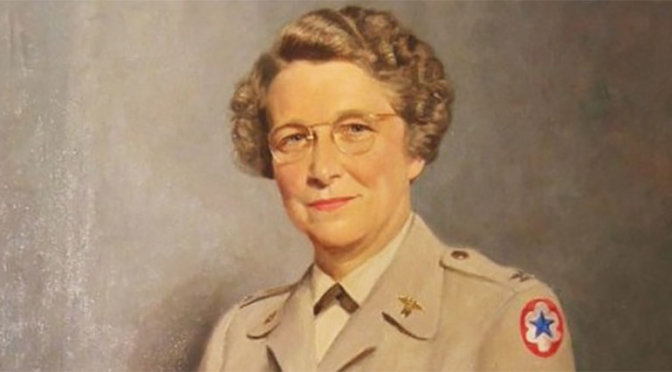
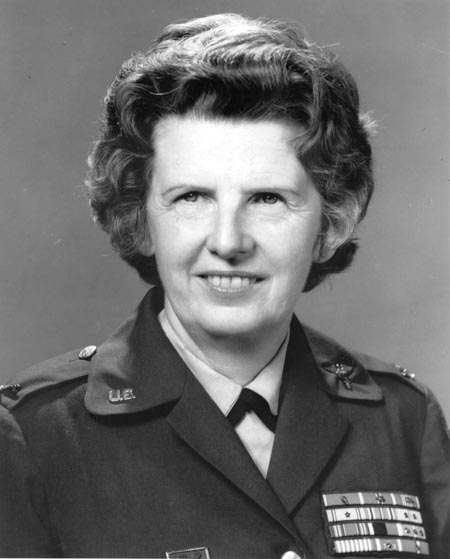
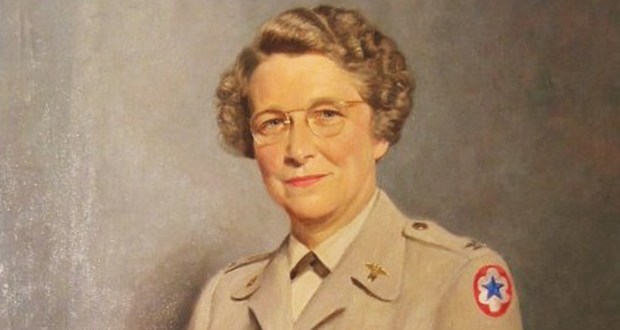
Ruby G. Bradley, Colonel, U.S. Army Nurse Corps Director, Nursing activities, Brooke Army Medical Center, Fort Sam Houston, Texas
Ruby G. Bradley, Colonel, U.S. Army Nurse Corps Director, Nursing activities, Brooke Army Medical Center, Fort Sam Houston, Texas. Source: Wikipedia.

In 1926, Bradley graduated from Glenville State Teachers College and taught four years in one-room schoolhouses in Roane County. In 1930, she entered the Philadelphia General Hospital School of Nursing, graduating as a surgical nurse in 1933. In 1934, Bradley entered the Army Nurse Corps as a surgical nurse and served as Walter Reed General Hospital until she was assigned to Station Hospital at Fort Mills, Philippine Islands in February 1940.

A year later, she transferred to Camp John Hay on the island of Luzon in the Philippines where she was on December 7, 1941 when the Japanese attacked Pearl Harbor. Hours after Pearl Harbor, the Japanese bombed the American defenses in the Philippines where Bradley was stationed as a thirty-four-year old Army nurse.

Three weeks later, Bradley was captured and would spend the rest of the war as a POW in three different prison camps. For the duration of World War II, 2nd Lieutenant Bradley would care for the wounded and sick around her. She had been at Camp John Hay for almost one year until the Japanese moved Bradley to Camp Holmes in April 1942. About a year and a half later, Bradley and 65 other nurses took an optional transfer to Manila to the Santo Tomas Internment Camp on September 5, 1943.

Even though the conditions at the Santo Tomas Internment Camp were awful and deteriorated as the war continued, Bradley and her fellow nurses continued to care for the sick and assist the starving children. It was here that Bradley and several other nurses earned the title of “Angels in Fatigues,” as she would take some of the food she had been given for her own nourishment and instead would feed it to hungry children. She was even able to use the excess space in her uniform that she gained from losing weight to smuggle surgical material into the POW camp.

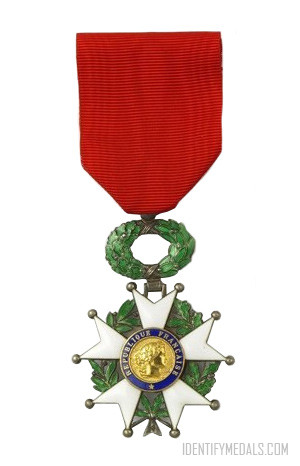
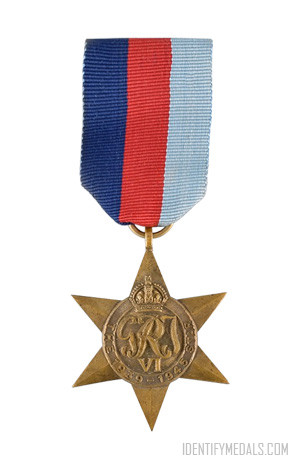
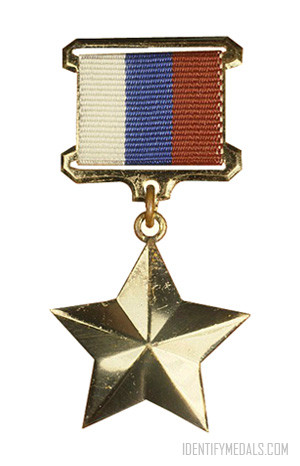
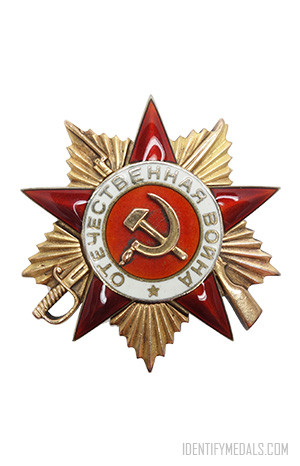
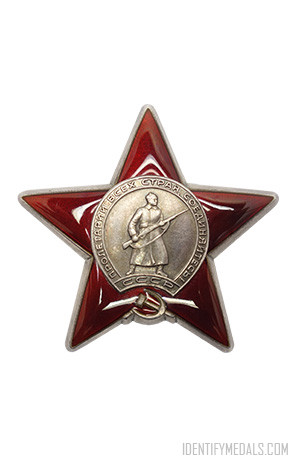
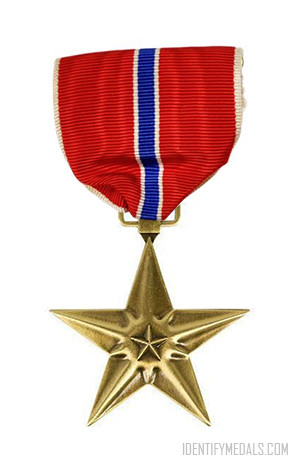
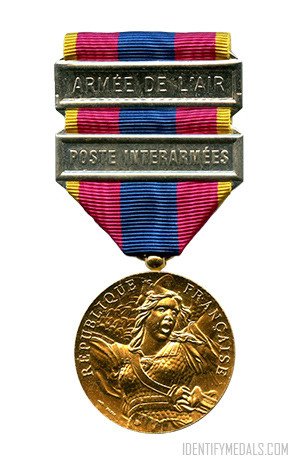
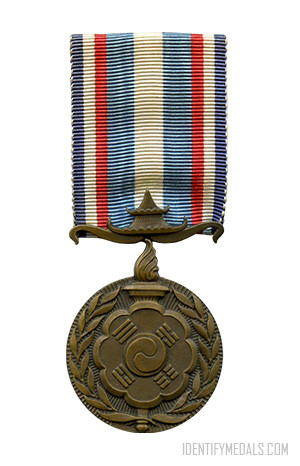
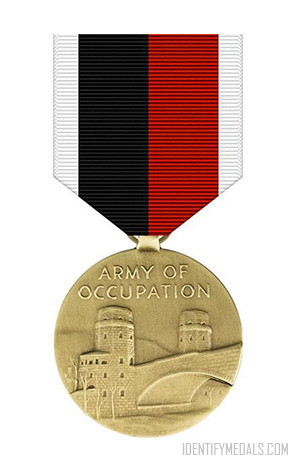
Some of Ruby Bradley’s medals:

The POWs normally received only half a cup of rice in the morning and half a cup of rice in the evening. Bradley saved part of her limited rations when the children would start crying at the end of the day. She also became an excellent thief, putting food in her pockets for the children.

In addition, she would help with 230 surgeries and deliver 13 babies. As Bradley remembered, the Japanese were amazed at the work that Bradley and her fellow nurses could do without any instruments. For example, Bradley used a tea strainer and gauze to anesthetize a pregnant woman who had gone into labor.

Ruby Bradley Is Liberated

On February 3, 1945 after three years of captivity, U.S. troops stormed the gates of Santo Tomas Internment Camp and liberated Bradley and her fellow prisoners. She weighed only 86 pounds when she left the Japanese camp.

Bradley returned home to West Virginia to recover after her years in captivity, but returned to the battlefield during the Korean War five years later. She served as Chief Nurse of the 171st Evacuation Hospital during the Korean War and again illustrated her deep devotion and care for those who were wounded and sick, putting her own life at risk. Bradley was later named Chief Nurse for the Eighth Army in 1951, supervising over 500 Army nurses throughout Korea.

In November 1950, during the Chinese counteroffensive, she refused to leave until she had loaded the wounded onto a plane even though she was surrounded by 100,000 Chinese soldiers. She was the last person on the plane, as she watched the ambulance explode behind her. As Bradley once stated in a TV interview, “You got to get out in a hurry when you have somebody behind you with a gun.”

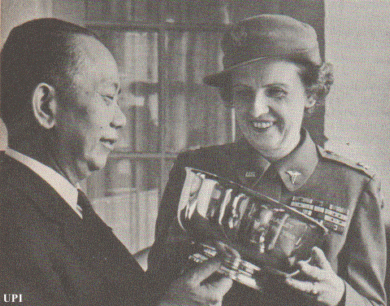
Philippine General Carlos Romulo presents Lt. Col. Ruby Bradley with the U.S. Lady of the Year Award
Philippine General Carlos Romulo presents Lt. Col. Ruby Bradley with the U.S. Lady of the Year Award. Source: The Robinson Library.
Colonel Ruby F. Bryant 9th Chief, Army Nurse Corps.
Colonel Ruby F. Bryant 9th Chief. Source: Army Nurse Corps.

The Legacy of Ruby Bradley

Bradley became the first woman to receive a national or international guard salute when she received a full-dress honor guard ceremony when she left Korea in June 1953. She would also become the third woman in Army history to be promoted to the rank of colonel on March 4, 1958 at Fort McPhearson, Gerogia. 

Bradley retired from the Army in 1963 after three decades of service, but continued in the field of nursing for 17 years, working as a supervisor in a private nursing facility in Roane County, West Virginia.

In later years, Bradley would receive more acknowledgment for her work during World War II and the Korean War with her hometown of Spencer, WV giving a parade in her honor on “Ruby Bradley Day” in September 1991 and Tom Brokaw presenting a story on NBC Nightly News on February 23, 2000 about the forgotten heroes of the American military, referencing Colonel Bradley and her work.

Bradley died in Hazard, Kentucky on May 28, 2002, but was buried with full military honors in Arlington National Cemetery on July 2, 2002. In 2013, Nancy Polette, author of countless educational books and materials for children, wrote a book about Bradley entitled Angel in Fatigues.

Colonel Bradley received 34 medals and citations of bravery during her thirty years of service, including two Legion of Merit medals, two Bronze stars, two Presidential Emblems, the World War II Victory Medal, and the U.N. Service Medal. She also received the Red Cross’s highest international honor—the Florence Nightingale Medal.

Although Bradley was one of—if not the—most decorated woman in American military history, she never thought too highly of herself. When asked about her time in the service or about the fact that she was one of America’s most decorated military women, Bradley normally responded that it was just all in a day’s work. As many other medal recipients have said, Bradley wanted to be remembered as just an Army nurse.

Sources

Guest Contributor: Rachel Basinger is a former history teacher turned freelance writer and editor. She loves studying military history, especially the World Wars, and of course military medals. She has authored three history books for young adults and transcribed interviews of World War II veterans. In her free time, Rachel is a voracious reader and is a runner who completed her first half marathon in May 2019.

Iwo Jima: The Battle With the Greatest Number of Medals of Honor

Did you know that of the 82 Marines that were Medal of Honor recipients during World War II, over one-fourth, or twenty-two, of those awards were given for actions during the Battle on Iwo Jima? 

Of the 27 Medals of Honor awarded at Iwo Jima, almost half, or thirteen, of the awards were posthumous. In addition, there were over 200 Navy Cross medals awarded, a decoration second only to the Medal of Honor, and many Navy Cross citations could have warranted a Medal of Honor.

The Medals of Iwo Jima

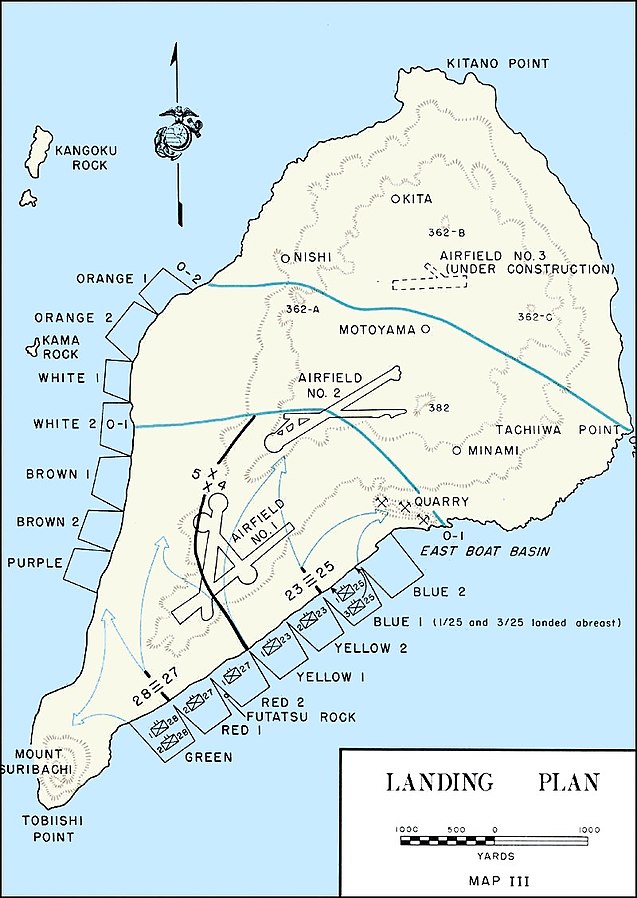
Iwo Jima - Landing Plan. Source: ibiblio.org.

22 Marines and 5 sailors would receive Medals of Honor for their actions at Iwo Jima during the campaign that lasted slightly over a month and featured three Marine divisions minus one regiment. In fact, Iwo Jima is the most highly decorated single engagement in United States history.

By contrast, the second largest campaign for Medals of Honor award—Okinawa—was eighty-one days long, involved four Army and two Marine divisions, and 24 Medals of Honor were awarded to soldiers, sailors, and Marines.

Admiral Chester W. Nimitz’s phrase about Iwo Jima seems particularly apt:

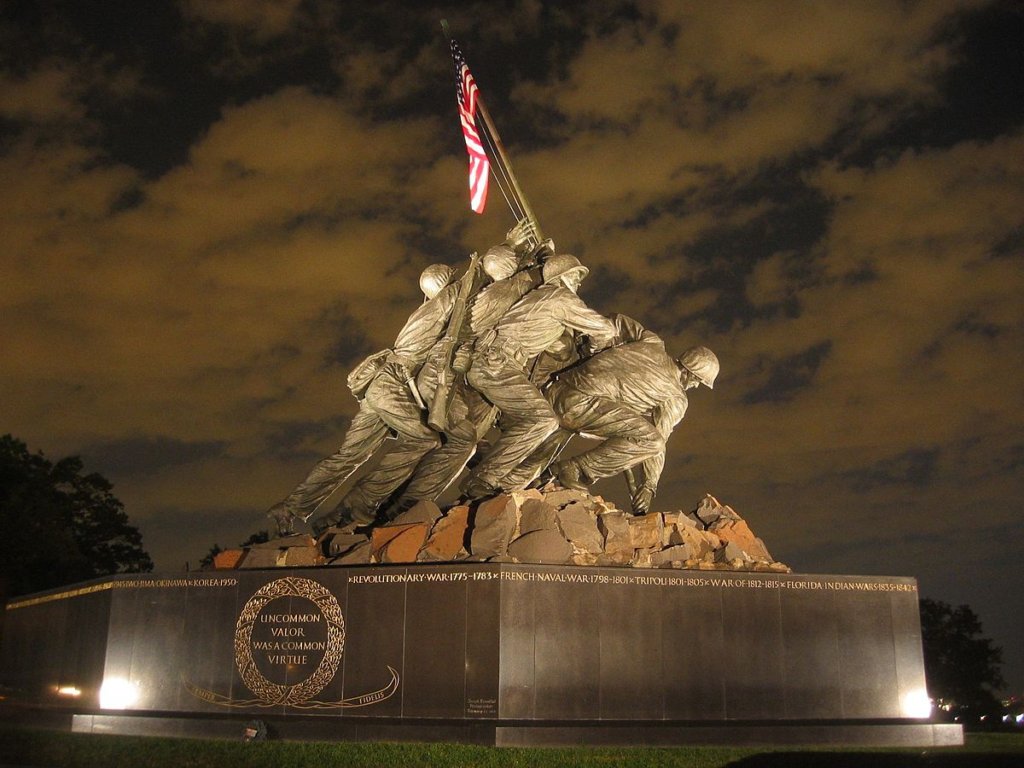
Among the men who fought on Iwo Island, uncommon valor was a common virtue.

Time after time, veterans who recalled fighting on Iwo Jima and who had participated in other battles like at Tarawa or Guadalcanal said that nothing compared to Iwo Jima.

Peter Zurlinden, a veteran Marine combat correspondent, noted that it was different: “At Tarawa, Saipan and Tinian, I saw Marines killed and wounded in a shocking manner, but I saw nothing like the ghastliness that hung over the Iwo beachhead. Nothing any of us had ever known could compare with the utter anguish, frustration and constant inner battle to maintain some semblance of sanity.

About the Battle of Iwo Jima

The Battle of Iwo Jima, which lasted from February 19 to March 26, 1945 featured around 70,000 Marines and somewhere between 18,000-20,000 Japanese on a volcanic island 660 miles south of Tokyo that was 2 miles wide by 4 miles long. It is estimated that there were at least 17,000 Japanese casualties, including dead and missing, plus 216 taken prisoner. The Marines suffered 6,800 deaths alone and a total of over 26,000 casualties. In the first day alone, the Marines would experience 2,400 casualties, a number comparable with American losses at Omaha Beach on D-Day at Normandy in June 1944.

Iwo Jima was the largest, yet costliest, Marine amphibious operation during World War II with a casualty rate of 35of Marines employed. The bloodiest battle in the history of the Marine Corps, Iwo Jima was the only major Pacific battle in which the Marines suffered greater casualties than they inflicted. Due to the lethality of the campaign, junior Marines had to assume leadership roles in order to continue in the attack like Private first classes leading platoons because all the officers and non-commissioned officers (NCOs) had been killed.

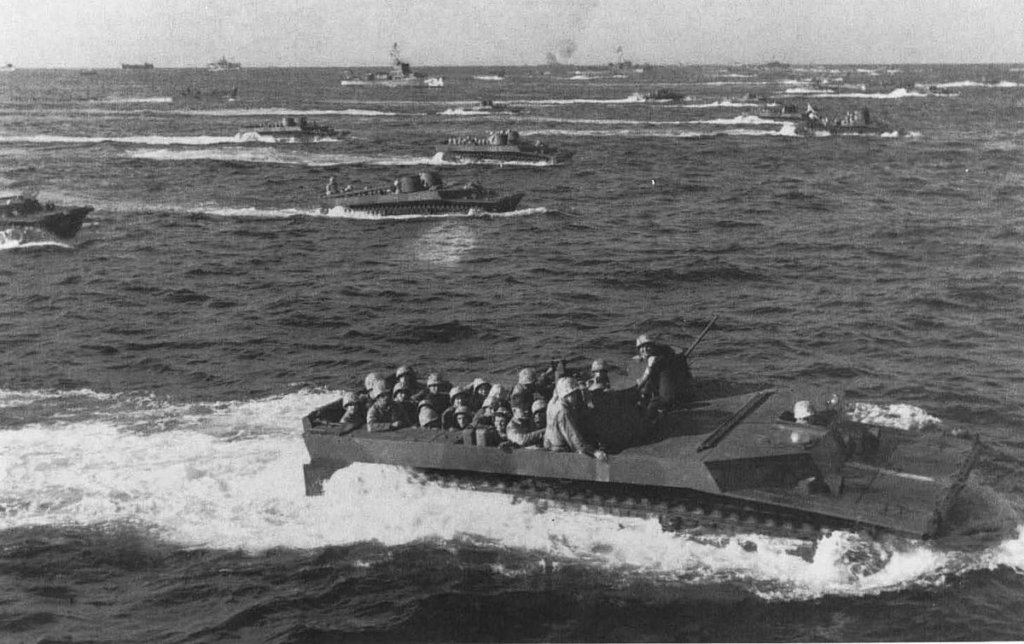
Tracked landing vehicles (LVTs), jam-packed with 4th Marine Division troops, approach the Line of Departure at H-hour on D-day.
Tracked landing vehicles (LVTs), jam-packed with 4th Marine Division troops, approach the Line of Departure at H-hour on D-day. Source: Wikimedia.
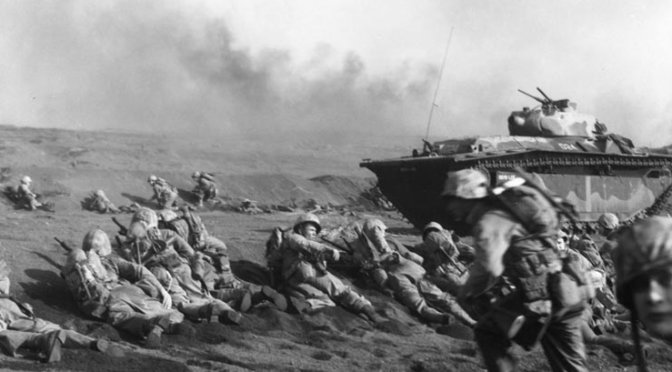
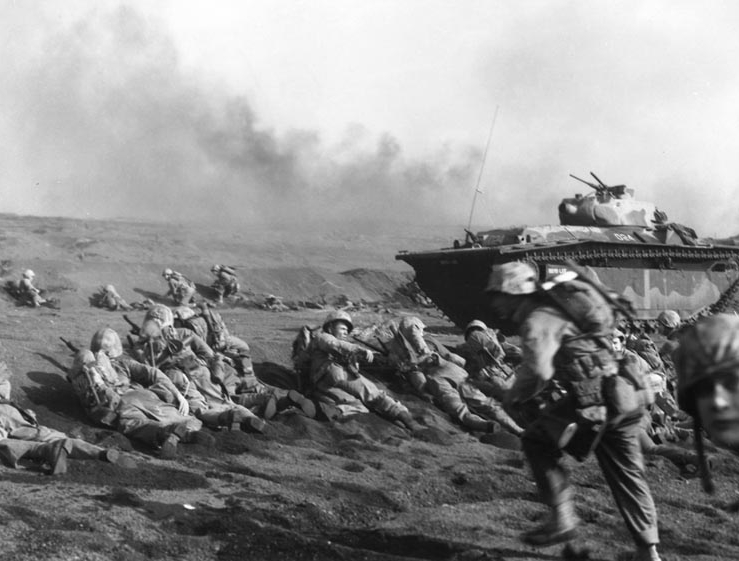
U.S. Marines of the Second Battalion, Seventh Regiment, wait to move inland on Iwo Jima, soon after going ashore on 19 February 1945. An LVT(A)-5 amphibious tractor is in the background. Source: Wikipedia.

The Strategic Importance of Iwo Jima

Although the campaign was extremely deadly, it was essential for the United States. It gave the Americans an advanced base, which would boost the strategic bombing campaign against mainland Japan, and it would assist in the eventual invasion of Japan. After the battle, Iwo Jima became the emergency landing site for over 2,200 B-29 bombers.

The Japanese had the upper hand as the defenders. Iwo Jima had few beaches and was replete with cliffs and caves. They had buried underground and riddled the landscape with pillboxes that blended into the ground. Although the Army Air Forces B-24 bombers had raided the island for 10 straight days and the Navy ships and carrier ships took over three days before the landing, the bombardment had little impact since most of the Japanese were underground.

The distinctive flag-raising atop Mount Suribachi took place on February 23, 1945, five days after the battle began. After the first flag raising of the day, Associated Press photographer Joe Rosenthal captured the famous moment of six Marines raising the flag, an image now ingrained in the mind of every American.

The U.S. Marine Corps War Memorial in Arlington, Virginia. Source: Catie Drew, Wikipedia.

These men were Michael StrankHarlon BlockFranklin SousleyIra HayesRene Gagnon, and Harold Schultz. Until 2016, it was believed that the sixth man was John Bradley, a Navy hospital corpsman, who took place in the first flag raising that day, instead of Schultz who had died in 1995. Strank, Block, and Sousley would die on Iwo Jima.

The Medal of Honor and Iwo Jima

Twenty-seven Medals of Honor were awarded for action on Iwo Jima, which is more than any other battle in U.S. history. This is fitting as the Medal of Honor is our country’s highest military award for bravery, and Iwo Jima required a bravery that many other battles did not.

Of the twenty-seven Medals of Honor awarded, there were some that were particularly unique. Captain Robert H. Dunlap received the Medal of Honor at Iwo Jima, and his cousin, Jim Stockdale, admired him as a boy and ended up becoming a Navy pilot, receiving a Medal of Honor for his heroism as a POW during the Vietnam War. They are the only cousin-pair to receive Medals of Honor.

Private First Class (PFC) Donald J. Ruhl was the only person from the state of Montana to receive a Medal of Honor during World War II. Joe McCarthy received a Medal of Honor, Silver Star, and three Purple Hearts and became the only active firefighter to receive the Medal of Honor during World War II. For his actions on February 17, 1945 before the battle began, Lieutenant (jg) Rufus G. Herring received the only Medal of Honor awarded to an LCI sailor during World War II.

Sergeant William G. Harrell lost his two hands during the Iwo Jima campaign protecting others and had two steel hooks for hands. But ever the prankster, he had goosed the hero in front of him with his hook moments before the Medal of Honor recipients walked into the ceremony to receive their awards from President Harry S. Truman.

Finally, PFC Jack Lucas was the youngest Medal of Honor recipient during World War II, receiving his decoration at the age of 17.

One Medal of Honor recipient from Iwo Jima is still alive: Hershel “Woody” Williams. He is one of the four remaining Medal of Honor recipients from World War II and the only Marine still alive. He received the Medal of Honor for his actions with a flamethrower in destroying a variety of enemy pillboxes.

Woody Williams like many others who survived feels grateful and that his medal does not belong to him. Instead, as he says, “It belongs to those Marines who did not get to come home.”

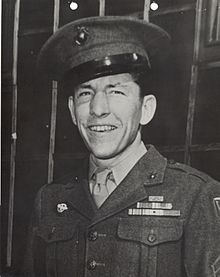
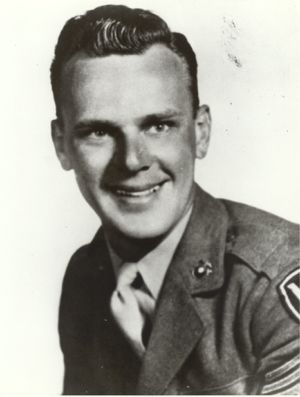
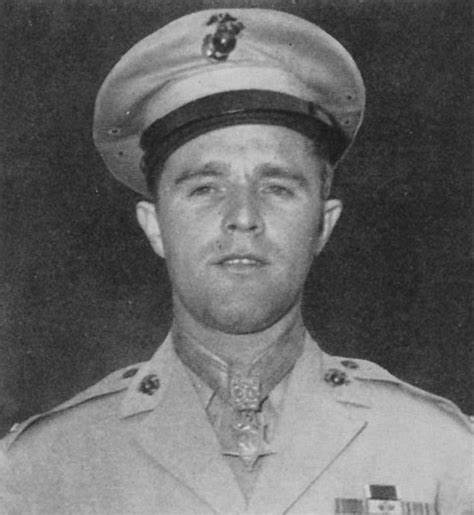
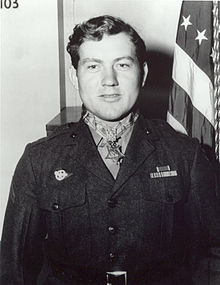
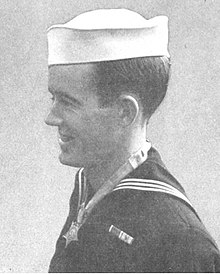
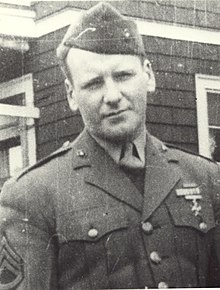
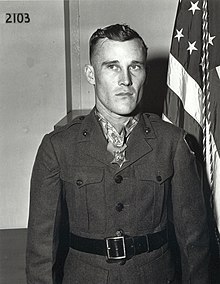
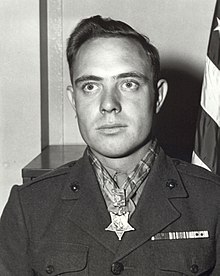
Medal of Honor Recipients at Iwo Jima

Sources


Guest Contributor: Rachel Basinger is a former history teacher turned freelance writer and editor. She loves studying military history, especially the World Wars, and of course military medals. She has authored three history books for young adults and transcribed interviews of World War II veterans. In her free time, Rachel is a voracious reader and is a runner who completed her first half marathon in May 2019.

Joseph Joffre: The Man Who Resisted the Germans and Held Paris

A disaster loomed over Europe. The Archduke Franz-Ferdinand was murdered, and the Russians had guaranteed the independence of Serbia. Austria-Hungary’s ultimatum to Serbia was rejected, and Germany planned to stand by its ally, Austria-Hungary.

Since France was a part of the Entente, a military alliance with the Russian Empire, the German ambassador in Paris asked for an answer about the French posture. Rene Viviani, president of the French Republic, answered on August 1st that “France will draw on its interests.”

On August 3rd, the German Empire subsequently invaded Luxemburg as part of the Schlieffen Plan and declared war on France. France and its high command was ready. The “Plan XVII,” drafted by Joseph Joffre, was already fully operational.

Joseph Joffre's Early Years

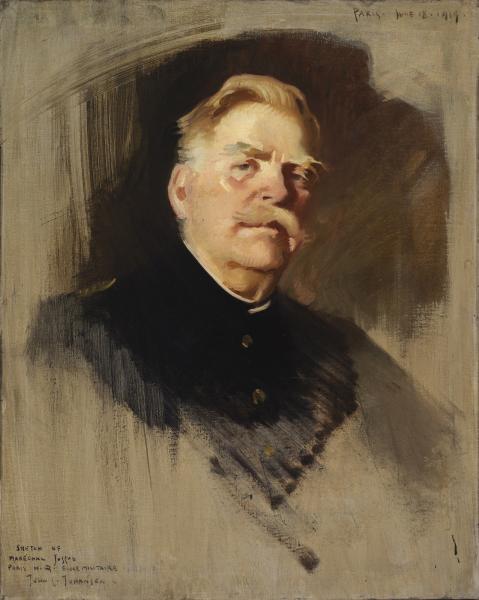
Born in 1852 in the Pyrénées range south of France, Joseph Joffre was a career officer. His career started in late 1869, and he was already second lieutenant when France declared war on Prussia in 1870 and ended up participating in different artillery battalions. He was highly disappointed by the disastrous defense of the French army during the war and was hostile towards the “Commune de Paris,” a communist rebellion during 1871.

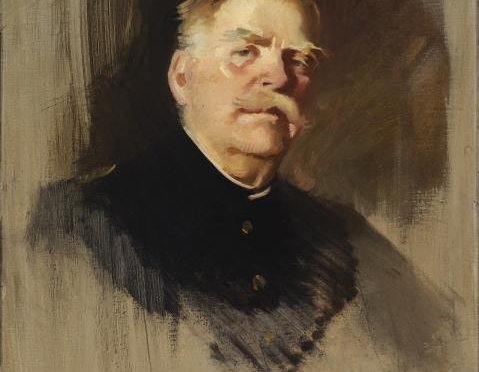
Oil painting of Marechal Joseph Joffre by John C. Johansen. Source: Smithsonian American Art Museum.

Back to school at the end of the Franco-Prussian War, Joffre went to different French colonies all around the globe: Madagascar, French Indochina, French Sudan (today’s Mali). Additionally, he studied and progressed through the ranks, finally coming back and settling down in Paris where he got his final position, the highest one: “Généralissime” of the French Army. At 59 years old, he was one of the youngest generals in the Army to obtain this rank and during the few months before hell was unleashed during World War II, he spent most of his time reorganizing the French Army and designing the “Plan XVII”.

This plan was simple and was one of the major reasons why France did not capitulate in a matter of days during the terrible month of August 1914. In a very short time, the French Army was able to mobilize and transport thousands of men in the direction of the German frontier. However, what happened during the first days of the war was unexpected, and the breaking point was nearly reached.

August 1914. France was on the edge of the cliff.

During the first few days of the war, no one would predict that the French army could stand against the terrible attack and the implementation of the Schlieffen Plan.

Defeated on the majority of the front, the French infantry despite their courage and determination could not hold against the enemy cannons. Until the end of August, the French Army was in full retreat on the entire front, excepting Alsace-Lorraine. The “Plan XVII” drafted by Joffre had been a failure even though some good things resulted. The French had advanced in Alsace-Lorraine, but the German Army opened a major breach west of Lorraine in the Ardennes and Belgium. The highest success of the “Plan XVII” had been the fast mobilization of the French army.

The cold-blood of Joseph Joffre surely prevented an even greater disaster, and he is now famous saying: “Surtout, pas d’affolement!”, translated as “Above all, do not panic!

But the German Headquarters made some fatal mistakes. The first one was that Joffre decided to counter-attack every time he could against the Germans. Fixing divisions was crucial for the French as they could reorganize their army all along the Marne river.

The Germans were also very stubborn about their beloved Schlieffen Plan which had been proven to have major flaws. The first and perhaps the most important one was that the Plan needed to cut through Belgium, which dragged another country into war when the Belgians refused to let through the German troops. This subsequently brought the United Kingdom into war as they had guaranteed Belgium’s independence.

The second major mistake was that the Germans wanted to destroy Belgium and their forts by any means. Fixing more than 150,000 men and most of their artillery in an attempt to destroy the Forts of Liège, Namur, and Anvers, the Germans experienced a crucial time and manpower loss. Instead of directing their force against France and destroying the French armies, the Germans lost time which they would never get back again and would finally cost them Paris.

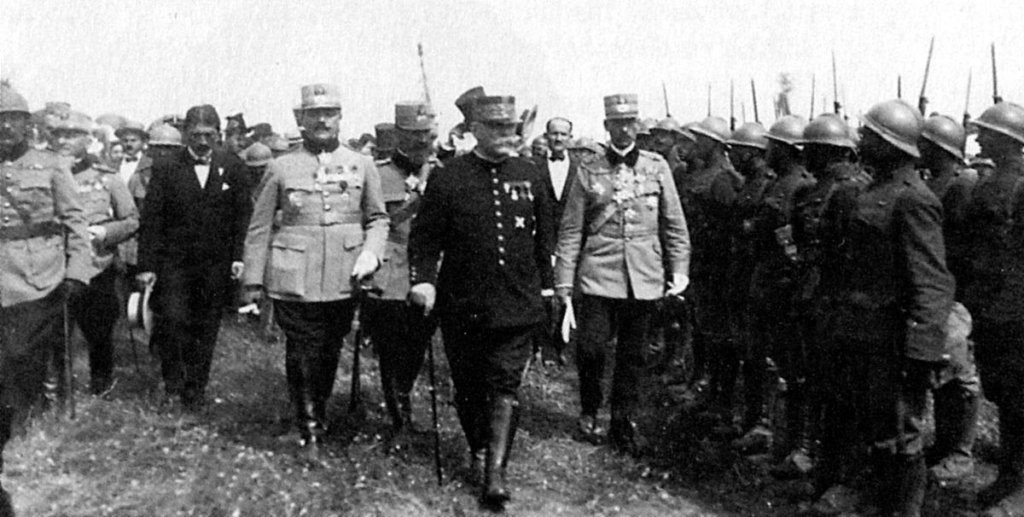
Marshal Joffre inspecting Romanian troops during WWI. Source: Wikipedia.
Marshal Joffre inspecting Romanian troops during WWI. Source: Serviciul Fotografic şi Cinematografic al Armatei Române.

“The Marne Miracle”

As stated before, Joffre declared a Full Retreat, and all the units capable of organizing the defense were sent off behind the Marne River, one of the last major rivers before Paris. Some 70 kilometers away from the front, British General John French was already thinking about evacuating the British Expeditionary Force.

General Kitchener convinced General French to listen to Joffre. During the retreat, August 29 would become a significant day and permit the success of the Marne Battle. During this crucial day, General Lanrezac held an important German attack at Guise, which fixed German troops and cost them time. During this battle, Joffre found time to reorganize the army and refine his strategy to block the Germans.

During this time, Joffre carefully analyzed how the German Army was organized to try and find something interesting. Strategy is all about opportunities, and, since the beginning of the War, nothing was interesting enough for France. Joffre spotted gaps between the 9th and the 4th German Army, and came up with the main objectives of destabilizing the frontline and completing encirclement maneuvers around the enemies. A recon plane spotted that the German Army was making a move in direction of Meaux, which indicated the moment when the French and British should attack.

After several hours of hesitation, Gallieni and Joffre decided that the attack should be completed as soon as possible. And in the early morning of the 6th of September, the decisive Battle of the Marne started. Possibly the most important battle of WWI, this battle was of strategic importance. The French and the British attacked and destroyed multiple German divisions, pushing them 100 kilometers back in a matter of days! “The Miracle of the Marne” happened and saved France from collapsing, thanks to the sacrifice, the courage, and the determination of its infantry.

Even if the tactics and the strategies were already long obsolete, it was enough for the Germans to be stopped and drove back from Paris’s region.

Following the Marne Battle, the Aisne Battle (another river in northern France) began, but no movement from both sides were decisive enough, the Germans finally settled down behind a river and the French were exhausted by this enormous effort.

This battle proved that the Schlieffen Plan was indeed a failure, and the belligerents could not go on with a war movement which was very costly for both sides. Thus began Trench Warfare.

In this “Miracle,” Joffre’s cold blood prevented major disasters and his ability to convince General French to withdraw his troops contributed to this strategic victory. His mind was a key-factor in the final victory of France in WWI.

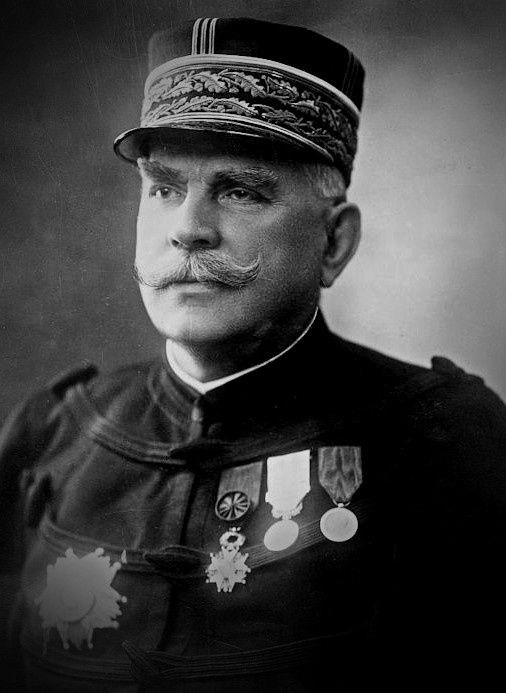
Photograph of French Commander-In-Chief, Marshal Joseph Joffre
Photograph of French Commander-In-Chief, Marshal Joseph Joffre. Source: Wikipedia.
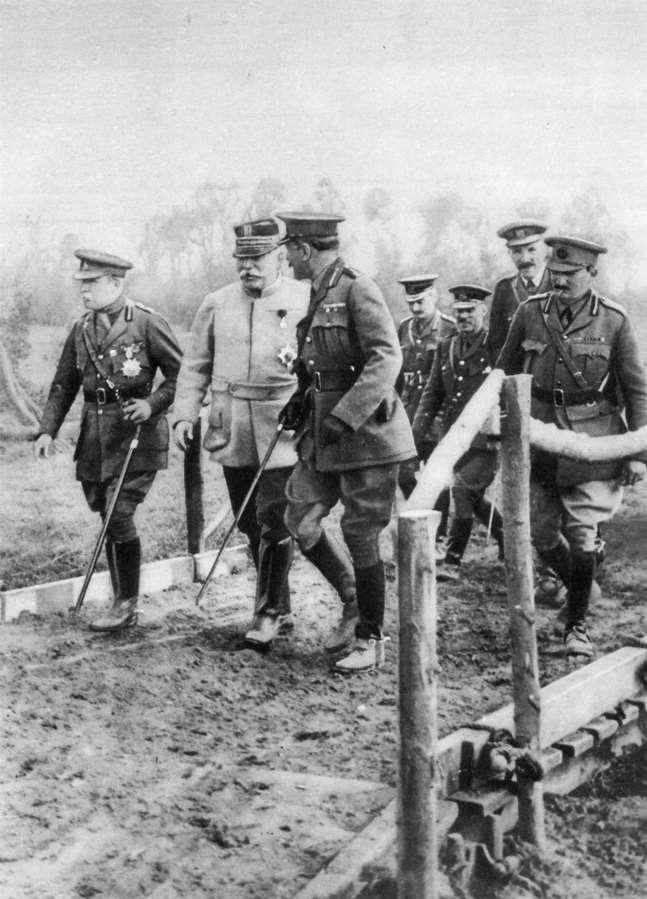
Generals French, Joffre and Haig at the Front (right to left order), 1915. Source: Wikipedia.

Bloodbath after Bloodbath…

At the end of the Aisne Battle, the infamous Trench Warfare started. As the belligerents started to dig themselves deeper and deeper, offensives from both sides looked disastrous. So began enormous casualties for insignificant victories, and the horrors of the Trench Warfare developed.

The “Chemin des Dames,” the Flanders Battle, the Champagne BattlesYpres, all of these battles were disasters for multiple reasons. First, the French Army always lacked ammunition and firepower to break the lines. The bravery of the Infantry shined on the battlefield but no major breakouts could be achieved from October 1914 until the end of 1916, when Joffre was sacked. Second was the appearance of a new weapon: lethal gas. It was not the best way to attack since the attacking side could also suffer from the effect of the gas, but when used as a defensive means, it was very reliable since one army could absolutely choke the whole no-man’s land with it.

The last major battle directed by Joffre was the Somme Battle. As the Verdun Battle had already been raging on for several months during 1916, the Somme was an ideal objective for Joffre to break the enemy frontline but dissensions in the Allies Headquarters sabotaged the effort. Like the previous battles, the Somme ended in a useless bloodbath and was very costly for France, the United Kingdom, and Germany. The Status Quo stood.

Joffre proved several times he was a real general and probably saved France in September 1914, but within several years, his tactics were outdated, and it was time for change. Robert Nivelle became the new commander of the Allied Armies in France on the 26th of December 1916. Joffre was out.

The same day, Joseph Joffre was named Marshal of France.

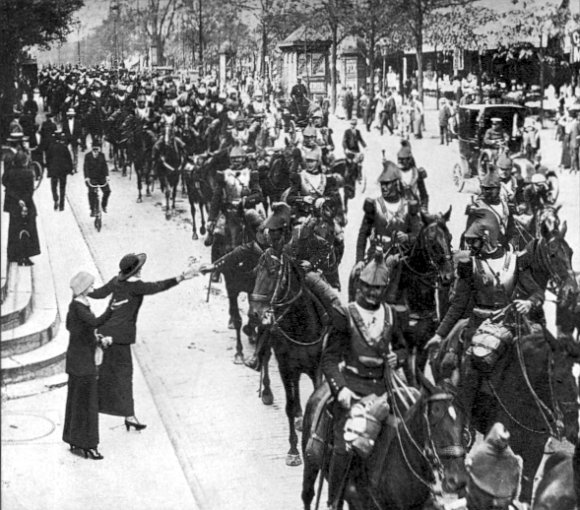
French Calvary going to front, Paris 2 August 1914. Source: Wikipedia.
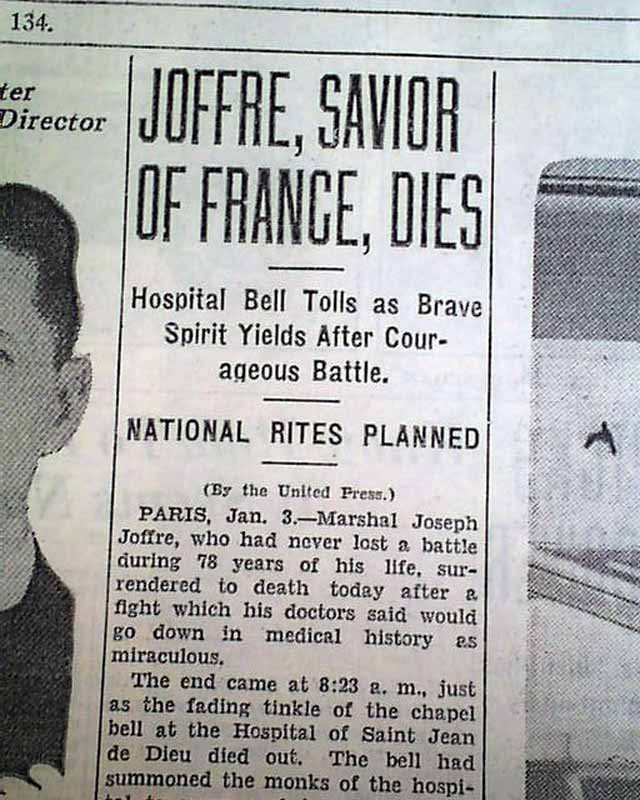
Marshal Joseph Joffre dies. THE DETROIT NEWS, January 3, 1931.

His legacy

Seen as a savior by some and as a butcher by others, everyone had his opinion about Joseph Joffre. It is possible to discuss the horrific battles that took place under his command but despite having significantly fewer troops and firepower than German General Von Moltke, Joffre did what he was tasked for: resist and hold.

Even though his Plan XVII was ultimately a failure and France nearly collapsed, his strategy to push the enemies of the French Republic back were a success, and it is important to remember the sacrifices and bravery of the men that died under his orders.

After all, we can see Joseph Joffre as a true savior because Paris did not fall to the hand of the German Imperial Army. As in 1871, it could have caused major troubles to the French war effort. Revolution, revolts, mutinies? What could have happened if the cold blood of Joffre did not prevent the Germans from entering Paris as they did 40 years before?

In the end, France won the Great War with enormous casualties, and every effort from the entire French population was vital for the war. Joffre had been their leader, the leader of a nation every step of the way.

Guest Contributor: Kjetil Vion is a writer and a history enthusiast. A passionate of France and modern military history, he has a special interest into the Prussian state, specially since the Sadowa battle against Austria. Always wanting to learn more, he now looks to spread his knowledge in history.

Odette Sansom: The Most Decorated Woman of World War II

The most decorated woman of World War II was a spy. Her name was Odette Sansom, a woman born in France that moved to Britain. This is her story.
Did you know that the most decorated woman of World War II was a spy? That’s right. Her name was Odette Sansom, a woman who was originally born in France and later moved to Britain, married an Englishman, and had three girls. 

Odette would survive several years in prison after being captured by the Germans before the war ended. She was a determined, audacious woman whose adventurous and loyal spirit made her one of Britain’s best spies. Odette, better known by her code name of Lise, was also World War II’s most highly decorated spy.

Who Was Odette Sansom?

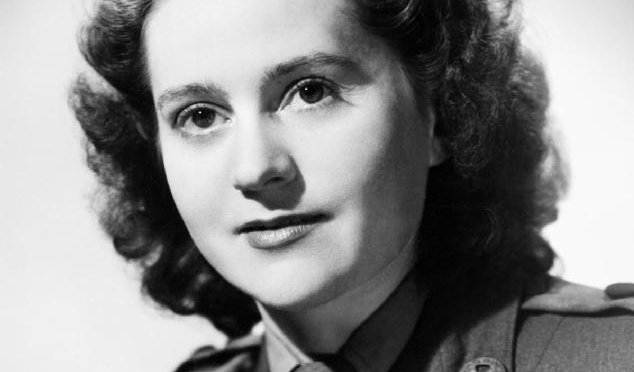
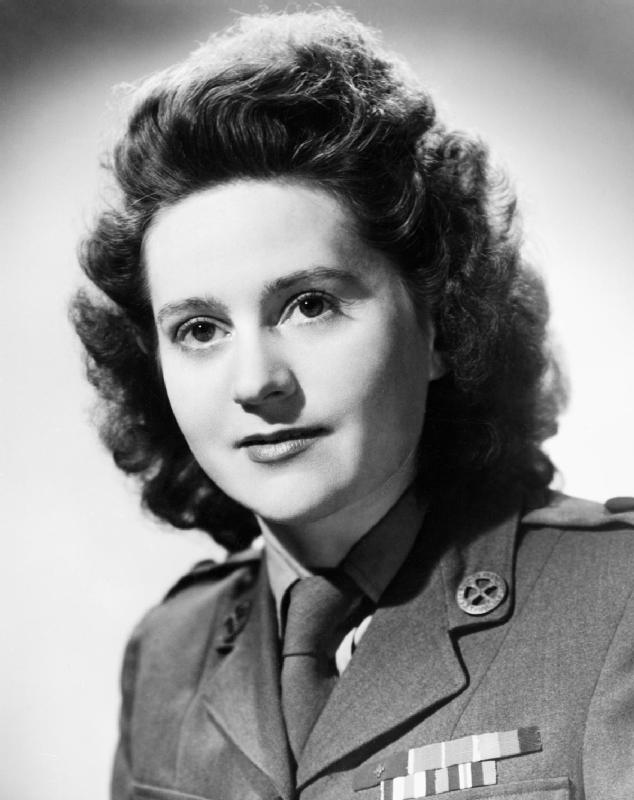
Lieutenant Odette Marie-Céline Sansom (1912-1995), George Cross, MBE. Odette Sansom served as a courier with F Section, Special Operations Executive.
Lieutenant Odette Marie-Céline Sansom (1912-1995), George Cross, MBE. Odette Sansom served as a courier with F Section, Special Operations Executive. CC Wikipedia.

Odette Marie Céline was born on April 28, 1912 to Gaston and Yvonne Brailly who lived in Amiens, France. Her brother Louis was born a year later in 1913. In 1914 when World War I broke out, Odette’s father joined the Infantry Regiment and received the Croix de Guerre and Médaille Militaire for his bravery. He died trying to find two of his men who had gone missing after the Battle of Verdun. Thus, Odette and her brother Louis grew up never knowing their father except his brave deeds.

Odette was a sickly child, but she managed to grow out of that when her mother enrolled her at a convent near the English Channel. When Odette graduated from high school, the nuns wrote in their final report that Odette was intelligent but also petulant. This streak would be seen clearly in Odette’s later activities as a spy.

Bessie Dora Bowhill was a woman who served alongside of Dr. Inglis. Although Bowhill is less well-known than Inglis, she nevertheless did much to improve the lives of the Serbians she served. Bowhill had served during the Boer War and joined one of the Scottish Women’s Hospitals in Serbia during the First World War. She retained her senior position as a matron of the unit until she left Serbia in 1916. Like Dr. Inglis, Bowhill experienced the German occupation and did much to assist the suffering Serbians. Bowhill received the Serbian Cross of Mercy as well as the British War Medal and the British Victory Medal due to her nursing work in Serbia.

Odette married an Englishman, Roy Sansom, in 1930, and they moved to London after the birth of their first daughter, Francoise, 1932. They would later have Lily in 1934 and Marianne in 1936. After Nazi Germany invaded Poland in 1939 and France and Britain declared war, Roy enlisted with the British army and Odette was left at home to take care of their girls.

In 1942, Odette happened to hear on the radio that the Royal Navy was asking for photos of France. Odette had spent a fair amount of time on the beaches around Calais with her brother when Odette was in high school, so she had photos to send. In addition, Odette also mentioned in an accompanying letter that her parents were French and she was well-acquainted with the coastal regions, and promptly (and mistakenly!) sent the letter to the War Office.

Odette Sansom Turns Into Lise

Around a week later, Odette was summoned to the War Office where a Major Guthrie asked if she might be interested in some part-time work. Shortly thereafter, she received a letter from Captain Selwyn Jepson, who Odette would later discover worked for the F (France) Section of the SOE—Special Operations Executive—a secret organization that was supposed to assist with resistance efforts in Nazi-occupied countries and perform acts of sabotage in those countries.

Captain Jepson asked if she would be willing to undergo training to see if she would be fit for the role of saboteur. That day and for weeks later, Odette said no, saying that she had to take care of her children. Finally, she relented, just to prove Captain Jepson wrong that she was not fit for the job. But ironically, it turned out that she was, and Odette loved the training and was propelled by her desire to assist those in France.

After several failed attempts to get her to France, Odette under the code name Lise, arrived in Cannes on October 1942 to temporarily join Peter Churchill, who had the code name Pierre ChauvetMichel, or Raoul, and the SPINDLE circuit. Odette was later supposed to go on to Auxerre to establish a safe house, but Peter—unrelated to Winston Churchill—pulled some strings, and Odette joined his circuit, which included one of the best radio operators, Adolphe Rabinovitch who had the code name Arnaud

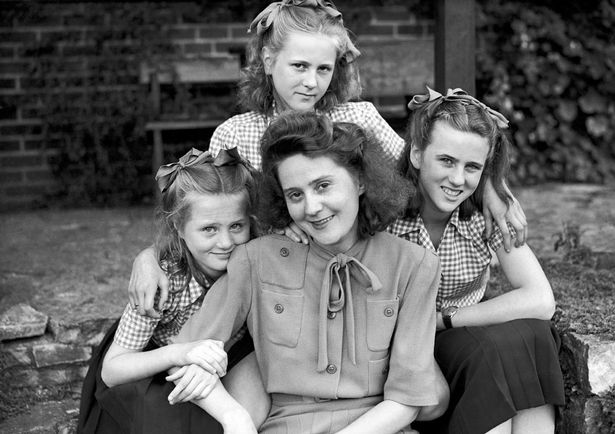
Odette Sansom and children
Odette Sansom with her children, Marianne, Lily and Francoise.
French secret agent and heroine Odette Sansom at a restaurant with her fiance, Captain Peter Churchill (Image: Getty)
French secret agent and heroine Odette Sansom at a restaurant with her fiance, Captain Peter Churchill. Image Source: Getty

Odette Sansom and Peter Churchill Are Captured

For six months, Odette, Peter, Arnaud, and the SPINDLE circuit together incited mayhem and avoided Germans, which required relocating several times. Unfortunately, though, a member of their network, Andre Marsac, had been captured and a sweet-talking Abwehr—the German intelligence organization—officer Hugo Bleicher, known as Colonel Henri, convinced Marsac to name members of his organization. On April 16, 1943, Odette and Peter were captured, and by this time, had developed a romantic connection so it was fairly easy to play that they were married.

From that point on until the end of the war, Odette and Peter would move into different prisons and concentration camps, sometimes together, but other times not. Odette tried to save Peter by convincing the Gestapo that she was the mastermind, not Peter, and she mentioned that Peter, who she called her husband, was the nephew of the Prime Minister Winston Churchill. These intelligent acts certainly saved Odette and Peter’s lives for some time.

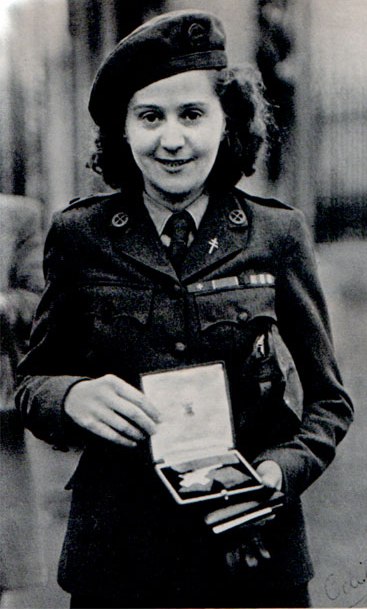
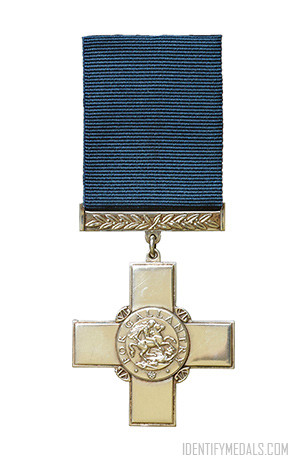
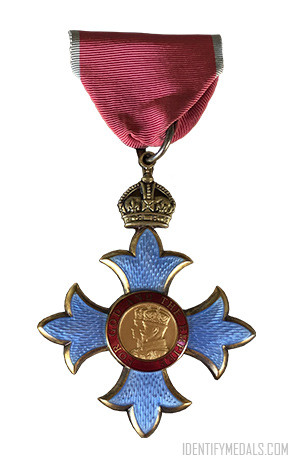
Odette Sansom’s Medals:

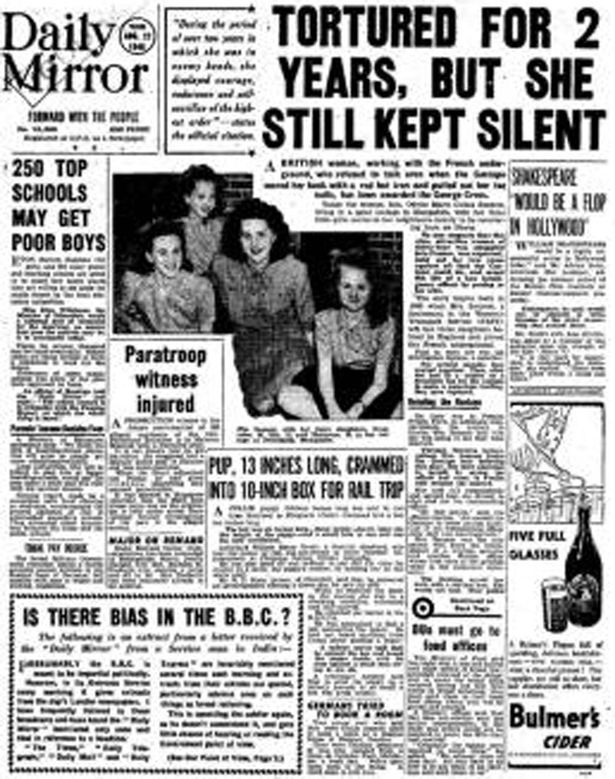
The Gestapo brutally tortured Odette since they considered her the mastermind and asked her for the location of some individuals which only Odette knew. Even when a red hot poker was placed on her back and all of her toenails were pulled out, Odette simply replied, “I have nothing to say.”

In July 1944, Odette was sent to Ravensbruck concentration camp and was kept in a dark bunker completely isolated for three months and 11 days at one point during her stay. Even though she was extremely emaciated and her hair and teeth were falling out, Odette still had her wits about her.

The camp commandment Fritz Suhren decided to take Odette with him to the American forces in May 1945, knowing that the Allies had entered Germany and that Odette had said that she was related to Winston Churchill. Odette, however, told the Americans to take him prisoner. Although Suhren would escape several times, he was eventually hanged for war crimes due in part to Odette’s testimony.

On August 19, 1946, Odette received news that she had received the George Cross, Britain’s second-highest honor, and it was decided that she and Peter would receive their British awards together at the investiture on November 17 of that same year. The only woman out of about 250 soldiers and officers about to be decorated, Odette was given the honor of leading the investiture.

Daily Mirror front page featuring WW2 female spy Odette Sansom.

Odette’s George Cross Citation:

‘The KING has been graciously pleased to award the GEORGE CROSS to: Odette Marie Celina, Mrs. SANSOM, M.B.E., Women’s Transport Service (First Aid Nursing Yeomanry).

Mrs. Sansom was infiltrated into enemy occupied France and worked with great courage and distinction until April, 1943, when she was arrested with her Commanding Officer. Between Marseilles and Paris on the way to the prison at Fresnes, she succeeded in speaking to her Commanding Officer and for mutual protection they agreed to maintain that they were married. She adhered to this story and even succeeded in convincing her captors in spite of considerable contrary evidence and through at least fourteen interrogations. She also drew Gestapo attention from her Commanding Officer on to herself saying that he had only come to France on her insistence. She took full responsibility and agreed that it should be herself and not her Commanding Officer who should be shot. By this action she caused the Gestapo to cease paying attention to her Commanding Officer after only two interrogations. In addition the Gestapo were most determined to discover the whereabouts of a wireless operator and of another British officer whose lives were of the greatest value to the Resistance Organisation. Mrs. Sansom was the only person who knew of their whereabouts. The Gestapo tortured her most brutally to try to make her give away this information. They seared her back with a red hot iron and, when, that failed, they pulled out all her toe-nails. Mrs. Sansom, however, continually refused to speak and by her bravery and determination, she not only saved the lives of the two officers but also enabled them to carry on their most valuable work. During the period of over two years in which she was in enemy hands, she displayed courage, endurance and self-sacrifice of the highest possible order.’

Odette Sansom holding her medals.

The Reunion of Odette and Peter

After the war, Odette and Peter reunited after fifteen months of being separated and were married on February 15, 1947 although they would later divorce in 1956, but Peter never spoke ill of his ex-wife who married Geoffrey Hallowes later in 1956. Odette died on March 13, 1995 at the age of 82.

One of only three F Section agents operating in France to receive the George Cross, Britain’s second-highest honor, Odette was the only one to receive the award in her lifetime. In addition, Odette was the second SOE agent and the first female who had faced the enemy to receive the award. Odette did not like being especially singled out and asked that the award be regarded as acknowledgement of all who had assisted to liberate France. Even though some individuals disputed Odette’s receipt of the George Cross and asked it to be revoked, Prime Minister Macmillan refused to entertain the idea, as Odette had duly received the award.

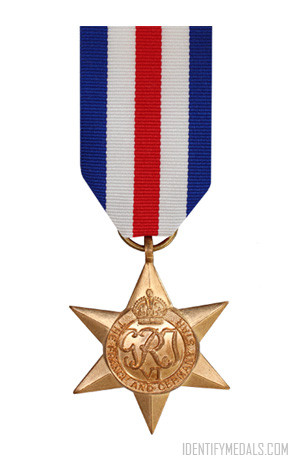
In addition to the George Cross, Odette received the Order of the British Empire (M.B.E.), the Chevalier de la Legion d’honneur, the the 1939-1945 Star, the France and Germany Star, the War Medal 1939-1945, the Queen Elizabeth II Coronation Medal, and the Queen Elizabeth II Silver Jubilee Medal. In 1950, Odette’s story was made in a film called Odette, and the Royal Mail released a stamp in Odette’s honor in 2012.

Sources

Guest Contributor: Rachel Basinger is a former history teacher turned freelance writer and editor. She loves studying military history, especially the World Wars, and of course military medals. She has authored three history books for young adults and transcribed interviews of World War II veterans. In her free time, Rachel is a voracious reader and is a runner who completed her first half marathon in May 2019.

A Visit to the Arromanches Museum in Normandy

The Arromanches Museum is a monument in the name of those who jumped above Normandy and landed at the beaches to end Fascism in Europe.
1944, Normandy. The sky is grey and the fog is compact. The night is dark. The wind blows but somehow, the most intrepid of all men decided on their own to jump over France. It is the 5th of June, and some of them will never see their homeland again. But in the name of Freedom and Democracy, they decided it was their duty to help those who are oppressed.

The museum is a monument in the name of those who decided to jump above Normandy and land at the beaches. It is a monument for those who made possible what would later lead to the defeat of Nazi Germany and the end of Fascism in Europe.

What is the Arromanches Museum about?

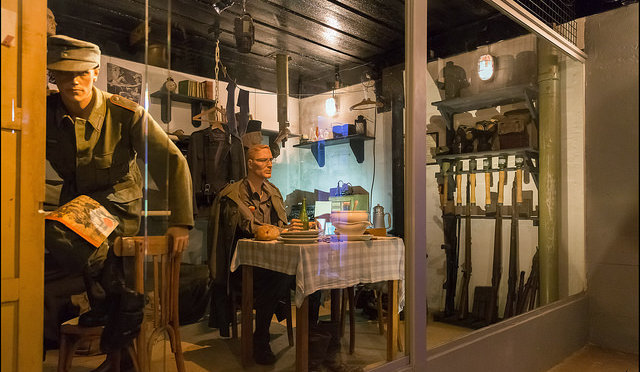
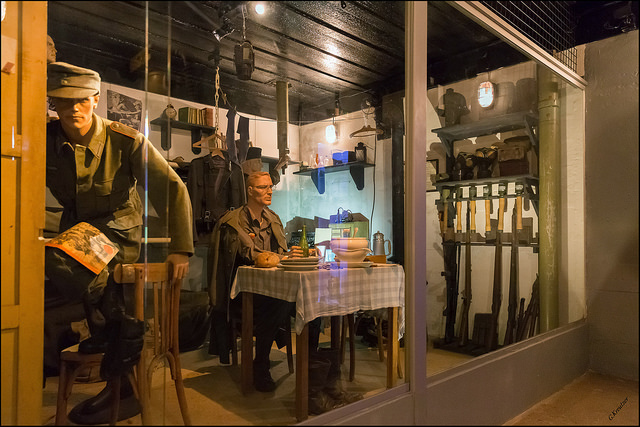
Arromanches Landing Museum - Exhibit. CC GK Sens-Yonne Flickr.

Why would you go to this museum in the first place? Well, it is nearby all the bridgeheads of the Normandy landings.

If you start your journey from Utah Beach, the most western of all the beaches, you’ll have the luck to go across all the beaches from West to East and the final stage in this trip is naturally, Arromanches, which was a crucial point during the Liberation of France. Or if you take the trip in the other way around, it is the first necessary stop on your way to knowledge.

The museum has two particulars addressed subjects: the first one is as you guessed, the Normandy landings and the second one is the Mulberry Harbor. This harbor was capital for the landings as the Dieppe Landing (1942) proved that the Allies couldn’t not breach the Atlantic Wall to capture a harbor. Even though the Allies finally captured Cherbourg and its precious harbor, the Mulberry harbor was still in use for 10 months after the initial landings. More than 2,500,000 men, 500,000 vehicles and 4 million tons of supplies landed in the harbor.

But why would you buy a museum just by this particular site? French President René Coty pushed hard in the 1950s for a museum to be built in the area, to show the magnificent war effort that was done just for the landings and to help supply the troops that were liberating France.

So as you guessed, in this museum, you will have the luck to see everything about the harbor. You will enter first a big room where you will see a mock up of the harbor. Every aspect of the harbor and how it worked is detailed on this mock up that is around 20 meters long!

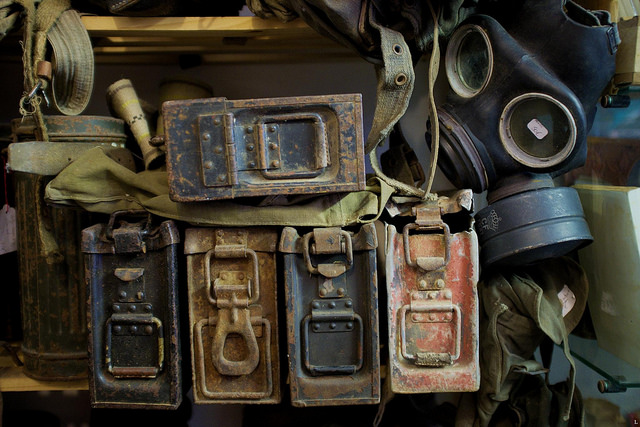
You can find many other things in the museum. You’ll find different uniforms used by the troops of both sides, some rifles, some German equipment… There is also a movie describing the Normandy landing and the role of the Harbor, its conception and the strategic importance it had.

At the end of your tour in the museum, you will of course happen to land… in a souvenir shop like every museum in the world. Outside the museum, and next to the usual flags that you can find pretty much all across the Normandy coast, you will find some interesting pieces of artillery, from both England and Germany.

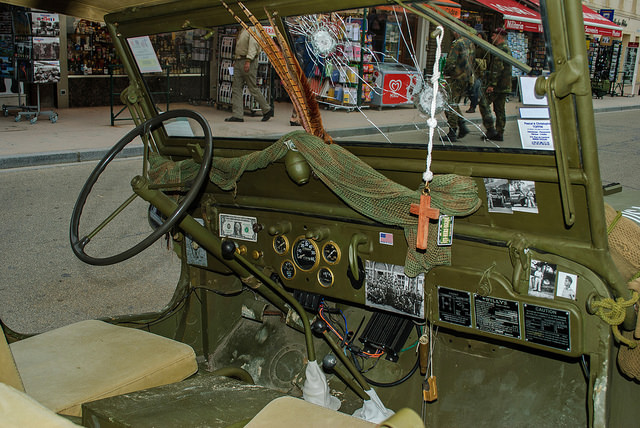
Inside the museum. CC txindoki, Flickr.
Outside the museum. CC Davide P., Flickr.

Outside the museum…

Not only you should go to the museum for all the things you can learn inside the museum, but the most important thing in Arromanches is the scenery offered to the visitor. Not only Arromanches is a beautiful city on the Channel Coast, but the sea is just by the museum, on the shore.

The most impressing thing in all of that is that ashore, you can still see what used to be a harbor. As Lord Mountbatten said: “If we dispose of no harbors, we will bring our own.

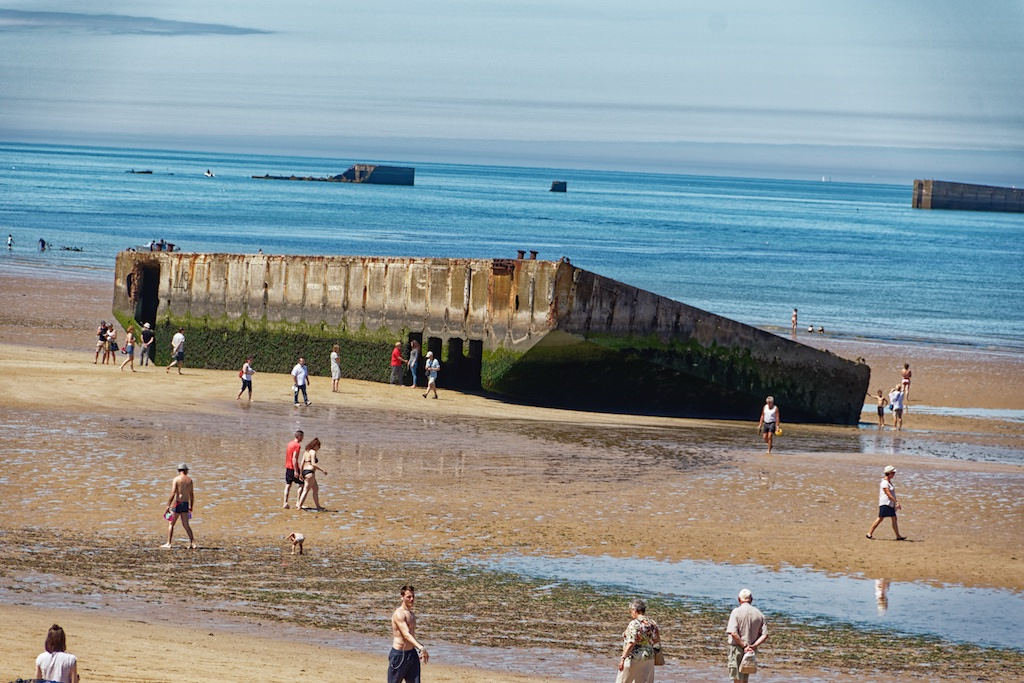
The gigantic dockyard that was used to pour equipment through the Channel and into France was located in the bay of Arromanches, just ashore of the museum! If the tide is low, you can even walk to the remains of the harbor! You’ll happen to find gigantic pieces of concrete that could float, and that was used as pontoons, going back and forth with the tide.

The artificial harbor at Arromanche.
The artificial harbor at Arromanche. Credit: Andrew Thomson, CC, Flickr.

The remains of the harbor give you an idea of how enormous what the Allies decided to do. They didn’t bother asking themselves which sea harbor would be the best between Cherbourg, Le Havre or many more. They just built their own harbor in the middle of basically nowhere, in the only place where the shore is not a cliff in the area. The things you can discover inside the museum are truly interesting and is an important stop on your way to history and how everything happened. But outside, you can truly appreciate the effort that was done to help and supports the troops fighting Nazi Germany inland.

The Mulberry Harbour of Arromanches was of strategic importance, and there was no way Germany could disrupt its effort in any manner, considering the Luftwaffe and Kriegsmarine had no way to interfere. They could always sabotage the harbors they were holding such as what happened in Cherbourg, but the Mulberry of Arromanches stood and, it was one of the most important points of the Allies invasion of Western Europe.

The point of this museum is as stated before, not to be the most precise or detailed one, but to be a monument. A monument dedicated to the people who decided to do the impossible, the unthinkable. They decided to go for it, to liberate Europe from Fascism and Nazism. It is dedicated to those who thought and built the Mulberrys. Those who decided to fight for Freedom.

Guest Contributor: Kjetil Vion is a writer and a history enthusiast. A passionate of France and modern military history, he has a special interest into the Prussian state, specially since the Sadowa battle against Austria. Always wanting to learn more, he now looks to spread his knowledge in history.

The Arctic Convoys of the Second World War

How after a disaster in the Eastern front and the possible collapse of the communist giant, the USA and Great Britain helped the Red Army.
This night of the 21st of June 1941, no one would have expected what followed. Well, some saw some signs that an enormous army was reaching the borders between Nazi Germany and the Soviet Union. The tsunami that ensued was one of the most ambitious attack ever created by any army in the history of Mankind.

In a few days, lacking any real orders nor information from the Stavka (Soviet high command of the Armed forces) or Stalin, most of the troops of the Red Army were wiped out. The equipment was captured or destroyed. It would take several months for the Red Army to recover from this hurricane, and they would only stop the Germans in the suburbs of Moscow.

Seeing a total disaster in the Eastern front and the possible collapse of the communist giant, America and Great Britain decided to help the Red Army, in an unusual way but in a way that could only help the soviets recovering. The lend-lease program thus started in august 1941, taking its part in saving the explosion of the Soviet Union.

Where did the Arctic convoys come from, and where did they arrive?

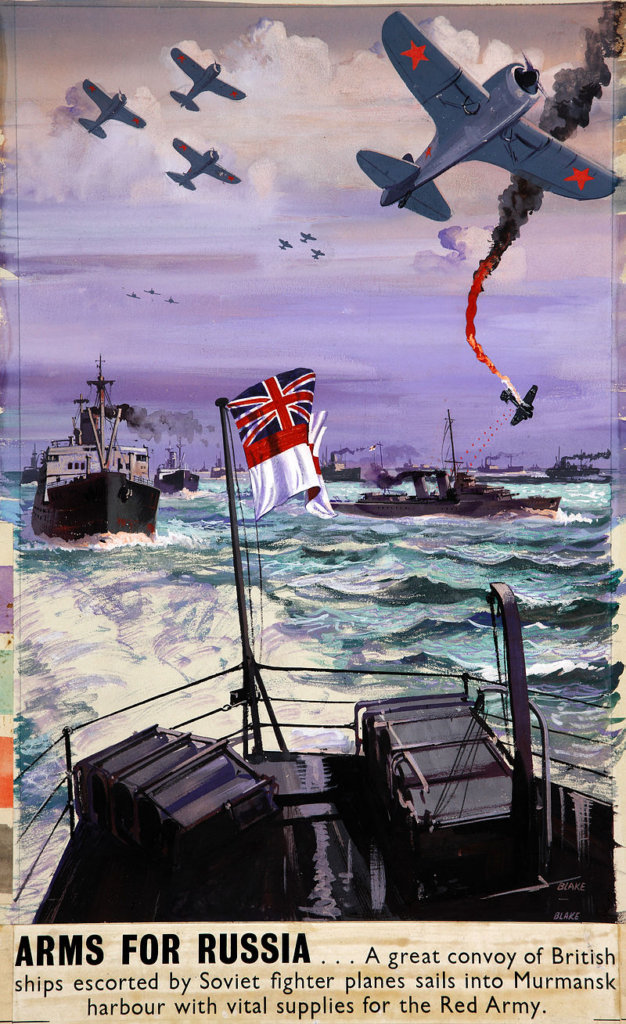
A British wartime poster about the Arctic convoys.
A British wartime poster about the Arctic convoys. Public Domain. Courtesy of The National Archives (United Kingdom).

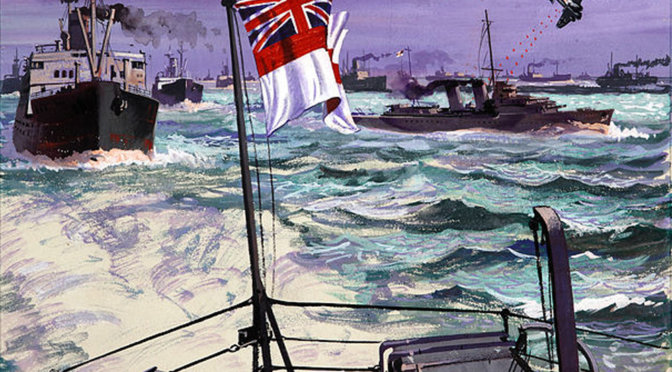
Escorted by the Royal Navy, the Royal Canadian Navy and the US Navythe convoys sailed in the north Atlantic to a meeting point situated in Iceland and then sailed through the north, crossing the Norwegian sea as far away from the coast as possible, the tumultuous Barents Sea and arriving in Murmansk or Arkhangelsk deep in the coast of the White Sea.

During this journey, the vessels and their escorts would sneak between the icebergs of the Arctic Ocean and the German naval bases located in the fjords of the Norwegian coastline.

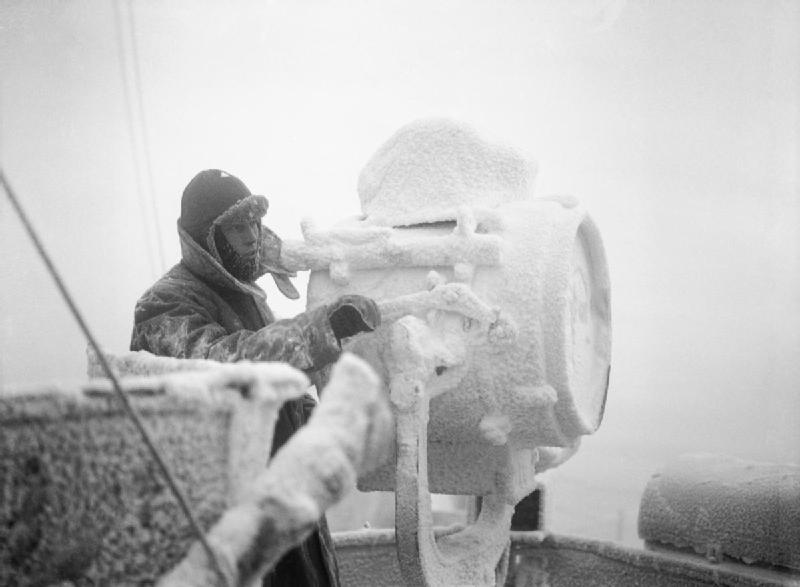
Besides the danger of icebergs and the minus 50 degree Celsius the sailors could face, the main trouble was the wolf packs of GroßAdmiral Dönitz. These packs were composed of several U-Boote and were hunting the vessels all year long. The submarines were not the only hunters in the paths of the convoys, as the Tirpitz and the Scharnhorst were also stationed in the fjords. As the Battle of the Atlantic was carrying on and with the slow death of the Kriegsmarine, these two Battleships had no real impact after 1942.

The destination of the convoys was not clear but the ideal target was Murmansk in the Kola peninsula. With the efficient rail network that covered the Soviet Union, it was the fastest stop to unload equipment and make it go across the country, until it reached front-line units.

Murmansk was at first a very dangerous stop for the convoys as Finland also joined the war against the USSR as a co-belligerent. One of the objectives of the Finns was to attack and cease Murmansk in case convoys would reach the Soviet Union. Operation ‘Silver Fox’ was a failure and the outnumbered and badly equipped Russians held Murmansk until the end of the war with Finland in 1944.

It would take around 10 to 15 days for the convoys to sail from their meeting point, either in Iceland or near the Orkney Islands, to Murmansk or Arkhangelsk.

Some may ask why the USA didn’t sail across the Northern Pacific to harbors like Vladivostok. The answer is quite obvious, since Japan declared war in late 1941. The Pacific Ocean was dangerous, not only because the Japanese Imperial Navy was hunting in the area, but also because in the Aleutian Islands, the Japanese did a ground landing and thus starting the only ground battle on American Soil.

Were the convoys that important for the USSR war economy?

We can always try and want to rewrite history, but the arctic convoys played a major role during the Great Patriotic War as the Russians call it nowadays. Some convoys were so stacked, it would take sometimes more than 6 months to unload their shipping in the soviet harbors. Tanks, aircraft, artillery, basic equipment like boots, trucks… The convoys unloaded more than 4 million tons of equipment into the arctic harbors!

Arguing about the necessity of the convoys is easy, knowing that all the Soviet war industries were displaced far away behind the Urals, but in 1941, when in the very first day of Operation Barbarossa, most of the Soviet air force was destroyed by the Blitzkrieg orchestrated by Nazi Germany, this equipment was more than necessary. It was vital.

The first English aircraft that set foot on Soviet territory was directly engaged in combat. Even “The Hurricanes” participated in the Battle for Moscow during winter 1941-1942, when the Soviet Union was on the brink of collapsing.

Ice forming on a 20-inch signal projector on the cruiser HMS SHEFFIELD whilst she is helping to escort an Arctic convoy to Russia. CC Wikipedia.
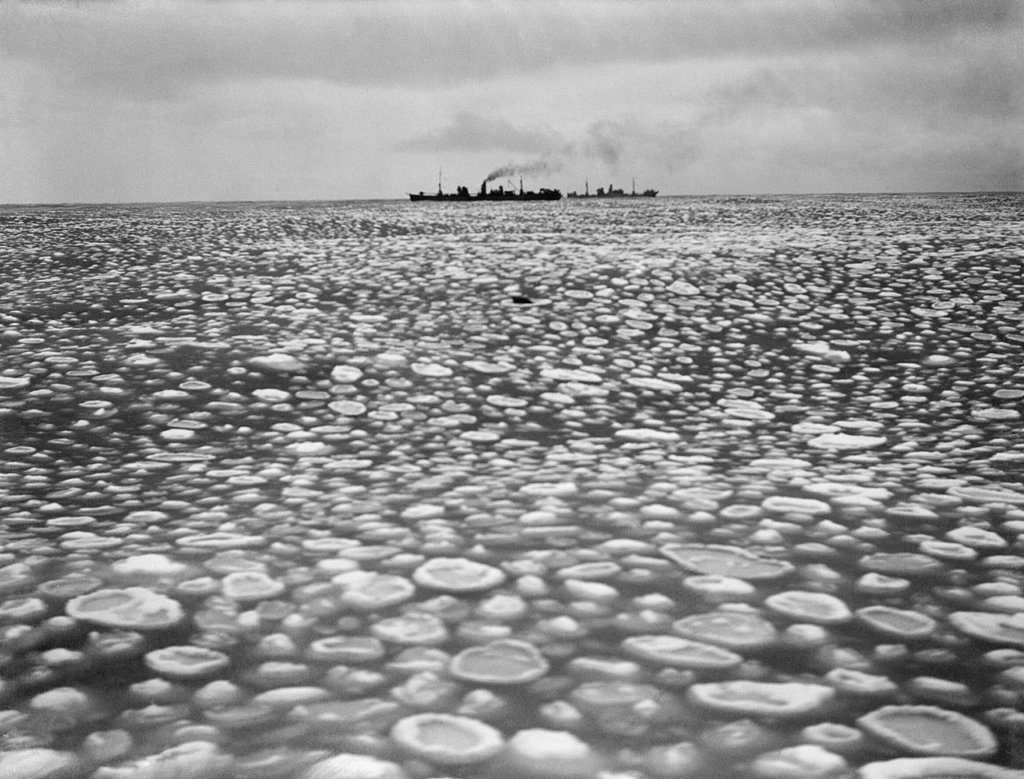
The ships on northern convoy duty passing through pack ice during the voyage.
The ships on northern convoy duty passing through pack ice during the voyage. CC Wikipedia.
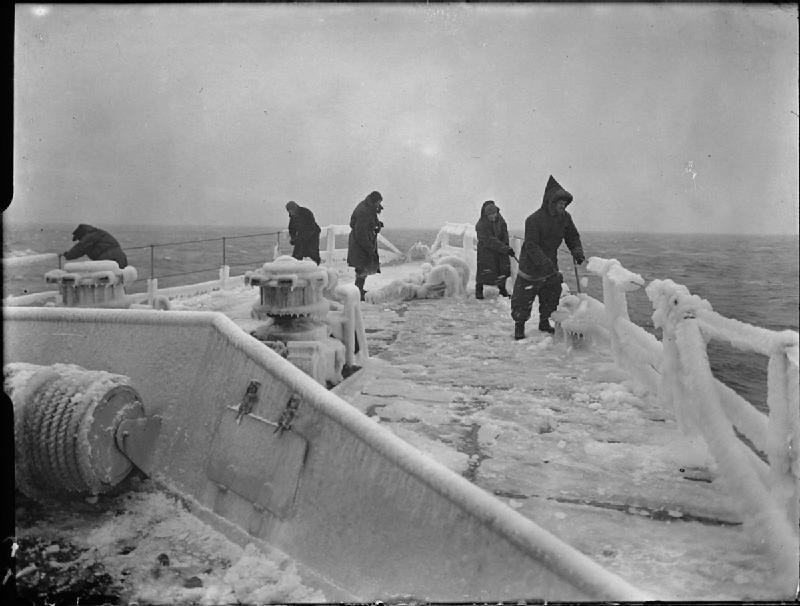
Members of the crew clearing the frozen focsle of HMS INGLEFIELD during convoy duty in Arctic waters.
Members of the crew clearing the frozen focsle of HMS INGLEFIELD during convoy duty in Arctic waters. CC Wikipedia.

Why did the convoys play a Major role in the War?

The convoys played a major role in the war effort. Not only on the battlefield, even though the equipment provided by the UK and the USA was vital for the Soviet war effort, it wasn’t as vital as the diplomatic actions and trust it installed between the communist giant and the western democracies.

The convoys were vital for Stalin, but they were for Churchill as well. It showed that the West was prone to help the USSR before creating the “Second Front” in Western Europe in 1943 and 1944. Stalin was paranoiac but in the West was trying to help him, he knew he could trust the Allies and that they would not give up on him.

These sailors probably didn’t know it and some died without knowing it, but they played a major role in winning the War. They tried and succeeded to connect two different ideologies against a monstrosity only for the good to succeed in the end.As we look back, we must remember the sacrifice of these sailors, not because they did their job but because as FieldMarshal Mannerheim said : “Fortifications, artillery, foreign aid will be of no value, unless the ordinary soldier knows that it is HE guarding his Country.

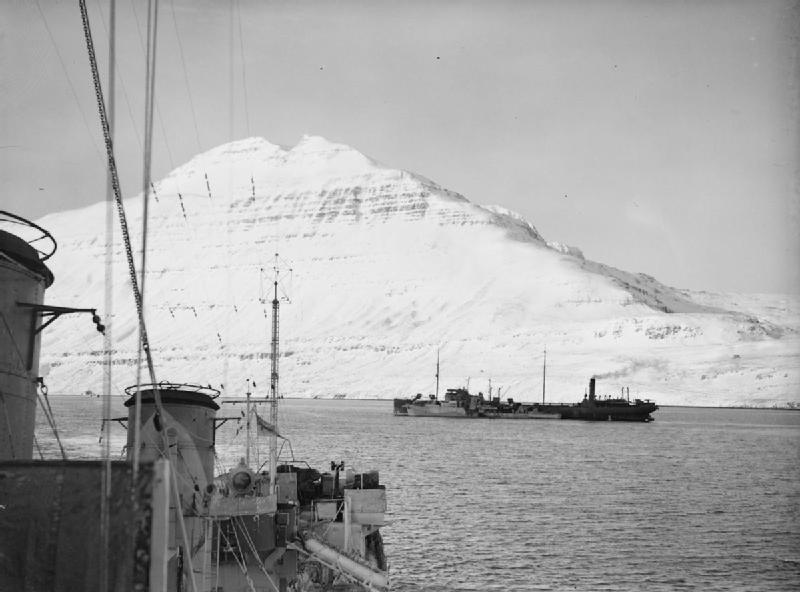
Arctic Convoy. on Board HMS Inglefield , 14 February To 13 March 1943, during Convoy Duty in Arctic Waters.
Arctic Convoy. on Board HMS Inglefield , 14 February To 13 March 1943, during Convoy Duty in Arctic Waters. CC Wikimedia.
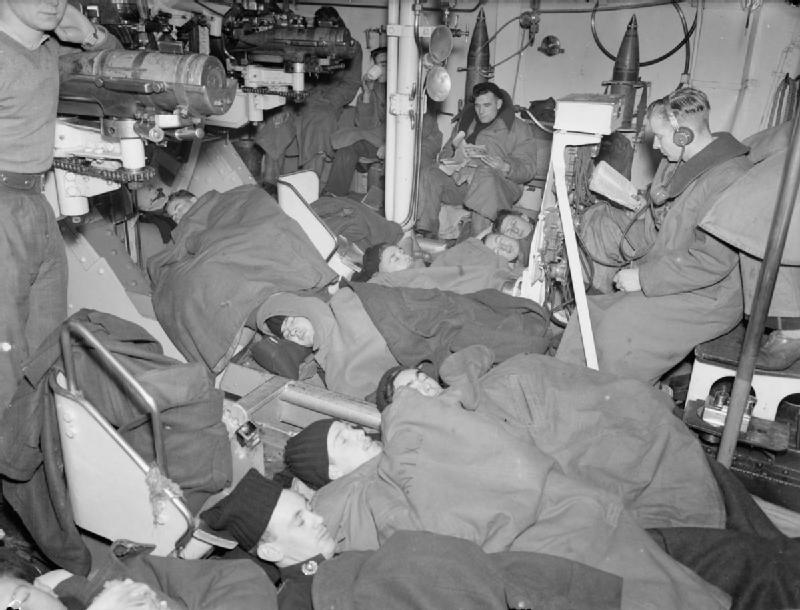
Inside one of the gunhouses for the triple mounted 6 inch gun aboard HMS SHEFFIELD.
Inside one of the gunhouses for the triple mounted 6 inch gun aboard HMS SHEFFIELD. CC Wikimedia.

Sources:

Guest Contributor: Kjetil Vion is a writer and a history enthusiast. A passionate of France and modern military history, he has a special interest into the Prussian state, specially since the Sadowa battle against Austria. Always wanting to learn more, he now looks to spread his knowledge in history.

The Incredible Story of John Basilone, U.S. Marine

The only Marine in World War II to receive the two highest U.S. military medals, John Basilone is an excellent example of a U.S. fighter.
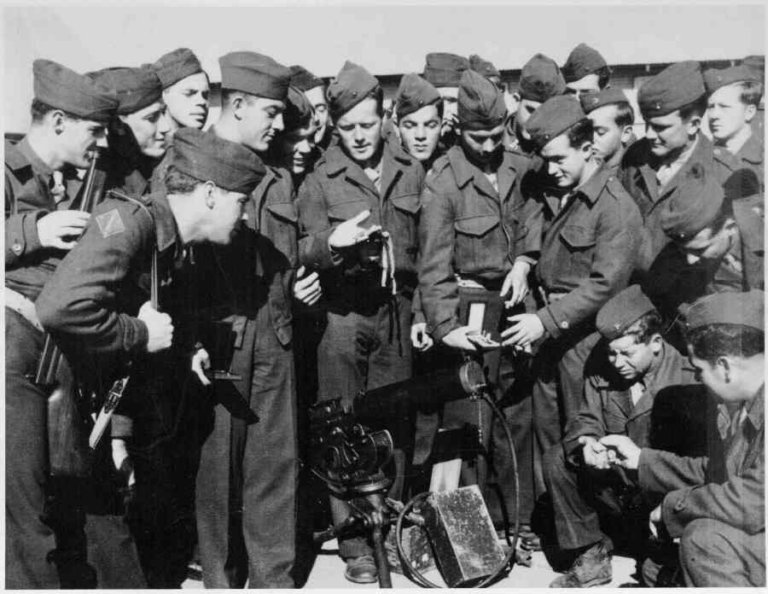
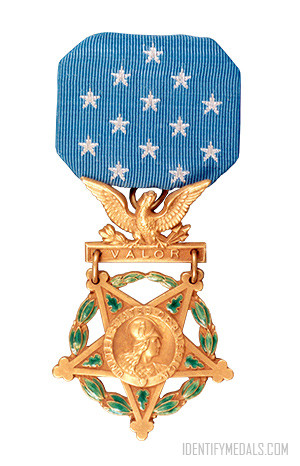
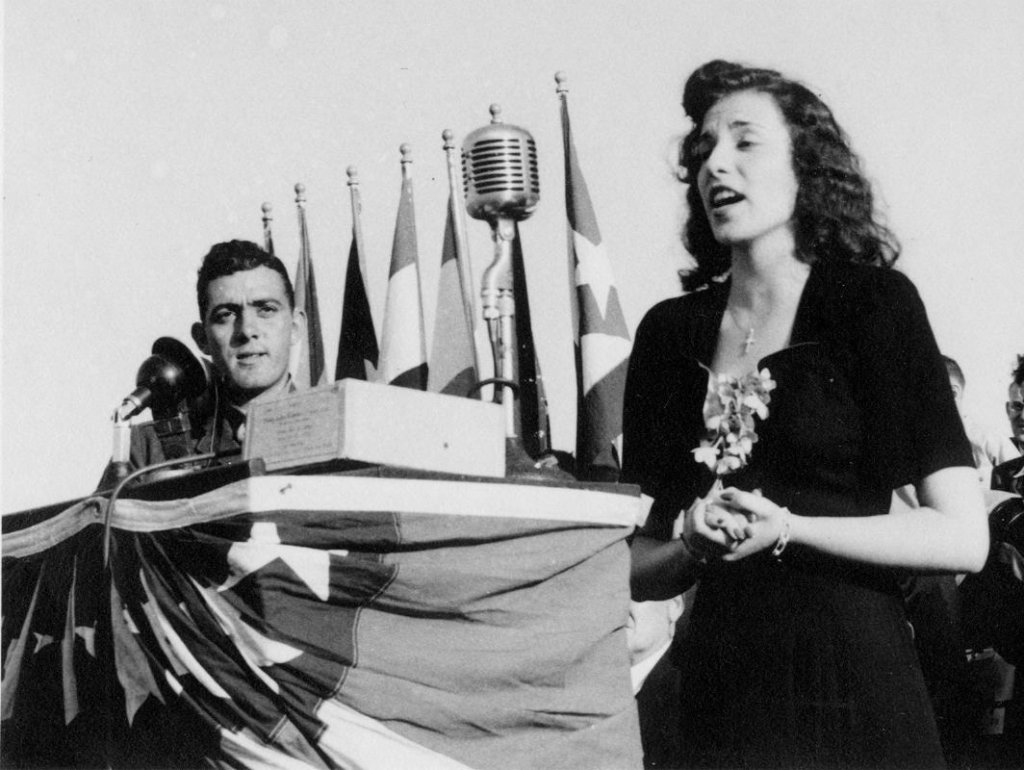
If you aren’t a U.S. Marine, you might have not heard heard the name John Basilone before. He’s quite a legend in the United States Marine Corps and should be for the general population as well because of his incredible feats. So, let’s take a look at the story of Manila John and his medals.

The only Marine in World War II to receive the two highest U.S. military medals—the Medal of Honor and the Navy Cross, John Basilone is an excellent example of a U.S. Marine and a fighter well deserving of the medals he received.

Who Was John Basilone?

Born on November 4, 1916 in Ruritan, New Jersey, Basilone was the six of ten children in an Italian family and would grow up as a tough young man. Just before his 18th birthday, Basilone enlisted in the U.S. Army and served in the Philippines as an infantryman from 1934 to 1937. He would become known as “Manila John” due to his Army service in the Philippines.

Basilone as Field Cook

Before becoming known for his heroic actions in combat, Basilone served as a field cook in the United States Marine Corps. While stationed at various bases, including Quantico and Parris Island, he worked in the mess hall, preparing meals for his fellow Marines. This experience as a field cook provided Basilone with valuable skills and insights that would later serve him well during his combat deployments.

During his time there, Basilone became a champion boxer and absolutely adored life in the Philippines. Thus, when he returned to the States in 1937 and started working as a truck driver, it was not the life Basilone longed to leave, so he enlisted in the Marine Corps on June 3, 1940, in hopes of returning to his beloved Philippines.

Basilone was deployed to Guantanamo Bay, Cuba before he took part in the invasion of Guadalcanal in the Pacific, where he would achieve his renown. From August 1942 on, Basilone and his unit—1st Battalion, 7th Marines of the 1st Marine Division—were tasked with fighting the Japanese deep in the jungles of Guadalcanal, one of the hundreds of islands that comprise the Solomons.  

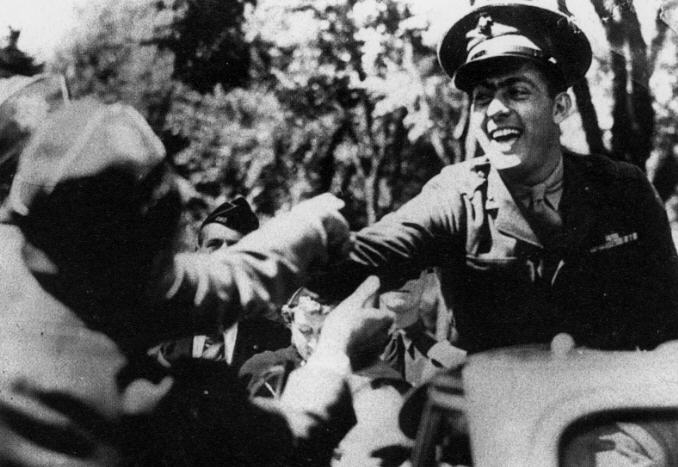
Sgt. Basilone receives the congratulations of his platoon.
Sgt. Basilone receives the congratulations of his platoon after receiving the Congressional Medal of Honor. Courtesy of The Raritan Library.

John Basilone's Extraordinary Heroism
(And the Military Medals He Received)

Late in the fall on the night of October 24, 1942, Basilone who was then a sergeant, was responsible for commanding two heavy  caliber fire sections (.30-caliber machine gun) from 1/7 that had the task of holding a narrow pass at Tenaru River. A Japanese regiment that numbered 3,000 men began to attack the small crews of Marines as they dug in for the night with grenades and mortar fire. The Marines successfully held off the attack until one gun crew was disabled by enemy fire.

As Basilone’s Medal of Honor citation notes, Basilone carried roughly 90 pounds of weaponry and ammunition to the disabled gun pit, running a distance of 200 yards through enemy fire with total disregard for his own life. As he ran, Basilone killed several Japanese soldiers with his Colt .45 pistol.

John Basilone’s Citation for his Congressional Medal of Honor (Guadalcanal):

For extraordinary heroism and conspicuous gallantry in action against enemy Japanese forces, above and beyond the call of duty, while serving with the 1st Battalion, 7th Marines in the Lunga Area, Guadalcanal, Solomon Islands, on 24 and 25 of October 1942. While the enemy was hammering at the Marines defensive positions, Sgt. Basilone, in charge of 2 sections of heavy machine guns, fought valiantly to check the savage and determined assault. In a fierce frontal attack with the Japanese blasting his guns with grenades and mortar fire, one of Sgt. Basilone’s sections, with its “gun crews”, was put out of action, leaving only 2 men able to carry on. Moving an extra gun into position, he placed it in action, then, under continual fire, repaired another and personally manned it, gallantly holding his line until replacements arrives. A little later, with ammunition critically low and the supply lines cut off, Sgt. Basilone, at great risk to his own life and in the face of continued enemy attack, battled his way through hostile lines with urgently needed shells for his gunners, thereby contributing in large measure to the virtual annihilation of a Japanese regiment. His great personal valor and courageous initiative were in keeping with the highest traditions of the U.S. Naval Service.

Franklin D. Roosevelt

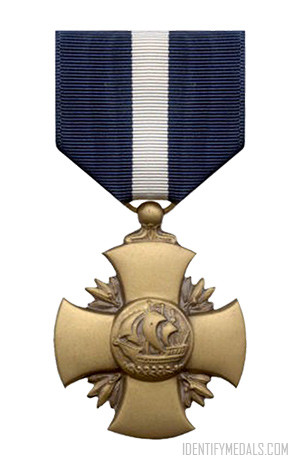
WW1 Medals and Awards: The Navy Cross

The Navy Cross

The Navy Cross is the United States military’s second-highest decoration and awarded to members of the Navy, Marine Corps, and Coast Guard. 
Read More »

John Basilone’s Citation for his Navy Cross (Iwo Jima):

“For extraordinary heroism while serving as a leader of a Machine-Gun Section of Company C, First Battalion, Twenty-Seventh Marines, Fifth Marine Division, in Action against enemy Japanese forces on Iwo Jima in the Volcano Islands, 19 February 1945. Shrewdly gauging the tactical situation shortly after landing when his company’s advance was held up by the concentrated fire of heavily fortified Japanese blockhouse, Gunnery Sergeant Basilone boldly defied The smashing bombardment of heavy caliber fire to work his way around the flank and up to a position directly on top of the blockhouse and then, attacking With grenades and demolitions, single-handedly destroyed the entire hostile strongpoint and its defending garrison. Consistently daring and aggressive as he fought his way over the battle-torn beach and up the sloping, gun-studded terraces toward Airfield Number One, he repeatedly exposed himself to the blasting fury of exploding shells and later in the day coolly proceeded to the aid of a friendly tank which had been trapped in an enemy mine field under intense mortar and artillery Barrages, skillfully guiding the heavy vehicle over the hazardous terrain to safety, despite the overwhelming volume of hostile fire. In the forefront of the assault at all times, he pushed forward with dauntless courage and iron determination until, moving upon the edge of the airfield, he fell, instantly by a bursting mortar shell. Stout-hearted and indomitable, Gunnery Sergeant Basilone by his intrepid initiative, outstanding professional skill and valiant spirit of self-sacrifice in the face of fanatic opposition, contributed materially to the advance of his company during the early critical period of the assault, and his unwavering devotion to his comrades and reflects the highest credit upon Gunnery Sergeant Basilone and the United States Naval Service.”

For a total of three days, Basilone ran back and forth between gun pits, supplying ammunition and assisting the junior Marines. He even lost his asbestos gloves, which were gloves used to hold or switch the hot barrels of the heavily used machine guns. Undeterred, Basilone used his bare hands to remove the barrel of his machine gun and take out an entire wave of Japanese soldiers during the height of the battle even though he burned his hands and arms in the process.

By the time reinforcements arrived for the Marines, Basilone and his gun crews had thwarted the entire Japanese regiment, but at great cost: only Basilone and two other Marines were left standing. Basilone himself killed at least 38 enemy soldiers, using the machine guns, his pistol, and even a machete.

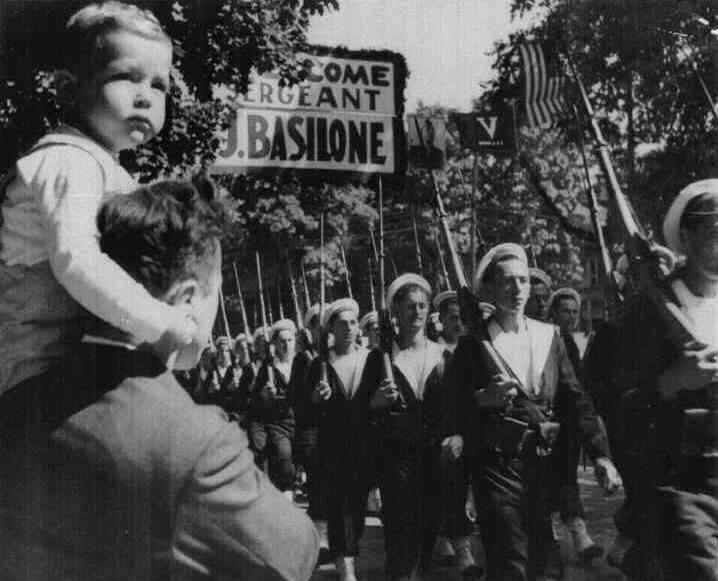
The 1943 Welcome Home Parade.
The 1943 Welcome Home Parade. Courtesy of The Raritan Library.
The 1943 Welcome Home Parade.
The 1943 Welcome Home Parade. Courtesy of The Raritan Library.
The 1943 Welcome Home Parade.
The 1943 Welcome Home Parade. Courtesy of The Raritan Library.
The 1943 Welcome Home Parade.
The 1943 Welcome Home Parade. Courtesy of The Raritan Library.

Due to his great acts of valor, he was awarded the Medal of Honor and promoted to Gunnery Sergeant Johh Basilone, becoming the first enlisted U.S. Marine to earn the Medal of Honor during World War II. He refused an opportunity to have President Franklin D. Roosevelt bestow the medal and instead opted to have the ceremony in the field with his unit.

As Basilone would note, “Only part of this medal belongs to me. Pieces of it belong to the boys who are still on Guadalcanal.”

John Basilone's Return Home

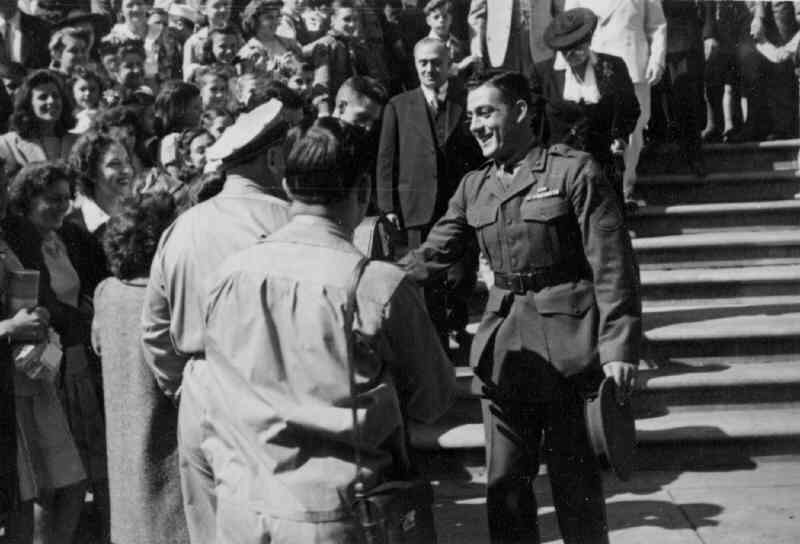
Basilone returned home to the United States for a homecoming parade in his hometown on September 19, 1943, and began to participate in war bond tours to raise money for the war effort. Even so, Basilone hated being away from his unit and the fighting and kept requesting to return to the Pacific, turning down a commission and an instructor position to get back with his men. He never completely liked all the attention from receiving the Medal of Honor. Basilone just wanted to be a plain Marine allegedly saying, “I ain’t no officer and I ain’t no museum piece. I belong back with my outfit.”

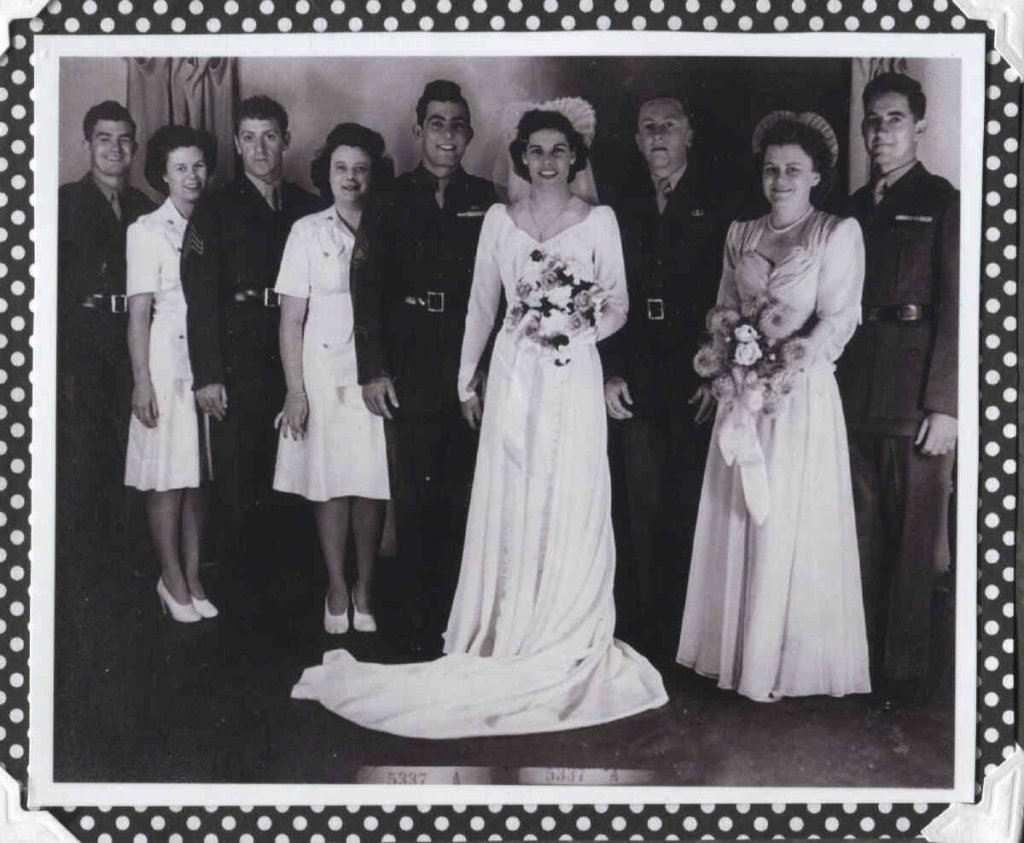
Basilone was sent to Camp Pendleton in California to complete additional training for combat in the Pacific where he ended up meeting his wife, a fellow Marine Sergeant named Lena Mae Riggi. The two would wed on July 10, 1944.

Basilone and Lena Liggi

Sgt Lena Mae Riggi Basilone played a significant role on the home front, supporting her husband and actively participating in war bond drives and other patriotic efforts. She, in fact, became a symbol of resilience and strength for many Americans during the war and left a lasting impact on the legacy of John Basilone and the spirit of American patriotism.

Wedding of John Basilone and Lena Riggi
Wedding of John Basilone and Lena Riggi - Married July 1944. Courtesy of The Raritan Library.

John Basilone And The 5th Division

In December 1944, Basilone returned to the Pacific, headed toward Iwo Jima. Serving with the 1st Battalion, 27th Marines, 5th Marine Division, Basilone stormed Red Beach on Iwo Jima on February 19, 1945. Leading his gunners up the steep black sand, Basilone and his unit were pinned down by enemy machine gun fire. As in Guadalcanal, Basilone started attacking a heavily-fortified blockhouse with grenades and demolitions, single-handedly destroying an enemy strong point. He fought his way toward an airfield and assisted a Marine tank trapped in an enemy mine field, guiding the vehicle over the deadly terrain to safety even though he was under intense mortar and artillery barrages. At the edge of the airfield, Basilone was killed by enemy Japanese forces due to mortar shrapnel, dying at the age of 28.

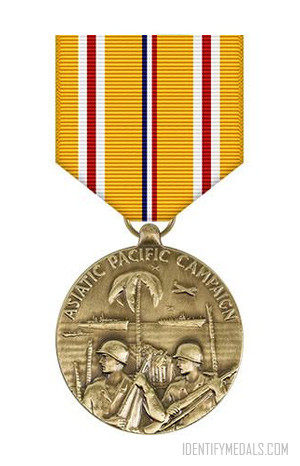
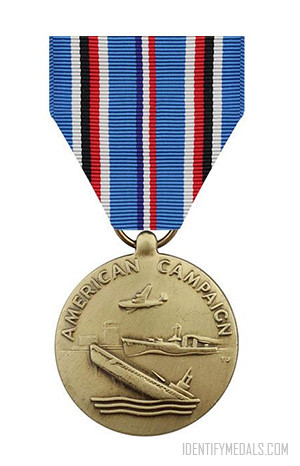
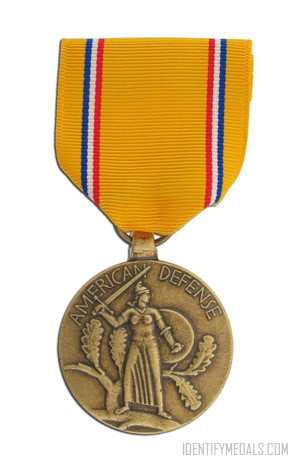
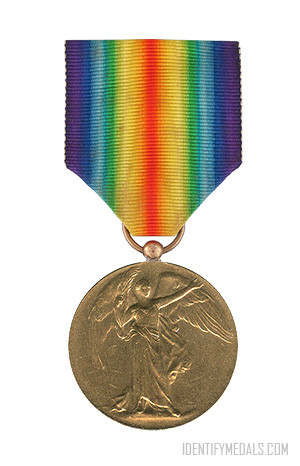
For his brave actions during the invasion, Basilone would posthumously receive the Purple Heart and the Navy Cross, becoming the only enlisted Marine in World War II to earn the Navy Cross posthumously. He received the Navy Presidential Unit Citation with one star, the American Defense Service medal with one star, the American Campaign medal, the Asiatic-Pacific Campaign medal, and the World War II Victory medal.

Other Accolades by John Basilone

In addition to his numerous medals, Basilone has received other accolades. In 1945, the U.S. Navy named a destroyer after Basilone, which his wife christened. His wife would never remarry and died at the age of 86 in 1999. She was buried wearing her wedding ring.

Additionally, Basilone was a central character in the HBO series The Pacific, appeared in the “Distinguished Marines” postage stamp series, and has another destroyer named after him—John Basilone—scheduled for commission in 2019. You can find Basilone’s grave in Section 12, Grave 384 in Arlington National Cemetery.

Truly a Marine to whom all Marines aspire and an incredible individual that we can all admire, John Basilone is an excellent example of the brave men and women who fought and died in World War II.

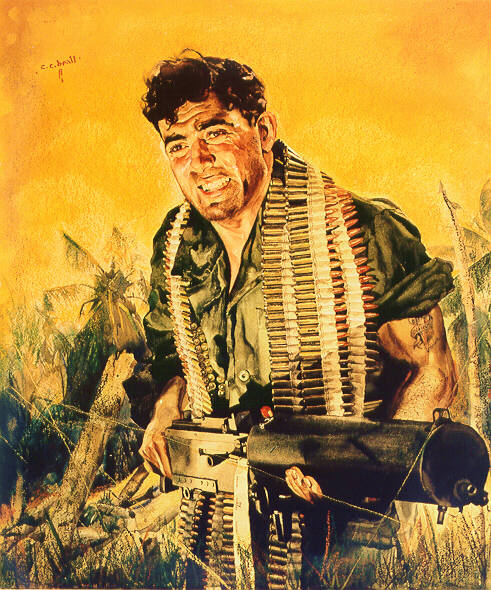
Portrait appeared on the cover of Colliers Magazine.
Portrait appeared on the cover of Colliers Magazine. Courtesy of The Raritan Library.
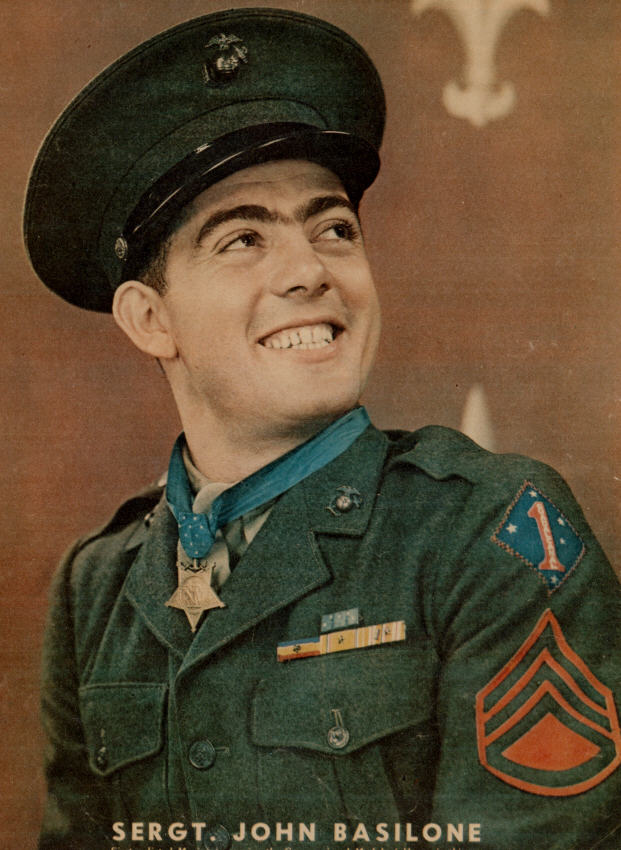
Photo of John Basilone appeared in The New York Daily News.
Photo of John Basilone appeared in The New York Daily News. Courtesy of The Raritan Library.
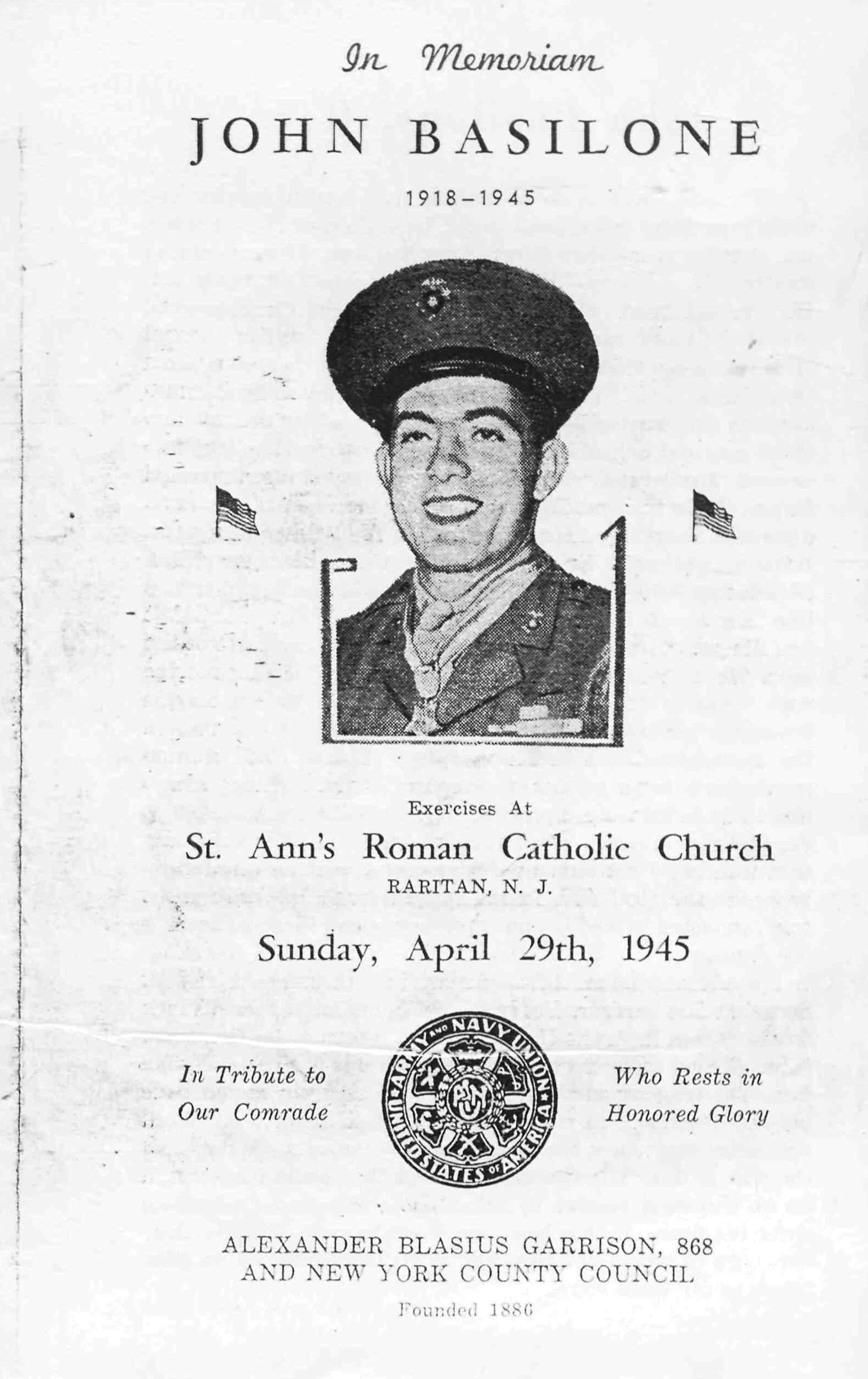
Program from 1945 Memorial Mass for John Basilone
Program from 1945 Memorial Mass for John Basilone. Courtesy of The Raritan Library.

Sources:

Guest Contributor: Rachel Basinger is a former history teacher turned freelance writer and editor. She loves studying military history, especially the World Wars, and of course military medals. She has authored three history books for young adults and transcribed interviews of World War II veterans. In her free time, Rachel is a voracious reader and is a runner who completed her first half marathon in May 2019.

How to Look for British Soldiers from the Second World War WW2

There is a wide-ranging variety of records from the Second World War where you can research British soldiers and their histories. These are kept in different archives, all held by the Ministry of Defence. In this guide we will list them so you can search for information about those that put their lives at risk (and frequently lost them) during WW2.

Records Available Online

A lot of records can be accessed online, for free or for a very small fee. These include registers and documents provided in large by the National Archives and the Ministry of Defence.

1939

The 1939 Register

This 1939 register allows you to browse for documents by name or address. The site is paid, as it belongs to Findmypast.co.uk. Th register contains a survey of the civilian British population and was used as the basis for issuing ID cards and ration books, among others.

> Explore the 1939 Register

1915-1978

The Cabinet Papers

The Cabinet Papers lets you check records from the Cabinet Office. This includes documents concerning decisions and discussions before, during, and after the Second World War.

> Explore Cabinet Papers

1943-1945

The Allied Expeditionary Force Papers

This website allows you to browse copies of documents from the Supreme Headquarters Allied Expeditionary Force and 21 Army Group, which relate to a variety of headquarters responsibilities. The records are also available as digital microfilm in their catalog.

> Explore all WO229 Documents

Service Records

1920 – Present

Service Records by Veterans UK

Veterans UK offers summaries of service records from the Ministry of Defence. One important note: Only those who are next of kin can request access, as these are not available to members of the general public.

> Explore Service Records

National Archives in Kew Records

1939 – 1945

War Diaries from British Army Units

This website allows you to search British Army unit war diaries for the Second World War. They have a nice research guide you can use to get started.

> Explore War Diaries

1939 – 1945

UK Wartime Diaries and Personal Papers

This link will connect you with the Imperial War Museum website. Here, you will be able to access different records from their document archive, as well as from the various collections held by the museum and that refer to the Second World War.

> Visit the Imperial War Museum Website

Government and Military Records

The National Archives has an immense collection of documents you can consult, divided into Departments that cover government and military records for the Second World War. Just note that there’s likely to be some overlap between separate departments.

Most armed forces and general war records will be found in one of these:

Correspondence, policy and negotiation with other states can be explored in:

Correspondence to and from the Prime Minister’s office:

Domestic and internal affairs:

George Halas: Father of the NFL Who Also Served in Both World Wars

George Halas was a player, coach, and owner of the Chicago Bears. He also served in the Armed Forces and received the Bronze Star during WW2.
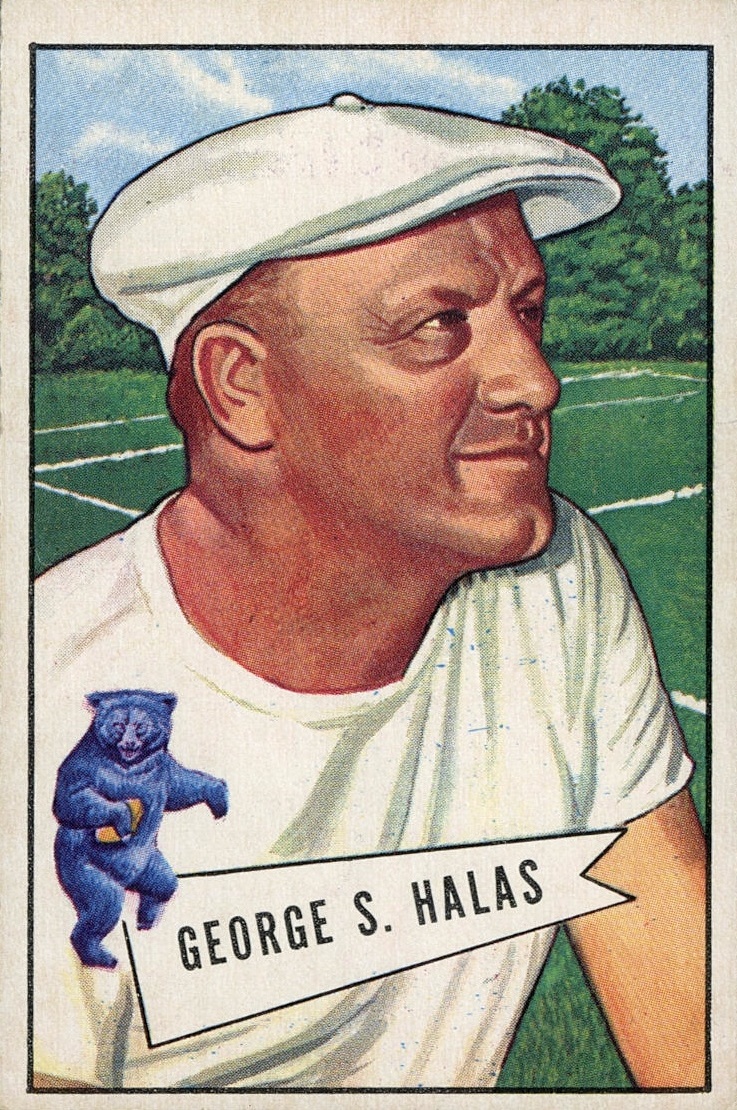
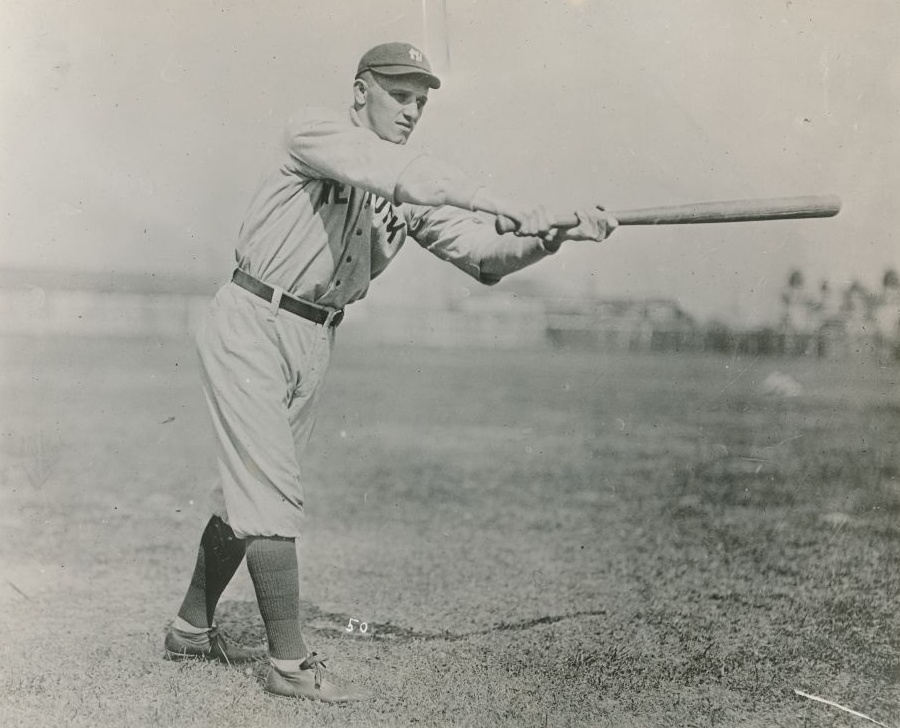
If you’re an NFL fan like I am, you know all the greats of the leagueGeorge Halas, player, coach, and owner of the Chicago Bears, definitely fits into that category. But what you might not know is that he served in the U.S. Armed Forces and even received the Bronze Star for his actions in the Pacific during World War II.

Let’s take a few moments to look at this incredible man who loved the sport of football so much but did not shirk from his duty to serve his country. Maybe this article will inspire you to read about all the other incredible NFL players who are also veterans!

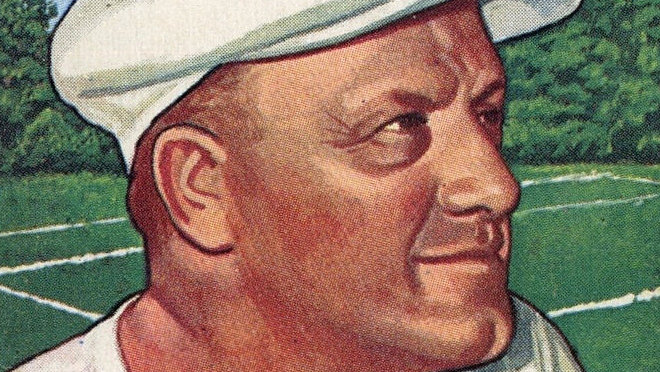
A George Halas sports card (#48) produced by Bowman Gum in 1952.
A George Halas sports card (#48) produced by Bowman Gum in 1952. Source: Wikipedia.

Who Was George Halas?

Born in Chicago on February 2, 1895, George Halas grew up in a very disciplined and frugal family. It’s no surprise then that he carefully saved money in order to attend the University of Illinois in Urbana-Champaign. He had been a sports nut since he was growing up, and he played football, baseball, and basketball in college.

Right before his final semester at Illinois, Halas enlisted in the United States Navy because the United States had World War I. Even though he did not complete all of the required coursework, Halas still later received his college degree. Assigned to Great Lakes Naval Base outside of Chicago, Halas was responsible for organizing the service football and basketball teams.

Halas’s first foray into the professional sports world was abysmal. Although he had gained a spot on the roster of the New York Yankees in 1919, a hip injury keep him relatively sidelined for a good portion of the season and he struggled when he hit the starting lineup.

George Halas After Baseball

His baseball career was over, so he returned to the Chicago area and worked for the railroad by day and played football on the weekends. In early 1920, Halas received a call from the Staley Starch Works, located in Decatur, Illinois. A.E. Staley, the owner of the company, wanted Halas to oversee the day-to-day operations of the manufacturing plant as well as organize and coach the company’s football and baseball teams. Halas was delighted.

Shortly after Halas arrived in Decatur, several club football teams of companies got together on September 17, 1920 in Canton, Ohio and formed the basic structure of the American Professional Football Association, which would later be renamed the National Football League (NFL) in 1924.

George Halas, "Papa Bear" New York Yankees Spring Training Hopeful
George Halas, "Papa Bear" New York Yankees Spring Training Hopeful. Source: Wikipedia.

Even though the Decatur team had had a successful season, A.E. Staley encouraged Halas to take the team to Chicago because the former didn’t think a professional football team could survive in Decatur. He offered Halas $5,000 to get started as long as Halas kept the team name of the Staleys for at least one season.

In 1922, Halas chose to rename the team the Bears to acknowledge the goodwill of William Veeck, Sr., the owner of the Chicago Clubs who allowed the Staleys to share Wrigley Field in exchange for a portion of the concessions, gate, and program sales.

In addition to coaching the Staleys and later Bears throughout the 1920s, Halas also played various positions on the team until he retired as a player after the 1929 season. In 1930, he hired another head coach for several years, who took the Bears to the 1932 championship. Perhaps because Halas wanted a championship himself, he returned to coaching. His 1933, 1940, and 1941 teams won the NFL championships with Halas as their head coach.

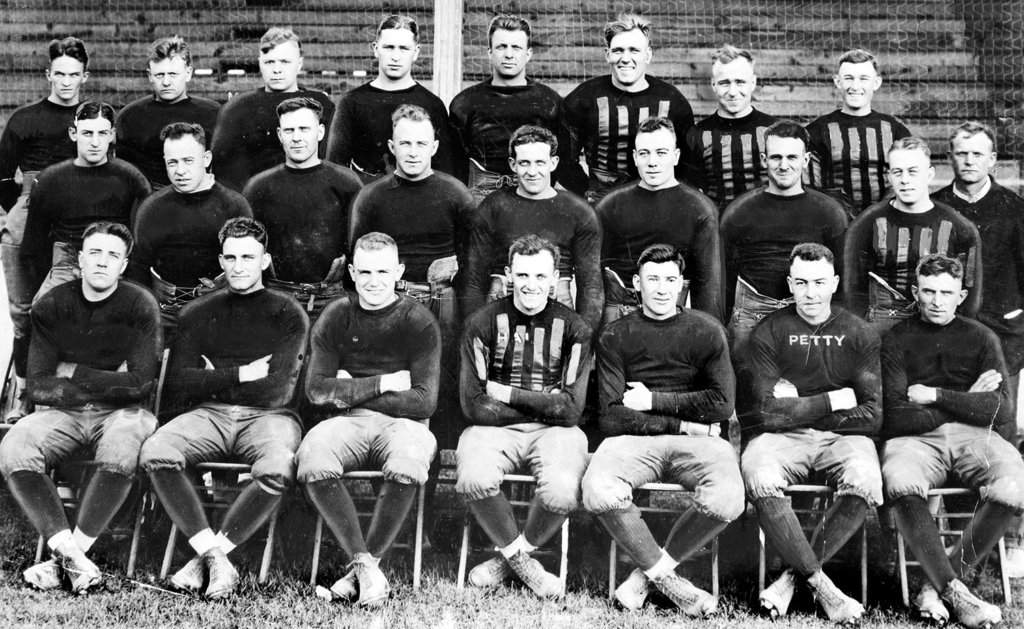
The 1920 Decatur Staleys football team. It would be later renamed "Chicago Bears".
The 1920 Decatur Staleys football team. It would be later renamed "Chicago Bears". Source: Wikipedia.

George Halas Enlists in the Navy

Following the attack on Pearl Harbor, Halas took a break from coaching for a while and re-enlisted in the Navy. He would spend the majority of his three years of service in the South Pacific, predominantly organizing R&R and entertainment for the troops there.

When he returned to the Bears at the end of the 1945 season, Halas led the Bears to yet another championship in 1946. Luke Johnsos and Hunk Anderson had won another title for the Bears in 1943.

The 1950s were a dry season for the Bears, as they won no championships, and Halas, who had come to be known as “Papa Bear” retired from coaching the Bears in 1955. Even though he continued to meddle on the sidelines for two years, Halas couldn’t stay away and returned to the head coach position.

He finally got his elusive one more championship in 1963. He would remain as Head Coach for several more years before finally giving up the reins, retiring after the 1967 season with 318 career wins and six NFL championships.

In 1982, Halas hired Mike Ditka, who had previously played with the Bears, as head coach, and a year later, Halas was diagnosed with pancreatic cancer, dying on October 31, 1983 at the age of 88.

Before he died, he gave Ditka a bottle of Dom Perignon champagne with the instructions that he wasn’t supposed to open it until Ditka won a Super Bowl. That happened on January 26, 1986 against the New England Patriots with a score of 46-10, and Ditka celebrated with that bottle of champagne!

Halas never forgot his service during the World Wars, though, as he hung a picture of Admiral Nimitz who Halas served under during World War II in his office. In addition, he helped start a Bears preseason tradition of the Armed Forces benefit game.

In a 1946 advertisement featuring a photo of Halas flanked by Nimitz and Dwight D. Eisenhower with Eisenhower handing Halas a football, the caption read: “We Must Carry the Ball for Them,” encouraging the general public to come to a game between the Bears and the Giants to support official relief agencies for the Army, Navy, and Army Air Forces.

Although Halas may be remembered more for his time in the NFL, we certainly can’t forget his service during both of the World Wars.

Sources

Guest Contributor: Rachel Basinger is a former history teacher turned freelance writer and editor. She loves studying military history, especially the World Wars, and of course military medals. She has authored three history books for young adults and transcribed interviews of World War II veterans. In her free time, Rachel is a voracious reader and is a runner who completed her first half marathon in May 2019.

Fighter Aces: Yekaterina Budanova, Soviet Air Force Pilot

Yekaterina Budanova was one of the world’s two female fighter aces. During WW2, she achieved five air victories, went solo hunting, and was awarded several medals.
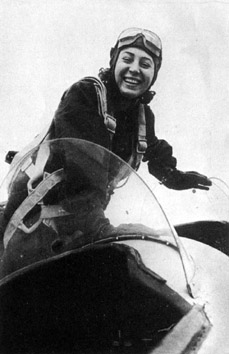
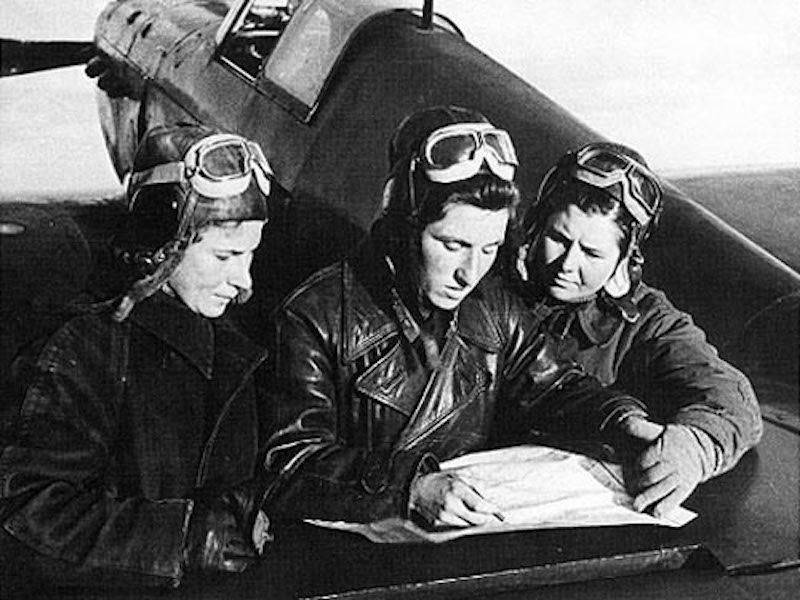
Yekaterina Budanova, also known as Katya, was one of the world’s two female fighter aces. During World War IIshe achieved five air victories and was given permission for “solo hunting,” an honor given to aggressive and successful pilots. She was posthumously awarded the title Hero of the Russian Federation medal in 1993.
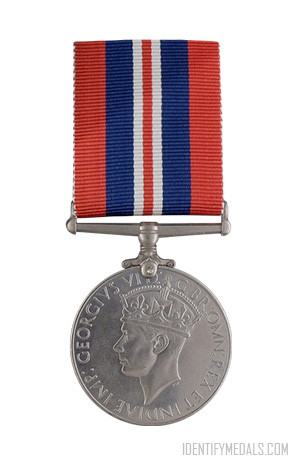
Who Was Yekaterina Budanova?

Yekaterina Budanova c. 1940.
Yekaterina Budanova c. 1940. Source: Wikipedia.

Yekaterina was born in 1916 in Smolensk, a village in Russia, to a peasant family. She had top grades in school, but had to begin working as a nanny to care for her family after her father’s death. When she was thirteen, she was sent to Moscow to join her sister. She first began working as a carpenter in an aircraft factory, where she developed an interest in aviation. She soon joined a local aeroclub’s parachutist section and got her flying license in 1934, becoming a flight instructor in 1937. During several air parades she joined, she flew a Yakovlev UT-1 🔗, a single-seater trainer aircraft used by the Soviet Air Force from 1937 until the late 1940s.

It wasn’t until 1939 that a law on “universal military duty” was passed, allowing women to be formally accepted into the military. Even when the law proved to be more theoretical than practical and women faced harassment and disdain when enlisting, once they proved their ability to accomplish a number of tasks they quickly earned the respect of their commanders. Still, the work that women were doing was mostly hidden by the government as they did not want the Red Army to appear weak, or raise women’s expectations for permanent or front-line roles in the military.

Yekaterina Budanova and Her Military Career

Yekaterina enlisted in military aviation in June 1941, after the German attack on the USSR, and was assigned to the 586th Fighter Aviation Regimenta unit consisting only of female pilots and formed by Marina Raskova, record holder for a non-stop flight and survivor of a crash-landing in Siberia. The units consisted usually of three women, usually instructors or members of pre-war flying clubs.

On 10 September, Budanova was assigned with Lydia Litvyak, Mariya Kuznetsova, and Raisa Belyayeva to the 437th Fighter Aviation Regiment, based on the east bank of the Volga river and in constant engagement with the fighting over Stalingrad. This is where Yekaterina shot down her first opponent alongside Litvyak, a Messerschmitt Bf 109 🔗 fighter. Her first two solo victories were against a Junkers Ju 88 🔗 and a Bf 109.

Budanova and Litvyak later served with the elite 9th Guards Fighter Regiment, commanded by a Hero of the Soviet Union, Lev Shestakov, where they were allowed to remain for an extra three months after other women were returned to the 586th. While Yekaterina was described as a “cheerful, lively character”, Litvyak looked “thoughtful and quiet”.

Pictured at center, Yekaterina Budanova was one of the only women fighter pilots of World War II.
Pictured at center, Yekaterina Budanova was one of the only women fighter pilots of World War II. Source: Wikimedia Commons.
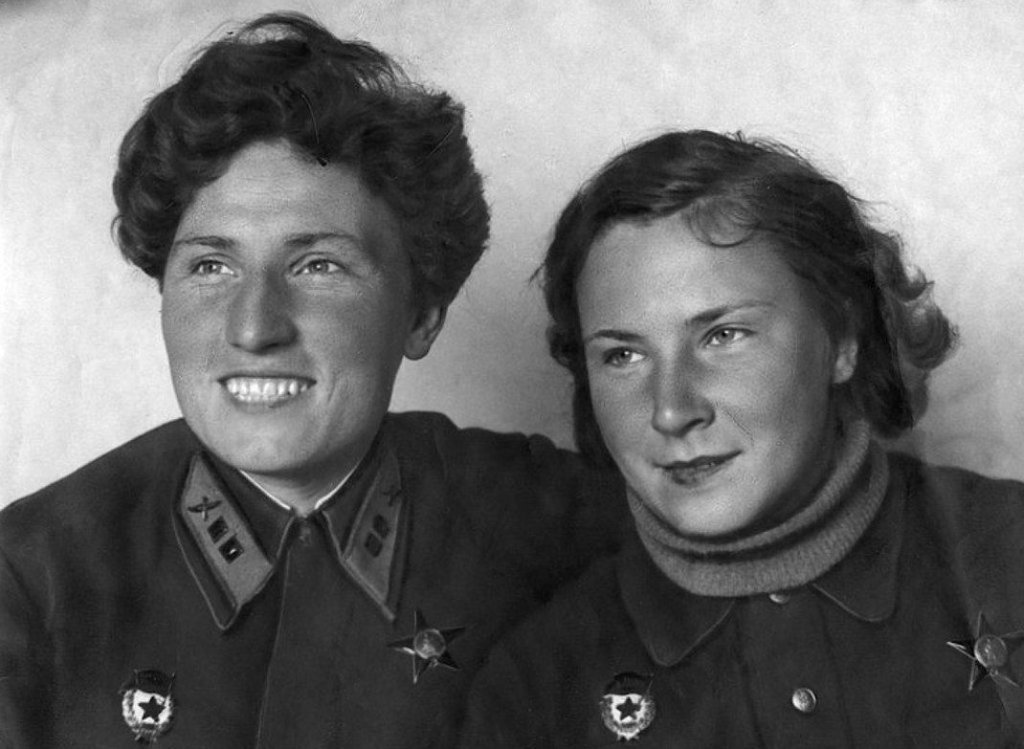
Yekaterina Budanova, left, with fellow ace Lydia Litvyak, posing together in 1943.
Yekaterina Budanova, left, with fellow ace Lydia Litvyak, posing together in 1943. Source: Wikimedia Commons.

Yekaterina Budanova's Lone Wolf Operations

It was when Budanova and Litvyak were moved to the 296th Fighter Aviation Regiment of Nikolai Baranov (or 73rd Fighter Aviation Regiment) that they achieved the bulk of their combat claims. Budanova was given permission to become a “lone wolf” and do freelance operations just like the best male pilots. In 23 February 1943 she was awarded the Order of the Red Star. By June 1943, Budanova had six victories to her credit and heavy air combat saw her claims raised to 11.

Budanova’s last mission happened on 19 July 1943 near Novokrasnovka. In the morning she took off to do an escort mission and got involved in a dogfight with Bf 109s near Antratsit in Luhansk Oblast. She shot down one (her fifth solo kill) and damaged another, but her aircraft was also hit. She managed to put out the fire and force landed in no-man’s land, but she was already dead when local farmers tried to pull her from the aircraft.

Inna Pasportnikova recalled the fight:

She spotted three Messerschmitt going on the attack against a group of bombers. Katia attacked and diverted the enemy. A desperate fight developed in the air. Katia managed to pick up an enemy aircraft in her sight and riddle him with bullets. This was the fifth aircraft she killed personally. Katia’s fighter rapidly soared upward and swooped down on a second enemy aircraft. She “stitched” it with bullets, and the second Messer, streaming black smoke, escaped to the west. But Katia’s red starred fighter had been hit; tongues of flame were already licking at the wings.”

Budanova was buried on the outskirts of the village of Novokrasnovka. It’s believed that the pilot that shot her down was either Georg Schwientek of JG 52 or Emil Bitsch, of 8./JG 3.

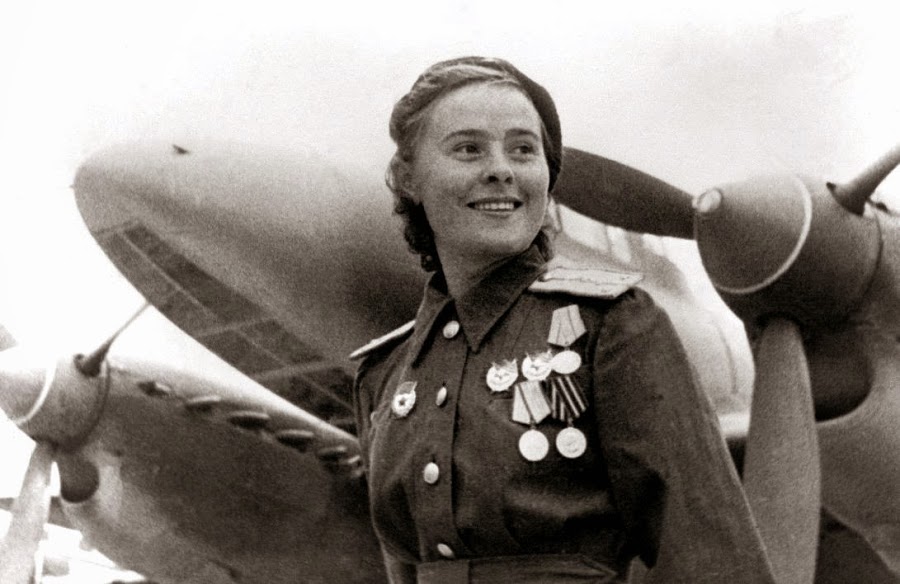
Yekaterina Budonova, Soviet Fighter Pilot Posing In Front Of Her Yak-1.
Yekaterina Budonova, Soviet Fighter Pilot Posing In Front Of Her Yak-1. Source: Wikimedia Commons.

Yekaterina Budanova's Medals

Yekaterina Budanova's Fighter Ace Victories

Yekaterina Budanova claimed an estimated total of 11 kills (5 of which were solo) in her career as a combat pilot, making her one of the war’s two female fighter aces. She was twice awarded the Order of the Patriotic War, and although she was nominated for the title of Hero of the Soviet Union during the war, she never received it. She was instead posthumously awarded the title Hero of the Russian Federation on 1 October 1993.

Although Budanova’s accomplishments were celebrated, most of the work done by women was quietly dismissed at the end of the war. Those who served in the military were forced to turn in their uniforms and take up more traditional roles, and Soviet paper Pravda wrote that the women soldiers should not “forget about their primary duty to nation and state—that of motherhood.”

In the 1960s and onward, women took on workforce roles in engineering and medicine, although men continued to dominate supervisory and leadership roles. Today, women  are allowed to serve in the Russian military, but still confront various forms of sexism, including being encouraged to participate in state-sponsored military beauty pageants.

Sources:

  • https://www.smithsonianmag.com/history/soviet-ace-shot-down-nazi-pilots-with-great-skill-but-her-feats-are-mostly-forgotten-today-180969698/
  • https://ww2db.com/person_bio.php?person_id=645
  • https://www.rbth.com/history/326811-two-young-soviet-top-guns