

The Purple Heart: America’s Oldest Decoration Still Awarded Today

Fox enlisted in the Marine Corps in 1950 and served for 43 years until mandatory retirement at age 62, holding ranks from private to colonel.

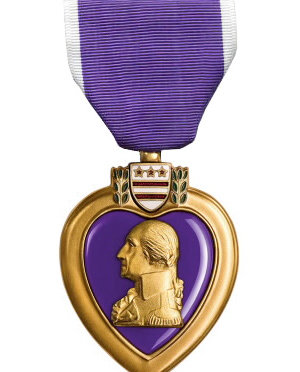
August 7 may not be a significant day to you, but over 230 years ago, General George Washington established the Badge of Military Merit, which we know today as the Purple Heart. This was August 7, 1782, and the medal is still awarded today!

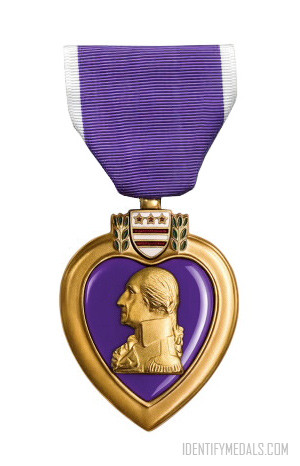
What's the Purple Heart?

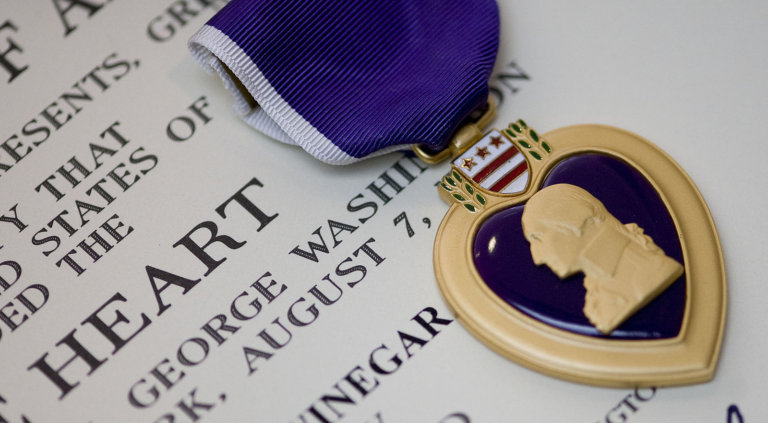
The Purple Heart medal is prepared for a presentation ceremony at the Center for the Intrepid, Fort Sam Houston, Texas, Nov. 17, 2008.
The Purple Heart medal is prepared for a presentation ceremony at the Center for the Intrepid, Fort Sam Houston, Texas, Nov. 17, 2008. Courtesy of the United States Air Force.

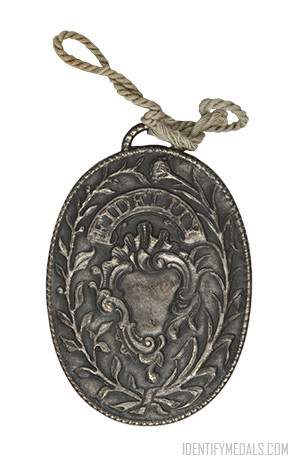
While the Fidelity Medallion was created in 1780 by the Continental Congress and thus preceded the Purple Heart, it was only awarded to three soldiers in that year and was never again bestowed. For this reason, the Badge of Military Merit and later the Purple Heart is considered to be the first U.S. military decoration.

Before 1782, military awards throughout different countries were almost exclusively given to officers to had achieved significant victories in battle. The Badge of Military Merit was one of the first awards in military history that could be awarded to enlisted soldiers or noncommissioned officers for “unusual gallantry in battle” as well as “extraordinary fidelity and essential service,” in Washington’s words.

Three Continental Army noncommissioned officers—Sergeant Daniel BissellSergeant William Brown, and Sergeant Elijah Churchill—received the Badge of Military Merit for spying and acquiring intelligence, gallantry during assaults on the British positions at Yorktown, and heroism during two raids against British fortifications on Long Island respectively. Then for 150 years, the Badge of Military Merit fell into oblivion and was not awarded.

The New Version of the Badge of Military Merit

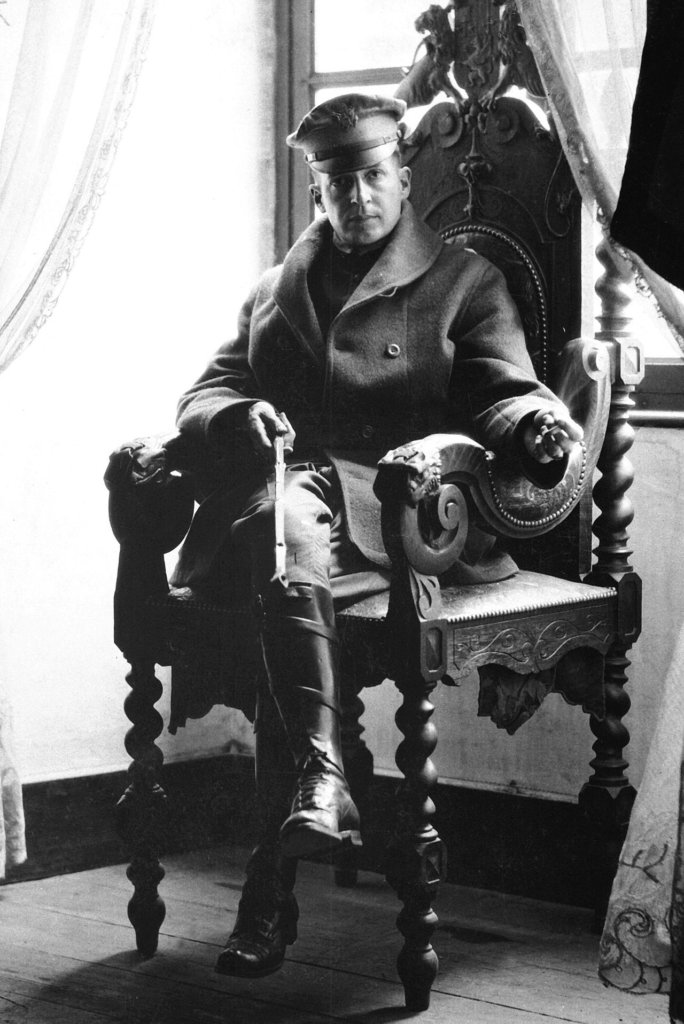
General of the Army Douglas MacArthur at St. Benoit Chateau, France.
General of the Army Douglas MacArthur at St. Benoit Chateau, France. Source: Wikipedia.

In 1932General Douglas MacArthur spearheaded an effort to revive and rename the award in time for the bicentennial of  George Washington’s birth. Working with the Washington Commission of Fine Arts and Elizabeth Will, a heraldry specialist in the Army’s Office of the Quartermaster General, MacArthur designed the award to commemorate bravery—its original goals—as well as recognition of soldiers with wounds.

In MacArthur’s estimation, a soldier had to demonstrate bravery if he received wounds from the enemy. In July 1932, MacArthur would receive the first Purple Heart—Purple Heart No. 1—as Arabic numerals were impressed on the edge of all pre-World War II Purple Hearts.

Originally, the award was only for wounds, as MacArthur saw the award as recognizing superior service of the living, the Purple Heart was modified on April 28, 1942 to allow posthumous award due to the significant loss of life. Several months later on September 4, 1942, the War Department designated the Purple Heart exclusively for wounds or deaths in combat.

It was not until during World War II in 1944 that the qualifications for receiving a Purple Heart were changed to what we know it for todayan award that is given to recognize those wounded or killed in combat. Since 1944, the military has modified the award some, clarifying what constituted a combat wound or death, including service members wounded in acts of terrorism as well as soldiers injured in friendly fire.

In the 1950s, there was controversy regarding awarding the Purple Heart for frostbite. While soldiers and sailors were not given the medal for that condition, aviators did award the Purple Heart for frostbite. This was later changed, removing frostbite as an eligible injury. In 1989, a similar controversy arose when a soldier suffered heat stroke during an invasion in Panama and received the Purple Heart. Due to the outcry from veterans, heat stroke was removed as an eligible injury.

On February 23, 1984, President Ronald Reagan signed an executive order that allowed the Purple Heart to be issued for injuries due to acts of terrorism. Similarly, in 1996, regulations were changed to allow prisoners of war to receive the Purple Heart.

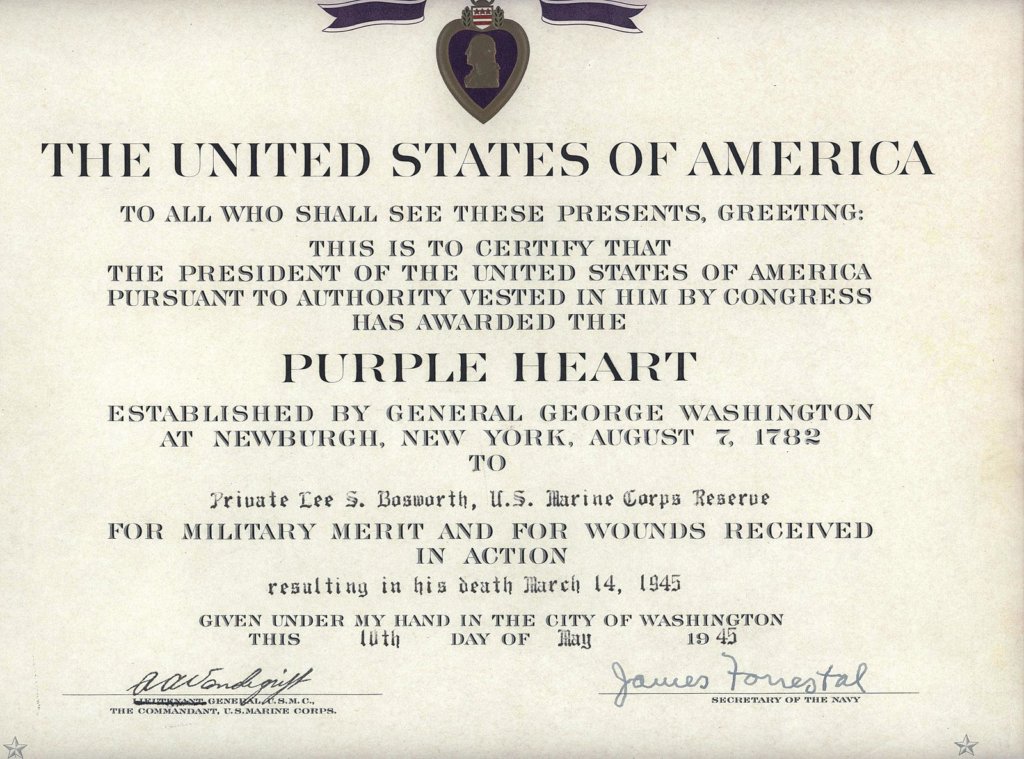
Purple Heart certificate posthumously awarded to Lee Bosworth for wounds received in action on Iwo Jima.
Purple Heart certificate posthumously awarded to Lee Bosworth for wounds received in action on Iwo Jima. Source: Wikipedia.

Finally, in 2008, military members can receive the Purple Heart if they have a mild traumatic brain injury due to an IED, for example, if minimum medical treatment was required. PTSD, however, is not a condition for receiving the award, as a Pentagon panel decided that it is a secondary effect of enemy action that wounds a soldier.

What is unique about the Purple Heart is that it is an entitlement and does not depend upon the recommendation of a superior officer. Any service member that meets basic criteria—generally a wound that occurred during hostilities and that required treatment documented by a medical officer—will receive the Purple Heart. Since the Purple Heart’s reestablishment in 1932, over 1.8 million Purple Hearts have been awarded to airmen, Marines, sailors, and soldiers.

While individual service members can apply for the award, it is more common for command superiors to submit an awards package that demonstrates that a particular service member has met the criteria for the award. Even so, the process can differ by branch and theater of operations.

Awards By War

In the years that followed between 1932 and the first issue of the new award to MacArthur, tens of thousands of World War I veterans received the Purple Heart retroactively for actions during World War I.

The majority of the awards were given for actions during World War II with over one million service members receiving the Purple Heart during the Second World War. Also a Medal of Honor recipient, Audie Murphy was likely the most famous recipient of the Purple Heart during World War II and was awarded three Purple Hearts.

Over 100,000 Purple Hearts were awarded to service members wounded or killed in action in the Korean War that lasted between 1950 to 1953, while over 350,000 Purple Hearts were awarded during the Vietnam War.

Finally, over 30,000 Purple Hearts have been awarded to soldiers for wounds and deaths since 2001.

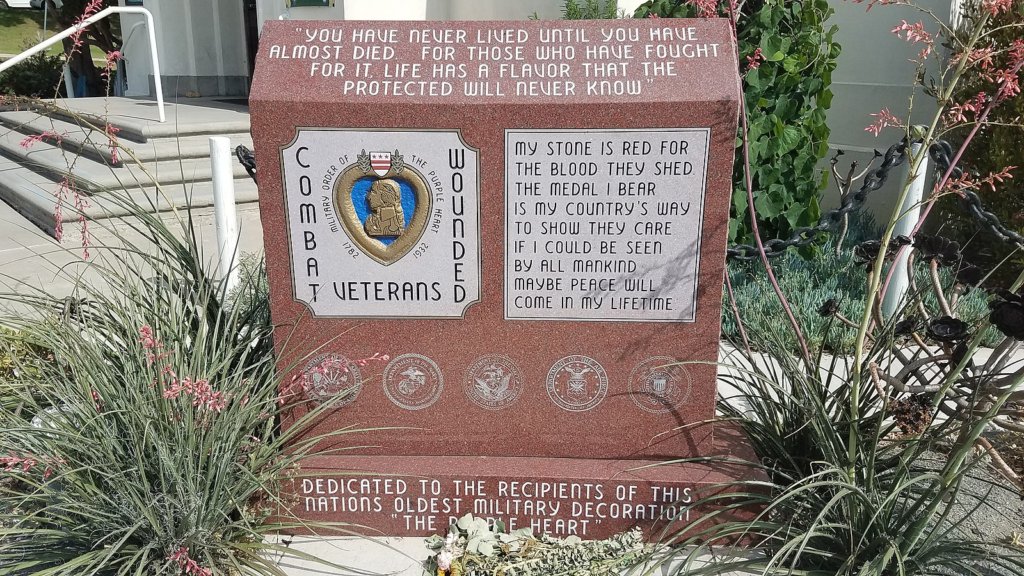
Balboa Park Purple Heart monument
Balboa Park Purple Heart monument. Source: Wikipedia.

Famous Recipients of the Purple Heart

The only U.S. president to receive the honor of the Purple Heart was John F. Kennedy who was wounded in action on August 2, 1944, when the patrol torpedo boat under his command—PT-109—was divided in half and sunk by a Japanese destroyer near the Solomon Islands. Many newspapers covered his injuries, which helped propel him to success in politics in Massachusetts after the war.

While civilians are no longer eligible for the Purple Heart, war correspondent Ernie Pyle is an exception. Pyle wrote for the Scripps Howard news service, was killed in April 1945, and was awarded the Purple Heart in April 1983.

Military records suggest that General Robert T. Frederick and Colonel David H. Hackworth have been the soldiers who have received the most awards of the Purple Heart, acquiring an astounding eight awards of the decoration.

General Frederick received all of his awards during World War II, including three Purple Hearts awarded for actions on June 4, 1944 for wounds on three separate occasions by bullets that hit his thighs and right air. He received his eighth and last Purple Heart while leading a parachute assault during Operation Dragoon near Saint-Tropez, France.

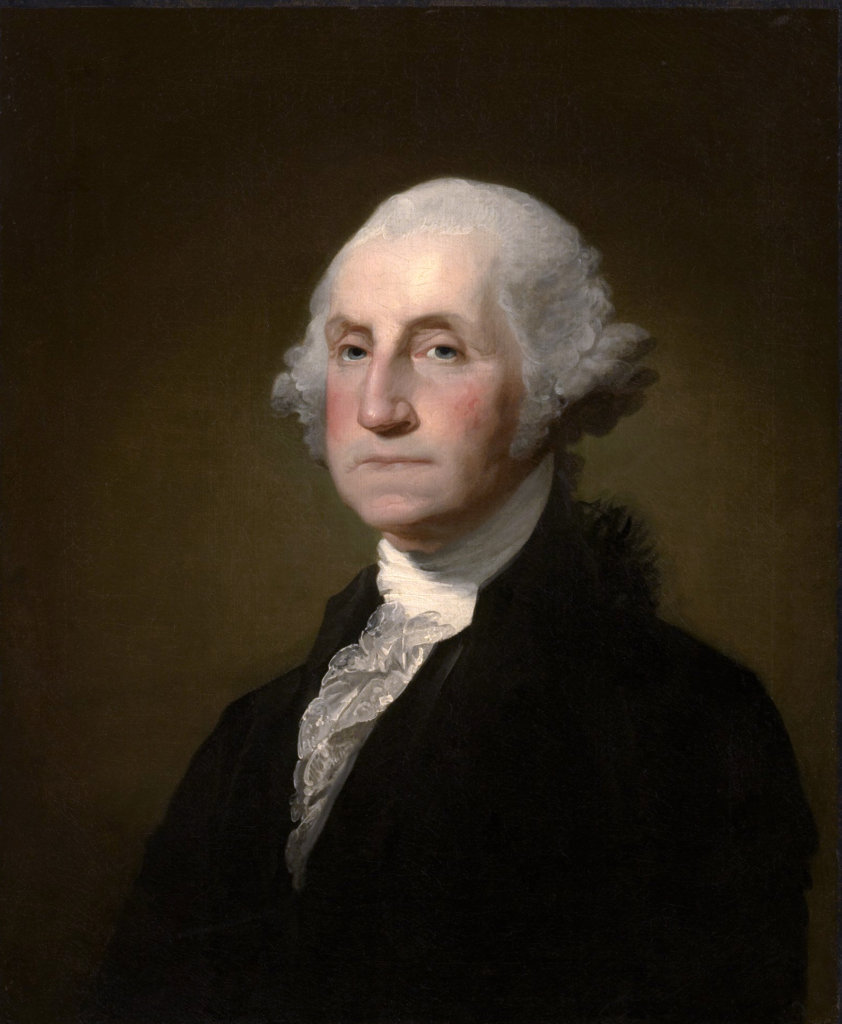
Portrait of George Washington (1732–99) based on the uncompleted Antheneum portrait by Stuart.
Portrait of George Washington (1732–99) based on the uncompleted Antheneum portrait by Stuart. Source: Wikipedia.
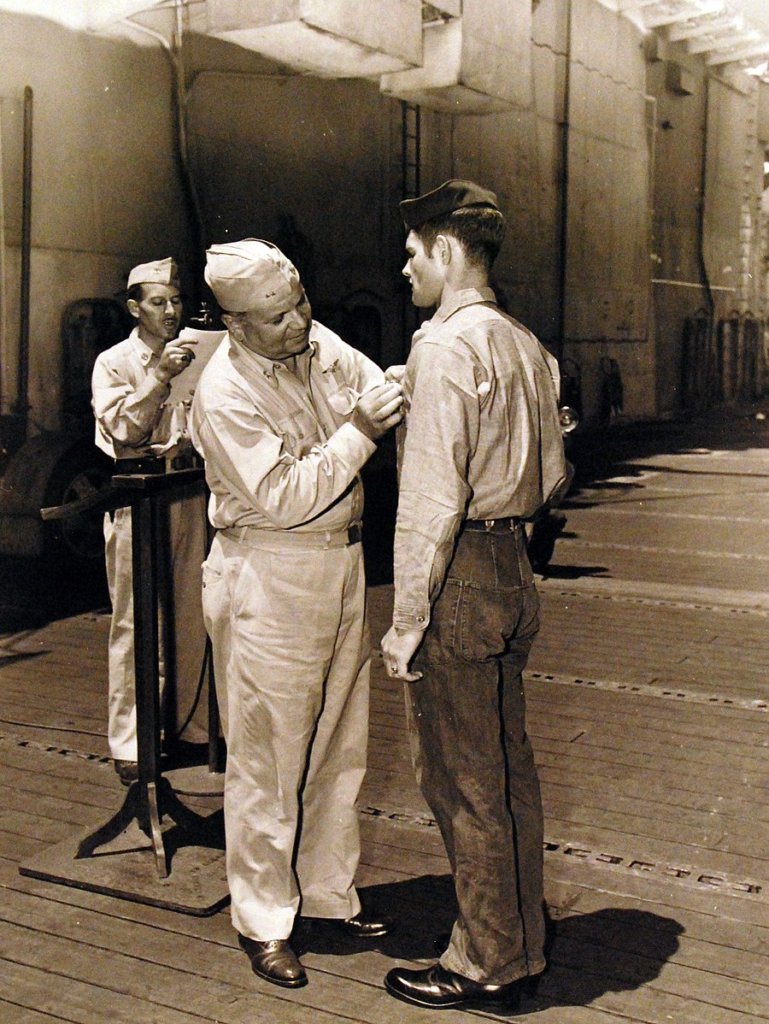
July 7, 1944. Rear Admiral Ralph Davidson presenting the Purple Heart to personnel onboard the carrier.
July 7, 1944. Rear Admiral Ralph Davidson presenting the Purple Heart to personnel onboard the carrier. Source: Wikipedia.
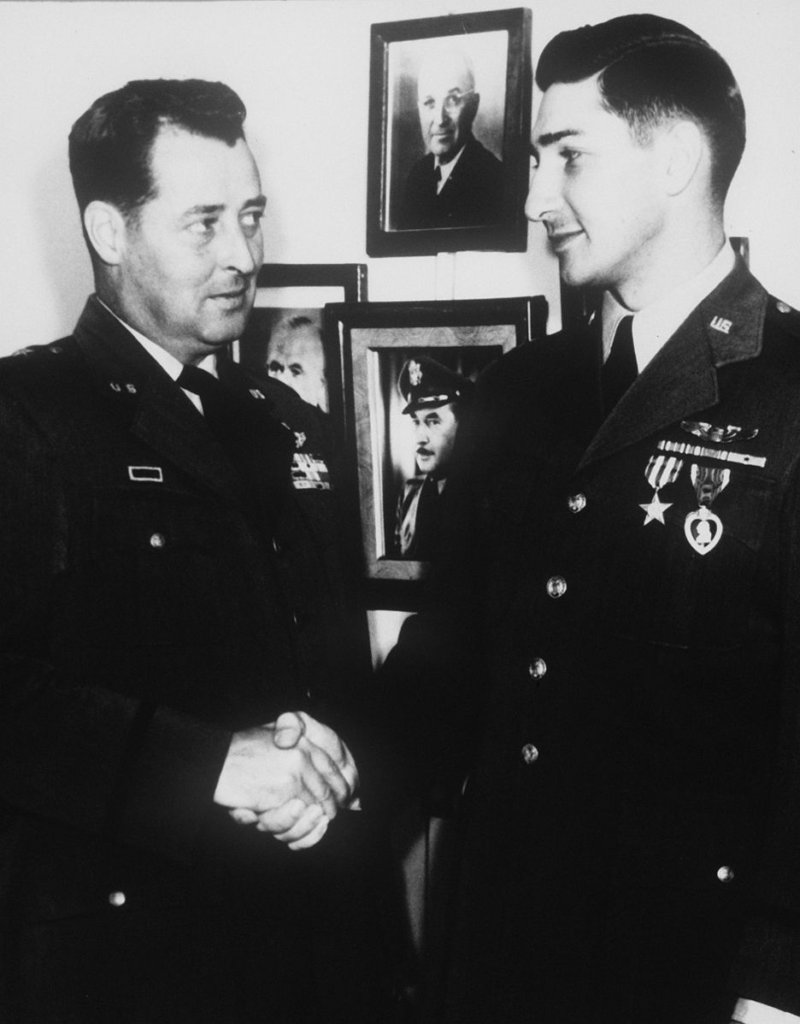
U.S. Air Force pilot receiving the Purple Heart and Silver Star during the Korean War.
U.S. Air Force pilot receiving the Purple Heart and Silver Star during the Korean War. Source: Wikipedia.
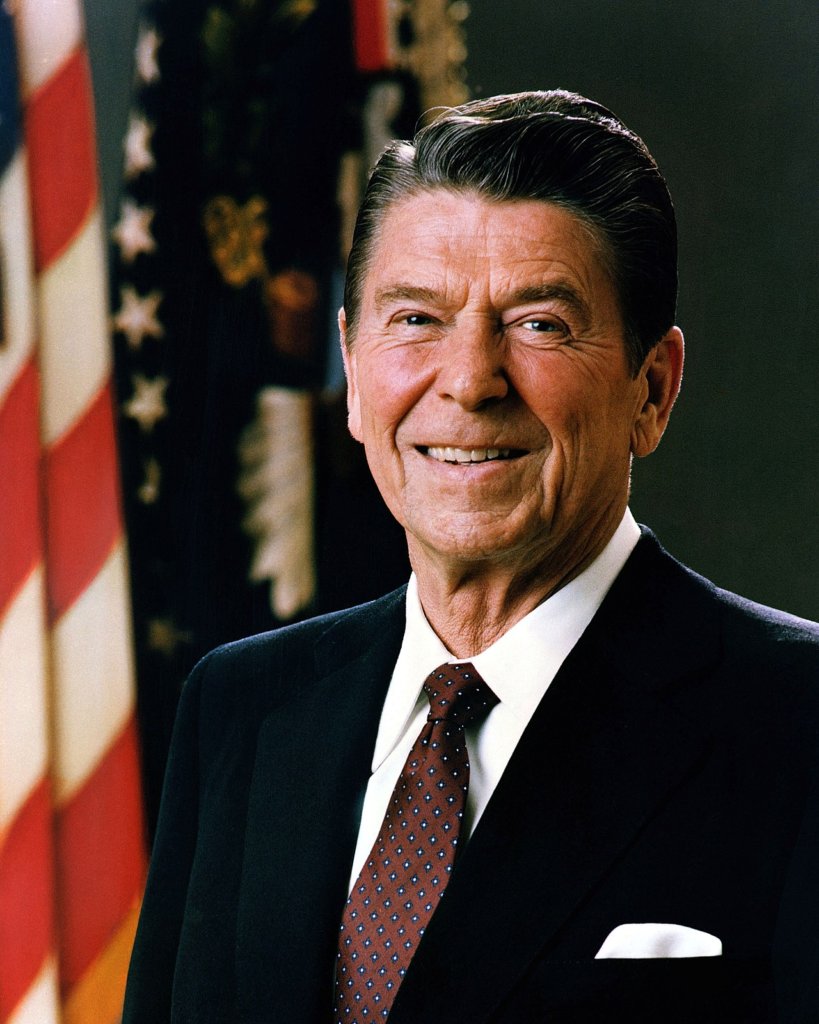
Official Portrait of President Reagan
Official Portrait of President Reagan, taken 8 Apr 1983. Source: Wikipedia.

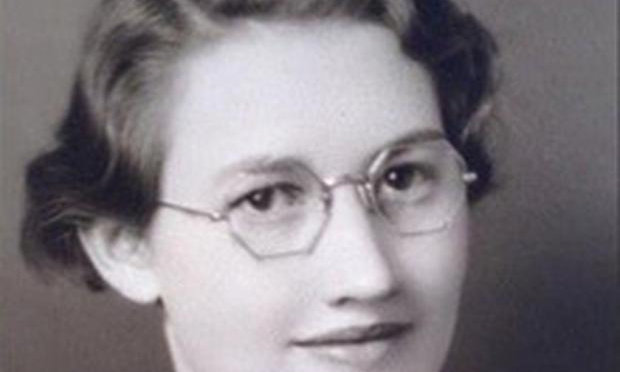
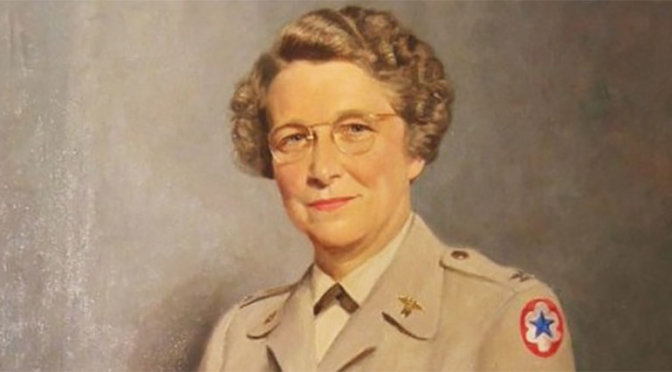
Army Lieutenant Annie G. Fox was the first woman to receive a Purple Heart for her actions during Pearl Harbor, remaining calm throughout the attack and successfully directing hospital staff to care for the wounded.

Cordelia “Betty” Cook was the first woman to receive both the Purple Heart and the Bronze Star. While working as a combat nurse at a field hospital on the Italian front, Cook sustained shrapnel wounds in 1943 but continued to work despite her injuries. She received both awards for her actions.

Some people receive their awards many years after being wounded, including Calvin Pearl Titus, who was wounded on August 15, 1900 in China, but did not receive his Purple Heart until February 17, 1955. He was seventy-six years old when he was awarded the Purple Heart, having retired from the Army in October 1930 with the rank of lieutenant colonel.

Other famous recipients include Marine legend Lewis Burwell “Chesty” PullerJohn KerryColin PowellJohn McCain, and even animals like Sergeant Stubby the dog and Sergeant Reckless the horse.

Like the Medal of Honor, the Purple Heart is a military decoration recognized by civilians and military members alike. We could never begin to even touch on all the individuals and their actions that merited the Purple Heart due to the enormous number of recipients, but it’s important to honor those that we do know.

The next time you see a veteran with a hat that indicates he or she received a Purple Heart, take the time to stop and ask him or her about his or her story. It’s probably pretty amazing.

Sources:

Guest Contributor: Rachel Basinger is a former history teacher turned freelance writer and editor. She loves studying military history, especially the World Wars, and of course military medals. She has authored three history books for young adults and transcribed interviews of World War II veterans. In her free time, Rachel is a voracious reader and is a runner who completed her first half marathon in May 2019.

Sergeant Stubby and Sergeant Reckless, Decorated Dog and Horse

Animals have always been a crucial part of the war effort, as humans have enlisted them to help fight their wars since prehistoric times.
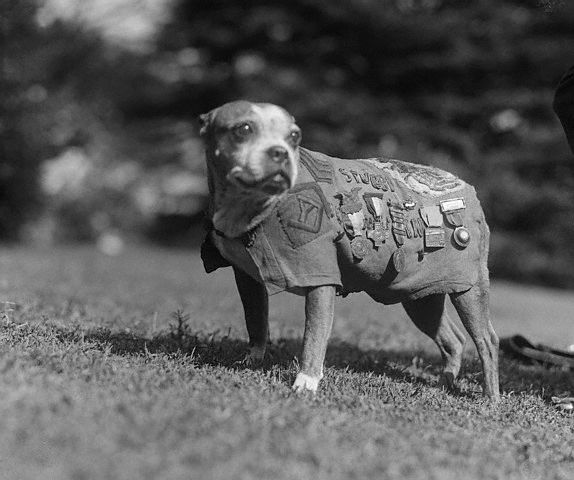
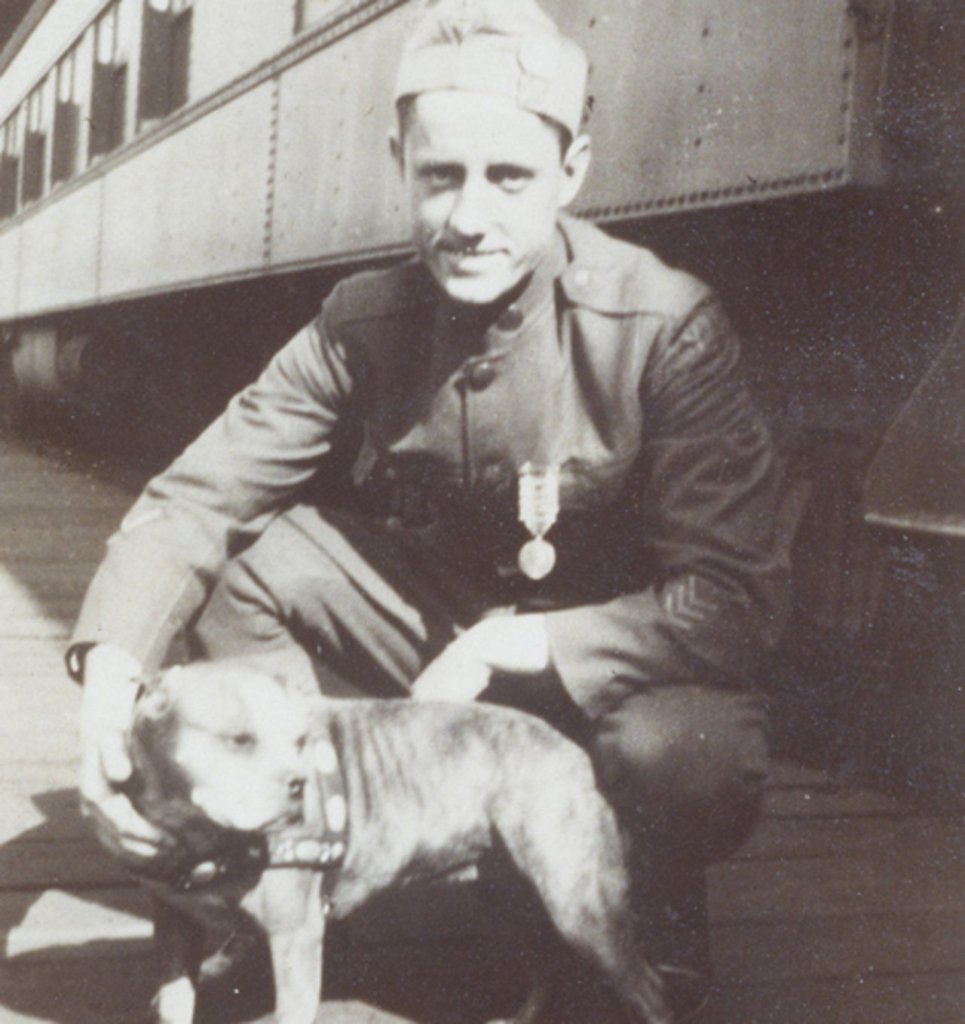
Animals have always been a crucial part of the war effort, as humans have enlisted them to help fight their wars since prehistoric times. Horses, elephants and camels have in the past hauled men and supplies; pigeons carried messages and done photographic espionage. Even rats and pigs have been used in warfare and other combat related activities. But did you know that some of them received medals?
Sergeant Stubby

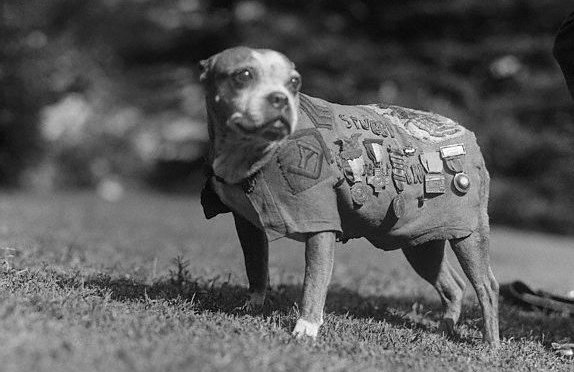
Sergeant Stubby wearing military uniform and decorations.
Sergeant Stubby wearing military uniform and decorations. Source: Wikipedia.
Sergeant Stubby with Corporal Robert Conroy
Sergeant Stubby with Corporal Robert Conroy. Courtesy of BBC.

Born in 1916, Sargent Stubby served for 18 months and participated in seventeen battles on the Western Front. During World War I, this dog was the official mascot of the 102nd Infantry Regiment and was assigned to the 26th (Yankee) Division. He was so popular that his actions were well-documented in contemporary American newspapers.

Stubby was a dog of “uncertain breed“, most likely a Bull Terrier or Boston Terrier. Ann Bausum wrote that “The brindle-patterned pup probably owed at least some of his parentage to the evolving family of Boston Terriers, a breed so new that even its name was in flux: Boston Round Heads, American Bull Terriers, and Boston Bull Terriers.

Stubby’s story is unique. As members of the 102nd Infantry were training in the Yale University campus in New Haven, Connecticut in July 1917, Stubby was found wandering the grounds and one soldier, Corporal Robert Conroy, developed a fondness for him. Conroy got so attached that he hid Stubby on board the troop ship, who remained undetected under his overcoat until they got off the ship in France. Luckily for everyone who was to come into contact with him n the future, the commanding officer allowed the dog to stay on board.

Stubby entered combat on February 5, 1918, at Chemin des Dames, north of Soissons in France. Serving with the 102nd Infantry Regiment in the trenches, Stubby participated in four offensives and 17 battles. He was wounded in the foreleg by the retreating Germans throwing hand grenades during a raid to take Seicheprey in April 1918, and sent to the rear for convalescence.

He was also injured by mustard gas, but after he recovered he returned with a specially designed gas mask to protect him. He soon learned to warn his unit of poison gas attacks and became very adept at letting his unit know when to duck for cover, as he could hear the whine of incoming artillery shells before humans. Stubby also helped locate wounded soldiers in no man’s land and was solely responsible for capturing a German spy in the Argonne, reason he was nominated for the rank of sergeant.

After Château-Thierry was retaken by the US, the women of the town made Stubby a chamois coat on which were pinned his many medals.

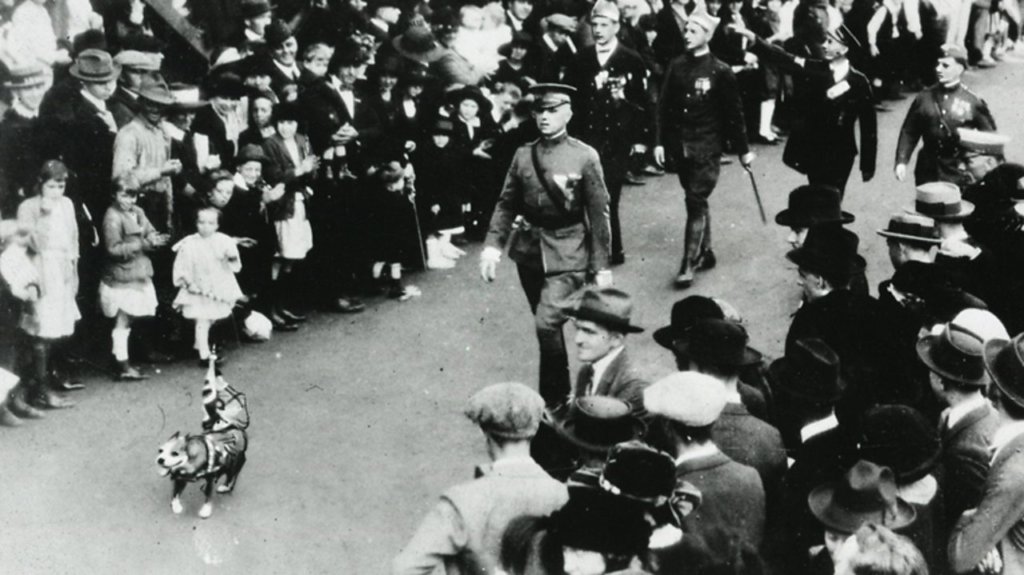
Stubby marched through many parades
Stubby marched through many parades. Photo courtesy of BBC.

At the end of the war, Robert Conroy smuggled Stubby home where he became a celebrity and marched in, and normally led, many parades across the country. He even met Presidents Woodrow WilsonCalvin Coolidge, and Warren G. Harding, was presented a gold medal from the Humane Education Society, attended Georgetown University Law Center with Conroy and became the Georgetown Hoyas‘ team mascot.

Stubby died in his sleep in 1926. His skin was mounted on a plaster cast and presented to the Smithsonian in 1956. Stubby’s obituary in the New York Times was half a page, much longer than those of many notable people of the time. The descendants of Robert Conroy (Stubby’s inseparable companion) dedicated a life-size bronze statue of Stubby named “Stubby Salutes”, by Susan Bahary, in the Connecticut Trees of Honor Memorial at Veteran’s Memorial Park in Middletown, Connecticut in May 2018.

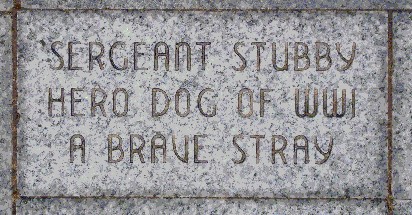
Sgt Stubby's brick at Liberty Memorial
Sgt Stubby's brick at Liberty Memorial. Source: Wikipedia.

Sergeant Reckless

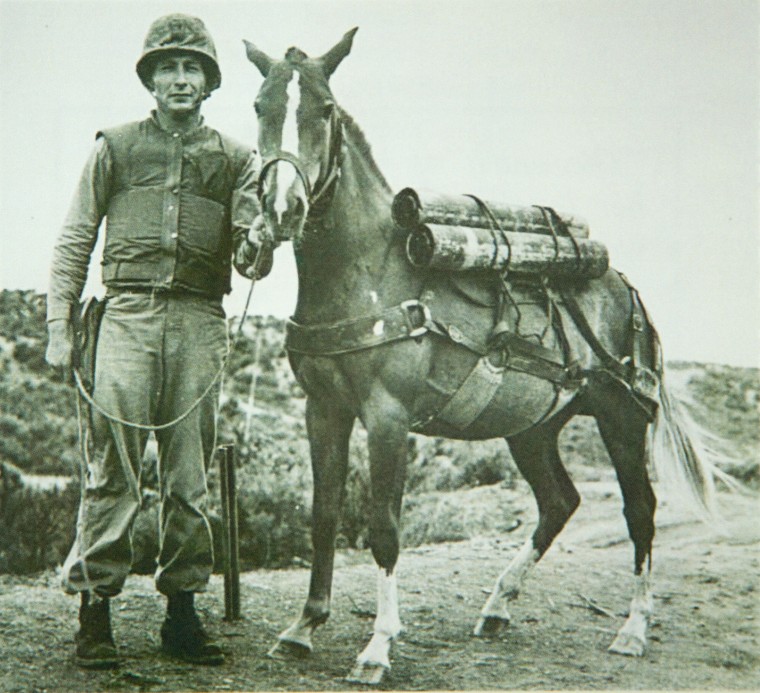
Reckless with her main caretaker, US Marine Sergeant Joseph Latham.
Reckless with her main caretaker, US Marine Sergeant Joseph Latham. Source: Wikipedia.
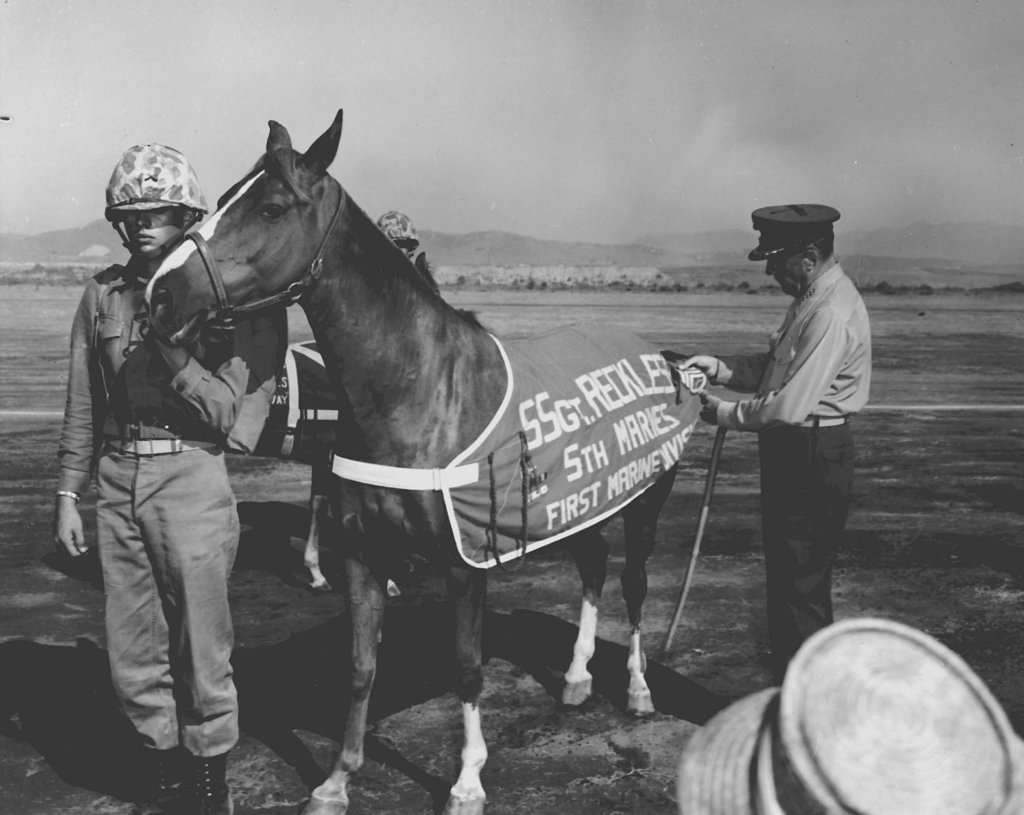
Sergeant Reckless getting promoted to Staff Sergeant in 1959 at Camp Pendleton.
Sergeant Reckless getting promoted to Staff Sergeant in 1959 at Camp Pendleton. Source: Wikipedia.

Reckless was a mare of Mongolian horse breeding, chestnut colored with a blaze and three white stockings, born in 1948 and purchased by members of the United States Marine Corps in October 1952 out of a race horse dam at the Seoul racetrack. She was originally named “Ah Chim Hai”, which translates to “Morning Flame“. She was small, standing only 56 inches (142 cm) and weighing 900 pounds (410 kg).

In October 1952, Lieutenant Eric Pedersen had received permission to purchase a horse for his platoon, a pack animal capable of carrying up to nine of the heavy 24-pound shells needed to supply the recoilless rifles used by his unit. Pedersen had his wife ship a pack saddle from their home in California so Reckless could better fulfill her primary role as a pack animal.

She was trained to be a pack horse for the Recoilless Rifle Platoon, Anti-Tank Company, 5th Marine Regiment1st Marine Division and was known for her willingness to eat nearly anything including scrambled eggs, beer, Coca-Cola and, once, about $30 worth of poker chips.

She quickly became part of the unit and was allowed to roam freely through camp. She served in numerous combat actions during the Korean War, carrying supplies and ammunition. She often traveled to deliver supplies to the troops on her own, without benefit of a handler as she could learn each supply route after only a couple of trips. In a single day in late March 1953, during the Battle for Outpost Vegas, she made 51 solo trips to resupply multiple front line units.

The Marines, especially Platoon Gunnery Sergeant Joseph Latham, taught Reckless battlefield survival skills such as how not to become entangled in barbed wire and to lie down when under fire. She also learned to run for a bunker upon hearing the cry, “incoming!”.

When not on the front lines, Reckless was particularly useful for stringing telephone wire. Carrying reels of wire on her pack that were played out as she walked, she could string as much wire as twelve men on foot. She became the first horse in the Marine Corps known to have participated in an amphibious landing when the 5th moved from Camp Casey to Inchon.

Reckless was wounded in combat twice, given the battlefield rank of corporal in 1953. Randolph M. Pate, then the commander of the 1st Marine Division, gave Reckless a battlefield promotion from corporal to sergeant in a formal ceremony, complete with reviewing stand, on April 10, 1954, several months after the war ended. Following the war was awarded two Purple Hearts, a Marine Corps Good Conduct Medal and a red and gold blanket with insignia as well as other military honors.

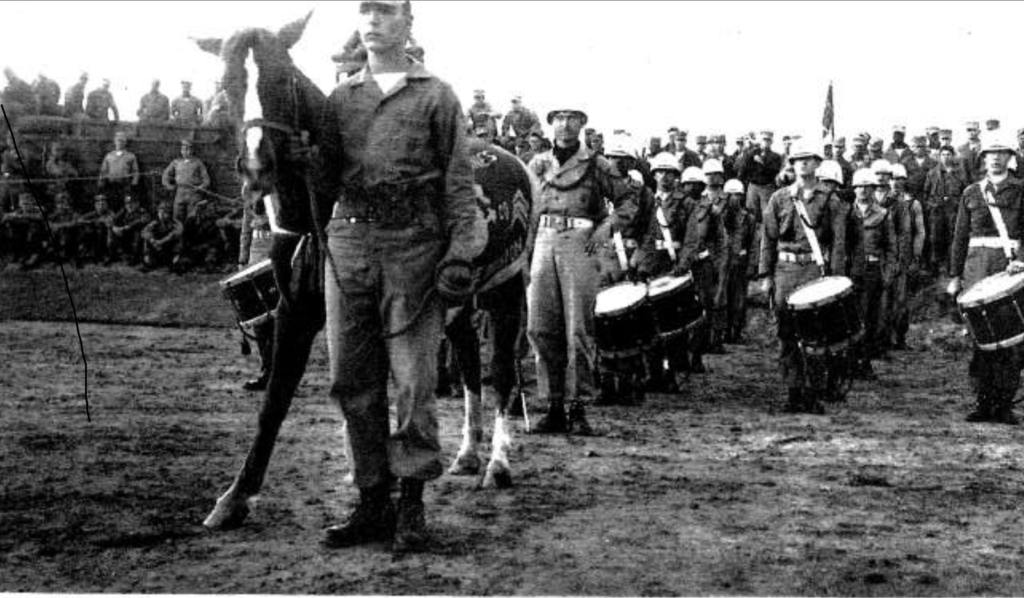
Sergeant Reckless was given a formal stateside rotation ceremony prior to her departure from Korea for America. PFC William Moore, her caretaker at the time but he was not in the platoon during the war, is holding her and is the one who accompanied her on the trip to America.
Sergeant Reckless was given a formal stateside rotation ceremony prior to her departure from Korea for America. PFC William Moore, her caretaker at the time but he was not in the platoon during the war, is holding her and is the one who accompanied her on the trip to America. Source: Wikipedia.
I was surprised at her beauty and intelligence, and believe it or not, her esprit de corps. Like any other Marine, she was enjoying a bottle of beer with her comrades. She was constantly the center of attraction and was fully aware of her importance. If she failed to receive the attention she felt her due, she would deliberately walk into a group of Marines and, in effect, enter the conversation. It was obvious the Marines loved her.

—Lieutenant General Randolph McC. Pate

Prior to her departure for America, a ceremony was held during half time of a football game between the Marine Corps and Army. Reckless left Korea for Japan aboard a 1st Marine Aircraft Wing transport plane and then sailed from Yokohama on October 22 aboard the SS Pacific Transport, due in San Francisco on November 5, 1954. Reckless was kept by Pedersen’s family for a brief time before moving to a more permanent home with the 5th Marines, 1st Marine Division at Camp Pendleton. She was well cared for and treated as a VIP during her time at Camp Pendleton. The Marine Corps was also careful not to allow her to be exploited by commercial interests.

Reckless developed arthritis in her back as she aged and injured herself on May 13, 1968, by falling into a barbed wire fence. She died under sedation while her wounds were being treated. In 1997, Reckless was listed by LIFE magazine as one of America’s 100 all-time heroes.

Wesley Fox: The Marine Who Worked His Way Up From Private to Colonel

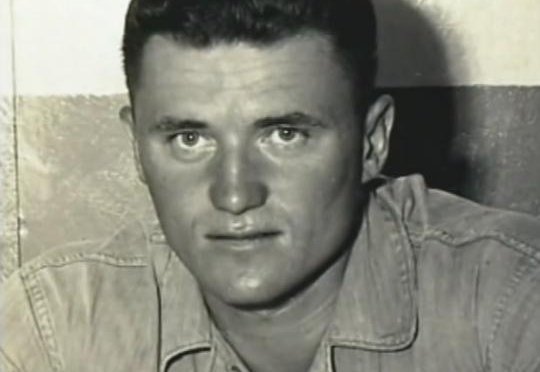
Not many individuals have the ability to say that they held almost every rank—both enlisted and officer—in a particular branch in the military, but Wesley Fox could until his death in 2017. Fox enlisted in the Marine Corps in 1950 and served for 43 years until mandatory retirement at age 62, holding every rank from private to colonel.

Who Was Wesley Fox?

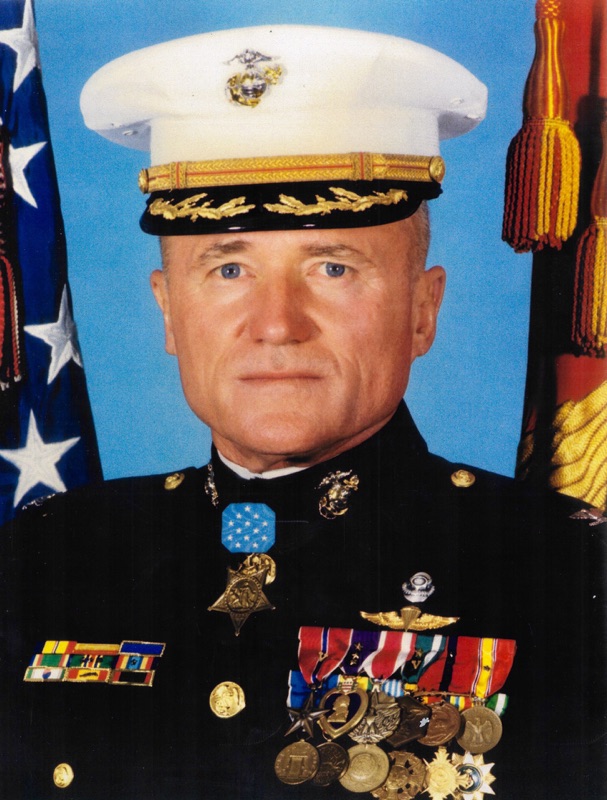
Colonel Wesley L. Fox, U.S. Marine Corps
Colonel Wesley L. Fox, U.S. Marine Corps. Source: Wikipedia.

Born on September 30, 1931 in rural northern Virginia near Herdon, Virginia, Fox watched his older cousins leave to fight in World War II and planned to join the military. In 1950 at the start of the Korean War, Fox enlisted in the Marine Corps.

Fox began as a private and deployed to Korea in January 1951. In March 1951, he was promoted to corporal. Wounded in action on September 8, 1951, Fox would receive the Bronze Star with Combat “V” while hospitalized at the National Naval Medical Center in Bethesda, Maryland. Then, in the following 16 years, Fox worked through all of the enlisted ranks all the way up to first sergeant, which he reached in 1966.

While some individuals would work their way through the enlisted ranks until they could retire, Fox wanted to continue his Marine Corps career and decided to start all over as an officer. He was commissioned as a lowly second lieutenant in 1966 and made his way up to colonel before his retirement in 1993.

Wesley Fox and the Marine Corps

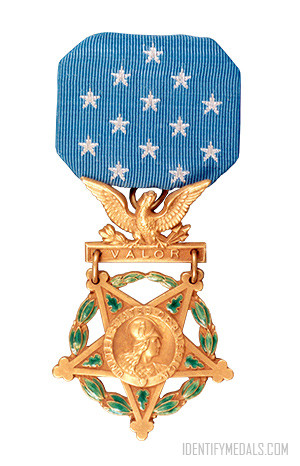
Although the fact that Fox held almost every single rank in the Marine Corps is impressive, he also has another distinction: he was awarded the Medal of Honor for his actions in the Vietnam War.

Serving in his second war in Vietnam, Fox was the first lieutenant of Alpha Company, part of the 1st Battalion, 9th Marines (1/9), known as the “Walking Dead” due to the extensive casualties the battalion suffered.

When Fox led Alpha Company of the “Walking Dead” battalion, he was serving his second tour of duty in the Vietnam War during Operation Dewey Canyon. His company would suffer 75 percent casualties during the course of the three-month operation, including Fox himself.

On February 22, 1969, which Fox described as a rainy, miserable, and cloudy day, Alpha Company came under intense gunfire from the North Vietnamese in the jungle of the northern A Shau Valley. Although Fox was supposed to have 240 men in his rifle company, he had fewer than 90 Marines left due to a variety of skirmishes over several weeks.

Fox became aware that that the remaining men in the company wouldn’t be able to move the wounded and retreat, so he decided to engage the much larger and well-concealed group of North Vietnamese Army regulars. Fox described in an interview with the Veterans History Project that he looked his Marines in the eyeballs and said, “This is what we do.

The Purple Heart - American Military Medals & Awards

The Purple Heart

The Purple Heart is a military decoration from the United States awarded to those wounded or killed while serving with the U.S. military.

Read More »

Even though some of the Marines may not have wanted to assault a larger force, they did because their commander had wanted them to. As Fox noted, “[U]ntil somebody told ‘em something clearly, differently, a Marine isn’t going to lose his focus. I had some great Marines.

Even though Fox was wounded from severe injuries to his shoulder due to shrapnel, he refused medical attention and successfully directed the attack against the North Vietnamese. At one point, Fox even took out an NVA sniper that had killed the Marine in front of him by grabbing the dead man’s gun and taking out the sniper.

When the clouds parted in the afternoon, Fox coordinated air support in order to annihilate a machine-gun nest that was blocking the U.S. advance. This action prompted the group of NVA regulars to begin its retreat. Fox continued to refuse immediate medical treatment for his injuries in order to supervise the safe medical evacuation of the wounded and deceased Marines.

Later, Fox said that 11 of his Marines died on February 22, but to his men’s credit, he counted 105 enemy dead. In light of Fox’s exceptional leadership of his Marines despite his own wounds, President Richard Nixon presented the Medal of Honor, the U.S. military’s highest award for military heroism and valor, to Fox and six other soldiers in a group ceremony at the White House on March 2, 1971. By the time Fox received the medal, he had risen to the rank of captain.

Wesley Fox's Medal of Honor

Medal of Honor Citation

For conspicuous gallantry and intrepidity at the risk of his life above and beyond the call of duty while serving as commanding officer of Company A, in action against the enemy in the northern A Shau Valley. Capt. (then 1st Lt.) Fox’s company came under intense fire from a large well-concealed enemy force. Capt. Fox maneuvered to a position from which he could assess the situation and confer with his platoon leaders. As they departed to execute the plan he had devised, the enemy attacked and Capt. Fox was wounded along with all of the other members of the command group, except the executive officer.

Capt. Fox continued to direct the activity of his company. Advancing through heavy enemy fire, he personally neutralized one enemy position and calmly ordered an assault against the hostile emplacements. He then moved through the hazardous area, coordinating aircraft support with the activities of his men. When his executive officer was mortally wounded, Capt. Fox reorganized the company and directed the fire of his men as they hurled grenades against the enemy and drove the hostile forces into retreat. Wounded again in the final assault, Capt. Fox refused medical attention, established a defensive posture and supervised the preparation of casualties for medical evacuation.

His indomitable courage, inspiring initiative and unwavering devotion to duty in the face of grave personal danger inspired his Marines to such aggressive action that they overcame all enemy resistance and destroyed a large bunker complex. Capt. Fox’s heroic actions reflect great credit upon himself and the Marine Corps and uphold the highest traditions of the U.S. Naval Service.

Fox would continue to serve in the Marine Corps for another 22 years after receiving the Medal of Honor. His final active-duty assignment was serving as the commanding officer of Officer Candidates School in Quantico, Virginia. After he hit the mandatory retirement age of 62 in 1993, Fox spent eight years as a deputy commandant of cadets for the Virginia Tech Corps of Cadets in Blacksburg, Virginia.

In the years following his retirement, he continued to speak about his time in the military to students and civic leaders. Marine Corps life was the perfect fit for Fox, who told the Veterans History Project that he did not have any regrets about becoming a Marine.

To make his point, Fox noted that during his first four years as a Marine, he didn’t have any civilian clothes. He did everything in a Marine uniform. As Fox remembered, “I’d go home on leave, working in the hay fields or whatever, I wore my Marine utilities. Go in town to see the movies, I wore Marine dress.”

Unlike others who loathe to talk about receiving the Medal of Honor, Fox said that he was proud to wear the Medal of Honor: “I’m pleased and proud to wear it for the Marine Corps and for what my Marines did on that particular fight.” Even so, he felt that others deserved the award, and he feels some emptiness that they did not also receive the award.

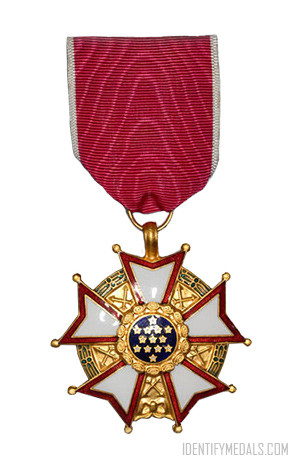
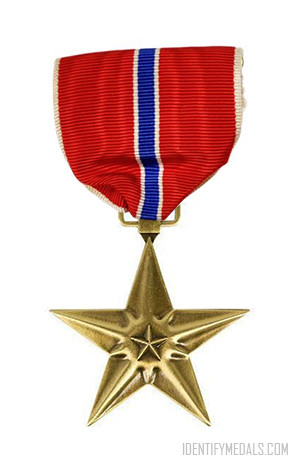
In addition to receiving the Medal of Honor, Fox also received two awards of the Legion of Merit, a Bronze Star with Combat V, four awards of the Purple Heart, the Armed Forces Honor Medal and 1st class from South Vietnam among numerous other commendations. After his service in Vietnam, Fox’s awards and decorations filled 7 rows on his uniform.

Once Fox retired from the Marine Corps and serving as a deputy commandant for the Virginia Tech Corps of Cadets, Fox wrote three books, Marine Rifleman (2002), his personal memoir; Courage and Fear: A Primer (2007); and Six Essential Elements of Leadership (2011).

When Fox died on November 24, 2017, the Marine Corps issued an announcement calling Fox a “legend” and a “true Marine’s Marine.” Their estimation is correct, as Fox embodied all of the values of the Corps from serving as almost every rank in the Marine Corps to receiving the Medal of Honor for his courageous actions in Vietnam.

Sources

Guest Contributor: Rachel Basinger is a former history teacher turned freelance writer and editor. She loves studying military history, especially the World Wars, and of course military medals. She has authored three history books for young adults and transcribed interviews of World War II veterans. In her free time, Rachel is a voracious reader and is a runner who completed her first half marathon in May 2019.

Small-town Nurse Ellen Ainsworth Died Saving Patients in World War II

Although her name is unrecognizable to many, Ellen Ainsworth was one of the first four women in the Army to receive the Silver Star.
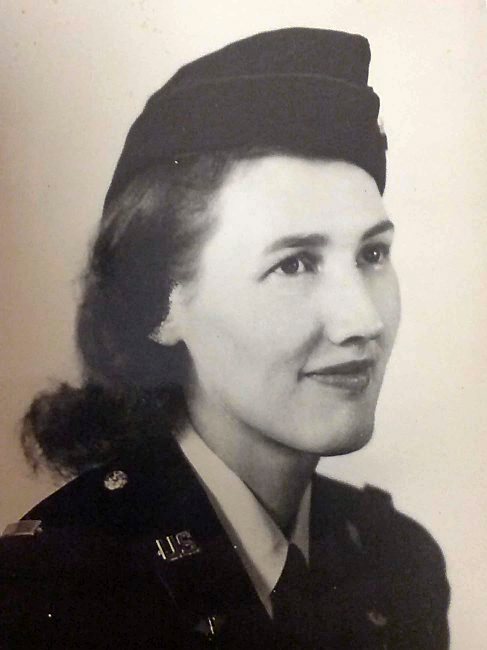
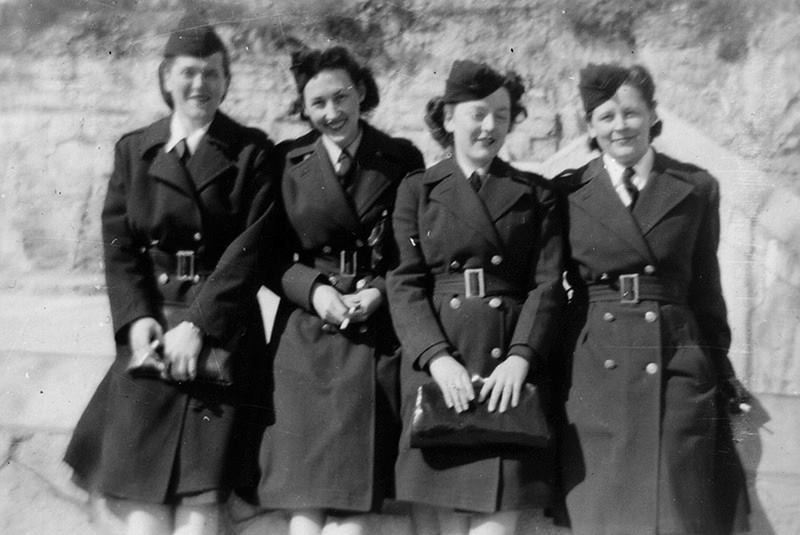
Although her name is unrecognizable to most Americans, Ellen Ainsworth was one of the first four women in the Army to receive the Silver Star as well as being the only woman from Wisconsin serving in the U.S. Armed Forces during World War II to die as a direct result of enemy fire.

Lt. Ellen Ainsworth pictured in her uniform in this undated photograph.

Who Was Ellen Ainsworth?

Born on March 9, 1919, Ainsworth had an inauspicious beginning, growing up in a small farming community of Wisconsin. She was the youngest of three siblings and attended nursing school at Eitel Hospital School of Nursing in Minneapolis, graduating in 1941. Even though she could have become a nurse at a private hospital in the Twin Cities, Ainsworth signed up for the U.S. Army Nurse Corps in March 1942.

Although nurses were highly encouraged to join the armed forces, Ainsworth also had a longing to see and experience the world, which is exactly what she ended up doing in her short life of 24 years. She was sent first to Morocco, then to Tunisia, and then to Salerno, Italy in September 1943. Several months later, Ainsworth was sent to Anzio, Italy where the Allies—Americans and British—had made a surprise landing behind German lines, but her travels would stop there.

Anzio was a battle that was only expected to take a couple weeks ended up taking several months, and Anzio would see some of the most savage fighting of World War II. Over the four-month period, the nurses and medical personnel at Anzio would care for more than 33,000, including 10,800 who had suffered battle wounds.

Ellen Ainsworth and the U.S. Army Nurse Corps

Of the sixteen women in the U.S. Army Nurse Corps were killed directly from enemy fire during World War II, six of them were killed at Anzio. Ellen Ainsworth was one of those six.

Assigned to the 56th Evacuation Hospital, which they called “a Half Acre of Hell,” Ainsworth cared for the wounded men at Anzio for only a few short weeks from late January until her eventual death on February 16, 1944. But she was able to make such an impact in that short time!

On February 12, 1944, the nurses of the 56th Evacuation Hospital rushed patients to nearby bunkers during a massive artillery bombardment. Ainsworth realized that some medical personnel needed to remain behind at the hospital tent to take care of the wounded, so she chose to stay. A German artillery round landed just outside the tent, and a piece of shrapnel penetrated Ainsworth’s chest close to her lungs. Even though she was wounded, Ainsworth continued to treat her patients.

U.S. Army Nurse Corps nurses (from left) Mary Henehan, Ellen Ainsworth, Anne Graves and Doris Maxfield were photographed in New York City in April 1943.

Ainsworth was eventually evacuated, but her condition worsened. Slowly suffocating from internal wounds, Ainsworth died on February 16, 1944. She was just 24 years old. On March 9, which would have been Ainsworth’s 25th birthday, her family back in Wisconsin instead received a telegram informing them that Ainsworth had died.

Ellen Ainsworth's Medals

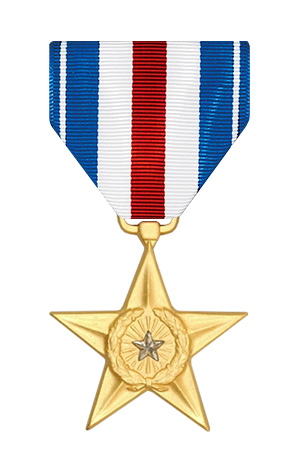
Due to her actions of bravery, including evacuating 42 patients to safety in complete disregard of the danger with three other nurses, Ainsworth and the other women became the first women in the Army to receive the Silver Star for their bravery (the third highest award for bravery after the Medal of Honor and Distinguished Service Cross/Navy Cross/Air Force Cross/Coast Guard Cross). Ainsworth would also posthumously receive the Purple Heart and Red Cross Bronze medals, a rare accomplishment for a nurse in World War II. She is also remembered with a portrait in the Pentagon, and the post office in her hometown of Glenwood City, Wisconsin was renamed in her honor in 2016.

Ellen Ainsworth’s Silver Star Citation

The President of the United States of America, authorized by Act of Congress July 9, 1918, takes pride in presenting the Silver Star (Posthumously) to Second Lieutenant Ellen G. Ainsworth (ASN: N-732770), United States Army, for conspicuous gallantry and intrepidity in action against the enemy while serving with the 56th Evacuation Hospital, in action at Anzio, Italy, on 10 February 1944. Second Lieutenant Ainsworth was on duty in a hospital ward, while the area was being subjected to heavy enemy artillery shelling. One shell dropped within a few feet of the ward, its fragments piercing the tent in numerous places. Despite the extreme danger, she calmly directed the placing of (42) surgical patients on the ground to lessen the danger of further injury. By her disregard for her own safety and her calm assurance, she instilled confidence in her assistants and her patients, thereby preventing serious panic and injury. Second Lieutenant Ainsworth’s gallant actions and dedicated devotion to duty, without regard for her own life, were in keeping with the highest traditions of military service and reflect great credit upon herself, his unit, and the United States Army.

Because her mother was ill when Ainsworth’s family received the news that she had been killed, her family chose to have her buried in the Sicily-Rome American Cemetery and Memorial in Nettuno, Italy. Ainsworth is one of nearly 7,900 Americans buried at the cemetery.

The Legacy of Ellen Ainsworth

Although Ainsworth only lived for 24 years, family and friends still remember her fondly, recalling how great of a sense of humor that she had. When she was evacuated due to the shrapnel, she made a cheeky comment to her fellow nurses that was something like, “Nothing these Krauts can do to scare at this point.

Her fellow nurses knew her as an outgoing, fun-loving individual, and her friends and family back home knew her as a caring girl who loved to sing (and had a beautiful voice!). These two elements came together for Christmas 1943 when Ainsworth wanted to bring some cheer to the troops in Italy, so she organized a group of people to sing Christmas carols over the PA system.

Her fellow nurses remembered her not only as the life of the party but also someone to tried to make every situation better. Even so, Ainsworth was immensely affected by the gruesomeness all around her.

Ainsworth’s sister Lyda wrote a speech in the 1970s that she presented at the dedication of a health clinic to Ainsworth and spoke of a letter she received from her sister Ellen. That letter was tear-stained, as Ellen wrote about the suffering of “her boys. She wished that she could do more to protect them, ease and comfort their pain, or halt their deaths, but there was so little she could do.

Ainsworth was not one to shirk duty, as is evident from her actions in choosing to stay with the wounded and risk death herself. Ainsworth was willing to pay the ultimate price to take care of “her boys,” and she did. But although her family and friends would greatly mourn her death, they took comfort in the fact that Ainsworth lived a full life for the short time she lived.

John McCain: A Lifetime of Service to America

Born on August 29, 1936 at Coco Solo Naval Station in the Panama Canal Zone when it was a U.S. territory, John McCain grew up in a family that had multiple examples of service to America. Both his father and grandfather were distinguished Navy Admirals, and McCain would follow in their footsteps as well as participating in politics in his later life. 

Admired on both the right and the left, John McCain dedicated his life to serving the American people and was willing to endure great pain and suffering to fulfill that duty.

Who Was John McCain?

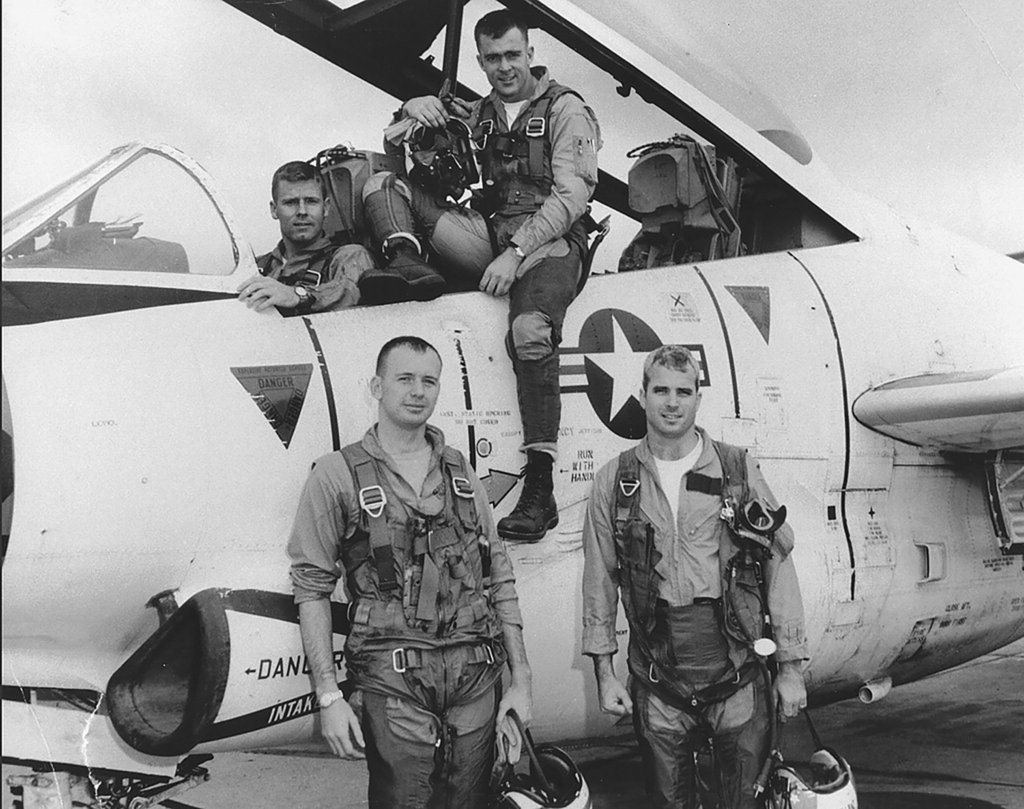
Lieutenant McCain (front right) with his squadron and T-2 Buckeye trainer, 1965
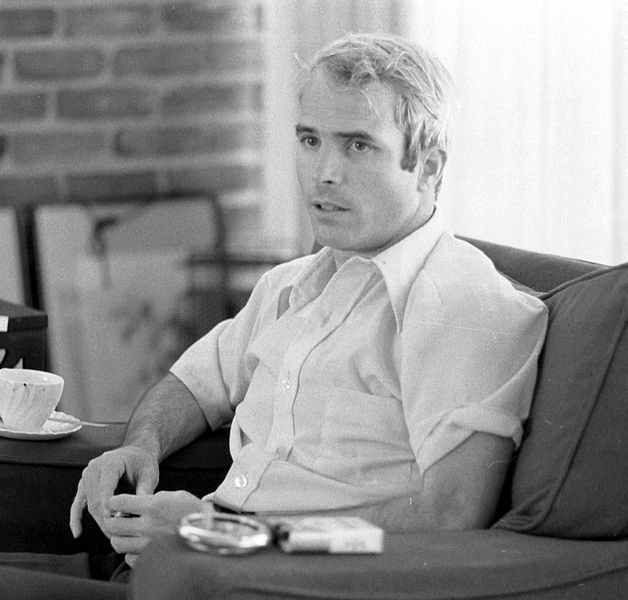
Interview with McCain, April 1974
Interview with McCain, April 1974. Source: Wikipedia.

As a military brat, McCain moved frequently as a child and attended 20 different schools throughout his childhood. He attended the Naval Academy, graduating near the bottom of his class in 1958 and became a Naval aviator for the 22 years, including serving in North Vietnam during the Vietnam War.

Although his father and grandfather had always been well-known in the military, McCain began to be recognized for his own service after his lengthy imprisonment in Vietnam. McCain’s 23rd bombing mission over North Vietnam on October 26, 1967 went terribly wrong when a missile struck his plane, forcing McCain to eject. In the process, he was knocked unconscious, broke both his arms and his leg, and taken prisoner.

McCain was a prisoner of war in the camp now known as “Hanoi Hilton”, a prison used by the French colonists in French Indochina for political prisoners, and later by North Vietnam for U.S. prisoners of war during the Vietnam War. He did not receive the medical treatment that he desperately needed and endured years of torture, spending much of his time in solitary confinement. The friendship of his fellow POWs like Air Force Majors George “Bud” Day and Norris Overly and his Christian faith kept him going during this time.

In late June, as McCain’s father was preparing to assume command of the U.S. forces in the Pacific, the North Vietnamese gave McCain the opportunity to accept an early release, which McCain denied. It was good that he did because the North Vietnamese had hoped to demoralize the American people and other POWs that POWs with privileged parents like McCain could escape, but others could not.

Since POWs were released based on their date of capture, McCain was finally released on March 14, 1973. He continued his service in the Navy once he returned home, including his last duty assignment of serving as naval liaison to the United States Senate. McCain retired from the Navy on April 1, 1981, with the rank of captain.

John McCain and the House of Representatives

Soon thereafter McCain was elected to the U.S. House of Representatives as a representative from Arizona in 1982 and served for two terms. Four years later, he was elected to the United States Senate in 1986, taking the seat formerly held by Republican Barry Goldwater. Throughout his career in the U.S. Senate, McCain served as the Chairman of the Senate Committees on Indian Affairs, Commerce, Science and Transportation, and the Armed Services.

McCain had media reputation of being a “maverick” due to his willingness to vote differently than his party on particular issues, including his stances on gun control and gay/lesbian issues. He is most well-known for the campaign finance reform bill of 2002—the McCain-Feingold Act.  

In 2000, McCain attempted to run for president, but lost the primary to George W. Bush of Texas, who later became the 43rd president. In 2008, McCain again ran for president and was the Republican Party’s nominee for president and chose Governor Sarah Palin as his running mate, losing the election to Barack Obama and Joe Biden.

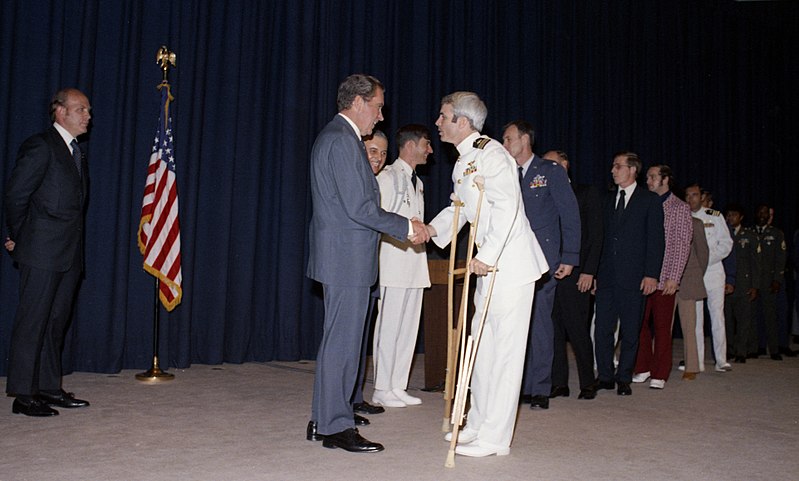
President Richard Nixon Greets Former Vietnam Prisoner of War John McCain, Jr. at a Pre-POW Dinner Reception, 5/24/1973
President Richard Nixon Greets Former Vietnam Prisoner of War John McCain, Jr. at a Pre-POW Dinner Reception, 5/24/1973. Source: Wikipedia.

Even though he lost the presidency, McCain continued to serve in the Senate for 10 years after the presidential election in 2008 until his death in 2018, becoming one of America’s longest-serving politicians.

In his personal life, McCain met and married Carol Shepp in 1965 while stationed at Meridian Naval Air Station, adopting her two sons from a previous marriage, Doug and Andy. A daughter Sidney was born in 1966. In the late 1970s, McCain’s marriage failed, and their divorce was final in April 1980.

The next month, McCain married Cindy Hensley whom he had met in 1979 in Hawaii. They would have four children together: daughter Meghan who was born in 1984, John Sidney “Jack” McCain IV who was born in 1985, James Hensley McCain who was born in 1988, and Bridget who was adopted in 1991.

McCain also coauthored a variety of booksFaith of My Fathers (1999), Worth the Fighting For: A Memoir (2002), Why Courage Matters: The Way to a Braver Life (2004), Hard Call: Great Decisions and the Extraordinary People Who Made Them (2007), Thirteen Soldiers: A Personal History of Americans at War (2014), and The Restless Wave: Good Times, Just Causes, Great Fights, and Other Appreciations (2018).

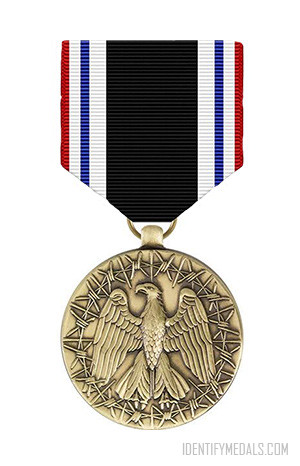
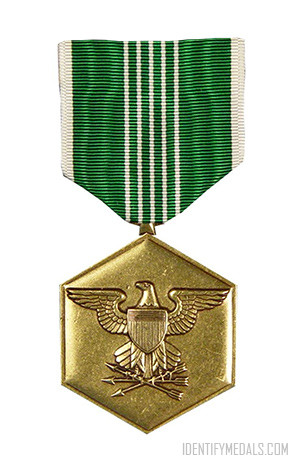
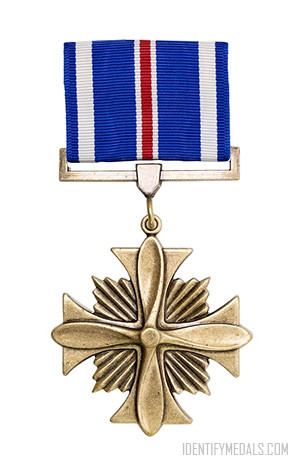
Some of John McCain’s medals:

McCain formally announces his candidacy for president in Portsmouth, New Hampshire, 2007
McCain formally announces his candidacy for president in Portsmouth, New Hampshire, 2007. Source: Wikipedia.
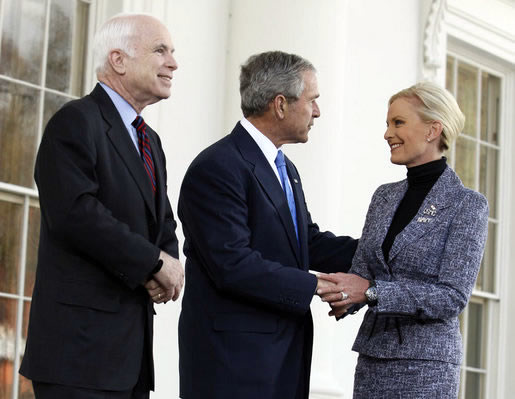
Republican presidential nominee Senator John McCain and his wife Cindy with President George W. Bush at the White House, Wednesday, March 5, 2008.
Republican presidential nominee Senator John McCain and his wife Cindy with President George W. Bush at the White House, Wednesday, March 5, 2008. Source: Wikipedia.
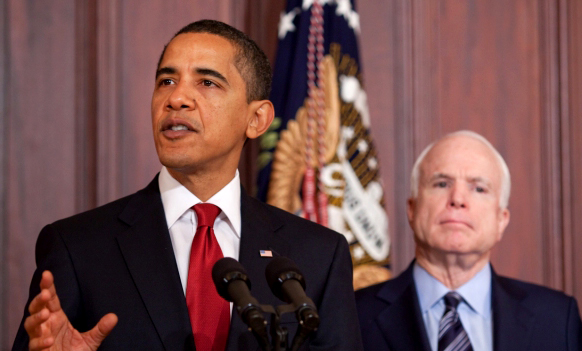
President Barack Obama and Senator John McCain in a press conference, taking place on March 4, 2009.
President Barack Obama and Senator John McCain in a press conference, taking place on March 4, 2009. Source: Wikipedia.

Although some Republicans see McCain as a controversial political figure due to his unorthodox political decisions—he chose to vote down a bill that would repeal the Affordable Health Care Act (NBC News had the apt title: “McCain hated Obamacare. He also saved it.”), almost all Americans have a huge respect for McCain’s military service, especially given the years that he served as a POW.

For his service and as a prisoner-of-war, McCain received the Silver Star, the Distinguished Flying Cross, the Legion of Merit with Combat ‘V’ and one gold star, the Bronze Star Medal with Combat ‘V’ and two gold stars, two Purple Hearts, the Navy Commendation Medal, and the Prisoner-of-War medal. In October 2017, McCain received the Liberty Medal.

Diagnosed with a type of brain cancer in July 2017, McCain decided to discontinue treatment on August 24, 2018, dying on August 25, 2018. McCain’s remains laid in state at the U.S. Capitol Rotunda, a high honor that has been presented to fewer than three dozen people, including Abraham Lincoln, John F. Kennedy, and Ronald Reagan.

Sources


Guest Contributor: Rachel Basinger is a former history teacher turned freelance writer and editor. She loves studying military history, especially the World Wars, and of course military medals. She has authored three history books for young adults and transcribed interviews of World War II veterans. In her free time, Rachel is a voracious reader and is a runner who completed her first half marathon in May 2019.

An Overview of the Red Cross Medals, Badges & Awards

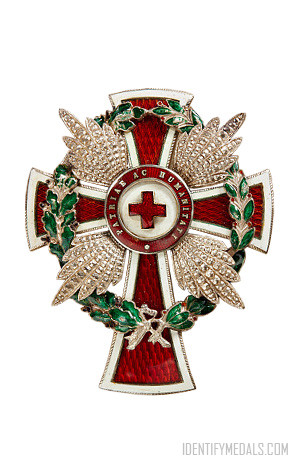
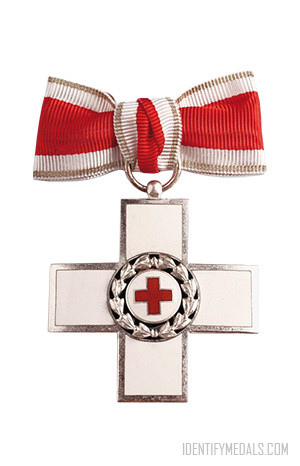
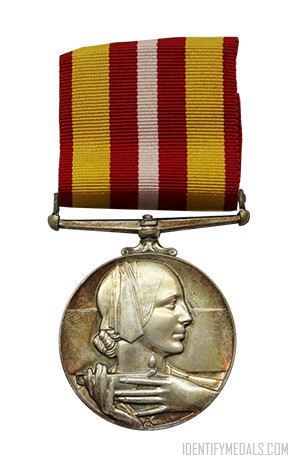
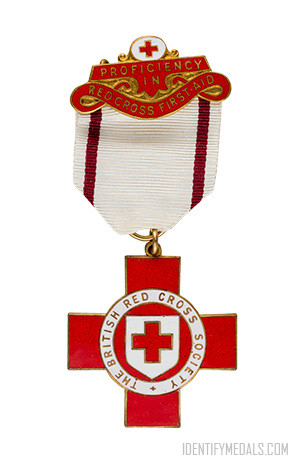
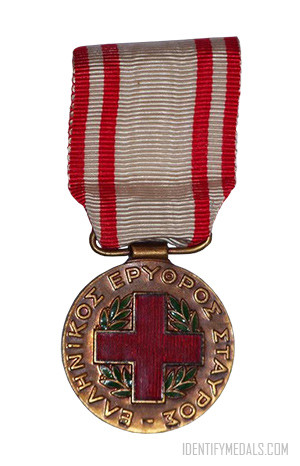
Since the creation of the International Committee of the Red Cross in 1863, various Red Cross organizations and societies throughout the world have issued medals to award volunteers for meritorious service as well as to honor other individuals who have provided services of benefit to the Red Cross.

What is the Red Cross, and Why Does it Award Medals?

First conceived as a concept during the Battle of Solferino during the War of Italian Unification in 1859, the Red Cross became a reality thanks to the efforts of Swiss businessman Henry Dunant.

He had witnessed 40,000 dead and wounded men who had not received medical attention and wanted to establish an agency that would provide humanitarian aid during wartime protected by an international treaty that would recognize and uphold the neutrality of said agency.

Thus, in 1863, this agency became the International Committee of the Red Cross (ICRC) with the emblem of a red cross on a white background, which was the inverse of the Swiss flag. In 1864, the first Geneva Convention codified acceptable treatment of sick and wounded soldiers and was initially adopted by twelve nations. Due to these accomplishments, Dunant received the first Nobel Peace Prize in 1901.

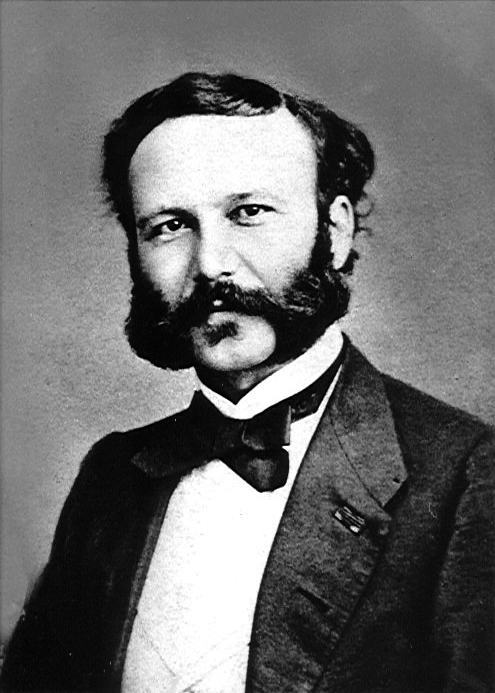
Henry Dunant (1828–1910), Swiss philanthropist and co-founder of the International Committee of the Red Cross; Nobel Peace Prize laureate 1901
Henry Dunant (1828–1910), Swiss philanthropist and co-founder of the International Committee of the Red Cross; Nobel Peace Prize laureate 1901. Source: Wikipedia.

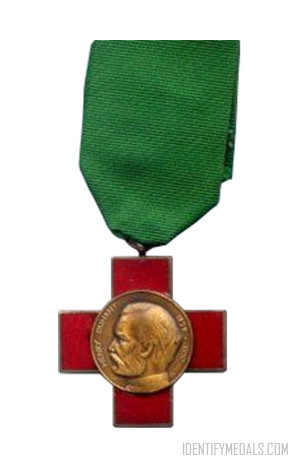
Even today, the highest award of the Red Cross Movement is the Henry Dunant Medal. Created 100 years after the establishment of the ICRC, the medal is named in honor of the founder of the International Red Cross. Thanks to the generosity of the Australian Red Cross, the medal was established by the International Red Cross Conference in Vienna in 1965, and the first medals were presented in 1969.

Awarded to

recognize and reward outstanding services and acts of great devotion, mainly of international significance, to the cause of the Red Cross/Red Crescent by any of its members,

only five Henry Dunant Medals are awarded every two years to maintain the prestige of the Red Cross’s highest honor.

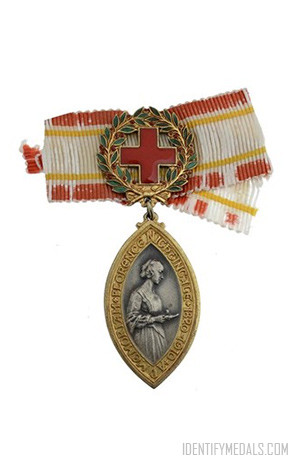
Similarly, the Florence Nightingale Medal, named in honor of the famous 19th century nurse, is awarded by the International Committee of the Red Cross to nurses or nursing aides who distinguished times either in peace or war. In addition, it may be awarded posthumously if the recipient died working in a conflict zone. First established in 1912, the medal was initially restricted to females, which would not change until 1991 when it was opened to both men and women.

The Henry Dunant Medal and the Florence Nightingale Medal

The Henry Dunant Medal and the Florence Nightingale Medal are some of the most prestigious awards one can receive from the Red Cross, but there are a plethora of awards given from various local and national societies.

After the establishment of the ICRC in 1863, it encouraged the creation of Red Cross societies which are now known as the International Federation of Red Cross and Red Crescent Societies. They are independent of the ICRC, as the ICRC acts as a liaison between the societies.

In 1881, Clara Barton, who is known for her efforts to improve nursing during the American Civil War, and a group of associates founded the American Red Cross in 1881 after becoming aware of the ICRC while visiting Europe. During World War I, the American Red Cross experienced substantial growth, going from 17,000 members in 1914 to over 20 million adult and 11 million junior members in 1918.

The Red Cross in WW1

World War I in particular would see the rise of many Red Cross medals, although medals did exist before then. The medals often had a double purpose especially during World War I—to honor and commemorate acts of great valor and to raise funds for the Red Cross during and after the war.

If you search Red Cross medals online, you will be overwhelmed by the number of medals out there. It seems like every country has a medal for every event or conflict that has ever occurred.

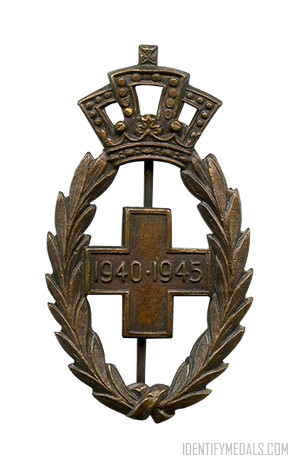
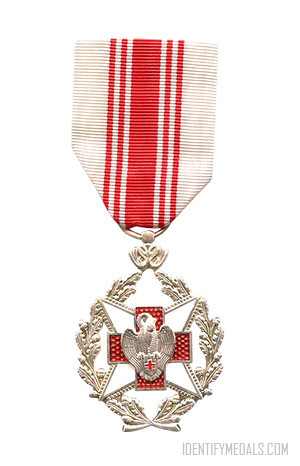
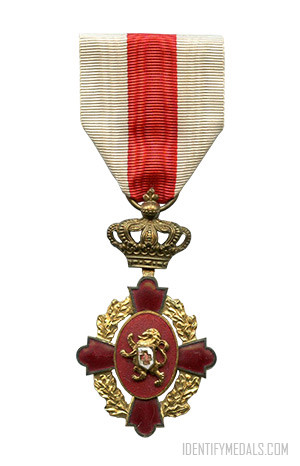
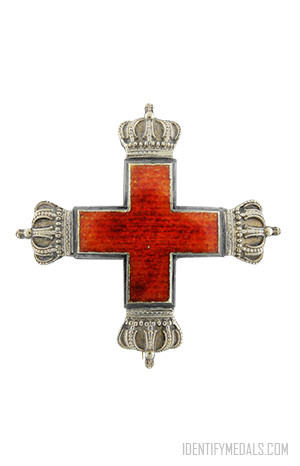
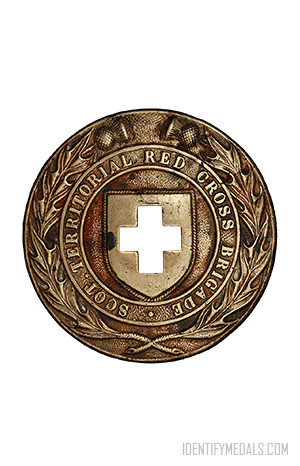
You’ll find rare medals like the Belgian Red Cross, Cross of Recognition 1st class, which was the earliest and highest award given by the Belgian Red Cross to volunteers during the Franco-Prussian War of 1870-1871 as well as the Early Scottish Territorial Red Cross Brigade badge that was issued to registered members of the voluntary aid detachments and had to be purchased by the member.

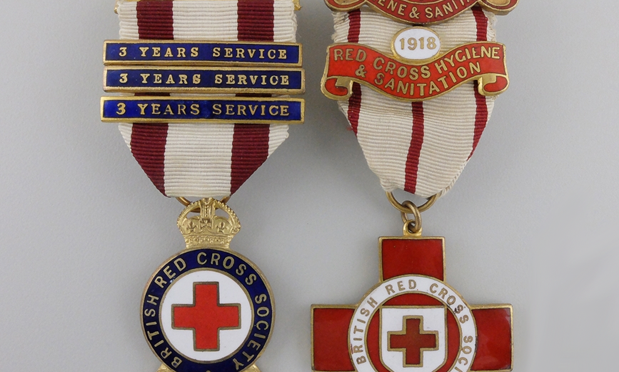
While I could have chosen any number of Red Cross Medals as examples, several in particular stood out to me, as they illustrate the wide variety of medals that individuals who volunteered with the Red Cross could receive.

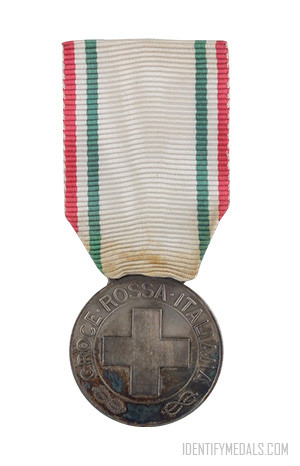
On December 28, 1908, a 7.1-magnitude earthquake struck the southern Italian towns of Sicily and Messina, followed by a crippling tsunami. Navy and merchant ships from France, Great Britain, Italy, and Russia came to provide assistance to the devastated region.

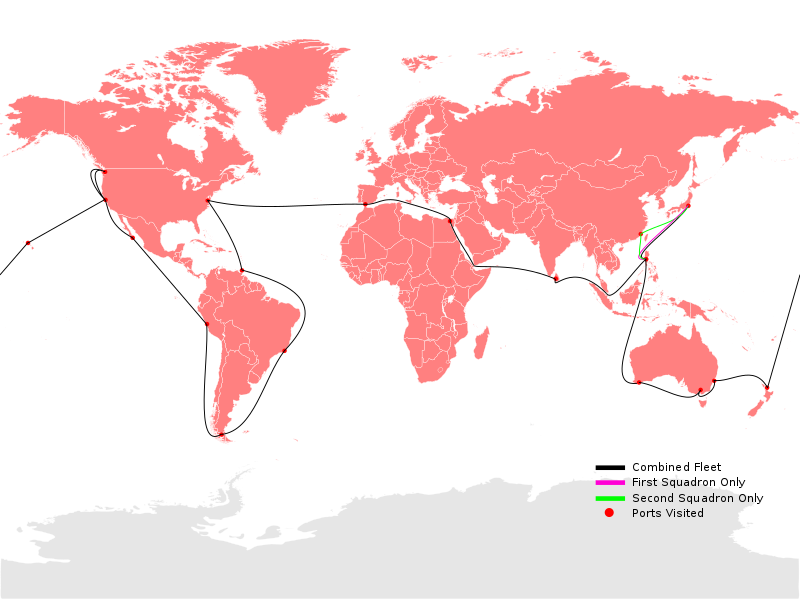
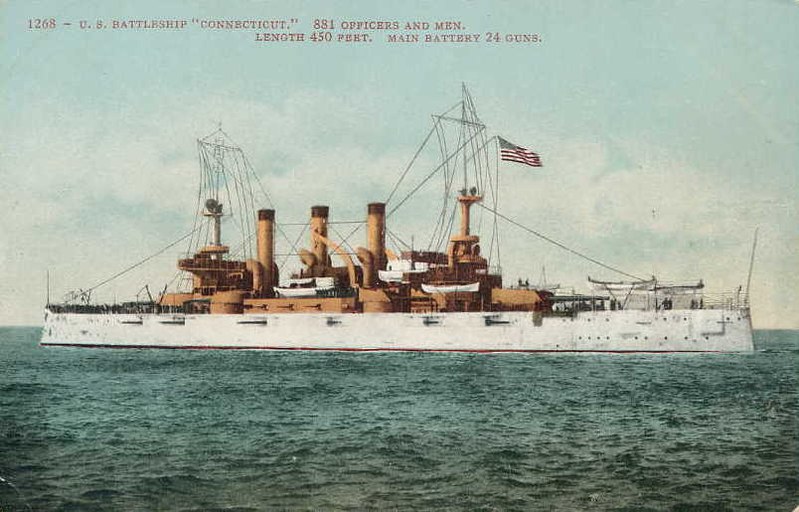
President Theodore Roosevelt even detoured the Great White Fleet, which had been circumnavigating the globe since December 1907 and had included 14,000 Sailors and Marines, in order to assist in the relief efforts. The Italian Red Cross Society commemorated the service of the Great White Fleet and others with the relief ribbon for earthquake relief efforts in Italy in 1908.

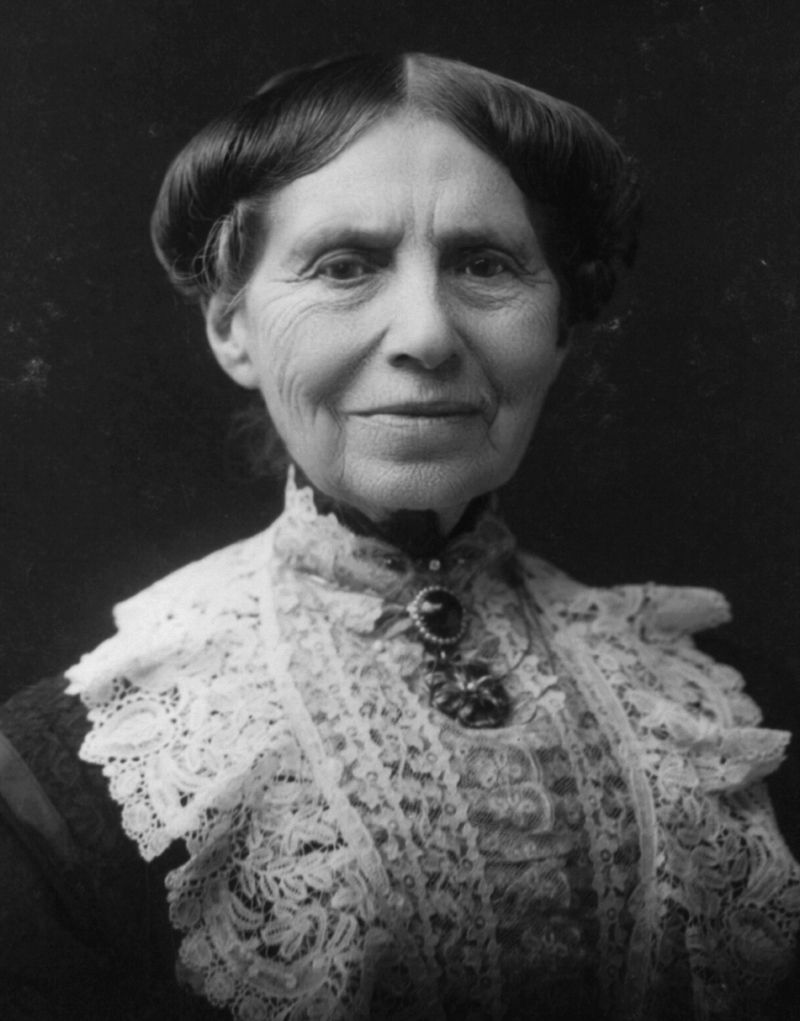
Clara Barton (1821–1912), founder of the American Red Cross
Clara Barton (1821–1912), founder of the American Red Cross. Source: Wikipedia.
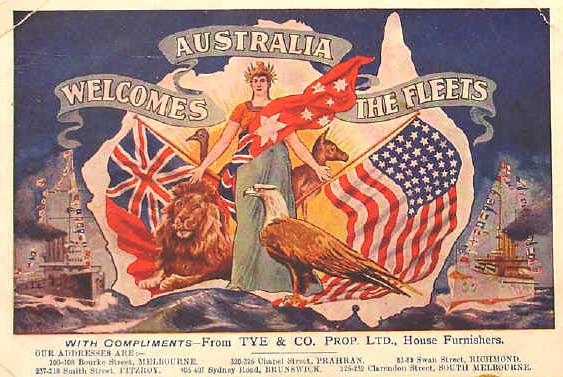
A 1908 Australian postcard welcoming the American 'Great White Fleet' to Australia.
A 1908 Australian postcard welcoming the American 'Great White Fleet' to Australia. Source: Wikipedia.
Map of the Great White Fleet's voyage (2009 political boundaries shown)
Map of the Great White Fleet's voyage (2009 political boundaries shown). Source: Wikipedia.
Postcard of USS Connecticut (BB-18). It (#1268) was the first of a 24-card series printed of the Great White Fleet by Edward Mitchell.
Postcard of USS Connecticut (BB-18). It (#1268) was the first of a 24-card series printed of the Great White Fleet by Edward Mitchell. Source: Wikipedia.

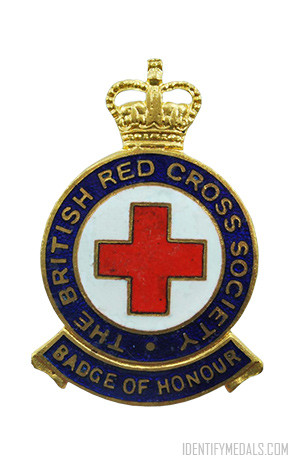
Another example was the British Red Cross medal awarded in 1921 to men and women who had volunteered during the First World War, who did not receive a British War Medal, and who had worked for 1,000 hours or 83 individual 12-hour shifts.

Many of the individuals who received the award worked on the Home Front in Great Britain in hospitals or nursing homes. Individuals who worked on the Front Line during the war—often as ambulance drivers or stretcher bearers—only had to have worked 500 hours to receive the medal.  

Meant to be worn with a Red Cross uniform, the British Red Cross medal was an unofficial medal since it was not given by the government. Even so, over 40,000 people who had volunteered in the Red Cross during August 4, 1914 to December 31, 1919 received the award. Other countries that had Red Cross or Red Crescent Societies also gave out similar medals for service during World War I.

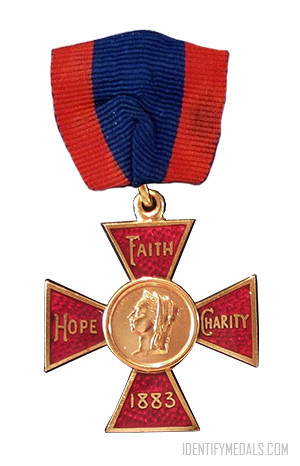
By contrast, the Royal Red Cross is a military decoration awarded in the United Kingdom and the Commonwealth for exceptional service in military nursing. Established on April 23, 1883 by Queen Victoria with a single class of Member, the Royal Red Cross was first awarded to Florence Nightingale. A second class of Associate would be added during World War I in November 1915.

Given to a fully trained military or civilian nurse of an officially recognized nursing service who shows exceptional devotion and competence in performing nursing duties over a substantial period of time or who has performed an exceptional act of bravery at his or her post of duty, the Royal Red Cross medal was exclusively conferred on women until 1967 when men became eligible. Similarly, in 1979, posthumous awards were permitted.

Both Members and Associates are entitled to use post-nominal letters, RRC and ARRC, respectively. While an initial award can be made in the first class, a second class holder—an Associate—will be promoted to the first class of Member if he or she receives a further award.

Kathleen Cambridge and the Royal Red Cross

In addition to Florence Nightingale, another prominent recipient of the Royal Red Cross was Kathleen Cambridge, who was part of a group of nurses affectionately nicknamed, “The Angels of Mons.” One of the first nurses to enter the battlefields of World War I, Cambridge convinced a Belgian family to turn their home into a hospital when she brought a group of wounded soldiers from the Battle of Mons.

Because Cambridge was not a member of the military, she was not entitled to any campaign medals. In 1916, however, Cambridge did join the Queen Alexandra’s Imperial Military Nursing Service, and King George V awarded Cambridge the Mons Star for her bravery. In 1919, she was awarded the Royal Red Cross.

All the Red Cross Medals

You can explore Red Cross medals here or go to the Red Cross Medals & Badges page. 

Sources

Guest Contributor: Rachel Basinger is a former history teacher turned freelance writer and editor. She loves studying military history, especially the World Wars, and of course military medals. She has authored three history books for young adults and transcribed interviews of World War II veterans. In her free time, Rachel is a voracious reader and is a runner who completed her first half marathon in May 2019.

Why Even the Allies Admired Field Marshal Erwin Rommel and The Medals He Won

While Erwin Rommel would become one of Germany’s most respected and honored generals, he did not grow up in a military family.
While Erwin Rommel would become one of Germany’s most respected and honored generals, he did not grow up in a military family. Rather, born in Heidenheim, Germany on November 15, 1891, Rommel was the son of a teacher.
Who Was Erwin Rommel?

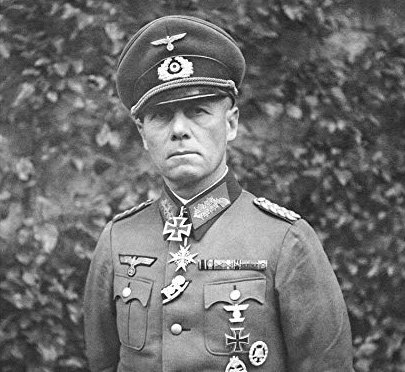
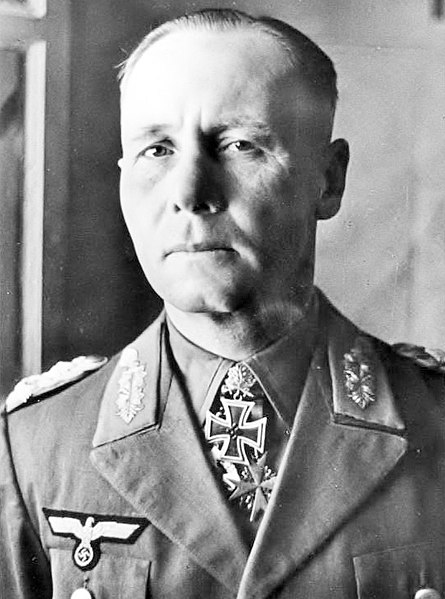
Photo of Field Marshal Erwin Rommel, c. 1942.
Photo of Field Marshal Erwin Rommel, c. 1942. Source: Wikipedia.

In 1909, as an eighteen-year-old, Rommel first attempted to join the military either in the artillery or as an engineer, but was rejected. Finally, however, in 1910, Rommel was accepted into the Germany infantry. As a cadet, Rommel was considered to be a “useful soldier,” an appellation that the rest of his military career would confirm.

Rommel served in World War I in France, Romania, and Italy and quickly learned to love the vigor of war. He became known as someone who would participate in dangerous raids and recon missions, causing his men to joke, “Where Rommel is, there is the front.”

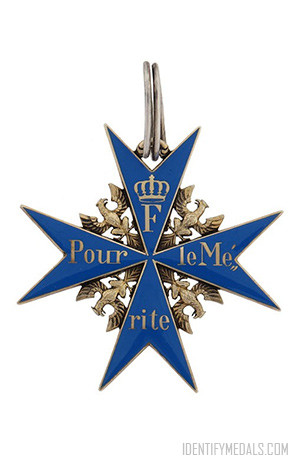
Quite the driven soldier, Rommel was intent on winning Germany’s highest military honor, known as the Pour le Merite or Blue Max, before the end of the war, which he would do in 1917. At the Battle of Caporetto, Rommel’s leadership of his company in a surprise attacked captured Mount Matajur and outflanked thousands of Italian troops, meriting the Blue Max. Rommel would proudly wear his Blue Max medal for the rest of his life.

In the mid-1930s, Rommel would write Infantry Attacks, a book that would perhaps completely alter Rommel’s military career. After Hitler read Rommel’s book in 1937, he was impressed and decided to appoint Rommel as the German Army’s liaison with the Hitler Youth. Two years later, Hitler gave Rommel command of his personal bodyguard during the Invasion of Poland in 1939.

Erwin Rommel and the Panzer Division

Finally, in February 1940, Hitler named Rommel as the commander of the 7th Panzer division, one of the new panzer units. It was in this command that Rommel would become a household name in countries beyond Germany. During the Battle of France, Rommel’s 7th Panzer division raced from Sedan on the border of Germany and France to the coast of the English Channel, covering 200 miles in just one week and capturing over 100,000 Allied troops as well as the French garrison of Cherbourg.

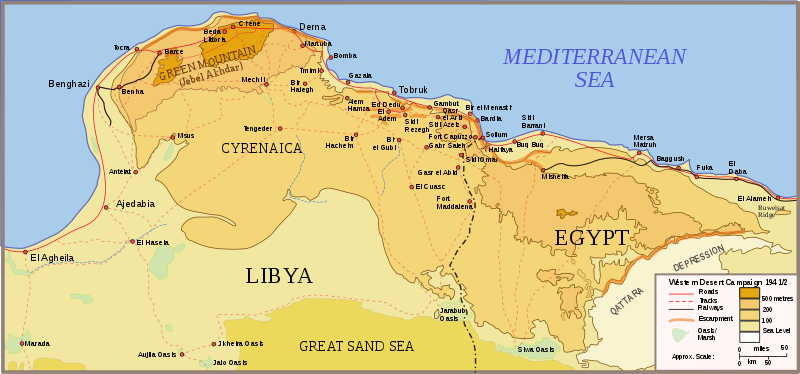
Due in large part to this success, Rommel was appointed commander of the German troops in North Africa, the Afrika Korps, a year later. At first, Rommel was unsuccessful in taking the port city of Tobruk from the British in December 1941, but when Rommel returned in June 1942, he took the city in an attack known as the Battle of Gazala. It was then that Hitler would promote Rommel to Field Marshal.

During the brief time of Rommel’s success in North Africa, which ended up lasting only several months, he would begin to win the respect of the Allies. Prime Minister Winston Churchill called Rommel “a very daring and skillful opponent” and even “a great general.” George Patton and Bernard Montgomery who both fought Rommel in North Africa likewise sang his praises.

Rommel too had a great regard for the military prowess of his enemies, Patton and Montgomery, noting that the former had “the most astonishing achievement in mobile warfare” and that the latter “never made a serious strategic mistake.

In the fall of 1942, Rommel’s success would turn with the British recapture of Tobruk at the Battle of El Alamein and the eventual loss of North Africa in May 1943. No longer needed in Northa Africa, Rommel returned to Europe to oversee the defense of the Atlantic coast in early 1944, exactly where the D-Day landings would occur in June 1944.

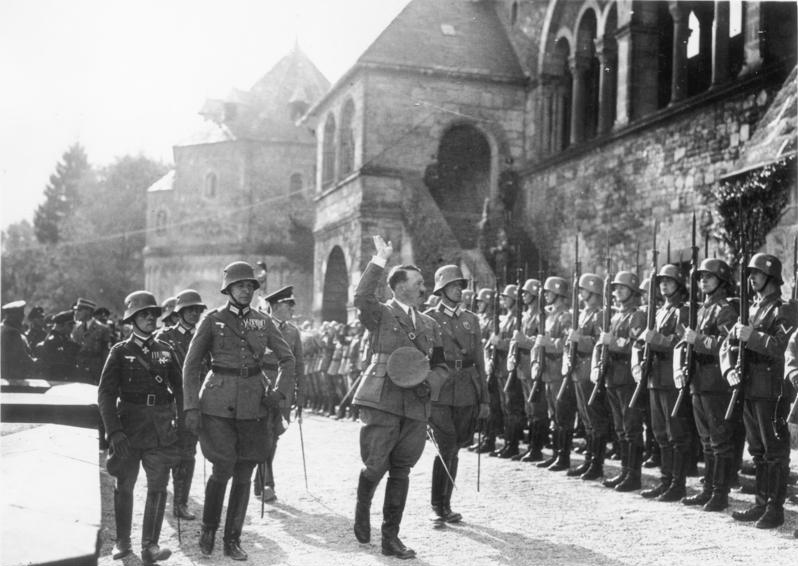
Rommel and Adolf Hitler in Goslar, 1934
Rommel and Adolf Hitler in Goslar, 1934. Foto Scherl Bilderdienst Berlin S.W.
Egypt & Cyrenaica, Libya: Map of the Western Desert Campaign and its Operation Compass Battle Area 1941.
Egypt & Cyrenaica, Libya: Map of the Western Desert Campaign and its Operation Compass Battle Area 1941. Source: Wikipedia.

Erwin Rommel and the 944 July Plot

Although Rommel had trusted Hitler’s leadership up until this point and did not question the FuhrerRommel began to change his tune in 1944 because he believed that Germany was going to lose the war.

Although Rommel doubted Hitler’s abilities for peace-making, evidence suggests that he did not want to dispose of him. Even so, Rommel’s contact with the conspirators in the 1944 July Plot, which was an assassination attempt against Hitler on July 20, 1944, implicated the Field Marshal in the plot against Hitler.

Given the option of facing a public trial or committing suicide, Rommel opted for the latter in order to protect his family. On October 14, 1944, German officers arrived at Rommel’s home to take him to a remote location where Rommel committed suicide through a cyanide capsule. He was 52 years old and received a full military burial, likely to appease the German public who did not know of Rommel’s connection to the assassination attempt.

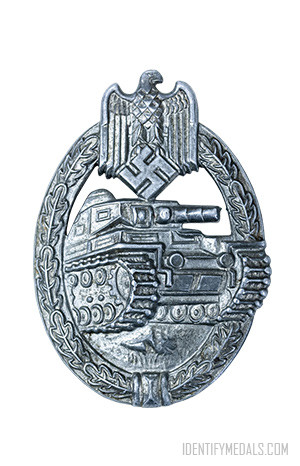
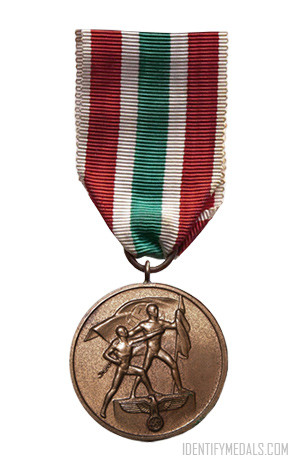
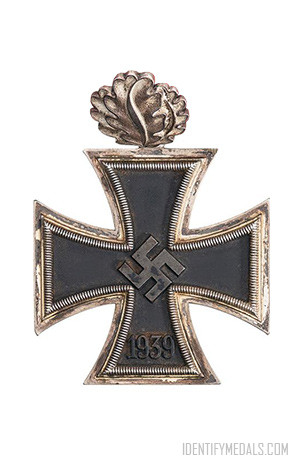
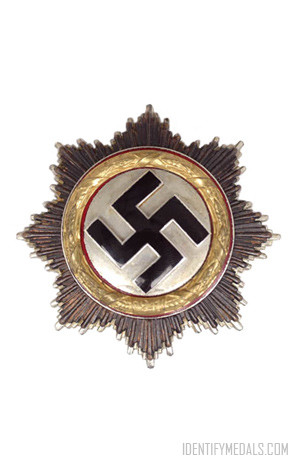
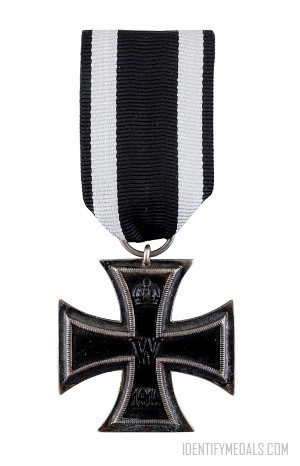
Some of Erwin Rommel’s Medals

See all German Medals

In fact, the German government even told the people that Rommel had died from injuries due to Allied aircraft strafing Rommel’s car earlier in 1944. Rommel had actually won his last victory from a hospital bed recovering from these injuries. Rommel had encouraged defensive preparations at the strategic city of Caen that ended up holding the Allies at bay and inflicting heavy casualties. The truth about Rommel’s suicide would not be revealed until after the war.

Respected by his comrades and his enemies, Rommel became known as the “Desert Fox due to his penchant for surprise attacks and the “People’s Marshal” among his countrymen. Widely regarded as one of Hitler’s most successful generals and one of Germany’s most popular military officers, Rommel has continued to be honored to this day.

In addition to the adulation Rommel received from friend and foe alike, Field Marshal Rommel’s list of decorations and awards is extensive:

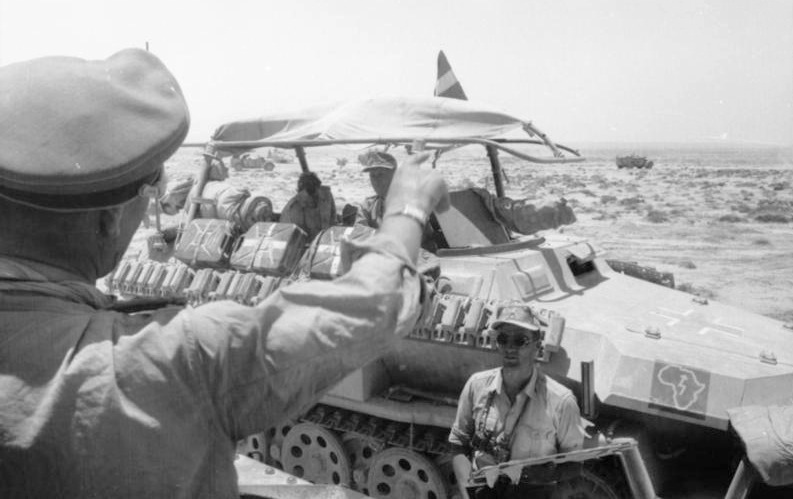
North Africa, Rommel in a Sd.Kfz. 250/3
North Africa, Rommel in a Sd.Kfz. 250/3. Source: Wikipedia.
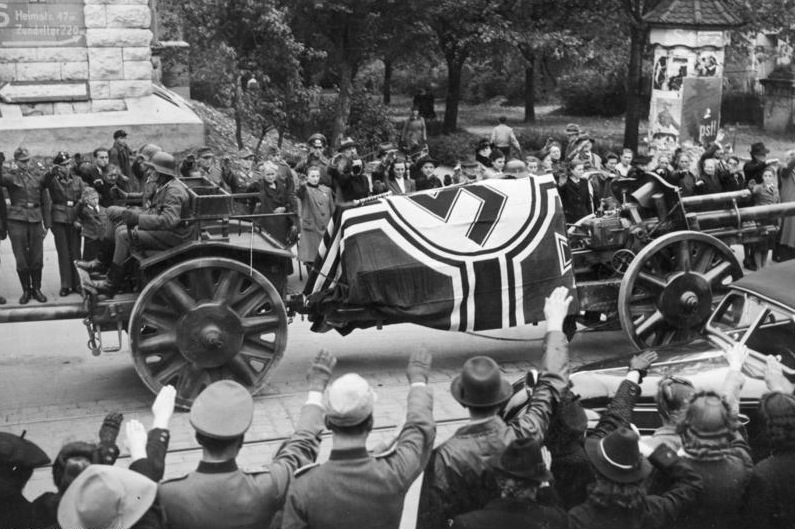
Rommel's funeral procession.
Rommel's funeral procession. Source: Wikipedia.

In contrast to other well-known World War II-era Germans, Rommel has largely not been vilified. His name can be seen on two military bases, several German streets, and a monument in his hometown. While Rommel did have experience with the Nazi party and was close to Hitler, most historians agree that Rommel seemed to care more about winning military victories and promoting his own military career than condoning Nazi atrocities.

Sources

Guest Contributor: Rachel Basinger is a former history teacher turned freelance writer and editor. She loves studying military history, especially the World Wars, and of course military medals. She has authored three history books for young adults and transcribed interviews of World War II veterans. In her free time, Rachel is a voracious reader and is a runner who completed her first half marathon in May 2019.

Dr. Mary Walker: Unconventional Suffragette & Only Female Medal of Honor Recipient

Dr. Mary Walker is the only woman to receive the Medal of Honor. She was also a suffragette with a unique perspective on women’s rights.
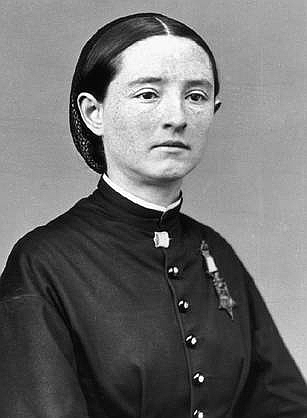
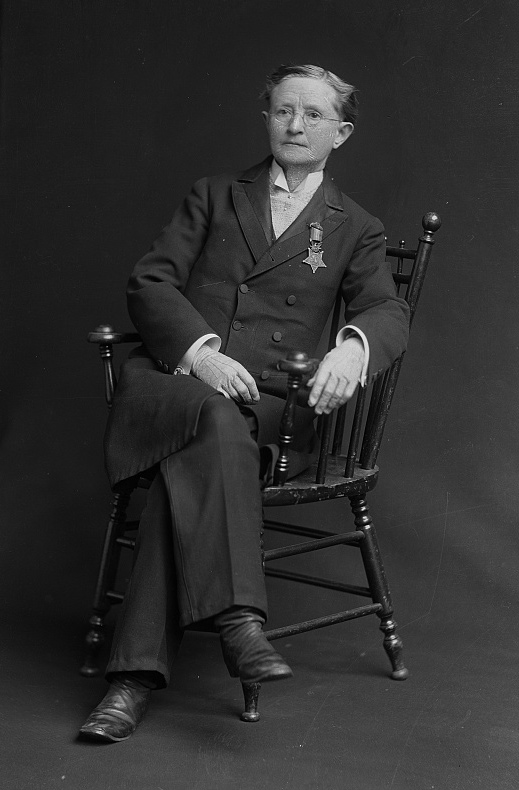
Dr. Mary Walker was the epitome of unorthodox. She was (and still is!) the only woman to receive the Medal of Honor. In addition, she was a suffragette with a unique perspective on women’s suffrage who was regularly arrested for impersonating a man by wearing men’s clothing.

Who Was Mary Walker?

This unusual woman was born on November 26, 1832 in Oswego, New York. Her parents were abolitionists, and her father encouraged Dr. Walker and her four sisters to dress as they liked, as he found skirts and corsets restrictive. Walker opted for “bloomers” and later chose to wear all male attire.

Photo of Mary Edwards Walker. Source: Wikipedia.
Dr. Walker photographed by C. M. Bell. Source: Wikipedia.

Walker’s father also encouraged his daughters to pursue education even though that was unusual for females at the time. When Walker graduated from Syracuse Medical College in 1855, she was the only female in her class and was one of the few female physicians in the country at the time.

Dr. Walker worked as a doctor in private practice for a few years until the Civil War broke out in 1861. She traveled to Washington, D.C. to apply for an appointment as an Army surgeon, but was rejected because she was a woman. Walker chose to volunteer as a doctor for the Union Army instead of applying to be a nurse due to her credentials. As a result, she became the first female surgeon in Army history.

At first, Walker worked at the temporary hospital set up at the U.S. Patent Office in D.C. and then moved to Virginia in November 1862, presenting herself as a field surgeon at the headquarters of Major General Ambrose Burnside. A month later, Walker found herself treating the wounded at Warrenton and Fredericksburg in December 1862.

During the next fall, Walker treated the casualties of the Battle of Chickamauga in Chattanooga, Tennessee and decided to request commission as an Army doctor again after the battle. In September 1863, Major General George H. Thomas appointed Walker as an assistant surgeon in the Army of the Cumberland, and she was assigned to the 52nd Ohio Regiment. As an assistant surgeon, Walker was the equivalent of a lieutenant of captain and had finally achieved paid work as a surgeon.

Mary Walker Is Captured and Released

In October 1864 after Walker had been released from Confederate control, the Medical Department granted Walker another contract as an acting assistant surgeon.

Although Walker wanted battlefield duty again, she was not sent into the field. Instead, she served as the superintendent of a hospital for female prisoners in Louisville, Kentucky and the medical director of a orphanage in Clarksville, Tennessee for the rest of the Civil War.

After the war, Walker was released from government contract, but she lobbied for a brevet promotion to major for her services. While she did not receive that promotion, President Andrew Johnson decided on an unorthodox way to honor her service: Medal of Honor, which she received in January 1866.

In 1910, the standards for the Medal of Honor were revised, and the Army reviewed all of the medals that had been awarded, rescinding 910 of them. Dr. Walker’s was one of those, as the new standards indicated direct combat with the enemy which Walker had not experienced.

Even so, Walker had no plans of giving up her award. She had worn and planned to continue to wear her Medal of Honor every day of her life. Thus, when the federal marshals arrived at her door to take her medal away in 1917, Walker opened the door with a 12-gauge shotgun and the Medal of Honor around her neck. The federal marshals decided to leave, and Walker continued to wear the medal every day until her death in 1919.

Mary Walker And the Medal of Honor

While Walker got to keep her medal, she had still lost the title of recipient of the Medal of Honor until almost sixty years after her death. On June 19, 1917, Walker’s Medal of Honor was reinstated by Army Secretary Clifford L. Alexander under President Jimmy Carter. To this day, Walker is still the only female recipient of the Medal of Honor.

In addition to being the only woman to receive the Medal of Honor, Walker was also an unusual feminist and suffragette. After the Civil War, she gave countless speeches about dress reform and women’s rights, but distanced herself some from the women’s suffrage movement.

Walker did not believe there was a need for a women’s suffrage act because women already had the right to vote as American citizens, which she stated in her 1907 published work entitled “Crowning Constitutional Argument.” Walker would also testify before the House of Representatives in the issue of women’s suffrage in 1912 and 1914.

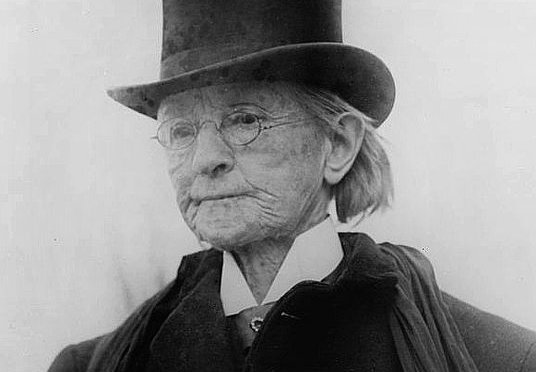
In addition, Walker challenged the norms of what it meant to be a female in America with her choice of clothing. By the 1870s, Walker exclusively wore men’s clothing and was frequently arrested for impersonating a man. Walker stated in one trial that she should be able to dress as she pleased because she served in the Civil War “in the cause of human freedom.” The judge found that argument persuasive, and Walker was released.

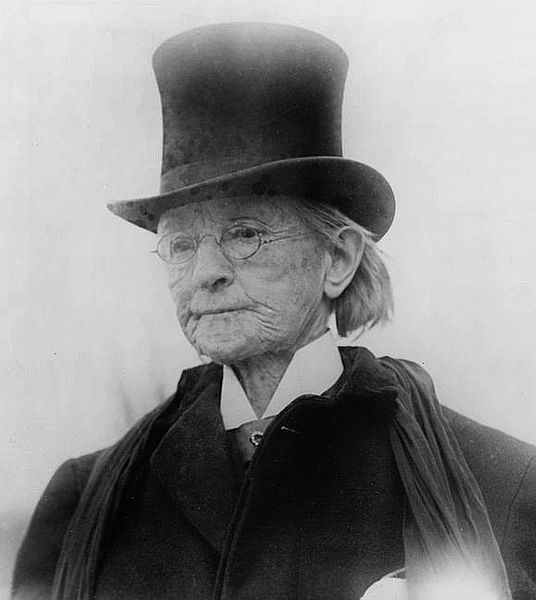
Mary Edwards Walker in a man's top coat and hat around 1911. Source: Library of Congress.

The Legacy of Mary Walker

Dr. Walker was certainly quite an unusual lady, well ahead of her time. She would receive several honors in addition to the Medal of Honor. The U.S. Postal Service issued a first-class stamp in 1982 to commemorate Dr. Walker. A World War II Liberty Ship was named the S.S. Mary Walker, and several medical facilities bear her name.

Although not kindly regarded by her contemporaries, Dr. Walker marched to the beat of her own drum and demonstrated her courage and willingness to promote freedom during her service as a medical contract doctor in the Civil War and as a vigorous and outspoken proponent of women’s rights, including the right to dress as they pleased. Dr. Walker certainly did!

The Maginot Line: A Defensive Barrier for World War II

World War I has just ended. France is victorious but it has cost it dearly. It’s necessary for France to defend its frontiers.
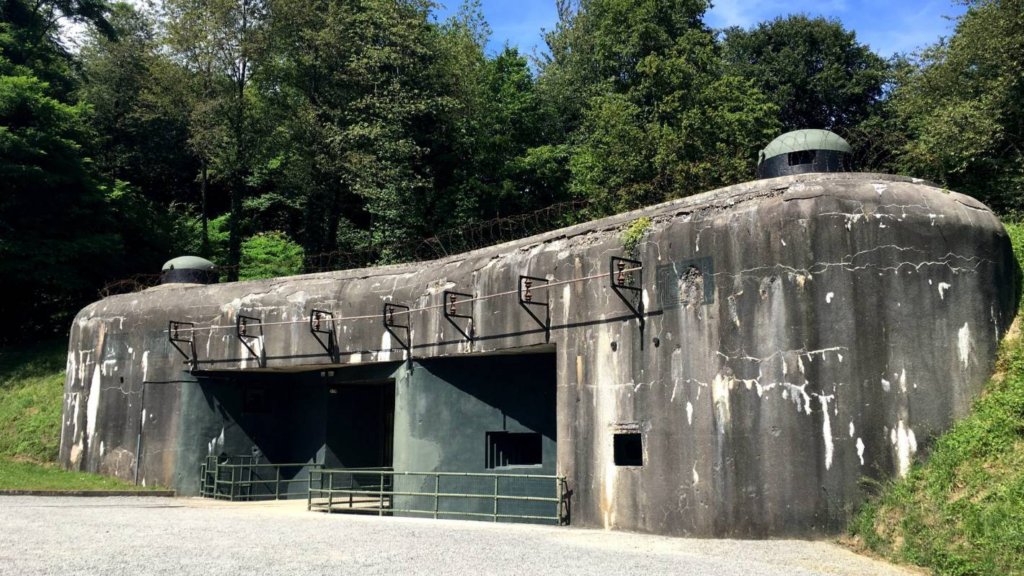
World War I has just ended. France is victorious but at a great cost. Millions of Frenchmen have died in the war, the Spanish Flu is destroying the country, and political agitation in Germany is scaring the French Government. A “Defense Council” is formed with Marshal PetainMarshal Joffre, and Marshal Foch, the French Minister of War and the French President in the late 1910’s.

It was decided that France was no match with Germany’s demography and industry, and that it was necessary for France to defend its frontiers. Was it a good decision to focus on a defensive, rather than an offensive, strategy? Marshal Petain was strongly against it, stating that France should focus on a Maneuvering Army and not a Static one.
The Frontiers of France

The Maginot Line: A Defensive Barrier for World War I

The French government decided to enact a law that would initiate the construction of a defensive line on the frontiers of France, near Switzerland and Belgium. The former had been neutral since 1815, and the latter was an ally of France. André Maginot, Minister of War in 1929, pushed hard for this law, and thus gave his name to what would later become the Maginot Line.

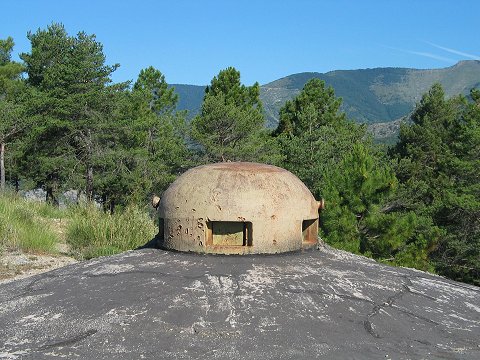
The Maginot Line was not a defensive line just at the German frontier, as the first Bunkers were built in Nice at the Italian Frontier in southeast France. Italy was no more a friend to France, and Benito Mussolini was increasingly more aggressive towards Savoie and the Nice territory. You can even find a lot of these bunkers in the Alps and get in if you dare to!

As the Occupation of the Rhineland was coming to an end in 1930, the French government decided to take the initiative by starting to build the defensive line at the German frontier in 1929. Until 1935, the German Frontier saw the acquisition of increasingly more defensive positions, artillery nests, bunkers, and tank traps.

How was the Maginot Line designed?

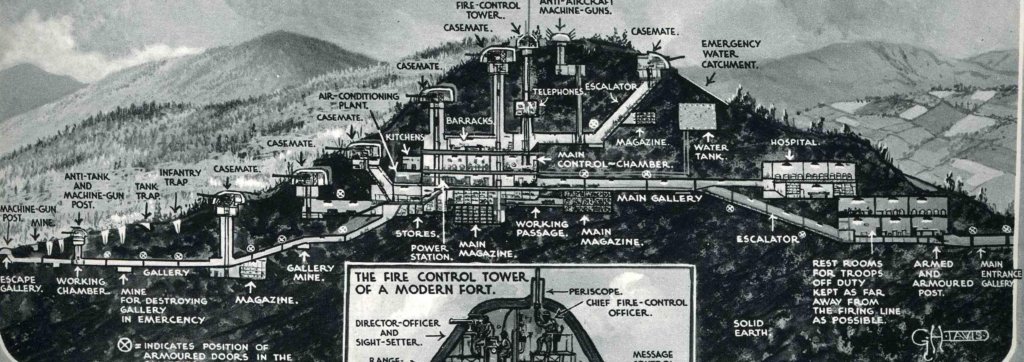
As you previously guessed, yes, the Maginot Line was a series of defensive position along the frontiers of France, some more armored than others and some more protected by terrain (the Alps is a fantastic wall, and Italy would never cross them in 1940).

The following description applies specifically for the German border. The structure of the line was very simple yet proved to be both great and really bad. The Line was divided in 4 different ones.

The first one was the weakest one, being a simple series of outposts with sentries, barbed wires, and mines. It was designed in a way that the sentries could quickly alert the second line that danger was coming. The barbed wires spread a distance of 10 to 15 meters. This was plenty for the machine guns from the second line to shoot down anything that could move in this zone as the French machine guns could shoot up to 1,200 meters.

The second line was the strongest one. Full of bunkers, more barbed wires, and mines, it was located around two kilometers behind the front line. With tank traps and machine gun nests located under heavy artillery cover, it was designed not only to hold, but also to inflict heavy casualties to the enemies.

The third line was designed to provide cover to the fighting troops in the field. With machine gun nests and bunkers, this line was designed to hold the enemy if it got through the first two lines through close quarter combat.

The fourth and last line was the logistic line: barracks, ammunition, and artillery. It was designed to provide support only. The enemy was not supposed to reach it and never really did.

The main goal of the Maginot Line was to inflict major casualties and to experience as few casualties as possible. The French demography was in no match for the German demography, and French blood had to be spared as much as possible.

The Maginot Line had a political goal too, as it was designed in a way to make the Germans attack through Belgium. Since the United Kingdom had guaranteed the independence of Belgium, if Germany dared to attack Belgium again, then the British would declare war to Germany again. But the French Government was then sure that Germany would never dare touch Belgium again.

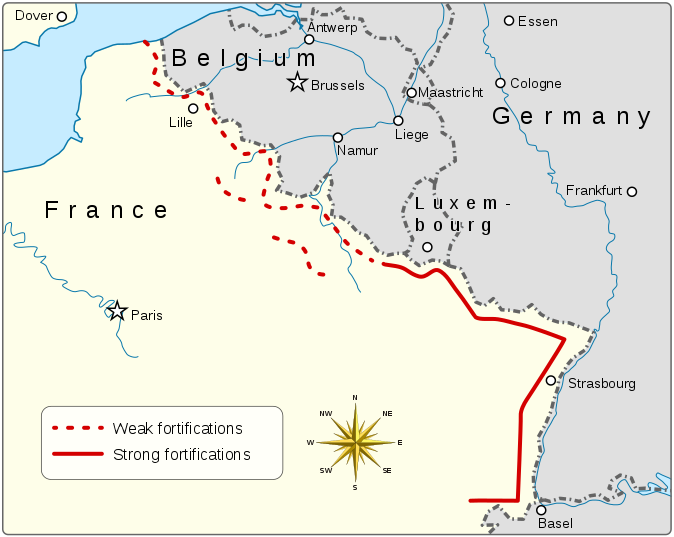
Maginot Line in France. Graphic by Goran tek-en via Wikipedia.

This looked great but as General Patton said…

“There is no such things as successful defense.”

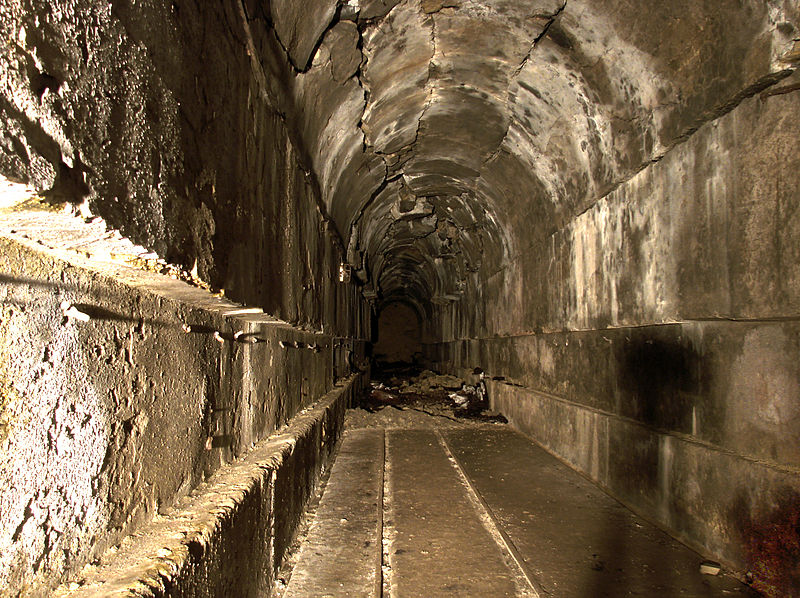
The defensive lines, even designed with extreme caution, had flaws. One of them is that, as you will see later on, there was no escape for some bunkers. Soldiers were trapped in shelters, cut from reinforcements and fresh air.

But the biggest flaw was that the line was incomplete because of diplomacy. To maintain a good relationship with its neutral neighbors of Belgium and Switzerland, the line at the borders of these two countries were lightly defended. It was a diplomatic strategy, but it proved to be an enormous mistake. Why? Not only because Germany did something that the French High Command did not really expect, but even worse, the line was designed in a way to defend the border and forbid the crossing of it. The back of the line was thus very vulnerable if a flanking attack happened and took the line from behind.

“Peace for our time…”

From 1936 to 1939, the line was fully occupied for different reasons and different lengths: the Rhineland re-militarization in ’36, the Anschluss, and the Sudeten crisis in ’38.

The Sudeten crisis had a major impact on the line. Political? Maybe. Strategic? No more than being a different crisis until the breakout of the war. For the Maginot Line itself, it was a disaster. When Germany annexed the Sudetenland, the Czech fortifications were thus captured and, as they were built with the help of French engineers, the Wehrmacht tested the fortifications and figured out how to break them. A few years later, this would prove to be a disaster for France.

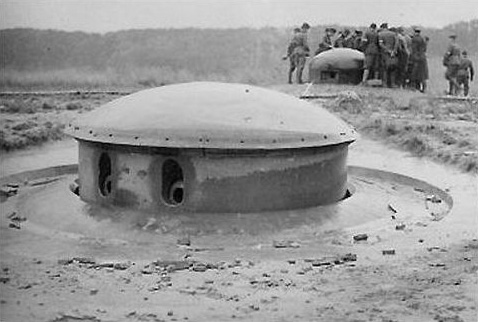
Block 14 at the Ouvrage du Hochwald on the Maginot Line in 1940; 135 mm turret and Cloche GFM. Source: Wikipedia.
Anti-tank rails at the Casemate number 9 of the Hochwald ditch - Secteur Fortifié de Haguenau. Source: Wikipedia.

The Phony War

Poland had just rejected Germany’s demand about the Danzig corridor. War would breakout in a matter of time. The 21st of August 1939, France decided to mobilize and thus garrison the fortifications. Total mobilization would start on the 2nd of September, and war between Germany and France would start the 3rd after France declared war. During the first days of the war, nothing would happen. Besides some artillery shots, nothing. The Sarre offensive would do nothing as well.

Soon the phony war started. During winter of 1939-1940, the fortifications would continue to grow until May 1940. Did the French High Command ever expect what would follow?

“Fall Gleb”

It is the 10th of May 1940. Nothing changes as the Phony War continues. There are no casualties, and the soldiers are waiting. Waiting for what? Are they expecting anything? No. The French High Command has its “wall,” and the Army is believes that the enemies will not attack through it. They think that even attempting it would be a suicide mission.

The Wehrmacht has an other idea.

The Fall Gleb plan consisted of cutting through the Netherlands and Belgium and Luxemburg, bypassing the strongest elements of the Maginot Line. The French High Command didn’t really expect that. Even worse, they didn’t expect Germany to pierce the front in the Ardennes range and its deep forest. The Germans met some fortifications of the Maginot Line but they were only lightly defended as it was so unthinkable to attack through the Ardennes. What the Germans did was pretty simple. They basically dodged the strongest line of defense and attacked where it was weak. Punching hard in the Ardennes and in the direction of Sedan, like in 1870, the French High Command realized a disaster was happening.

The worse was yet to come as “Plan Dyle” started as a response to the German attack. The Allies entered in Belgium with the desire to counter-attack the Germans. A disaster happened during the following days through the application of the plan. The Germans were attacking deeper and deeper behind the Allies, and they were now flanking them. The Wehrmacht then attacked and pushed to the Channel and encircled most of the Allied armies in Belgium. Most of the French Armies, the British Corps, and the Belgian army began to surrender, completely cut off from the back. The Maginot Line saw little to no action. Most of the fortifications the Germans ran into were so lightly defended that it was impossible for the French troops to hold any attack there. Most of them were captured with small confrontation since the Germans were so dominant in every way. Some forts fought hard though. A strange case happened too with a fortification that would prove to be a major flaw for the Maginot Line. A bunker was isolated and couldn’t retreat and would not surrender. It was attacked, and trapped in the bunkers the soldiers were attacked by engineers. Trapped and with no fresh air, they all suffocated.

Later on, during the “Fall Rot,” it would happen many times.

The Maginot line - A diagram. Source: Wikipedia.

“Fall Rot,” or the End of the Battle of France

For a short period of time from the 25th of May until early June, the front was stabilizing and even with the loss of thousands of soldiers encircled and trapped in Belgium, the French dug behind the Aisne and the Somme rivers, and nothing happened for a few days. The Germans then launched their final battle plan, Fall Rot, which finally made France surrender.

During this final plan, the Germans attacked through the rivers and the strongest fortifications of the Maginot Line. Heroic defense from the French during 15 days would push back the Germans but the line would finally be breached on the 19th of June and then during the last 3 days of the Battle of France. The Latiremont Sector would fire up to 1577 shells a day to push back the assault groups, and even with the help of the “Big Bertha” and the Skoda Artillery Guns (305 mm), the line would hold in most of the fortifications.

The main danger would finally come from the back of the line, as General Heinz Guderian would push his panzers far behind the defensive line and encircle the French, too.

On the 22nd of June, the French Army would finally surrender to Germany, completely destroyed.

AM Bell (at the work of Welschhof). Source: Wikipedia.
GFM Bell (Ouvrage de l'Agaisen). Source: Wikipedia.
What remains of block 1 of the fort after the German experiments. (Four à Chaux, Alsace). Source: Wikipedia.

What about the Alps Front?

The Maginot Line was weaker there, but the Mountains were a fantastic defensive position for the French as the Germans or Italians would never break through. The Italians declared war the 10th in a very unfavorable terrain, and it proved to be a disaster. Only the German Armistice forced the French to surrender to Italy on the 25th of June.

There is also a very “internet famous” battle that happened during this short period. The “Battle of the Pont-Saint-Louis” gained fame, when 9 French soldiers held an enormous Italian attack, killing more than 150 Italians and only having two slightly injured soldiers.

Conclusion

The Maginot Line wasn’t so much of a bad idea in itself. It proved to be reliable, and it never really fell. Its only problem was that it was 30 years late. War changed during peace time, and the French stayed with the World War 1 strategies, which proved to be a total disaster. The war was now moving at a very fast pace.

The Blitzkrieg and the encirclement maneuvers of the Germans were very simple, and, in the end, not that well thought out. Their success was great but only because the French strategy was simply not possible during World War 2.

Guest Contributor: Kjetil Vion is a writer and a history enthusiast. A passionate of France and modern military history, he has a special interest into the Prussian state, specially since the Sadowa battle against Austria. Always wanting to learn more, he now looks to spread his knowledge in history.

Why Colonel Ruby Bradley Was Known as the Angel in Fatigues

Born near Spencer, West Virginia in 1907, Ruby Bradley would later become one of the most decorated women in American military history.
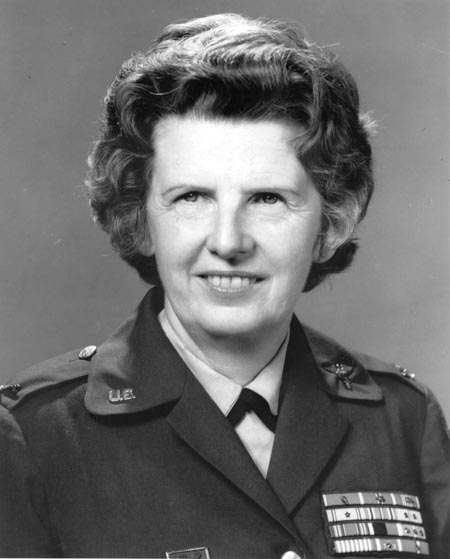
Born near SpencerWest Virginia on December 19, 1907, Ruby Bradley would later become one of the most decorated women in American military history. Bradley’s first career, though, wasn’t as an Army nurse. She was a teacher!
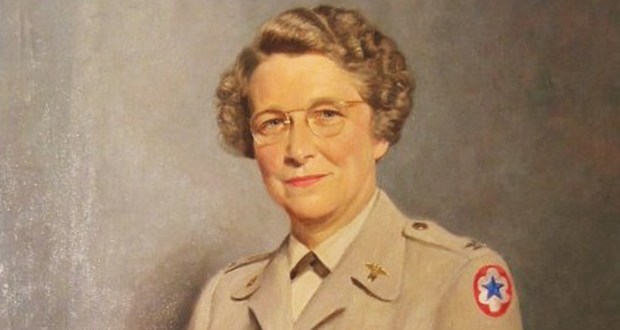
Who Was Ruby Bradley?

Ruby G. Bradley, Colonel, U.S. Army Nurse Corps Director, Nursing activities, Brooke Army Medical Center, Fort Sam Houston, Texas
Ruby G. Bradley, Colonel, U.S. Army Nurse Corps Director, Nursing activities, Brooke Army Medical Center, Fort Sam Houston, Texas. Source: Wikipedia.

In 1926, Bradley graduated from Glenville State Teachers College and taught four years in one-room schoolhouses in Roane County. In 1930, she entered the Philadelphia General Hospital School of Nursing, graduating as a surgical nurse in 1933. In 1934, Bradley entered the Army Nurse Corps as a surgical nurse and served as Walter Reed General Hospital until she was assigned to Station Hospital at Fort Mills, Philippine Islands in February 1940.

A year later, she transferred to Camp John Hay on the island of Luzon in the Philippines where she was on December 7, 1941 when the Japanese attacked Pearl Harbor. Hours after Pearl Harbor, the Japanese bombed the American defenses in the Philippines where Bradley was stationed as a thirty-four-year old Army nurse.

Three weeks later, Bradley was captured and would spend the rest of the war as a POW in three different prison camps. For the duration of World War II, 2nd Lieutenant Bradley would care for the wounded and sick around her. She had been at Camp John Hay for almost one year until the Japanese moved Bradley to Camp Holmes in April 1942. About a year and a half later, Bradley and 65 other nurses took an optional transfer to Manila to the Santo Tomas Internment Camp on September 5, 1943.

Even though the conditions at the Santo Tomas Internment Camp were awful and deteriorated as the war continued, Bradley and her fellow nurses continued to care for the sick and assist the starving children. It was here that Bradley and several other nurses earned the title of “Angels in Fatigues,” as she would take some of the food she had been given for her own nourishment and instead would feed it to hungry children. She was even able to use the excess space in her uniform that she gained from losing weight to smuggle surgical material into the POW camp.

Some of Ruby Bradley’s medals:

The POWs normally received only half a cup of rice in the morning and half a cup of rice in the evening. Bradley saved part of her limited rations when the children would start crying at the end of the day. She also became an excellent thief, putting food in her pockets for the children.

In addition, she would help with 230 surgeries and deliver 13 babies. As Bradley remembered, the Japanese were amazed at the work that Bradley and her fellow nurses could do without any instruments. For example, Bradley used a tea strainer and gauze to anesthetize a pregnant woman who had gone into labor.

Ruby Bradley Is Liberated

On February 3, 1945 after three years of captivity, U.S. troops stormed the gates of Santo Tomas Internment Camp and liberated Bradley and her fellow prisoners. She weighed only 86 pounds when she left the Japanese camp.

Bradley returned home to West Virginia to recover after her years in captivity, but returned to the battlefield during the Korean War five years later. She served as Chief Nurse of the 171st Evacuation Hospital during the Korean War and again illustrated her deep devotion and care for those who were wounded and sick, putting her own life at risk. Bradley was later named Chief Nurse for the Eighth Army in 1951, supervising over 500 Army nurses throughout Korea.

In November 1950, during the Chinese counteroffensive, she refused to leave until she had loaded the wounded onto a plane even though she was surrounded by 100,000 Chinese soldiers. She was the last person on the plane, as she watched the ambulance explode behind her. As Bradley once stated in a TV interview, “You got to get out in a hurry when you have somebody behind you with a gun.”

Philippine General Carlos Romulo presents Lt. Col. Ruby Bradley with the U.S. Lady of the Year Award
Philippine General Carlos Romulo presents Lt. Col. Ruby Bradley with the U.S. Lady of the Year Award. Source: The Robinson Library.
Colonel Ruby F. Bryant 9th Chief, Army Nurse Corps.
Colonel Ruby F. Bryant 9th Chief. Source: Army Nurse Corps.

The Legacy of Ruby Bradley

Bradley became the first woman to receive a national or international guard salute when she received a full-dress honor guard ceremony when she left Korea in June 1953. She would also become the third woman in Army history to be promoted to the rank of colonel on March 4, 1958 at Fort McPhearson, Gerogia. 

Bradley retired from the Army in 1963 after three decades of service, but continued in the field of nursing for 17 years, working as a supervisor in a private nursing facility in Roane County, West Virginia.

In later years, Bradley would receive more acknowledgment for her work during World War II and the Korean War with her hometown of Spencer, WV giving a parade in her honor on “Ruby Bradley Day” in September 1991 and Tom Brokaw presenting a story on NBC Nightly News on February 23, 2000 about the forgotten heroes of the American military, referencing Colonel Bradley and her work.

Bradley died in Hazard, Kentucky on May 28, 2002, but was buried with full military honors in Arlington National Cemetery on July 2, 2002. In 2013, Nancy Polette, author of countless educational books and materials for children, wrote a book about Bradley entitled Angel in Fatigues.

Colonel Bradley received 34 medals and citations of bravery during her thirty years of service, including two Legion of Merit medals, two Bronze stars, two Presidential Emblems, the World War II Victory Medal, and the U.N. Service Medal. She also received the Red Cross’s highest international honor—the Florence Nightingale Medal.

Although Bradley was one of—if not the—most decorated woman in American military history, she never thought too highly of herself. When asked about her time in the service or about the fact that she was one of America’s most decorated military women, Bradley normally responded that it was just all in a day’s work. As many other medal recipients have said, Bradley wanted to be remembered as just an Army nurse.

Sources

Guest Contributor: Rachel Basinger is a former history teacher turned freelance writer and editor. She loves studying military history, especially the World Wars, and of course military medals. She has authored three history books for young adults and transcribed interviews of World War II veterans. In her free time, Rachel is a voracious reader and is a runner who completed her first half marathon in May 2019.